Cast Iron Skillet Care Guide: Clean, Season, Repair
By Martin Reyes
Testing note: I maintain and cook on several cast iron pans at home, including a 6.5-inch egg pan, a 10.25-inch everyday skillet, and a 12-inch deep skillet, plus one enameled Dutch oven and one enameled skillet. For this guide, I relied on that hands-on use with test meals that commonly expose care problems: fried eggs, skin-on salmon, pancakes, smash burgers, cornbread, tomato sauce, and a short wine pan sauce. The failure cases that most often forced a reset were sticky seasoning from over-oiling, flash rust after rack-drying overnight, and patchy seasoning after acidic cooking in a newer pan.
Cast iron skillet care comes down to one rule: match the fix to the pan’s condition, clean and dry needs a thin oil wipe, sticky needs heat and scrubbing, rust needs stripping and reseasoning. Get it wrong and food sticks, old oil turns rancid, or the pan flashes rust again after the next wash. I use this guide the same way I check my own pans after dinner: daily care first, then a targeted fix for setup, cleaning, drying, oiling, seasoning, or rescue work.
Start here: identify your skillet and its current condition


Bare cast iron, pre-seasoned cast iron, and enameled cast iron
Bare cast iron is unfinished iron that needs a full seasoning build before it cooks well. It rusts quickly if left wet.
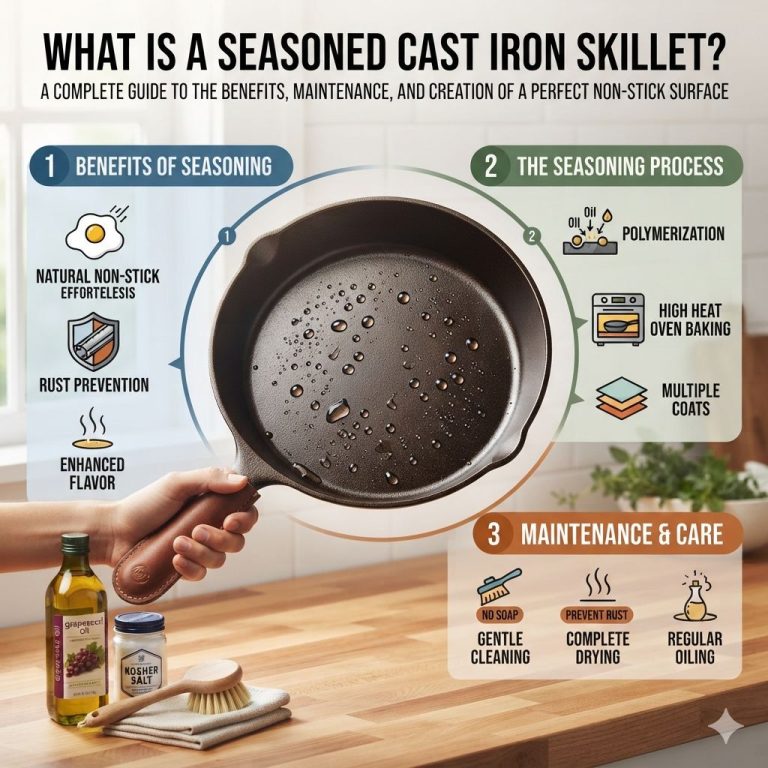
Pre-seasoned cast iron already has a factory-applied seasoning layer. That layer is generally a thin, polymerized oil surface. It keeps building between uses, helps food release, and slows rust, but it still needs routine drying and light oiling.
Enameled cast iron is different. The cooking surface may be black enamel or light enamel, but it is not bare iron. Do not season it like raw cast iron, and do not attack it with abrasive rescue methods meant for rusted bare pans.
What clean, dry, sticky, rusty, stripped, and newly bought look like
- Clean: surface looks even, feels smooth, no loose residue, no orange spots.
- Dry: no visible moisture, no water beading near the handle joints or pour spouts.
- Sticky: tacky or gummy patches, often shiny in a smeared way rather than satin.
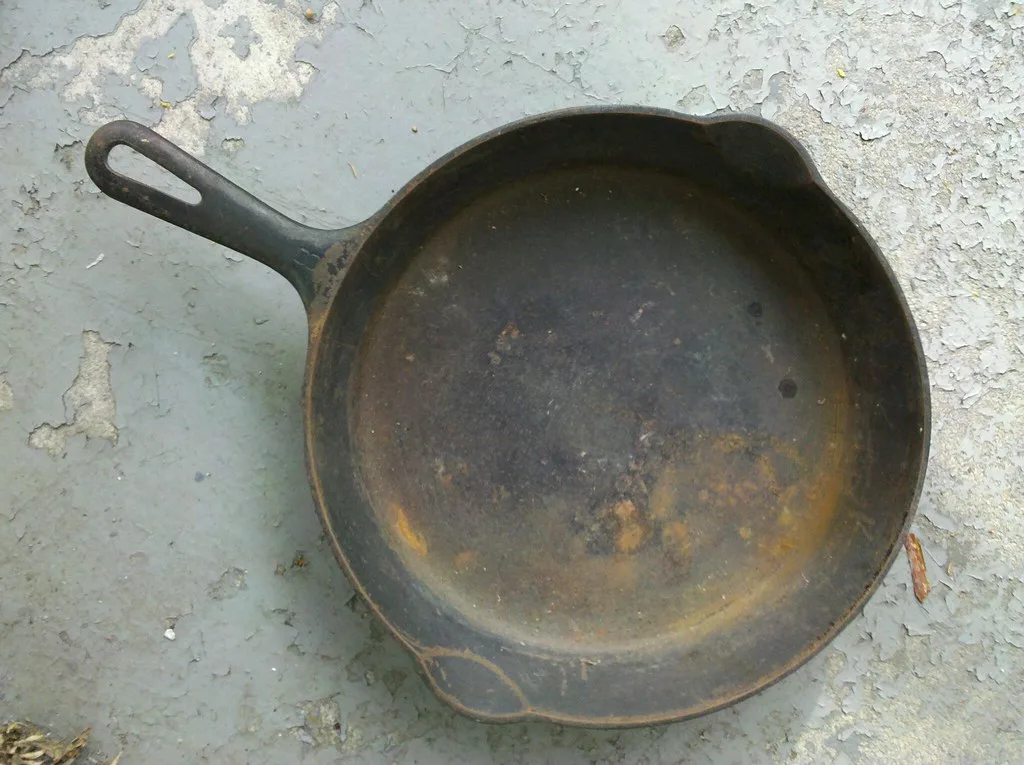
- Rusty: orange or brown dusting, spots, or rough patches after washing or storage.
- Stripped: dull gray iron showing through, weak food release, patchy seasoning after acidic cooking or heavy scrubbing.
- Newly bought: may be factory pre-seasoned, bare, or enameled. Check the maker’s care sheet before the first wash.
Which problems need a quick fix and which need a full re-season
A pan with minor residue usually needs a rinse, scrub, thorough drying, and a light wiped-on coat of neutral oil. A sticky pan needs less oil, more wiping, and sometimes heat to set the surface. Rust means the protective layer failed. Light rust can be scrubbed off and re-oiled. Heavy rust or stripped patches usually call for re-seasoning.
| Pan condition | What it means | Immediate action | Do you need a full oven seasoning cycle? |
|---|---|---|---|
| Clean and dry | Seasoning is intact | Wipe on a very thin coat of neutral oil, then wipe off excess | No |
| Sticky or gummy | Too much oil set on the surface | Scrub with hot water, non-metal scrubber, then heat dry | Only if tackiness remains after cleaning |
| Light rust spots | Moisture reached exposed iron | Scrub rust off, dry fully, re-oil, then re-season affected area or whole pan | Usually yes |
| Stripped or patchy | Seasoning layer is weak or partly gone | Clean to bare stable surface and rebuild with thin oil layers | Yes |
| Enameled pan with stains | Surface is enamel, not seasoning failure | Use gentle washing only; do not season or strip | No |
| Type | What it is | Routine care | Soap use | Rust risk | What not to do |
|---|---|---|---|---|---|
| Raw cast iron | Bare iron with user-built seasoning | Clean, dry fully, oil lightly, season as needed | Brief mild soap is fine when needed | High if left wet | Soak, air-dry wet, store damp |
| Pre-seasoned cast iron | Raw iron with factory seasoning started | Same as raw, but usually no initial full strip needed | Brief mild soap is fine when greasy | High if seasoning is damaged and pan stays wet | Assume factory seasoning means no drying or oiling ever |
| Enameled cast iron | Iron coated in vitreous enamel | Wash gently, dry well, no seasoning film required | Normal mild soap is standard | Low on intact enamel surfaces | Strip, steel-wool rescue, or season like bare iron |
How do you properly care for a cast iron skillet?
Proper care for a cast iron skillet means using a short maintenance cycle after cooking: rinse with hot water, scrub with the right tool, dry at once, and wipe on a very thin coat of neutral oil if the pan is bare or pre-seasoned. Move to repair only when the surface turns sticky, rusty, or patchy.
The standard cycle after cooking
- Pour off grease and wipe out loose food with a paper towel or cloth.
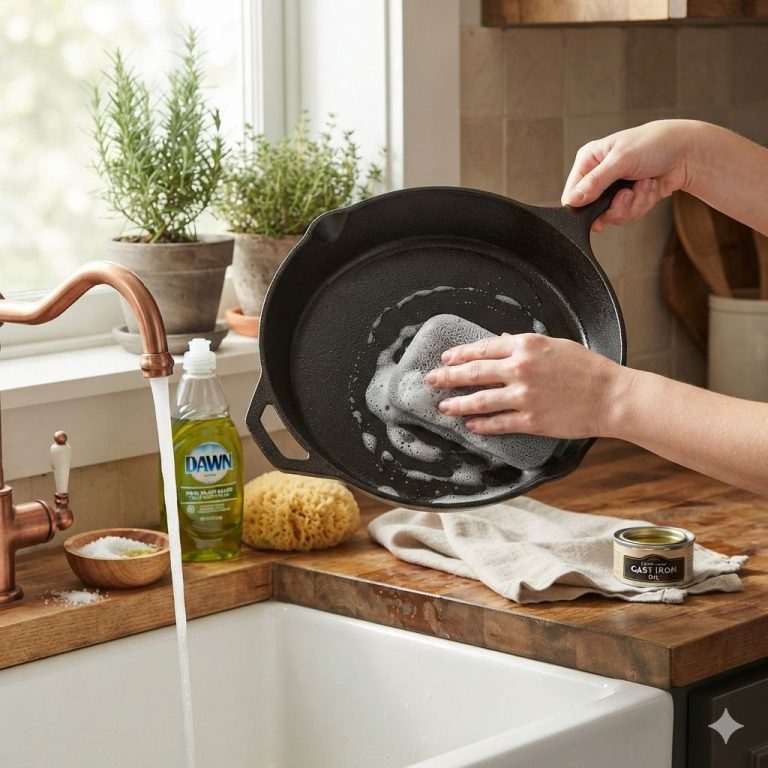
- Rinse the warm pan under hot water.
- Use a pan scraper, stiff brush, or non-metal sponge based on the residue.
- If grease remains, use a small amount of mild soap and rinse well.
- Towel dry right away.
- Set the skillet over heat briefly until fully moisture-free.
- Rub on a few drops of neutral oil, then wipe until the pan looks almost dry.
What daily care should feel like when the pan is healthy
Daily care should feel boring. No soaking. No thick oil coat. No long rescue session after every meal. A healthy cast iron skillet cleans in minutes because the seasoning layer builds between uses and stays thin. On my 10.25-inch skillet, eggs release best when I keep the finish dry-looking rather than shiny and when I heat-dry for a minute instead of rack-drying.
When to stop at maintenance and when to move to repair
Stop at maintenance when the pan looks dark, smooth, and dry after cleaning. Move to repair when food sticks in random patches, the surface feels tacky after cooling, the pan smells like old oil, or orange rust shows up again after a normal wash. In my own tests, random sticking with pancakes and fish usually meant poor preheat or a weakened patch, while a smeared glossy look almost always meant I had left too much oil behind.
Cast iron care checklist by condition
Decision table: use the branch that matches the pan
| Branch | Use this when | Tools to use | What to avoid | Re-oil or re-season? |
|---|---|---|---|---|
| Daily clean | Normal cooking residue only | Hot water, pan scraper, stiff brush, non-metal sponge | Dishwasher, wet air-drying, heavy soaking | Re-oil lightly |
| After-acidic cooking | Tomato, wine, beans with acid, long braises | Hot water, mild soap if greasy, towel, stovetop heat | Leaving acid in the pan, storing leftovers | Re-oil; re-season if dull gray patches appear |
| Sticky-seasoning rescue | Tacky, gummy, smeared shine | Hot water, non-metal scrubber, stiff brush, cloth | Adding more oil over sticky residue | Re-season only if cleaning does not fix it |
| Rust rescue | Orange spots or brown roughness | Scrubber, brush, coarse salt for light spots, steel wool only for severe bare-iron rescue | Ignoring it, storing damp, oiling over rust | Yes, after rust removal |
| First-time seasoning | New bare pan or stripped pan | Soap, sponge, towel, neutral oil, oven | Thick oil coats, skipping the wipe-off step | Yes, full cycle |
Branch 1: daily clean after normal cooking
Use hot water while the pan is still warm. A plastic or wood pan scraper lifts stuck bits without gouging the seasoning. A stiff brush handles browned fond. A non-metal sponge works for everyday washing. Dry the pan all the way, then wipe on a trace of grapeseed, canola, or avocado oil and buff it off until the surface looks nearly dry.
Branch 2: after-acidic cooking care
Tomato sauce, wine reductions, and long acidic braises can weaken seasoning, especially in a newer pan. Empty the skillet soon after cooking. Wash, dry, and inspect the surface. If it looks dull but still black, oil it and keep cooking. If gray iron shows or sticking gets worse, do an oven seasoning cycle. I have had a newer 12-inch pan lose a visible patch after simmering tomatoes longer than I should have; a quick clean and one thin oven cycle fixed it.
Branch 3: sticky-seasoning rescue
Sticky buildup usually comes from too much oil left on the pan during seasoning or after cleaning. Wash with hot water and firm scrubbing. Dry over heat. If the tackiness eases and the pan turns more even, keep using it. If it stays gummy and smokes early in cooking, strip the bad film back and rebuild thinly. My most common mistake is not the wrong oil, it is failing to wipe enough oil off before heating.
Branch 4: rust rescue
For light surface rust, scrub until the orange color is gone, rinse, and dry at once. Warm the pan briefly so hidden moisture cooks off, then wipe on a very thin coat of neutral oil and re-season. For heavier rust, stronger abrasion may be needed. This is one of the few times steel wool has a place on bare cast iron, but keep it away from enameled interiors. I reserve steel wool for true rescue work only; on one neglected pan, anything gentler left orange residue behind and the rust returned after the next wash.
Branch 5: first-time seasoning or re-seasoning
Wash a new bare pan to remove factory residue. Dry it fully. Rub on neutral oil, then wipe off until the pan looks nearly dry. Bake according to the maker’s directions, then cool and repeat if needed. The key is the thin film. Thick oil turns tacky instead of forming a hard seasoning layer. On a stripped 10.25-inch skillet, two thin cycles gave me a better cooking surface than one heavy, glossy coat that cured sticky.
Matching care kits to your cookware material
Using the wrong cleaning tools damages pans faster than daily cooking. Nonstick coatings strip under abrasive pads, stainless steel pits without the right cleaner, and cast iron seasoning turns sticky if scrubbed with standard sponges. A budget care kit tailored to your specific pan material prevents these failures.
The guide to budget cookware care kits ranks affordable options by material and failure mode. It breaks down which combinations—like nylon scrapers for nonstick, chainmail scrubbers for cast iron, or specialized polishes for stainless steel—actually fix the damage you have. Buying only what matches your pan type saves money and extends the life of every piece in your kitchen.
Protecting Cookware and Sinks During Washing
Choosing the right sink mat prevents scratched basins and damaged nonstick or enamel coatings when washing heavy pots and pans. Thick silicone or rubber mats with raised feet and heat resistance above 400°F provide necessary cushioning and drainage, while weighted designs keep cast iron stable during cleaning.
Selecting inadequate protection risks warping cheap mats or chipping delicate finishes. This breakdown of best sink mats compares silicone, stainless steel, and plastic options to help you match material and weight capacity to your specific cookware collection and sink type.
Protecting Cookware During Stackable Storage
Felt pads are the most practical cookware protectors for mixed cabinets because they stay thin, fit common pan sizes, and cost less per piece than silicone. Choosing the wrong protector leads to scratched pans, chipped nonstick coatings, and lids that stick together during storage.
The guide on stackable cookware protectors breaks down options by failure mode so the pad matches how your pots and pans actually stack. It compares felt, silicone, and star-shaped designs, explains sizing requirements, and highlights which materials work best with heavy cast iron. Matching the right protector to your specific cookware prevents surface damage and keeps stacked pieces easy to separate.
Is a Dedicated Cookware Cleaning Brush Worth It?
Choosing the right brush can make or break your cookware maintenance routine. The review breaks down how soft bristles protect non‑stick and coated pans, while firmer ones tackle stainless steel and cast iron without scratching. It also covers replaceable heads for heavy users, a quick‑look specs table, and a surface‑by‑surface decision guide that helps you decide when the brush is appropriate versus when a sponge or steel wool is safer. By weighing the pros, cons, and alternatives, the article shows whether the extra tool justifies its cost for your kitchen.
Find the full verdict in the Cookware cleaning brush review.
When is a cookware storage protector worth the investment?
If you stack pans, mix non‑stick with cast iron, or keep both stainless and cast iron together, a cookware storage protector can prevent scratches and corrosion. The Decorguider review finds it worthwhile in those scenarios, but notes that rigid organizers or single‑layer cabinets gain little extra protection.
The article breaks down specs, who benefits most, and a decision checklist, helping you decide whether the extra cost fits your kitchen layout. It also lists alternatives if you already have a solid storage system. For a quick verdict, see the Cookware Storage Protector review.
How Much to Spend on a Cookware Cleaning Brush
A reliable cookware cleaning brush typically costs between $5 and $15. Spending at the lower end works for occasional nonstick use, but frequent stainless steel or cast iron cleaning demands a sturdier option that won’t shed bristles or scratch surfaces. Cheap brushes often wear out quickly, leading to higher long-term replacement costs for both tools and damaged pans.
Matching your brush budget to your specific cookware material and cleaning frequency prevents unnecessary damage while keeping expenses reasonable. Premium features like heat-safe handles or replaceable heads justify a higher price only when your routine requires them. This breakdown of cookware brush pricing compares six common types by annual cost, helping you decide exactly where a budget pick suffices and where investing more protects your pans.
Budgeting for Cookware Polish When Basic Cleaners Fall Short
Cookware polish typically costs between a few dollars and the mid-teens for a small bottle, though specialty formulas for stainless steel or silver run higher. You only need it when standard cleaning methods—soap, baking soda, or vinegar—fail to remove stubborn stains, haze, or tarnish from your pans.
Before purchasing a dedicated product, evaluate whether cheaper household alternatives can restore your cookware’s finish. Understanding the cookware polish cost helps you decide if a commercial formula is justified for your specific material, whether that is stainless steel, aluminum, enamel, or nonstick. Factoring in cost-per-use ensures you do not overspend on maintenance products your kitchen does not actually require.
When a bamboo pot scraper makes sense for your pans
A bamboo pot scraper works best for lifting soft, stuck-on food from stainless steel, cast iron, and enamel without scratching the surface. It falls short on heavily burnt residue and requires hand washing, so it won’t replace a stiff brush or metal chainmail for serious buildup.
Choosing the right scraper prevents unnecessary wear on seasoning and reduces paper towel waste during cleanup. The bamboo pot scraper review breaks down cleaning power, durability, and care requirements to help you decide if this tool earns permanent space in your kitchen drawer.
How to Organize Pots and Pans in Cabinets Without Wasting Space
Choosing the right pot and pan organizer depends on your cabinet shape and cookware weight. Vertical dividers work best for deep base cabinets, while pull-out racks handle heavy sets without sliding. Lid holders are ideal only if you have many lids to separate. The wrong choice leads to wasted space, scratches, and unstable stacks.
This guide breaks down the best organizer types for each cabinet style, including weight limits and layout tips. Learn how to sort by pots, pans, and lids for efficient storage: pot pan organizers.
Protecting Your Pans With Affordable Interleavers
Preventing scratches is essential for maintaining the longevity of nonstick, enamel, and cast iron surfaces. A dedicated cookware protector set typically ranges from $8 to $60, depending on material thickness and piece count. Thicker felt or silicone options provide superior grip and compression resistance compared to basic pads. For details on material value and sizing, see this cookware protector cost breakdown.
Investing in these inserts safeguards your investment by ensuring safe, stackable storage. The right size prevents shifting, which can compromise delicate finishes over time.
Choosing a drying rack that handles heavy cast iron
Cast iron skillets weigh significantly more than standard cookware, so a flimsy drying rack can tip over, scratch countertops, or block your sink entirely. A proper setup requires a heavy-duty over-sink or countertop rack rated for at least 20 to 30 pounds, featuring deep slots and enough width to accommodate long pan handles.
Over-sink models save counter space in tight kitchens, while countertop versions offer maximum stability for heavier loads. Matching the rack type to your specific cookware weight, handle length, and kitchen layout prevents damage and speeds up the drying process after washing. For detailed comparisons of stainless steel shelves, wall-mounted options, and stackable baskets built for heavy pans, review this guide to drying racks for pots.
How do you clean a cast iron skillet without ruining the seasoning?
Clean a cast iron skillet without hurting the seasoning by using hot water, the mildest tool that removes the residue, and immediate drying after washing. For exterior cleanup and burnt-on mess outside the cooking surface, that adjacent guide is the relevant companion page; for interior care, the same rule still applies: modern mild soap in small amounts is acceptable for greasy pans. What actually damages seasoning is prolonged soaking, trapped moisture, and abrasive stripping when the pan only needed a scrub.
Hot water, scrubber choice, and how much force is safe
Start with hot water. It loosens grease better than cold and cuts down the need for hard scrubbing. Use a pan scraper for stuck starches, a stiff brush for browned bits, and a non-metal sponge for greasy film. Coarse salt can help with stubborn residue on bare cast iron, though I treat it as a backup tool, not a daily one.
Can you use soap on a cast iron skillet?
Yes, a small amount of mild dish soap is fine when the pan is greasy or smells of old oil. Soap is not usually the main concern. Long soaking, dishwasher cycles, and leaving the pan wet are the bigger problems. On a healthy pre-seasoned skillet, a quick soapy wash followed by full drying does less harm than greasy buildup.
What to do with stuck-on food, burnt bits, and greasy residue
For burnt bits, add hot water to the warm pan and scrape. For greasy residue, use a drop or two of soap with a sponge. For black flakes that keep coming off, the seasoning is unstable or overloaded with carbon, and the pan may need a deeper reset rather than more oil.
Why does drying matter so much?

Drying matters because cast iron rusts fast when moisture sits in pores, around rivet-free handle joints, or under a thin film of leftover food. Towel drying removes most of the water, but stovetop drying finishes the job. I have seen a pan left on the rack overnight grow fresh orange rust by morning.
Towel drying versus stovetop drying
Towel drying gets the pan from wet to nearly dry. Stovetop drying takes it the last step and drives off hidden moisture. This matters most for bare and pre-seasoned cast iron. Enameled cast iron also benefits from full drying, though it does not need the same post-dry oil film.
Why wet air-drying causes rust fast
Air-drying sounds harmless, but water sits in a thin film and evaporates slowly. On weakened seasoning, that is enough to start rust. If the pan has pour spouts, a helper handle, or a rougher interior, hidden water lingers longer than it looks.
The right thin coat of oil after drying
Use a neutral oil with a clean flavor and stable cooking profile, such as grapeseed, canola, or avocado oil. Add a few drops, spread them across the cooking surface and rim, then wipe again with a dry cloth so only a whisper-thin film remains. If the pan looks shiny-wet, there is too much oil on it.
When should you season, re-season, or leave the pan alone?
A cast iron skillet can usually be left alone when the surface is dark, dry, and releasing food well after normal preheating. It needs a touch-up when the finish looks dull or cooks slightly sticky. Full re-seasoning is for rust, stripped gray areas, or a stubborn gummy film that cleaning cannot remove.
What a good seasoning layer looks and feels like
A good seasoning layer is usually a thin, polymerized oil surface rather than a thick coating. It usually looks dark, even, and low-sheen rather than wet-glossy. It helps food release, slows rust, and gets better through repeated thin cooking-oil cycles between uses.
Signs the pan needs a touch-up oiling versus a full oven cycle
Use a touch-up oiling after a normal wash when the pan looks dry but intact. Choose a full oven cycle after rust removal, after a stripped-looking acidic cook, or when the surface has wide pale patches that keep grabbing food. Do not jump to stripping if a simple cleaning and re-oil will solve it.
How excess oil creates a sticky surface
Excess oil pools and partially cures. That leaves gummy patches that feel tacky after cooling and smoke early in use. The cure is less oil, more wiping, and enough heat to set a thin film. Many sticky pans are over-oiled, not under-seasoned.
How do you know when a cast iron skillet is hot enough?
A cast iron skillet is hot enough when the whole cooking surface has preheated evenly and food meets a dry, ready pan instead of a lukewarm center with cool edges. In regular stovetop use, medium to medium-high is often a good starting range. Rushing this step is one of the main reasons eggs, fish, and pancakes stick.
Preheat timing for most burners and pan sizes
Exact timing depends on burner strength, pan thickness, and size, so use cues instead of a strict clock. Preheat over medium, not full blast. A large skillet takes longer than a small one because of its weight and heat retention. The goal is even heat, not maximum heat. My 6.5-inch pan is ready quickly for eggs, while the 12-inch skillet needs longer or the edges lag behind the center.
Visual and cooking cues that the pan is ready
A few drops of water should usually skitter and evaporate fairly quickly rather than sit flat. Oil should loosen and move easily across the surface. When adding a protein, it should sizzle on contact without immediate scorching. If butter turns dark too fast, the pan overshot the target.
How poor preheating causes sticking with eggs, fish, and pancakes
Underheated cast iron grabs delicate food. Eggs spread and weld to cool spots. Fish tears because the crust never sets. Pancakes brown unevenly and cling where the pan was still cold. A stronger seasoning layer helps, but heat management is the first fix.
What should you avoid when seasoning is weak?
When seasoning is weak, avoid long acidic cooks, delicate low-fat foods, and any habit that leaves the skillet wet or coated in excess oil. Weak seasoning needs easy wins: shorter cooks, more preheat, enough fat, and careful drying. Push a fragile surface too hard and you usually get sticking, patchiness, or rust.
Long acidic cooks and why they strip weak seasoning
Tomato, vinegar, citrus, and wine can thin a weak seasoning layer, especially during longer simmering. A short pan sauce is one thing. A long braise in a patchy bare cast iron skillet is another. If the pan is newly rebuilt, use stainless steel or enameled cast iron for acidic dishes first.
Common cooking habits that cause sticking or patchy buildup
- Starting with a cold pan
- Using heat that is too high, too fast
- Moving proteins before they release naturally
- Adding a thick post-wash oil coat and leaving it there
- Cooking sugary sauces onto a weak surface
Storage mistakes that lead to rust
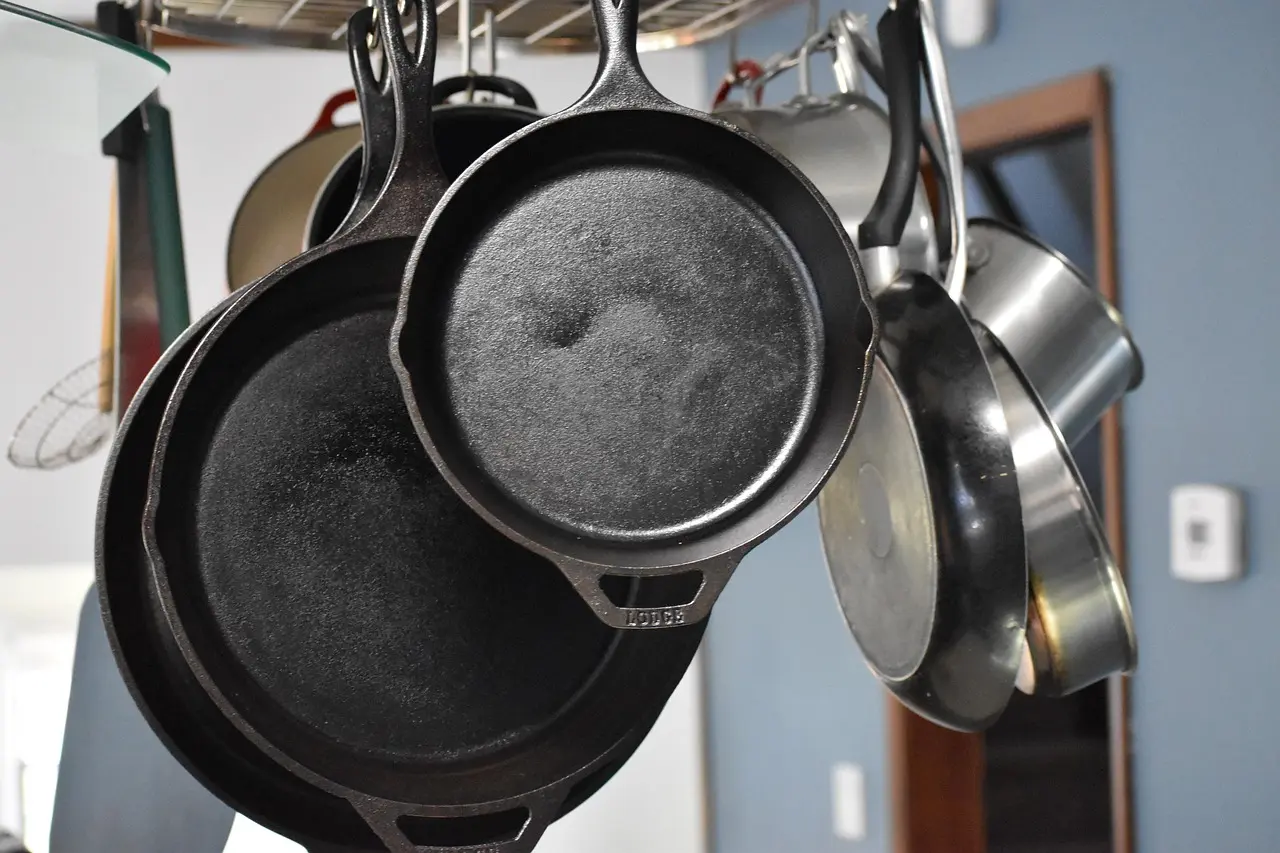
Store the skillet bone-dry. If stacking pans, place a paper towel between them so moisture does not get trapped. Do not put a lid on a still-warm or slightly damp cast iron skillet. Closed, humid storage is a rust factory.
Brand notes for Lodge and other common pre-seasoned skillets
What Lodge care instructions get right for first-time use
Lodge is a useful baseline because its published care guidance matches the core routine: wash, dry, oil lightly, and keep the coat thin. It also clearly separates seasoned cast iron from enameled pieces and states that small amounts of soap are acceptable when needed. The broad care logic still matters more than any one logo on the handle: identify the surface, keep it dry, and use the least aggressive fix that solves the real problem.
How Crofton and Tramontina users can apply the same checks
For Crofton, Tramontina, and other common pre-seasoned skillets, the same condition check works: confirm whether the interior is bare seasoned iron or enamel, inspect for sticky residue or rust, then choose the matching branch. First-time use usually means a wash, full dry, and a light oil wipe before cooking.
When model-specific directions should override general advice
If the maker says the skillet is enameled, follow enamel care first. If the pan has a special coating, unusual handle material, or stated oven limits, follow the manual. Manufacturer directions are the best tiebreaker when a pan falls outside standard raw cast iron care. In my own kitchen, the enameled pieces behave differently enough that I never use bare-iron rescue methods on them, even when they stain or lose their glossy look.
Frequently asked questions
How often should you season a cast iron skillet?
Season a cast iron skillet when the surface looks dry, patchy, rusty, or starts sticking more than usual, not on a rigid calendar. A healthy pan needs light oiling after many washes and only occasional full oven seasoning. Daily use with proper cleaning often builds the seasoning layer better than repeated heavy re-seasoning.
What do you do if a cast iron skillet starts to rust?
Scrub off the rust first, then dry the pan completely and rebuild protection with oil and heat. Light orange spotting needs only a focused scrub and re-season. Heavier rust means more aggressive removal and a full seasoning cycle. Oiling over active rust does not solve the problem.
Why do you never wash a cast iron skillet?
That old claim is too blunt to be useful. Cast iron can be washed; the issue is how it is washed and dried. Quick cleaning with hot water, a brush, and even a little mild soap is fine. What causes trouble is soaking, dishwasher cleaning, and leaving the pan wet afterward.
What is the first-time use process for a cast iron skillet?
First, identify whether the skillet is bare, pre-seasoned, or enameled. Wash off packing residue, dry it fully, and for bare or pre-seasoned iron, wipe on a very thin layer of neutral oil and buff away excess. Then cook something forgiving before trying eggs, fish, or acidic sauces.
How do you know if a cast iron skillet is good?
A good cast iron skillet heats evenly enough for its size, has a stable cooking surface, and can be cleaned and dried without constant rescue work. Pre-seasoned models are common and convenient. Weight matters because heavier pans hold heat well, but care quality matters more than brand prestige alone. A well-kept cast iron pan can cook for decades, and I trust the ones that stay stable through years of washing, drying, reheating, and regular use.
s
- Lodge Cast Iron, care guidance for seasoned cast iron: manufacturer guidance on washing, brief soap use, drying, oiling, and seasoning maintenance.
- Lodge Cast Iron, rust removal guidance: manufacturer instructions for removing rust, drying thoroughly, and rebuilding seasoning.
- Le Creuset, enameled cast iron care guidance: manufacturer instructions that distinguish enamel care from raw cast iron care and do not recommend seasoning enamel.
- The Cast Iron Collector, seasoning reference: background on seasoning as a polymerized oil layer and why thin coats outperform thick coats.
- University extension and food-safety guidance on cookware drying and rust prevention: drying promptly after washing reduces corrosion risk on exposed iron.
Products related to this article
Sponsored / affiliate links. As an Amazon Associate I earn from qualifying purchases. I may earn additional commission from eligible campaigns.