5 Best Budget Cookware Care Kits for Home Kitchens: we compared
Buy the cheapest kit that fits your pan type: nonstick usually does best with a soft sponge plus nylon scraper, stainless steel with a non-scratch pad and a suitable cleaner like Bar Keepers Friend, and cast iron with a chainmail scrubber plus a lint-free oil cloth. Wrong tools strip coatings, pit steel, and turn seasoning sticky. This guide ranks budget kits by material and failure mode, so you buy only what fixes the damage you actually have.
Quick comparison
| Product | Badge | Best for | Price | ||
|---|---|---|---|---|---|
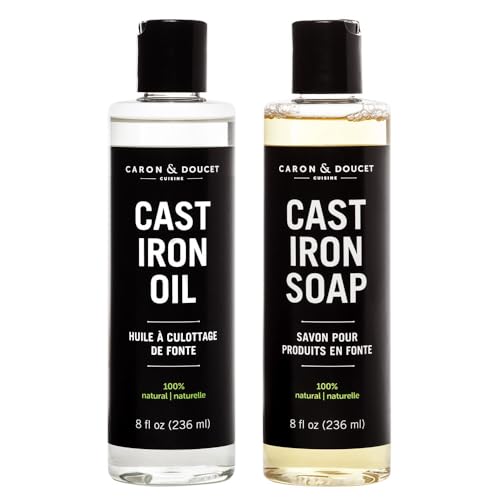 |
CARON & DOUCET – Cast Iron Cleaning & Conditioning Set:CARON & DOUCET | Our pick | Cast iron soap + coconut oil seasoning | $24.99
Price as of 30 Sep 2026
|
View |
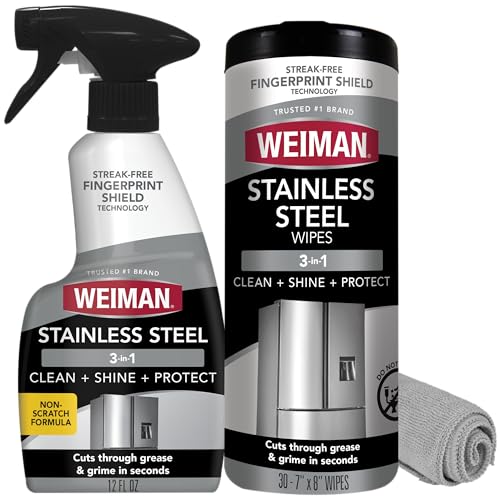 |
Weiman Stainless Steel Cleaner & Polish Kit, 3 Piece –Weiman | Budget pick | 3-piece stainless steel spray + wipes + cloth | $21.99
Price as of 30 Sep 2026
|
View |
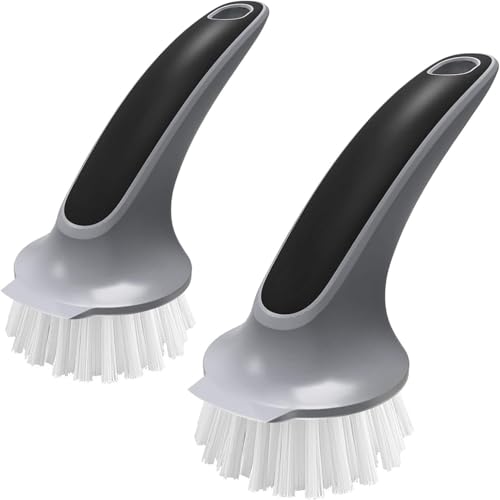 |
MR.SIGA Pot and Pan Cleaning Brush, Dish Brush for Kitchen,MR.SIGA | Also great | Pack of 2 non-scratch nylon brush sets | $13.99
Price as of 30 Sep 2026
|
View |
 |
Wright’s Copper and Brass Polish and Cleaner Cream- 8 OunceWright’s | Upgrade pick | Copper & brass cream polish, 8 oz pack of 2 | $17.78
Price as of 30 Sep 2026
|
View |
 |
Culina Supreme Cast Iron Care Set: Restoring Scrub,Culina | Pair with it | Cast iron scrub + soap + conditioning oil set | $24.99
Price as of 30 Sep 2026
|
View |
Use the comparison table to match a kit to the damage you are trying to prevent. If you only have one cookware material, skip overlap purchases and buy for that surface first.
How we chose
We compared the kits by three things that matter in a real kitchen: whether the tool addresses the main problem, whether it is safe on the cookware surface, and whether it fits reasonably well in a small cabinet or drawer. We also weighed replacement priority, because a cheap tool that needs frequent swapping can cost more over time.
We gave extra credit to kits that solve a specific problem cleanly, like rust on cast iron or stuck milk solids on stainless steel. We also penalized bulky or redundant pieces, since a wide drying rack or extra storage pads can become dead weight fast.
| Kit / tool | Best for | Key spec | Price | Skip if… |
|---|---|---|---|---|
| MR.SIGA Pot and Pan Cleaning Brush | Nonstick and coated pans | Non-scratch nylon bristles, scraper edge, ergonomic handle | $13.99 | You already have a soft sponge and a safe scraper |
| CARON & DOUCET Cast Iron Cleaning & Conditioning Set | Cast iron seasoning and odor control | Plant-based soap plus coconut oil conditioning | $24.99 | You only need a scraper and plain drying routine |
| Culina Supreme Cast Iron Care Set | Cast iron with rust or burnt residue | Scrub, soap, conditioning oil | $24.99 | Your skillet is already well-seasoned and dry |
| Weiman Stainless Steel Cleaner & Polish Kit | Stainless steel finish care | Spray, wipes, cloth for fingerprints and streaks | $21.99 | You only care about food removal, not polishing |
| Wright’s Copper and Brass Polish | Copper and brass cookware accents | Cream polish, tarnish removal | $17.78 | You do not own copper or brass cookware |
Material-by-material buying matrix

The cheapest useful kit changes with the pan material. Nonstick, stainless steel, and cast iron each fail in different ways, and the wrong overlap buy wastes money while sometimes causing the very damage you meant to avoid.
| Cookware material | Problem solved first | Must-buy tools | Can skip at budget level | Surface safety note |
|---|---|---|---|---|
| Nonstick | Scratches and premature coating wear | Soft sponge, nylon scraper, non-scratch brush, small drying mat | Chainmail scrubber, steel wool, polish kits, heavy storage pads | Use only soft bristles and blunt edges; avoid anything that can cut the coating |
| Stainless steel | Stuck-on food and water spots | Non-scratch pad, scraper, drying rack, steel-safe cleaner | Oil-based cast iron kits, coating protectors, abrasive scouring pads | Heat tint and residue respond to the right cleaner, not harsh scrubbing |
| Cast iron | Rust and seasoning damage | Chainmail scrubber, scraper, lint-free drying cloth, conditioning oil, skillet divider or felt protector | Dish soap-heavy polish kits, wet mats, coated metal scrubbers | Drying speed matters more than shine; lingering moisture causes rust |
Nonstick: must-buy tools and skips
Nonstick cookware needs the gentlest kit because the failure mode is coating wear, not cosmetic dullness. Buy a nylon scraper, a soft brush, and a drying surface that does not trap grit under the pan. Skip abrasive pads, chainmail, copper scrubbers, and thick oiling cloths that belong to cast iron care.
Stainless steel: must-buy tools and skips
Stainless steel usually fails from stuck food, browned residue, and water spots. A non-scratch pad, a scraper with a blunt edge, and a stainless-safe cleaner handle most of that. Skip seasoning products and soft storage pads unless you stack pans tightly and need scratch protection between pieces.
Cast iron: must-buy tools and skips
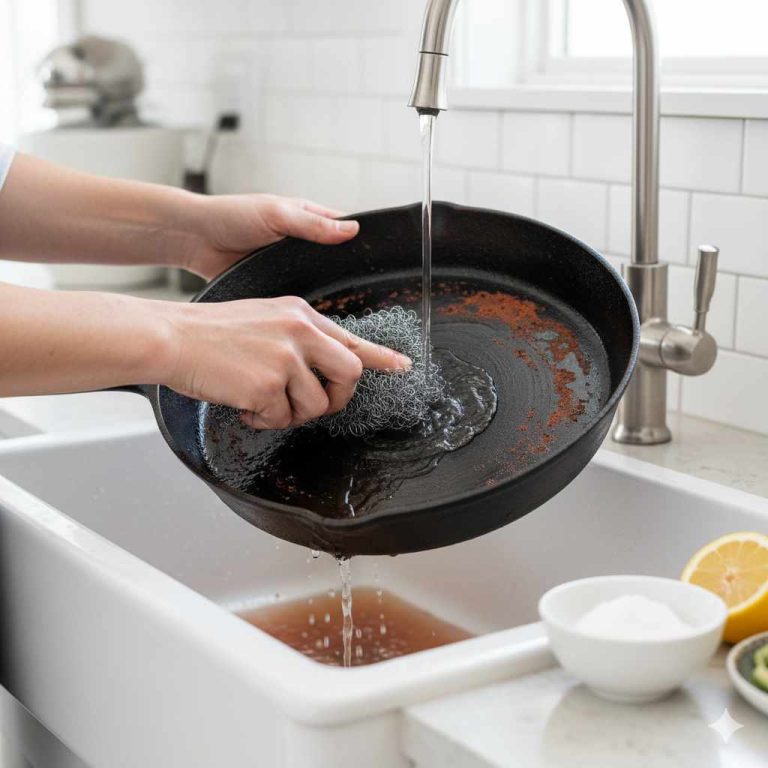
Cast iron fails when moisture stays on the surface or when aggressive cleaning strips seasoning. A chainmail scrubber, scraper, drying cloth, and conditioning oil solve the real problems. Skip anything that leaves a wet residue or relies on a dishwasher-style rinse cycle.
One-kit households: where overlap works and where it does not
Overlap works best for the scraper, the drying tool, and basic storage protection. It does not work as well for cleaning chemistry. A cast iron oil-and-soap set can be overkill for nonstick, while a stainless polish kit does little for a seasoned skillet.
Cookware care kit: best for mixed everyday use
The best mixed-use budget kit is a small setup built around a nylon scraper, a non-scratch brush, a simple drying rack or mat, and stack protectors if pans live in a cabinet. That mix covers the common failures without paying for specialty items that sit unused.
Core tools included
For a mixed kitchen, the core bill of materials is simple: one scraper, one brush, one drying solution, and a thin storage protector. That combination handles stuck food, safe scrubbing, fast drying, and scratch prevention without turning the cabinet into a cleaning supply shelf.
Who this kit fits
This is the right buy for a home kitchen with one or two nonstick pans, a stainless skillet or saucepan, and maybe a cast iron pan used occasionally. It also fits renters and small households that need one compact solution instead of separate material-specific systems.
What to skip to keep cost down
Skip large sink caddies, oversized bamboo racks, and duplicate polish products. If the kitchen does not stack pans often, skip bulky protectors too. The money is better spent on a scraper that will not gouge coating and a drying setup that actually lets air move around the pan.
MR.SIGA pot and pan brush: best for nonstick pans
This is the cheapest useful buy for nonstick cookware because it combines a non-scratch nylon brush with a scraper edge and an ergonomic handle. Based on the spec sheet and owner feedback, it is the clearest budget choice for lifting stuck bits without turning a coated pan into a scratched pan.
It fits cooks who mostly clean eggs, rice starch, sauce film, and light browned bits from nonstick skillets and saucepans. The drawback is simple: a brush like this is not a rust remover, and it will not replace a dedicated cast iron scrubber or stainless cleaner.
Safe scraper and brush choices
For nonstick, the safest scraper material is nylon or silicone. Wooden scrapers can work on light residue, but they wear faster and are less predictable at the edge. A stiff metal edge is the wrong call here, even if the pan looks dirty enough to justify it.
Drying and storage basics
Nonstick pans dry quickly, so the main goal is preventing trapped grit and cabinet scratches. A small rack or mat that lets the pan air out is enough. If the pan stacks, use a slim felt or silicone protector between pieces.
When to replace worn tools
Replace the scraper when the edge rounds over or the brush bristles splay and lose their shape. A worn tool starts dragging residue across the coating instead of lifting it. That is how small cleaning habits become visible damage.
CARON & DOUCET cast iron cleaning & conditioning set: best for seasoning and rust control
This kit fits cast iron owners who need cleaning and conditioning in one purchase. The soap and coconut oil pairing makes sense for pans that need gentle washing, odor control, and a seasoning refresh after a rough cleaning session.
The honest drawback is that it is specialized. It is useful for cast iron and grills, but it is not the cheapest answer for a mixed kitchen because most stainless and nonstick cookware does not need a conditioning oil.
Pan scraper shape and material
For cast iron, the best scraper is a blunt-edged plastic or nylon piece that removes crust without cutting into seasoning. A slightly curved edge is more useful than a sharp point because it follows the pan wall and corners with less pressure. Metal scrapers are a bad trade unless the seasoning is already badly compromised.
Drying setup that stops rust
Cast iron needs immediate drying, not just a rinse and a rest on the counter. A lint-free cloth or towel matters more than a plush drying mat because it removes surface moisture instead of holding it against the iron. Air drying alone is risky in humid kitchens.
Storage protection for stacked skillets
If cast iron pans stack, use felt or silicone protectors between the cooking surfaces. Felt is soft and compact; silicone tolerates more heat but adds a bit more bulk. The goal is to stop metal-on-metal contact, not to pad the whole cabinet.

Culina Supreme cast iron care set: best for rust and burnt residue
This set is the better value when the problem is not just seasoning care but actual stuck-on residue and light rust. It includes a scrub, soap, and conditioning oil, so it covers the most common cast iron failure points in one package.
The drawback is overlap. If a kitchen already owns a scraper and a drying cloth, part of this set duplicates what is already needed. It is strongest for neglected skillets, not for people who only need a refill.
Pan scraper material and edge shape
For burnt residue on cast iron, the safest low-cost tool is still a blunt scraper with a firm edge. It should peel residue, not gouge seasoning. A chainmail scrubber can help when the pan has rough buildup, but it should be used with restraint and only on seasoned iron that can tolerate it.
Drying and rust prevention
Rust prevention starts the moment the pan leaves the sink. Dry it fully, then apply a thin coat of oil if the seasoning looks thirsty or the kitchen is humid. If the towel comes away damp after the first pass, the pan is not ready for storage yet.
What to watch for
Replace any scrubber that snags, sheds, or holds old grease. A dirty scrubber can leave a sticky film that makes seasoning feel tacky. That is a maintenance failure, not a finish problem.
Weiman stainless steel cleaner & polish kit: best for stuck-on residue and fingerprints
This kit fits stainless steel kitchens that care about food residue and visible finish marks. Based on the spec sheet and owner feedback, it is a good low-cost polish set for cookware and other stainless surfaces when fingerprints, streaks, and water spots keep coming back.
The drawback is that it polishes more than it cleans. If the pan has serious burnt-on bits, you still need a non-scratch pad or scraper first. It also does little for nonstick and cast iron.
Safe surfaces and grip
Stainless steel is durable, but it still benefits from non-scratch cleaning tools because the wrong pad can leave visible scuffs. A cleaner with a cloth that works in the grain reduces streaking and helps the pan look even after drying. A good grip matters when the cleaner is used on a hot, handled pan.
How this fits with drying gear
Stainless steel can handle air drying better than cast iron, but water spots show up fast if the finish sits wet. A compact drying rack is usually the better call than a mat, because it drains away rinse water instead of trapping it under the pan.
Replacement priority
Replace wipes and cloths before the cleaner bottle itself. A dirty cloth puts grime back on the pan and creates the same streaks the polish was supposed to remove. That is wasted product and wasted time.
Wright’s copper and brass polish: best for copper cookware accents
This polish is the right choice only if the kitchen includes copper or brass cookware or decorative pieces that tarnish. It is not a general cookware care kit, but it fills a very specific gap for people who want to remove tarnish without scratching the metal.
The drawback is obvious: it is not needed for nonstick, stainless steel, or cast iron. Budget buyers should skip it unless copper or brass is actually part of the cookware list.
Where it fits and where it does not
Use a polish like this for tarnished copper lids, brass handles, or trim that you want to keep bright. Do not use it as a substitute for food residue cleaning. It is a finish product, not a maintenance system.
Storage and footprint
This is one of the smallest items in the group, so it fits well in a cramped cabinet. The bigger question is whether the kitchen owns enough copper or brass to justify buying it at all.
What should a budget cookware care kit include?
A budget cookware care kit should include four things: a scraper, a cleaning brush or pad, a drying tool, and a storage protector if pans stack. That is the core. Specialty cleaners and polish come after that, only if the cookware material actually needs them.
What each piece does
The scraper lifts stuck food. The brush handles textured residue without chewing up the surface. The drying tool reduces rust and water spots. The storage protector keeps stacked pans from rubbing against each other and wearing down coatings or seasoning.
What you can skip
Skip duplicate tools, oversized drying systems, and polish for metals you do not own. If the kitchen is small, every extra piece has to earn its place. A kit that cannot fit in one drawer is already too much for many homes.
Are silicone or wooden pan scrapers better for nonstick pans?
Silicone is usually the better buy for nonstick pans because it stays gentler on coated surfaces and is easier to keep consistent at the edge. Wooden scrapers can work for light residue, but they wear unevenly and are less predictable once the tip softens or chips.
Best use case for each
Silicone suits regular cleanup of eggs, rice, and sauce film. Wood is more of a backup option for cooks who prefer natural materials and only need occasional scraping. For heavily stuck food, neither should be forced harder than the coating can tolerate.
Can I use one kit for stainless steel, cast iron, and nonstick cookware?
Yes, but only if the kit is built around overlap tools like a scraper, a soft brush, a drying solution, and thin storage protectors. One kit stops being a good value when it includes specialty products that only serve one material and leave the other two under-covered.
When overlap works
Overlap works for cleanup of light residue, basic drying, and cabinet protection. A small family kitchen with one nonstick skillet, one stainless pan, and one cast iron skillet can get by with a compact shared kit if the tools are chosen carefully.
When overlap fails
It fails when the kit tries to be everything at once. Cast iron wants rust control. Stainless wants residue removal. Nonstick wants scratch prevention. A one-size kit often means paying for a feature you will never use.
How much should I spend on a cookware care kit?
Most budget buyers should aim for the low twenties for a single-material kit and a little more if they need a drying or storage piece too. Spend where the failure mode is expensive: scratches on nonstick, rust on cast iron, and residue buildup on stainless steel.
Replacement and upgrade priority
Replace scrapers and brushes first, because they are the pieces that do the actual cleaning work. Upgrade drying gear if pans stay damp too long. Storage protectors come after that, unless the kitchen stacks cookware daily and coating damage is already visible.
Do budget cookware care kits work for dishwasher-safe cookware?
Yes, but dishwasher-safe does not mean care-free. A budget kit still matters for residue that survives the cycle, for drying water spots, and for storage scratches after the pan comes out clean. Dishwasher-safe cookware still benefits from the right hand tools.
What the dishwasher does not solve
The dishwasher will not prevent cabinet rubbing, rusty cast iron, or scratched coatings from bad utensils. It also will not polish stainless steel or fix a pan that dried with a water film. A kit still has a job after the cycle ends.
How do I keep nonstick cookware from wearing out faster?
Use only soft cleaning tools, avoid high heat when possible, and dry the pan before stacking it. The fastest way to wear out nonstick is aggressive scrubbing, metal contact, and storage abrasion. A small non-scratch kit prevents all three problems at once.
Fastest wear triggers
Hard scrapers, abrasive pads, and wedged storage are the big ones. Even a good coating fails early if grit gets dragged across it every day. Nonstick care is mostly about reducing friction.
What is the best cookware care kit for a small home kitchen?
The best small-kitchen choice is a compact set built around one scraper, one non-scratch brush, one drying solution, and slim storage protectors. It should fit a drawer and handle the cookware that gets used most. Anything larger usually wastes space before it saves time.
Small-kitchen buying rule
Buy for the pans that cook dinner every week, not the specialty pieces you use twice a year. In a tight kitchen, a compact mixed-use kit is usually better than three separate material-specific kits that crowd out real storage.
Which one should you buy?
Choose the kit by the pan you are trying to save first. Nonstick owners should buy the MR.SIGA brush set. Cast iron owners should pick the CARON & DOUCET set if seasoning care matters, or the Culina set if rust and burnt residue are the main problems. Stainless steel owners should go with Weiman. Copper or brass cookware is the only reason to buy Wright’s.
If you mainly cook on nonstick
Start with the MR.SIGA brush set and add a slim drying mat if pans stack. Do not pay for cast iron oil or metal polish. Those dollars do nothing for a coating that fails from scratches, not shine loss.
If you own stainless steel skillets or sauté pans
Buy the Weiman kit if fingerprints, streaks, and residue are the main complaint. If the real issue is burnt food, pair it with a non-scratch pad before you think about polish. Stainless care is about cleanup first, appearance second.
If you season cast iron regularly
Choose CARON & DOUCET for routine conditioning, or Culina when the pan needs more aggressive cleanup support. Cast iron rewards a small, specific kit far more than a general one. Drying and oiling are the parts that keep rust away.
If your kitchen is short on storage
Buy the smallest tool set that solves the worst damage. A scraper, a brush, and a thin protector usually beat a full rack-plus-kit bundle. Big drying systems and extra bottles are the first things to cut when cabinet space is tight.
Frequently asked questions
What tools help remove stuck-on food without scratching pans?
Non-scratch nylon brushes, blunt scrapers, and safe cleaning pads do the job best. On stainless steel, a cleaner can help after the residue loosens. On nonstick, avoid anything abrasive. On cast iron, remove stubborn bits carefully so the seasoning stays intact.
Products related to this article
Sponsored / affiliate links. As an Amazon Associate I earn from qualifying purchases. I may earn additional commission from eligible campaigns.