Rust Removal Service Cost for Cast Iron
Rust removal service for cast iron is commonly priced at about $25 to $100 per pan, with larger pieces, mail-in service, or deep pitting pushing totals to about $150 or more (Lodge care guidance, restoration shop estimates). DIY is best for light surface rust; hire a pro when the rust is pitted, the pan is collectible, or the labor is likely to exceed replacement cost. Price mainly depends on rust severity, pan size, and how much reseasoning is needed afterward.
Rust level pricing and service model comparison
Rust removal pricing depends on how much metal loss is present, how much seasoning has been stripped away, and if you are paying for labor, shipping, or a full reseasoning finish. Light surface rust is often a low-cost DIY job. Pitting or deep corrosion can push the pan into restoration territory.
| Rust level | Service model | Estimated labor time | Materials | Likely tools | Reseasoning steps | Pay vs DIY note |
|---|---|---|---|---|---|---|
| Light surface rust | DIY | 10 to 30 minutes | 1/4 cup coarse kosher salt, 1 tablespoon vegetable oil, paper towels | Non-scratch pad or cloth | Wash, dry fully, apply a thin oil coat, heat to set the finish | Cheapest option if rust is only on the surface and the seasoning is mostly intact |
| Moderate rust | DIY | 1 to 8 hours including soak time | 50/50 vinegar and water mix, baking soda paste if needed, oil for finish | Bucket or sink tub, nylon brush, gloves | Neutralize, rinse, dry fast, then reseason | Still cheaper than pro service if the pan is common, but over-soaking can increase repair work |
| Moderate to heavy rust | Pro shop restoration | 1 to 3 days, often longer with queue time | Cleaner, degreaser, reseasoning oil, possible rust remover | Blast cabinet, soak tanks, heat source, ventilation | Strip, remove rust, dry, coat, and bake in finish layers | Worth paying for if the pan is valuable, oddly shaped, or you want less trial and error |
| Severe pitted restoration | Pro shop or replacement | Several days to multiple sessions | Rust remover, abrasives, oil, possible shipping materials | Electrolysis setup or aggressive abrasive tools | Multiple cleaning and reseasoning cycles are common | Only pay if the pan has sentimental or collector value; otherwise replacement may cost less |
What drives rust removal cost
The biggest price drivers are rust depth, pan size, and how much of the seasoning layer must be rebuilt after cleaning. Surface rust is fast and usually cheap. Deep pitting takes longer because the corrosion sits below the surface, and the finish often needs multiple cleaning and coating passes before the pan is stable again.
How much do rust severity and pitting change the bill?
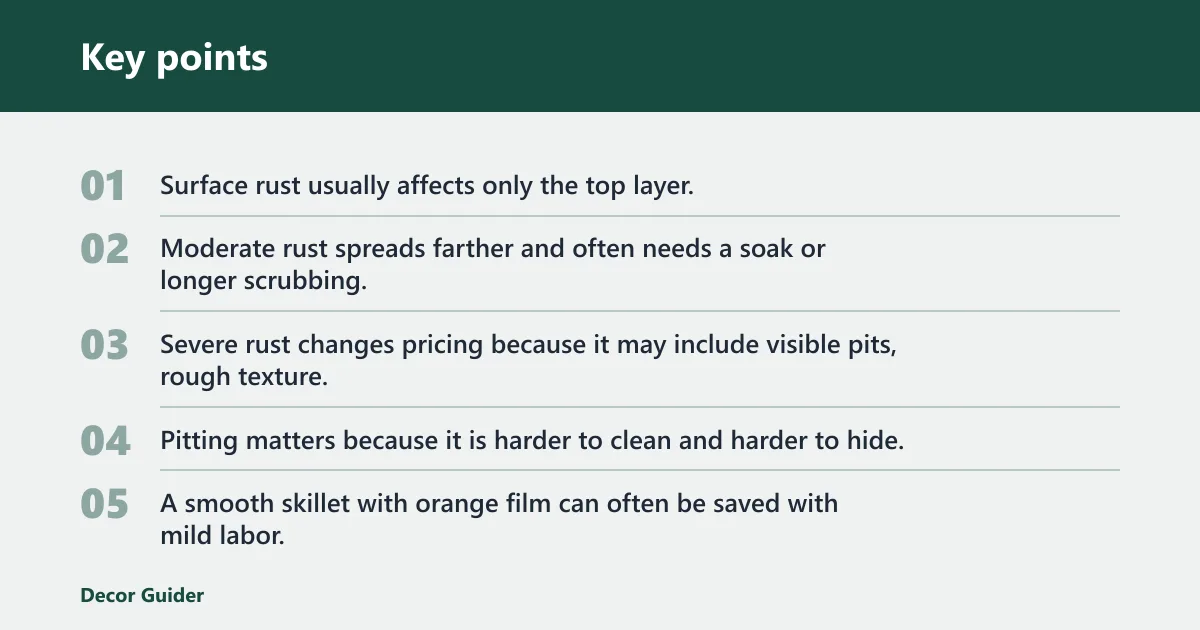
Surface rust usually affects only the top layer. Moderate rust spreads farther and often needs a soak or longer scrubbing. Severe rust changes pricing because it may include visible pits, rough texture, or blackened areas where the seasoning has failed and metal has been exposed for a while.
Pitting matters because it is harder to clean and harder to hide. A smooth skillet with orange film can often be saved with mild labor. A heavily pitted skillet may need abrasive work, repeated rinsing, and several seasoning rounds before it is stable enough for cooking again.
Why do pan size and shape affect rust repair cost?
A 6-inch skillet costs less to clean than a deep Dutch oven or a wide griddle. Larger pieces need more solution, more wiping, and more drying time. Handles, lugs, ribbing, and pour spouts add corners that trap moisture and rust residue, so labor rises with shape complexity too.
How do labor time and tool use affect pricing?
DIY cost is mostly your time plus basic supplies. Pro service adds labor rates, but it may also reduce the chance of uneven scrubbing or missed corrosion. Steel wool, sandpaper, tank cleaning, and electrolysis setups all raise the labor bill because they take more setup and more finishing work afterward.
When do shipping, drop-off, and reseasoning fees show up?
Mail-in restoration can add packing and shipping costs. Local shops may charge drop-off fees, intake minimums, or finish charges if the skillet arrives with no seasoning left. Reseasoning is not optional; once rust is removed, bare iron can flash-rust quickly if it is left damp or uncoated.
Say your 12-inch skillet has light orange specks after a wet sink soak. A basic salt scrub may fix it in one short session. If the same skillet sits in a damp cabinet for weeks and the surface starts pitting, that same pan can move from a quick cleanup to a pro restoration quote very fast.
How do you judge rust severity?
You can usually sort cast iron into surface rust, moderate rust, or severe pitting by looking at color, texture, and how far the rust has spread. If the pan still feels fairly smooth and the orange color wipes away, the repair is usually cheaper. If the surface feels rough or cratered, costs rise.
What is the simplest severity checklist for cast iron rust?
Use three checks: orange film only, rough texture, or visible holes. Orange film usually means surface rust and a low-cost fix. Rough texture suggests deeper corrosion and a longer cleanup. Visible holes, craters, or flaking metal point to severe pitting and possibly replacement if the pan is inexpensive.
What is the difference between surface rust and pitting?
Surface rust is a thin orange film or spotting. Pitting looks like small holes, rough dimples, or permanent texture loss. Surface rust often comes from brief moisture exposure. Pitting usually means longer exposure, repeated wet storage, or a finish that has already failed and stopped protecting the iron.
What are the signs that the seasoning layer is gone?
If food sticks badly, the pan looks dull instead of glossy, or rust returns right after washing, the seasoning layer is probably gone or too thin to protect the metal. That does not mean the pan is ruined, but it does mean you should budget time for cleaning and reseasoning, not just rust removal.
When has moisture exposure gone too far?
Long storage in a wet sink, a closed dishwasher, or a damp basement can push a skillet into deeper corrosion. Once rust has sat long enough to create pitting, restoration work becomes less predictable. At that point, the decision is less about cleaning and more about whether the pan is worth rebuilding.
What is the cheapest way to remove rust?

The cheapest way to remove rust from cast iron is usually the gentlest method that matches the damage. For light surface rust, coarse kosher salt and a little oil are low-cost and fast. Baking soda paste is another low-risk option. White vinegar can work, but it needs tighter control.
How do coarse kosher salt and oil work on light rust?
The salt method is the budget choice for surface rust. Use coarse salt as a dry abrasive with a small amount of oil to loosen orange film without immediately stripping every bit of seasoning. This approach is best when rust is shallow and the pan is otherwise in good shape.
When is baking soda paste the better low-cost option?
Baking soda is a milder option when you want less abrasion than salt or steel wool. It is useful for crusty spots that need soaking help but do not yet call for strong acid or heavy sanding. Use it for light cleaning when the metal still feels mostly smooth.
How long can a vinegar soak last before it becomes risky?
White vinegar is a stronger answer for moderate rust, especially when rust covers more than 30% of the surface. A 50/50 vinegar and water mix is commonly used, and restoration guidance from Lodge and cookware refinishers puts the soak window at about 1 to 8 hours. Short checks matter because over-soaking can etch sound metal.
Does vinegar damage cast iron if left too long? Yes, it can. The acid does the work, but too much time in the bath can strip good metal along with rust and may leave the surface rougher than before. That is why short checks matter, along with immediate rinsing and drying once the rust lifts.
When do pro tools make sense?
Pro tools make sense when manual scrubbing would take too long, remove too much seasoning, or fail to reach deep corrosion. Steel wool, sandpaper, commercial rust removers, and electrolysis each have a place. The more severe the rust, the more a paid service can save time, but the bill rises with the setup.
When is steel wool acceptable, and what grit range is reasonable?
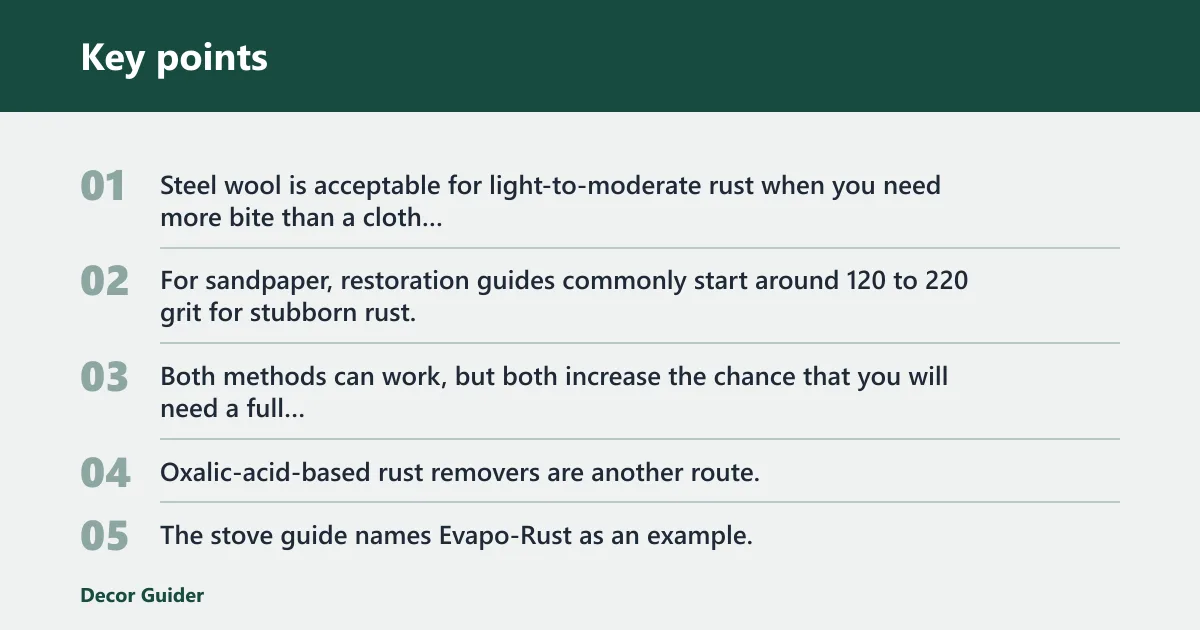
Steel wool is acceptable for light-to-moderate rust when you need more bite than a cloth or nylon scrubber, but it can strip seasoning unevenly and leave the pan patchy. For sandpaper, restoration guides commonly start around 120 to 220 grit for stubborn rust. Both methods can work, but both increase the chance that you will need a full reseasoning afterward.
What should you know about commercial rust remover and ventilation?
Oxalic-acid-based rust removers are another route. The stove guide names Evapo-Rust as an example. These products can speed up cleaning on stubborn corrosion, but they still need rinsing, drying, and good ventilation. They are best when you want a controlled chemical step without going all the way to abrasive sanding.
What are the safety limits for electrolysis on cast iron?
Electrolysis is the serious option for severe rust, deep pitting, or heirloom pans that need careful restoration. It requires a safe setup, a power source, and ventilation. Keep it outdoors or in a very well-ventilated area, and never use it on a pan with attached electrical components or unknown repairs.
Picture a 14-inch griddle with rust in the handle recesses and rough patches across the cooking surface. A salt scrub will not get far. At that point, sanding, a commercial rust remover, or electrolysis may be more sensible than trying five cheap fixes that still leave active corrosion behind.
What happens after rust is gone?
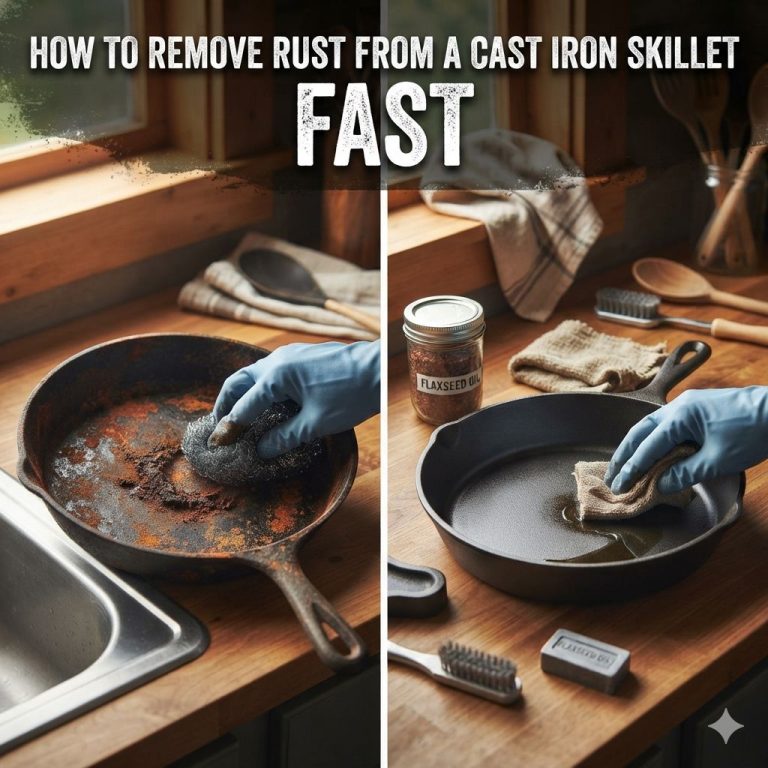
After rust is removed, the work is not finished. You need to rinse, dry, and reseason quickly so the bare iron does not flash-rust. A thin coat of reseasoning oil, plus heat, creates the protective finish that slows future moisture damage and keeps the pan usable.
How should you rinse, dry, and neutralize the pan?
If you used vinegar or another acidic cleaner, rinse the pan well and neutralize any leftover acid with a mild baking soda wash if needed. Then dry it completely, including the handle, rim, and underside. Even a small amount of trapped moisture can start rust again within hours.
Which reseasoning oil should you use?
Vegetable oil is a common reseasoning choice, and flaxseed oil is also used for a protective finish, though results vary by formula and application. The goal is a thin coat, not a sticky layer. Heavy oil can gum up instead of baking into a hard surface. Thin coats also use less product.
What heat and storage steps stop rerusting?
After coating, heat the pan so the oil bonds to the surface. Then store it in a dry place with airflow. Avoid stacking it wet or placing a lid on it before it has fully cooled and dried. That routine matters because rust repair cost often returns if moisture control is poor.
Restore or replace the pan?
Repair is usually worth it when the pan is common, lightly to moderately rusty, and still structurally sound. Replacement starts to win when pitting is deep, the pan is warped, or the labor needed to restore it costs more than a new skillet. Sentimental value can change the math.
When does repair cost more than replacement?
A basic skillet can be cheaper to replace than to mail in for restoration once shipping, labor, and reseasoning are added together. If a local restorer charges near the high end for a small pan, the total can exceed the price of a standard new pan. That is why service quotes should be compared before you commit.
When does an heirloom pan justify restoration?
An older family pan may be worth restoring even when the cost is not the lowest option. If the piece is thick, well cast, or tied to a set of matching cookware, restoration can make sense because replacement may not match the original weight, shape, or heat behavior.
When is a low-cost pan better replaced?
If the pan is inexpensive, badly pitted, and already missing its finish in large patches, replacement is often the better financial choice. Cheap repair can become expensive when multiple rounds of cleaning do not stop the rust or when the skillet still needs more work after service.
Frequently asked questions
How much does rust repair cost?
DIY can be much cheaper, but the real cost also includes your time, reseasoning supplies, and any shipping or drop-off fees.
How do you remove rust from cast iron?
Start with the gentlest method that fits the damage. Light surface rust often responds to coarse kosher salt and a little oil. Moderate rust may need a 50/50 vinegar and water soak for 1 to 8 hours. Afterward, rinse, dry fully, and reseason the pan right away.
When is cast iron rust too severe for DIY?
Rust is too severe for simple DIY when the surface is deeply pitted, the seasoning is mostly gone, or the rust keeps returning after short cleaning. At that point, sandpaper, commercial rust remover, or electrolysis may be needed. If the pan still will not stabilize, replacement can be the smarter call.
Does vinegar damage cast iron if left too long?
Yes. Vinegar can remove rust, but too much soak time can also attack good iron and leave the surface rougher. That is why moderate rust work uses a controlled 50/50 mix and close timing. If the rust lifts early, remove the pan, rinse it, dry it, and stop the soak.
What should I do after rust is removed so it does not come back?
Dry the pan completely, then apply a thin coat of reseasoning oil such as vegetable oil or flaxseed oil. Heat it so the coating bonds, and store it in a dry spot with airflow. Moisture is the enemy here. Even a clean pan can flash-rust again if it stays damp.
What is the cheapest way to remove rust from cast iron?
For light rust, the cheapest method is usually coarse kosher salt with a small amount of oil. Use it only when the rust is superficial and the seasoning is still mostly intact. If rust is more spread out, baking soda paste can be a low-cost next step before stronger methods.
Products related to this article
Sponsored / affiliate links. As an Amazon Associate I earn from qualifying purchases. I may earn additional commission from eligible campaigns.