Cookware Polish Cost: How Much to Expect
Cookware polish often costs in the low single-digit to mid-teens range for a small bottle, while specialty stainless or silver polishes can cost more. Buy it only if stains, haze, or tarnish remain after soap, baking soda, or vinegar.
This guide is part of our Cast iron skillet care guide series.
Choose the wrong product and you can scratch a finish, leave residue, or spend more than the cookware is worth.
This guide breaks down polish prices, what polish actually does, cheaper alternatives, and when cleanup beats buying polish.
How much does cookware polish cost?
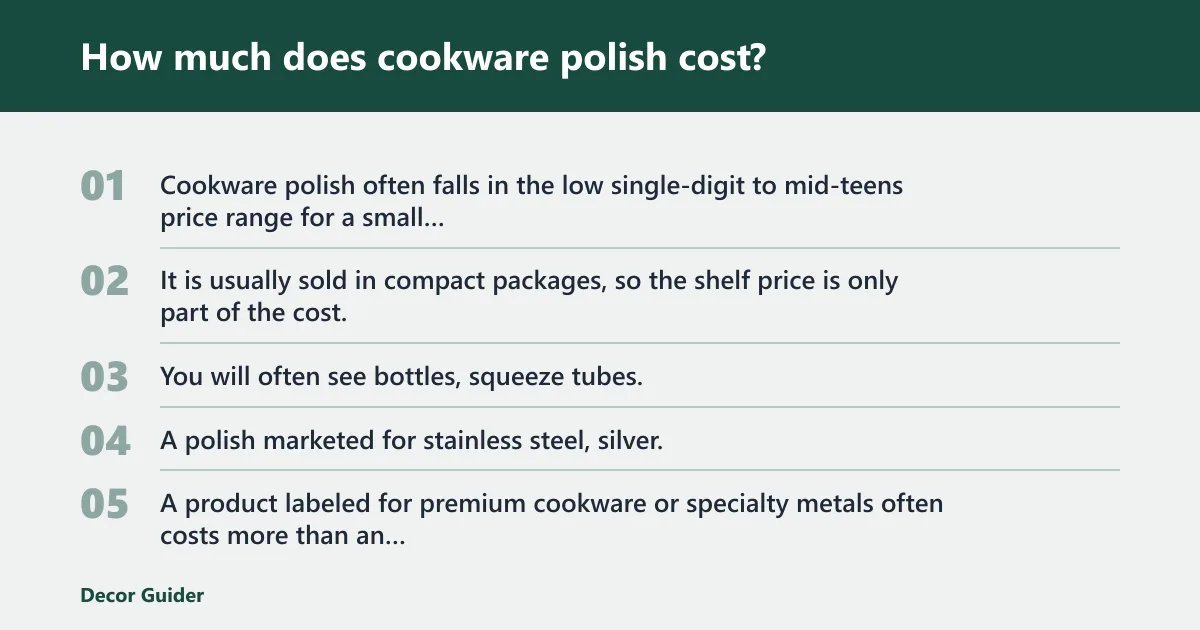


Cookware polish often falls in the low single-digit to mid-teens price range for a small bottle or tube, with some specialty formulas costing more. It is usually sold in compact packages, so the shelf price is only part of the cost; the cost per use depends on how far each application spreads.
Common package sizes are small. You will often see bottles, squeeze tubes, or paste tins made for spot cleaning rather than full-pan restoration, because polish is meant for thin coverage and buffing, not heavy scrubbing.
What changes the price
Formula type matters. A polish marketed for stainless steel, silver, or mixed metal surfaces may cost more than a basic cleaner because it is made to leave a brighter finish and fewer visible streaks.
Brand positioning matters too. A product labeled for premium cookware or specialty metals often costs more than an all-purpose metal cleaner, even when the package size looks similar.
📊 Consumer Reports notes cookware sets usually consist of five to 15 pieces. Source: 9 Best Cookware Sets of 2026, Expert Tested and Reviewed.
What are you paying for with cookware polish?
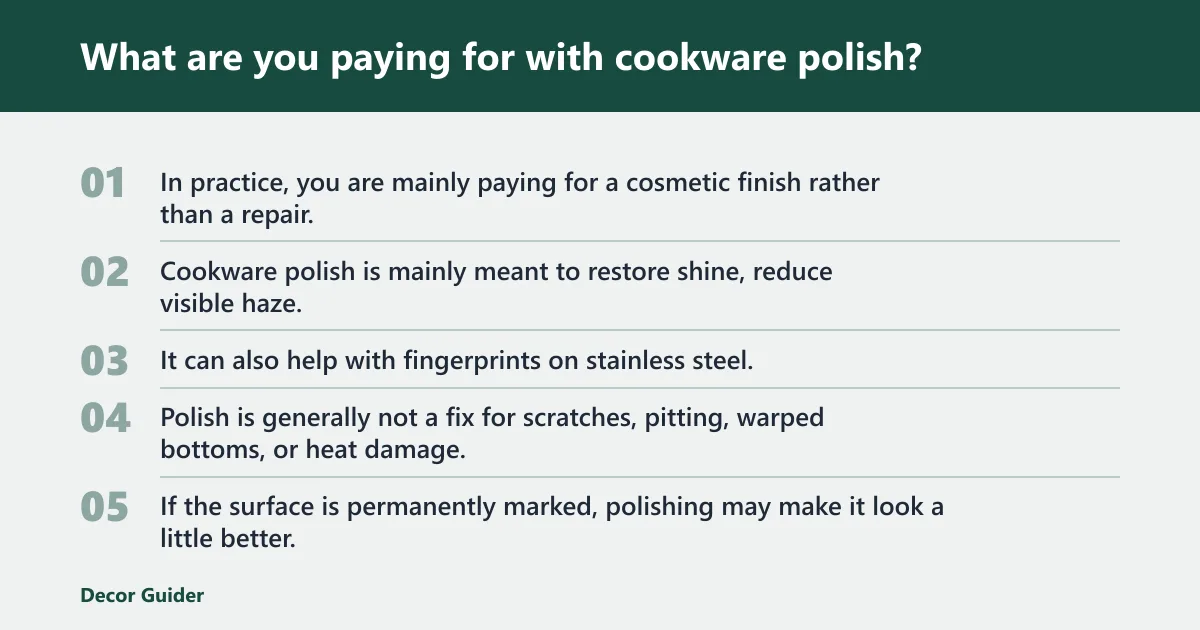
In practice, you are mainly paying for a cosmetic finish rather than a repair. Cookware polish is mainly meant to restore shine, reduce visible haze, and remove light tarnish or surface dullness after normal cleaning. It can also help with fingerprints on stainless steel.
Polish is generally not a fix for scratches, pitting, warped bottoms, or heat damage. If the surface is permanently marked, polishing may make it look a little better, but it will not restore the original finish.
Shine versus stain removal
Shine is the easiest job. A small amount of polish plus a microfiber cloth can remove film, smudges, and light residue that soap leaves behind.
Stain removal is less predictable. Brown heat tint, mineral film, and cooked-on discoloration may need a cleaner first, and even then the result can be partial rather than perfect.
Tarnish removal on stainless steel
Stainless steel is the most common target for cookware polish because it shows fingerprints and can look cloudy after repeated heating. Polish can improve the look of lightly tarnished stainless, especially on exterior surfaces and lids.
It does not fix deeper wear. If the pan has scratches, gouges, or pitting, polish can smooth the appearance only at the surface level.
Food-contact safety after rinsing
Whether cookware polish is food-contact safe after rinsing depends on the label directions. Many products are meant for exterior metal surfaces, and some require a thorough rinse before cookware returns to cooking duty.
That means you should read the package carefully. If the label does not clearly allow food-contact use after rinsing, keep the product on the outside of the pan only.
Is cookware polish worth it for stainless steel pans?
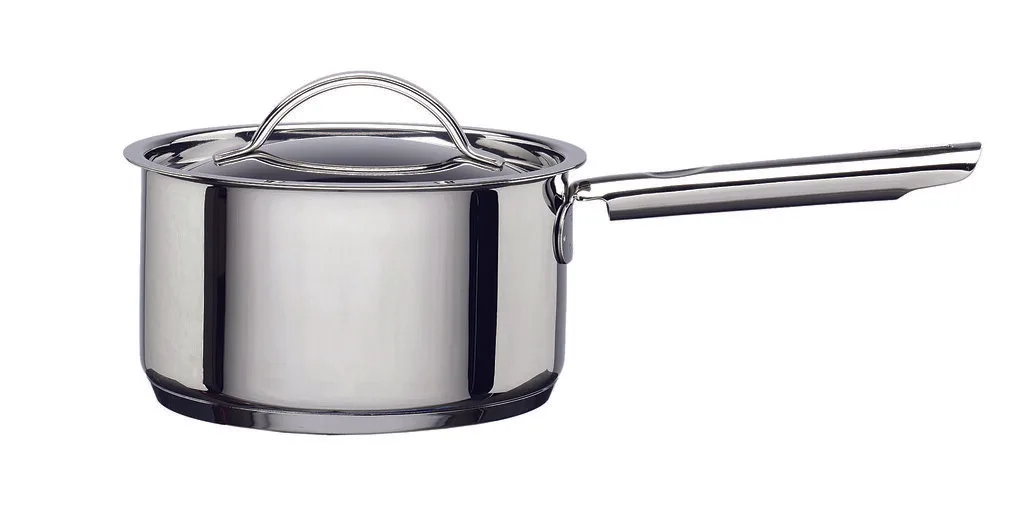
Cookware polish is usually worth it for stainless steel only when the pan has visible haze, fingerprints, or light tarnish that soap has not removed. It is less worthwhile when the issue is cooking residue, heat marks, or old scratches that polish cannot remove.
For many stainless pans, cleaning alone is enough. If the pan looks dull from grease film or water spots, a cleaner and microfiber cloth can solve the problem for less money.
Best-fit uses for stainless steel
Use polish on exterior panels, lids, and other exposed stainless areas when the goal is a cleaner-looking finish for storage or serving. It also makes sense for cookware stored on open shelves, where fingerprints show quickly.
Suppose a 12-inch stainless sauté pan has a cloudy outside and a clean cooking surface. Polish can improve the outside appearance without changing the cooking performance.
Where polish stops helping
Polish stops helping when the problem is structural wear. A browned base, scratched rim, or pitted cooking surface will still look worn after polishing.
A common first-timer mistake is using polish on a pan that only needs soap, hot water, and a dry buff. That adds cost without changing the result much.
Can cookware polish work on aluminum, enamel, and nonstick?
Cookware polish is a poor fit for nonstick, risky on abrasive-sensitive enamel, and only sometimes useful on aluminum. Aluminum oxidation may improve with the right cleaner, but not every polish is made for it. Fit to the material matters more than a brand claim.
Read the label before use. The wrong product can dull a coated finish, leave residue, or damage a delicate surface.
Aluminum oxidation and discoloration
Aluminum can oxidize and darken, especially after repeated heating. Some metal polishes can help with surface discoloration, but many are not the best first choice for cookware because aluminum can react to harsh cleaners.
If the cookware is bare aluminum, a mild cleaner or a baking soda paste is usually the safer first step. If the discoloration is baked-in oxidation, polishing may improve appearance only partially.
Enamel surface care and scratch risk
Enamel cookware usually needs surface-safe cleaning, not polishing. Abrasive or metal-heavy products can dull the glaze or leave fine marks on exterior enamel finishes.
If the enamel has stains, start with a nonabrasive cleaner and a soft cloth. Save polish for products that explicitly list enamel compatibility, and even then use it cautiously.
Why nonstick should stay off the list
Nonstick cookware is not a polish target. The coating is made for food release, not buffing, and abrasive products can shorten its life quickly.
If a nonstick pan looks dull, the issue is often residue or wear rather than a need for polish. Soap, a soft sponge, and complete drying are the safer route.
Cost-per-use: polish versus cheaper alternatives
The real cost of cookware polish is better understood by how much you use per shine session than by the sticker price alone. A small bottle can be economical if you use only a few drops on stainless steel, but it becomes expensive if you use it for jobs that a microfiber cloth, vinegar, or a cleaner can handle.
| Product or method | Typical package price | Estimated applications | Cost per shine session | Best material fit |
|---|---|---|---|---|
| Cookware polish | $5 to $15 | 10 to 25 | About $0.20 to $1.50 | Stainless steel, some metal exteriors |
| Microfiber cloth buffing | $3 to $10 for a cloth pack | 50+ uses | Usually pennies per use | Stainless steel, enamel exteriors, glass lids |
| White vinegar wipe | $2 to $4 for a bottle | 10 to 20 | About $0.10 to $0.40 | Stainless steel, mineral-film cleanup |
| Bar Keeper’s Friend | $4 to $6 | 15 to 30 | About $0.15 to $0.40 | Stainless steel, some enameled surfaces if label allows |
These are practical estimates based on common package sizes and normal spot-use, not lab measurements. The main point is that polish is usually more expensive than a microfiber cloth or vinegar wipe, and can be in the same general range as a dedicated cleaner.
Cheaper alternatives by cookware material
For stainless steel, start with hot soapy water, then a microfiber cloth buff. If haze remains, a vinegar wipe can help with mineral film before you reach for polish.
For enamel, choose a soft cloth and a nonabrasive cleaner. For aluminum, use the mildest product that removes oxidation without scuffing the surface. For nonstick, stop at soap, water, and gentle drying.
How often should you polish cookware?
Polishing should be occasional, not routine. Most cookware only needs polish when exterior dullness, fingerprints, or tarnish remain after normal cleaning, and even then the job should be limited to the affected area.
If you need polish every few washes, the issue is likely maintenance, water spots, or storage, not a lack of polish strength.
Signs you are polishing too often
If the cookware still looks streaky after repeated polishing, or if the finish starts to look hazy rather than bright, the product may be leaving residue. That is a sign to switch back to soap, water, and dry buffing.
Frequent polishing also makes less sense than prevention. Dry the pan after washing, store it where it will not rub against other metal pieces, and clean fingerprints before they set.
Cleaning and drying habits that reduce repeat work
- Wash cookware soon after use with dish soap and a non-scratch sponge.
- Dry it fully with a microfiber cloth to limit water spots.
- Store pans with separators or hanging space so rims do not scrape.
- Wipe stainless steel exteriors after handling to reduce fingerprints.
- Use polish only when normal cleaning leaves visible dullness behind.
What should you buy instead of cookware polish?
For most homes, a microfiber cloth is the first purchase to make, not polish. It buffs stainless steel clean, removes water marks, and costs far less per use. Bar Keeper’s Friend is the better buy when you need a cleaner for stains or cooked-on residue, not a shine product.
Choose by material. If the pan is stainless steel and the issue is film, start with microfiber and a mild cleaner. If it is enamel or nonstick, stay with surface-safe cleaning rather than polishing products.
Microfiber cloth for final buffing
A microfiber cloth is the cheapest finishing tool for cookware maintenance. It works well after washing because it lifts water spots and smears without adding chemicals.
For shiny stainless steel, this is often enough. It does not restore deep tarnish, but it can make a pan look cleaner at almost no ongoing cost.
Bar Keeper’s Friend as a cleaner, not a polish
Bar Keeper’s Friend is an abrasive cleaner, not a polish. That distinction matters. It can remove stains and discoloration that polish may only gloss over, especially on stainless steel.
Use it as the label directs and do not treat it like a finishing product. The goal is cleaning, then a dry buff with a microfiber cloth.
The cheapest option by cookware material
For stainless steel, the cheapest useful route is soap, warm water, and microfiber buffing. If mineral film remains, add a vinegar wipe before buying polish.
For aluminum, stay with mild cleaning unless the discoloration is severe. For enamel, avoid abrasive products unless the label clearly allows them. For nonstick, skip polish entirely.
How much does cookware polish cost?
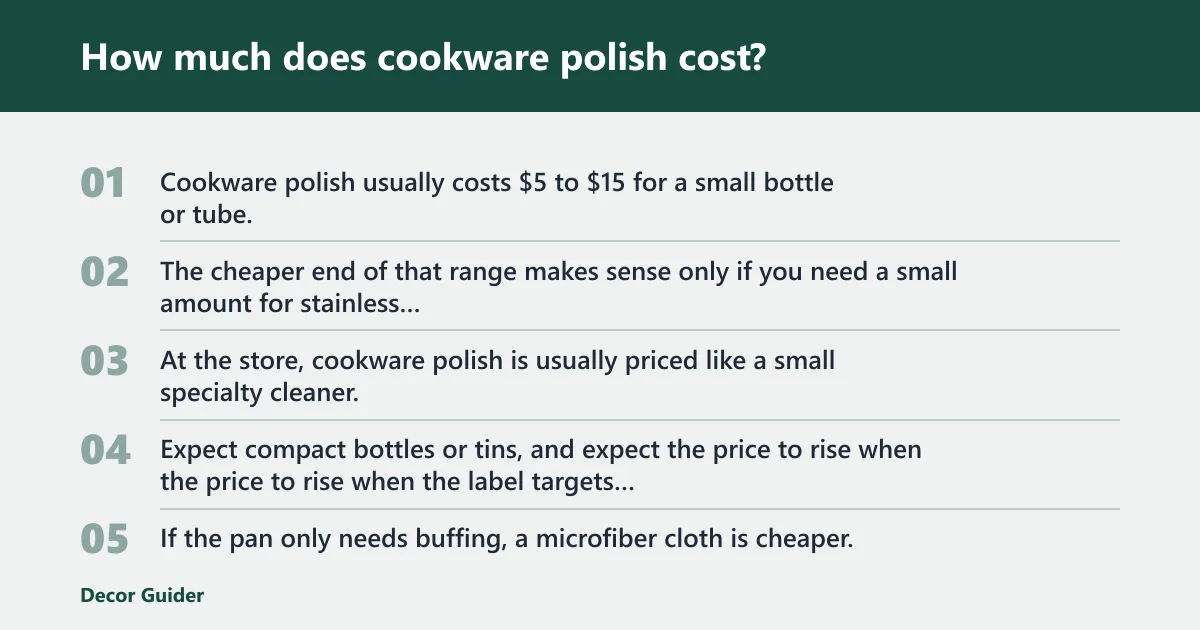
Cookware polish usually costs $5 to $15 for a small bottle or tube, with specialty formulas sometimes reaching $20 or more. The cheaper end of that range makes sense only if you need a small amount for stainless steel shine or light tarnish, not routine cleaning.
What is the price of cookware polish at the store?
At the store, cookware polish is usually priced like a small specialty cleaner, not a major kitchen item. Expect compact bottles or tins, and expect the price to rise when the label targets stainless steel or premium metal finishes. If the pan only needs buffing, a microfiber cloth is cheaper.
Is cookware polish worth it for stainless steel pans?
It can be worth it for stainless steel pans when fingerprints, haze, or light tarnish remain after soap and drying. It is not worth it for scratches, pitting, or heat tint that will not polish away. In those cases, a cleaner or simple buff is the better spend.
How often should you polish cookware?
Polish cookware only when the finish still looks dull after normal washing and drying. For many pans, that means occasional use rather than a regular habit. If you keep reaching for polish, the better fix is usually faster drying, gentler storage, and a microfiber wipe after washing.
What’s the cheapest way to make cookware look shiny again?
The cheapest route is soap, water, and a microfiber cloth for final buffing. For stainless steel, a vinegar wipe can remove mineral film before you dry it. That combination often solves the problem without buying polish, and it works especially well when the cookware is clean but looks cloudy.
Can cookware polish remove stains and discoloration?
Sometimes, but only light surface marks. Polish can help with haze, fingerprints, and mild tarnish, especially on stainless steel. It usually cannot remove deep heat discoloration, scratches, or pitting. For stains that are baked on, a dedicated cleaner such as Bar Keeper’s Friend is often the more effective first step.
Does cookware polish work on nonstick pans?
No. Nonstick cookware should stay off the polish list because the coating can be scratched or worn down by the wrong product. If a nonstick pan looks dull, wash it gently with soap and a soft sponge, then dry it fully. That protects the coating and avoids residue.
What should I buy instead of cookware polish?
Buy a microfiber cloth first, then a cleaner suited to the material. For stainless steel, Bar Keeper’s Friend or vinegar can handle many jobs that polish cannot. For enamel and nonstick, gentle soap and careful drying are usually enough. That keeps costs down and lowers the risk of finish damage.
Frequently asked questions
How much does cookware polish cost?
Most cookware polish costs $5 to $15 for a small bottle, tube, or tin. Specialty metal polishes can run $20 or more. The bottle price is only part of the decision; the better question is how many shine sessions you actually need and whether a cheaper cleaner would work instead.
What is the price of cookware polish at the store?
Store prices usually track with package size and formula type. A basic metal polish sits in the low-to-mid single digits, while products aimed at stainless steel or silver can cost more. If the pan only needs a final buff, a microfiber cloth is the cheaper purchase.
Is cookware polish worth it for stainless steel pans?
Usually only when stainless steel has fingerprints, haze, or light tarnish that washing did not remove. It is not a fix for scratches, pitting, or discoloration that is baked into the metal. For many pans, a cleaner plus microfiber buffing gives most of the visible improvement.
How often should you polish cookware?
Occasionally, not on a schedule. Polish should be used when normal cleaning leaves the outside looking dull. If you need it every week, focus on drying, storage, and residue removal first. Those habits cut the need for repeat polishing far more than buying a stronger product.
What’s the cheapest way to make cookware look shiny again?
Wash it well, dry it fully, then buff it with a microfiber cloth. For stainless steel, a vinegar wipe can clear mineral film before drying. That approach is low-cost and often enough for pans that are clean but look cloudy after regular use.
Does cookware polish work on nonstick pans?
No, and it should not be used there. Nonstick coatings are more sensitive to abrasion and chemical residue than bare metal surfaces. Stick with soap, a soft sponge, and careful drying. That preserves the coating and avoids turning a cosmetic problem into a wear problem.
Products related to this article
Sponsored / affiliate links. As an Amazon Associate I earn from qualifying purchases. I may earn additional commission from eligible campaigns.