Cast Iron Storage Rack Cost / Price / How Much
Cast iron storage racks commonly fall in the $20 to $90 range; budget tiers may start near $20, sturdier 3- to 6-tier racks often run about $35 to $70, and heavy-duty or wall-mounted designs can reach $100 or more. Buy a rack that is too small or too light and you waste cabinet space, crowd pans, and raise the chance of bent shelves or tipped cookware. This guide breaks down price by tier, capacity, dimensions, and which rack type gives the best value for skillets, lids, griddles, and Dutch ovens.
What drives the price of your rack
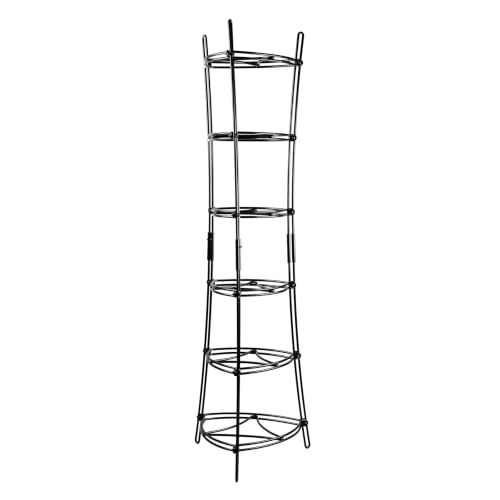

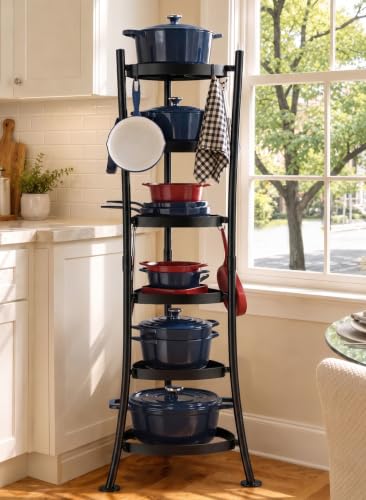
Most buyers land in the middle of the market. Thin, lightweight organizers sit near the low end, while all-steel racks with more tiers, tighter welds, or higher stated capacity move the price up. The main cost drivers are tier count, capacity, finish, orientation flexibility, and whether the rack ships ready to use.
What buyers usually get at each band
At about $20 to $35, you usually get a basic pan organizer with a modest tier count and enough support for everyday skillets, lids, and lighter cookware. In the $35 to $70 band, the rack is more likely to be all-steel, hold heavier pieces, and fit both countertop and cabinet use. Above $70, you are often paying for higher capacity, thicker metal, or a layout meant for heavier Dutch ovens.
Price alone does not tell you much. A $25 rack that fits five skillets upright may be a stronger buy than a $45 rack with more finish detail but less usable capacity. Compare what each tier can actually support, and how much cabinet or counter space each slot consumes.
Cast iron storage rack value table
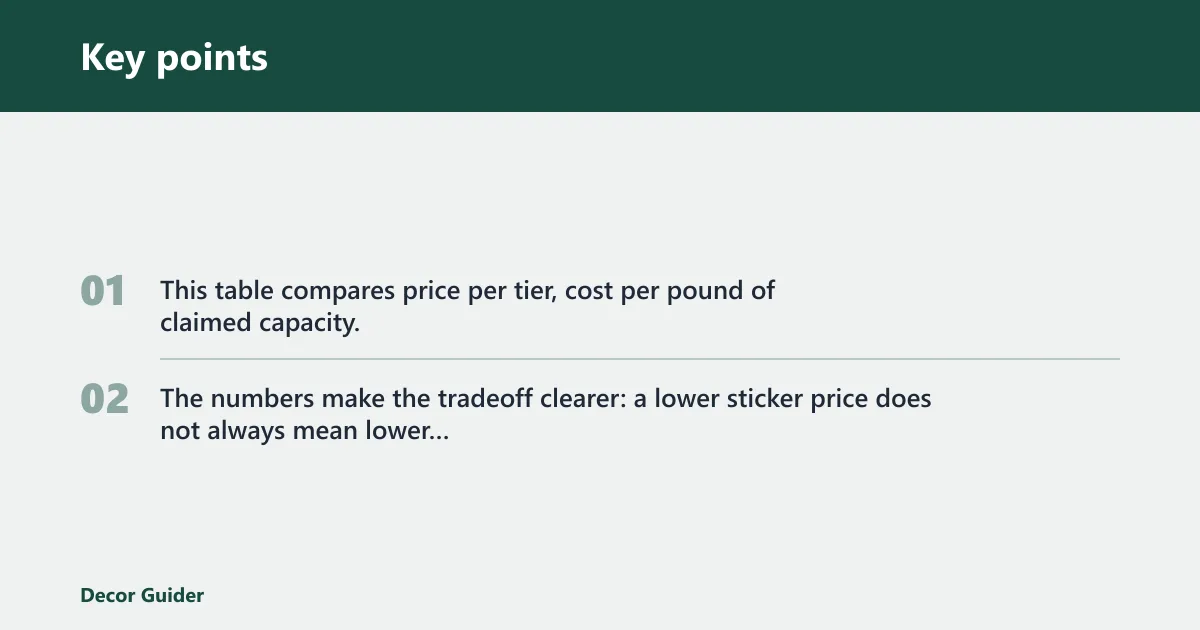
This table compares price per tier, cost per pound of claimed capacity, and how much storage you get for the footprint. The numbers make the tradeoff clearer: a lower sticker price does not always mean lower cost per slot, and a compact rack can still be a poor value if it cannot hold heavier pans safely.
| Model | Typical price | Tiers | Claimed capacity | Dimensions | Orientation | Cost per tier | Cost per pound | Footprint-to-capacity read | Verdict |
|---|---|---|---|---|---|---|---|---|---|
| Lodge cookware storage rack | $59.95 | 5 | Not publicly stated | 11.07 in x 14.32 in x 8.43 in | Vertical or horizontal | $11.99 | Not available | Compact footprint, strong cabinet fit | Pay more if you want a branded all-steel rack with no assembly and a tidy fit. |
| Cuisinel pan organizer | $24.99 | 5 | 70 lb | About 12.2 in wide; compact organizer format | Vertical or horizontal | $5.00 | $0.36 | Low entry cost, solid slot value | Save money here if you want basic heavy cookware storage without paying for a premium finish. |
| Cuisinel silicone-coated organizer | $29.99 | 5 | 50 lb | About 12.2 in wide; silicone-coated contact points | Vertical or horizontal | $6.00 | $0.60 | Costs more per pound than the standard version | Worth it if you want extra scratch protection, not if you are chasing raw capacity. |
| ORDORA heavy-duty pan organizer | $34.99 | 8 | 120 lb | About 12 in x 8.5 in x 12 in | Vertical | $4.37 | $0.29 | Strong slot count for the price | Buy this kind of rack when you need more tiers for a bigger cookware set. |
| Toplife 5-tier pan organizer | $21.99 | 5 | 50 lb | About 11.5 in x 9.5 in x 10.5 in | Vertical | $4.40 | $0.44 | Low-cost slot count, modest capacity | Good for lighter skillet sets and lids when you want the lowest entry price. |
| Heavy-duty steel 6-tier organizer | $49.99 | 6 | 100 lb | About 13 in x 10 in x 11 in | Vertical | $8.33 | $0.50 | Middle-ground option for mixed cookware | Pay extra here if you store several cast iron pieces and do not want to overfill each slot. |
| Heavy-duty wall-mounted organizer | $89.99 | 6 | 120 lb | Wall-mounted; footprint depends on wall layout | Horizontal or wall-fixed layout | $15.00 | $0.75 | High price, but frees shelf space | Only pay for this when cabinet space matters more than cost per tier. |
How much capacity do you need?
For a few skillets and lids, a 50-pound organizer is often enough. If you store a Dutch oven, griddle, and several cast iron pans together, look higher, because the load can climb fast. For mixed heavy cookware, a 70- to 120-pound rating gives more margin and reduces the chance of sagging or wobble.
Skillets and lids
Cast iron skillets are the everyday load for these racks, and they create the most scratch risk if they sit edge to edge without separation. A 5-tier layout usually handles a small skillet set well, especially if the slots keep the pieces upright and apart. Lids are lighter, but they still benefit from a stable divider so they do not tip when you pull one pan out.
Suppose your cabinet holds three skillets, two lids, and a griddle. A 5-tier organizer can work if each item has its own slot and the rack sits level. If the slots are too narrow, the pans scrape together and the whole stack gets awkward to lift.
Griddles and Dutch ovens
Griddles and Dutch ovens push the rack harder because they are bulkier and heavier. Dutch ovens usually belong in lower or wider slots, where the rack can take more of the load without top-heaviness. A 70-pound rack is safer than a 50-pound one if you plan to store multiple deep pieces.
A common first-timer mistake is assuming every “pan organizer” handles the same weight. A compact 5-tier rack may be fine for lids and skillets, then feel unstable once a Dutch oven gets added on top. Keep the load balanced and low when the cookware is heavy.
Is vertical or horizontal storage better?
Vertical storage is usually the better value when you want to save cabinet space and separate heavy pans. Horizontal storage can work on a counter or in a wider cabinet, but it uses more width. The right choice depends on your cabinet height, shelf depth, and how often you reach for the cookware.
Countertop placement
On a counter, vertical racks keep the footprint smaller and make each pan easier to grab. That matters if you want open access without stacking pans on one another. A horizontal setup can look cleaner on a wide counter, but it usually consumes more space and can be less efficient for a crowded kitchen.
Cabinet placement
Inside a cabinet, the rack has to fit under the shelf above it. That makes height just as important as width. If the rack is too tall, you lose the top shelf clearance and the storage idea falls apart. Measure the inside cabinet height before you buy, especially for 8-tier or wall-style organizers.
What rack features are worth paying for?
All-steel construction, no-assembly setup, and non-slip contact points are the features that most often justify a higher price. They matter because cast iron is unforgiving: a rack that flexes, slides, or comes loose can damage cookware and waste the space you were trying to save.
All-steel construction
All-steel racks are the safer choice for heavy cookware because they are less likely to flex under repeated loading. That does not mean every steel rack is equal, but it does give you a sturdier starting point than lighter mixed-material organizers. For cast iron, construction quality matters as much as tier count.
No-assembly convenience
No-assembly racks are useful when you want to start using the organizer right away and reduce the chance of a loose joint or crooked frame. Lodge’s cookware storage rack requires no assembly, which is a practical advantage if you want a simple, ready-to-place rack for a cabinet or counter.
Silicone-coated or non-slip contact points
Silicone-coated racks can be worth the extra cost if your cookware finish is a concern or if you want more grip at the contact points. They do not automatically mean more capacity. In fact, a silicone-coated Cuisinel rack is described as holding up to 50 lbs, while a standard Cuisinel organizer is listed at 70 pounds. The coating may help with contact and sliding, but it can come with a lower load rating.
Lodge versus Amazon-style pan organizers
Lodge’s rack costs more than many generic pan organizers, but it gives you a branded all-steel build, a 5-tier design, and the ability to use it vertically or horizontally. Amazon-style pan organizers usually compete on lower price, higher stated capacity, or more tiers. The better buy depends on whether you want compact fit, heavier load support, or the lowest cost per slot.
Lodge cookware storage rack details
The Lodge rack costs $59.95, has a 5-tier design, uses all-steel construction, and can be used vertically or horizontally. Lodge also lists no assembly required, a matte black finish, and dimensions of 11.07 inches x 14.32 inches x 8.43 inches. That makes it a tidy fit for a cabinet or counter where space is tight and a compact footprint matters.
Representative heavy-duty pan organizer features
Amazon-style organizers usually compete on price per tier and capacity. A 5-tier model like Toplife may come in cheaper, while a higher-capacity design like ORDORA can reach 120 lb and offer 8 tiers. Those numbers matter more than the listing title. If you store several cast iron pieces, the extra tiers can be worth paying for.
Where the cheaper option makes sense
Choose the cheaper rack when you mainly need a few dividers for skillets and lids, or when cabinet space is limited and the rack will not carry a deep stack of heavy pieces. Pay more when you need stronger capacity, a smaller footprint for the amount of storage, or a ready-to-use steel frame that should not flex under load.
What size fits your kitchen?
Small cabinets, apartments, and RVs usually do better with compact vertical racks that keep cast iron separated without eating shelf space. Larger kitchens can justify taller or heavier-duty organizers, especially when the cookware collection includes multiple skillets, griddles, and at least one Dutch oven. Fit matters as much as price.
Small cabinets and apartments
In a small cabinet, a compact 5-tier rack is often the sweet spot. It saves more space than stacked cookware and keeps the pans easy to reach. Check the cabinet height before buying, because even a good rack loses value if the top tier hits the shelf above it.
RVs and compact storage
RVs need extra attention to wobble risk. The rack should sit low, stay stable during travel, and keep heavier items near the bottom. A compact steel organizer with a modest footprint is usually safer than a tall, crowded rack, because movement can shift heavy cookware and stress the frame.
Large cookware collections
If you own several cast iron pans, a griddle, and a Dutch oven, the better-value rack is usually the one with the highest usable capacity, not the lowest sticker price. An 8-tier organizer can make sense here because each item gets more separation. That separation protects finishes and makes the set easier to lift out one piece at a time.
Frequently asked questions
How much does a cast iron storage rack cost?
Most cast iron storage racks cost $20 to $90, with basic organizers near the low end and sturdier steel or higher-capacity models in the middle. Heavy-duty or wall-mounted designs can reach $100 or more. The price moves up with tier count, capacity, finish, and whether the rack needs assembly.
What is the typical price range for a cast iron pan rack?
A typical cast iron pan rack falls in the $35 to $70 range for sturdier 3- to 6-tier designs. Cheaper racks can work for lighter loads, but they often give you less capacity per slot. Higher prices make more sense when you need all-steel construction or stronger load ratings.
Is a cast iron rack better vertically or horizontally?
Vertical storage is usually more efficient for cabinets and small counters because it uses less width and keeps pans separated. Horizontal storage can work when you have extra shelf depth or want a lower profile. The better choice depends on your cabinet height and how much cookware you want to access quickly.
How much weight should a cast iron storage rack hold?
For a few skillets or lids, 50 pounds may be enough. If you plan to store a griddle, Dutch oven, and several heavy pans together, look for 70 to 120 pounds. Higher capacity matters because overload can cause wobble, bent dividers, or a frame that tips when you pull one pan out.
Do I need a no-assembly rack for heavy cast iron?
No-assembly is not mandatory, but it is a strong convenience feature for heavy cast iron. A ready-to-use steel rack removes setup mistakes and gets you to a stable layout faster. If a rack arrives preassembled and still offers the right capacity, that can be worth paying for.
What’s the difference between Lodge’s rack and Amazon-style pan organizers?
Lodge’s rack costs $59.95, has a 5-tier design, all-steel construction, and no assembly required, with vertical or horizontal use. Amazon-style organizers usually compete on lower price, more tiers, or higher stated capacity. The cheaper option is better for slot count; Lodge is stronger on compact fit and ready-to-use convenience.
Products related to this article
Sponsored / affiliate links. As an Amazon Associate I earn from qualifying purchases. I may earn additional commission from eligible campaigns.