Best Scrubbers for Cast Iron Pans: We Compared
Choose a scrubber by the pan’s condition: use a soft chainmail or non-scratch pad for routine care, a nylon or stiff brush for stuck-on food, a narrow brush for grill grooves, and steel wool only for rust removal. Wrong tools can strip seasoning or leave food sticking. This guide compares scrubbers by cleaning goal and seasoning protection.
Quick comparison
| Product | Badge | Best for | Price | ||
|---|---|---|---|---|---|
 |
Scotch-Brite Heavy Duty Scouring Pad, 8 Pack | DishScotch-Brite | Our pick | 8 packs · Heavy Duty · Scouring Pads | $10.40
Price as of 20 Oct 2026
|
View |
 |
Full Circle Skillet Strong Cast Iron Bamboo Dish Brush andFull Circle | Pair with it | Bamboo Handle · Recycled Plastic · Dish Brush | $9.99
Price as of 20 Oct 2026
|
View |
 |
TOPULORS 316L Stainless Steel Cast Iron Scrubber ChaimmailTOPULORS | Also great | 7 inch · Stainless Steel · Chainmail Link | $6.99
Price as of 20 Oct 2026
|
View |
Use this as a quick screen, then match the tool to the residue on the pan. A pan with light film needs a very different scrubber from a skillet with orange rust or a grill pan packed with ridges.
How we chose
This comparison weighs four points: how much abrasion each tool adds, how well it handles stuck-on residue, whether it fits corners or grooves, and how much care it needs after washing. Seasoning safety matters most for routine cleanup.
Taste of Home says its test kitchen found three favorite scrubbers for cast iron, while The Kitchn tested scrubbers on refried beans, scrambled egg, and frozen dumplings. That matters because cast iron cleanup is not one problem. It is several.
Saveur recommends a pan scraper or scrub brush for crusty food on cast iron, and Saveur says steel wool or a metal scrubber should not be used for routine cleaning. That split drives the buying choice.
Chainmail scrubber: best for stuck-on food
- Removes stuck-on food without stripping seasoning
- Multifunctional use for skillets and glassware
- Ultra-hygienic and dishwasher safe for storage
Choose chainmail if you want a strong scrubber that still works with seasoned cast iron. A stainless steel chainmail scrubber fits stuck-on residue, and light pressure helps it clean without stripping the seasoning layer on a well-kept pan.
Based on the manufacturer’s specs and published product details, this style is stainless steel, and some models are dishwasher safe. Bon Appétit says The Ringer is made of stainless steel chain mail, and says it can be used on griddles, Dutch ovens, and pizza stones.
The honest drawback is that chainmail is not the gentlest option for fragile seasoning or very new seasoning layers. If you press too hard, or keep scrubbing long after the residue is gone, you can wear the surface faster than a sponge or brush would.
Why chainmail works on seasoned cast iron
Chainmail moves over the surface with many small contact points instead of one harsh edge. That makes it useful for cooked-on bits that resist a sponge, but it still leaves enough seasoning in place when used with light pressure and hot water cleaning.
When to use light pressure
Use light pressure after the pan has been rinsed with hot water and the loose residue has softened. A common first-timer mistake is pressing harder than needed on a 10-inch skillet just because one spot still feels tacky. More force is rarely the answer.
Dishwasher-safe models and durability notes
Some chainmail models are dishwasher safe, but that is a model-by-model detail, not a rule for all chainmail. Metal versions also tend to last a long time, which makes them a lower-maintenance choice than brushes or sponges that can wear out sooner.
Scrub sponge: best for daily cleanup
- Tackles tough, baked-on messes effectively
- Explicitly designed for uncoated cast iron pans
- Made from durable, long-lasting materials
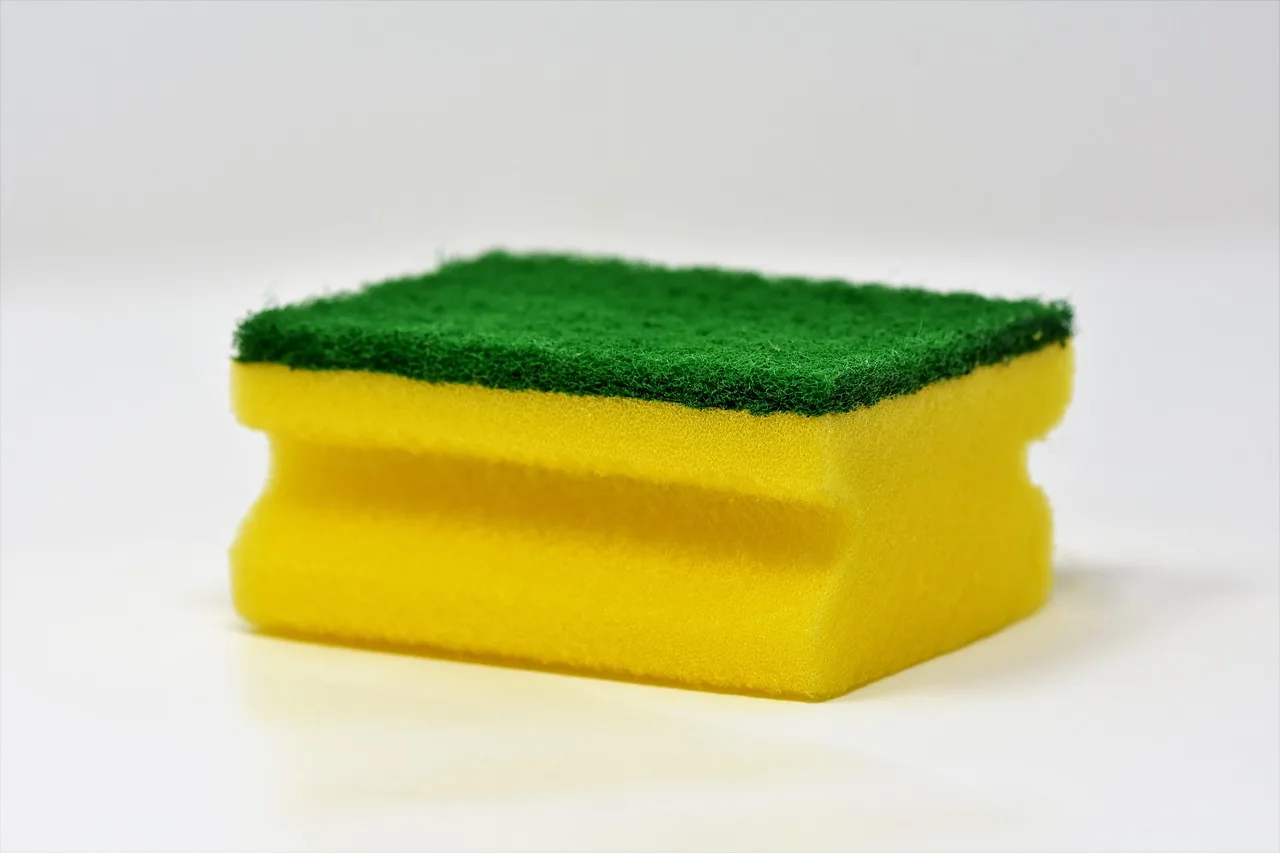
Pick a scrub sponge for everyday cleanup when the pan has light stuck-on food and you want the soft side to do most of the work. Scrub sponges are comfortable to hold, often dishwasher safe, and the abrasive side handles residue that does not lift with hot water alone.
Scrub Mommy softens with hot water and becomes abrasive with cold water, which shows how temperature can change how a sponge behaves. That kind of flexibility is useful when you want to protect seasoning during routine washing rather than remove heavy carbon buildup.
The tradeoff is simple: a sponge is not the answer for rust or thick crust. It is the easy option for daily cleanup, not a deep-strip tool.
Why the soft side matters after hot water cleaning
Hot water cleaning is the baseline for cast iron because residue releases more easily before it hardens. After that rinse, the soft side of a scrub sponge can clear the last film without grinding away the oil layer you want to keep.
When the abrasive side is enough
The abrasive side is enough for leftover egg, thin browned bits, or a light film from sautéed food. It is less suitable for burnt sugar, thick carbon, or rust, where a pan scraper, brush, or chainmail will do a better job.
What dishwasher-safe really means
Dishwasher-safe on a sponge usually means the tool can tolerate machine washing. It does not mean the sponge is the right tool for every cast iron mess, and it does not change the need to dry the pan immediately after washing.
Cast iron skillet brush: best for corners and grooves
- Scrubs dishes and cast iron with ease
- Crafted with eco-friendly bamboo and recycled plastic
- Durable and sustainable alternative to sponges
Choose a cast iron skillet brush when grip and control matter more than aggressive abrasion. A handle gives you control, stiff bristles reach corners and grooves, and the shape makes it easier to clean around rivets, edges, and ridged cookware.
The OXO brush includes a plastic scraper at the end, which shows how many brush designs pair bristles with a small scraping edge. That combination is handy for stuck bits that collect where a sponge has trouble reaching.
The downside is durability. A brush usually wears out faster than chainmail, and it is less suited to heavy stripping work. For daily care, though, it is one of the most practical tools.
Do you need a handle on a cast iron scrubber?
A handle helps when you are cleaning a hot skillet, a deep grill pan, or a pan with ridges that catch debris. It keeps your hand away from the hottest part of the cookware and gives you better control when you are working into corners.
Why it helps on grill pans
Grill pans and ridged cast iron trap food in narrow channels. A brush can move along those grooves better than a flat pad, and the bristles reach into the low points where residue collects after searing or charring.
Where it falls short versus chainmail
A brush is good for access, but it is not as effective on stubborn residue that has bonded tightly to the pan. Chainmail is usually stronger for that kind of stuck-on patch, while a brush is better for controlled daily cleanup.
Can you use stainless steel scrubbers on cast iron?
Yes, but mainly for heavy-duty stripping or rust removal, not for routine seasoning-safe cleaning. Stainless steel scrubbers are very abrasive. Used carelessly, they can remove seasoning, which is why they belong in recovery work rather than everyday washing.
Scotch-Brite Stainless Steel Scrubbers were chosen for re-seasoning and rust removal, which matches their more aggressive role. Saveur also says steel wool or a metal scrubber should not be used for routine cleaning, so this is a special-purpose tool, not a default one.
When stainless steel is appropriate
Use stainless steel when the pan has rust, thick carbon, or a surface that needs a reset before a fresh seasoning cycle. It is the right choice when gentle tools stall and you are deliberately removing damaged layers.
Why overuse can strip seasoning
Seasoning is the protective oil layer on cast iron. Too much abrasion can wear it down faster than normal cooking and cleaning do, which can leave the surface dull, dry, and more likely to stick.
Best fit for rust removal and reset work
Stainless steel scrubbers fit a recovery path: remove rust, rinse away debris, dry fully, then re-season. That is a deeper workflow than daily cleanup, and it is the only time this level of abrasion makes sense.
Stainless steel scrubber: best for rust removal
Pick a stainless steel scrubber for rust removal or heavy-duty stripping when the pan no longer has usable seasoning. It is inexpensive, aggressive, and able to cut through buildup that softer tools will not move, which is why it belongs in recovery kits.
The downside is equally clear: it can remove seasoning if overused. That means you should plan to re-season after use, and you should avoid it for normal post-dinner cleanup.
Think of it as a reset tool. It solves a problem that routine scrubbers are not meant to solve.
Aggressiveness level and seasoning risk
This is the most abrasive option in this guide. The risk is not theoretical. If you use it like a daily scrubber, it can erase the protective surface you are trying to preserve.
How to pair it with re-seasoning
After rust removal, wash away the loosened debris, dry the pan immediately, and move into a fresh seasoning cycle. That cycle rebuilds the oil layer that the aggressive scrubber removed.
Why it is usually not the daily option
For routine care, a chainmail scrubber, brush, or scrub sponge is easier on the pan. Stainless steel is for situations where the pan needs more than cleanup and the seasoning is already compromised.
Cast iron scrubber matrix
| Pan condition | Safest tool | Aggressiveness level | Seasoning risk | Best use case | When to re-season |
|---|---|---|---|---|---|
| Daily cleanup | Scrub sponge or soft chainmail | Low | Low if pressure stays light | Hot water cleaning after normal cooking | Not usually needed |
| Stubborn stuck-on food | Chainmail scrubber | Medium | Moderate if pressed hard | Lift browned residue before it hardens further | Only if the surface looks worn or patchy |
| Grill pan grooves | Cast iron skillet brush | Low to medium | Low to moderate | Reach into ridges and corners | Not usually needed |
| Rust or reset | Stainless steel scrubber | High | High | Remove rust and damaged buildup before re-seasoning | Immediately after rust removal |
Daily cleanup scenario
Suppose a 10-inch skillet has a thin film of cooked oil and a few stuck onion bits after dinner. A scrub sponge with hot water is enough, and a chainmail scrubber is the next step only if the residue still hangs on.
Stubborn stuck-on food scenario
Picture a pan with one dark patch from pan-fried potatoes that will not lift with a sponge. Chainmail is the safest stronger option because it removes residue without pushing you straight into rust recovery territory.
Grill pan grooves scenario
Say your ridged grill pan has bits trapped in each channel after searing vegetables. A handled brush is the better choice because the bristles and grip give you control where a flat scrubber cannot reach cleanly.
Rust and reset scenario
A common first-timer mistake is scrubbing a cast iron pan with a metal pad after a simmered sauce leaves a sticky film. If you see orange patches, move to a stainless steel scrubber, then dry the pan fully and re-season it. That sequence matters more than scrubbing hard for a longer time.
Which one should you buy?
If you want one tool for most cast iron cleanup, start with chainmail. It is the strongest all-around option for stuck-on residue while still being suitable for seasoned pans when used with light pressure.
If your pans are mostly used for eggs, pancakes, and quick sautés, a scrub sponge is enough for daily cleaning and is the easiest on seasoning. If you cook on grill pans or pans with grooves, choose a brush with a handle.
If you are buying for restoration work, choose stainless steel and plan to re-season afterward. Do not buy that level of abrasion for normal maintenance. It is more tool than most cooks need.
For budget shoppers, the cheapest option is often a scrub sponge or a simple brush. For cooks who want one tool that can handle more residue without going full strip, chainmail is the practical middle ground. The Kitchn found a tie between chainmail and a brush for cast iron cleaning, while Taste of Home says its test kitchen found three favorite scrubbers for cast iron.
Frequently asked questions
What kind of scrubber should I use on cast iron?
Use the least aggressive scrubber that removes the residue in front of you. For routine care, that is usually a scrub sponge or soft chainmail. For grooves, use a brush. For rust, move to stainless steel and expect to re-season afterward.
Is chainmail safe for cast iron pans?
Chainmail is generally safe for seasoned cast iron when you use light pressure. It works well on stuck-on residue and some models are dishwasher safe, but it is still stronger than a sponge, so fragile seasoning deserves a gentler touch.
What scrubber removes stuck-on food without stripping seasoning?
Chainmail is the strongest choice for stuck-on food while still being usable on seasoned cast iron. A brush also works well, especially in corners and grooves. If the food is only lightly stuck, a scrub sponge is often enough.
Which scrubber is best for a cast iron skillet with rust?
A stainless steel scrubber is the right tool for rust removal and reset work. It is aggressive enough to clear damaged areas, but it should be followed by drying and a fresh seasoning cycle because the old protective layer may be partly or fully removed.
Can I put a cast iron scrubber in the dishwasher?
Some models can go in the dishwasher, especially certain chainmail scrubbers and some sponge-style tools. That said, dishwasher-safe is not universal. Check the specific model, and remember that cast iron itself should never go in the dishwasher.
What should I use for grill pans and ridged cast iron?
A handled cast iron brush is usually the best fit because the bristles reach into grooves and the handle helps you control pressure. If residue is heavy, a chainmail scrubber can help first, then the brush can finish the corners.
How do I choose between a sponge, brush, and chainmail scrubber?
Choose by residue and shape. A sponge is best for daily cleanup, a brush is best for grooves and edges, and chainmail is best for stubborn stuck-on food. If rust is the problem, none of those is strong enough to replace stainless steel.
What scrubber is best for daily cast iron cleaning versus deep cleaning?
For daily cleaning, use a scrub sponge or a brush if the pan has grooves. For deep cleaning, chainmail handles tougher residue without going as far as a full strip. For rust or major buildup, stainless steel is the recovery tool.
What kind of scrubber to use on cast iron
Use a soft chainmail or non-scratch pad for routine care, a brush for stuck-on food, a narrow brush for grill grooves, and stainless steel only for rust or heavy stripping. The right choice depends on the residue, not on the pan material alone.
Can you use stainless steel scrubbers on cast iron: yes?
Yes, but only for rust removal or heavy-duty reset work. Stainless steel is too abrasive for routine seasoning-safe cleaning and can strip the protective layer if you use it too often. Afterward, dry the pan and rebuild the seasoning.
Products related to this article
Sponsored / affiliate links. As an Amazon Associate I earn from qualifying purchases. I may earn additional commission from eligible campaigns.