What Is an Oven Safe Skillet: The Proven, Essential Answer
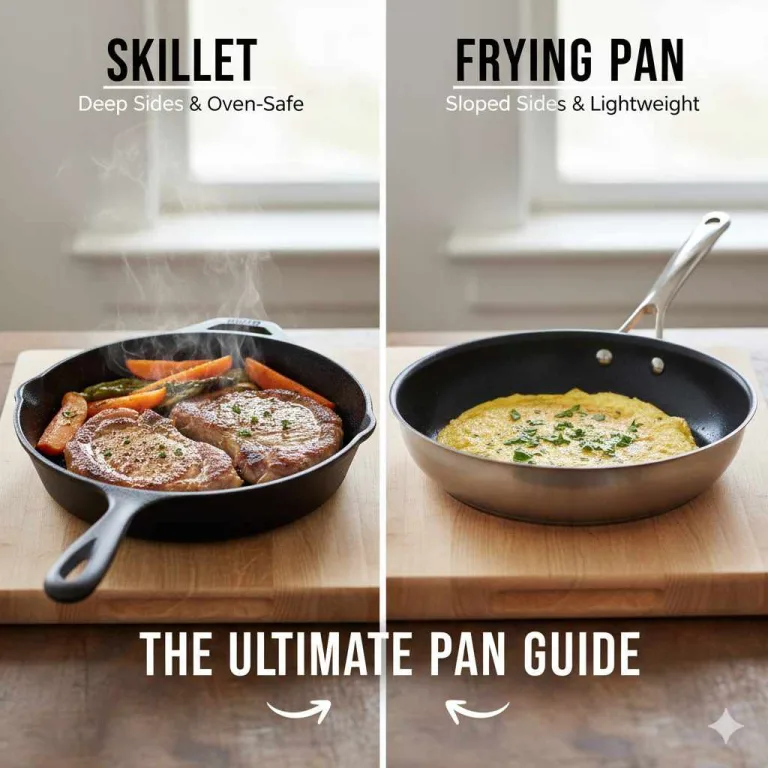
An oven-safe skillet is a cooking pan constructed entirely from heat-resistant materials, including the handle, allowing it to transition from the stovetop directly into the oven. Materials like cast iron, stainless steel, and carbon steel are typically oven-safe, while skillets with plastic or wooden handles are not, as they can melt, burn, or release harmful fumes.

Blue Diamond
Blue Diamond 5QT PFAS-Free Ceramic Nonstick Sauté…
- DIAMOND-TOUGH EXCELLENCE: Metal utensil safe surface with diamond-infused ceramic nonstick - 5x harder and 10x longer lasting than…
- SUPERIOR HEAT MASTERY: Diamonds are 4x more conductive than copper, ensuring faster heating and easier cleanup. Efficiency meets c…
- HEALTHY TOXIN-FREE COOKING: Toxin-Free coating - free of PFAS, PFOA, lead, and cadmium. Cook with confidence and peace of mind!
As an Amazon Associate I earn from qualifying purchases.
Have you ever followed a recipe that tells you to sear a steak on the stove and then finish it in the oven? It sounds simple, until you stare at your skillet and a wave of uncertainty hits. Will the handle melt? Will the pan get damaged? It’s a common kitchen fear, and the last thing you want is a melted handle or a ruined dinner.
You are not alone in this confusion. Many home cooks feel unsure about which cookware can handle oven heat. But don’t worry, figuring this out is much easier than you think. There are simple, clear signs to look for. In this guide, I’ll walk you through everything you need to know, step by step. We’ll cover how to identify an oven-safe skillet, which materials are best, and what to absolutely avoid. Let’s get you cooking with confidence.
What Exactly Makes a Skillet “Oven-Safe”?
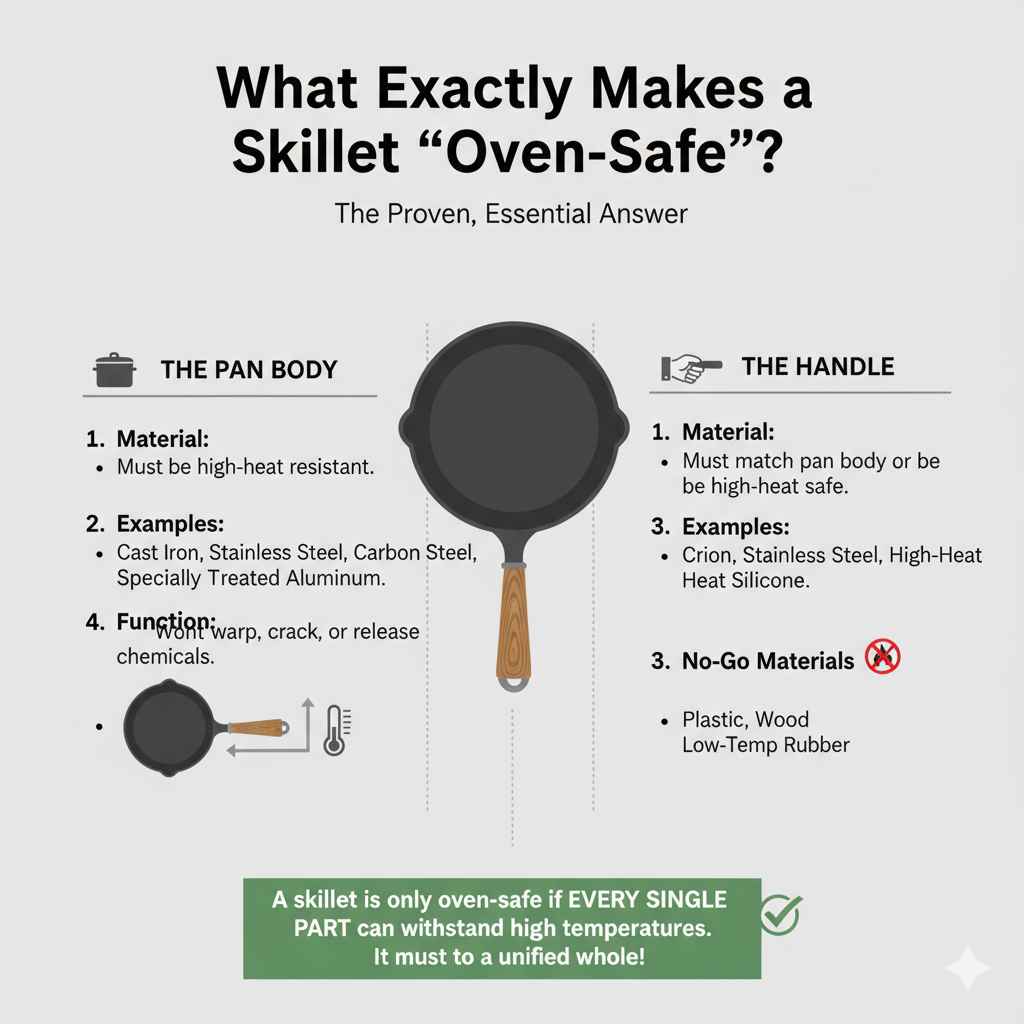
Think of an oven-safe skillet as a single, solid piece of gear built for heat. The concept is simple: every single part of the skillet must be able to withstand high temperatures without breaking down. If even one component can’t take the heat, the entire pan is a no-go for the oven. This is why material and construction are everything.
There are two main parts to consider:
- The Pan Body: This is the main part of the skillet that holds your food. For a pan to be oven-safe, its body must be made from a material that won’t warp, crack, or release chemicals when heated to several hundred degrees. Metals like iron, steel, and even some specially treated aluminum are perfect for this. They are strong and handle heat beautifully.
- The Handle: This is the most common point of failure. A skillet can have a perfectly oven-safe body, but if the handle is made of plastic, wood, or a low-temperature rubber, it’s not safe for the oven. An oven-safe handle must be made from the same metal as the pan (like cast iron or stainless steel) or a special, high-heat-resistant material like silicone rated for high temperatures.
In short, for a skillet to be truly oven-safe, it must be a unified whole. Every rivet, screw, and grip has to be ready for the intense, all-around heat of an oven. Anything less is a recipe for disaster.
The Ultimate Checklist: How to Know If Your Skillet is Oven-Safe
You don’t need to be a professional chef to figure out if your skillet can go in the oven. Just follow these simple steps to check your cookware. It only takes a minute and can save you from a kitchen catastrophe.
Step 1: Check the Bottom of the Pan
The easiest way to find out is to look for clues from the manufacturer. Flip your skillet over and examine the bottom. Many brands engrave or stamp information directly onto the metal. You might see:
- Text that says “Oven-Safe” or “Oven-Proof.” This is the clearest sign you can get.
- A maximum temperature rating, such as “Oven safe up to 500°F” or “260°C.”
- An oven symbol. This often looks like a simple square with circles inside representing heating elements, or just a basic drawing of an oven.
If you see any of these, you’re good to go. If not, don’t worry—move on to the next step.
Step 2: Identify the Skillet’s Material
The material of your skillet is your biggest clue. Some materials are naturally built for the oven, while others are not. Here’s a quick guide:
- Cast Iron: If your skillet is very heavy, black or dark gray, and feels slightly rough, it’s likely cast iron. These are almost always oven-safe to very high temperatures.
- Stainless Steel: This material is bright, shiny, and relatively heavy. If the entire pan, including the handle, is made of stainless steel, it is oven-safe.
- Carbon Steel: It looks similar to cast iron but is lighter and smoother. Like cast iron, it’s a workhorse and safe for the oven.
- Copper or Aluminum: These pans are often lined with another material like stainless steel. If the pan and handle are all metal, they are usually oven-safe, but their temperature limits can sometimes be lower.
Just by looking at the material, you can get a very good idea of its oven-readiness.
Step 3: Inspect the Handle Carefully
The handle is often the dealbreaker. No matter what the pan itself is made of, the handle must also be oven-proof. Take a close look:
- All-Metal Handles: If the handle is the same metal as the pan and is either part of the same mold (like in most cast iron skillets) or attached with sturdy metal rivets, it’s a great sign.
- Plastic or Bakelite Handles: If the handle is made of any kind of hard, shiny plastic (even if it feels very solid), assume it is not oven-safe. Plastic can melt, warp, and release toxic fumes.
- Wooden Handles: Wood cannot go in the oven. It will dry out, crack, and can eventually char or catch fire.
- Silicone or Rubber Grips: Some modern skillets have silicone handles or grips. You must check the manufacturer’s instructions for these. Some high-quality silicone is rated for oven use up to 400-500°F, but many are not. If you don’t know for sure, it’s safer to assume it can’t handle the heat.
Step 4: When in Doubt, Search Online
If you’ve checked the pan and handle and are still not 100% sure, use your phone or computer. A quick search for the brand name and any model information you can find on the pan will almost always lead you to the manufacturer’s website or a product page with specifications. This is the most reliable way to confirm temperature limits and clear up any doubt.
A Guide to Oven-Safe Skillet Materials
Understanding the different materials used to make skillets is key to choosing the right one for your stovetop-to-oven recipes. Each material has its own strengths, weaknesses, and, most importantly, heat tolerance.
Cast Iron: The Workhorse
Cast iron is the undisputed king of oven cooking. Made from a single piece of molded iron, these skillets have no weak points, like screws or welded handles, that can fail under heat. They are incredibly durable and can handle extremely high temperatures, often well above 500°F (260°C).
- Pros: Excellent heat retention, virtually indestructible, can go from stovetop to oven to broiler, develops a natural non-stick surface over time.
- Cons: Very heavy, requires seasoning to prevent rust, can react with acidic foods.
Stainless Steel: The Versatile Pro
High-quality stainless steel skillets are another fantastic option. They are non-reactive, meaning you can cook acidic foods like tomatoes without any metallic taste. As long as the handle is also made of stainless steel (and not plastic or wood), the entire pan is safe for the oven, typically up to 500°F (260°C) or even higher.
- Pros: Durable, non-reactive, heats evenly (especially with an aluminum or copper core), easy to clean.
- Cons: Food can stick without proper heating and oiling, can discolor at very high heat.
Carbon Steel: The Restaurant Favorite
Carbon steel is like a cousin to cast iron. It’s formed from a sheet of steel, making it lighter and quicker to heat up than cast iron. It offers similar high-heat performance and is a favorite in professional kitchens. It is completely oven-safe.
- Pros: Lighter than cast iron, heats up quickly, very durable, can withstand high oven temperatures.
- Cons: Must be seasoned like cast iron, can rust if not cared for properly.
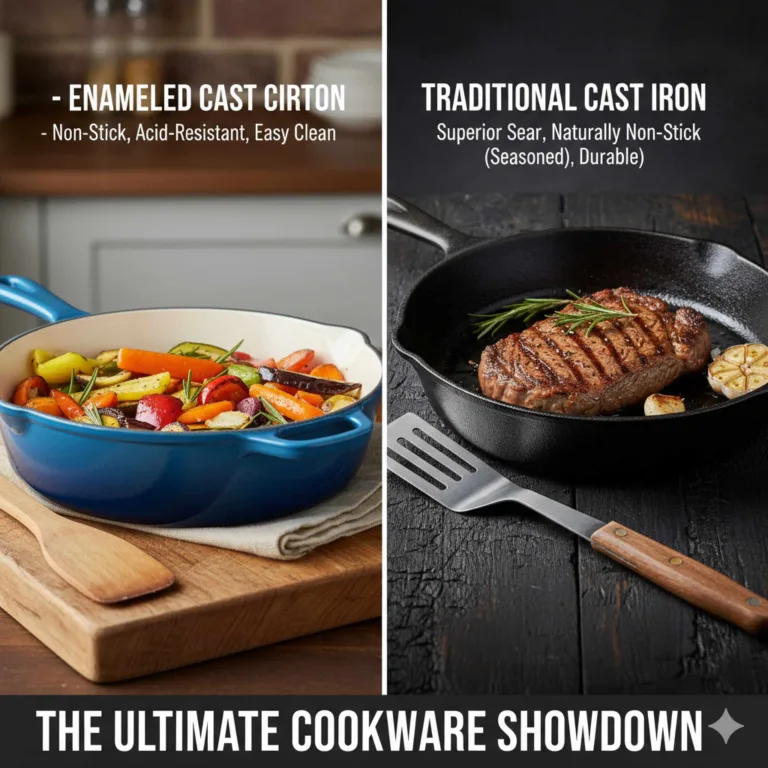
Enameled Cast Iron: The Colorful Choice
This is a cast iron skillet that has been coated with a layer of enamel. This coating makes the pan non-reactive and eliminates the need for seasoning. However, the enamel can have a slightly lower temperature limit than bare cast iron. Most are safe up to 450-500°F (232-260°C), but it’s crucial to check the manufacturer’s recommendation to avoid damaging the enamel.
- Pros: No seasoning required, easy to clean, non-reactive, available in many colors.
- Cons: Enamel can chip or crack if dropped or subjected to extreme temperature changes, often more expensive.
To make it even easier, here is a quick comparison table:
| Material | Typical Max Temp (°F) | Best For | Key Consideration |
|---|---|---|---|
| Cast Iron | 600°F+ | Searing, baking, frying | Requires seasoning; very heavy |
| Stainless Steel | 500-600°F | Searing, sauces, all-purpose | Ensure handle is also steel |
| Carbon Steel | 600°F+ | Searing, stir-frying, roasting | Lighter than cast iron but needs seasoning |
| Enameled Cast Iron | 450-500°F | Braising, baking, acidic foods | Avoid thermal shock to prevent cracking |
| Hard-Anodized Aluminum | 400-500°F | Everyday cooking, gentle baking | Check handle material and non-stick coating limits |
Warning Signs: Materials and Features to Avoid
Knowing what makes a skillet unsafe for the oven is just as important as knowing what makes it safe. Putting the wrong pan in the oven can ruin your cookware, your meal, and even pose a safety risk. Here are the red flags to watch out for.
- Plastic or Bakelite Handles: This is the number one feature to avoid. Standard plastic handles will melt at oven temperatures, creating a gooey mess and releasing potentially harmful fumes into your oven and food. Bakelite, a type of early plastic, can crack or char. If the handle isn’t metal or high-heat silicone, keep it on the stovetop.
- Wooden Handles: Wood is a natural material that does not react well to the dry, intense heat of an oven. It can dry out, splinter, and crack. At higher temperatures, it poses a fire risk. Any skillet with a wooden handle should never go in the oven.
- Most Non-Stick Coatings (with exceptions): This is a tricky area. Many modern non-stick skillets are rated oven-safe up to a certain temperature, often around 350-400°F (177-204°C). However, older or cheaper non-stick coatings can break down at higher temperatures, releasing fumes. According to the U.S. Food and Drug Administration (FDA), some chemicals used in older non-stick surfaces can degrade at high heat. Always follow the manufacturer’s temperature limit. If you don’t know the limit, it’s safest not to risk it.
- Rubber or Soft-Grip Silicone Handles: Don’t confuse all silicone with high-heat-resistant silicone. Many skillets have soft, comfortable grips for stovetop use. These are typically made from a lower-grade silicone or rubber that is not meant for oven heat and will melt. Unless it is explicitly stated that the handle is oven-safe to a high temperature, assume it is not.
Understanding Temperature Limits: Don’t Guess!
The term “oven-safe” doesn’t mean a skillet can handle unlimited heat. Every pan has a maximum temperature it can safely withstand. Exceeding this limit can damage the pan, warp its shape, or compromise its non-stick coating. It’s essential to know your skillet’s specific limit.
Why do limits vary so much? It comes down to the materials used. A solid cast iron skillet can handle just about any temperature your home oven can produce. But a skillet with a non-stick coating and a silicone handle has multiple components, each with its own heat tolerance. The pan’s overall temperature limit is determined by its weakest part—which is almost always the non-stick coating or the handle.
Here’s a general guide to help you understand common temperature limits:
| Skillet Feature | General Temp Limit (°F) | Important Note |
|---|---|---|
| All-Metal (Cast Iron, Carbon Steel, Stainless Steel) | 500°F and up | Essentially limited only by your oven’s max temperature. |
| High-Temp Silicone Handle | 400°F to 500°F | Must be confirmed by the manufacturer. Do not guess. |
| Standard Non-Stick Coating | 350°F to 400°F | Overheating can damage the coating and release fumes. |
| Glass Lids | 350°F to 400°F | The lid often has a lower temp limit than the pan itself. Check the knob material. |
The golden rule is this: Always check the manufacturer’s instructions. If you can’t find them, err on the side of caution and keep the temperature moderate, or use a different pan you are sure about.
Essential Safety Tips for Stovetop-to-Oven Cooking
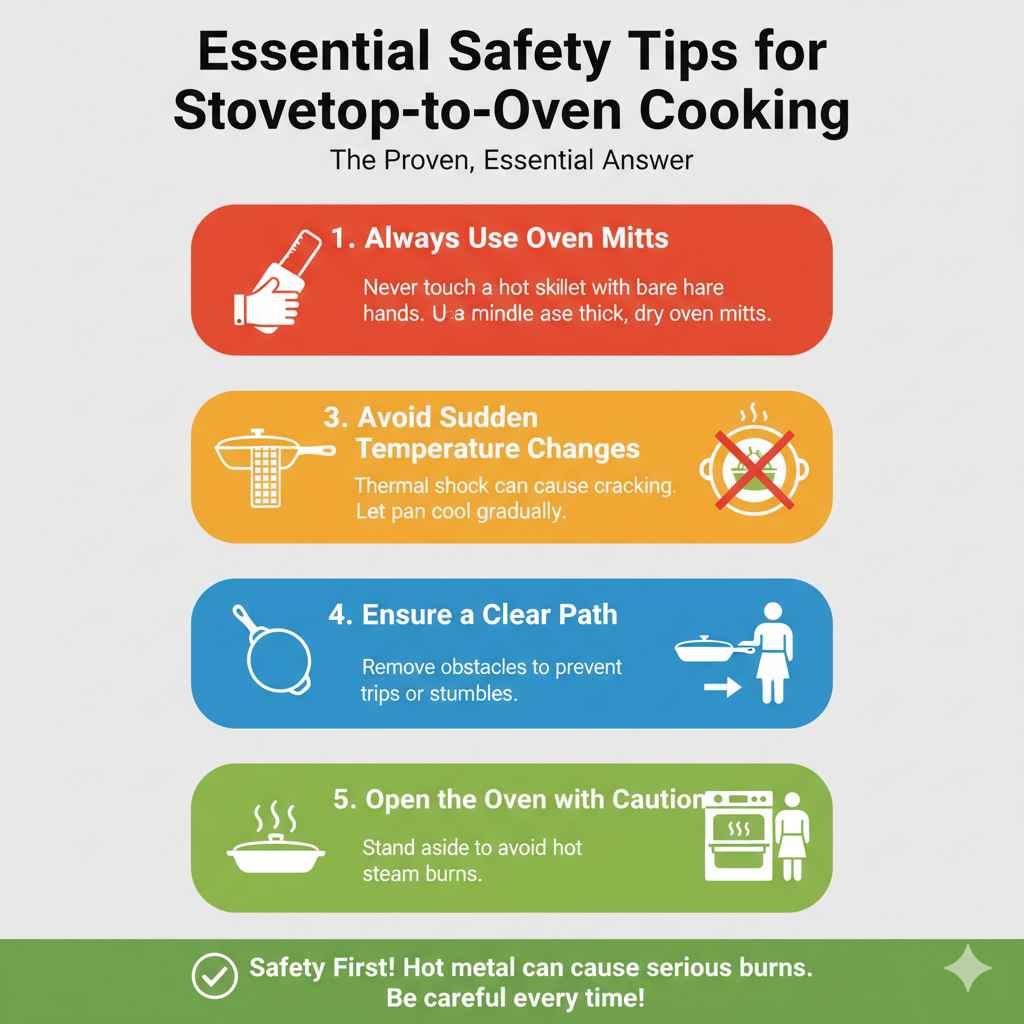
Successfully moving a skillet from the stovetop to the oven is a great cooking technique, but safety should always be your top priority. Hot metal can cause serious burns, so follow these tips every time.
- Always Use Oven Mitts: This is non-negotiable. Once a skillet goes into the oven, its handle becomes just as hot as the pan itself. Never grab it with your bare hands. Use thick, dry oven mitts or pot holders to handle the skillet.
- Remember the Handle Stays Hot: After you take the skillet out of the oven, the handle will stay dangerously hot for a long time. It’s easy to forget this once it’s back on the stovetop. A great pro tip is to drape a kitchen towel over the handle or leave an oven mitt on it as a visual reminder not to grab it.
- Avoid Sudden Temperature Changes: Never take a sizzling hot pan and place it in cold water or on a very cold surface like a granite countertop. This is called thermal shock, and it can cause some materials, especially cast iron and ceramic, to crack or warp. Let the pan cool down for a few minutes first.
- Ensure a Clear Path: Before you move a heavy, hot skillet full of food, make sure your path from the stove to the oven is clear. You don’t want to trip or stumble while carrying something that hot.
- Open the Oven with Caution: When you open the oven to check on your food or take the skillet out, stand to the side and open the door slowly. A blast of hot steam can escape and cause burns.
Frequently Asked Questions (FAQ)
Is my cast iron skillet oven-safe?
Yes, almost certainly. Bare cast iron skillets are made from a single piece of metal and are safe for very high oven temperatures, often exceeding what a home oven can even produce. The only exception would be a rare model with a wooden or plastic handle attached, which should not go in the oven.
Can a skillet with a plastic handle go in the oven?
No, you should never put a skillet with a standard plastic or Bakelite handle in the oven. The heat will cause the handle to melt, warp, or crack, potentially releasing harmful fumes and ruining your pan and your meal.
What temperature is too high for an oven-safe skillet?
This depends entirely on the material. Cast iron and carbon steel can handle 600°F+ with no problem. Stainless steel is usually safe to 500-600°F. Skillets with non-stick coatings or special handles often have lower limits, typically between 350°F and 450°F. Always check the manufacturer’s guidelines for your specific pan.
Are all stainless steel pans oven-safe?
Most are, but you must check the handle. If the entire skillet, including the handle, is made of stainless steel, it is oven-safe to high temperatures. However, if it has a plastic, wood, or soft-grip handle, it is not oven-safe.
How can I tell if my non-stick pan is oven-safe?
Check the bottom of the pan for an “oven-safe” label or a max temperature rating. You can also search for the brand and model online to find its specifications. If you can’t find any information, it’s safest to assume it is not oven-safe, or at least not above 350°F.
What happens if I put a non-oven-safe skillet in the oven?
Several bad things can happen. A plastic handle can melt, creating a mess and releasing toxic fumes. A wooden handle can crack or burn. A non-stick coating can be damaged, causing it to peel and become ineffective. In the worst case, you can permanently ruin your skillet and your food.
Can the lid of my skillet go in the oven too?
Sometimes, but you need to check the lid separately. Many glass lids are oven-safe only up to 350-400°F. The weak point is often the handle or knob on top of the lid. If the knob is plastic, it likely cannot handle high oven heat. Lids made entirely of metal are usually safe to the same temperature as the pan.
Conclusion: Cook with Confidence
There you have it—the complete guide to understanding what makes a skillet oven-safe. It all comes down to three simple checks: the material of the pan, the material of the handle, and the manufacturer’s temperature limit. By taking a moment to inspect your cookware, you can confidently move your meals from the stovetop to the oven without any fear of melted handles or ruined pans.
Now, when a recipe calls for that perfect oven finish, you’ll know exactly what to do. You can choose the right skillet for the job, whether it’s a trusty cast iron, a versatile stainless steel, or a modern non-stick pan. Armed with this knowledge, you’ve unlocked a whole new world of cooking techniques, from perfectly seared steaks to beautifully baked frittatas. Go ahead and cook with the confidence of a pro.
Related pick: Check today's price on Amazon
Products related to this article
Sponsored / affiliate links. As an Amazon Associate I earn from qualifying purchases. I may earn additional commission from eligible campaigns.