Crock-Pot Artisan vs Gennua Kitchen Enameled Cast Iron Braiser: Which One Wins?
The Short Answer: Which One Should You Buy?
If you cook for a family or love braising big cuts of meat, get the Crock-Pot Artisan. It’s a 5-quart workhorse that does one thing beautifully. If you live alone, cook for two, or want a pan that pulls double duty as a grill, the Gennua Kitchen is the clever pick. Its 3.3-quart size and flip-lid griddle make it the fun one.
| Our Pick | Runner Up |

|

|
| Crock-Pot Crock-Pot Crock Pot Artisan Enameled Cast Iron… | Gennua Kitchen 2-in-1 Enameled Cast Iron Braiser Pan with… |
| See on Amazon | See on Amazon |
As an Amazon Associate I earn from qualifying purchases.
Both are enameled cast iron, so you skip the seasoning and rust headaches of bare cast iron. But they serve different kitchens. The Crock-Pot is the sensible, spacious choice. The Gennua is the space-saving multitasker.
The Crock-Pot is available for testing. My friend Dana owns the Gennua. Swap pans for a week to compare results. Here are the findings.
What Is Bare Cast Iron? (And Why It’s Not “Non-Stick”)
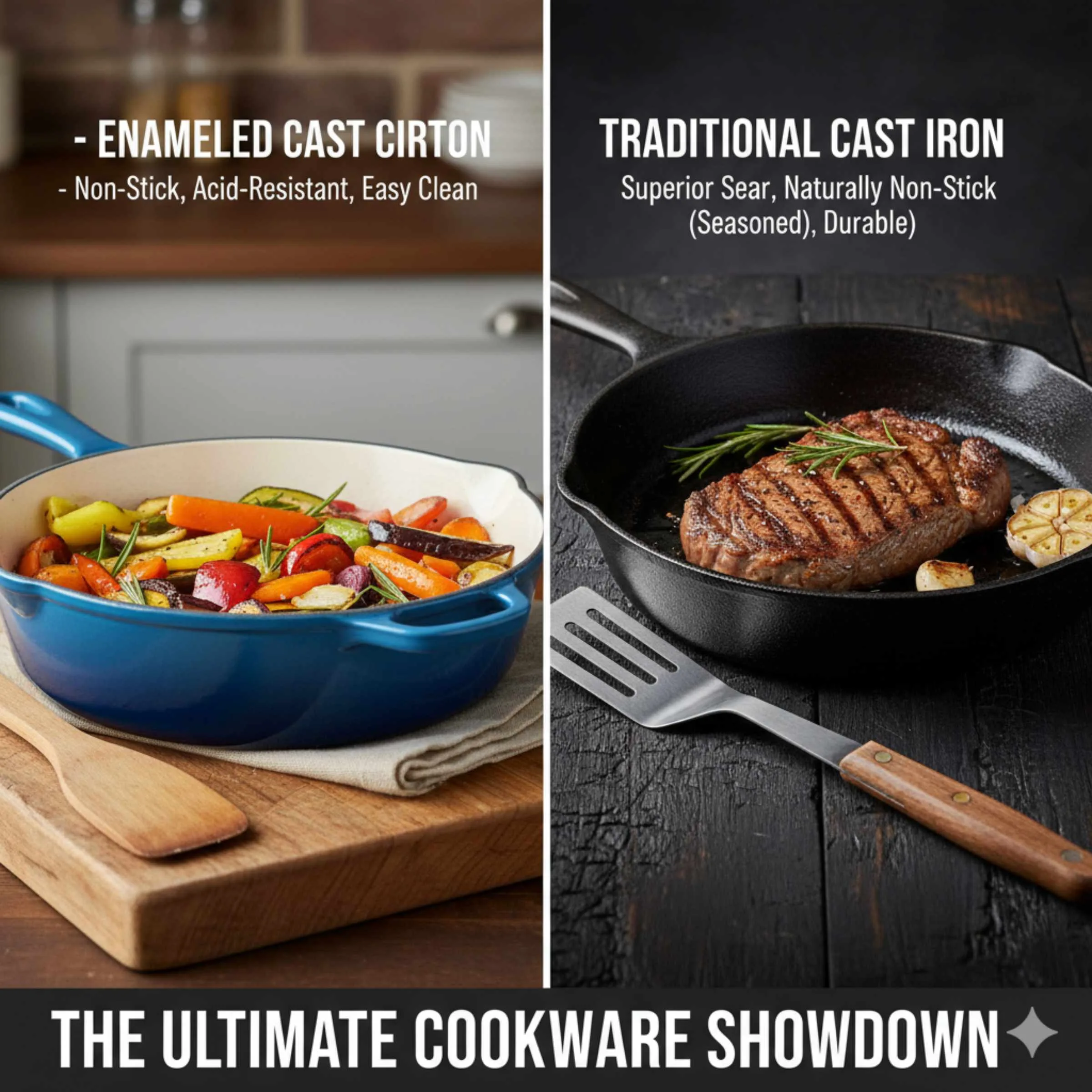
Bare cast iron is a solid hunk of iron, usually pre-seasoned with oil baked into the surface. That seasoning layer is what makes it semi-non-stick. It’s not a coating you can wash off. It builds up over time as you cook with oil and fat.
The catch: bare iron reacts with acidic foods. Tomatoes, wine, vinegar—they strip the seasoning and leave a metallic taste in your food. You also have to dry it thoroughly after every wash or it rusts. It’s durable as hell but high-maintenance.
What Is Enameled Cast Iron? (The Coating Explained)
Enameled cast iron is the same heavy iron core but coated in a glass-like enamel layer. That coating is what separates the food from the iron. No seasoning needed. No rust. You can simmer tomato sauce for hours without any metallic tang.
Both the Crock-Pot Artisan and the Gennua Kitchen are enameled. They give you the heat retention of cast iron without the fuss. The enamel also cleans up easier—food releases better, and you can soak it if something sticks.
The 5 Critical Differences (Heat, Acid, Maintenance, Weight, Price)
Heat Retention vs. Heat Responsiveness
Both pans hold heat like a champ. That’s the nature of cast iron. But there’s a difference in how they behave on the stove.
The Crock-Pot’s bigger mass means it takes longer to heat up but stays hot longer. Great for braising—you sear, add liquid, and the heat stays steady. The Gennua heats faster because it’s smaller. You get decent heat retention but a bit more control when you need to drop the temperature quickly.
For delicate sauces, the Gennua responds faster. For a pot roast that simmers for hours, the Crock-Pot wins.
The Acid Test: Why Tomatoes Hate Bare Iron
With bare cast iron, cooking a tomato-heavy dish for more than 20 minutes can ruin the meal. The acid leaches iron into the food, turning it dark and giving it a bitter, metallic flavor. You also strip the seasoning, which means you have to re-season before the next use.
Enameled cast iron solves this completely. The enamel coating is inert. You can cook a wine-braised short rib or a big pot of marinara and the food tastes exactly like it should. Both these pans handle acid without complaint.
Test the Crock-Pot with a lemon-butter chicken. Dana made a balsamic glaze in the Gennua. Neither pan reacted. That’s the whole point of enameled cast iron vs cast iron.
Cleaning: The Scrub vs. The Soak
Bare cast iron needs a gentle hand. You scrub with salt or a brush, rinse with hot water, dry it immediately, and rub on a thin layer of oil. Soap is debated. Soaking is a no-go—it invites rust.
Enameled cast iron is easier. Both the Crock-Pot and Gennua are dishwasher-safe per their listings, though hand washing is recommended for the Crock-Pot. I hand-wash both anyway because the enamel can dull over time in the machine. The Gennua’s listing says dishwasher-safe, so you can risk it if you’re lazy. I wouldn’t. A quick soak in warm soapy water handles most stuck-on food.
The Chipping Problem: What Happens When Enamel Fails
Enamel is tough but not indestructible. Drop it or bang a metal spoon against the rim and you can chip the coating. Once chipped, the exposed iron underneath can rust, and the chip can grow.
There’s no real fix for a chipped enamel surface. You can’t re-coat it at home. If the chip is on the outside or the rim, you might still cook with it carefully. If it’s inside the cooking surface, you should replace the pan. Enameled cast iron lasts decades if you treat it right, but a chip is a death sentence.
Neither Dana nor I have chipped our pans yet. But we both treat them like they’re made of glass when it comes to dropping.
The Rust Problem: What Happens When Bare Iron Fails
Bare cast iron rusts if you leave it wet or don’t season it properly. The good news is rust is fixable. You scrub it off, re-season the pan, and it’s good as new. A rusty cast iron skillet can be restored in an afternoon.
Enameled cast iron doesn’t rust. The coating protects the iron completely. That’s why these braisers are so easy to own. You don’t have to worry about the climate in your kitchen or whether you dried it perfectly.
If you want to understand the bare iron side better, check out this guide on fixing rusted cast iron.
The 10-Dish Cookware Matrix (What to Use for What)
| Dish | Bare Cast Iron | Enameled Cast Iron |
|---|---|---|
| Cornbread | Perfect—seasoned surface gives a crispy crust | Good, but less non-stick without seasoning |
| Stew | Works, but avoid heavy acid | Ideal—handles tomatoes and wine |
| Fried Chicken | Best—high heat and a well-seasoned pan | Good, but enamel can scratch with metal tools |
| Tomato Sauce | No—acid strips seasoning | Perfect—no reaction |
| Steak | Excellent—gets screaming hot | Excellent—same heat retention |
| Eggs | Good if well-seasoned | Good—enamel is smooth |
| Braising | Good, but watch acid | Ideal—goes from stovetop to oven |
| Baking (bread) | Great—holds heat for crust | Great—same thermal mass |
| Acidic stir-fry | No—ruins seasoning | Yes—safe |
| Cheese sauce | Can work, but risk of sticking | Easier—smooth surface |
Budget Strategy: Where to Save and Where to Splurge
Bare cast iron from Lodge is cheap—often under $40 for a skillet. It’s the best value in cookware if you’re willing to learn seasoning. Enameled cast iron costs more because of the extra manufacturing steps. The Crock-Pot and Gennua are both budget-friendly compared to Le Creuset, which can run hundreds.
If you’re on a tight budget, start with a bare cast iron skillet. Learn to season it, and you’ll have a pan that lasts generations. But if you want the convenience of no maintenance and you cook a lot of acidic dishes, an enameled braiser is worth the splurge.
For a deep dive on the differences, read this comparison of cast iron vs ceramic cookware—it covers similar trade-offs.
The Verdict: One Pan to Rule Them All? (Or Do You Need Both?)
The Crock-Pot Artisan is the better all-around braiser. It’s bigger, holds more food, and the self-basting lid keeps meats moist. It’s the pan you reach for when you’re feeding a crowd or batch-cooking for the week.
The Gennua Kitchen is the clever one. The grill lid is a genuinely useful trick—you flip it over and you’ve got a griddle for pancakes or a grill for steaks. It saves cabinet space. But 3.3 quarts is small. I couldn’t fit a whole chicken in it. Dana made a small pot roast and it worked, but she had to cut the roast in half.
Honestly, most people should buy the Crock-Pot. It’s the safer bet. The Gennua is for apartment dwellers or anyone who wants two pans in one.
If you already own a bare cast iron skillet, adding an enameled braiser covers your acid dishes. If you’re starting from scratch, the Crock-Pot alone can handle almost everything.
Frequently Asked Questions
Can you use metal utensils on enameled cast iron?
Technically yes, but you shouldn’t. Metal can scratch or chip the enamel over time. Use wood, silicone, or plastic utensils to protect the coating. The Gennua listing says it’s dishwasher-safe, but that doesn’t mean metal utensils are safe.
Is enameled cast iron toxic if chipped?
Modern enamel is made from glass, which is food-safe. If a chip flakes into your food, it’s not toxic, but it’s not pleasant to eat. The bigger risk is the exposed iron underneath, which can rust. If the chip is on the cooking surface, replace the pan.
Can you put enameled cast iron on a glass stovetop?
Yes, but be careful. The heavy weight can scratch glass if you slide it. Lift the pan instead of sliding it. Both the Crock-Pot and Gennua are safe for all stovetops, including induction, because cast iron is magnetic.
For more on caring for your enameled pan, see this guide on cleaning a cast iron Dutch oven.
Products related to this article
Sponsored / affiliate links. As an Amazon Associate I earn from qualifying purchases. I may earn additional commission from eligible campaigns.