Stainless Steel vs Nonstick Skillet: Which Is Better?
Choosing between a stainless steel vs nonstick skillet can feel overwhelming when you are stocking your kitchen. Both cookware types have devoted fans and specific strengths that suit different cooking styles and recipes.
This comparison breaks down how each material performs on heat, durability, food release, and maintenance so you can pick the right pan for your needs.
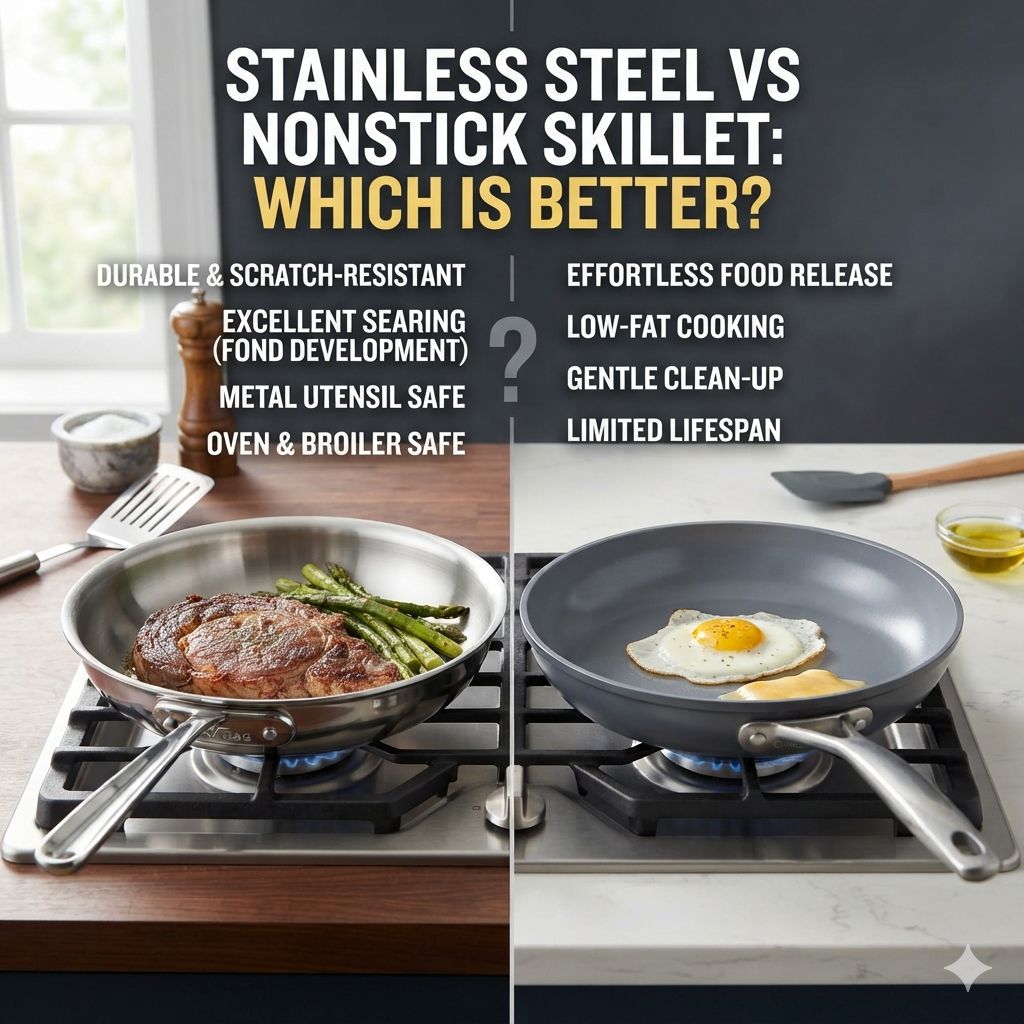
Simply put, stainless steel skillets excel at high-heat searing and browning and last for decades, while nonstick skillets make delicate cooking and cleanup effortless but wear out faster. Your choice depends on whether you prioritize durability and crust or convenience and low-fat cooking.
Key Takeaways
- Stainless steel vs nonstick skillet decisions hinge on cooking style: stainless steel suits high-heat searing and deglazing, while nonstick handles eggs and fish with zero sticking.
- Stainless steel lasts a lifetime with proper care and works on any cooktop, including induction.
- Nonstick skillets require gentle use and replacement every 2-5 years but offer unmatched food release and quick cleanup.
- Many home cooks keep both types in rotation to cover all cooking tasks efficiently.
Quick Comparison: Stainless Steel vs Nonstick Skillet
Before diving into the details, a side-by-side snapshot helps you see the main differences at a glance. The table below covers the critical factors that home cooks care about most.
| Factor | Stainless Steel Skillet | Nonstick Skillet |
|---|---|---|
| Durability | Lifetime – resists warping and scratching | 2-5 years – coating degrades over time |
| Food Release | Poor without oil or technique | Excellent – slides right off |
| Heat Tolerance | Very high – oven safe up to 500°F+ | Low-medium – coating degrades above 450°F |
| Browning/Searing | Superior – creates deep crust | Poor – limits browning |
| Maintenance | Hand wash or dishwasher safe | Hand wash only – no metal utensils |
| Price Range | $40 – $200+ | $15 – $100 |
| Best For | Meat, stir-fry, deglazing, sauces | Eggs, fish, pancakes, low-fat cooking |
This table summarizes the stainless steel vs nonstick skillet trade-offs clearly. Durability and high-heat performance belong to stainless steel, while convenience and easy food release are the nonstick advantage.
What Is a Stainless Steel Skillet?
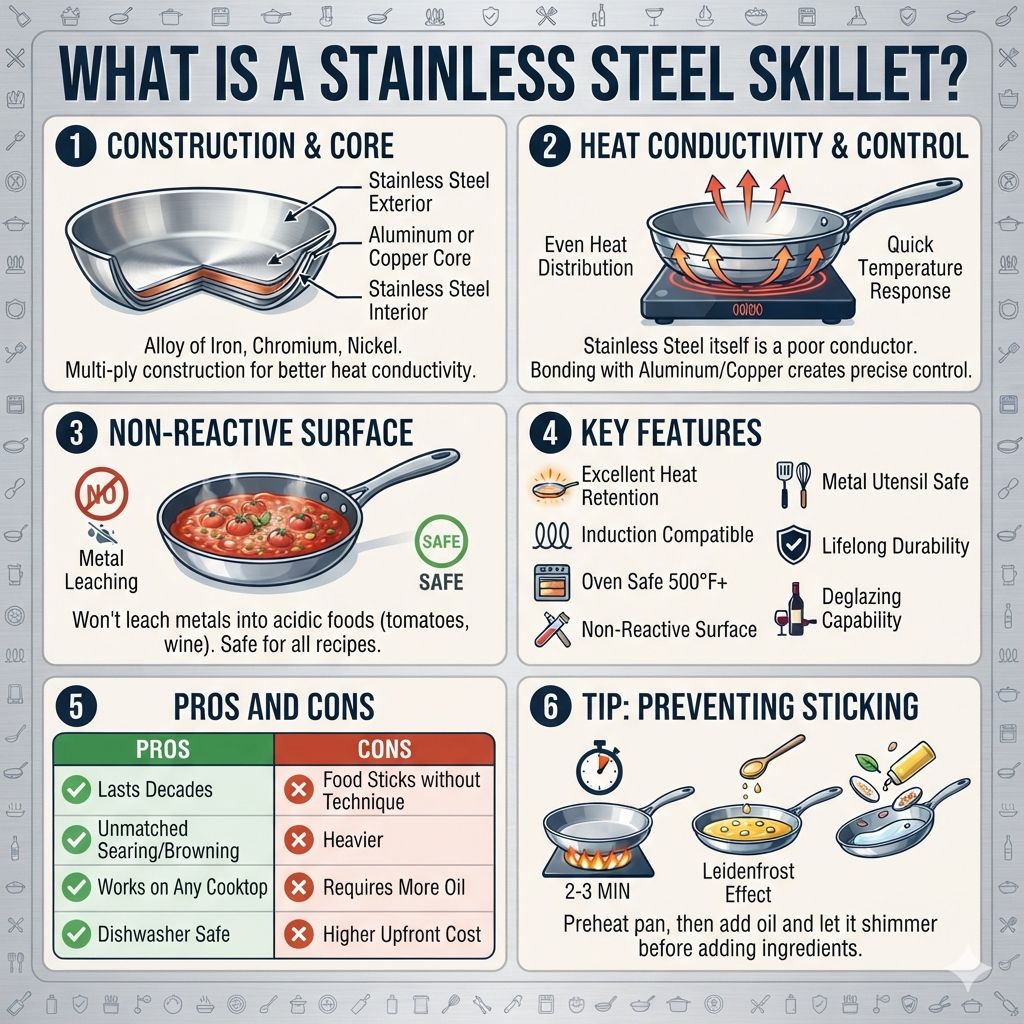
A stainless steel skillet is a pan made from an alloy of iron, chromium, and nickel. Most quality versions have a multi-ply construction with an aluminum or copper core sandwiched between stainless steel layers for better heat conductivity.
Stainless steel itself is a poor heat conductor, which is why manufacturers bond it with conductive metals. A tri-ply skillet spreads heat evenly and responds quickly to temperature changes, giving you precise control over cooking.
The surface is non-reactive, meaning it won’t leach metals into acidic foods like tomatoes or wine-based sauces. This makes stainless steel a safe, neutral choice for any recipe.
Key Features of Stainless Steel Skillets
- Excellent heat retention – holds high temperatures for searing and browning
- Induction compatible – the magnetic stainless exterior works on all cooktops
- Oven safe – most pans withstand oven temperatures of 500°F or higher
- Non-reactive surface – safe for acidic ingredients like citrus and vinegar
- Metal utensil safe – use spatulas, tongs, and whisks without worry
- Lifelong durability – resists warping, rust, and corrosion with proper care
- Deglazing capability – fond sticks to the pan on purpose for making pan sauces
Pros and Cons of Stainless Steel
| Pros | Cons |
|---|---|
| Lasts decades with minimal wear | Food sticks without proper technique |
| Unmatched searing and browning | Heavier than nonstick alternatives |
| Works on any cooktop including induction | Requires more oil or fat for cooking |
| Dishwasher safe and easy to sanitize | Higher upfront cost than basic nonstick |
Tip: To prevent food from sticking to stainless steel, preheat the pan for 2-3 minutes, then add oil and let it shimmer before adding ingredients. This creates a temporary nonstick effect through the Leidenfrost principle.
What Is a Nonstick Skillet?
A nonstick skillet has a coating applied to the cooking surface that prevents food from bonding to the pan. The most common coating is PTFE (polytetrafluoroethylene), sold under brand names like Teflon, though ceramic nonstick options have grown popular in recent years.
Nonstick skillets are typically made from aluminum or hard-anodized aluminum, which conducts heat well and keeps the pan lightweight. The coating is applied through a multi-step process that bonds it to the metal base.
These pans shine when cooking delicate foods that tend to stick, like eggs, fish fillets, crepes, and pancakes. They also require very little oil, making them a go-to for low-fat and health-conscious cooking.
Key Features of Nonstick Skillets
- Effortless food release – eggs, fish, and cheese slide off without sticking
- Low oil cooking – use minimal fat for healthier meals
- Lightweight design – easy to handle and toss food
- Quick cleanup – a simple wipe or rinse removes residue
- Affordable entry price – good nonstick pans start around $20
- Even heat at low temperatures – perfect for gentle cooking
- Easy for beginners – less technique required compared to stainless steel
Pros and Cons of Nonstick Skillets
| Pros | Cons |
|---|---|
| Food slides off with zero effort | Coating wears out in 2-5 years |
| Very easy to clean by hand | Cannot use metal utensils |
| Lightweight and easy to maneuver | Limited to low or medium heat |
| Low-fat cooking is simple | Poor searing and browning results |
Warning: Never heat a nonstick skillet above 450°F (232°C). Overheating can cause the PTFE coating to break down and release fumes. Always use low to medium heat and avoid preheating an empty pan.
How Do Stainless Steel and Nonstick Skillets Compare?
Understanding the stainless steel vs nonstick skillet differences in everyday cooking helps you decide which one fits your routine. Each material behaves differently under heat, with food, and during cleanup.
Heat Performance and Cooking Results
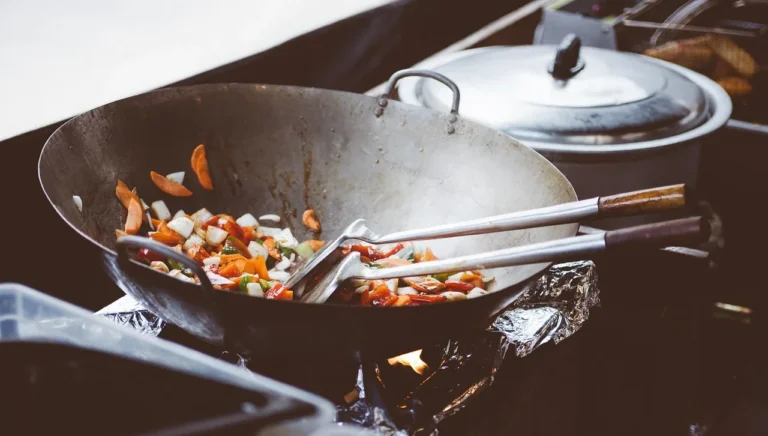
Stainless steel excels at high-heat techniques like searing steak, pan-frying chicken with a crispy skin, and stir-frying vegetables over intense heat. The pan gets hot and stays hot, which creates the Maillard reaction that builds deep flavor and color.
Nonstick skillets perform best at low to medium heat. The coating limits how hot you can go before risking damage, which means you lose the ability to develop a rich crust. Foods tend to steam rather than brown in nonstick pans.
Food Release and Oil Requirements
Nonstick pans release food effortlessly. You can fry an egg with a drop of butter and watch it slide right onto your plate. This makes nonstick ideal for sticky ingredients and low-fat diets.
Stainless steel requires technique to prevent sticking. You need enough oil or fat, the pan must be properly preheated, and you must let food develop a crust before flipping. Once you master the method, stainless steel becomes nonstick enough for most foods.
Durability and Longevity
According to the Cookware Manufacturers Association, stainless steel skillets can last 20 years or more with normal use. They resist warping, denting, and scratching. Many stainless pans are heirloom-quality pieces passed down through generations.
Consumer Reports indicates that most nonstick skillets lose their coating effectiveness within 2-5 years of regular use. The coating gradually wears thin, chips, or peels, requiring replacement. Ceramic nonstick coatings tend to fail even faster than PTFE-based ones.
Important: If you cook primarily for one or two people, a single high-quality stainless steel skillet and one nonstick pan cover nearly every cooking task. Invest in the stainless pan and buy a mid-range nonstick that you can replace affordably.
Maintenance and Care Comparison
- Stainless steel – hand wash or dishwasher safe, metal utensils allowed, can be scrubbed with abrasive cleaners, oven safe to high temperatures
- Nonstick – hand wash only with soft sponges, only silicone or wooden utensils, no abrasive cleaners, limited oven safety (usually 350°F-400°F max)
- Stainless steel – can be restored with vinegar or bar keepers friend if discolored
- Nonstick – once coating is damaged, the pan must be replaced entirely
- Stainless steel – develops patina over time but performs consistently
- Nonstick – performance declines as coating wears, food starts sticking more
Which Skillet Should You Choose?
The stainless steel vs nonstick skillet decision comes down to your cooking habits and priorities. No single pan does everything perfectly, so matching the material to your most common dishes makes the most sense.
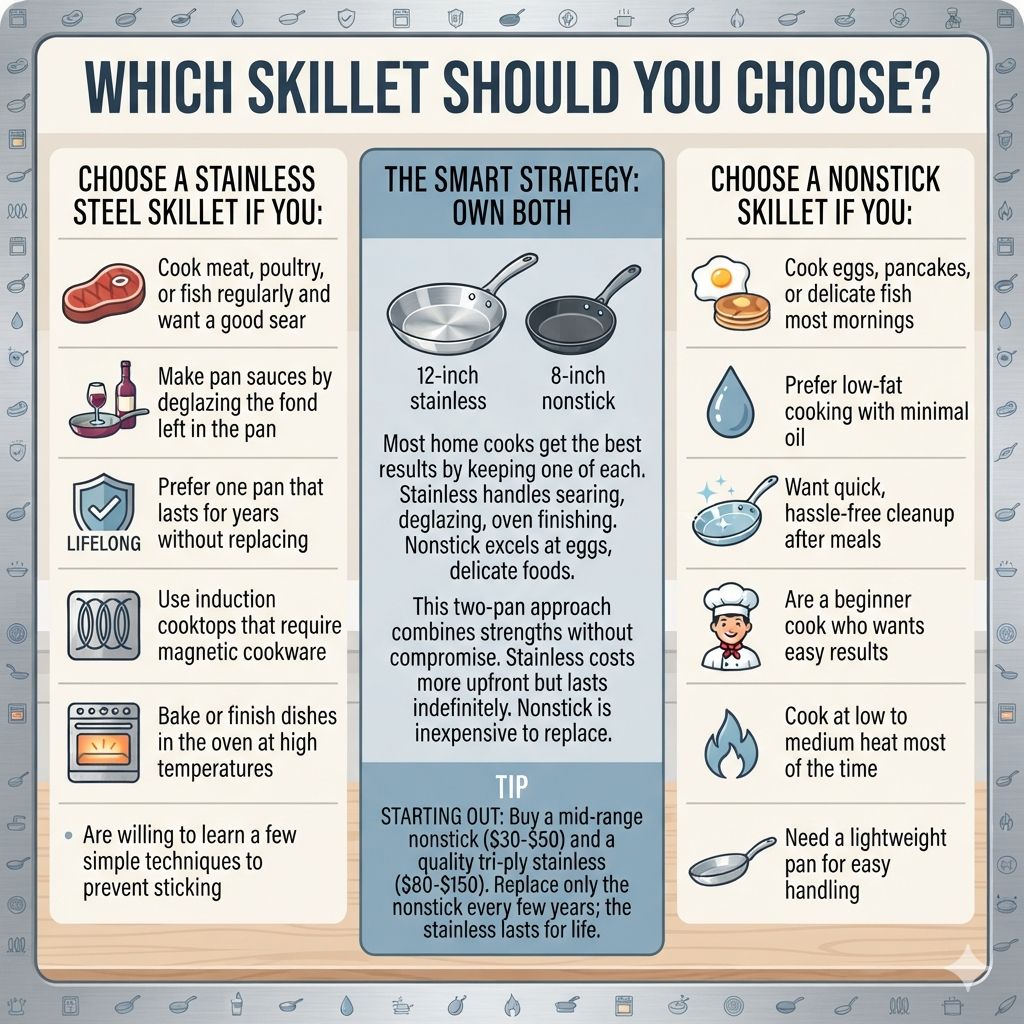
Choose a Stainless Steel Skillet If You:
- Cook meat, poultry, or fish regularly and want a good sear
- Make pan sauces by deglazing the fond left in the pan
- Prefer one pan that lasts for years without replacing
- Use induction cooktops that require magnetic cookware
- Bake or finish dishes in the oven at high temperatures
- Are willing to learn a few simple techniques to prevent sticking
Choose a Nonstick Skillet If You:
- Cook eggs, pancakes, or delicate fish most mornings
- Prefer low-fat cooking with minimal oil
- Want quick, hassle-free cleanup after meals
- Are a beginner cook who wants easy results
- Cook at low to medium heat most of the time
- Need a lightweight pan for easy handling
The Smart Strategy: Own Both
Most home cooks get the best results by keeping one of each in their kitchen. A 10-inch or 12-inch stainless steel skillet handles dinner tasks like searing, sautéing, simmering sauces, and oven finishing. An 8-inch or 10-inch nonstick skillet tackles breakfast eggs, grilled cheese, and delicate fish.
This two-pan approach gives you the strengths of both materials without compromising on any cooking method. The stainless steel pan costs more upfront but lasts indefinitely. The nonstick pan is inexpensive to replace when the coating wears out.
Tip: When starting out, buy a mid-range nonstick skillet (around $30-$50) and a quality tri-ply stainless steel skillet (around $80-$150). You will save money by replacing only the nonstick pan every few years while the stainless pan stays in your kitchen for life.
Frequently Asked Questions
Can you use metal utensils on stainless steel skillets?
Yes, stainless steel skillets are fully compatible with metal utensils like spatulas, tongs, and whisks. The hard surface resists scratching, so you do not need to worry about damaging the pan during cooking.
Is stainless steel or nonstick better for eggs?
Nonstick skillets are better for eggs because the coating prevents sticking without requiring a lot of butter or oil. Stainless steel can work for eggs if you use enough fat and proper technique, but nonstick makes the process much easier and more reliable.
How do you clean a stainless steel skillet that has stuck-on food?
Fill the pan with water and a splash of vinegar or lemon juice, then bring it to a simmer for 2-3 minutes. Scrape the loosened bits with a wooden spoon, then wash normally. For stubborn spots, use a powder cleaner like Bar Keepers Friend with a non-scratch scrub pad.
Are ceramic nonstick skillets better than PTFE nonstick?
Ceramic nonstick coatings are made from sand-derived silicone and are free of PTFE and PFOA. They handle slightly higher temperatures than PTFE but tend to lose their nonstick properties faster, often within 6-12 months of regular use. PTFE-based coatings generally last longer.
Can nonstick skillets go in the oven?
Most nonstick skillets are oven safe up to 350°F or 400°F, but you must check the manufacturer’s specifications. Handles made of plastic or silicone cannot go in the oven at all. Stainless steel skillets, by contrast, are typically oven safe up to 500°F or higher.
Final Thoughts
The stainless steel vs nonstick skillet choice is not about which one is better overall, but which one suits your cooking style. Stainless steel delivers unmatched durability, heat performance, and versatility for serious cooking, while nonstick offers convenience, easy cleanup, and foolproof food release. Owning both gives you the flexibility to cook any dish with the right tool for the job.
Products related to this article
Sponsored / affiliate links. As an Amazon Associate I earn from qualifying purchases. I may earn additional commission from eligible campaigns.