Stainless Steel vs Cast Iron Cookware
Choose Stainless Steel for tomatoes, wine, vinegar, citrus, fast temperature changes, and cleanup that stops at the sink. Choose Cast Iron Cookware for hard searing, heat that stays put, and oven baking. Use the wrong pan and you can get off flavors, uneven browning, warped routines, or extra cleanup that turns cooking into a hassle. This guide maps Stainless Steel vs Cast Iron Cookware by food type, heat behavior, seasoning and rust care, cleanup, and household constraints.
| Decision factor | Stainless Steel | Cast Iron Cookware | Winner |
|---|---|---|---|
| Heat retention | Heats faster and cools faster | Excellent heat retention and surface stability | Cast Iron Cookware |
| Acidic food compatibility | Non-reactive with acidic ingredients | Can react with tomatoes, wine, vinegar, and citrus | Stainless Steel |
| Cleanup and maintenance | Low maintenance; dishwasher-safe | Handwash, dry immediately, and oil after use | Stainless Steel |
| Weight and handling | Much lighter and easier to move | Heavy; a 12-inch skillet weighs about 8–12 lbs | Stainless Steel |
| Oven use | Good only within handle-dependent limits | High heat tolerance; suitable for baking | Cast Iron Cookware |
Heat performance and daily use
Heat retention and searing
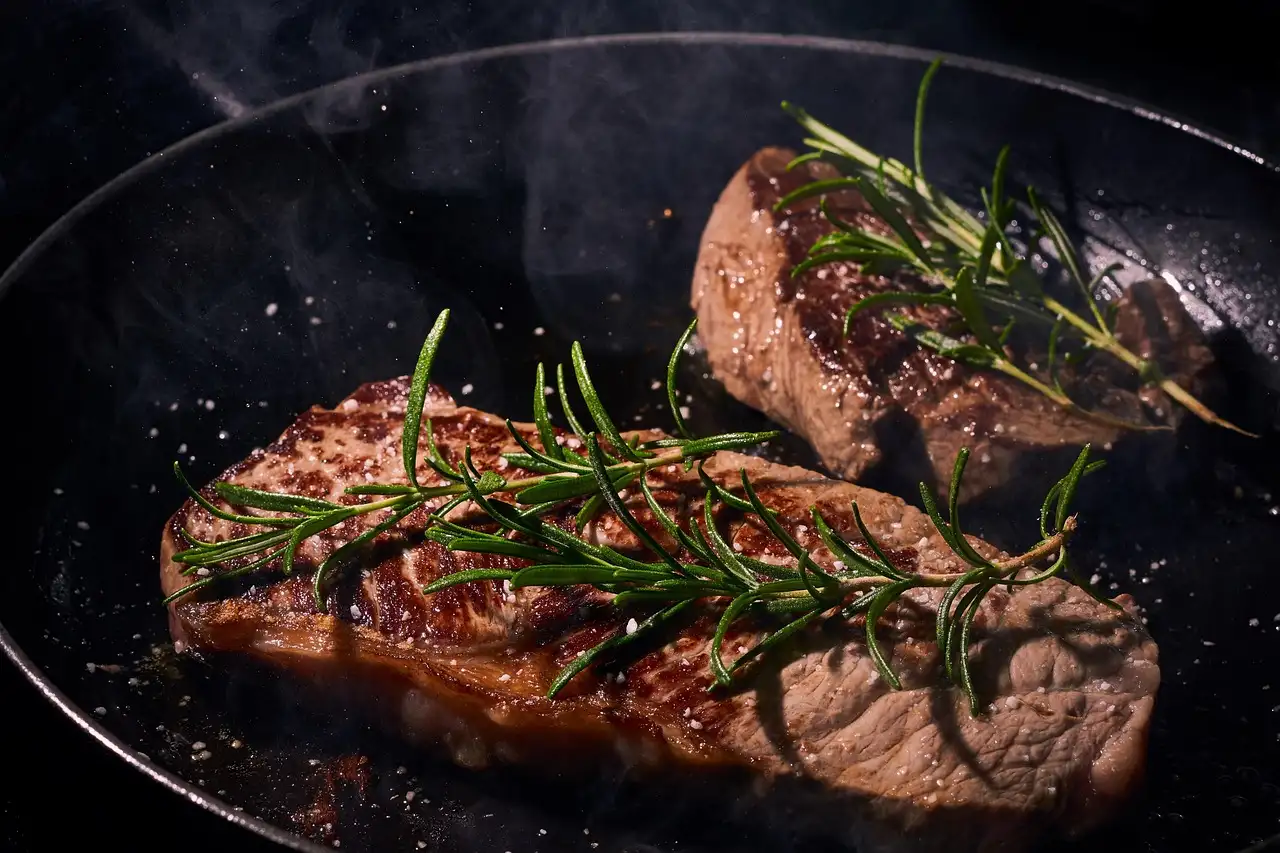
Cast Iron Cookware wins when you need a pan that stays hot after food hits it. Its thermal mass helps it recover after a cold steak or a pile of vegetables drops the surface temperature. Stainless Steel can still sear well, especially when it is fully clad, but it depends more on preheating and pan quality.
Reactivity with acidic foods
Stainless Steel is the safer default for tomatoes, wine, vinegar, and citrus-based sauces because its surface is non-reactive. Cast Iron Cookware can react with acidic foods and can leave a metallic taste in long-simmered dishes. That is a flavor issue first, and a performance issue second.
Food release and sticking
Cast iron cookware develops seasoning, a protective oil layer that can improve release over time and help prevent rust. Stainless Steel has no seasoning layer, so food sticks more often unless you preheat correctly and use enough fat. That does not make stainless defective; it means the pan rewards tighter technique.
Cleanup, drying, and rust risk
Stainless Steel is the low-maintenance option. Most pans are dishwasher-safe, and routine cleanup is simpler because you do not need to protect a seasoning layer. Cast Iron Cookware needs handwashing, drying immediately, and occasional oiling after use to avoid rust.
Weight, handling, and oven use
Stainless Steel is much lighter and easier to lift, tilt, and store. Cast Iron Cookware is heavy, with a 12-inch skillet weighing about 8–12 lbs, so wrist strain and grip limits matter. In the oven, cast iron is the clearer choice for high heat and baking; stainless steel depends on handle limits and the pan’s build.
Which pan heats and sears better?
Cast Iron Cookware usually wins for pure searing because it holds heat better and keeps the cooking surface steadier after food goes in. Stainless steel can still brown well, especially in well-clad cookware with an aluminum or copper core, but it gives up heat faster and relies more on careful preheating.
Thermal mass and surface stability
The advantage of cast iron is not magic. It is thermal mass. Once hot, it resists sudden temperature drops, which matters when you add a thick steak or several cutlets at once.
Recovery after adding cold food
Recovery is where cast iron often pulls ahead. A cold ingredient can drag down a weaker pan, and lower surface temperature slows browning. Stainless Steel with a good core can narrow that gap, but basic thin stainless tends to lose ground sooner.
Why fully-clad stainless can still sear well
Fully-clad stainless steel uses aluminum or copper cores, and common builds include 3-ply, 5-ply, and 7-ply construction. That layering spreads heat more evenly than plain stainless, so hot spots are less likely. It still does not match cast iron’s heat retention, but it can be the better all-around searing pan when weight and cleanup matter.
Say your 12-inch skillet is hot, then you add two 1-inch steaks straight from the fridge. Cast iron cookware is more likely to keep browning strong, even across the whole surface, when cold steaks are added. Stainless Steel may need more recovery time between batches.
How do they handle acidic food?
Stainless Steel is the safer default for acidic cooking because it stays non-reactive and does not alter flavor. Cast Iron Cookware can react with tomatoes, wine, vinegar, and citrus, especially during longer cooks. That makes stainless the cleaner choice for sauces, braises, and pan deglazing that depend on bright flavor.
Tomatoes, wine, vinegar, and citrus
Those ingredients are where the difference becomes practical. A tomato sauce can spend enough time in a pan to pick up unwanted notes from reactive iron. Stainless Steel keeps the sauce tasting like the ingredients you put in it.
Metallic taste risk in cast iron
The issue is not that cast iron cannot touch acid. It can. The problem is exposure time and intensity, especially when a sauce simmers for a while or when the pan seasoning is thin or worn.
Why stainless steel is the safer default for acidic cooking
For everyday acidic meals, Stainless Steel asks for fewer compromises. You do not need to worry about flavor drift, and you do not have to protect a seasoning layer during cleanup. That makes it the more predictable pan for tomatoes, vinegar-based pan sauces, and citrus-forward dishes.
Which is easier to clean and maintain?
Stainless Steel is easier to keep ready for the next use. It is low maintenance and dishwasher-safe, so cleanup usually stops at washing and drying. Cast Iron Cookware needs more care: handwashing, drying immediately, and a light coat of oil after use to protect against rust.
Seasoning, handwashing, and drying immediately
Seasoning is the thin oil layer that builds with use and helps food release. It also helps prevent rust, which is why moisture control matters so much. Skip drying and cast iron can corrode quickly enough to turn a simple cleanup into a repair job.
When to oil cast iron after use
Oil after use when the surface looks dry or after a wash that stripped away visible sheen. The goal is a thin protective film, not a greasy pan. That small step is part of the maintenance cost of choosing cast iron.
Dishwasher compatibility and low-maintenance care in stainless steel
Stainless Steel is the better choice if you want a pan that fits a busy sink routine. Even when food leaves residue, the material does not need seasoning protection. For many households, that lower upkeep is the real performance benefit.
- Wash cast iron by hand soon after cooking.
- Dry it immediately, including the handle and rim.
- Apply a thin layer of oil if the surface looks bare.
- Store it only when fully dry.
Cookware task matrix
| Cooking task | Stainless Steel score | Cast Iron Cookware score | Best fit |
|---|---|---|---|
| Eggs | 3/5 | 4/5 | Cast Iron Cookware |
| Steak | 4/5 | 5/5 | Cast Iron Cookware |
| Tomato sauce | 5/5 | 2/5 | Stainless Steel |
| Pan sauce | 5/5 | 2/5 | Stainless Steel |
| Boiling water | 5/5 | 3/5 | Stainless Steel |
| Sautéed vegetables | 4/5 | 4/5 | Tie |
| Pan-fried fish | 4/5 | 3/5 | Stainless Steel |
| Baking bread | 3/5 | 5/5 | Cast Iron Cookware |
| Oven roasting | 3/5 | 5/5 | Cast Iron Cookware |
| One-pan weeknight dinners | 5/5 | 3/5 | Stainless Steel |
Eggs
Stainless Steel can cook eggs well, but it asks for careful preheat and fat control. Cast Iron Cookware gains release as seasoning improves, so it can be excellent for eggs once the surface is well cared for. For beginners, stainless is more predictable for cleanup after a miss.
Steak
Cast Iron Cookware gets the edge because it holds searing heat better and keeps browning steady. Stainless Steel is still a strong option for steak if the pan is fully clad and properly preheated. If you want the most forgiving path to a crust, cast iron stays ahead.
Tomato sauce
Stainless Steel wins because it handles acid without flavor change. Cast Iron Cookware risks reactivity, especially with long-simmered sauce. The shorter the cook and the lighter the acid, the smaller that gap becomes, but stainless remains the safer bet.
Pan sauce
Pan sauces rely on deglazing with wine, stock, or vinegar, so non-reactivity matters. Stainless Steel also makes fond easy to lift without worrying about seasoning damage. Cast iron can work, but it is the less direct tool for this job.
Boiling water
Stainless Steel is easier to handle and does not need special care after a boil. Cast Iron Cookware can do it, but the weight is awkward and the drying step matters more. For a simple pot task, stainless is the practical pick.
Sautéed vegetables
This is the closest call in the matrix. Both materials can do the job well if the pan is heated correctly. Choose based on whether you care more about easy cleanup or about holding steady heat across a larger batch.
Pan-fried fish
Stainless Steel has the cleaner edge because it handles delicate acid, browning, and cleanup without the seasoning concerns that can follow fish. Cast Iron Cookware can work, but sticking risk and odor retention can make it less convenient. A well-heated stainless pan is usually the simpler answer.
Baking bread
Cast Iron Cookware wins because it tolerates high heat and holds it through the bake. That stored heat supports oven spring and a darker crust. Stainless Steel can go in the oven, but cast iron is the more natural fit here.
Oven roasting
Cast Iron Cookware again fits the task better when high heat and steady retention matter. Stainless Steel can roast well, but only if the handle and pan construction are rated for the oven temperature you plan to use. Cast iron keeps the decision simpler.
One-pan weeknight dinners
Stainless Steel is the better all-around choice for fast, mixed cooking. It handles sauce, vegetables, and protein without asking you to protect seasoning or avoid acid. That flexibility matters when dinner needs to move from stove to table with the least friction.
Picture a chicken-thigh dinner finished with lemon and white wine. Stainless Steel is the safer path because the acid can go into the pan sauce without side effects. Cast Iron Cookware can do the main sear, but the finishing sauce is more comfortable in stainless.
Choose Stainless Steel if… / Choose Cast Iron Cookware if…
Choose stainless Steel if…
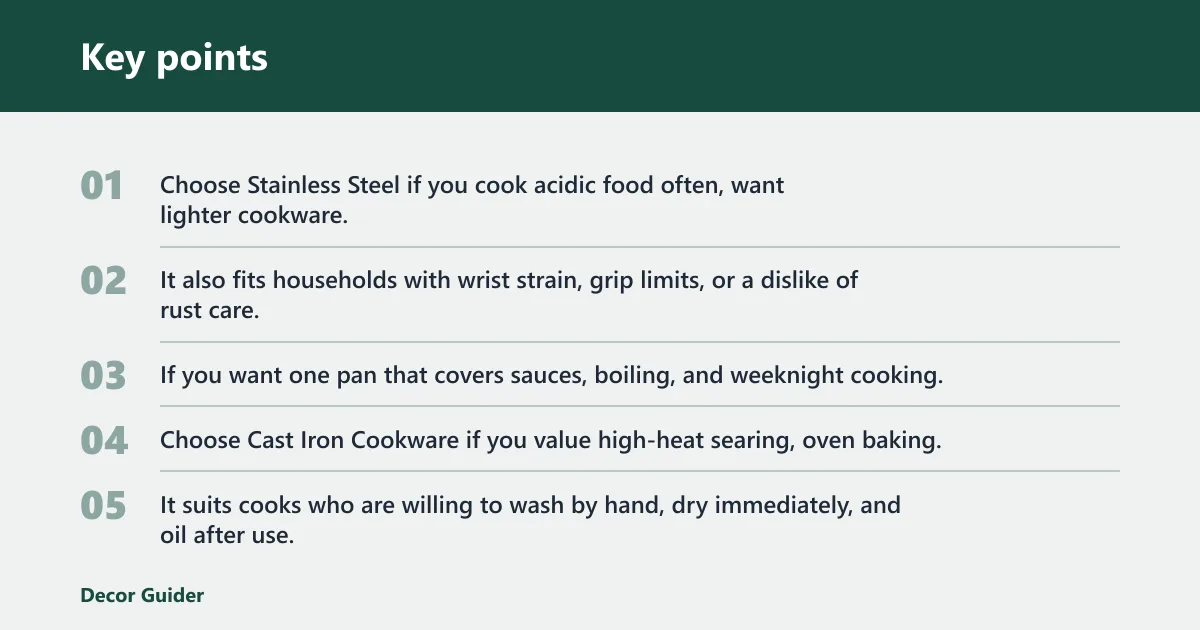
Choose Stainless Steel if you cook acidic food often, want lighter cookware, or prefer low-maintenance cleanup. It also fits households with wrist strain, grip limits, or a dislike of rust care. If you want one pan that covers sauces, boiling, and weeknight cooking, stainless is usually the better fit.
Choose cast iron Cookware if…
Choose Cast Iron Cookware if you value high-heat searing, oven baking, and heat retention over ease of care. It suits cooks who are willing to wash by hand, dry immediately, and oil after use. If your kitchen routine centers on steaks, breads, and roasting, cast iron earns its place.
Special cases
If nickel sensitivity matters, Stainless Steel deserves a closer look because some stainless alloys contain nickel. If weight is a concern, cast iron can be a poor match, especially at 12 inches. If your cooking shifts between acidic sauces and hard searing, a mixed set often solves the problem better than forcing one pan to do everything.

- D3 tri-ply construction for optimal heat distribution
- Fully bonded design delivers fast, even heat
- Made in USA with professional-grade materials
Frequently asked questions
Stainless steel vs cast iron pan
For most home cooks, the choice comes down to acid, maintenance, and weight. Stainless Steel is better for sauces, quick cleanup, and lighter handling. Cast Iron Cookware is better when you want stronger heat retention, steadier searing, and oven use at high heat.
Stainless steel vs cast iron skillet
A skillet in Stainless Steel is usually the easier everyday tool because it is low maintenance and non-reactive. A skillet in Cast Iron Cookware rewards better heat control and seasoning care. If you want simple cleanup, stainless fits; if you want a pan that holds heat, cast iron fits.
Stainless steel vs cast iron pan for steak
Cast Iron Cookware usually has the edge for steak because it holds heat through the sear and recovers well after the meat goes in. Stainless Steel can still build a good crust, especially if it is fully clad and properly preheated. Weight and patience matter either way.
Stainless steel vs cast iron pan for eggs
Eggs are easier in Stainless Steel if you have good preheat and enough fat, but cast iron can become very good once seasoning is mature. The difference is less about raw ability and more about consistency. For a beginner, stainless is often the safer first pick.
Why use cast iron vs stainless steel
Use Cast Iron Cookware when heat retention, oven baking, and high-heat searing matter more than easy cleanup. Use Stainless Steel when you cook acidic food, want lighter pans, or prefer less upkeep. The material should match the task, not the other way around.
Is cast iron cookware better than stainless steel?
Not overall. Cast Iron Cookware is better for some tasks, especially searing and baking, while Stainless Steel is better for acidic cooking and easy maintenance. The right answer depends on what you cook most often and how much care you want to give the pan.
Products related to this article
Sponsored / affiliate links. As an Amazon Associate I earn from qualifying purchases. I may earn additional commission from eligible campaigns.