Viking Stainless Steel Cookware Review: Worth It?
Viking stainless steel cookware is worth the premium if you cook often, want oven-safe, induction-ready pans, and can handle a learning curve. Skip it if you want low-maintenance nonstick. Buy the wrong set and you may pay more for sticking, hot spots, and heavy pans you stop reaching for. This guide covers build quality, heat behavior, comfort, durability, and the specs that matter before you buy.
Verdict
Based on published specs and buyer feedback, Viking makes the most sense for cooks who already want stainless steel behavior and know how to manage heat. It is a poor fit for anyone who wants food release with minimal technique, or who is shopping mainly on lowest price. The line can be a smart long-term buy, but only if the specific set matches your cooktop, oven habits, and comfort with cleanup.
Pros and cons
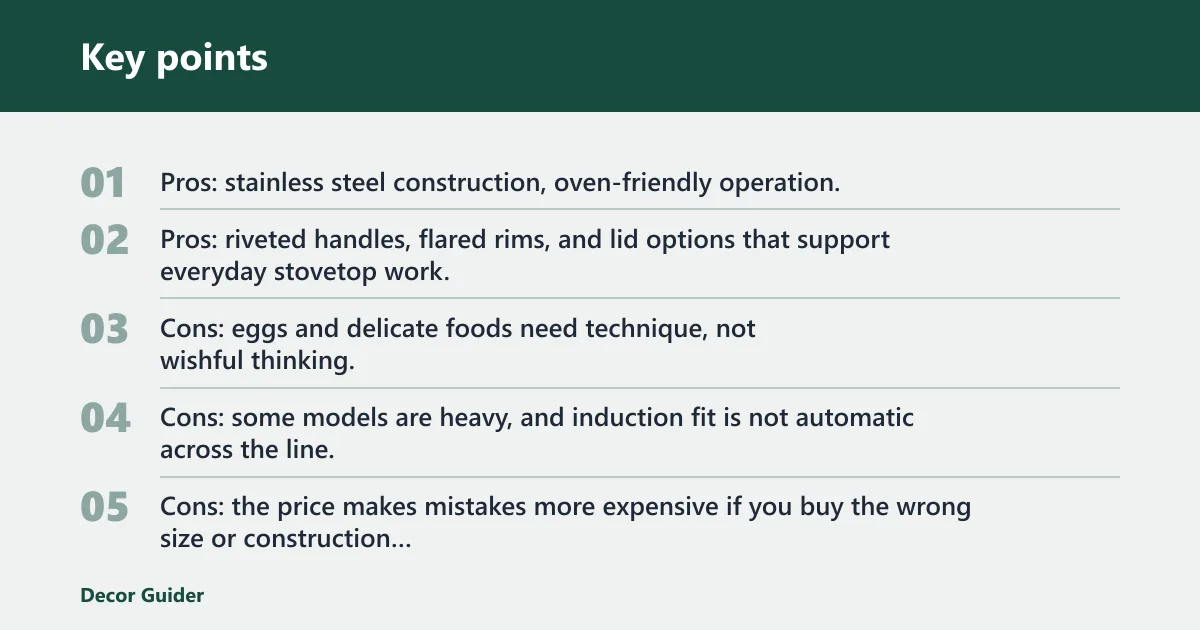
- Pros: stainless steel construction, oven-friendly operation, and a non-reactive cooking surface.
- Pros: riveted handles, flared rims, and lid options that support everyday stovetop work.
- Cons: eggs and delicate foods need technique, not wishful thinking.
- Cons: some models are heavy, and induction fit is not automatic across the line.
- Cons: the price makes mistakes more expensive if you buy the wrong size or construction level.
Specs at a glance
| Spec | What it means for ownership |
|---|---|
| 18/10 stainless steel | Made with 18% chromium and 10% nickel for corrosion resistance, stain resistance, and a non-reactive cooking surface. |
| Construction | Viking is sold in stainless steel construction, with tri-ply construction described in at least one review and a separate 5-ply / 5-layer line positioned above it. |
| 5-ply / 5-layer line | Heavier feel, faster heating claims, strong heat retention, and a more professional-grade pitch; better for experienced users than casual buyers. |
| Handles | Riveted stay-cool handles for grip, secure attachment, and better heat safety. |
| Rims and lids | Flared rims support drip-free pouring; some sets include tight-fitting lids and vented glass lids for moisture control. |
| Oven use | One page says stainless steel pieces are oven-safe up to 600°F; glass lids are listed at 400°F. |
| Cooktop use | Some Viking cookware is marketed as compatible with all cooktops, including induction, but compatibility depends on the exact model. |
Who it
Viking fits home cooks who already want stainless steel rather than coated nonstick. It also fits people who sear often, deglaze pans, and move food from stovetop to oven without changing cookware. The line is a stronger match for someone comfortable watching heat, adjusting preheat time, and choosing oil carefully.
It is less appealing if you want quick cleanup, the lowest purchase price, or a pan that forgives high heat and rushed timing. A small kitchen may also feel the weight of a larger set, especially if you buy the 10-piece Professional 5-Ply Stainless Steel Cookware Set without needing all of it.
Say your weeknight dinner is salmon in a 10-inch skillet, then a pan sauce with shallots and white wine. Viking is a sensible fit because the same pan can handle searing, deglazing, and oven finishing. Say your priority is eggs with almost no oil and almost no learning curve; that is a weaker match.
Best fit and poor fit
- Best fit: cooks who already know how to preheat, manage stainless release, and use fond for sauces.
- Best fit: buyers who want a set that can move from stovetop to oven without changing cookware.
- Poor fit: beginners who want nonstick-style release with minimal technique.
- Poor fit: shoppers who need the lowest cost per piece or a very light pan.
What works
Viking’s strongest case is searing and sautéing. Stainless steel rewards direct heat control, and the line’s heavier construction and warp resistance are useful when you want a pan to stay flat under repeated heating. That matters more than brand polish; it matters most on a burner that runs hot or a cooktop that cycles unevenly.
It also works well for sauces. Stainless steel gives you browned bits, then a clean pan surface for deglazing, reduction, and pan gravy. That is one of the main reasons cooks keep stainless in the first place.
The 18/10 surface is another practical advantage. The chromium and nickel content help resist corrosion and staining, and the non-reactive surface is better for acidic ingredients than bare reactive metals. Shine and stain resistance still depend on care, but the material choice is sensible.
Viking’s handle and rim details matter in daily use. Riveted stay-cool handles give a more secure grip than loose or thin handles, and flared rims make controlled pouring easier. If your set includes a tight-fitting lid or a vented glass lid, you gain more control over steam and moisture than you get from a bare pan.
Suppose you are finishing chicken thighs on the stovetop, then moving the pan into the oven. A stainless piece rated to 600°F gives you room for that workflow, while the 400°F glass lid limit means you should remove the lid before high-heat oven use or broiler exposure.
What does not?
Eggs and delicate foods are where stainless steel exposes technique gaps. If the pan is not preheated correctly, or if the food is moved too soon, sticking happens. That is not a defect unique to Viking; it is the normal learning curve of stainless steel, and Viking does not remove it.
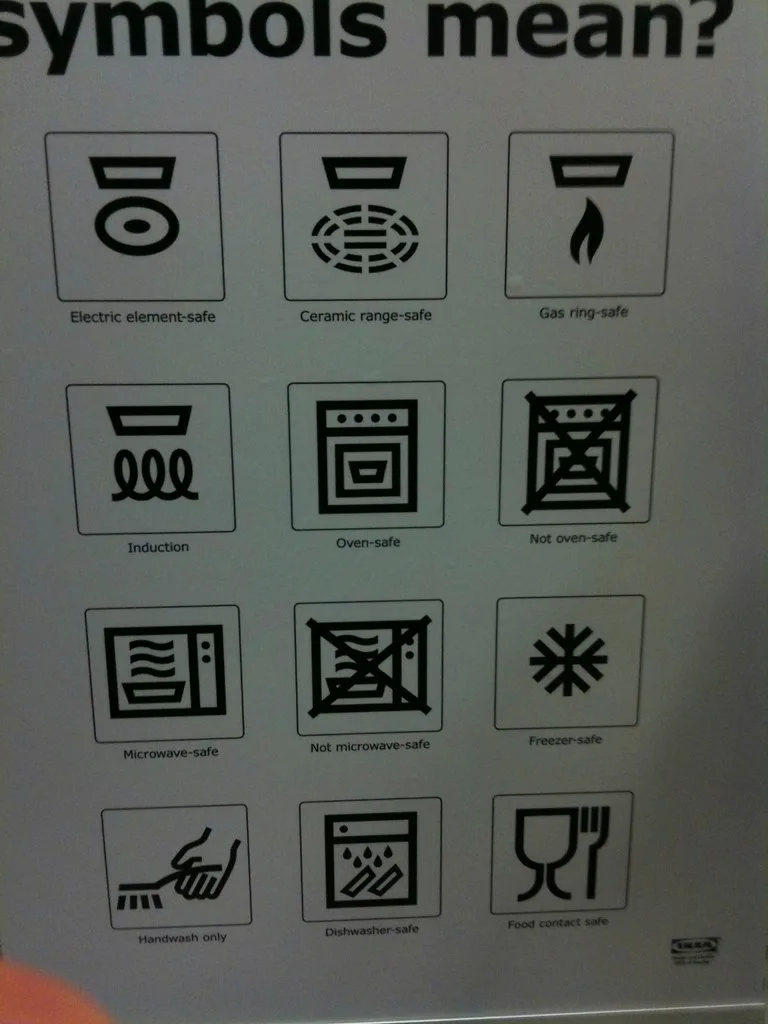
Cleaning effort is the other tradeoff. Discoloration, water spots, and stuck-on fond can take time to remove. Dishwasher-safe claims may exist on some sets, but dishwasher use does not guarantee a spotless finish, and it does not erase the need for better heat control on the next cook.
The weight can also be a drawback. The 5-ply / 5-layer line is described as heavier, and that heft can be useful for heat retention. It can also make storage, lifting, and tossing food more tiring, especially in a small kitchen.
Cooking behavior is the real fault line. A common first-timer mistake is turning the burner too high, then dropping cold food into a pan that is already smoking. The result is scorched oil, uneven browning, and food that clings instead of releasing.
Ownership drawbacks to expect
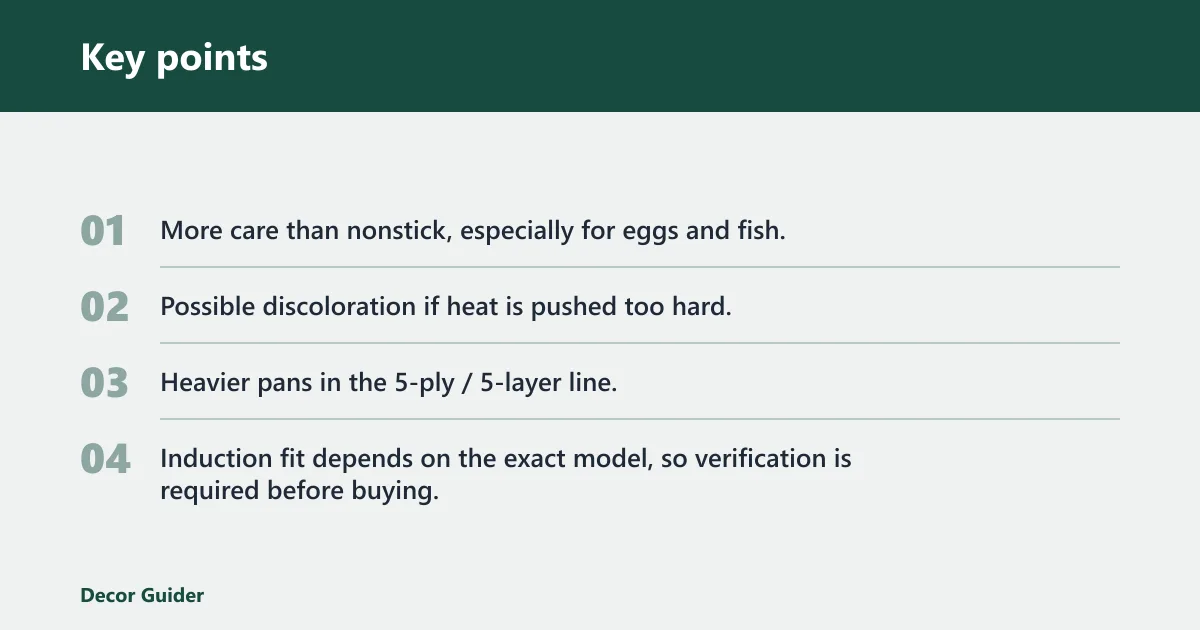
- More care than nonstick, especially for eggs and fish.
- Possible discoloration if heat is pushed too hard.
- Heavier pans in the 5-ply / 5-layer line.
- Induction fit depends on the exact model, so verification is required before buying.
Viking cookware decision matrix
| Scenario | Score | Buy or skip | One-line reason |
|---|---|---|---|
| Searing | 9/10 | Buy | Stainless steel, heavier construction, and oven-safe use make it strong for browned crusts. |
| Eggs | 5/10 | Skip if eggs are a priority | Release depends on preheat, fat, and timing; this is not the easy path for delicate foods. |
| Sauces | 9/10 | Buy | Fond formation and deglazing are where stainless steel earns its keep. |
| Induction use | 7/10 | Buy after verifying the model | Some Viking cookware is induction-compatible, but not every piece should be assumed compatible. |
| Oven use | 9/10 | Buy | 600°F for stainless pieces gives wide stovetop-to-oven flexibility; lids are the limiting factor. |
| Maintenance effort | 5/10 | Skip if you want easy cleanup | Staining, stuck bits, and burn marks are manageable, but they take more work than nonstick. |
| Value per piece | 6/10 | Buy only if you need the build quality | The price makes more sense when you will use the pans often and want stainless steel behavior. |
| Beginner-friendliness | 4/10 | Skip for first stainless set | The learning curve is real, and the set rewards technique more than casual use. |
Alternatives

- Vented glass lids monitor cooking progress easily
- Riveted ergonomic handles ensure comfortable grip
- Durable 3-ply construction with magnetic exterior
The Viking 3-Ply Pots and Pans Set, 13 Piece Stainless Steel Cookware, Glass Lids, Strainer, Silver is the more obvious Viking entry point if you want a smaller investment than the 5-ply line. Its vented glass lids and riveted ergonomic handles are practical strengths, but the 3-ply build is less ambitious than Viking’s heavier 5-ply line, so it is the better buy for cooks who want the brand without the extra weight.
- Tri-ply construction provides fast, even heating
- Double riveted handles ensure secure grip
- Oven safe up to 600 degrees Fahrenheit
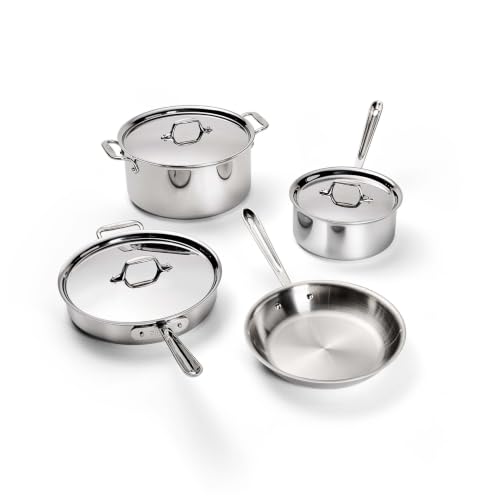
All-Clad D3® Stainless Steel Cookware Set, 7-Piece, Made in the USA is the cleaner comparison if you want a simpler premium stainless path. Published details point to tri-ply construction, 600-degree oven safety, and induction compatibility, which makes it a strong benchmark. Its drawback is value: the set is smaller, and the price makes sense mainly if you prioritize the All-Clad name and a proven all-purpose stainless profile.

- Aluminum encapsulated base heats quickly and evenly
- Cool grip handles stay safe on stovetop
- Dishwasher and oven safe for easy maintenance
Cuisinart Chef’s Classic Stainless Steel Pots and Pans Set, 11 pc, 77-11G is the budget-conscious alternative. It lists induction compatibility, an aluminum encapsulated base, and a much lower price point than Viking or All-Clad. The tradeoff is obvious: it is easier on the budget, but it does not read as the same level of build ambition or long-term ownership bet.
How Viking compares with All-Clad and Calphalon
Against All-Clad, Viking is less about universal name recognition and more about line choice. The 3-ply Viking set is easier to justify if you want a smaller entry option, while the 5-ply Viking line aims at heavier, more advanced use. All-Clad D3 is the cleaner, more widely recognized premium stainless benchmark, but Viking can still make sense if the included pieces better match your kitchen.
Against Calphalon, Viking generally belongs in the more committed stainless-steel lane. If Calphalon’s set is the more approachable route for your budget or your cooking style, that is a valid reason to stop there. Viking only wins when you actually want the stainless learning curve and will use the oven-safe, searing-first design often enough to justify it.
Should you buy it?
Buy Viking stainless steel cookware if you want stainless steel, cook often, and can name the jobs it will handle: searing, sautéing, sauces, and stovetop-to-oven meals. Skip it if you want the easiest possible cleanup, the lowest price, or a pan that behaves like nonstick without practice.
The smartest purchase is not the fanciest set. It is the one whose construction, cooktop compatibility, and lid limits match your actual routine.
Frequently asked questions
Is Viking stainless steel cookware worth it?
It is worth it for buyers who specifically want stainless steel and will use the pans often enough to justify the premium. The value comes from the material, oven-safe flexibility, and cooking control, not from effortless food release. If you want low-maintenance nonstick behavior, it is the wrong buy.
Is Viking stainless steel cookware good for everyday cooking?
Yes, if everyday cooking for you includes searing, sautéing, sauces, and oven finishing. It is less ideal for everyday eggs, pancakes, or low-oil delicate foods. That difference matters more than brand reputation, because stainless steel rewards technique on ordinary weeknights.
Does Viking stainless steel cookware work on induction?
Some Viking cookware is marketed as compatible with all cooktops, including induction, but compatibility is model-dependent. You should verify the exact base and product listing before buying. Do not assume every Viking pan will work on every induction cooktop.
How hot can Viking stainless steel cookware go in the oven?
Viking stainless steel pieces are oven-safe up to 600°F. Glass lids are listed at 400°F, so the lid is the lower limit. For broiler use or high-heat oven work, remove the lid unless the specific product guidance says otherwise.
Does Viking stainless steel cookware stick with eggs and delicate foods?
It can, especially if you rush preheating or use too little fat. That is normal for stainless steel. Viking is better for cooks who can manage heat and timing than for buyers who want nonstick-style release with almost no effort.
Which Viking cookware line is best: 3-ply or 5-ply?
Choose 3-ply if you want a smaller entry option and a more approachable price point. Choose 5-ply if you want heavier construction, stronger heat retention, and a more professional-grade feel. The 5-ply line is the harder sell for beginners and the stronger fit for experienced stainless users.
Products related to this article
Sponsored / affiliate links. As an Amazon Associate I earn from qualifying purchases. I may earn additional commission from eligible campaigns.