Caraway Cookware Review: Is It Worth It?
Caraway is worth it if you want PFAS-free ceramic nonstick and storage-friendly lids, and you expect to replace pans every 1 to 3 years; if you want the lowest cost per year, buy hard-anodized or clad stainless instead. Skip that tradeoff, and you may pay premium prices for a coating that loses release sooner than metal cookware. This review covers safety claims, cooking performance, storage convenience, lifespan, and better-value alternatives.
This guide is part of our Cookware materials and safety guide series.
Deciding if Caraway is worth it for your kitchen


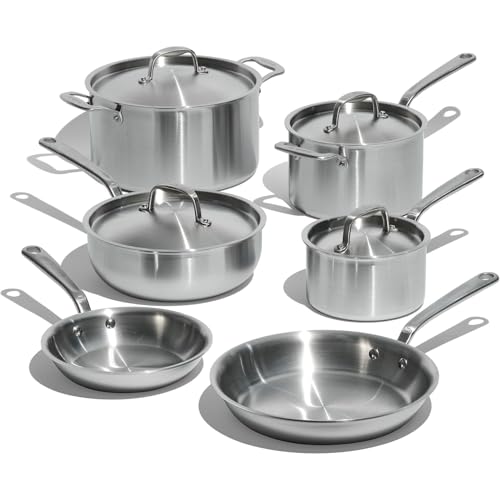
Caraway is a strong buy for shoppers who value safer-material positioning and cabinet organization more than long service life. It is a weaker buy for anyone trying to minimize cost per year, because ceramic nonstick wear usually becomes the ownership issue before the pans are structurally worn out.
The best way to judge it is by total ownership value: what you pay up front, how often you will need careful heat control, how much cabinet space you save, and how soon the coating is likely to need replacement.
Quick verdict by buyer type
Buy it if you live in a smaller kitchen, want storage aids included, and are comfortable treating ceramic nonstick as a replacement item. Skip it if you want the longest possible service life, cook on higher heat often, or expect one cookware set to last many years with minimal upkeep.
Say your kitchen has one narrow cabinet and you keep lids stacked in a drawer now. Caraway’s included dividers and lid holder can solve that storage problem in one purchase. The tradeoff is that the coating still needs gentle use, so the cabinet win does not erase the durability question.
Caraway cookware value matrix
The numbers below are the ownership snapshot that matters most. The list price is high, the sale price is more workable, and the replacement risk is the main reason the set does not compete with metal cookware on lifetime value.
| Factor | Score | What that means for ownership |
|---|---|---|
| Upfront price | 2/5 | The 12-piece set is listed at $675 and often promoted at $445, so the price is still premium even on sale. |
| Coating safety claims | 4/5 | PFAS-free positioning is appealing, but you should rely on public test reports, not marketing alone. |
| Cooktop compatibility | 4/5 | Induction compatibility is a real plus, but performance still depends on the base plate and your cooktop. |
| Oven temp | 4/5 | Up to 550°F is better than many nonstick sets, though broiler use still has practical limits. |
| Maintenance burden | 3/5 | Low-to-medium heat, no metal utensils, and careful stacking all matter if you want the coating to last. |
| Likely replacement risk | 2/5 | Reported 1-3 year lifespan and a 1-year limited warranty make replacement a likely part of ownership. |
Buy: apartment dwellers, PFAS-free shoppers, and people who want a tidy cabinet system.
Not buy: shoppers who want the lowest cost per year, frequent high-heat cooks, and anyone who prefers cookware that can take rougher treatment.
What is Caraway cookware?
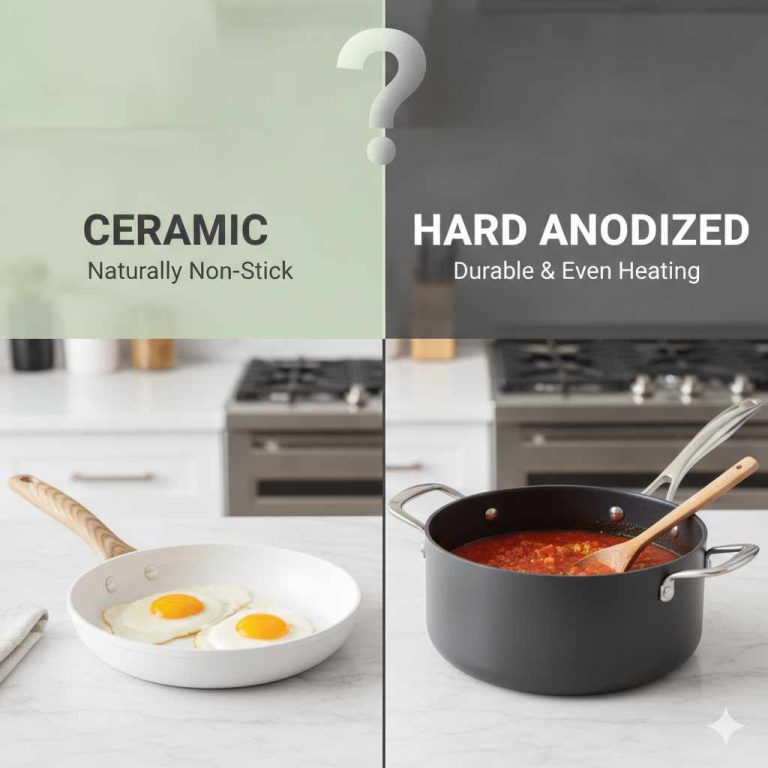
Caraway’s cookware is a ceramic nonstick set built around a lightweight aluminum body, a stainless steel base plate, and stainless steel handles. The appeal is simple: fewer storage headaches, less sticking when new, and induction compatibility in a package that looks organized in a cabinet.
The 12-piece set includes cookware plus storage pieces. That matters because you are not only buying pans; you are also buying a system for keeping lids and vessels from scratching each other.
What comes in the 12-piece set
The 12-piece Caraway cookware set is listed at $675 and on promotion for $445. The set includes the cookware pieces and storage accessories, which shifts the value calculation from “how many pans?” to “how complete is the kitchen setup?”
Storage pieces and what they do
Caraway is said to include shelf dividers and a canvas lid holder. Those pieces are useful if you store pans in deep cabinets, because they reduce lid pileups and limit direct contact between coated surfaces.
That convenience is real. It also matters because ceramic nonstick tends to lose value faster when it is stacked carelessly or scraped by lids, tools, and other pans.
Core materials and coating
Caraway uses an aluminum core with a stainless steel base plate, plus a ceramic nonstick coating described by the brand as mineral-based and two-layer. The lightweight construction helps handling, while the metal base supports induction compatibility and more even heat spread than a bare thin pan would usually deliver.
Is Caraway cookware safe to use?
Caraway’s safety case is strongest when you look at its PFAS-free positioning and public testing reports together. The coating is sold as ceramic nonstick, not PTFE, and the brand says it tested 600+ types of PFAS and total organic fluorine with zero detected within reporting limits.
That does not mean you should stop at the marketing page. Caraway says its reports are publicly available at its third-party testing page, and the useful question is whether the reports are easy to inspect and current enough for you to trust.
PFAS-free coating claims
Caraway positions its ceramic nonstick coating as PFAS-free. That claim is the main reason many shoppers compare it with conventional nonstick, especially if they want a pan that avoids PTFE-based coatings.
Third-party testing and published reports
Caraway says its reports are publicly available through its third-party testing page. That matters because published testing is more useful than a general safety claim on a product page; it lets you check what was tested and how the result was described.
Lead and cadmium testing claims
Caraway says it tested 20+ heavy metals, including lead and cadmium, and all were clear. That helps answer the common safety question, but the strongest reading still comes from the report itself rather than the headline claim alone.
A common first-timer mistake is using ceramic nonstick on medium-high heat because it looks sturdy enough. That habit shortens the life of the coating. The safer routine is lower heat, preheat briefly, then cook with gentler temperature control.
How does Caraway cook?
Caraway cooks like a light ceramic nonstick set should: good release at low-to-medium heat, easy turning for eggs and delicate foods, and decent flexibility for stovetop-to-oven recipes. It is not the set to choose for aggressive searing or repeated very high heat.
Heat spread and aluminum core construction
The aluminum body helps the pan spread heat more evenly than many thin bargain pans. The stainless steel base plate adds induction compatibility and stability, though the cooking feel still depends on the burner, the pan size, and how patiently you manage heat.
Induction compatibility
Caraway is induction compatible, and the Kitchn notes compatibility with induction, gas, and electric cooktops. That is useful for apartment kitchens and mixed cooktop households, but induction results can still vary with the size and strength of the burner.
Oven-safe use and broiler limits
Caraway cookware is described as oven safe to 550°F. That is strong for a nonstick set and supports cooktop-to-oven use, but broiler exposure is a separate issue and should be treated with caution because direct top heat can punish coatings faster than standard oven baking.
Low-to-medium heat care
Low-to-medium heat is the right operating range for ceramic nonstick. That care level is part of the product, not an optional tip, because overheating and repeated high heat are among the fastest ways to shorten release performance.
Pros and cons
Caraway has a clear fit, and the downsides are just as clear. The set is attractive to organize, but the coating and price mean you should judge it as a limited-life convenience product, not a buy-it-once investment.
Pros
- PFAS-free ceramic nonstick positioning.
- Induction compatible.
- Oven safe to 550°F.
- Included storage pieces help cabinet organization.
- Lightweight aluminum body is easy to handle.
Cons
- High upfront price at $675 list price, even though $445 is a common promotion.
- Reported 1-3 year lifespan puts replacement risk front and center.
- Needs low-to-medium heat and careful utensil use.
- Not ideal for high-heat searing.
- Long-term value trails stainless steel and cast iron.
Who should buy Caraway cookware?
Caraway suits buyers who prioritize storage convenience, PFAS-free nonstick positioning, and a cleaner cabinet setup more than maximum longevity. It is less compelling for cooks who want the lowest annual cost or the toughest cookware they can buy.
Best for apartment storage and organization
If your kitchen is short on space, the included dividers and lid holder can be worth real value. That is especially true for apartment dwellers, shared kitchens, and anyone who stores cookware in stacked cabinets rather than deep drawers.
Best for PFAS-free nonstick shoppers
If you want ceramic nonstick and care about publicly stated PFAS testing, Caraway is an easy short list item. The set is most compelling when the buyer already accepts that ceramic nonstick is a wear item, not a lifetime pan.
Skip if you want the longest service life
If durability is your main goal, buy stainless steel or cast iron. Those materials cost differently up front, but they usually offer lower cost per year because they do not depend on a nonstick coating that eventually loses release.
Suppose a two-person household cooks eggs three mornings a week and uses a single skillet for quick dinners. Caraway can feel excellent for a while, especially at the promotional price. If that same household cooks on high heat or uses metal tools by habit, the coating will likely age much faster.
How does Caraway compare with other cookware?
Caraway is best compared by ownership style, not by slogan. It beats many sets on storage and safety messaging, but it loses to stainless steel and cast iron on long service life, and it competes most directly with other ceramic nonstick brands on convenience.
Caraway vs Our Place
Caraway and Our Place compete in the same general category: stylish, storage-aware ceramic nonstick for people who want easier cleanup. Caraway’s edge is the clearer storage system and the publicly stated testing claims; Our Place is the more obvious comparison if you are choosing between two lifestyle-forward ceramic sets.
Caraway vs GreenPan
GreenPan is the more direct ceramic nonstick alternative for shoppers who want a similar material story. Caraway tends to win on cabinet organization, while GreenPan often competes more on range breadth and price. Either way, the same durability caution applies: ceramic nonstick is still a limited-life coating.
Caraway vs stainless steel and cast iron
Stainless steel and cast iron are the better value choices if your goal is years of use rather than easy release from day one. They do not provide the same slick nonstick feel, but they usually win on replacement risk, repairability, and cost per year.
Caraway vs made in, Misen, and all-Clad HA1
Made In and Misen are more relevant if you want higher-duty metal cookware with stronger long-term value. All-Clad HA1 is another hard-anodized nonstick option that is often described as competitive on release and price structure, but it still uses a nonstick coating, so it does not address the lifespan issue the way stainless steel does.
Why is Caraway cookware so expensive?
Caraway is expensive because you are paying for a bundled set, storage accessories, induction-ready construction, and ceramic nonstick positioning rather than bare-bones pans.
Where can I buy Caraway cookware?
You can buy Caraway directly from the brand and through major retailers such as Amazon, though pricing and bundle contents can vary. Compare the sale price, shipping terms, and included accessories before you choose, because the most attractive offer is not always the one with the best total value.
Frequently asked questions
Is Caraway cookware worth it?
Caraway is worth it for buyers who want PFAS-free ceramic nonstick, induction compatibility, and storage accessories in one package. It is less worth it if your main goal is the lowest cost per year, because reported lifespan and coating wear make replacement part of the ownership plan.
What is comparable to Caraway cookware?
Comparable options include GreenPan, Our Place, All-Clad HA1, Made In, Misen, stainless steel, and cast iron. The closest matches on feel are other ceramic nonstick sets; the closest matches on value over time are stainless steel and cast iron.
How does Caraway cookware compare with Our Place?
Caraway and Our Place both target buyers who want attractive, storage-aware ceramic nonstick. Caraway stands out more for its storage pieces and published testing claims, while Our Place is the more direct design-led alternative if you are comparing package features and appearance alongside price.
How long does Caraway cookware last?
Prudent Reviews says Caraway cookware has a 1- to 3-year lifespan. That range is why ownership value matters so much: if you replace pans every few years, the purchase can make sense; if you want a set that lasts much longer, stainless steel or cast iron is the better buy.
Products related to this article
Sponsored / affiliate links. As an Amazon Associate I earn from qualifying purchases. I may earn additional commission from eligible campaigns.