Our Place Cookware Review: Safe, Nonstick, and Worth It?
Our Place cookware is safe for low-to-medium heat cooking, but the nonstick pans should be retired once the coating chips, peels, warps, or loses release; I would not use them for high-heat searing or empty-pan heating. Ignore those limits, and food sticks faster, the coating fails sooner, and a damaged pan can overheat in rare cases. This review checks materials, heat limits, cleaning, replacement signs, and which Our Place pieces fit eggs, sautés, boiling, or browning best.
This guide is part of our Cookware materials and safety guide series.
Verdict


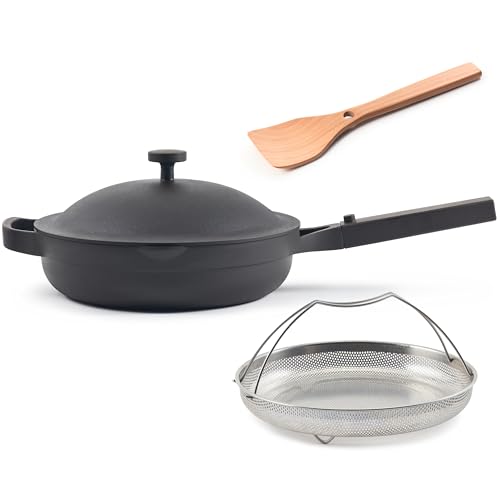
The short answer is conditional, and the review seems to treat it as PFAS-free only in a qualified sense. The Always Pan 2.0 is a PFAS-free ceramic nonstick pan, which is a different safety story from stainless steel, cast iron, or a titanium-surfaced pan. It seems best when you want easy release and compatibility with induction, but it is not the right tool for very high heat or heavy metal-utensil use.
Value depends on how you cook. If the household wants a lighter pan for eggs, vegetables, and moderate stovetop use, that tradeoff makes sense. If the kitchen leans hard on searing, broiler work, or long service life, the safer buy is usually stainless steel, enameled cast iron, or a harder hybrid like HexClad.
Specs at a glance
| Model | Coating or surface | Base / construction notes | Compatibility | Heat limit / care claims | Included accessories |
|---|---|---|---|---|---|
| Our Place Always Pan 2.0, 10.5" Ceramic Nonstick Pan, 2.6 Qt | PFAS-free Thermakind ceramic nonstick | Lightweight recycled aluminum body | Induction compatible | Oven-safe temperature is not given in the product data here; ceramic nonstick still needs moderate heat and no empty-pan heating | Steamer and spatula included |
| Our Place Titanium pan | Titanium-surface pan, positioned as more durable than ceramic nonstick | Construction details vary by model revision; check the base and handle materials on the current listing | Model-dependent; confirm induction compatibility before buying | Usually marketed for better scratch resistance than ceramic, but still needs care around overheating and utensil abuse | Accessory bundle varies by version |
| Caraway 12-Piece Non-Stick Ceramic Cookware Set | PFAS-free ceramic surface | Cookware set with multiple pieces for everyday cooking | Stovetop, oven, induction, and gas compatibility stated in the product data | Oven-safe and stovetop safe; still a coated set with normal ceramic wear limits | Set format covers frying pans and Dutch oven use cases |
| Le Creuset Enameled Cast Iron Signature Braiser, 5 qt. | Enameled cast iron, not nonstick coating | Heavy cast-iron body with enamel finish | Works on common cooktops, including induction | Better for higher heat and long simmering than ceramic nonstick; still avoid thermal shock | No accessory bundle is part of the core product |
Who it is for
Our Place is best for cooks who stay in the low-to-medium heat range and want a lighter pan with easy food release. It also makes sense for induction users who want a manageable everyday pan, as long as they accept the care limits that come with ceramic nonstick.
It is a poorer fit for high-heat searing, frequent broiler use, or anyone who routinely cooks with metal tools. Households that want one pan to take repeated abuse should look at stainless steel, cast iron, or a hybrid steel-and-nonstick design instead.
Best fit by kitchen setup
- Eggs, fish, vegetables, and reheating: good fit for the Always Pan line.
- Induction cooktops: acceptable if the exact model is listed as induction compatible.
- Small kitchens: the lighter aluminum body is easier to lift and store than cast iron.
- High-heat cooks: choose a different material.
Are Our Place pans safe?
Yes, in a limited sense: the Always Pan line uses ceramic nonstick that is described as PFAS-free, so it avoids the PFAS/PTFE/PFOA chemistry people often worry about in older nonstick coatings. That does not make it heat-proof or scratch-proof, and it does not mean every use condition is safe for the coating.
What PFAS, PTFE, and PFOA actually mean
PFAS is the broad family people ask about when they want to avoid persistent fluorinated chemicals. PTFE is the classic nonstick polymer associated with many older pans, while PFOA was a processing aid tied to older manufacturing. A PFAS-free ceramic coating is a different category, but it still has a wear limit.
That distinction matters. “PFAS-free” speaks to chemistry, not to durability or heat abuse. A pan can be marketed as safer from a chemical standpoint and still fail early if it is overheated, scraped with metal, or tossed in the dishwasher after every use.
Heat limits and what overheating does
Ceramic nonstick is best treated as a medium-heat surface. Empty-pan heating is the fastest way to damage it. High burner settings can dry out the coating, dull release, and shorten the usable life long before the base itself is worn out.
Once a coating starts to lose release, users often push the heat higher to compensate. That usually makes the problem worse. The pan may still be food-safe for normal cooking, but it is no longer the right tool for the job.
Signs a coated pan should be retired
- Peeling or flaking coating
- Deep scratches you can feel with a fingernail
- Warped base that spins or rocks on the cooktop
- Persistent odor when heated under normal conditions
- Food sticks in spots that used to release cleanly
- Visible blistering or cloudy patches that keep spreading
If one of those shows up, the practical call is to retire the pan from regular cooking. A damaged nonstick coating is not a “keep using it carefully” item forever. It is a replace-or-demote item, usually into low-risk tasks only if the damage is minor and not flaking.
What works
The Always Pan formula makes sense for everyday stovetop jobs that benefit from easy release. Eggs, tender fish, quick sautés, and reheated leftovers are the obvious wins. For many home cooks, that is enough to justify a coated pan.
Cleaning is also straightforward when the pan is treated gently. Warm water, mild soap, and a soft sponge are usually enough. Dishwasher use is often claimed for coated cookware, but hand-washing is still the safer default if the goal is longer coating life.
Pros and cons
- Pros: PFAS-free ceramic nonstick; lighter than cast iron; induction compatibility on the Always Pan line; includes useful accessories on the listed model.
- Cons: coating is still wear-prone; not suited to high heat; metal utensils and abrasives shorten lifespan; damaged nonstick should be retired early.
Cooking performance in normal home use
For moderate-heat cooking, the main advantage is release. That matters most for sticky proteins and delicate foods. The pan is less appealing for hard searing because ceramic nonstick is not built to tolerate the same abuse as stainless steel or cast iron.
For induction, the key question is whether the base is flat and the model is explicitly compatible. A flat aluminum pan with an induction-ready base can work well, but induction users should still watch for hot spots and avoid overheating.
What does not
The biggest drawback is the same one that affects most ceramic nonstick cookware: wear happens faster than people expect when the pan is used hot or scrubbed hard. A pan can look fine on the shelf and still lose performance if it is treated like a stainless skillet.
Scratch and wear concerns
Metal utensils are a bad idea on ceramic nonstick unless the manufacturer explicitly allows them, and even then the safer habit is still wood, silicone, or nylon. Abrasive powders, green scrub pads, and stacked storage without pan protection also raise the scratch risk.
Dishwasher use is another tradeoff. It may be allowed, but detergent chemistry and high wash heat can age the coating faster. Hand-washing is slower and gentler on the surface.
Heat limits that rule out some cooking styles
If the household wants a true searing pan, this is the wrong lane. Browning a steak hard, heating an empty pan, or running the burner at max for long stretches can shorten the life of the coating and may create unpleasant odor when the surface is pushed too far.
That is why coated cookware should be judged by use case, not by broad labels like “safe” or “healthy.” Safe for eggs is not the same as safe for a screaming-hot wok-style session.
Safety decision table: Our Place models compared
| Model | Coating type | Heat tolerance | Compatibility | Scratch risk | Ideal user |
|---|---|---|---|---|---|
| Always Pan 2.0 | PFAS-free Thermakind ceramic nonstick | Best at low-to-medium heat; avoid empty-pan heating | Induction compatible | Moderate to high if used with metal utensils or abrasives | Egg cooks, light sautés, small kitchens, induction users who want easy release |
| Our Place Titanium pan | Titanium-surface nonstick style | Better durability positioning than ceramic, but still not a high-heat searing pan | Check the current model listing | Lower than ceramic if the surface is truly titanium-reinforced, but not scratch-proof | Buyers who want more wear resistance than ceramic and are willing to compare carefully with hybrid pans |
| Caraway 12-Piece Set | PFAS-free ceramic nonstick | Moderate heat; oven and stovetop safe per product data | Induction, gas, stovetop, oven | Moderate; full set ownership often leads to overuse of the coating | Households replacing multiple old nonstick pieces at once |
| Le Creuset Braiser | Enameled cast iron | High heat capable compared with ceramic nonstick | Induction and other common cooktops | Low coating-scratch risk, but enamel can chip if abused | People who want long wear, braising, and better heat retention |
Alternatives

The Caraway 12-Piece Set is the cleaner comparison if a buyer wants PFAS-free ceramic across multiple pieces, not just one pan. It works better as a full kitchen reset than the Always Pan alone, but it keeps the same basic ceramic tradeoff: better release, limited heat tolerance, and a real need for gentle care.

The Le Creuset braiser is the safer pick for people who want heat tolerance and long-term durability more than nonstick convenience. Enameled cast iron is heavier and less slippery for eggs, but it is far better for browning, braising, and everyday abuse. The honest drawback is weight and price.
HexClad versus Our Place Titanium
HexClad is the more obvious comparison for shoppers who want something between stainless steel and nonstick. Compared with a titanium-surface Our Place pan, HexClad is usually the better bet for scratch resistance and broader heat range, while the Our Place titanium pitch leans more toward easier release and lighter handling.
If the buyer cooks hot and uses metal tools, HexClad is usually the safer long-term choice. If the buyer wants a lighter pan and cooks mostly eggs, vegetables, and shallow sautés, the titanium-surface Our Place option may be fine, but it is still a coating-based compromise.
Stainless steel and budget-safe options
Stainless steel is the default answer for higher heat and longer wear. It does not offer nonstick release, so food technique matters more, but it avoids the coating life cycle that makes ceramic pans disposable for many households.
For shoppers on a budget, the safest low-risk move is often a basic stainless skillet plus one coated pan for eggs. That split keeps the nonstick surface for gentle work and preserves the sturdier pan for browning and deglazing.
Should you buy it?
Buy Our Place if your cooking style matches the limits: low-to-medium heat, gentle utensils, and realistic care. Skip it if you cook hot, want a pan for hard searing, or need the longest possible service life. That split is more useful than a simple yes-or-no verdict.
For households that want an easy-release coated pan and understand when to retire it, the Always Pan is reasonable. For households with kids, frequent high-heat cooking, or a habit of dishwasher abuse, stainless steel or enameled cast iron is the safer buy.
Retire-or-keep checklist for damaged nonstick cookware
- Inspect the surface for peeling, flaking, or deep scratches.
- Check whether the base rocks or has warped.
- Heat the pan on a normal burner and watch for odor or smoke at ordinary settings.
- Test release with a small amount of oil and a simple egg cook.
- If release is failing or damage is spreading, retire the pan from regular use.
Frequently asked questions
is our place cookware safe
Our Place cookware is safe when the model and use case match the material. The Always Pan line uses PFAS-free ceramic nonstick, which is appropriate for low-to-medium heat and gentle care. It is not the right choice for empty-pan heating, heavy scratching, or aggressive searing.
our place titanium pan review vs hexclad
HexClad is usually the better pick for scratch resistance and mixed-heat cooking. An Our Place titanium-surface pan is more appealing if the buyer wants lighter handling and nonstick convenience, but the comparison favors HexClad for durability, especially in kitchens that use metal tools or hotter burners.
what is the safest cookware set
The safest cookware set is the one that matches cooking style without pushing coating limits. For most homes, that means a stainless-steel core set for high heat plus one coated piece for eggs or delicate food. If a full nonstick set is desired, PFAS-free ceramic is the cleaner chemistry choice, not the longest-wearing one.
what is the best and safe cookware
The best safe cookware for everyday use is usually stainless steel or enameled cast iron, because both tolerate higher heat and avoid the short lifespan of coated nonstick. If easy release matters more than toughness, a PFAS-free ceramic pan is acceptable, but only with moderate heat and careful cleaning.
are our place pans worth it
They are worth it for buyers who want a lighter nonstick pan, understand ceramic wear, and mostly cook at medium heat or below. They are not worth it for people who expect one pan to replace stainless steel, cast iron, and a searing pan at the same time.
our place cookware review reddit
Reddit discussion usually mirrors the same split seen in owner feedback: people like the release and dislike the wear. That is useful, but it should be filtered through the basics of coating chemistry, heat limits, and retirement signs rather than treated as proof that the pan is good or bad for everyone.
what is the best rated pots and pans set
The best rated pots and pans set is not always the safest or longest-lasting one. For many kitchens, a stainless-steel set or a hybrid set rates better over time because it tolerates more heat and more abuse. A coated set can rate highly for convenience while still having a shorter practical lifespan.
Products related to this article
Sponsored / affiliate links. As an Amazon Associate I earn from qualifying purchases. I may earn additional commission from eligible campaigns.