Is Cuisinart Stainless Steel Cookware Safe To Use?
Buying new pots and pans can be exciting. You want good quality. You want things that last.

Cuisinart
Cuisinart MultiClad Pro 12-Piece Stainless Steel Cookware…
- PROFESSIONAL CLAD CONSTRUCTION — The tri-ply flagship collection for serious home cooks who want clad performance up the sidewalls…
- TRI-PLY TO THE RIM FOR EVEN HEATING — Heat Surround technology distributes heat evenly along the bottom and up the sidewalls. This…
- PRO PERFORMANCE ON EVERY SURFACE — Induction compatible, along with gas, electric, and glass-ceramic cooktops, plus oven and broil…
As an Amazon Associate I earn from qualifying purchases.
You also want them to be safe for your family. Many people wonder about Cuisinart stainless steel cookware safety. Does the metal leach into food?
Is it good for everyday cooking? Let’s dive in. We’ll look at what makes this cookware popular and if it’s a good choice for your kitchen.
You’ll learn about the materials, how they work, and what to expect over time.
Cuisinart stainless steel cookware is generally considered safe for everyday use. It’s made from durable materials that do not typically react with food, ensuring a safe cooking experience when used as intended. Proper care helps maintain its safety and longevity.
What Makes Cuisinart Stainless Steel Cookware Safe?
Cuisinart uses high-quality stainless steel for its cookware. This material is chosen for many good reasons. It’s strong.
It lasts a long time. It doesn’t easily scratch or pit. This makes it a reliable choice for kitchens everywhere.
We will look at the layers and the metals involved. This helps understand why it’s a safe bet.
The Anatomy of Cuisinart Stainless Steel Cookware
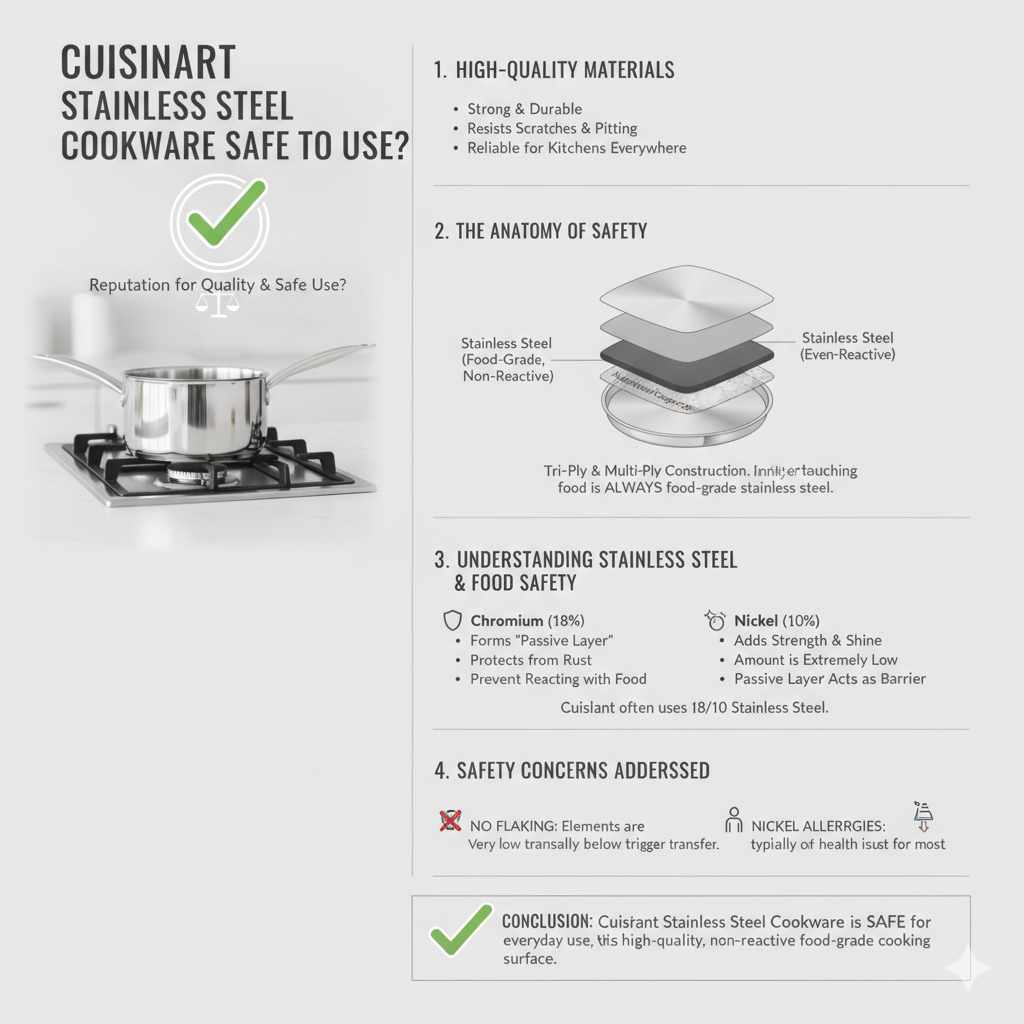
Most Cuisinart stainless steel pans are not just one solid piece of metal. They often have layers. This is called “clad” construction.
The most common type is called “tri-ply.” This means it has three layers. There’s a core layer, usually made of aluminum or copper. Then, there are layers of stainless steel on the outside and inside.
Why use layers? Aluminum heats up very fast. Copper heats up fast and evenly.
Stainless steel is great because it’s strong and non-reactive. It’s also easy to clean. The stainless steel on the cooking surface touches your food.
This layer is what we need to talk about for safety. It doesn’t rust or react with acidic foods. This is a big plus for health.
Some Cuisinart pots and pans might have more layers. These are often called “multi-ply” or “five-ply.” The idea is the same: combine the best heating properties with a safe, durable cooking surface. The inner layer that touches your food is always food-grade stainless steel.
This is the key to its safety.
Understanding Stainless Steel and Food Safety
Stainless steel is a mix of metals. The main parts are iron and chromium. The chromium forms a thin, invisible layer on the surface.
This is called the “passive layer.” It protects the steel from rusting. It also stops it from reacting with food. This is why stainless steel is used for so many things we eat from, like utensils and bowls.
The specific type of stainless steel matters. Cuisinart often uses 18/10 stainless steel. The “18” means it has about 18% chromium.
The “10” means it has about 10% nickel. Both are safe in these amounts. Chromium protects against rust.
Nickel helps make the steel strong and shiny. These elements are bonded within the steel. They do not flake off into your food.
You might hear concerns about nickel. Some people have nickel allergies. However, the amount of nickel that could potentially transfer from high-quality stainless steel is extremely low.
It’s much lower than what typically triggers a reaction in most people with nickel sensitivities. Plus, the passive layer on the stainless steel acts as a barrier.
Iron can also be a concern for some. While iron is essential for our bodies, too much can be bad. However, stainless steel releases very, very little iron.
It’s not like cast iron, where iron can transfer more easily. For most people, the tiny amount that might transfer is not a health issue at all. It’s much less than what you get from other food sources.
My Own Experience: A Close Call with Cookware Worries
I remember setting up my first apartment kitchen. I bought a whole set of shiny new pots and pans. They looked amazing.
But then I started reading things online. Suddenly, every pot felt like a potential poison. Was this stainless steel really safe?
I saw articles talking about metal leaching. I pictured tiny bits of nickel and iron ending up in my pasta sauce.
One evening, I was making a tomato-based stew. It simmered for hours. I felt a knot of worry in my stomach.
Was the acidity of the tomatoes making the metal worse? I kept poking at the food. I tasted it very carefully.
Was it metallic? I couldn’t tell. My mind was playing tricks on me.
I ate a small bowl, but I felt uneasy.
That night, I couldn’t sleep well. I kept thinking about the cookware. The next day, I did more research.
I talked to a friend who is a chef. She laughed kindly at my worries. She explained how good stainless steel is made.
She showed me her own pans, which were old but still looked great. She told me about the passive layer. She said that reputable brands like Cuisinart use safe alloys.
It was a lightbulb moment. My anxiety started to fade. I realized I had been letting fear get the better of me.
From then on, I learned to trust the science behind good cookware.
Quick Scan: Stainless Steel Layers
Tri-Ply: Most common. Aluminum or copper core between two stainless steel layers. Great balance of heating and safety.
Multi-Ply: More layers. Often includes stainless steel and aluminum/copper. Offers superior heat control.
Inner Surface: Always food-grade stainless steel. This is the part that touches your food.
Real-World Kitchen Habits and Cuisinart Cookware
How you use and care for your pots and pans makes a big difference. Cuisinart stainless steel cookware is built for daily life. It can handle high heat for searing.
It can simmer gently for sauces. The way it’s designed helps it work well in a typical American kitchen.
Cooking with Acids
One common question is about cooking with acidic foods. Think tomatoes, lemon juice, or vinegar. These foods can sometimes react with certain metals.
However, high-quality stainless steel, like what Cuisinart uses, is designed to resist this. The chromium in the steel forms a strong protective layer.
When you cook with acidic foods in stainless steel, the pan might look a little duller after a while. Or you might see faint streaks. This is normal.
It does not mean the metal is breaking down or leaching into your food. The passive layer is still there, doing its job.
What you should avoid is leaving highly acidic foods sitting in the pan for very long periods after cooking. For example, don’t store leftover marinara sauce in the stainless steel pot overnight. Transfer it to a glass or plastic container.
This is good practice for any type of cookware. It helps keep your food fresh and your pans in good shape.
High Heat and Sticking
Stainless steel is excellent for searing meats. It gets hot enough to create a beautiful crust. However, food can sometimes stick.
This is not a safety issue. It’s more about cooking technique. If you heat the pan properly and use enough oil or butter, sticking is less of a problem.
A common tip is to heat the pan first, then add your oil. The oil should shimmer. Then add your food.
This helps prevent sticking. Also, avoid overcrowding the pan. Give your food space to cook properly.
If something does stick, don’t scrub aggressively with steel wool. This can scratch the surface. Use a good cleaner and a soft sponge.
Sometimes soaking the pan helps loosen stuck-on bits.
If you notice discoloration, like rainbow streaks, this is also usually harmless. It’s caused by overheating or mineral deposits from water. A little white vinegar can often clean this right up.
This is a common sight in many busy kitchens.
Myth vs. Reality: Stainless Steel
Myth: Stainless steel cookware constantly releases harmful metals into food.
Reality: High-quality stainless steel has a protective layer that prevents significant metal transfer. Any trace amounts are well within safe limits.
Myth: Sticking food means the pan is damaged and unsafe.
Reality: Sticking is usually due to cooking technique or pan temperature, not pan safety. It can be cleaned with proper methods.
What This Means for Your Kitchen Safety
Understanding how your cookware works helps you feel confident. With Cuisinart stainless steel, you can generally relax. It’s made to be safe for cooking your family’s meals.
When Is It Normal?
It’s normal to see some minor scratches on the surface over time. This is like a badge of honor for a well-used pan. It’s normal to see slight discoloration, especially if you cook at high heat or use acidic ingredients.
These are cosmetic. They don’t mean the pan is unsafe.
It’s normal for food to sometimes stick a bit. This can happen with any non-stick surface, including stainless steel. Learning how to prevent it is part of cooking.
If you clean your pans well after each use, they will continue to be safe and effective.
When Should You Be Concerned?
You should be concerned if your cookware is visibly damaged. This means deep gouges or pitting. If the layers seem to be separating, that’s a problem.
If there are cracks in the metal, it’s time to replace the pan. These kinds of serious damages can affect how the pan heats. They could potentially lead to issues.
Another sign to watch for is a strong metallic taste in your food that doesn’t go away. If everything you cook tastes off, and it wasn’t like that before, something might be wrong. This is rare with good quality stainless steel, but it’s good to be aware of.
If you have a severe nickel allergy, and you notice unusual skin reactions after cooking, it might be worth discussing with your doctor and considering other cookware materials. However, for most people, this is not an issue with Cuisinart stainless steel.
Simple Checks for Your Cookware
Inspect the Surface: Look for any deep scratches, cracks, or signs of warping.
Check the Handle: Make sure the handle is securely attached.
Test for Wiggling: The pan should sit flat on the stove. The handle should not feel loose.
Taste Your Food: If you notice a persistent metallic taste, investigate further.
Quick Tips for Safe and Lasting Cookware
Taking good care of your Cuisinart stainless steel cookware helps keep it safe and makes it last. These are simple steps that everyone can follow.
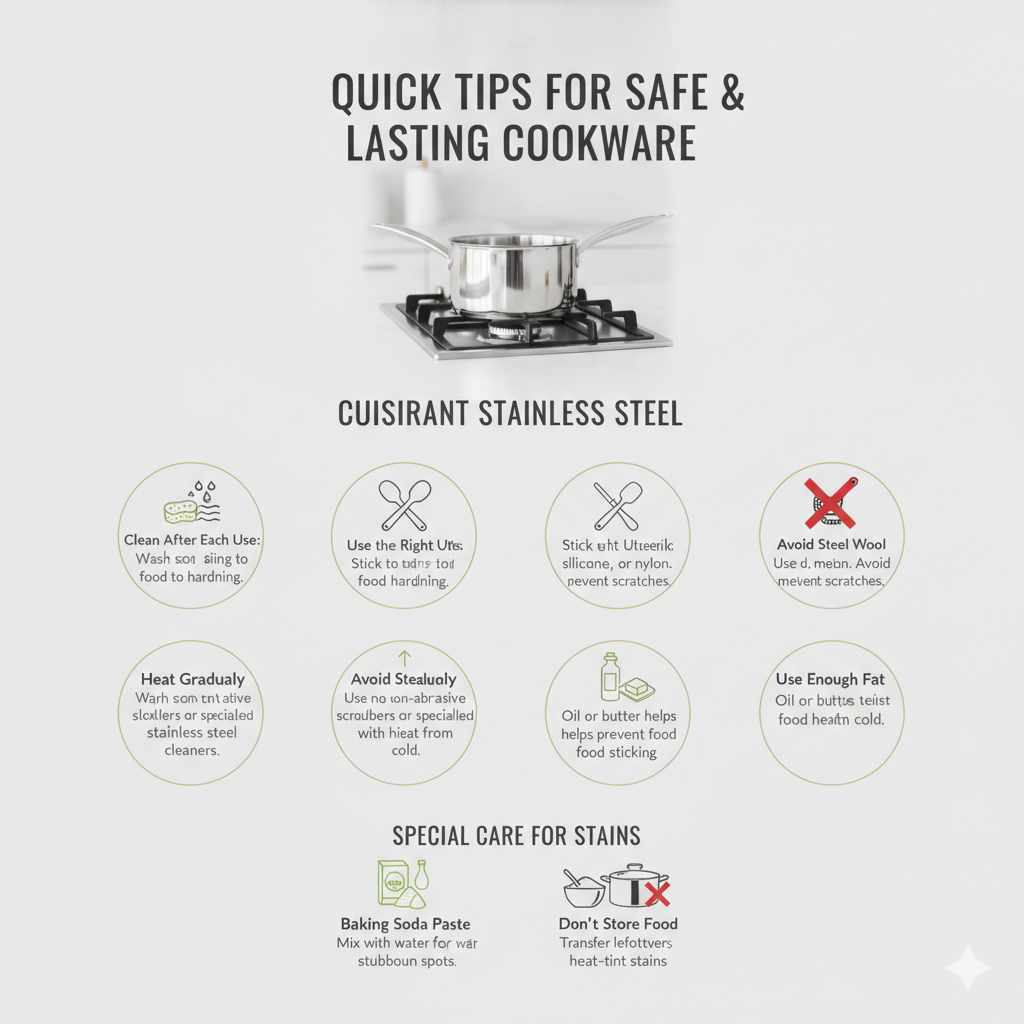
- Clean After Each Use: Wash your pots and pans soon after they cool down. This prevents food from hardening.
- Use the Right Utensils: Stick to wood, silicone, or nylon. Avoid metal utensils that can scratch.
- Avoid Steel Wool: For tough messes, use a non-abrasive scrubber or a cleaner made for stainless steel.
- Heat Gradually: Don’t blast the heat from cold. Let the pan warm up slowly.
- Use Enough Fat: Oil or butter helps prevent food from sticking.
- Don’t Store Food: Transfer leftovers to other containers.
- Handle Stains with Care: A paste of baking soda and water can often remove stubborn spots. For tougher stains, a little white vinegar can work wonders.
Quick Guide: Common Cookware Issues
Issue: Food Sticking
Cause: Pan not hot enough, not enough oil, overcrowding.
Solution: Preheat pan, use oil, cook in batches.
Issue: Rainbow Stains
Cause: Mineral deposits or overheating.
Solution: Clean with vinegar or a stainless steel cleaner.
Issue: Scratches
Cause: Metal utensils, harsh scrubbing.
Solution: Use soft utensils, gentle cleaning.
Frequently Asked Questions About Cuisinart Stainless Steel Safety
Is Cuisinart stainless steel cookware really safe?
Yes, Cuisinart stainless steel cookware is considered safe for everyday cooking. It is made from food-grade stainless steel alloys, which are non-reactive and durable. These materials do not typically leach harmful metals into your food when used as intended.
Can stainless steel release nickel into food?
Stainless steel contains nickel, but the amount that can potentially transfer to food is extremely small. High-quality stainless steel like Cuisinart’s has a protective layer that minimizes contact. For most people, this amount is too low to cause any health issues or allergic reactions.
Is it safe to cook acidic foods in Cuisinart stainless steel?
Yes, it is safe to cook acidic foods like tomatoes or citrus in Cuisinart stainless steel cookware. The stainless steel is designed to resist corrosion and reaction with acidic ingredients. It’s best practice not to store leftovers in the pan for extended periods, however.
What should I do if food sticks to my Cuisinart stainless steel pan?
If food sticks, it’s usually not a safety issue but a cooking technique matter. Try preheating the pan properly before adding oil and food. If food is stuck, you can often remove it by simmering a little water in the pan or using a gentle stainless steel cleaner and a soft sponge.
Are scratches on stainless steel cookware dangerous?
Minor scratches are generally not dangerous. They are often cosmetic and can occur with normal use. However, if you notice deep gouges, cracks, or the layers of the pan separating, it might be time to replace the cookware as its performance and integrity could be compromised.
How do I clean discolored stainless steel cookware?
Discoloration, often appearing as rainbow streaks or dull spots, can be cleaned. Try making a paste of baking soda and water and gently scrubbing. For tougher stains or discoloration, a small amount of white vinegar can also be effective.
Rinse thoroughly afterward.
Is Cuisinart stainless steel cookware a good investment for health?
Yes, Cuisinart stainless steel cookware is considered a healthy choice for your kitchen. Its non-reactive surface and durable construction mean you get safe cooking for years. By caring for it properly, you ensure it remains a reliable and safe part of your cooking routine.
Final Thoughts on Your Cuisinart Cookware
So, is Cuisinart stainless steel cookware safe? The short answer is a resounding yes. It’s a popular choice for good reasons.
It’s durable, performs well, and is designed with your health in mind. You can feel good about using it for all your cooking needs. Enjoy your meals!
Related pick: Check today's price on Amazon
Products related to this article
Sponsored / affiliate links. As an Amazon Associate I earn from qualifying purchases. I may earn additional commission from eligible campaigns.