Ceramic Cookware Vs Nonstick: Key Differences Explained
It’s a common kitchen puzzle. You’re looking for new pots and pans. You see terms like “ceramic” and “nonstick” everywhere.

GreenPan
GreenPan 10 Piece Cookware Set, Non-Toxic PFAS-Free…
- SET INCLUDES: 8” and 11” frying pans, 2QT and 3QT saucepans with lids, 3.3QT sauté pan with lid, and 5QT stock pot with lid
- REINFORCED WITH DIAMONDS: GreenPan's original diamond-infused nonstick coating offers remarkable durability, balanced heating, and…
- TOXIN-FREE: GreenPan's Thermolon healthy ceramic nonstick coating is free of PFAS, PFOA, lead, and cadmium
As an Amazon Associate I earn from qualifying purchases.
They sound similar, but are they the same? This can be confusing when you just want to cook a good meal. Let’s break down what makes ceramic cookware different from traditional nonstick.
Ceramic Cookware vs. Nonstick: Understanding the Basics
Many people wonder about ceramic cookware versus nonstick. They often get mixed up. This is because both aim to make cooking easier.
They both promise food won’t stick. But how they achieve this is quite different. It’s good to know these differences.
This helps you pick the right tools for your kitchen.
Traditional nonstick pans usually have a coating. This coating is often made from a material called PTFE. You might know it as Teflon.
This coating creates a very slick surface. Food glides right off. Ceramic cookware is a bit different.
Its nonstick surface is often made from a ceramic material. This material is applied as a coating. It’s baked onto the metal pan.
This creates a hard, smooth surface. It also helps food release easily.
So, both offer easy food release. But the materials and how they are made are distinct. This leads to different properties.
These properties affect how they cook, how long they last, and how you care for them.
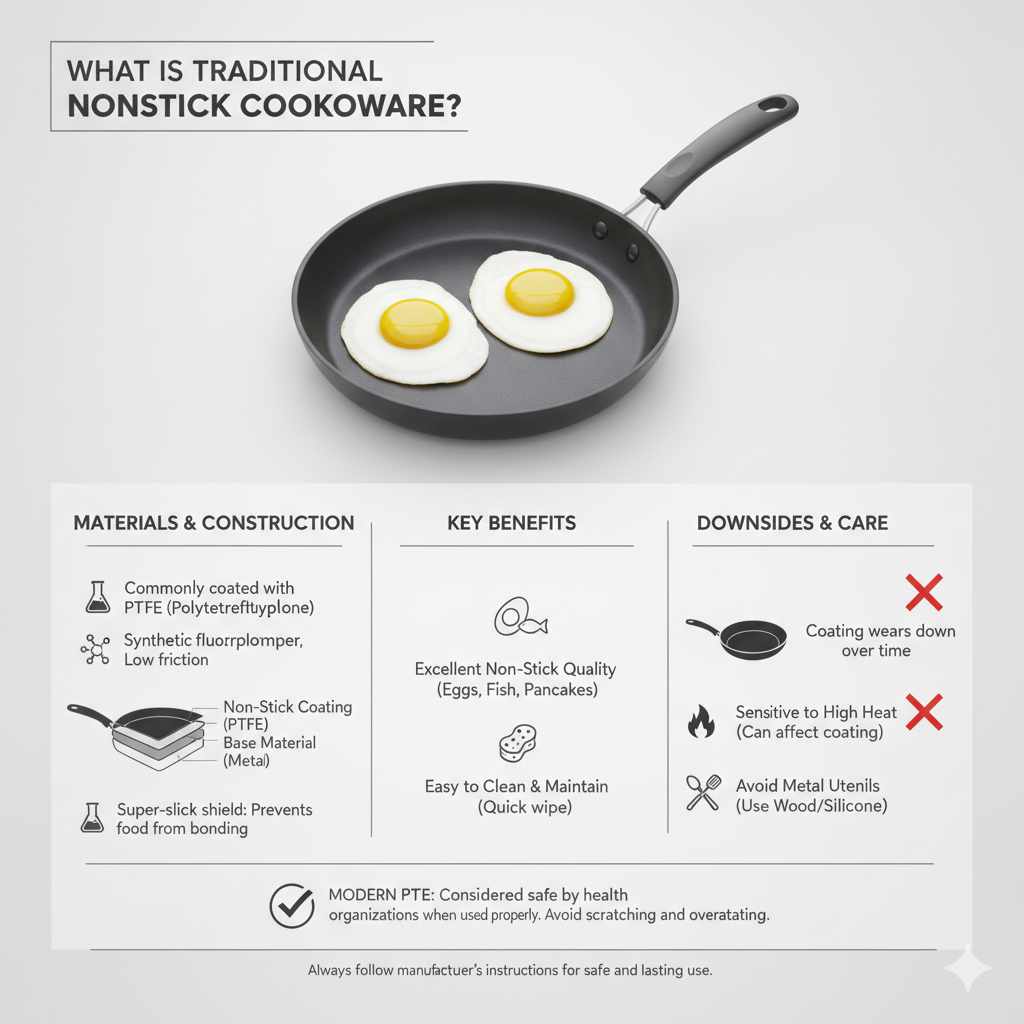
What is Traditional Nonstick Cookware?
Traditional nonstick cookware has been around for a while. Think about pans your parents or grandparents might have used. They often had a dark, smooth surface.
This surface was designed to keep food from sticking. The most common material used for this coating is Polytetrafluoroethylene (PTFE).
PTFE is a synthetic fluoropolymer. It’s known for its very low friction. This means almost nothing sticks to it.
It’s like a super-slick shield. The way it works is by creating a surface that oil and food particles can’t easily bond to. This makes it great for cooking delicate foods.
Think eggs, fish, or pancakes. They slide right out of the pan. It also makes cleaning much simpler.
Often, a quick wipe is all that’s needed.
However, there are some things to know about traditional nonstick. The coatings can wear down over time. High heat can also affect them.
Some people have concerns about chemicals used in older PTFE coatings. Modern PTFE coatings are considered safe by many health organizations. Still, the idea of a coating wearing away worries some home cooks.
Another point is that you generally can’t use metal utensils on them. They can scratch the surface. And you need to be careful with abrasive cleaners.
These can also damage the coating. This means you need to be gentle with your traditional nonstick pans to keep them working well.
What is Ceramic Cookware?
Ceramic cookware is a newer option. It gained popularity as people looked for alternatives. The term “ceramic” in cookware usually refers to the nonstick coating.
This coating is made from natural materials. It’s often derived from sand (silicon dioxide). This material is then turned into a ceramic-like substance.
It’s applied to the pan as a liquid. Then, it’s cured at high heat. This hardens it into a tough, smooth surface.
The main appeal of ceramic cookware is its nonstick quality. It works by creating a very smooth, dense surface. This surface prevents food from adhering.
It’s considered a more natural or “green” option by many. This is because the manufacturing process often uses fewer harsh chemicals. It also doesn’t rely on PTFE.
This appeals to people concerned about chemical exposure.
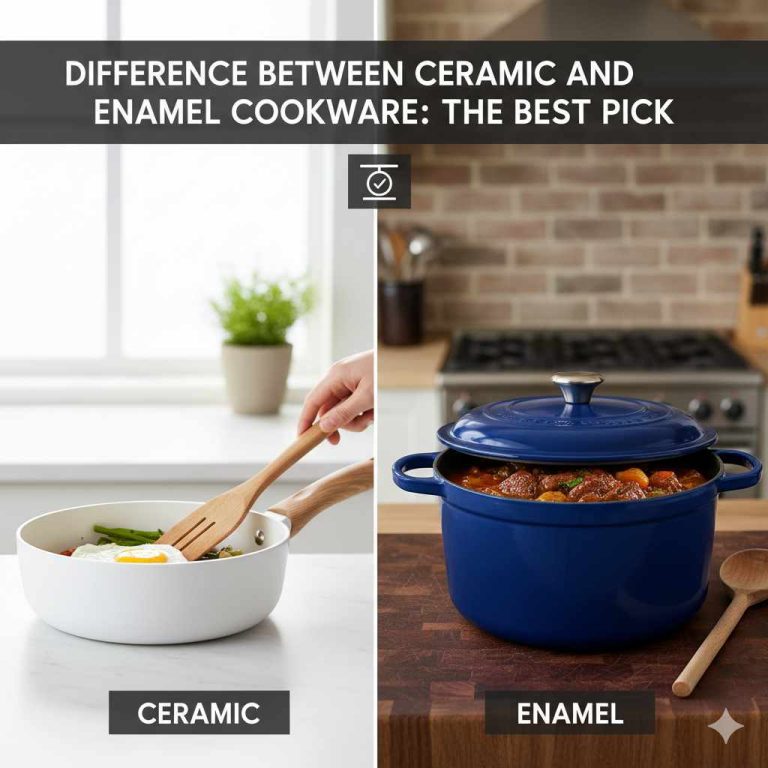
Ceramic pans are known for looking nice. They often come in bright colors. The surface can be white, cream, or other shades.
They are generally easy to clean. Like traditional nonstick, food doesn’t stick much. You can often use less oil when cooking.
This can be good for health.
However, ceramic coatings can also wear down. They might not be as durable as some other pan types. They can also be prone to chipping or scratching if not cared for properly.
While they are often marketed as metal-utensil safe, it’s still a good idea to use wood or silicone. This helps maintain the nonstick surface for longer.
Ceramic Cookware vs. Nonstick: Key Differences Explored
When you look at ceramic cookware versus nonstick, several key differences stand out. These differences impact how you use them and how well they perform in your kitchen. Understanding these points can help you choose the best cookware for your needs.
It’s not just about which one is “better,” but which one is better for you.
One big difference is the material of the nonstick coating itself. Traditional nonstick uses PTFE. Ceramic uses a silica-based coating.
This leads to different properties. Think about heat tolerance. PTFE can break down at very high temperatures.
Ceramic coatings are often said to handle higher heats better. This can be useful for searing or quick, hot cooking. However, it’s important to check the manufacturer’s recommendations for specific pans.
Another aspect is durability. Both types of coatings can wear out. But they might wear out in different ways.
PTFE coatings can scratch. They can also degrade if overheated. Ceramic coatings can chip.
They can also lose some of their nonstick ability over time. How you treat them matters a lot for both types.
The environmental aspect is also a difference for many. Ceramic coatings are often promoted as more eco-friendly. This is because they typically don’t contain PTFE or PFOA.
PFOA was a chemical used in older PTFE production. It’s now banned in many places. Ceramic is seen as a more natural option.
Traditional nonstick brands have worked hard to reassure consumers about the safety of modern PTFE. But the perception remains a factor for some.
Cleaning is generally easy for both. However, some users find ceramic easier to wipe clean. Others find traditional nonstick to be just as easy.
It often depends on what you’re cooking and how well you’ve cared for the pan.
Price is also a factor. Both types come in a wide range of prices. You can find very cheap pans of each type.
You can also find very expensive ones. Generally, high-quality pans of either type will cost more. But initial cost might not tell the whole story.
The lifespan of the pan is also important for value.
Let’s look at this more closely in a structured way. It helps to see it side-by-side.
Comparing Coating Types
Traditional Nonstick (PTFE-based):
- Material: Polytetrafluoroethylene (PTFE).
- How it works: Creates an extremely slick surface where food doesn’t bond.
- Heat Tolerance: Moderate. High heat can degrade the coating.
- Durability: Can scratch. Coating can wear down over time.
- Environmental Perception: Concerns about chemicals in older versions (PFOA), but modern PTFE is widely considered safe.
- Use: Best for low to medium heat cooking.
Ceramic Nonstick:
- Material: Silica-based coating derived from natural minerals.
- How it works: Forms a dense, smooth surface that prevents sticking.
- Heat Tolerance: Generally higher than PTFE, but varies by brand.
- Durability: Can chip or scratch. Nonstick properties can fade.
- Environmental Perception: Often marketed as a “greener” or PFOA/PTFE-free alternative.
- Use: Versatile, but check manufacturer limits for high heat.
Heat Tolerance and Cooking Performance
When you’re cooking, heat is everything. How cookware handles heat makes a big difference. This is a key area where ceramic cookware and traditional nonstick can differ.
Traditional nonstick pans, the ones with PTFE, are fantastic for everyday cooking. They are perfect for things like frying eggs or making grilled cheese. You can achieve a good sear with them too.
However, they have a limit. If you heat them too high, the PTFE can start to break down. This can release fumes.
It can also damage the coating. Manufacturers usually recommend avoiding temperatures above 500°F (260°C). This might seem high, but if you’re searing meat at the end of cooking, you can get close.
Or if you accidentally leave a pan on high heat for too long.
Ceramic nonstick coatings often boast higher heat tolerance. Many brands claim they can handle temperatures up to 500°F or even 550°F (288°C). This means you might feel more comfortable using them for quicker, hotter cooking.
For example, if you’re finishing a dish under the broiler for a few minutes. Or if you’re doing a fast stir-fry. This extra margin of safety can be reassuring.
It means you might be less likely to damage the pan by accident.
However, it’s crucial to remember that “nonstick” doesn’t always mean “perfect release” forever. Even high-heat-tolerant ceramic can lose its ability to release food. Especially if it’s exposed to extreme heat repeatedly.
Also, the performance of any nonstick surface depends on how it’s used. Adding a little oil or butter often helps. It aids in heat distribution and food release.
It also protects the coating.
I remember a time I was trying to sear some salmon. I used a ceramic pan that was new. I had it on pretty high heat.
The skin crisped up nicely. The fish released well. It felt very satisfying.
But then, I tried to cook eggs in it the next morning. They stuck a bit. It wasn’t terrible, but it wasn’t the perfect glide I expected.
I realized I had probably pushed the heat too high. Or maybe I hadn’t used any oil. It was a good reminder that even with higher heat tolerance, care is important.
Every pan has its limits. And learning those limits is part of becoming a better cook.
Heat Matters: A Quick Look
Maximum Recommended Heat (General Guidelines):
- Traditional Nonstick (PTFE): ~500°F (260°C)
- Ceramic Nonstick: ~500-550°F (260-288°C) – Always check manufacturer specs.
What This Means for Your Cooking:
- High-Heat Searing: Ceramic may offer a slight edge if used correctly.
- Delicate Foods (Eggs, Fish): Both excel at low to medium heat.
- Oven Use: Check manufacturer limits for oven-safe temperatures.
Durability and Lifespan
One of the biggest questions people have is: how long will these pans last? The durability of ceramic cookware versus nonstick is a common concern. Nobody wants to buy new pots and pans only to have them wear out quickly.
Both types of nonstick coatings can degrade over time. Traditional PTFE coatings can develop scratches. These scratches can make food stick more.
They can also chip or flake off. If the coating is compromised, the pan’s nonstick ability decreases. You also want to avoid using metal utensils.
These can easily scratch the surface. Even dishwashers can be tough on PTFE coatings over time. They can dull the finish and wear down the surface.
Ceramic nonstick coatings have their own challenges. They are known for being quite hard. However, they can also be brittle.
This means they are more prone to chipping if dropped. Or if a metal utensil hits the edge of the pan too hard. Over time, the smooth surface can also become less slick.
Food might start to stick more than it used to. This can happen even with careful use. It’s like the magic wears off, slowly.
So, which lasts longer? It’s hard to give a definitive answer. It really depends on how you use and care for the pans.
If you treat both types with care, you can extend their life. This means using wood, silicone, or plastic utensils. It means avoiding abrasive cleaners.
It means not overheating the pans. And often, hand-washing is best for both.
I’ve had pans of both types that lasted for years. I’ve also had cheap ones that didn’t make it six months. I found that with traditional nonstick, the biggest killer was usually overheating.
I’d forget a pan was on the stove. With ceramic, it was more about accidental chips or just the surface becoming less effective. It felt like it lost its “grip” on the food.
A few years ago, I bought a mid-range set of ceramic pans. They looked beautiful. The nonstick was amazing at first.
I used them constantly. Then, one day, I dropped a lid onto the edge of one pan. It made a small chip.
I was so bummed! I tried to ignore it, but I knew it was there. And slowly, food started to stick a little more in that spot.
It wasn’t the end of the world, but it was a sign of wear. It made me appreciate how delicate even hard surfaces can be.
It’s important to set realistic expectations. No nonstick surface lasts forever. The goal is to get good performance for a reasonable amount of time.
Choosing a good quality pan from a reputable brand can help. They often use better materials and construction. This can lead to a longer lifespan for your cookware.
Lifespan Factors
Things that shorten lifespan for BOTH types:
- Metal utensils
- Abrasive cleaners
- Dishwasher use (can be harsh)
- Extreme overheating
- Sudden temperature changes (e.g., washing a hot pan with cold water)
Specific concerns:
- Traditional Nonstick: Scratches, degradation from heat, coating breakdown.
- Ceramic Nonstick: Chipping from impact, loss of nonstick properties over time.
Health and Safety Considerations
When we talk about ceramic cookware versus nonstick, health and safety are often at the forefront of people’s minds. Especially with past concerns about cookware coatings.
Traditional nonstick cookware’s main ingredient is PTFE. For many years, the production of PTFE involved a chemical called PFOA (perfluorooctanoic acid). PFOA was linked to health problems.
Because of this, many consumers became worried about PTFE cookware. However, it’s important to know that PFOA has been largely phased out of production worldwide. Most modern PTFE nonstick cookware is now PFOA-free.
Reputable brands will clearly state this. The US Environmental Protection Agency (EPA) and other health bodies consider modern PTFE cookware safe for home use. The coating itself is inert.
It’s not absorbed by the body. The main risk is if the coating is damaged and ingested. But even then, it’s generally considered to pass through the body without harm.
The concern with overheating PTFE is that it can break down and release fumes. These fumes can cause flu-like symptoms, sometimes called “polymer fume fever.” This typically happens at very high temperatures, far beyond normal cooking. So, avoiding overheating is key for both performance and safety with traditional nonstick.
Ceramic cookware is often marketed as a safer, more natural alternative. Its nonstick coating is typically made from silica. This is a mineral found in sand.
It’s heated and bonded to the pan. Because it doesn’t use PTFE, it naturally avoids the PFOA controversy. Many consumers feel more comfortable with this approach.
The ceramic surface itself is considered very stable and non-toxic.
As with traditional nonstick, the main safety point for ceramic is to avoid overheating. If a ceramic coating is exposed to extreme heat, it could potentially degrade. Though it’s generally considered more stable at higher temperatures than PTFE.
Also, if the coating chips, you want to avoid ingesting those chips. While the material is likely inert, it’s best to avoid it.
I once read an article about the science behind nonstick coatings. It explained that PTFE is incredibly stable. It doesn’t react with food.
It doesn’t leach into your meals. The actual risk comes from the manufacturing process of older nonstick, or from overheating. This helped me feel more at ease about the pans I use.
I still choose to use silicone utensils and avoid scorching hot pans. But knowing the science behind it made a difference.
Ultimately, both types of cookware, when used as directed, are generally safe for everyday cooking. The choice often comes down to personal preference and comfort level with different materials.
Safety Snapshot
Traditional Nonstick (Modern, PFOA-free):
- Main Material: PTFE (Polytetrafluoroethylene)
- Safety: Generally considered safe by health authorities when used correctly.
- Key Caution: Avoid overheating (above ~500°F / 260°C) to prevent fume release.
- Use: Follow manufacturer guidelines strictly.
Ceramic Nonstick:
- Main Material: Silica-based coating (mineral-derived)
- Safety: Considered non-toxic and safe. Free from PTFE/PFOA concerns.
- Key Caution: Avoid overheating and physical damage (chipping).
- Use: Follow manufacturer guidelines.
Cleaning and Maintenance: Keeping Them in Top Shape
Good cookware deserves good care. How you clean and maintain your pots and pans significantly impacts how long they last. This is true for both ceramic cookware and traditional nonstick.
For traditional nonstick, the golden rule is gentle. Hand washing is almost always recommended. Use a soft sponge or cloth.
Mild dish soap is fine. Avoid abrasive scrubbers like steel wool. These will scratch the PTFE coating.
You also want to let the pan cool down a bit before washing. Pouring cold water into a screaming hot pan can cause thermal shock. This can warp the pan or damage the coating.
For stubborn bits of food, you can try soaking the pan in warm, soapy water for a while. Or you can gently heat some water in the pan to loosen things up.
Ceramic nonstick cookware also benefits from gentle cleaning. Again, hand washing is the best approach. Use a soft sponge or cloth and mild dish soap.
Avoid harsh scrubbers. The main difference some people notice is that ceramic can sometimes be slightly easier to wipe clean. Bits of food might lift off more readily.
However, like PTFE, ceramic can also lose its nonstick properties if it’s not cleaned properly. Don’t use oven cleaners or strong degreasers on ceramic. These can damage the surface.
Be careful with the edges, too. If you chip the edge, that can be hard to clean around.
What about dishwashers? Most manufacturers advise against putting either type of nonstick cookware in the dishwasher. The high heat, harsh detergents, and potential for banging against other items can wear down the coatings faster.
Some high-end ceramic pans might be labeled as dishwasher safe, but even then, hand washing is usually the best way to preserve their performance.
Let’s think about tools too. For both traditional nonstick and ceramic, you should always use utensils made of wood, silicone, or plastic. Metal utensils can scratch and damage the nonstick surface.
This is a mistake I made early on with a good set of pans. I used a metal spatula out of habit. It left tiny little marks.
They seemed minor at first, but over time, they added up. It was a costly lesson in patience and using the right tools.
Regular maintenance is key. For any nonstick pan, consider giving it a light re-seasoning every so often. You can do this by applying a thin layer of cooking oil to the surface.
Then heating it gently on the stove for a few minutes. Wipe out any excess oil. This can help refresh the nonstick properties.
It’s a good practice for both PTFE and ceramic.
Care Tips for Longevity
For ALL Nonstick Pans (Ceramic & Traditional PTFE):
- Utensils: ALWAYS use wood, silicone, or plastic.
- Cleaning: Hand wash with soft sponge and mild soap.
- Cooling: Let pans cool before washing.
- Dishwashers: Generally avoid, even if labeled “safe.”
- Storage: Protect surfaces from scratches when stacked. Use pan protectors.
Ceramic Specific: Be careful not to chip the edges. Avoid harsh chemical cleaners.
Traditional PTFE Specific: Avoid abrasive scrubbers. Do not use metal scourers.
Real-World Context: When to Use Which
So, you’ve got the lowdown on ceramic cookware versus nonstick. Now, where do they fit into your kitchen routine? When is one a better choice than the other?
Traditional nonstick pans shine for everyday, low-to-medium heat cooking. Think about your breakfast routine. Frying eggs, making pancakes, cooking bacon.
These are tasks where a super-slick surface is a huge advantage. They make cooking delicate foods easy. They also make cleanup a breeze.
If you’re someone who cooks mostly simple meals, or if you’re making dishes that tend to stick (like omelets or crepes), a good traditional nonstick pan is hard to beat. They are often less expensive upfront too, making them a good choice for budget-conscious cooks. The key is to treat them well.
Avoid high heat. Use the right utensils. And replace them when they start showing significant wear.
Ceramic nonstick cookware can be a great all-around performer. Because they often have better heat tolerance, they can be more versatile. You might use them for a quick sear on chicken breasts.
Or for stir-frying vegetables. They can also be a good choice if you’re concerned about PTFE. Or if you just prefer a different aesthetic.
Many people like the look of ceramic pans, with their often brighter colors. They can handle a wider range of cooking tasks. However, they still require careful handling.
Don’t expect them to last forever if you’re rough with them. They are a good middle ground for people who want a nonstick surface but might occasionally push the heat a bit higher than recommended for traditional nonstick.
What about things that don’t need nonstick? For high-heat searing of steaks where you want a deep crust, or for cooking intensely flavored sauces where you want fond to develop and deglaze, neither ceramic nor traditional nonstick is ideal. Cast iron, stainless steel, or carbon steel are usually better choices for those tasks.
These materials are built for high heat. They can withstand rougher treatment. And they develop unique cooking properties over time.
I find myself reaching for different pans for different jobs. My well-seasoned cast iron skillet is my go-to for searing steaks. My stainless steel saucepan is perfect for making pan sauces.
But for my morning omelets? My trusty, older nonstick pan still does the job best. And when I’m making a quick batch of fried rice and want minimal sticking?
My ceramic pan is the one I grab. It’s not about one being superior. It’s about having the right tool for the right task.
And understanding the strengths of each type of cookware.
Best Use Cases
Traditional Nonstick (PTFE-based):
- Ideal For: Everyday cooking, delicate foods (eggs, fish, pancakes), low to medium heat.
- When it Excels: When you want effortless release and easy cleanup for simple meals.
- Budget-Friendly: Often available at lower price points.
Ceramic Nonstick:
- Ideal For: Versatile cooking, including slightly higher heat applications than PTFE.
- When it Excels: As a PTFE-free option, or when a bit more heat tolerance is desired. Good for stir-fries, quick sears.
- Aesthetic Appeal: Often available in a variety of attractive colors.
NOT Ideal For: High-heat searing for crust development, fond building, or tasks requiring very robust, scratch-resistant surfaces (consider cast iron, stainless steel, carbon steel).
What This Means for You: Making Your Choice
Deciding between ceramic cookware and traditional nonstick can feel like a big choice. But it’s really about figuring out what matters most in your kitchen. What are your cooking habits?
What are your priorities?
If your main goal is incredibly easy cooking for delicate items like eggs and fish, and you’re happy to treat your pans gently, traditional nonstick is a fantastic choice. Modern PTFE coatings are safe and effective. Just be mindful of heat.
And remember to replace them when they start to look worn. You can get excellent performance for a good amount of time if you care for them properly.
If you’re looking for a nonstick option that might handle slightly higher heat, or if you prefer to avoid PTFE and PFOA, ceramic is a strong contender. They offer good nonstick performance and can be a beautiful addition to your kitchen. They are a good balance for many home cooks.
Again, the key to their longevity is careful use and cleaning. Don’t subject them to extreme abuse.
Think about how often you cook. What kinds of dishes do you make most often? Do you have kids who might accidentally overheat a pan?
Are you someone who likes to experiment with high-heat searing? Answering these questions can help guide you.
It’s also okay to have both! Many kitchens benefit from a mix of cookware types. You might have a beloved cast iron skillet for searing.
A sturdy stainless steel pot for boiling pasta. And then a nonstick pan for your morning eggs. This way, you always have the best tool for the job.
Consider the warranty. A good manufacturer’s warranty can be a sign of confidence in their product. It can also offer peace of mind if something goes wrong.
Check what it covers and for how long.
Ultimately, the best cookware is the cookware you enjoy using. The cookware that makes cooking feel less like a chore and more like a pleasure. Whether you choose ceramic or traditional nonstick, or a mix of both, take the time to learn how to care for them.
Proper care is the secret to getting the most out of any kitchen tool.
Your Kitchen Decision Guide
Choose Traditional Nonstick (PTFE) if:
- Your priority is supreme ease for delicate foods like eggs.
- You mainly cook at low to medium heat.
- You are comfortable with modern PTFE and its safety guidelines.
- Budget is a primary concern for everyday pans.
Choose Ceramic Nonstick if:
- You prefer a PTFE/PFOA-free nonstick option.
- You want slightly more heat tolerance for versatile cooking.
- You value the aesthetic appeal of brightly colored cookware.
- You are willing to follow specific care instructions for durability.
Consider Stainless Steel or Cast Iron if:
- Your focus is high-heat searing, deep crust development, or fond building.
- You need cookware that can withstand very aggressive use.
- You want pans that can last a lifetime with proper care.
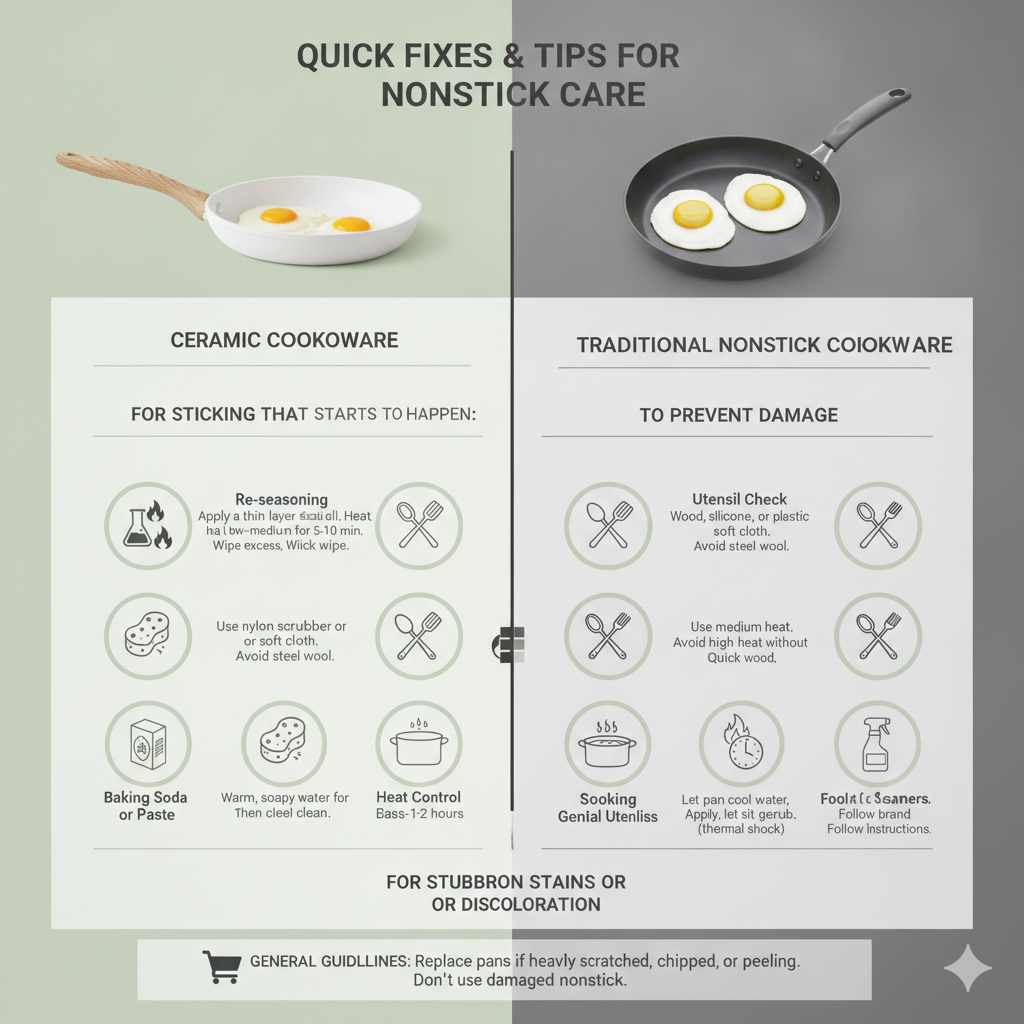
Quick Fixes and Tips for Nonstick Care
Sometimes, even with the best intentions, nonstick pans can start to lose their magic. Or you might notice small issues. Here are a few quick tips to help keep your ceramic and traditional nonstick pans performing well.
For sticking that starts to happen:
- Re-seasoning: Apply a very thin layer of cooking oil (like vegetable or canola) to the entire cooking surface. Heat the pan on low to medium-low heat for about 5-10 minutes. Let it cool. Wipe out any excess oil with a paper towel. This can help refresh the surface.
- Gentle Scrub: If food bits are really stuck, try gently scrubbing with a nylon scrubber or a soft cloth. Never use steel wool or abrasive pads.
- Soaking: For tough residue, fill the pan with warm, soapy water. Let it soak for an hour or two. Then try cleaning again.
To prevent damage:
- Utensil Check: Double-check your utensils. Are they all made of wood, silicone, or plastic? If you see any metal ones, put them away for nonstick pans.
- Heat Control: Be mindful of the stovetop setting. Use medium heat for most cooking. Avoid preheating a nonstick pan on high heat for too long without food in it.
- Cooling Down: Always let your pan cool down significantly before washing. This prevents thermal shock.
For stubborn stains or discoloration:
- Baking Soda Paste: For ceramic pans, a paste of baking soda and water can sometimes help lift stains. Apply it, let it sit for a bit, then gently scrub and rinse. Test in an inconspicuous spot first.
- Special Cleaners: Some brands make specific cleaners for nonstick surfaces. Follow their instructions carefully.
Remember, these are tips to extend life. They are not fixes for severely damaged pans. If your nonstick coating is heavily scratched, chipped, or peeling, it’s usually time to replace the pan.
Continuing to use a damaged nonstick pan is not recommended for performance or safety.
Frequently Asked Questions About Ceramic vs. Nonstick Cookware
Is ceramic cookware truly nonstick forever?
No, ceramic cookware, like all nonstick surfaces, will eventually lose some of its nonstick properties over time. How long it lasts depends heavily on how it’s used and cared for. With proper maintenance, it can provide excellent nonstick performance for several years.
Are modern nonstick pans (PTFE) safe to use if scratched?
If a modern PTFE nonstick pan has minor scratches, it is generally considered safe to continue using, as the PTFE coating itself is inert and non-toxic. However, the nonstick performance will be reduced. If the coating is heavily damaged, flaking, or peeling, it is best to replace the pan.
Can I use metal utensils on ceramic cookware?
While ceramic coatings are often marketed as durable, it is strongly recommended to use only wood, silicone, or plastic utensils on ceramic cookware. Metal utensils can scratch and damage the nonstick surface, significantly reducing its lifespan and effectiveness.
Does ceramic cookware require oil or butter to prevent sticking?
Ceramic cookware offers excellent nonstick properties, but using a small amount of oil or butter can further enhance performance. It helps with heat distribution and ensures even better food release, especially for delicate items. It also helps protect the nonstick surface.
Which type of nonstick cookware is better for high-heat cooking?
Generally, ceramic nonstick coatings are considered to have a higher heat tolerance than traditional PTFE-based nonstick coatings. However, it’s crucial to always check the manufacturer’s specifications for maximum recommended cooking temperatures for both types. Overheating any nonstick surface can damage it.
How do I clean burnt-on food from my nonstick pans?
For burnt-on food, try filling the pan with warm, soapy water and letting it soak for an hour or more. You can also gently heat water in the pan on the stove to loosen residue. Avoid abrasive scrubbers.
For ceramic, a paste of baking soda and water can sometimes help lift stains. Never use steel wool on either type.
Is ceramic cookware truly PFOA and PTFE-free?
Most ceramic nonstick cookware is marketed as being free from PTFE and PFOA. The nonstick surface is typically derived from minerals like silicon dioxide. However, always check the product packaging or manufacturer’s website to confirm specific material composition.
The Bottom Line on Ceramic vs. Nonstick
Choosing between ceramic and traditional nonstick cookware comes down to your personal needs and preferences. Both offer the convenience of easy food release and simpler cleanup. Traditional nonstick excels at everyday, low-heat tasks.
Ceramic provides a bit more versatility and is a popular choice for those seeking PTFE-free options. Remember that proper care is vital for the longevity of any nonstick surface. By understanding their differences and using them correctly, you can enjoy cooking with your chosen cookware for years to come.
Related pick: Check today's price on Amazon
Products related to this article
Sponsored / affiliate links. As an Amazon Associate I earn from qualifying purchases. I may earn additional commission from eligible campaigns.