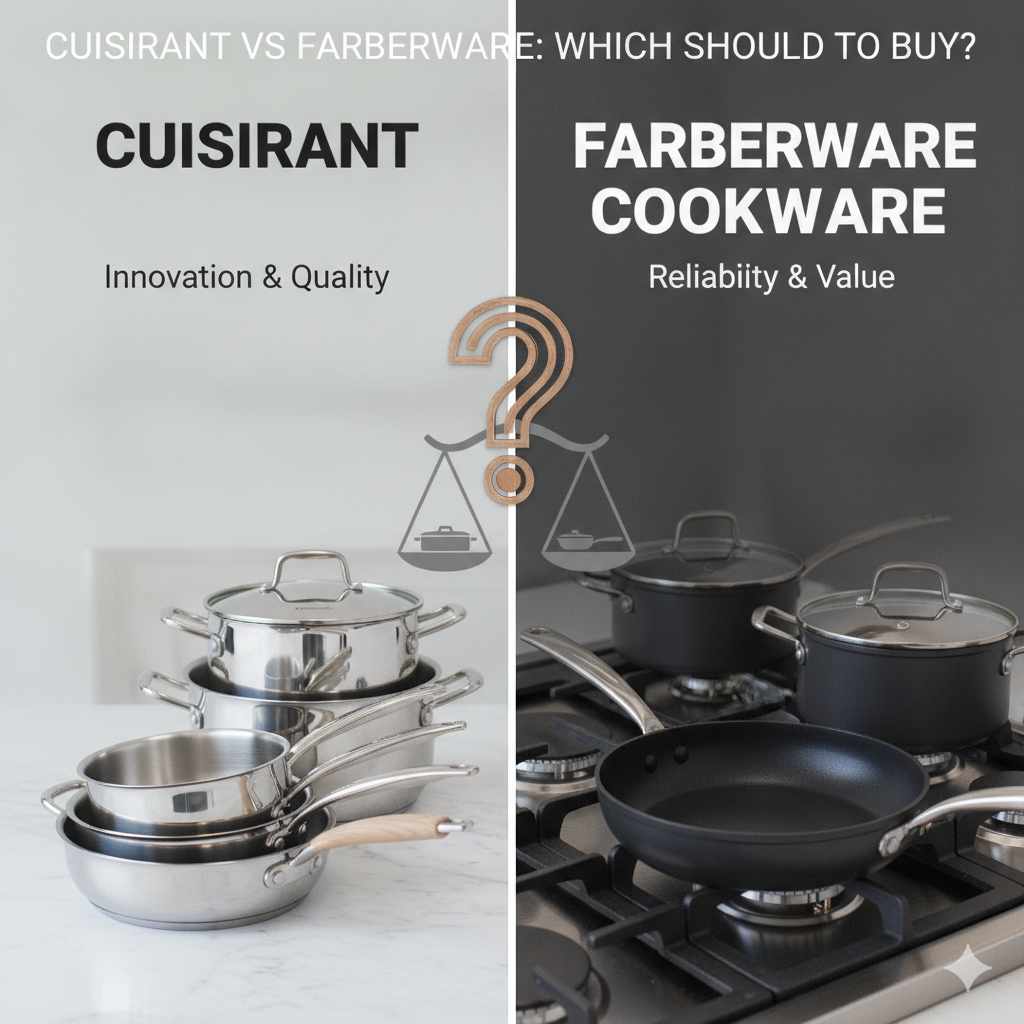
Picking new pots and pans can feel like a big decision. You want something that cooks well. You also want it to last.

Cuisinart
Cuisinart Chef's Classic Stainless Steel Pots and…
- KITCHEN COOKWARE SET: This Cuisinart stainless steel cookware set includes 1.5 qt. & 2.5 qt. saucepans w/glass covers, 3 qt. sauce…
- PREMIUM STAINLESS STEEL: Premium stainless steel pots and pans set with aluminum encapsulated base heats quickly and spreads heat…
- COOL GRIP HANDLES: Cast stainless steel Cool Grip stick handles are contoured for a secure grip and designed to stay cool on the s…
As an Amazon Associate I earn from qualifying purchases.
Many people look at Cuisinart and Farberware. They are popular brands. But they are also quite different.
This can make choosing tricky. We’ll break down what each brand offers. This will help you find the right fit for your cooking style and budget.
When choosing between Cuisinart and Farberware cookware, consider material (stainless steel, nonstick, cast iron), construction (clad vs. stamped), durability, ease of use, oven-safe limits, and overall value. Cuisinart often offers premium, multi-clad options for serious cooks, while Farberware typically provides more budget-friendly, everyday essentials.
Understanding Cuisinart Cookware
Cuisinart is known for making kitchen appliances. But they also make really good cookware. They offer many different types.
You can find stainless steel. They have nonstick pans too. Some sets use hard-anodized aluminum.
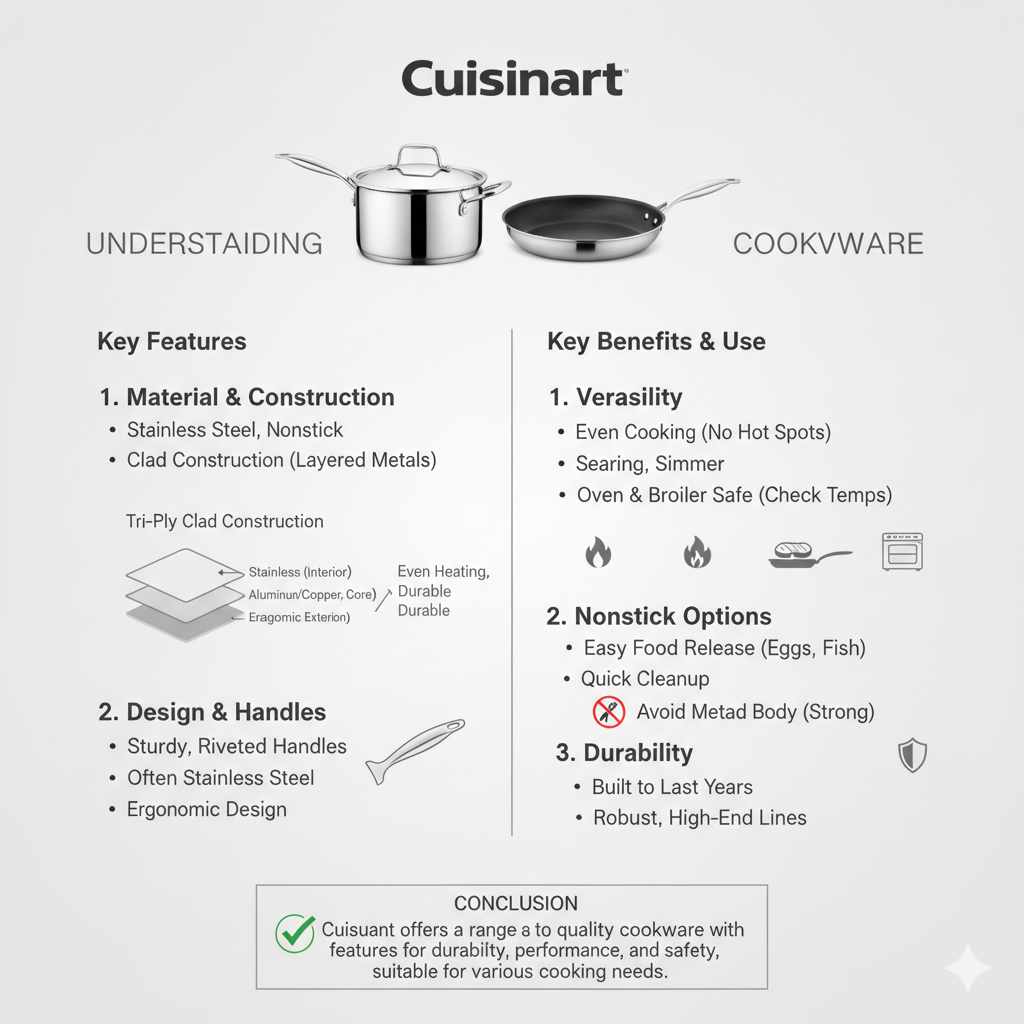
They often focus on quality. Many Cuisinart lines use “clad” construction. This means they layer different metals.
This helps with even heating. It also makes them durable.
A common type is clad stainless steel. This usually has three layers. There’s stainless steel on the outside.
There’s aluminum or copper in the middle. Then more stainless steel inside. This design helps heat spread nicely.
It prevents hot spots. This means your food cooks more evenly. It’s great for searing and simmering.
Many Cuisinart stainless steel pieces are oven-safe. They can also go under the broiler.
Cuisinart also has many nonstick options. These are good for eggs and fish. They make cleanup easier.
Some nonstick pans have hard-anodized aluminum bodies. This is a strong material. It resists warping.
It also heats up well. The nonstick coating needs care. You should avoid metal utensils.
You also shouldn’t use very high heat. This helps the coating last longer.
Another thing to notice is the handles. Cuisinart often uses sturdy handles. They are usually made of stainless steel.
They are often riveted to the pan. This makes them strong. Some handles have ergonomic designs.
They might feel comfortable to hold. Always check the oven-safe temperature. This is important for baking or finishing dishes.
Cuisinart’s higher-end lines are generally very robust. They are built to last many years.
Understanding Farberware Cookware
Farberware is another very old brand. It’s been around for over a hundred years. They are known for being affordable.
They offer cookware that many families use every day. Farberware makes pots and pans for different needs. They have stainless steel sets.
They also offer a lot of nonstick options.
Much of Farberware’s stainless steel cookware is simpler. It might be stamped stainless steel. This means a single sheet of metal is shaped.
It’s usually less expensive than clad. It might not heat quite as evenly as clad. But for many everyday tasks, it works fine.
It’s good for boiling water. It’s also okay for simple sautéing. These pieces are often lighter too.
Nonstick is a big part of Farberware’s offerings. They have many lines of nonstick pans. These are often very budget-friendly.
They are great for beginners. They are also good if you don’t cook often. Or if you just need a few basic pans.
The nonstick coatings on these can vary. Some are very basic. Others are advertised as more durable.
Like with any nonstick, gentle use is key.
Handles on Farberware can vary too. Some are stainless steel. Others might be plastic or silicone.
Plastic handles often stay cooler on the stovetop. But they might not be oven-safe. Or they may have lower oven-safe limits.
Always check the product details. Farberware aims to be accessible. Their prices are often much lower than Cuisinart.
A key point about Farberware is its value. You get a lot of cookware for your money. They have many starter sets.
These can be perfect for a first apartment. Or if you need to
Cuisinart vs. Farberware: Key Differences
Let’s look at the main things that set these brands apart. It’s not just about the name. It’s about how they are made.
And what they are designed to do.
Material & Construction Deep Dive
Cuisinart: Often uses multi-clad stainless steel (layers of stainless steel and aluminum/copper). This means better heat distribution and retention. Also offers high-quality hard-anodized aluminum and ceramic nonstick options.
Designed for performance and longevity.
Farberware: Frequently features stamped stainless steel. This is simpler and more affordable. Also offers a wide range of nonstick cookware, often with basic coatings.
Focuses on accessibility and everyday use.
The construction really matters. Think about how heat travels. Multi-clad Cuisinart pans distribute heat well.
This means no more burnt spots or cold areas. Food cooks evenly. This is a big plus for serious cooking.
Stamped stainless steel from Farberware is okay. But it can have hot spots. Especially on less expensive models.
Nonstick coatings are another area of difference. Cuisinart’s higher-end nonstick pans might use better coatings. They might be PFOA-free and more durable.
Farberware’s nonstick is usually more basic. It’s good for simple tasks. But it might not last as long with heavy use.
Durability and Longevity
How long will your pots and pans last? This is a big question for most people. Nobody wants to replace cookware every year.
Especially if it’s expensive.
Durability Factors
Build Quality: Cuisinart’s multi-clad construction is generally more robust. Riveted handles add strength. Farberware’s stamped construction is lighter and can be less resistant to heavy wear.
Handle attachment methods also vary.
Material Strength: Hard-anodized aluminum used by Cuisinart is very strong and resists warping. Basic stainless steel can be more prone to dents over time with rough handling.
Coating Resilience: Higher-end nonstick coatings on Cuisinart pans often last longer than basic coatings found on many Farberware nonstick items, provided proper care is given.
I remember a time when I bought a cheap nonstick skillet. I used it almost every day for eggs. Within six months, the coating was scratched.
Food started sticking. It was so frustrating. That’s when I learned that spending a bit more upfront can save money later.
Investing in durable cookware means fewer replacements.
Cuisinart’s reputation is built on durability. Many cooks find their stainless steel lasts a lifetime. Their nonstick, with proper care, can also last many years.
Farberware is more of a value buy. It’s good for a few years of regular use. If you are very gentle and follow care instructions, you can extend its life.
Performance in the Kitchen
This is where cooking happens. How well do the pans actually cook? This is often the most important factor for home chefs.
Heating: Cuisinart’s clad stainless steel offers superior heat distribution. This means your food cooks evenly. No more one side burnt and the other raw.
Farberware’s stamped stainless steel can be uneven. You might need to stir more or move food around. This is especially true on gas stoves.
Searing and Browning: For a good sear on meat, you need even, consistent heat. Cuisinart excels here. The aluminum or copper core helps maintain temperature.
Farberware might struggle to get a uniform crust. It can sometimes lead to uneven browning.
Nonstick Capability: Both brands offer nonstick. Cuisinart often has better, longer-lasting nonstick surfaces. They are designed for easy food release.
Farberware’s nonstick is functional for everyday cooking. It’s great for eggs and pancakes. But it might require a bit more oil.
And it might lose its nonstick power sooner.
Sauce Making: Making sauces needs gentle, controlled heat. Cuisinart’s even heating helps prevent scorching. You can simmer delicate sauces for longer.
Farberware might require more attention. You have to watch it closely. You don’t want it to burn at the bottom.
I recall making a delicate béchamel sauce. I was using an older, cheaper pot. The bottom burned so fast.
It ruined the sauce. I switched to a nice clad pot. The heat was so much more controlled.
The sauce came out silky smooth. That experience showed me the power of good cookware. It really makes a difference in the kitchen.
Ease of Use and Maintenance
Nobody wants cookware that’s a pain to use or clean. Let’s see how Cuisinart and Farberware stack up.
Care and Cleaning Guide
Cuisinart Stainless Steel: Usually dishwasher safe, but handwashing is recommended to maintain shine. Use non-abrasive cleaners like Bar Keepers Friend for tough stains. Avoid steel wool.
Cuisinart Nonstick: Handwash only. Use soft sponges and mild dish soap. Never use metal utensils, abrasive scrubbers, or aerosol cooking sprays.
Farberware Stainless Steel: Often dishwasher safe. Handwashing helps preserve appearance. Can use mild dish soap and a soft sponge.
Farberware Nonstick: Handwash only. Similar to Cuisinart nonstick, avoid metal utensils and harsh cleaners. Treat the surface gently.
Most Cuisinart stainless steel is oven-safe to higher temperatures. This is a big plus. You can move a pan from the stovetop to the oven.
Many Farberware pieces have lower limits. Or plastic handles that can’t go in the oven at all. Always check the specific product.
It’s important for roasting or baking.
Cleanup is also a consideration. Nonstick is easier to clean. But it needs careful handling.
Stainless steel, especially good quality clad, can be cleaned easily. Even if food sticks a bit, it can often be scrubbed off with the right cleaner. Some Cuisinart lines are marketed as “easy clean” stainless steel.
This is a nice benefit.
Farberware’s nonstick is very convenient for everyday cooking. Especially for beginners. The basic stainless steel is also easy to clean.
But it might require more effort if food burns on.
Price and Value
This is often the deciding factor for many shoppers. How much does it cost? And what do you get for that price?
Cuisinart cookware tends to be more expensive. Especially their higher-end lines. You’re paying for the quality materials.
You’re paying for the multi-clad construction. You’re paying for better performance. A Cuisinart set might cost a few hundred dollars.
Individual pieces can also be quite pricey.
Farberware is generally much more affordable. You can often find Farberware sets for under $100. Individual pans are even less.
This makes it very accessible. It’s a great option for people on a tight budget. Or for those who don’t want to invest a lot in cookware.
Value Proposition
Cuisinart: Higher upfront cost, but often offers better long-term value due to durability and superior performance. An investment for serious home cooks.
Farberware: Lower upfront cost, making it budget-friendly. Good value for everyday use or for those who are just starting out. May require replacement sooner than higher-end options.
What does “value” mean here? For Cuisinart, value means it lasts. It performs well.
It makes cooking more enjoyable. For Farberware, value means affordability. It gets the job done for basic needs.
It’s a great entry point into cooking.
I’ve seen people buy the cheapest pans. They get frustrated with how they cook. Then they buy new ones a year later.
They might have been better off buying one good pan. Or a decent set that lasts. It’s a trade-off.
Think about how often you cook. And what kind of cooking you do.
Which Cuisinart Line is Right?
Cuisinart has many different lines. It can be confusing. Here are a few popular ones:
Cuisinart Multiclad Pro Stainless Steel
This is a very popular line. It uses triple-ply construction. It has stainless steel inside and out.
With an aluminum core. It’s known for great heat control. It’s oven-safe to high temperatures.
Many cooks love this line. It’s a workhorse for a reason. It offers excellent performance for its price point.
It’s a great example of good value for quality.
Cuisinart Chef’s Classic Stainless
Similar to Multiclad Pro. It also features multi-clad construction. Often with a polished exterior.
It’s another strong performer. Built for durability. Good for everyday use and special meals.
It feels substantial in your hand.
Cuisinart Green Gourmet Hard-Anodized
This line focuses on nonstick. It uses hard-anodized aluminum. This is very durable.
The nonstick coating is often PTFE and PFOA-free. It’s designed to be tough and easy to clean. Great for those who prioritize nonstick ease.
Cuisinart Ceramica XTreme Nonstick
Another strong nonstick option. It uses a ceramic-based nonstick coating. Often advertised as very durable.
And free from harmful chemicals. Good for healthy cooking. And easy cleanup after meals.
When looking at Cuisinart, consider the “clad” aspect. If it says “multi-clad” or “triple-ply,” it’s likely a good choice for heat control. If it’s hard-anodized or ceramic nonstick, focus on the coating quality and warranty.
Which Farberware Line is Right?
Farberware also has several lines. They usually focus on different price points and features.
Farberware Classic Stainless Steel
This is their most basic stainless steel line. It’s simple, affordable, and functional. It’s great for boiling water.
And for basic stovetop cooking. It’s a good starter set. It won’t break the bank.
Farberware Pure Cook Sauté Pan
This line often features a nonstick coating. It’s designed for everyday use. The coating is usually PFAS-free.
Making it a healthier choice. It’s a good choice for eggs and fish. And for easy cleanup.
Farberware Millennium Stainless Steel
This is often considered a step up from the Classic line. It might have slightly better construction. Perhaps thicker bottoms.
It aims for a bit more durability. While still being affordable. It’s a good middle ground for Farberware.
When choosing Farberware, look at the specific features. Does it have a thicker base? Is the nonstick coating advertised as particularly durable?
Or is it just a basic set? If you’re on a tight budget, any of their lines will likely serve you well for basic needs.
Comparing Specific Scenarios
Let’s imagine some cooking situations. How would each brand perform?
Scenario: Searing a Steak
Cuisinart: Excellent. Multi-clad stainless steel heats evenly and holds temperature well. This creates a beautiful, consistent crust on the steak.
Less likely to burn in spots.
Farberware: Okay, but requires more attention. Stamped stainless steel might have hot spots. You may need to move the steak around more.
Browning might be less even.
Scenario: Cooking Scrambled Eggs
Cuisinart: Great, especially with their nonstick lines. Eggs slide right off. Easy cleanup.
Farberware: Good with their nonstick lines. Eggs cook well. Cleanup is usually simple.
Basic stainless steel might require a little oil to prevent sticking.
Scenario: Making a Cream Sauce
Cuisinart: Superior. Even heating prevents scorching. Allows for gentle simmering.
Produces a smooth, consistent sauce.
Farberware: Requires careful monitoring. Stamped stainless steel can have hot spots. May need frequent stirring to prevent sticking and burning.
I once tried to make a delicate caramel sauce. I was using a thin pan. It burned very quickly.
I had to start over. It was a learning moment. Good cookware means less stress.
It means more consistent results. It makes cooking more fun.
Who Should Buy Cuisinart?
You should consider Cuisinart if:
- You are a serious home cook.
- You enjoy cooking often.
- You want cookware that performs exceptionally well.
- You prioritize even heating and temperature control.
- You want cookware that will last for many years, perhaps a lifetime.
- Your budget allows for a higher upfront investment.
- You like to sear, sauté, and simmer with precision.
Cuisinart is an investment. It’s for people who see their cookware as a tool for creating great meals. It’s for those who appreciate good design and lasting quality.
The experience of cooking is often enhanced by good tools. And Cuisinart cookware can certainly be a good tool.
Who Should Buy Farberware?
You should consider Farberware if:
- You are on a budget.
- You are a beginner cook.
- You don’t cook very often.
- You need basic cookware for everyday tasks.
- You are looking for good value for money.
- You need to furnish a new kitchen without spending a lot.
- You prefer simple, easy-to-use nonstick pans.
Farberware is a sensible choice for many households. It provides essential cooking tools at a price that most people can afford. It’s about getting the job done.
It’s about making home-cooked meals accessible. It’s a brand that has served American families for generations. And it continues to do so.
What This Means for Your Kitchen
Choosing between these brands isn’t about one being “bad.” It’s about matching the cookware to your needs. A Cuisinart set might be overkill for someone who only boils water once a week. A basic Farberware set might frustrate a chef who wants to sear steaks perfectly every time.
Think about your current cooking habits. Are you happy with them? Or do you want to expand your skills?
Good cookware can inspire you to try new recipes. It can make challenging techniques feel more achievable. Conversely, poor cookware can be a major roadblock.
Consider the materials. Stainless steel is durable and versatile. Nonstick is easy for delicate foods.
Hard-anodized aluminum offers a good balance of durability and heat conduction. Cast iron (which neither of these brands are primarily known for, but it’s a common comparison point) offers incredible heat retention but requires different care.
Also, think about your stovetop. If you have an induction cooktop, ensure your cookware is induction-compatible. Most Cuisinart stainless steel is.
Some Farberware lines might be, but always check. Magnetic bottoms are key for induction.
Quick Tips for Cookware Care
No matter which brand you choose, taking care of your cookware is vital. It helps it last longer. And it keeps it performing its best.
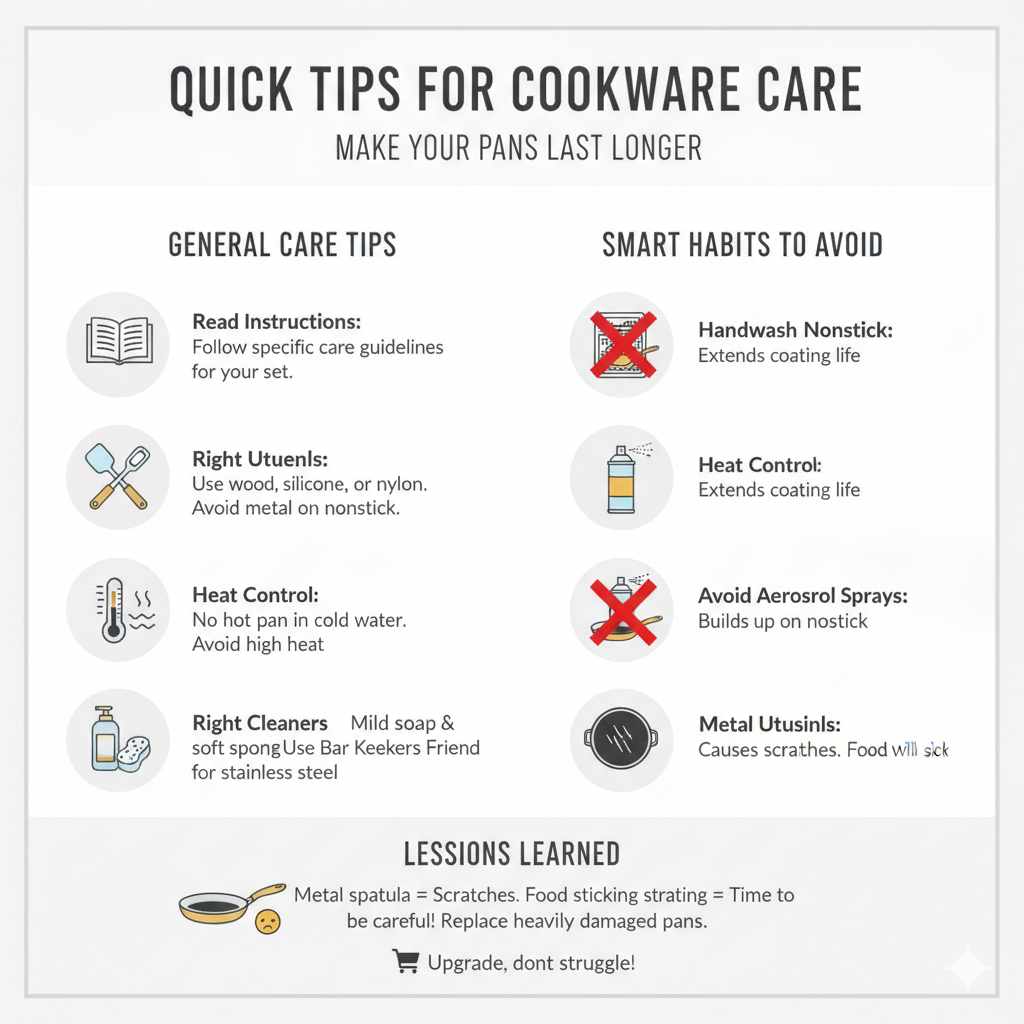
- Read the instructions: Every set comes with specific care guidelines. Follow them.
- Use the right utensils: Avoid metal on nonstick. Wood or silicone are best for most pans.
- Don’t overheat nonstick: High heat can damage the coating. Stick to medium or medium-low for most nonstick cooking.
- Let pans cool: Don’t put hot pans into cold water. This can cause warping.
- Use the right cleaners: Mild dish soap and a soft sponge are usually all you need. For stubborn stains on stainless steel, use a cleaner like Bar Keepers Friend.
- Handwash nonstick: Even if a pan says “dishwasher safe,” handwashing will extend the life of the nonstick coating.
- Avoid aerosol cooking sprays: These can build up on nonstick surfaces. And they are hard to remove.
I learned this the hard way with my first “good” nonstick pan. I used a metal spatula. I thought it was no big deal.
Then I saw scratches. Food started sticking. It was a clear sign I wasn’t treating it right.
Now I’m very careful.
Frequently Asked Questions
Is Cuisinart cookware worth the price?
For many home cooks, yes. Cuisinart offers excellent durability, performance, and even heating, especially in their multi-clad stainless steel lines. While more expensive upfront, it often lasts much longer, making it a good long-term investment.
Is Farberware cookware good for everyday cooking?
Yes, Farberware cookware is generally good for everyday cooking. It’s designed to be affordable and functional for common kitchen tasks. Its nonstick options are especially convenient for simple meals.
Can I use metal utensils with Cuisinart stainless steel cookware?
Yes, you can generally use metal utensils with Cuisinart stainless steel cookware. However, using softer materials like wood or silicone can help prevent minor scratches and maintain the polished look over time.
Can I use metal utensils with Cuisinart nonstick cookware?
No, it is strongly advised not to use metal utensils with Cuisinart nonstick cookware. Metal utensils can scratch and damage the nonstick coating, reducing its effectiveness and lifespan.
Are Cuisinart and Farberware pans oven-safe?
Many Cuisinart stainless steel and hard-anodized pans are oven-safe to high temperatures (often 400-500°F). Farberware’s oven-safe limits can vary widely by line; always check the product specifications, as some have lower limits or are not oven-safe due to handle materials.
Which brand is better for induction cooktops, Cuisinart or Farberware?
Both brands offer cookware lines that are compatible with induction cooktops. Look for induction-compatible markings on the packaging or product description. Cuisinart’s multi-clad stainless steel is typically induction-ready.
Some Farberware lines are also designed for induction use.
Conclusion
Deciding between Cuisinart and Farberware comes down to your needs. Cuisinart offers premium quality for serious cooks. Farberware provides excellent value for everyday use.
Both have their place in the kitchen. Consider your budget, cooking habits, and what you want from your cookware. Choose the brand that best helps you create delicious meals.
Related pick: Check today's price on Amazon
Products related to this article
Sponsored / affiliate links. As an Amazon Associate I earn from qualifying purchases. I may earn additional commission from eligible campaigns.
 Stainless Steel Car Clothes Hanger Retractable Back Seat Organizer
 Non Slip Area Rug Gripper 3×5 Feet, Rug Gripper for Hardwood Floors, Laminate, Vinyl, Stone & Tile, Anti Slip Area Rug Pad for Under Rugs
 Duggins Superior Rug Works – 10' x 14' – Rug Pad – Hard Surface/Carpet – Non Slip – Felt/Rubber – Reversible – 1/4In – 10YR