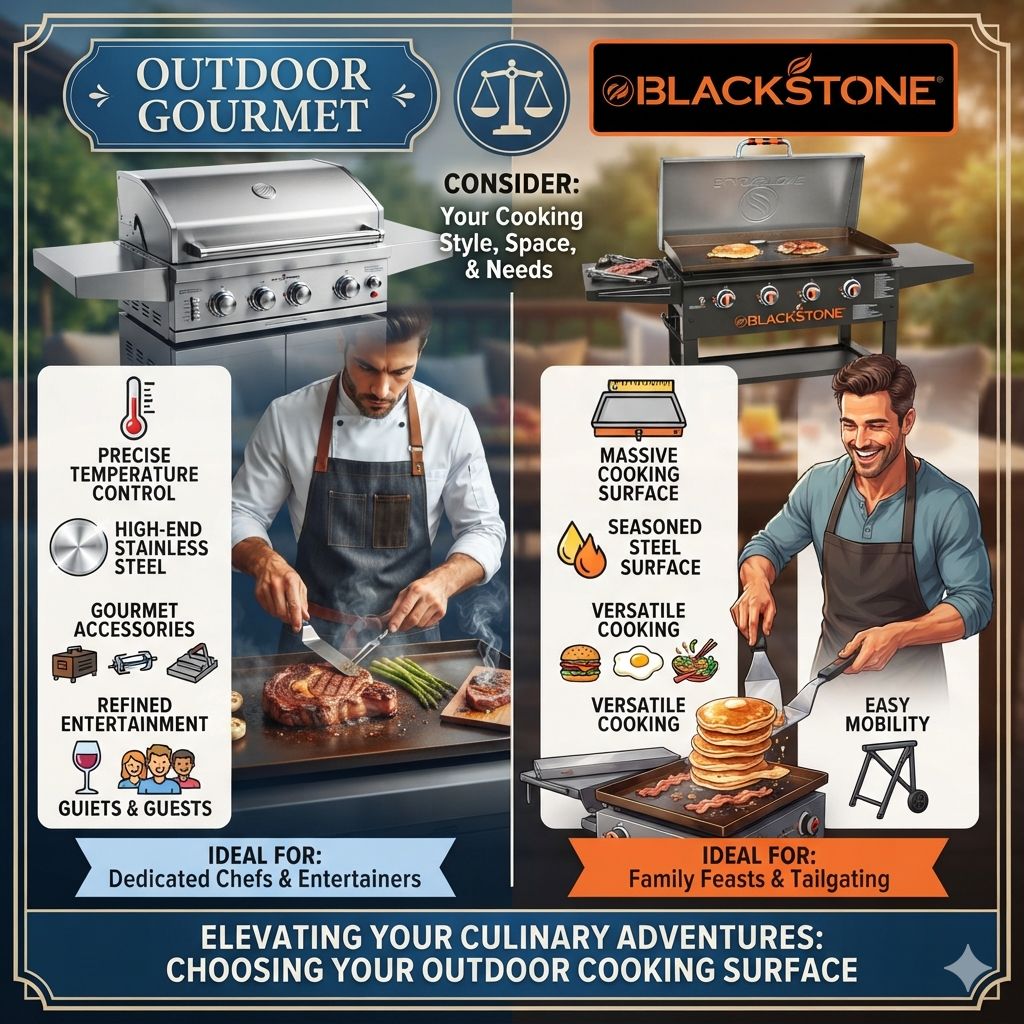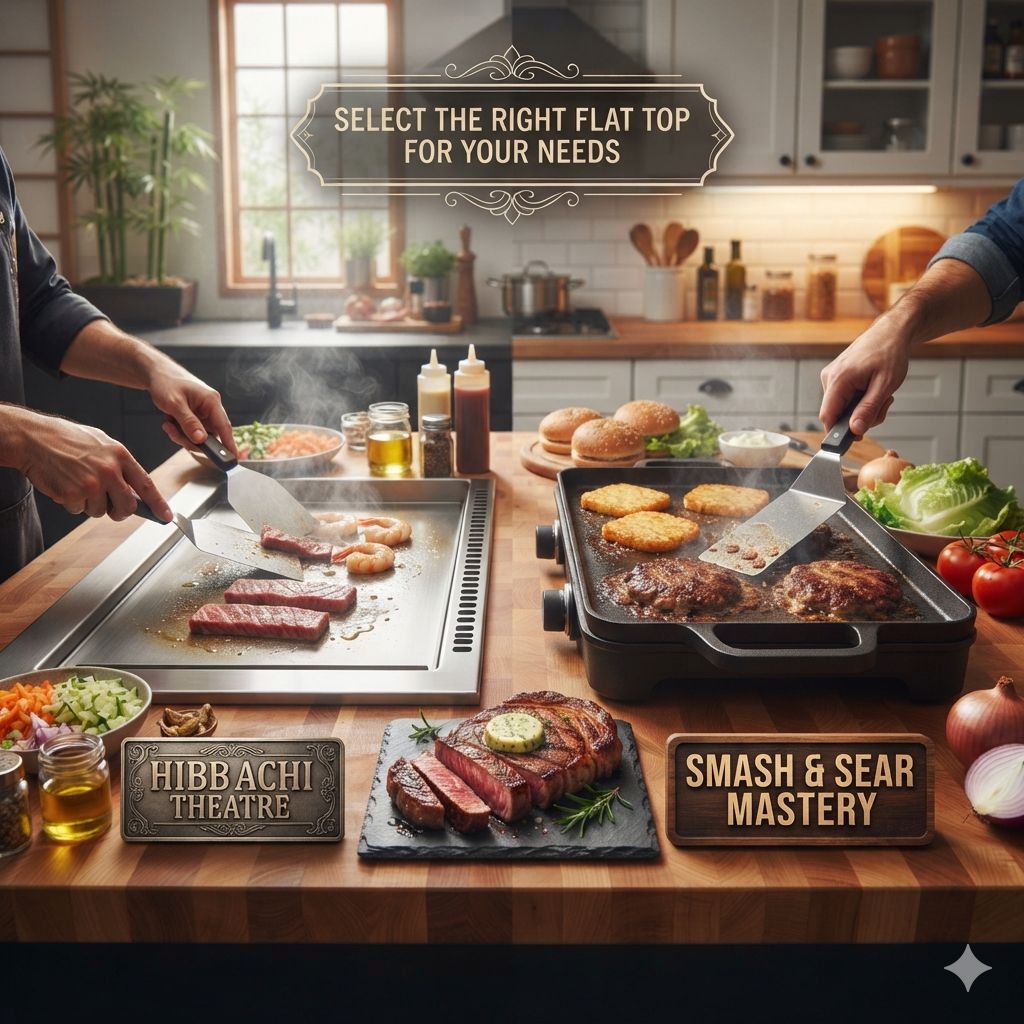
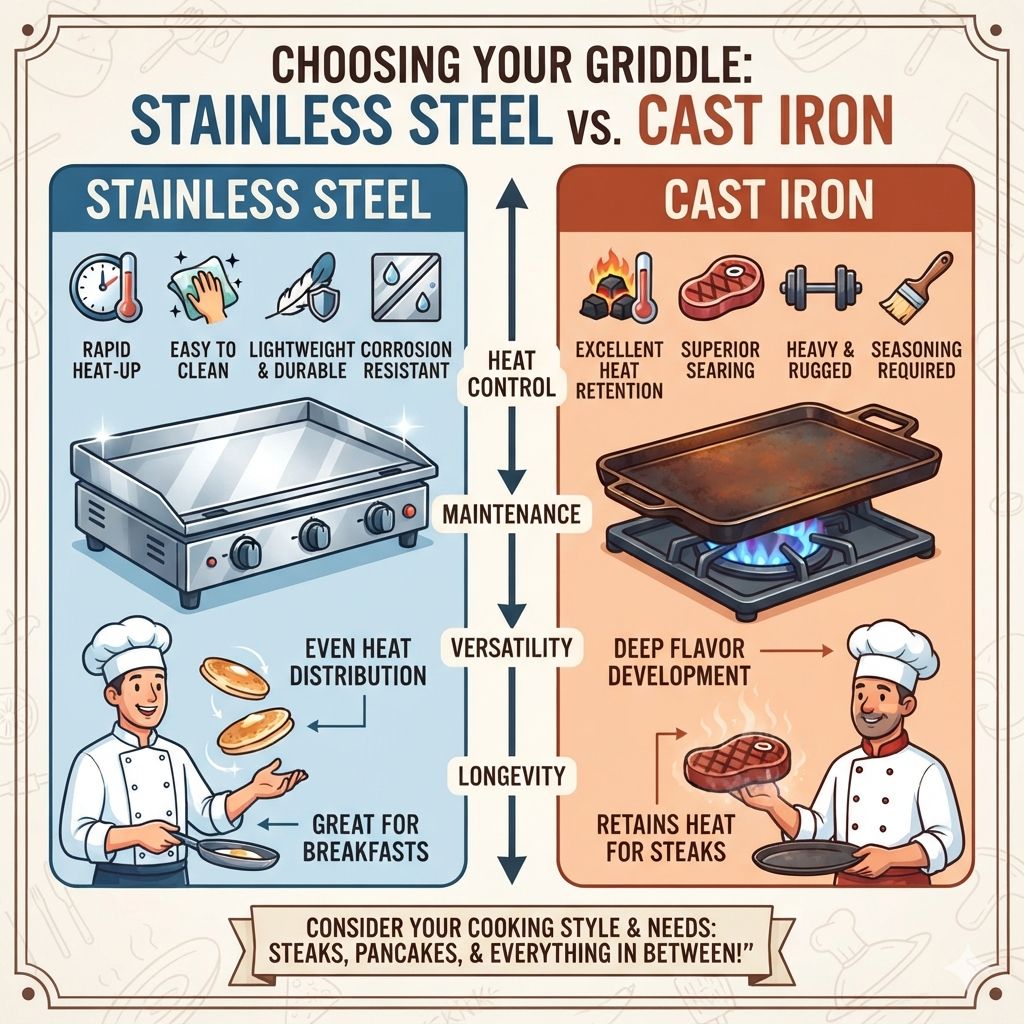
Simply put, stainless steel griddles offer easier maintenance and even heating, while cast iron excels in superior heat retention and searing capabilities, though it requires more care. The best choice depends on your priorities regarding cooking style, ease of use, and desired culinary results.
Key Takeaways
- Stainless steel griddles are generally lighter, easier to clean, and less prone to rust than cast iron.
- Cast iron griddles provide exceptional heat retention and create a superior sear, ideal for burgers and steaks.
- Proper seasoning and maintenance are crucial for cast iron to prevent rust and ensure non-stick properties.
- Stainless steel offers more even heat distribution, reducing hot spots, but may not achieve the same crust as cast iron.
- Your cooking habits, desired results, and willingness to perform maintenance will dictate the best griddle material for you.
What is a Stainless Steel Griddle?
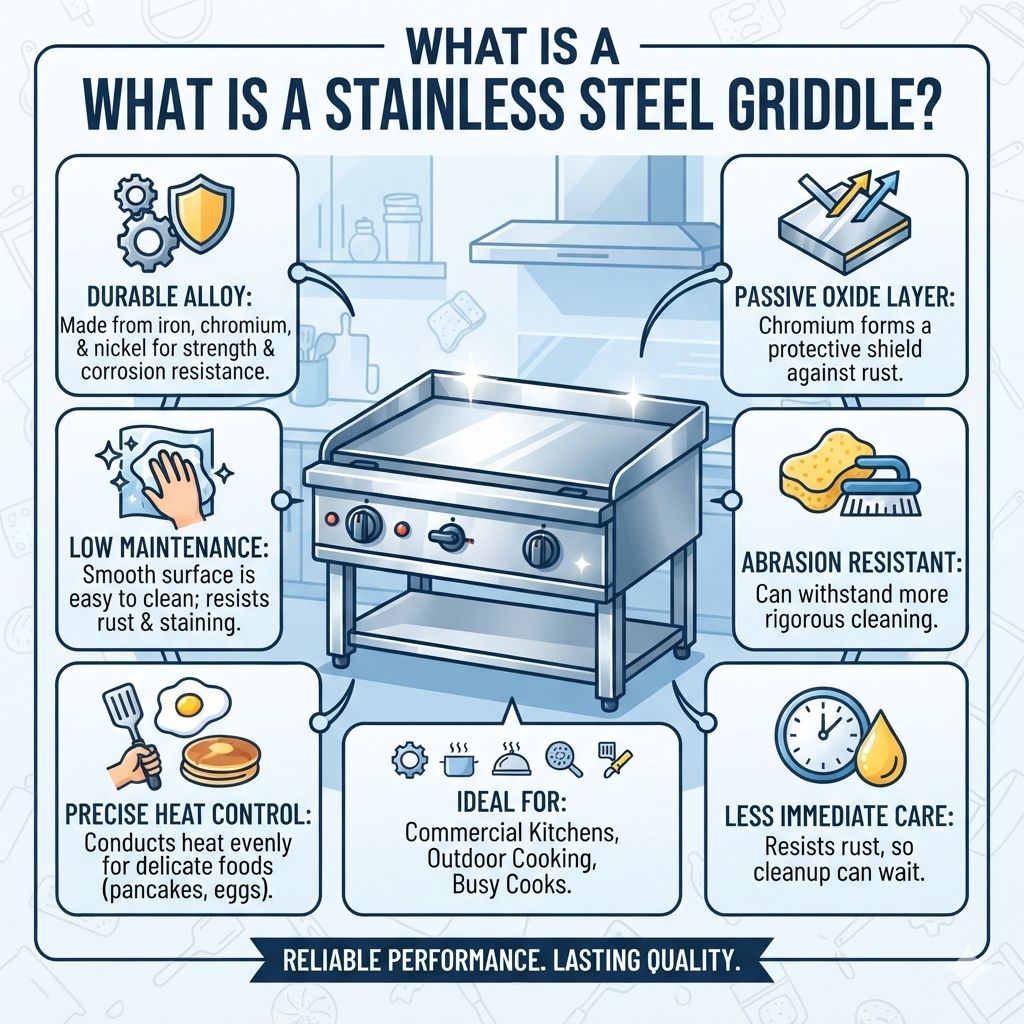
A stainless steel griddle is a flat cooking surface typically made from a durable, corrosion-resistant alloy of iron, chromium, and nickel. This material is widely favored in kitchens and outdoor cooking setups for its resilience and relatively low maintenance. The chromium content forms a passive oxide layer that protects the metal from rust and staining, making it a practical choice for those who want a reliable cooking surface without extensive upkeep.
Stainless steel griddles are known for their ability to conduct heat evenly across the entire cooking surface. While they might not retain heat as long as cast iron, their consistent temperature distribution helps prevent localized hot spots that can lead to unevenly cooked food. This makes them excellent for delicate items like pancakes, eggs, or fish, where precise temperature control is beneficial.
The ease of cleaning is another major advantage of stainless steel. Food particles and grease tend to release more easily from its smooth surface, and it can withstand more abrasive cleaning methods without significant damage. This durability and simplicity make stainless steel a popular option for busy cooks and commercial kitchens alike.
The material’s inherent resistance to rust also means it requires less immediate attention after use compared to other metals.
Key Features of Stainless Steel Griddles
- Corrosion Resistance: Highly resistant to rust and staining due to its chromium content.
- Even Heat Distribution: Spreads heat uniformly across the surface, minimizing hot and cold spots.
- Ease of Cleaning: Non-porous surface allows for quick wipe-downs and less sticking.
- Durability: Robust and can withstand frequent use and varying cooking temperatures.
- Lighter Weight: Generally lighter than cast iron, making them easier to move and handle.
- Non-Reactive: Does not impart a metallic taste to food, preserving the original flavors.
- Sleek Appearance: Offers a modern, clean aesthetic that complements many outdoor kitchens.
What is a Cast Iron Griddle?
A cast iron griddle is a cooking surface crafted from a robust iron alloy, known for its exceptional heat retention and durability. This material has been a staple in kitchens for centuries, prized for its ability to cook food evenly and create a beautiful, crispy sear. The dense nature of cast iron allows it to absorb and hold a significant amount of heat, distributing it slowly and consistently across the cooking surface.
The primary advantage of cast iron is its remarkable heat retention. Once heated, it stays hot for a considerable time, making it ideal for cooking dense foods like steaks, burgers, and roasts, as well as for prolonged cooking sessions. This property also contributes to its ability to achieve a desirable crust or sear on meats, locking in juices and enhancing flavor.
It is this superior heat performance that makes cast iron a favorite among many grilling enthusiasts.
However, cast iron griddles require diligent care and maintenance. They are prone to rusting if not properly seasoned and dried after each use. Seasoning involves applying a thin layer of oil and heating the griddle, which creates a protective, non-stick layer.
This process needs to be repeated periodically to maintain the griddle’s performance and longevity. Despite the extra effort, many believe the cooking results are well worth the commitment.
Key Features of Cast Iron Griddles
- Superior Heat Retention: Holds heat for extended periods, providing consistent cooking temperatures.
- Excellent Searing Capability: Achieves a deep, flavorful crust on meats.
- Natural Non-Stick Surface: Develops a non-stick coating through proper seasoning.
- Exceptional Durability: Can last a lifetime with proper care and maintenance.
- Versatility: Can be used on stovetops, in ovens, and over campfires.
- Develops Patina: The cooking surface improves with age and use.
- Heavyweight: Offers stability but can be cumbersome to move.
How They Compare: Heat Retention & Distribution
When it comes to heat, stainless steel and cast iron griddles behave quite differently, and this distinction significantly affects cooking outcomes. Cast iron excels in heat retention. Once it reaches temperature, it holds that heat exceptionally well, providing a stable cooking environment for extended periods.
This is why it’s often preferred for searing thick cuts of meat or for prolonged cooking where consistent heat is paramount. The dense metal absorbs a large amount of thermal energy and releases it slowly and evenly.
Stainless steel, on the other hand, heats up faster and cools down more quickly than cast iron. While it doesn’t retain heat as long, it offers more even heat distribution from the start. This means fewer hot spots and a more uniform cooking temperature across the entire surface.
This consistent heating is beneficial for foods that require delicate cooking, such as pancakes, eggs, or fish, preventing burnt edges and undercooked centers. Its conductivity is generally higher, allowing for quicker adjustments in temperature.
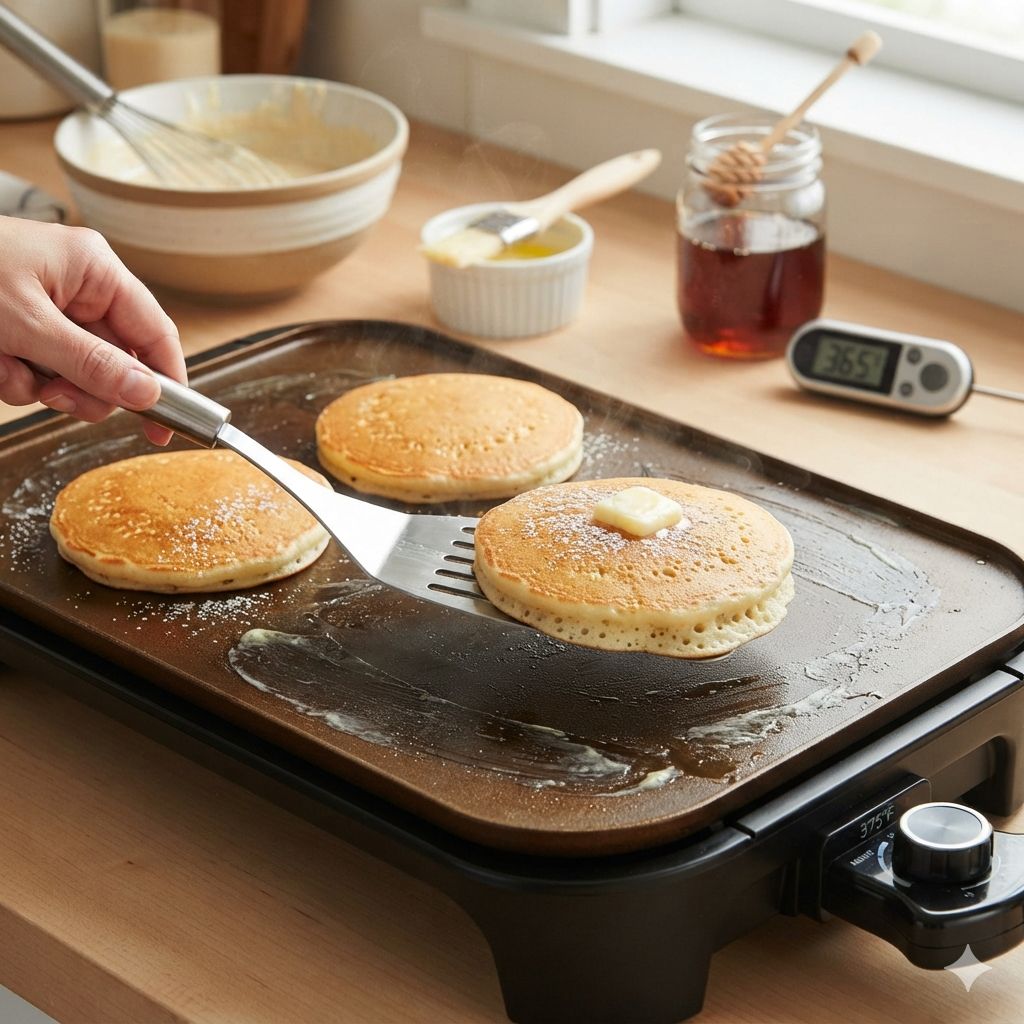
To illustrate the differences, consider a scenario where you’re cooking a batch of pancakes. With a cast iron griddle, you’d need to be mindful of maintaining a consistent temperature, as it can cool unevenly if not preheated properly or if too much cold batter is added at once. A stainless steel griddle would likely provide a more forgiving experience, with each pancake cooking at a very similar rate due to the uniform heat spread.
For searing steaks, the cast iron’s ability to maintain high temperatures and create a deep crust would be more advantageous.
| Feature | Stainless Steel Griddle | Cast Iron Griddle |
|---|---|---|
| Heat Retention | Moderate | Excellent |
| Heat Distribution | Very Even | Good (once fully heated) |
| Searing Capability | Good | Excellent |
| Warping Resistance | High | Moderate (can warp under extreme, rapid temperature changes) |
Cast iron’s superior heat retention makes it ideal for searing, while stainless steel’s even distribution is better for delicate items.
Ease of Cleaning and Maintenance
The difference in maintenance between stainless steel and cast iron griddles is substantial and often a deciding factor for many users. Stainless steel griddles are celebrated for their low maintenance requirements. Their non-porous and smooth surface resists food sticking and makes cleaning straightforward.
Most daily cleaning can be done with warm, soapy water and a soft sponge or cloth. For tougher residue, a non-abrasive cleaner or a specialized stainless steel cleaner can be used without fear of damaging the surface.
Crucially, stainless steel does not rust easily. This inherent property means you don’t have to worry about drying it meticulously after washing or applying protective oils to prevent corrosion. It’s a grab-and-go material that performs reliably with minimal fuss, making it an excellent choice for those who prioritize convenience and want to spend more time cooking and less time cleaning.
The material also resists scratching from metal utensils, though extreme scraping should still be avoided.
Cast iron, conversely, demands a higher level of commitment. It is porous and susceptible to rust. After each use, it must be thoroughly washed (often without harsh detergents that can strip the seasoning), completely dried, and then lightly oiled.
This process, known as seasoning, creates a natural non-stick surface and protects against rust. If neglected, a cast iron griddle can quickly develop rust spots, which can affect food taste and cooking performance. Re-seasoning might be necessary if rust appears or the non-stick properties diminish.
Important: While cast iron requires more maintenance, its seasoned surface can become incredibly non-stick and develops a unique flavor profile over time that many chefs adore.
| Maintenance Aspect | Stainless Steel Griddle | Cast Iron Griddle |
|---|---|---|
| Rust Prevention | Excellent, inherent | Requires regular seasoning and drying |
| Daily Cleaning | Simple soap and water; non-abrasive cleaners | Scrape clean, wash with minimal soap, dry thoroughly, oil |
| Non-Stick Quality | Good (especially with oil), can improve with use | Excellent when properly seasoned; improves with age |
| Dishwasher Safe | Generally Yes (check manufacturer) | Absolutely Not |
Stainless steel offers significantly easier cleaning and maintenance compared to the more demanding regimen required for cast iron.
Searing and Browning Capabilities
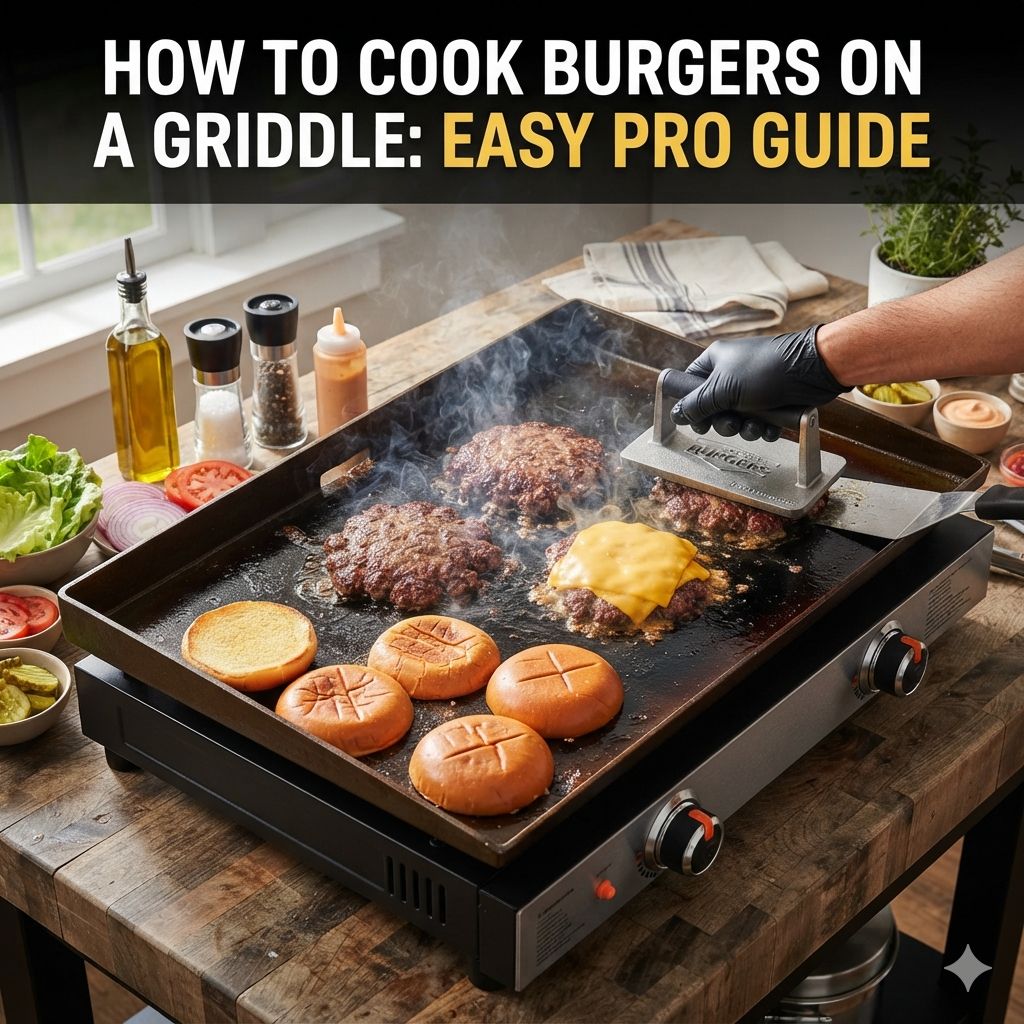
When it comes to achieving that perfect, caramelized crust on meats, cast iron often takes the lead. Its ability to maintain extremely high temperatures and distribute that heat evenly allows for intense contact with the food. This high heat environment breaks down proteins and sugars, creating complex flavors and textures through the Maillard reaction, which is responsible for the browning and savory notes we associate with well-cooked steaks and burgers.
The density of cast iron also means it has less of a temperature drop when cold food is placed on it, crucial for effective searing.
Stainless steel griddles can also achieve good searing, especially if they are of high quality and designed for high heat. However, they may not reach the same searing intensity or sustain it as effectively as cast iron. The thinner material and different thermal properties mean that the heat transfer might not be as aggressive.
For foods where a deep, dark crust is the primary goal, cast iron generally has a notable advantage. Nevertheless, many users find stainless steel perfectly adequate for everyday searing needs.
The outcome also depends on the specific design of the griddle. Some stainless steel griddles are built with thicker bases or conductive cores (like aluminum or copper) to improve heat retention and distribution, bringing them closer to cast iron’s performance. Ultimately, while cast iron is the traditional choice for superior searing, modern stainless steel options can deliver satisfying results for most home cooks.
The key is to ensure the griddle is properly preheated, regardless of the material.
Durability and Longevity
Both stainless steel and cast iron are known for their durability, but they achieve it through different means and offer varying lifespans. A well-maintained cast iron griddle is virtually indestructible and can be passed down through generations. Its primary vulnerability is rust, but if properly seasoned and cared for, it will resist corrosion and physical damage effectively.
Even if a cast iron griddle develops rust or becomes heavily damaged, it can often be restored through sanding and re-seasoning, giving it a new lease on life.
Stainless steel is also exceptionally durable and resistant to physical damage like warping or cracking. Its inherent resistance to rust and corrosion means it will maintain its structural integrity and aesthetic appeal over many years of use. While it can be scratched, these are typically superficial and do not compromise its functionality.
Unlike cast iron, which can be restored from severe damage, significant damage to stainless steel (like deep dents or warping) is usually irreparable.
In terms of longevity, both materials can last a lifetime. Cast iron’s longevity is tied to its maintainability and ability to be restored. Stainless steel’s longevity is due to its inherent resistance to degradation.
For outdoor use, where griddles might be exposed to the elements, stainless steel’s rust resistance provides a significant advantage in terms of sustained performance and appearance with less user intervention. The choice between them can come down to whether you prefer a material that requires active preservation or one that resists degradation passively.
| Durability Factor | Stainless Steel Griddle | Cast Iron Griddle |
|---|---|---|
| Resistance to Rust | Excellent (inherent) | Poor (requires active seasoning) |
| Resistance to Warping | High | Moderate (can warp under extreme temp changes) |
| Scratch Resistance | Good (can be scratched but usually superficial) | Good (seasoning can be damaged, but surface itself is robust) |
| Restorability | Limited (deep damage is usually permanent) | Excellent (can be restored from rust/damage) |
Both materials are durable, but stainless steel offers passive resistance to degradation, while cast iron’s longevity is tied to active maintenance and restoration potential.
Weight and Portability
The physical weight of a griddle is a practical consideration, especially if you plan to move it frequently, store it away after use, or take it to different locations for barbecues. Cast iron griddles are significantly heavier than their stainless steel counterparts. This is due to the density of the iron alloy.
A typical cast iron griddle can weigh anywhere from 15 to 30 pounds or more, depending on its size and thickness. This heft makes them feel substantial and stable on a grill or stovetop, but it also makes them cumbersome to lift and transport.
Stainless steel griddles, conversely, are much lighter. Their construction uses thinner materials, and the alloys themselves are less dense than cast iron. A comparable stainless steel griddle might weigh between 5 to 15 pounds.
This lighter weight makes them easier to maneuver, clean, and store. If portability is a key factor, such as for camping, tailgating, or simply moving the griddle from a patio to a garage, stainless steel has a clear advantage. The lighter weight also means they might be easier to handle for individuals who find heavy objects difficult to lift.
While weight is a factor, it’s important to balance it with other performance aspects. The stability of a heavier cast iron griddle can be beneficial for even cooking, preventing accidental shifts. However, for many, the convenience of a lighter stainless steel griddle outweighs the minor stability difference.
Manufacturers sometimes mitigate the weight of cast iron by incorporating handles or designing them to fit specific grill models, but the inherent density remains.
| Factor | Stainless Steel Griddle | Cast Iron Griddle |
|---|---|---|
| Typical Weight Range | 5-15 lbs | 15-30+ lbs |
| Portability | High | Low |
| Ease of Handling | Easy | Challenging |
| Stability on Surface | Good | Excellent |
Stainless steel griddles are significantly lighter and more portable, while cast iron griddles offer greater stability but are considerably heavier.
Cost Comparison
The initial investment for a stainless steel versus a cast iron griddle can vary widely based on brand, size, and specific features. Generally, a good quality stainless steel griddle for a gas grill might range from $100 to $300. High-end models with advanced construction or integrated features could push this price point higher.
The manufacturing process for stainless steel can be more intricate, and the raw materials often have a higher market value, contributing to their price.
Cast iron griddles are often more budget-friendly upfront. Basic cast iron griddles can be found for as little as $30 to $80. While premium brands or larger, more specialized cast iron griddles can cost $100 to $200, they generally offer a lower entry price point.
This affordability, combined with their longevity, makes them a cost-effective choice in the long run, provided the necessary maintenance is performed.
When considering the total cost of ownership, it’s essential to factor in maintenance and potential replacement costs. While stainless steel might have a higher initial purchase price, its low maintenance needs mean fewer ongoing costs. Cast iron’s lower initial cost is offset by the time and effort (and sometimes specialized cleaning supplies or oils) required for its upkeep.
Over many years, both can be excellent value, but the upfront expenditure and ongoing care commitment differ significantly.
| Cost Factor | Stainless Steel Griddle | Cast Iron Griddle |
|---|---|---|
| Initial Purchase Price | $100 – $300+ | $30 – $200 |
| Ongoing Maintenance Costs | Minimal (cleaning supplies) | Moderate (oils, potential re-seasoning supplies) |
| Longevity (with care) | Lifetime | Lifetime (restorable) |
| Value Proposition | Higher upfront, lower ongoing; convenient | Lower upfront, higher ongoing; superior searing |
While cast iron typically has a lower initial cost, stainless steel often represents a more convenient and less labor-intensive long-term investment for many users.
Which Griddle Material Is Right for You?
The decision between a stainless steel vs cast iron griddle hinges on your personal cooking style, available time for maintenance, and desired culinary results. If you prioritize ease of use, quick cleanup, and a reliable, rust-resistant cooking surface for everyday meals like pancakes, eggs, and grilled sandwiches, then a stainless steel griddle is likely your best bet. Its even heat distribution is forgiving and consistently produces good results without extensive fuss.
It’s ideal for those who want a functional tool that performs well without demanding a rigorous upkeep routine.
Conversely, if you are passionate about achieving the perfect sear on steaks and burgers, enjoy the unique flavor development that comes from high-heat cooking, and don’t mind the ritual of seasoning and care, then a cast iron griddle will likely satisfy your culinary ambitions. Its superior heat retention and searing capabilities are hard to beat for certain types of food. For dedicated home cooks and grilling enthusiasts who appreciate the craft and tradition associated with cast iron, the extra maintenance is a small price to pay for the exceptional results.
Consider your cooking frequency and environment. If your griddle will be exposed to humidity or you can’t always ensure it’s dried perfectly, stainless steel’s rust resistance is a significant advantage. If your primary goal is achieving restaurant-quality sears and you have the dedication to maintain your equipment, cast iron shines.
Both materials can provide a fantastic cooking experience, but aligning the griddle’s strengths with your needs is key to a satisfying purchase.
Warning: Neglecting the seasoning and drying process for cast iron can quickly lead to rust, significantly impacting its performance and lifespan.

Frequently Asked Questions
What is the primary difference between stainless steel and cast iron griddles?
The primary difference lies in their material properties: stainless steel is known for its rust resistance, even heating, and easy maintenance, while cast iron is renowned for superior heat retention and excellent searing capabilities, though it requires regular seasoning and care to prevent rust.
Which type of griddle is better for searing steak?
Cast iron griddles are generally considered superior for searing steak due to their exceptional heat retention and ability to reach and maintain very high temperatures, which creates a superior crust and locks in juices.
Is stainless steel or cast iron easier to clean?
Stainless steel griddles are significantly easier to clean. They can be washed with soap and water and don’t require specialized seasoning or immediate drying to prevent rust, making them a more low-maintenance option.
Can cast iron griddles rust?
Yes, cast iron griddles are susceptible to rust if not properly seasoned, dried thoroughly after washing, and protected from moisture. Regular maintenance is key to preventing rust.
Which griddle material is more durable?
Both materials are very durable. Cast iron can last a lifetime and be restored even if damaged, while stainless steel’s durability comes from its inherent resistance to rust and corrosion, meaning it will maintain its appearance and functionality with less effort.
Final Thoughts
Ultimately, the choice between a stainless steel and cast iron griddle comes down to your priorities. For convenience, ease of maintenance, and consistent heat distribution, stainless steel is an excellent choice. If you seek the ultimate searing power and are willing to invest time in proper care, cast iron offers unparalleled performance.
Both can elevate your outdoor cooking, so select the material that best aligns with your lifestyle and culinary goals for a truly satisfying grilling experience.