Traeger Flatrock vs Weber Griddle: Which Flat Top Is Right for You?
The Short Verdict: Which Griddle Wins?
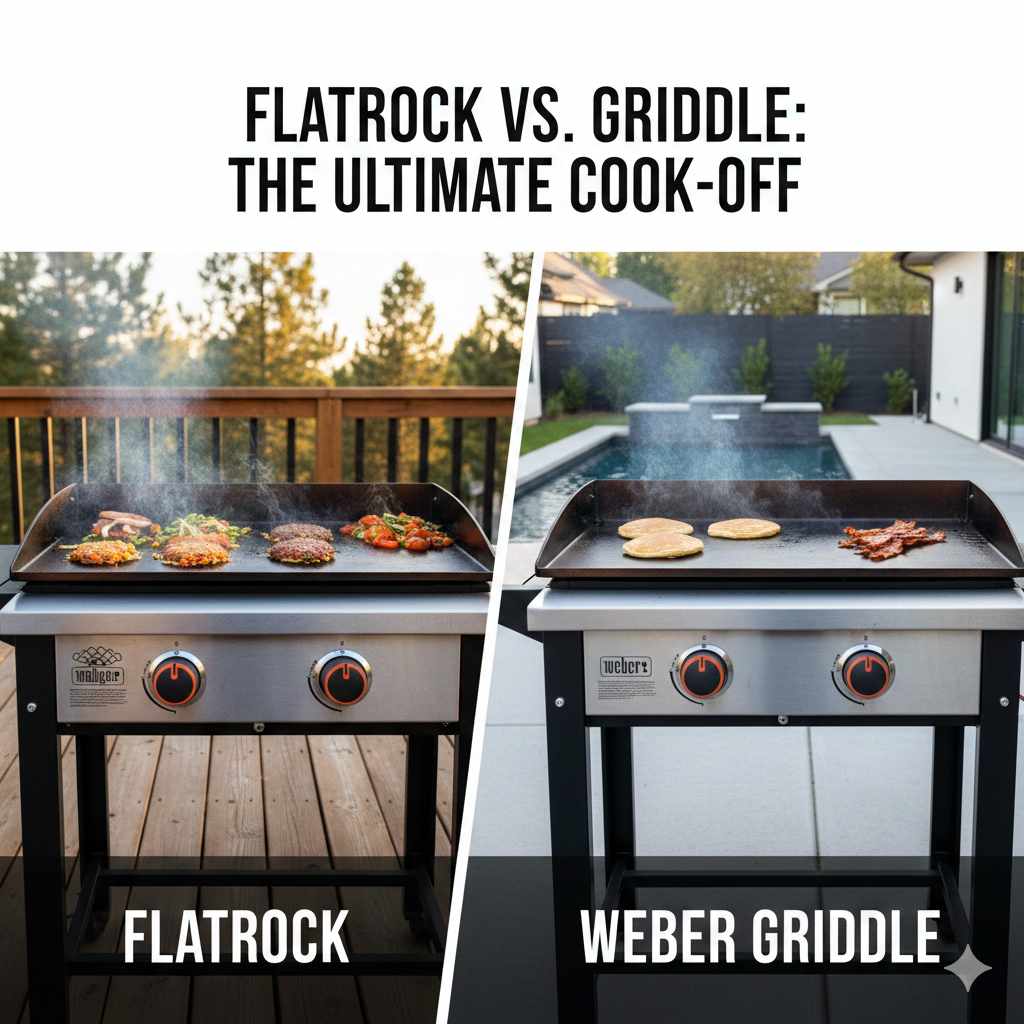
I’ve spent the last month cooking on both a Traeger Flatrock and a Weber griddle. My buddy Dan owns the Flatrock. I own the Weber. We traded backyards on weekends and kept notes. The short version: the Traeger Flatrock is a hobby. The Weber griddle is an appliance. One makes you think about fire and smoke and temperature swings. The other just gets hot and stays hot.
| Our Pick | Runner Up |

|

|
| Traeger Traeger Grills BAC731 Flat Top Griddle Seasoning… | M COMNOVA OUTDOORS Comnova Grill Cover for Traeger Flatrock -… |
| See on Amazon | See on Amazon |
As an Amazon Associate I earn from qualifying purchases.
If you want wood-fired flavor and don’t mind fiddling with pellets, the Flatrock wins. If you want consistent heat and quick weekday dinners, the Weber is the better buy. Most people should pick the Weber. But the Flatrock will make you a better cook, and it’s more fun.
I’ll get into the details below, including the traeger flatrock vs weber griddle question that actually matters: what kind of cook are you?
Price & Value: Upfront Cost vs. Long-Term Fuel Burn
The Flatrock costs more upfront. It’s a pellet-fired griddle, so you’re paying for the auger, the fire pot, and the electronics. The Weber griddle runs on propane, which is simpler and cheaper to build.
But the real cost difference shows up at the fuel store. Pellets cost more per cook than propane. A 20-pound propane tank lasts for weeks of griddle cooking. A 20-pound bag of pellets might last six to eight cooks if you’re searing hard. Over a year, that adds up.
You also need to maintain the Flatrock’s fire system. The Weber has fewer moving parts. If something breaks on the Weber, it’s usually a $20 regulator. The Flatrock has more that can go wrong, and replacement parts cost more.
Check the current price on Amazon for both before you decide. The gap matters more if you cook daily.
Cooking Performance: The Wood-Fired Flavor vs. Gas Consistency
This is where the two really split apart. The Flatrock burns hardwood pellets, and that smoke gets into the food. You taste it in a way that’s hard to describe. It’s not like smoking a brisket. It’s lighter, but it’s there.
The Weber griddle is clean. No smoke flavor at all. You taste the meat, the seasoning, the oil. That’s not a bad thing. It’s what most griddle cooks want.
Heat Zones and Temperature Control
The Weber has independent burners that give you true heat zones. You can run one side at 350°F and the other at 500°F. That’s huge for a flat top. You can keep food warm on one side while searing on the other.
The Flatrock has heat zones too, but they’re less precise. Pellet fires don’t respond instantly. You turn the dial and wait. It might take five minutes for the temperature to settle. The Weber responds in seconds.
For someone who cooks eggs and pancakes on a Sunday morning, the Weber’s consistency is a relief. You set it and forget it. The Flatrock needs attention.
The Side-by-Side Taste Test (Burgers & Fried Rice)
We did a blind test with four friends. Same burgers, same seasoning, same cooking time. The Flatrock burger had a subtle smoky note that everyone noticed. Two people preferred it. Two said it tasted “different” but couldn’t say why.
Then we made fried rice. This is where the Flatrock struggled. Fried rice needs high, even heat and quick tossing. The Weber held a steady 450°F across the surface. The Flatrock had hot spots that burned some rice while other parts stayed pale.
My honest take: the Flatrock adds flavor to fatty foods like burgers and steaks. For delicate stuff like eggs or rice, the Weber is easier and more predictable.
Design, Build Quality, and Durability
Both are built well, but differently. The Weber feels like a precision tool. The griddle surface is smooth, the frame is solid, and everything lines up. The Flatrock feels more like a machine. You see the auger housing, the hopper, the fire box. It’s chunkier.
Long-term durability is a real question. The Traeger Flatrock’s griddle top is carbon steel, same as most flat tops. It will rust if you don’t season it properly. The Weber uses a similar steel but has a better factory seasoning. Neither is rust-proof.
User reports over six months show the Flatrock’s paint can chip near the hopper if you’re rough with it. The Weber’s finish holds up better. The Flatrock’s electronics are the weak point. If the control board dies, you’re stuck. The Weber has no electronics to fail.
Grease Management and Cleanup
The Flatrock has a rear grease trough that drains into a bucket. It works, but the bucket is small and you’ll empty it often. The Weber has a front grease cup that’s easier to reach.
Cleaning the Flatrock takes longer. You have to scrape, then wipe, then re-season the bare spots. The Weber’s surface stays slicker, so cleanup is faster. I’ve timed it: the Weber takes about five minutes to clean. The Flatrock takes ten.
One thing I’ll give the Flatrock: the seasoning holds better after a few cooks. The Weber’s seasoning can flake off if you use too much oil. Both need regular care, but the Weber is more forgiving.
Portability and Storage: Tailgating vs. Patio Life
The Weber griddle is lighter and has wheels that actually roll well. You can move it around the patio, or load it in the truck for tailgating. It runs on a standard propane tank, which you can grab anywhere.
The Flatrock is heavier and needs power. You need an outlet for the auger and igniter. That kills it for tailgating unless you bring a generator. It’s a backyard tool, plain and simple.
If you camp or tailgate, the Weber is the obvious choice. The Flatrock is for people who have a dedicated patio spot and don’t plan to move it.
The Learning Curve: Adapting to Pellet vs. Gas
The Flatrock has a real learning curve. I burned my first batch of pancakes because the temperature spiked after I added food. You have to learn how the pellet feed works, how to manage the fire, and how to recover when it dips.
It took me three cooks to feel comfortable. Dan took a week. The Weber, by comparison, is instant. Light it, set the dial, wait ten minutes, cook.
There’s also the seasoning difference. The Flatrock needs a solid initial seasoning. Traeger sells a cast iron conditioner that works well, and you’ll want it. The Weber comes with a decent factory seasoning, but you’ll still need to maintain it with regular oiling.
Neither is hard, but the Flatrock demands more respect. If you’re new to griddles, start with the Weber.
Warranty and Customer Support
Weber has a reputation for standing behind their products. Their warranty covers the griddle surface and burners for a long time. Support is easy to reach.
Traeger’s warranty is decent, but the Flatrock is newer and there are more stories about slow support turnaround. The pellet system has more parts that can fail, and getting a replacement auger or control board can take weeks.
Neither is a dealbreaker, but if you want peace of mind, Weber is the safer bet.
Final Verdict: The Decision Matrix for Your Backyard
Here’s how I’d decide, based on how you actually cook:
Choose the Traeger Flatrock if:
- You already own a pellet smoker and like managing fire.
- You want that wood-fired flavor in burgers, steaks, and fajitas.
- You have a permanent patio spot and don’t need to move it.
- You enjoy cooking as a hobby, not just a chore.
Choose the Weber griddle if:
- You want consistent heat with zero fuss.
- You cook eggs, rice, and vegetables regularly.
- You tailgate or camp and need portability.
- You want lower long-term fuel costs.
- You’re new to flat top cooking.
The traeger flatrock vs weber griddle decision comes down to personality. The Flatrock is a conversation piece. It’s the thing guests gather around because it’s unusual. The Weber is the workhorse that gets dinner done without drama.
I kept the Weber. Dan kept the Flatrock. We both think we made the right call. If you want to read more about how the Flatrock compares to other pellet griddles, check out this Flatrock vs Loco griddle breakdown. And if you’re curious about how the Weber Slate stacks up against other Weber models, this Weber Slate comparison is worth a read.
One last thing: don’t skip the seasoning oil. Whether you buy the Traeger conditioner or a generic flaxseed oil, a well-seasoned griddle makes all the difference. If you need help with that, here’s a griddle cleaning guide that applies to both.
Frequently Asked Questions
Can the Traeger Flatrock be used as a smoker?
No. It’s a griddle, not a smoker. The pellets burn for heat, not smoke. You get a light wood-fired flavor, but you won’t get the deep smoke of a dedicated pellet smoker.
Do I need a special cover for the Traeger Flatrock?
Yes, because the electronics and pellet hopper need protection from rain. A standard griddle cover won’t fit over the hopper. Look for a cover made specifically for the Flatrock, like the Comnova cover, which is heavy-duty and waterproof. It measures 47 by 27 by 40 inches and fits the Flatrock’s dimensions.
Which griddle is better for beginners?
The Weber. It has simpler controls, consistent heat, and a shorter learning curve. The Flatrock requires understanding pellet feed rates and temperature management, which can frustrate new cooks.
How often do I need to re-season the cooking surface?
After every few cooks, or whenever you see bare steel. The Traeger conditioner works well for both. Apply a thin layer after cleaning while the surface is warm. The Weber needs it less often, but both benefit from regular care.
Products related to this article
Sponsored / affiliate links. As an Amazon Associate I earn from qualifying purchases. I may earn additional commission from eligible campaigns.