How to Make Fried Rice on a Griddle Like a Pro
Making fried rice on a griddle transforms a simple dish into a culinary event, offering a crispier texture and a more even cook than traditional stovetop methods. This technique allows for higher heat and more surface area, perfect for achieving that coveted wok hei flavor at home. Whether you’re a seasoned chef or a beginner in the kitchen, mastering griddle fried rice promises delicious results and an engaging cooking experience.

BELLA
bella Electric Non-Stick Griddle, Make 10 Eggs…
- ELECTRIC GRIDDLE: This hardworking griddle features a 1500 watt heating system, cool touch handles & a base with a built in ledge…
- DURABLE & EFFICIENT: The unique ceramic non-stick coating is 8 times more durable & cooks up to 30% faster than standard non-stick…
- NONSTICK COOKING: This griddle's Healthy-Eco coating contains no harmful chemicals like lead & cadmium. Its titanium ceramic coati…
As an Amazon Associate I earn from qualifying purchases.
This guide will walk you through everything you need to know, from selecting the right ingredients to executing each step perfectly. You’ll learn the secrets to fluffy rice, perfectly seared vegetables, and tender proteins, all cooked to perfection on your griddle.
Simply put, making fried rice on a griddle involves using high heat and a spacious surface to achieve perfectly separated grains of rice, tender vegetables, and savory proteins with a delightful crisp. This method ensures even cooking and develops superior flavor compared to a conventional stovetop, making it ideal for weeknight meals or entertaining.
Key Takeaways
- Griddle fried rice benefits from day-old, cold rice for optimal texture.
- High heat is crucial for achieving a smoky flavor and crispy elements in your griddle fried rice.
- Prep all ingredients before cooking; the griddle process is fast and requires immediate attention.
- Don’t overcrowd the griddle; cook in batches if necessary to maintain high heat and prevent steaming.
- Experiment with different proteins, vegetables, and sauces to customize your griddle fried rice.
What is Griddle Fried Rice?
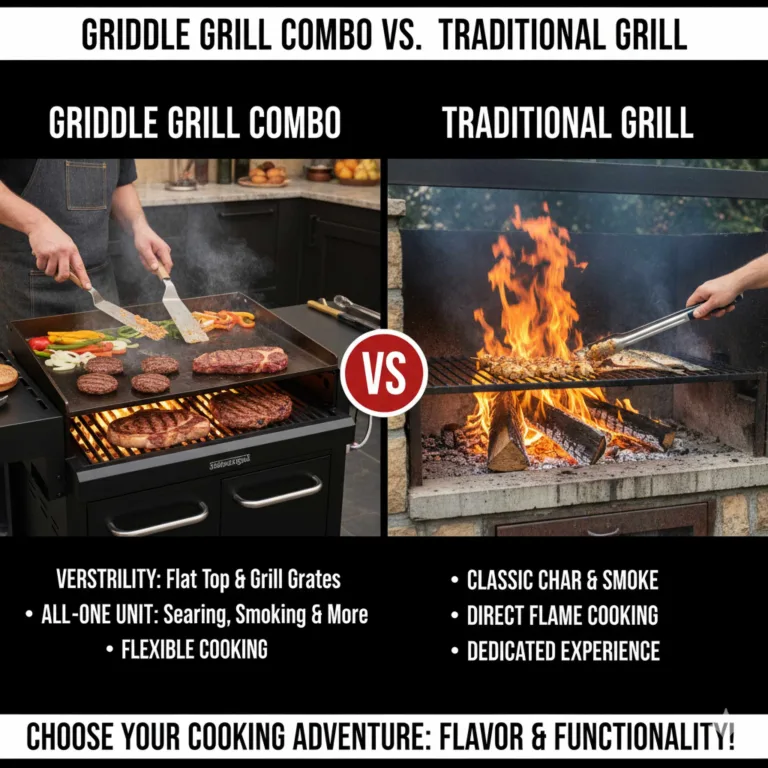
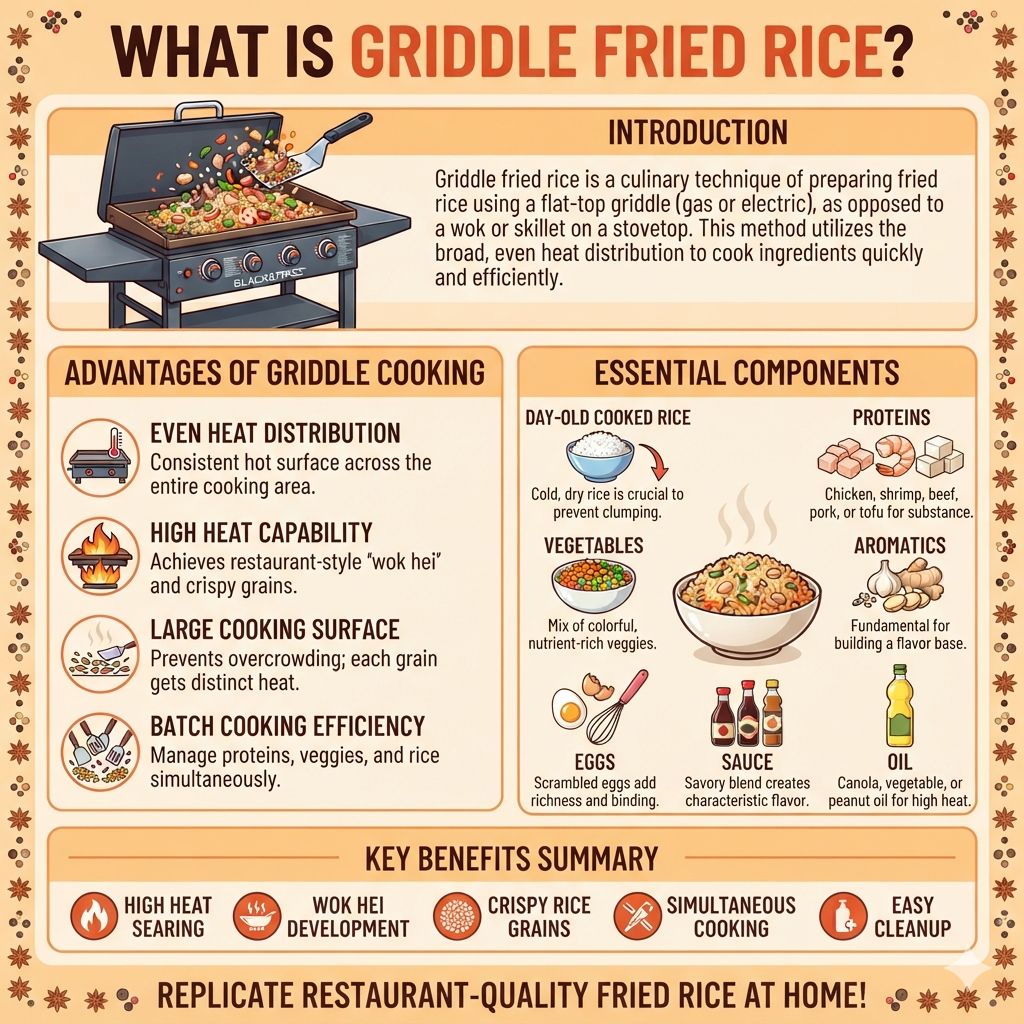
Griddle fried rice refers to the culinary technique of preparing fried rice using a flat-top griddle, such as a Blackstone or a large electric griddle, as opposed to a wok or skillet on a traditional stovetop. This method utilizes the broad, even heat distribution of the griddle to cook ingredients quickly and efficiently.
The primary advantage of using a griddle is the ability to achieve extremely high temperatures and maintain them consistently. This is essential for developing the characteristic smoky flavor, often referred to as “wok hei,” and for ensuring that each grain of rice is distinct and slightly crispy rather than clumped and mushy. The large surface area also allows for ample space to spread out ingredients, preventing overcrowding which can lead to steaming rather than frying.
This approach makes it easier to manage multiple components of the dish simultaneously, from searing proteins to sautéing aromatics and vegetables, and finally tossing everything with the rice and sauce. For home cooks, it offers a more accessible way to replicate restaurant-quality fried rice without specialized equipment like a high-BTU wok burner.
Essential Components of Griddle Fried Rice
- Day-Old Cooked Rice: Cold, dry, day-old cooked rice is paramount. Freshly cooked rice is too moist and will clump together.
- Proteins: Diced chicken, shrimp, beef, pork, or tofu provide substance and flavor.
- Vegetables: A mix of finely diced carrots, peas, corn, onions, bell peppers, and broccoli adds color, texture, and nutrients.
- Aromatics: Minced garlic and ginger are fundamental for building the flavor base.
- Eggs: Scrambled eggs are a classic addition, adding richness and binding elements.
- Sauce: A savory blend of soy sauce, oyster sauce (or vegetarian alternative), sesame oil, and a touch of sugar creates the signature taste.
- Oil: A high smoke point oil like canola, vegetable, or peanut oil is necessary for the high heat of the griddle.
Benefits of Griddle Cooking
- Even Heat Distribution: Griddles provide a consistently flat and hot cooking surface.
- High Heat Capability: Allows for quick searing and the development of “wok hei.”
- Large Cooking Surface: Prevents overcrowding and ensures individual ingredient crispness.
- Batch Cooking Efficiency: Easily manage multiple components at once.
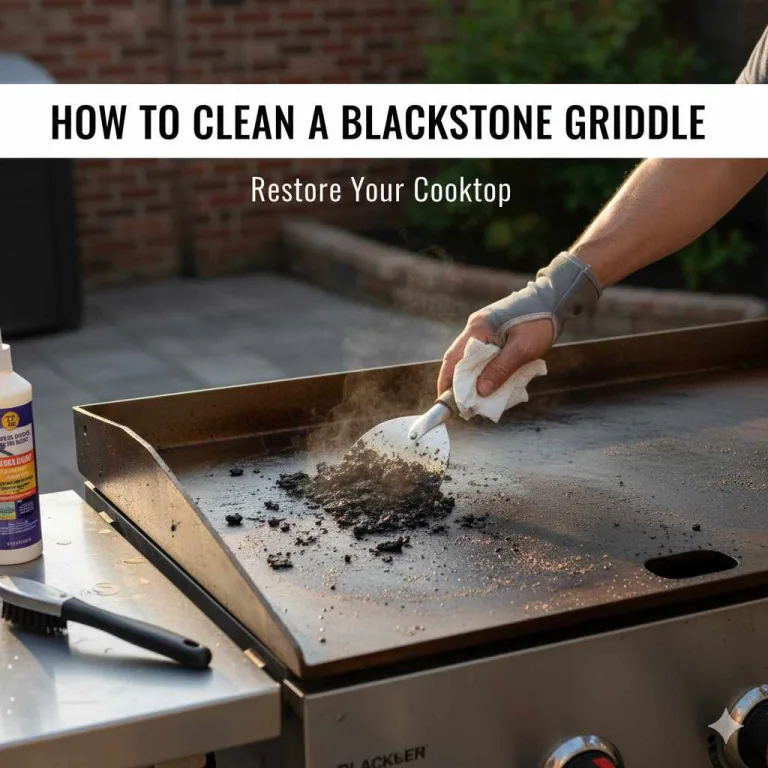
- Easy Cleanup: Often simpler to clean than multiple pans.
Choosing the Right Rice for Your Griddle Fried Rice
The foundation of any great fried rice, especially on a griddle, is the rice itself. Using the wrong type of rice or rice that is too fresh can lead to a gummy, unappetizing dish. The goal is to have each grain of rice separate, slightly chewy, and capable of absorbing the savory flavors without breaking down.
For the best results, opt for medium-grain or long-grain rice that has been cooked and then thoroughly chilled. Day-old rice is ideal because it has had time to dry out in the refrigerator. The chilling process firms up the starches, making them less likely to clump together when subjected to the high heat of the griddle.
When the cold rice hits the hot griddle, the exterior crisps up while the interior remains tender.
If you don’t have leftover rice, you can cook fresh rice several hours ahead of time and spread it thinly on a baking sheet to cool completely. Refrigerating it for at least 4-6 hours, or preferably overnight, is key. Avoid using short-grain sticky rice, as it’s too prone to clumping, and steer clear of parboiled or instant rice, which can become overly soft.
Rice Types and Their Suitability
| Rice Type | Suitability for Griddle Fried Rice | Reason |
|---|---|---|
| Medium-Grain White Rice (e.g., Calrose) | Excellent | Cooks up fluffy and slightly chewy, ideal for separating. |
| Long-Grain White Rice (e.g., Jasmine, Basmati) | Good to Very Good | Can be used, but may require careful cooking to avoid dryness or clumping. |
| Brown Rice | Fair | Can be used but is often denser and chewier, requiring longer cooking. |
| Short-Grain Sticky Rice | Poor | Too sticky, will result in a gummy texture. |
Always ensure your rice is cold and dry before it hits the griddle for the best chance at perfect texture.
Preparing Your Ingredients (Mise en Place)
The speed at which fried rice cooks on a griddle means that preparation is non-negotiable. Having all your ingredients chopped, measured, and within easy reach is crucial for a smooth and successful cooking process. This culinary principle, known as “mise en place,” is especially vital when working with high heat and a dynamic cooking surface like a griddle.
Take the time to finely dice all your vegetables, mince your garlic and ginger, and prepare your protein. If using eggs, crack them into a small bowl and whisk them lightly, ready to be poured onto the griddle. Whisk together your sauce ingredients in a separate bowl so it’s ready to be drizzled over the rice at the final stage.
This organization prevents panic and allows you to focus on the cooking technique itself, ensuring each component is added at the right time.
Pre-cooking any proteins that require longer cooking times, like raw chicken or shrimp, is also part of this preparation. Ensure they are cut into bite-sized pieces so they cook quickly on the griddle. For vegetables, aim for uniform, small cuts so they cook evenly alongside the rice and protein.
A well-prepared station is the secret weapon for mastering griddle fried rice.
Mise en Place Checklist
- Rice: Measure out your cold, day-old cooked rice. Break up any large clumps with your fingers.
- Proteins: Dice raw meats (chicken, beef, pork) into small, uniform pieces. Shell and devein shrimp. If using tofu, press and cube it.
- Vegetables: Finely chop onions, garlic, and ginger. Dice carrots, peas, corn, bell peppers, and any other desired vegetables into small, uniform pieces (about 1/4 inch).
- Eggs: Crack 2-3 eggs into a bowl, add a pinch of salt and pepper, and whisk until well combined.
- Sauce: In a small bowl, combine soy sauce, oyster sauce (or vegetarian alternative), sesame oil, a pinch of sugar, and optional white pepper.
- Oil: Have your high smoke point oil (like canola or peanut oil) measured out and ready.
Step-by-Step Griddle Fried Rice Cooking Process
Once your ingredients are prepped and your griddle is hot, the cooking process is rapid and requires your full attention. This method is designed to build layers of flavor and texture efficiently on the expansive surface of the griddle.
We’ll cover each step in detail, from heating the griddle to the final toss of the sauce. By following these instructions closely, you’ll achieve a professional-quality fried rice that rivals your favorite Asian restaurant.
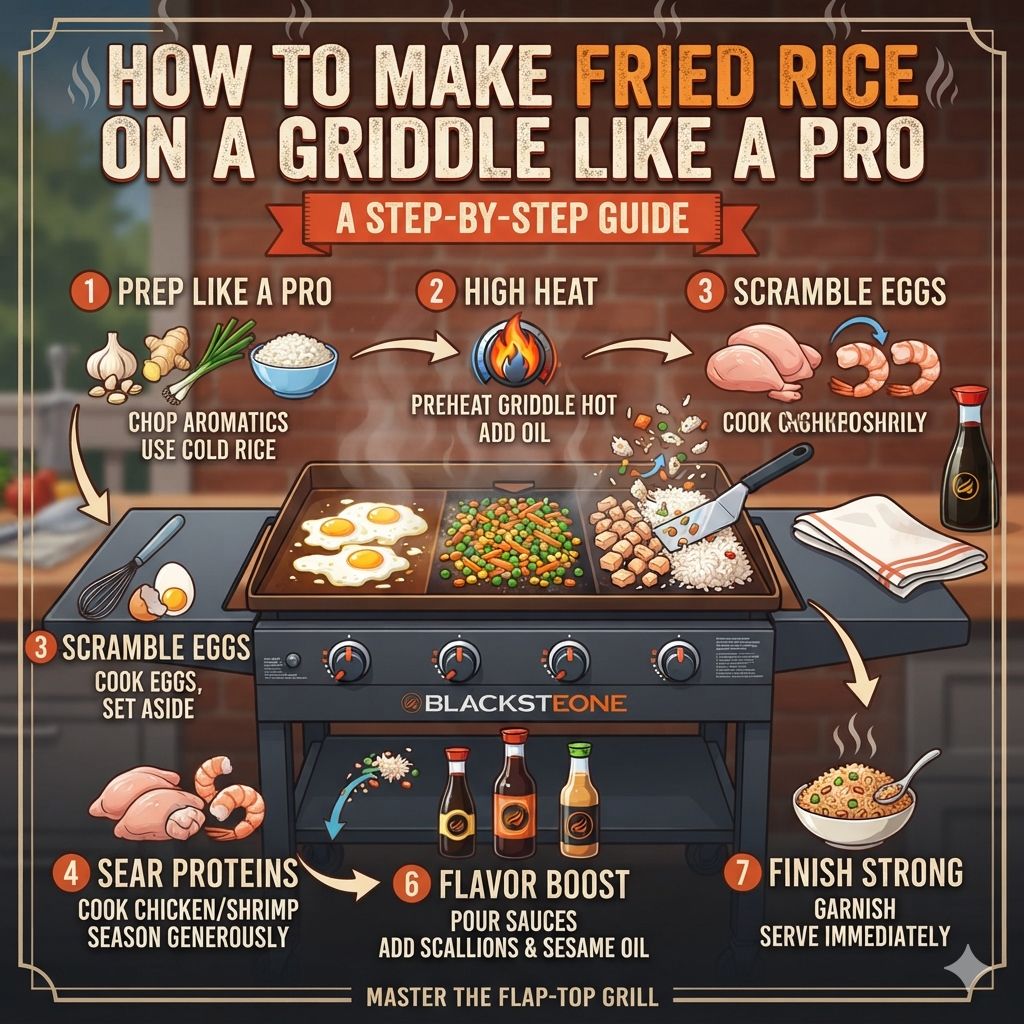
Step 1: Preheat Your Griddle
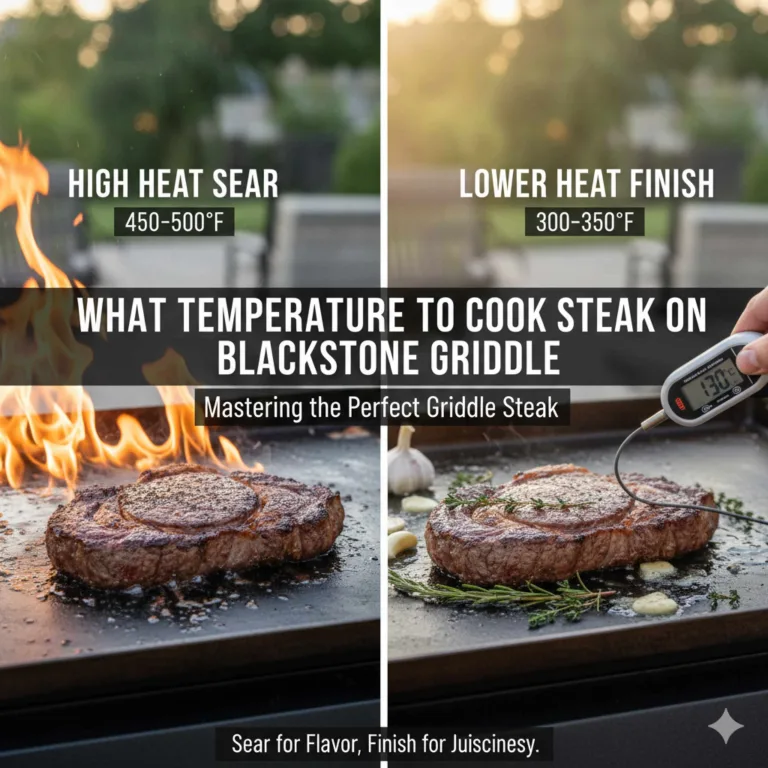
Turn your griddle on and set it to a high heat setting. For most electric griddles, this means around 400-450°F (200-230°C). For gas griddles like a Blackstone, medium-high to high heat is appropriate.
Allow the griddle to preheat for at least 5-10 minutes until it is thoroughly hot. A properly heated griddle is essential for searing ingredients and preventing them from sticking.
Step 2: Cook the Eggs
Add a tablespoon of high smoke point oil to the hot griddle. Pour in the whisked eggs and spread them thinly with a spatula. Cook for about 30-60 seconds until they are mostly set but still slightly moist.
Scrape the eggs into small pieces and push them to one side of the griddle. This keeps them separate and adds texture without overcooking them.
Step 3: Sear Proteins and Vegetables
Add another tablespoon of oil to the empty side of the griddle. Add your diced proteins (chicken, shrimp, etc.) and spread them in a single layer. Cook for 2-3 minutes, stirring occasionally, until they are nearly cooked through.
Then, add your diced aromatics (garlic and ginger) and firmer vegetables (like carrots and onions) to the protein side. Sauté for 1-2 minutes until fragrant and slightly softened.
If you have a lot of ingredients, you might need to do this in batches to avoid overcrowding. Overcrowding will lower the griddle temperature and cause ingredients to steam rather than fry, defeating the purpose of the griddle.
Step 4: Introduce the Rice
Clear a large space on the griddle. Add another tablespoon of oil to this cleared space. Carefully add your cold, day-old rice.
Use your spatulas to break up any remaining clumps and spread the rice out into a thin layer across the griddle. Allow the rice to cook undisturbed for 1-2 minutes to get a nice sear. This is where the crispiness starts to develop.
After searing, toss the rice with the cooked eggs, proteins, and vegetables that you’ve pushed to the side. Continue to stir and toss the mixture for another 3-5 minutes, ensuring the rice is heated through and evenly coated with any rendered fats and juices from the other ingredients.
Step 5: Add the Sauce and Final Toss
Drizzle your prepared sauce evenly over the entire mixture on the griddle. Immediately toss and stir everything vigorously to ensure the sauce coats every grain of rice and ingredient. Cook for an additional 1-2 minutes, continuing to stir, until the sauce has thickened slightly and everything is well combined and heated through.
The high heat of the griddle will help caramelize the sauce, adding depth of flavor.
Step 6: Serve Immediately
Once everything is perfectly combined and heated, remove the fried rice from the griddle and serve it hot. Garnish with chopped green onions or toasted sesame seeds if desired.
Customizing Your Griddle Fried Rice Creations
One of the most exciting aspects of making fried rice, especially on a griddle, is its incredible versatility. You can tailor this dish to your specific tastes, dietary needs, and whatever ingredients you have on hand. The griddle provides a fantastic canvas for culinary creativity.
Consider the variety of proteins you can use. Beyond the common chicken, pork, and shrimp, you can incorporate diced steak, firm tofu, tempeh, or even leftover rotisserie chicken. For a vegetarian or vegan version, ensure your sauce contains a vegetarian oyster sauce or a mushroom-based alternative and load up on plant-based proteins and vegetables.
The vegetable selection is equally flexible. While peas, carrots, and corn are classic, don’t hesitate to add broccoli florets, snap peas, edamame, mushrooms, or bell peppers. Even a handful of spinach wilted in at the end adds a healthy boost.
For a spicier kick, incorporate sliced jalapeños or a drizzle of sriracha or chili oil.
Protein Options
- Chicken (diced breast or thigh)
- Shrimp (peeled and deveined)
- Pork (diced tenderloin or shoulder)
- Beef (thinly sliced sirloin or flank steak)
- Tofu (firm or extra-firm, pressed and cubed)
- Tempeh (cubed or crumbled)
- Eggs (scrambled in)
- Edamame (shelled)
Vegetable Combinations
- Classic Mix: Peas, carrots, corn, diced onion
- Green Power: Broccoli florets, snap peas, edamame, green beans
- Spicy Kick: Diced jalapeños, bell peppers, onions
- Umami Boost: Sliced mushrooms, bok choy, water chestnuts
- Seasonal: Asparagus tips, diced zucchini, sweet potato cubes (pre-cooked)
Sauce Variations and Flavor Boosters
- Spicy: Add sriracha, chili garlic sauce, or red pepper flakes to the sauce mixture.
- Tangy: A splash of rice vinegar or lime juice can add brightness.
- Umami-Rich: A dash of fish sauce (if not vegetarian) or a bit of miso paste can deepen flavor.
- Sweet & Savory: Adjust the sugar-to-soy ratio to your preference.
- Aromatic: A sprinkle of toasted sesame seeds or a drizzle of toasted sesame oil at the end enhances the nutty aroma.
Common Mistakes to Avoid When Griddle Fried Rice
Even with the superior cooking surface of a griddle, there are still common pitfalls that can prevent your fried rice from reaching its full potential. Being aware of these mistakes can save you from a less-than-ideal meal and help you achieve that perfect texture and flavor every time.
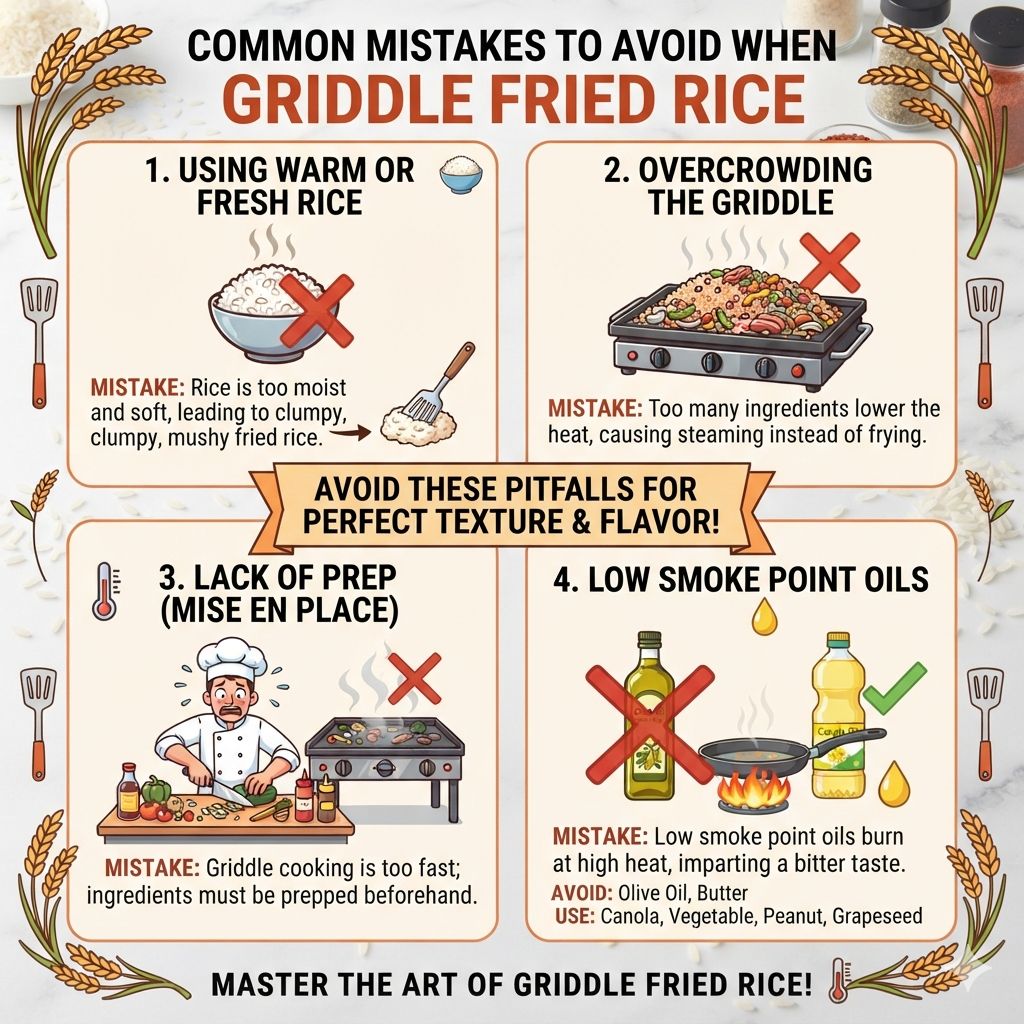
One of the most frequent errors is using fresh, warm rice. As mentioned earlier, this is a recipe for mushy fried rice. The rice needs to be cold and dry so that it can fry and crisp up on the griddle, rather than clump together.
Another common mistake is overcrowding the griddle. High heat is key to frying, and adding too many ingredients at once will lower the griddle’s temperature, leading to steaming and a greasy outcome.
Not having your ingredients prepped is another critical error. The cooking process is so fast that you won’t have time to chop vegetables or measure sauce once you start. Lastly, using an oil with a low smoke point is a problem.
High heat requires an oil that can withstand it without burning and imparting a bitter taste. Always choose oils like canola, vegetable, peanut, or grapeseed oil.
Mistakes and Their Solutions
| Mistake | Problem Caused | Solution |
|---|---|---|
| Using Fresh, Warm Rice | Mushy, clumpy fried rice. | Always use cold, day-old cooked rice. Refrigerate for at least 4-6 hours. |
| Overcrowding the Griddle | Steamed ingredients, greasy texture, uneven cooking. | Cook in batches if necessary. Ensure sufficient space for ingredients to fry. |
| Not Prepping Ingredients (Mise en Place) | Rushed cooking, burnt ingredients, incorrect timing. | Chop everything, mix sauces, and have them ready before heating the griddle. |
| Using Low Smoke Point Oil | Burnt oil taste, smoking excessively. | Use high smoke point oils like canola, vegetable, peanut, or grapeseed oil. |
| Undercooking or Overcooking Eggs | Gummy eggs or dry, rubbery eggs. | Cook eggs quickly until mostly set but still slightly moist, then scramble into pieces. |
Avoiding these common issues will significantly improve the quality and flavor of your griddle fried rice.
Frequently Asked Questions
What is the best type of griddle for making fried rice?
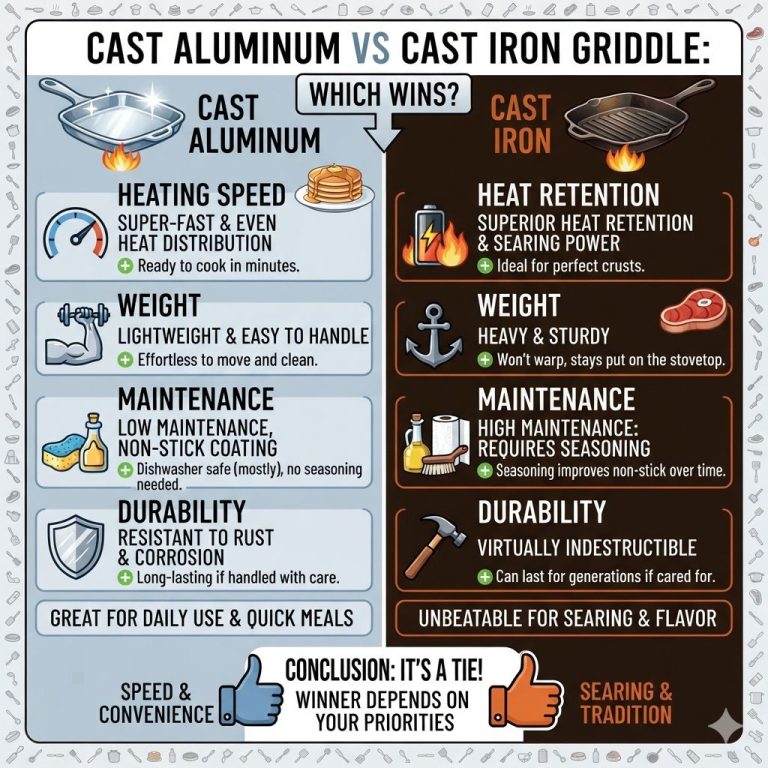
A flat-top griddle, whether electric or gas-powered (like a Blackstone), is ideal. These provide a large, flat, and consistent heat surface that allows for even cooking and ample space to maneuver ingredients, which is perfect for achieving crispy fried rice.
Can I use brown rice for griddle fried rice?
Yes, you can use brown rice, but it requires careful preparation. Brown rice is denser and chewier than white rice. Ensure it is thoroughly cooked and then well-chilled, and be prepared for it to require a bit longer on the griddle to achieve the desired texture.
How do I get the “wok hei” smoky flavor on a griddle?
The “wok hei” flavor comes from intense heat and rapid cooking. Ensure your griddle is fully preheated to a high temperature. Don’t overcrowd the griddle, allowing ingredients to sear and caramelize.
The rapid evaporation of moisture and slight charring of ingredients on the hot surface contribute to this smoky essence.
What can I do if my fried rice turns out too greasy?
Greasy fried rice usually results from overcrowding the griddle or using too much oil. Ensure you’re using a moderate amount of high smoke point oil and cooking in batches if necessary. Also, make sure your ingredients, especially vegetables, aren’t releasing excessive moisture that isn’t allowed to evaporate.
How can I make griddle fried rice vegetarian or vegan?
To make it vegetarian, replace meat proteins with firm or extra-firm tofu, tempeh, or edamame. Ensure your sauce uses a vegetarian oyster sauce or a mushroom-based alternative. For a vegan version, omit the eggs entirely or use a vegan egg substitute, and ensure all sauce ingredients are plant-based.
Final Thoughts
Mastering griddle fried rice elevates a simple home-cooked meal into a flavorful and textural delight. By focusing on cold, dry rice, high heat, proper ingredient preparation, and avoiding common mistakes, you can consistently produce perfect fried rice. Experiment with different ingredients and flavor profiles to make this dish your own.
Enjoy the sizzle and the delicious results!
Related pick: Check today's price on Amazon
Products related to this article
Sponsored / affiliate links. As an Amazon Associate I earn from qualifying purchases. I may earn additional commission from eligible campaigns.