How to Make French Fries in a Skillet: Crispy Guide
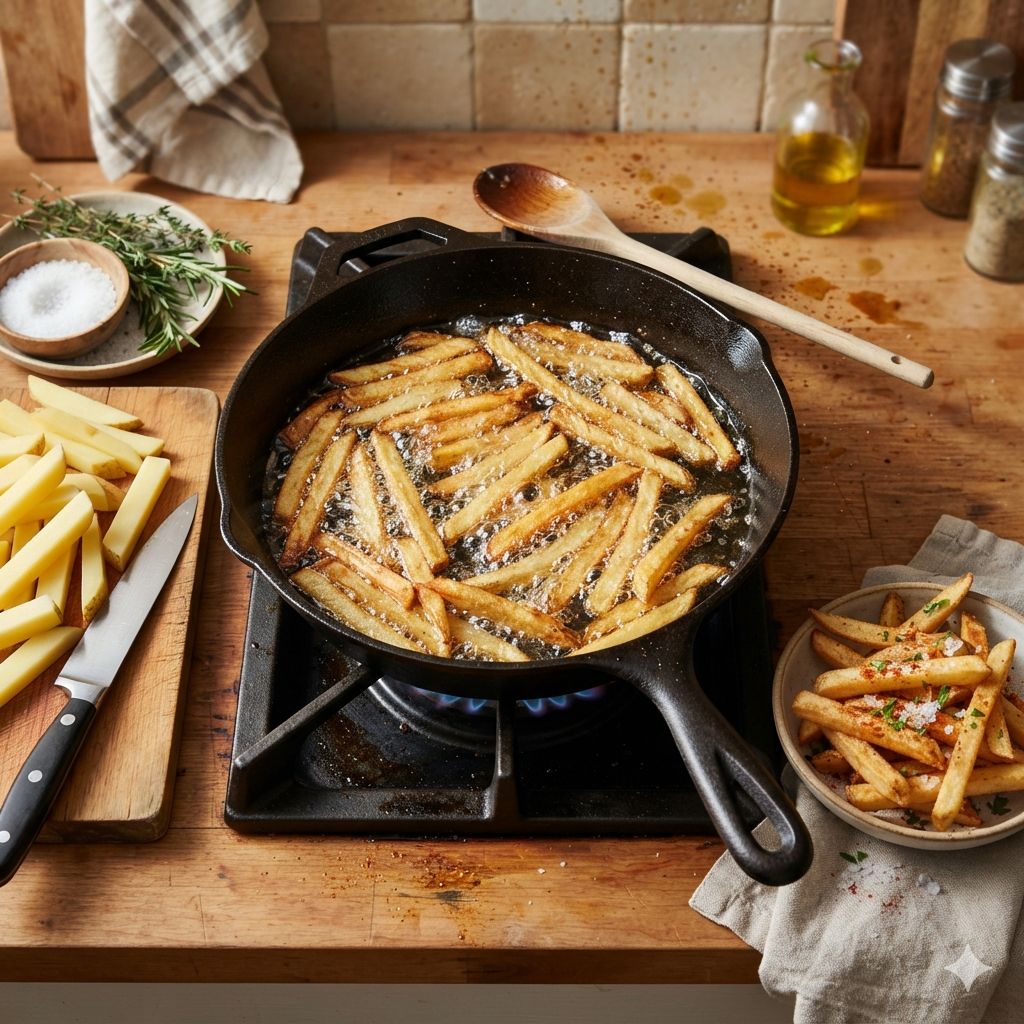
Making french fries in a skillet is a quick and satisfying way to enjoy crispy, golden potatoes without deep frying. This guide covers everything you need to know, from choosing the right potato to achieving that perfect crunch right on your stovetop.

Winco
Winco 8 5/8" Carbon Steel Fry Pan…
- Heavy-duty construction stands up to constant use in commercial kitchens
- Carbon steel material heats quickly and retains temperature for precise cooking
- Angled french-style sides make flipping and sautéing easier
As an Amazon Associate I earn from qualifying purchases.
Simply put, making french fries in a skillet is possible and delivers crispy results when you follow a few key steps. Soak the potatoes, use the right oil, don’t overcrowd the pan, and fry in batches for the best texture and flavor.
Key Takeaways
- Making french fries in a skillet requires proper potato prep, including soaking to remove excess starch for crispiness.
- Use a heavy-bottomed skillet and maintain oil temperature between 325°F and 375°F for even cooking.
- Soaking cut potatoes in cold water for at least 30 minutes is essential for crispy skillet fries.
- Fry in small batches and avoid overcrowding to ensure every fry turns golden and crunchy.
1. Choose the Right Potato for Skillet Fries
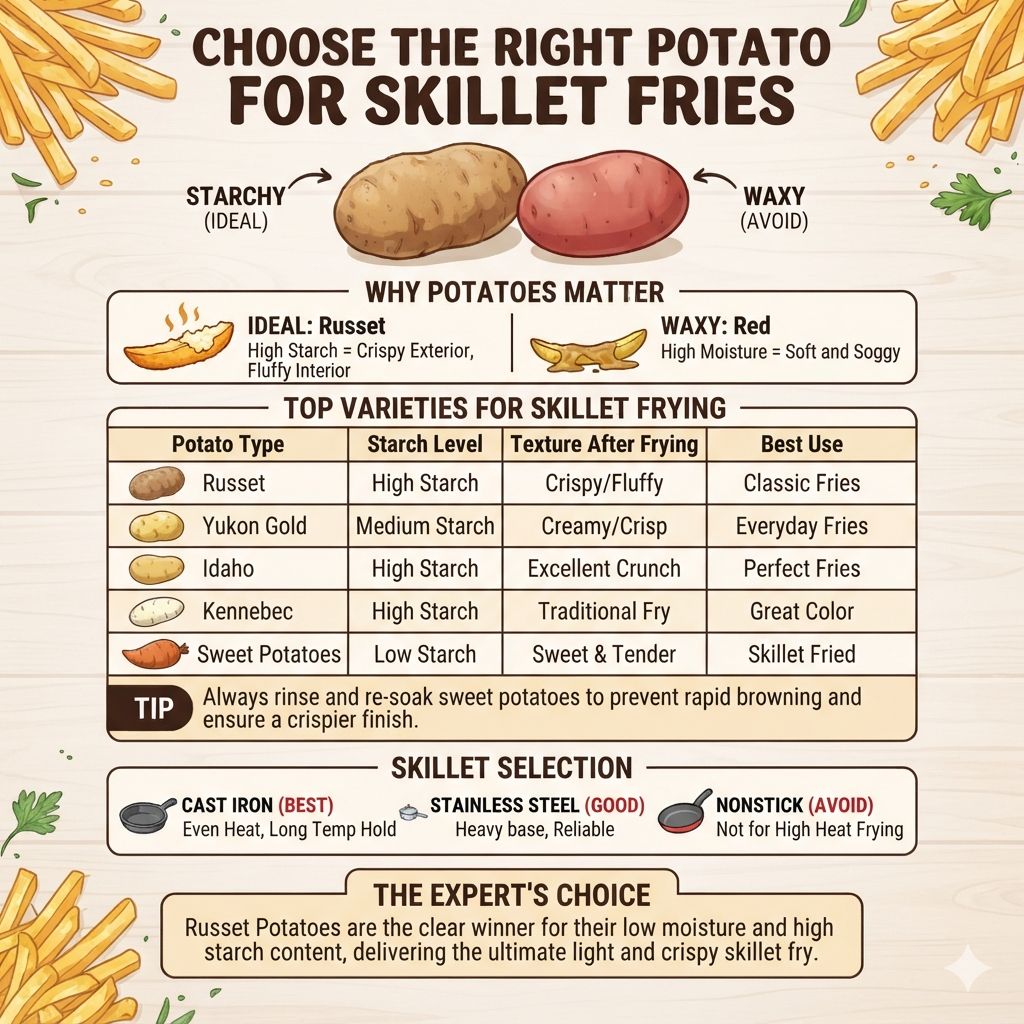
Not all potatoes fry the same. Starchy potatoes like Russets are ideal for making french fries because they yield a fluffy interior and crispy exterior. Waxy potatoes like red or new potatoes hold more moisture and can become soggy.
Russet potatoes also have a high starch content that helps create that signature golden crust when fried in a skillet. Yukon Gold potatoes are another solid option if you prefer a slightly buttery flavor with a tender bite.
Best Potato Varieties for Frying
- Russet – Highest starch content, crispiest results
- Yukon Gold – Buttery flavor, good crunch
- Idaho – Similar to Russet, excellent for frying
- Kennebec – Traditional choice for french fries
- Sweet potatoes – Different flavor, but works well in a skillet
Tip: Always rinse and re-soak sweet potatoes before frying to remove surface starches. They brown faster than white potatoes, so watch your heat closely.
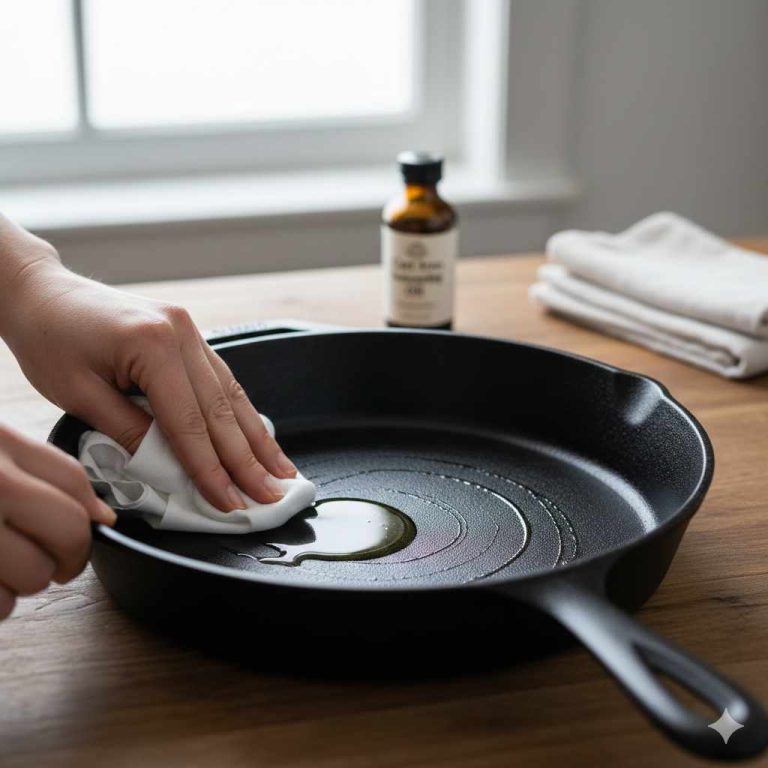
Your skillet choice also matters. A cast iron skillet holds heat evenly and maintains temperature well during frying. Stainless steel with a heavy base works too, but avoid nonstick pans for high-heat frying.
| Potato Type | Starch Level | Texture After Frying | Best Use |
|---|---|---|---|
| Russet | High | Crispy outside, fluffy inside | Classic fries |
| Yukon Gold | Medium | Creamy inside, crisp outside | Everyday fries |
| Red | Low | Dense and waxy | Roasted or boiled |
| Sweet | Low | Slightly caramelized | Baked or skillet fried |
Russet potatoes are the top choice for most cooks making french fries in a skillet. Their high starch content and low moisture produce the lightest, crispiest results. Yukon Golds are a close second if you want a richer flavor.
2. Prep the Potatoes the Right Way
Proper preparation separates soggy, sad fries from golden, crunchy ones. Start by washing and peeling the potatoes if you prefer skinless fries. Leaving the skin on adds texture and nutrients but requires extra cleaning.
Cut the potatoes into uniform sticks about ¼ to ⅓ inch thick. Consistent size ensures even cooking. Use a sharp chef’s knife or a mandoline slicer for precision.
You want every fry to finish cooking at the same time.
Step-by-Step Potato Prep for Skillet Fries
- Wash the potatoes thoroughly under cold water to remove dirt.
- Peel or leave skin on based on your preference.
- Cut into even sticks ¼ to ⅓ inch thick and 3 to 4 inches long.
- Place cut fries in a large bowl of cold water for 30 to 60 minutes.
- Drain and rinse the soaked fries with fresh cold water.
- Dry thoroughly with a clean kitchen towel or paper towels.
Important: Soaking removes excess starch that causes fries to stick together and turn gummy. Do not skip this step if you want crispy results when making french fries in a skillet.
Drying the fries after soaking is just as critical. Water hitting hot oil causes splattering and lowers the oil temperature. Pat the fries very dry with towels and let them air dry for 5 minutes before frying.
According to the USDA Food Safety and Inspection Service, moisture on food surfaces can cause dangerous oil splatter when frying. Dry fries also absorb less oil, leading to lighter, less greasy results.
3. Select the Best Oil for Frying
Oil choice affects flavor, smoke point, and crispiness. You need an oil with a high smoke point to achieve that golden crust without burning. Peanut oil is a classic french fry choice for its neutral flavor and high heat tolerance.
Canola oil and vegetable oil also work well and are more budget-friendly. Avocado oil has the highest smoke point but can be pricier. Avoid olive oil for deep skillet frying because it has a lower smoke point and can turn bitter.
| Oil Type | Smoke Point | Flavor | Cost |
|---|---|---|---|
| Peanut | 450°F | Neutral | Medium |
| Canola | 400°F | Very mild | Low |
| Vegetable | 400°F | Neutral | Low |
| Avocado | 520°F | Buttery | High |
| Coconut | 350°F | Coconut | Medium |
Use about 1 to 1.5 inches of oil in your skillet. The fries need enough oil to float freely without sticking together. A deep-fry thermometer helps you maintain the correct temperature range throughout the process.
For best results when making french fries in a skillet, heat the oil to 325°F for the first fry and 375°F for the second fry. This two-temperature method produces the crispiest fries.
4. How to Make French Fries in a Skillet: Step-by-Step
Now you are ready to fry. Follow these steps carefully for perfect results every time. The two-fry method is the secret to fries that stay crispy even after cooling down.
The Complete Skillet Frying Process
- Heat the oil to 325°F in your skillet over medium heat. Use a thermometer for accuracy.
- Add a test fry to check oil temperature. It should bubble steadily but not violently.
- Fry in batches. Add enough fries to cover the surface in a single layer without overcrowding.
- Cook for 4 to 5 minutes until the fries are pale and tender but not browned. This is the first fry.
- Remove fries with a slotted spoon and drain on paper towels. Let cool for 10 minutes.
- Increase oil temperature to 375°F. Wait until the oil is fully heated.
- Second fry the same batch for 2 to 3 minutes until deep golden and crispy.
- Drain on fresh paper towels and season immediately with salt.
Warning: Never leave hot oil unattended. Keep a lid nearby to smother any oil flare-ups. Do not add wet fries to hot oil — always dry them thoroughly first.
The first fry at the lower temperature cooks the potato through without browning the exterior. The rest period allows moisture to escape, setting the stage for a crunchy second fry at the higher temperature.
Making french fries in a skillet requires patience. Each batch takes about 7 to 8 minutes total between both frying rounds. Plan ahead and serve immediately for best texture.
5. Control the Oil Temperature for Consistent Results
Temperature is the single most important factor when making french fries in a skillet. Oil that is too cold makes fries absorb excess oil and turn greasy. Oil that is too hot burns the outside before the inside cooks through.
Use a clip-on deep-fry thermometer to monitor the oil constantly. Adjust the burner heat as needed to maintain the target temperature. Between batches, give the oil time to come back up to temperature before adding more fries.
Common Temperature Problems and Fixes
- Fries are pale and greasy – Oil temperature is too low. Increase heat and wait for proper temp before adding more fries.
- Fries burn quickly on the outside – Oil is too hot. Reduce heat and check thermometer calibration.
- Oil temperature drops sharply – You added too many fries at once. Fry in smaller batches.
- Fries are unevenly cooked – Cut pieces are not uniform in size. Slice more carefully.
- Oil starts smoking – Heat is too high. Remove from burner immediately and let cool.
According to the Institute of Food Technologists, maintaining oil temperature within a 25°F window during frying significantly reduces oil absorption. This means your fries stay lighter and less greasy.
Tip: Keep a kitchen timer handy. Setting a timer for each fry round helps you stay consistent, especially when cooking multiple batches.
Thermometer accuracy matters. Test your thermometer in boiling water (212°F at sea level) to confirm it reads correctly. If you are at a high altitude, adjust for the lower boiling point of water.
6. Season and Serve Skillet Fries Like a Pro
Seasoning right after frying is crucial. Making french fries in a skillet produces hot, oiled surfaces that salt and spices stick to instantly. Wait even 30 seconds and the fries cool enough that seasonings slide off.
Use fine sea salt or kosher salt for even coverage. Sprinkling from a height of 12 inches distributes the salt more evenly across the batch. Toss the fries gently in a bowl after salting to coat all sides.
Seasoning Variations for Skillet Fries
- Classic salted – Fine sea salt immediately after frying
- Garlic parmesan – Grated parmesan, garlic powder, and dried parsley
- Spicy chili – Chili powder, cayenne, smoked paprika, and salt
- Herb and lemon – Dried rosemary, thyme, lemon zest, and black pepper
- Truffle fries – Truffle oil drizzled after frying, topped with parmesan
- Old bay seasoned – Old Bay seasoning and celery salt
Serve your fries immediately for the best texture. If you need to hold them for a few minutes, spread them in a single layer on a baking sheet in a 200°F oven. Avoid stacking them in a bowl, which traps steam and makes them soggy.
Dipping sauces complete the experience. Ketchup is classic, but aioli, ranch, chipotle mayo, or malt vinegar all pair beautifully with crispy skillet fries.
| Seasoning Style | Key Ingredients | Best Paired With |
|---|---|---|
| Garlic Parmesan | Parmesan, garlic powder, parsley | Ranch or marinara |
| Spicy Chili | Chili powder, cayenne, paprika | Chipotle mayo or sour cream |
| Truffle | Truffle oil, parmesan, salt | Aioli or balsamic ketchup |
Making french fries in a skillet gives you full control over seasoning. Experiment with different spice blends to find your signature style. Just remember to season while the fries are still hot from the oil.
7. Common Mistakes When Making Skillet Fries
Even experienced cooks make mistakes when frying in a skillet. Knowing what can go wrong helps you avoid it. Here are the most common errors and how to fix them.
Mistake #1: Skipping the Soak
Skipping the cold water soak is the fastest way to soggy fries. Starch on the surface causes fries to stick together and absorb more oil. Always soak for at least 30 minutes, then rinse and dry thoroughly.
Mistake #2: Overcrowding the Skillet
Adding too many fries at once drops the oil temperature drastically. This leads to greasy, pale fries instead of crispy golden ones. Fry in small batches and give the oil time to recover between rounds.
Mistake #3: Not Drying Potatoes Enough
Wet potatoes cause violent oil splatter and soggy results. After soaking, pat the fries very dry with a clean towel. Let them air dry for a few minutes before adding to the hot oil.
Mistake #4: Using the Wrong Oil
Oils with low smoke points burn easily and impart bitter flavors. Stick with peanut, canola, or vegetable oil for the best results when making french fries in a skillet.
Mistake #5: Skipping the Second Fry
A single fry produces soft fries that lose their crunch quickly. The second fry at a higher temperature creates that signature crispy crust and keeps the fries crunchy longer.
Important: Each mistake is easy to fix once you know what to watch for. Follow the preparation and frying steps carefully, and your skillet fries will turn out consistently crispy.
Learning from these mistakes improves your results immediately. With practice, making french fries in a skillet becomes a quick, reliable cooking method you will use often.
8. Why Skillet Fries Beat Oven Fries and Deep Fryer Fries
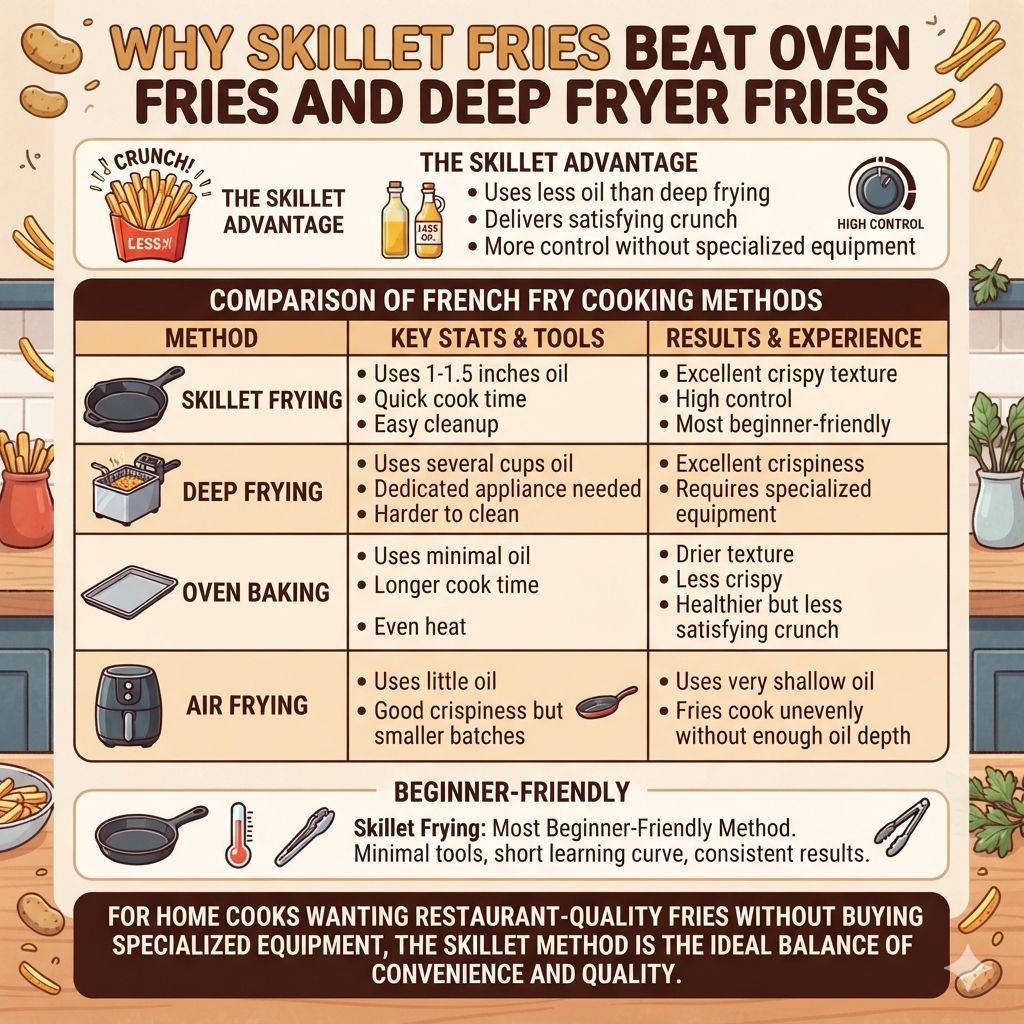
Skillet fries offer a balance of convenience and quality that other methods struggle to match. Oven baking often produces drier, less crispy results. Deep fryers require large amounts of oil and are harder to clean.
Making french fries in a skillet uses less oil than a deep fryer but still delivers that satisfying crunch. You also have more control over the cooking process without needing specialized equipment.
Comparison of French Fry Cooking Methods
- Skillet frying – Uses 1 to 1.5 inches of oil, quick cook time, easy cleanup, crispy results
- Deep frying – Uses several cups of oil, requires a dedicated appliance, excellent crispiness
- Oven baking – Uses minimal oil, longer cook time, less crispy texture
- Air frying – Uses little oil, even cooking, good crispiness but smaller batches
- Pan frying – Uses shallow oil, fries cook unevenly without enough oil depth
Skillet frying is also the most beginner-friendly method. You only need a heavy skillet, a thermometer, and basic kitchen tools. The learning curve is short and results are consistently good.
For home cooks who want restaurant-quality fries without buying specialized equipment, the skillet method is the clear winner. It delivers the texture you crave with minimal fuss.
Frequently Asked Questions
Do I need to peel potatoes for skillet fries?
No, peeling is optional. Leaving the skin on adds texture, fiber, and nutrients. Just scrub the potatoes thoroughly before cutting.
If you prefer classic diner-style fries without skin, peel them first.
Can I use frozen fries in a skillet?
Yes, you can cook frozen fries in a skillet. Do not thaw them first. Heat oil to 350°F and fry directly from frozen for 4 to 6 minutes until golden and crispy.
Frozen fries may splatter more due to surface ice crystals.
How do I reheat leftover skillet fries?
The best way to reheat skillet fries is in the same skillet. Heat a thin layer of oil over medium-high heat and fry the fries for 2 to 3 minutes until crispy again. Avoid microwaving, which makes them rubbery and soggy.
What type of skillet is best for making french fries?
Cast iron skillets are the best choice because they hold heat evenly and maintain temperature during frying. Heavy stainless steel skillets also work. Avoid thin nonstick pans that cannot handle high heat consistently.
How much oil should I use in the skillet?
Use enough oil to reach about 1 to 1.5 inches deep in the skillet. The fries need to float freely without touching the bottom. About 3 to 4 cups of oil works for a standard 12-inch skillet.
Final Thoughts
Making french fries in a skillet is easier than you think and produces crispy, golden results every time. Start with Russet potatoes, soak and dry them well, and use the two-fry method for the best texture. With the right oil temperature and small batches, you can enjoy restaurant-quality fries right from your stovetop.
Practice the technique once or twice and you will have a new go-to side dish that impresses every time.
Related pick: Check today's price on Amazon
Products related to this article
Sponsored / affiliate links. As an Amazon Associate I earn from qualifying purchases. I may earn additional commission from eligible campaigns.