How to Cook Pork Chops in a Skillet: Easy Guide
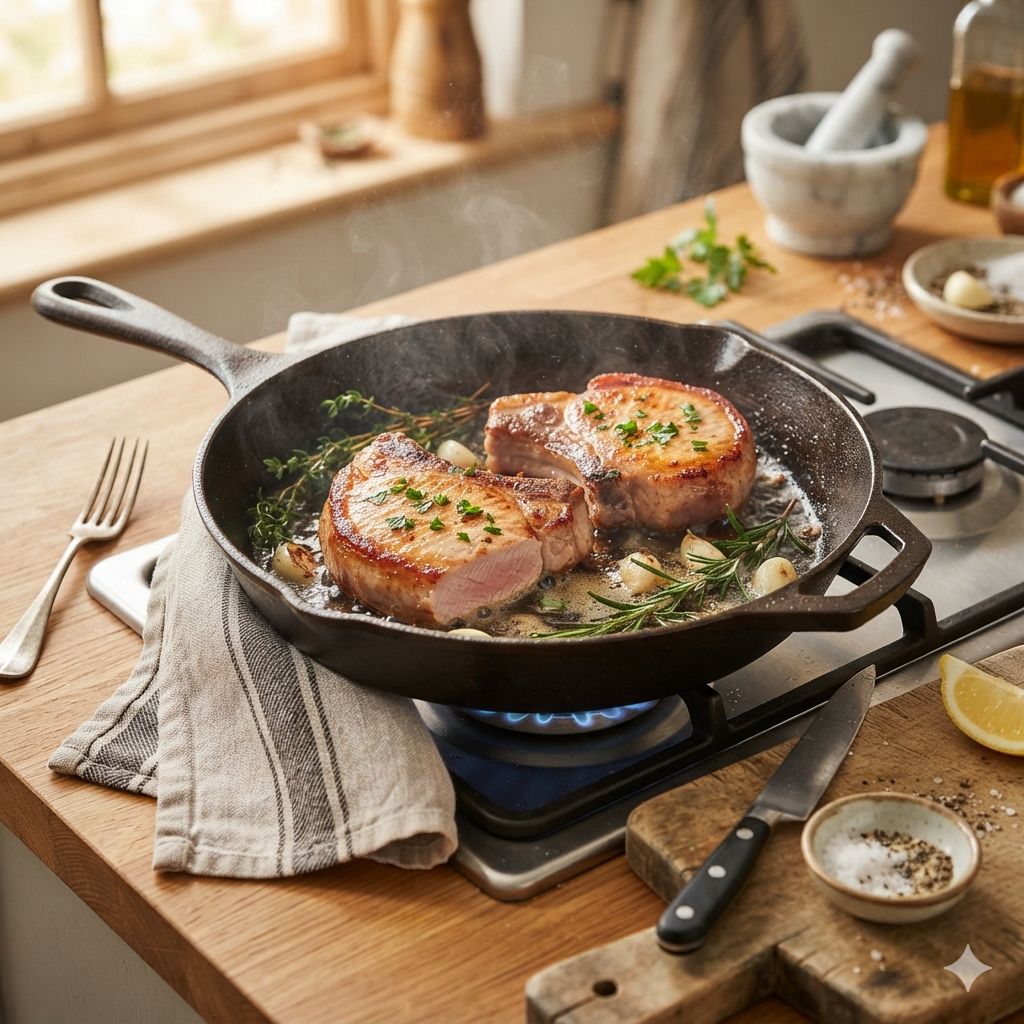
Cooking pork chops in a skillet is one of the fastest and most rewarding ways to get dinner on the table. The high direct heat creates a deep golden crust while locking in natural juices that keep the meat tender and flavorful. This guide walks you through every step, from choosing the right cut to nailing the perfect internal temperature.
Simply put, the best way to cook pork chops in a skillet is to dry brine them first, sear them over medium-high heat in a cast iron pan, and baste with butter and aromatics. A reliable meat thermometer ensures you never overcook them. Follow these steps and you will get juicy, restaurant-quality chops every time.
Key Takeaways
- Cook pork chops in a skillet using a dry brine for 40 minutes to lock in moisture and boost flavor.
- Always use thick-cut, bone-in pork chops for the most forgiving and succulent results.
- Preheat your skillet until it is smoking hot to achieve a deep Maillard crust.
- Let the chops rest for 5 minutes after cooking to allow juices to redistribute evenly.
What You Need to Cook Pork Chops in a Skillet
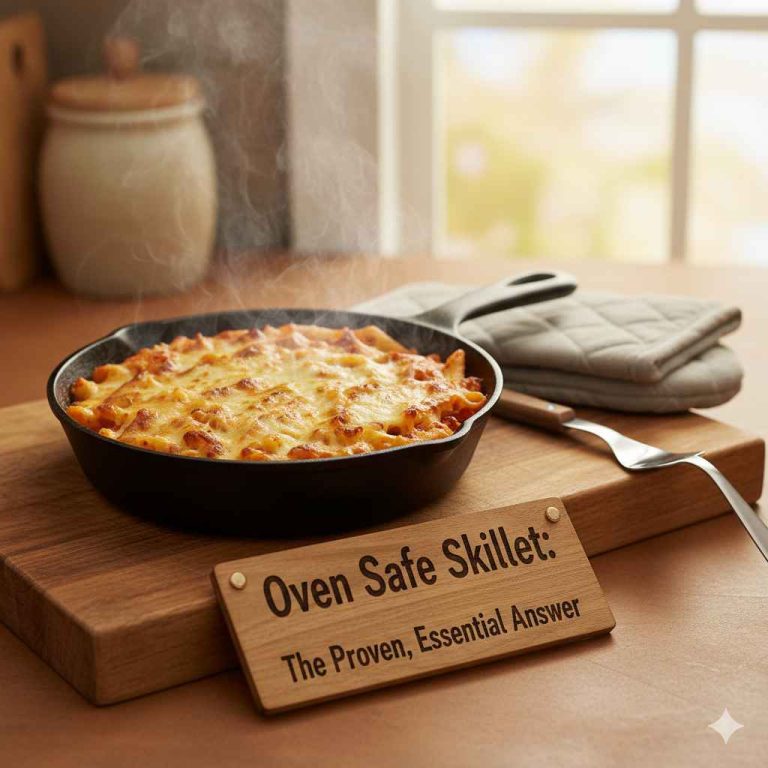
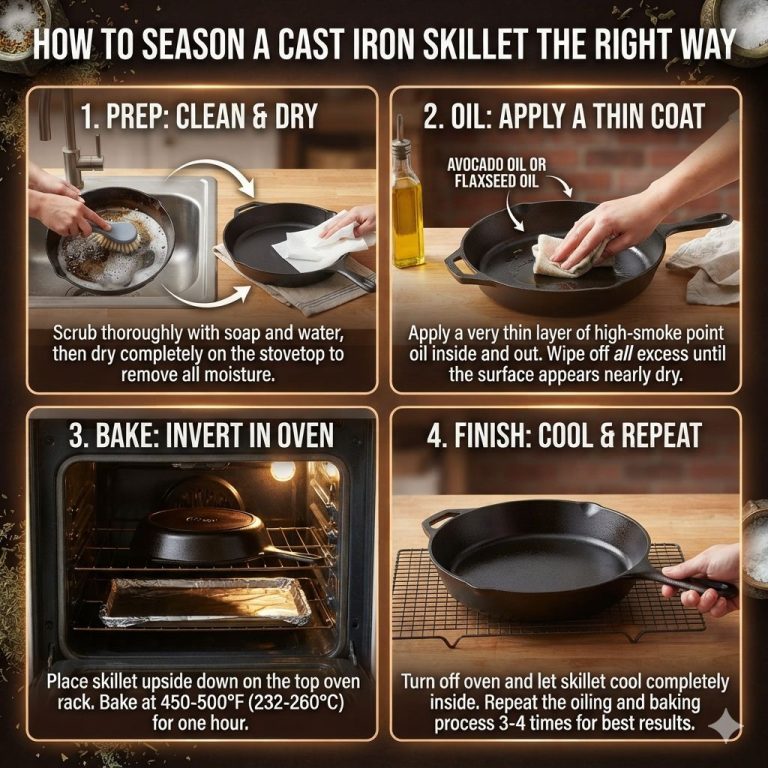
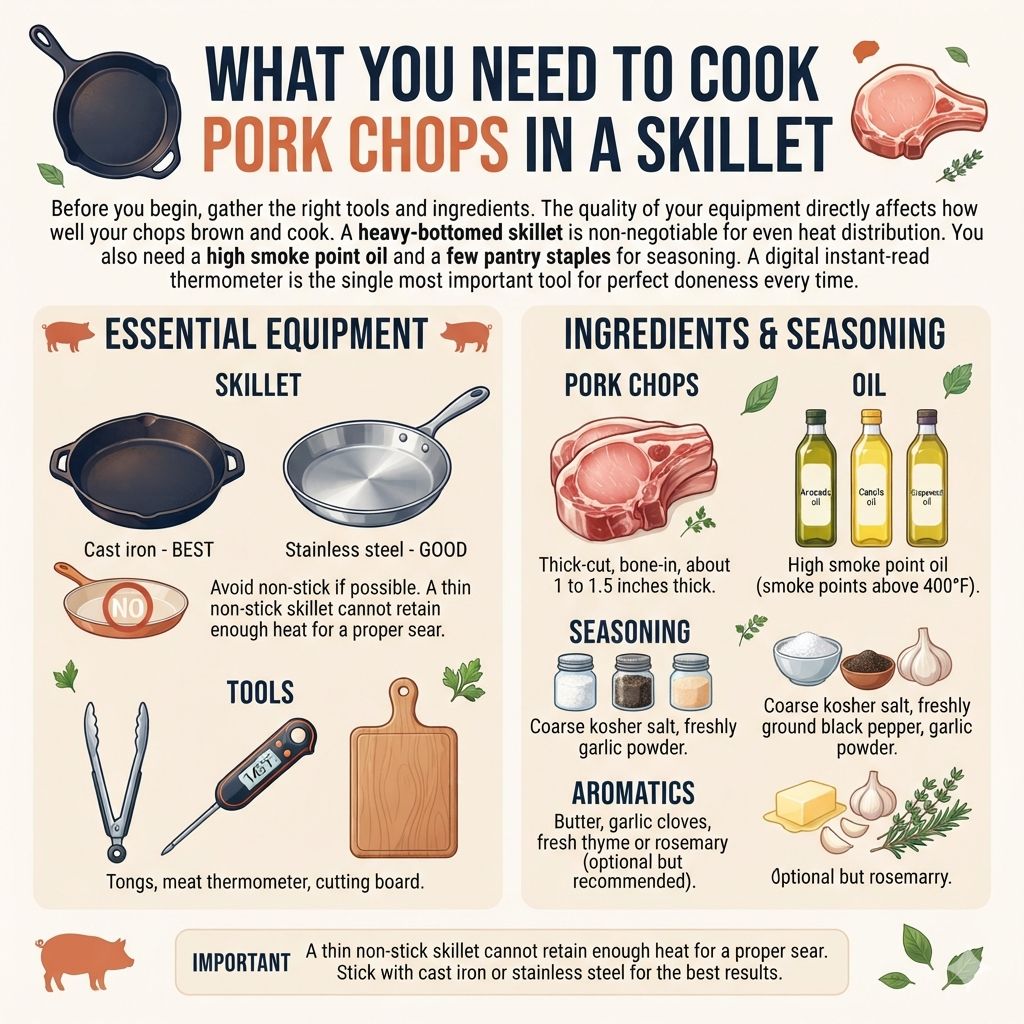
Before you begin, gather the right tools and ingredients. The quality of your equipment directly affects how well your chops brown and cook. A heavy-bottomed skillet is non-negotiable for even heat distribution.
You also need a high smoke point oil and a few pantry staples for seasoning. A digital instant-read thermometer is the single most important tool for perfect doneness every time.
- Skillet: Cast iron is best, but heavy stainless steel works well too. Avoid non-stick if possible.
- Oil: Avocado, canola, or grapeseed oil (smoke points above 400°F).
- Pork Chops: Thick-cut, bone-in, about 1 to 1.5 inches thick.
- Seasoning: Coarse kosher salt, freshly ground black pepper, garlic powder.
- Aromatics: Butter, garlic cloves, fresh thyme or rosemary (optional but recommended).
- Tools: Tongs, meat thermometer, cutting board.
Important: A thin non-stick skillet cannot retain enough heat for a proper sear. Stick with cast iron or stainless steel for the best results when you cook pork chops in a skillet.
How to Choose the Best Pork Chops for Skillet Cooking
Not all pork chops are created equal when it comes to pan searing. Thin, boneless chops cook too quickly and dry out before you get a good crust. The cut and thickness you choose will determine your success before you even turn on the stove.
Look for chops with a thick fat cap running along the side. This fat renders during cooking and bastes the meat naturally. Rib chops and loin chops are excellent choices for skillet preparation.
| Feature | Bone-In Chop | Boneless Chop |
|---|---|---|
| Flavor | Richer from bone and marrow | Milder, good for marinades |
| Moisture Retention | Excellent, very forgiving | Lower, easy to overcook |
| Cooking Time | 6-8 minutes per side | 4-5 minutes per side |
| Ideal Thickness | 1 to 1.5 inches | 1 to 1.5 inches |
For skillet cooking, always opt for bone-in chops that are at least one inch thick. They resist drying out and give you more time to develop that beautiful crust. Boneless chops require closer attention and are best for fast weeknight meals.
Step 1: Dry Brine the Pork Chops
Dry brining is the secret to juicy pork chops. It draws moisture out initially, then reabsorbs it with seasoning deep into the meat fibers. This process seasons the chop all the way through instead of just sitting on the surface.
Pat the pork chops completely dry with paper towels. Season generously on all sides with kosher salt. Place them on a wire rack over a baking sheet and refrigerate uncovered for at least 40 minutes, or up to 24 hours for best results.
- Pat dry: Removing surface moisture ensures better browning later.
- Salt ratio: Use about one teaspoon of kosher salt per pound of meat.
- Time: 40 minutes at minimum, but overnight gives superior texture.
- Covering: Do not cover the chops while brining in the fridge.
- Pepper: Add black pepper after brining, just before cooking, to avoid burning.
Tip: If you are short on time, a 15-minute dry brine is still better than no brine at all. The salt needs time to penetrate, but even a quick rest helps improve moisture and flavor.
Step 2: Sear the Pork Chops Over High Heat
Getting a good sear is the most critical part of cooking pork chops in a skillet. The Maillard reaction creates hundreds of flavor compounds that transform the meat from bland to savory. High heat is essential to achieve this reaction quickly without overcooking the interior.
Place your cast iron skillet over medium-high heat for at least five minutes. The pan must be extremely hot before the oil goes in. Add a thin layer of high smoke point oil and swirl to coat the bottom.
- Carefully lay the pork chops in the skillet away from your body to avoid oil splatter.
- Press down gently with tongs to ensure full contact with the pan surface.
- Cook without moving for 4-5 minutes until a deep golden brown crust forms.
- Flip the chops and sear the second side for 4-5 minutes.
Warning: Do not overcrowd the skillet. Cook in batches if needed. Overcrowding drops the pan temperature and causes the meat to steam instead of sear. A good crust requires space between each chop.
Step 3: Baste with Butter and Aromatics
After the initial sear, the fat in the crust is perfectly primed to soak up additional flavors. Basting with butter adds richness and helps finish cooking the meat gently. Aromatics like garlic and herbs infuse the butter, creating a pan sauce right in the skillet.
Reduce the heat to medium. Add two tablespoons of butter, two smashed garlic cloves, and a few sprigs of thyme or rosemary to the pan. Tilt the skillet slightly so the butter pools to one side and use a large spoon to continuously baste the chops.
- Butter: Unsalted is best to control the salt level.
- Garlic: Smash the cloves instead of mincing to prevent burning.
- Herbs: Thyme, rosemary, or sage complement pork beautifully.
- Duration: Baste for 1-2 minutes total.
- Internal temp: Remove chops at 135-140°F (they will rise to 145°F while resting).
Tip: Add a splash of chicken broth or white wine after basting to deglaze the pan. Scrape up the browned bits for a quick, delicious pan sauce to drizzle over the finished chops.
Step 4: Rest the Pork Chops Before Serving
Resting is a step many home cooks skip, but it makes a measurable difference in juiciness. When meat cooks, the juices are pushed toward the center. Resting allows those juices to redistribute evenly throughout the chop so they stay in the meat rather than running out onto the plate.
Transfer the seared chops to a clean cutting board or plate. Tent them loosely with a sheet of aluminum foil. Do not wrap tightly, as this can soften the crust you worked hard to create.
- Rest time: 5 minutes for thick-cut chops.
- Temperature rise: Carryover cooking increases internal temp by 5-10°F.
- Tenting: Loosely cover to keep warm without steaming the crust.
- Do not cut: Slicing too early releases the juices you just sealed in.
The USDA recommends cooking pork to a minimum internal temperature of 145°F followed by a three-minute rest. For the most tender and juicy results, pull your chops from the skillet between 135°F and 140°F. The carryover heat during the rest will bring them to the safe serving temperature.
Common Mistakes When Cooking Pork Chops in a Skillet
Even experienced cooks run into problems with pork chops. The most common issues stem from temperature mismanagement, improper preparation, or simple impatience. Understanding these pitfalls helps you avoid them on your next cook.
The table below breaks down the most frequent mistakes and how to fix them quickly.
| Mistake | Why It Happens | How to Fix It |
|---|---|---|
| Cooking cold chops | Cold center prevents even cooking | Let chops sit at room temp 15 mins before cooking |
| Thin-cut chops | They dry out before getting a crust | Buy 1-inch thick chops or butterfly thin ones |
| Flipping too often | Prevents crust from forming | Flip only once, after 4-5 minutes |
| Skipping the thermometer | Cannot reliably judge doneness | Use an instant-read thermometer every time |
| Not resting the meat | Juices leak out when cut | Rest for 5 minutes loosely tented |
Warning: Never rely on the “clear juices” method to check doneness for pork. It is unreliable and often leads to dry, overcooked meat. A digital thermometer is the only tool you should trust.
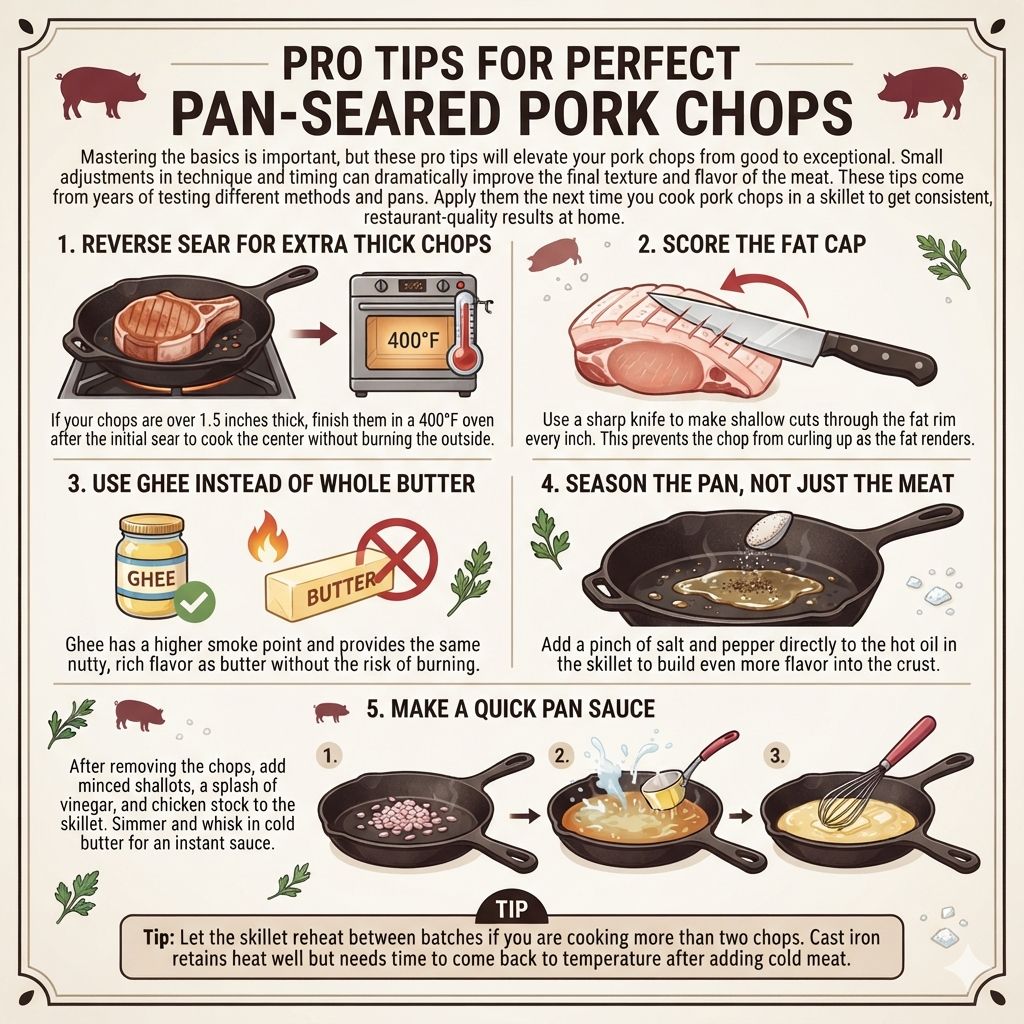
Pro Tips for Perfect Pan-Seared Pork Chops
Mastering the basics is important, but these pro tips will elevate your pork chops from good to exceptional. Small adjustments in technique and timing can dramatically improve the final texture and flavor of the meat.
These tips come from years of testing different methods and pans. Apply them the next time you cook pork chops in a skillet to get consistent, restaurant-quality results at home.
- Reverse sear for extra thick chops: If your chops are over 1.5 inches thick, finish them in a 400°F oven after the initial sear to cook the center without burning the outside.
- Score the fat cap: Use a sharp knife to make shallow cuts through the fat rim every inch. This prevents the chop from curling up as the fat renders.
- Use ghee instead of whole butter: Ghee has a higher smoke point and provides the same nutty, rich flavor as butter without the risk of burning.
- Season the pan, not just the meat: Add a pinch of salt and pepper directly to the hot oil in the skillet to build even more flavor into the crust.
- Make a quick pan sauce: After removing the chops, add minced shallots, a splash of vinegar, and chicken stock to the skillet. Simmer and whisk in cold butter for an instant sauce.
Tip: Let the skillet reheat between batches if you are cooking more than two chops. Cast iron retains heat well but needs time to come back to temperature after adding cold meat.
Frequently Asked Questions
How long does it take to cook pork chops in a skillet?
For a 1-inch thick bone-in pork chop, cook for 4-5 minutes per side over medium-high heat, then baste for 1-2 minutes. Total cook time is roughly 10-12 minutes. Thinner chops need less time, while thicker chops may require finishing in the oven.
What is the best oil for searing pork chops in a skillet?
Use oils with a high smoke point, such as avocado oil, canola oil, or grapeseed oil. These oils can withstand the high heat needed for a proper sear without burning or creating off-flavors. Olive oil has a lower smoke point and is not ideal for this purpose.
Should I cook pork chops in butter or oil?
Start with oil for the sear because it can handle higher heat without burning. Then add butter and aromatics during the last 1-2 minutes of cooking to baste and flavor the chops. This combination gives you both a good crust and rich taste.
How do I know when pork chops are done in the skillet?
The most accurate way is to use an instant-read digital thermometer. Insert it into the thickest part of the chop without touching the bone. The USDA recommends 145°F, but remove the chop at 135-140°F and let it rest to reach the final temperature safely.
Can I cook frozen pork chops in a skillet?
It is not recommended to cook frozen pork chops in a skillet. The outside will overcook and burn before the inside is thawed and cooked through. Always thaw pork chops in the refrigerator overnight for even, safe cooking.
Final Thoughts
Mastering how to cook pork chops in a skillet comes down to three key things: heat control, proper preparation, and accurate temperature tracking. Dry brine your chops, use a heavy pan, and never skip the rest. These simple techniques turn a basic weeknight dinner into a juicy, flavorful meal.
Grab your cast iron skillet and try this method today.
Products related to this article
Sponsored / affiliate links. As an Amazon Associate I earn from qualifying purchases. I may earn additional commission from eligible campaigns.