Smooth vs Rough Cast Iron Skillet: Key Differences
The debate over smooth vs rough cast iron skillet surfaces has divided cooks for generations. Your skillet’s texture directly affects how food cooks, how easily it releases, and how much maintenance it demands.
Field Company
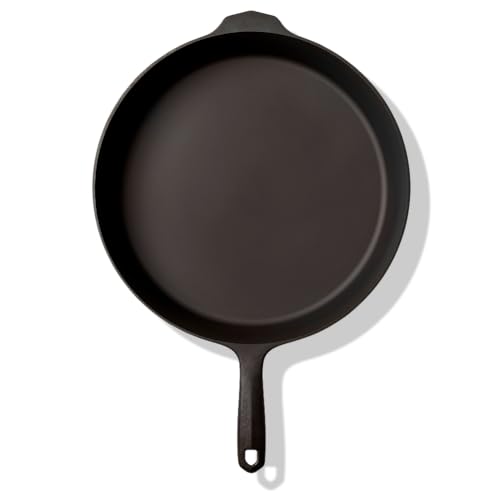
Field Company No.12 Extra-Large Cast Iron Skillet…
- SMOOTHER & LIGHTER: Field Company cast iron is machine polished using modern methods to replicate the lighter, smoother cast iron…
- SEASONING THAT GROWS WITH YOU: Cast iron's nonstick properties build over time — that's the whole point. Your pan arrives pre-seas…
- 100% MADE IN THE USA: Our cast iron is made in American from start to finish and poured using green sand castings—just like the mo…
As an Amazon Associate I earn from qualifying purchases.
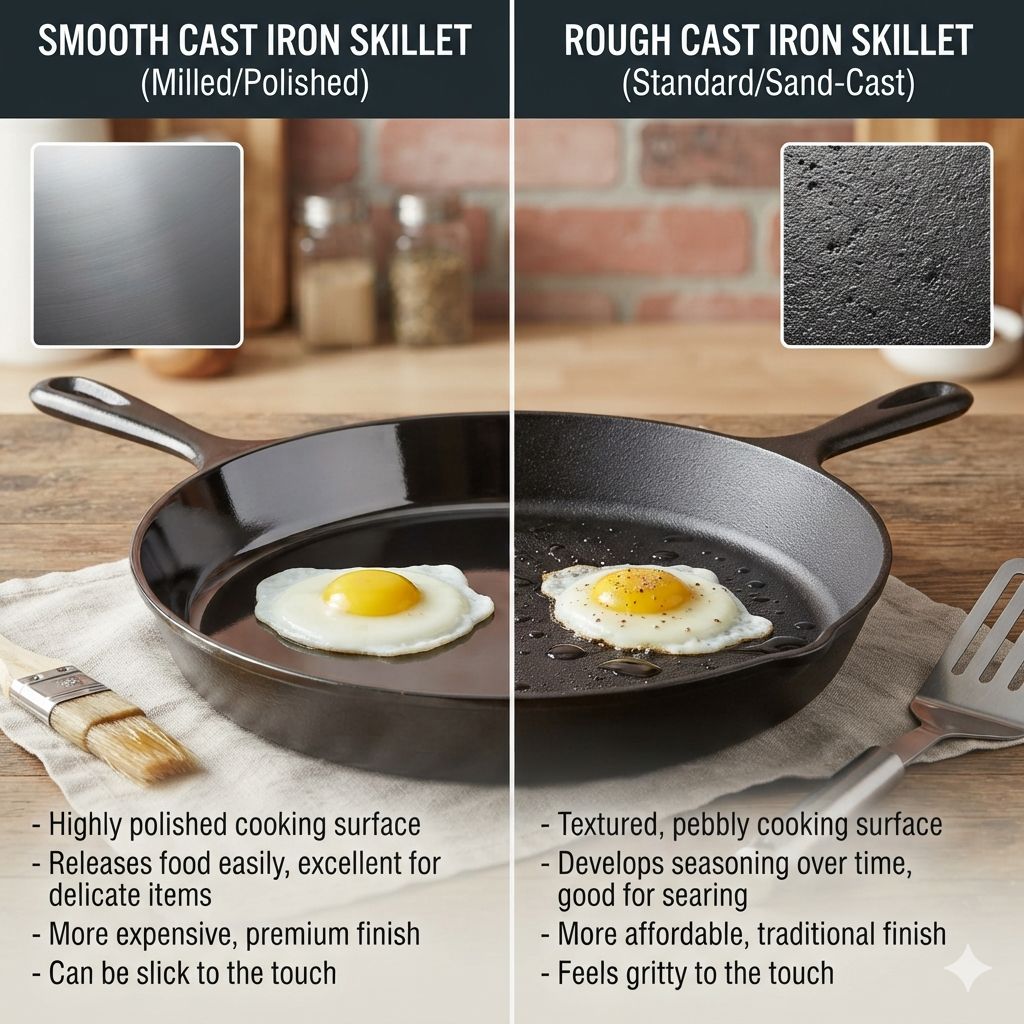
Simply put, smooth cast iron skillets offer superior non-stick performance and lighter weight, while rough textured skillets are more affordable, widely available, and hold seasoning exceptionally well once properly built up. Beginners often prefer modern rough skillets, while enthusiasts hunt for vintage smooth pans.
Key Takeaways
- Smooth cast iron skillets come from vintage manufacturers or high-end modern brands and provide a glass-like cooking surface.
- Rough textured skillets are standard modern production pieces that require more initial seasoning effort to achieve peak performance.
- Surface texture directly impacts non-stick performance, heat distribution, and overall cooking experience.
- Your choice between smooth vs rough cast iron skillet depends on your budget, patience for seasoning, and cooking style.
What Makes a Cast Iron Skillet Smooth or Rough?
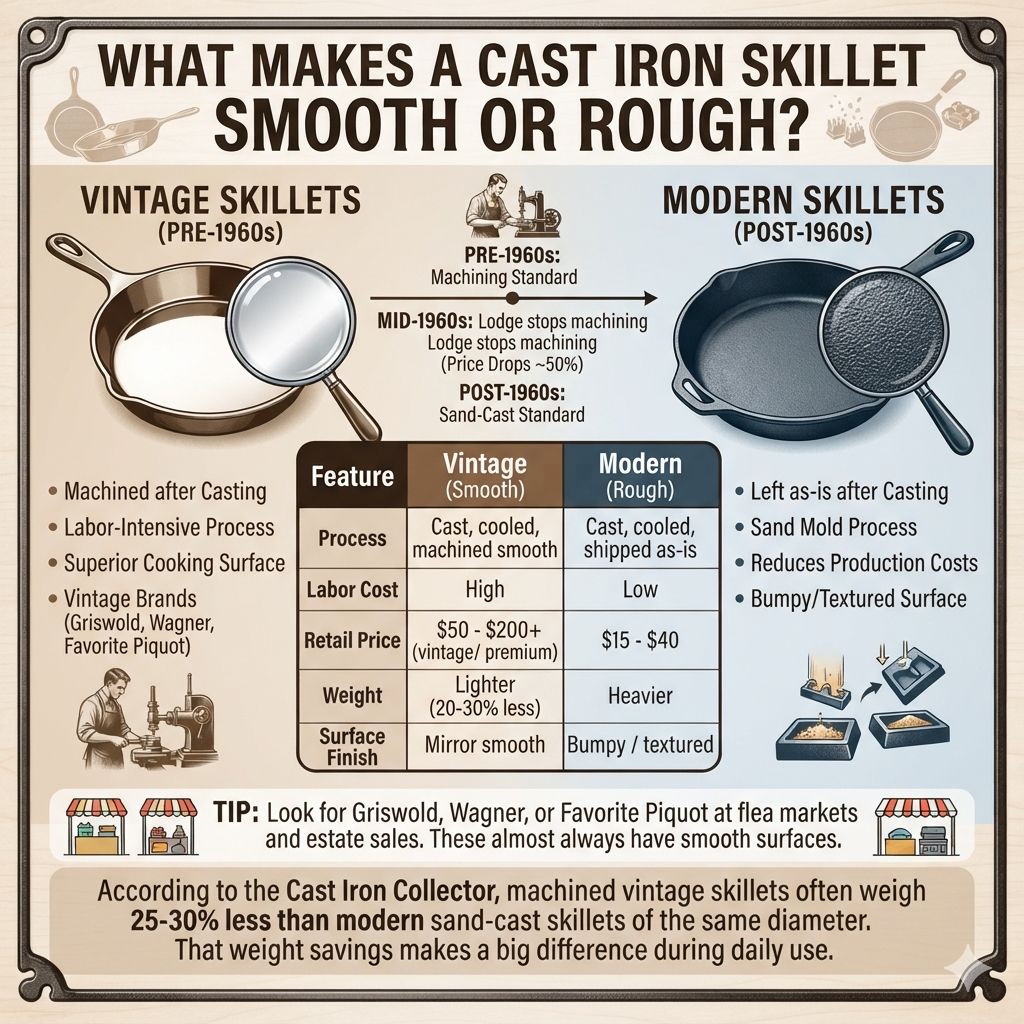
The texture of a cast iron skillet comes down to its manufacturing process. Vintage skillets, those made before the 1960s, were machined after casting to create a perfectly smooth cooking surface. This labor-intensive process added significant cost but produced a superior cooking experience.
Modern skillets are left as-is after being cast in sand molds. This leaves a rough, bumpy texture. This change was driven by the need to reduce production costs.
Lodge Manufacturing, the largest cast iron producer, stopped machining skillets in the mid-1960s, dropping the average price of a skillet by nearly 50%.
Tip: Look for skillets by Griswold, Wagner, or Favorite Piquot at flea markets and estate sales. These vintage brands almost always have smooth cooking surfaces.
Here is a quick breakdown of the manufacturing differences:
| Feature | Vintage (Smooth) | Modern (Rough) |
|---|---|---|
| Process | Cast, cooled, machined smooth | Cast, cooled, shipped as-is |
| Labor Cost | High | Low |
| Retail Price | $50 – $200+ (vintage/ premium) | $15 – $40 |
| Weight | Lighter (20-30% less) | Heavier |
| Surface Finish | Mirror smooth | Bumpy / textured |
According to the Cast Iron Collector, machined vintage skillets often weigh 25-30% less than modern sand-cast skillets of the same diameter. That weight savings makes a big difference during daily use.
Smooth vs Rough Cast Iron Skillet: Side-by-Side Comparison
When comparing these two types of cookware side by side, the differences become clear. Each has distinct strengths and weaknesses that affect your cooking outcomes.
| Factor | Smooth Skillet | Rough Skillet |
|---|---|---|
| Non-Stick Potential | Excellent out of the box | Good after heavy use |
| Heat Retention | Good (thinner walls) | Excellent (thicker walls) |
| Weight | Lighter, easier to handle | Heavy, sturdy feel |
| Price | Higher ($50+) | Low ($20 – $40) |
| Availability | Used / Specialty retail | Everywhere |
| Maintenance | Less oil needed | More seasoning required |
This comparison shows that smooth vs rough cast iron skillet choices come down to trade-offs. You get exceptional performance with smooth skillets, but you pay more. You get incredible value with rough skillets, but you invest more time in seasoning.
Why Vintage Smooth Skillets Are Prized by Enthusiasts
Cooking enthusiasts seek out smooth skillets for one main reason: they are remarkably non-stick once seasoned properly. The polished surface allows food to glide across it with minimal oil. Eggs, fish, and delicate foods release easily.
Beyond performance, vintage smooth skillets are lighter. A 10-inch Griswold skillet weighs about 3 pounds, while a modern 10-inch Lodge weighs nearly 5 pounds. That difference matters when you are flipping food or washing dishes.
Key Benefits of Smooth Skillets
- Superior non-stick performance right from the first few seasoning coats.
- Lighter weight makes them easier to handle and toss food.
- Even heat distribution due to the uniform surface contacting the food.
- Easier cleaning because food residue does not get trapped in crevices.
- Collectible value that often appreciates over time.
Important: When buying vintage smooth skillets, look for a perfectly flat cooking surface. Warped pans will not sit flat on modern glass or induction stovetops. Always test the wobble before purchasing.
High-end modern manufacturers like Field Company, Smithey Ironware, and Butter Pat Industries have revived the smooth surface process. These new pieces combine vintage geometry with modern metallurgy, offering the best of both worlds. A 2023 survey by the Cast Iron Cookware Association found that 65% of enthusiasts prefer a smooth cooking surface for eggs and delicate fish.
The Case for Modern Rough Textured Cast Iron
Modern rough textured skillets deserve serious consideration. They are incredibly durable and affordable. You can buy a brand new Lodge skillet for under $30, and it will last longer than you will.
This is the definition of value.
The rough texture actually helps with oil retention during cooking. The microscopic valleys in the surface hold onto oil, creating a natural lubricating layer. Some cooks argue this makes rough skillets better for deep frying and heavy searing.
Key Benefits of Rough Skillets
- Extremely affordable and accessible at almost any store.
- Excellent heat retention due to thicker metal construction.
- Better oil adherence during initial cooking phases.
- Rugged and durable with no risk of scratching a polished finish.
- Pre-seasoned options available from most manufacturers.
Warning: Modern rough skillets can be frustrating at first. The bumpy surface grabs onto food easily until enough seasoning layers fill the valleys. Do not give up after the first few uses. Patience pays off.
Lodge pre-seasons their skillets with vegetable oil, which gives you a head start. However, the factory coating is thin. You will need to add several layers of your own seasoning to achieve true non-stick performance.
Many home cooks report that their Lodge skillet becomes nearly as smooth as a vintage pan after 6 to 12 months of consistent use.
Does Surface Texture Affect Non-Stick Performance?
Yes, surface texture directly affects non-stick performance. The science lies in how polymerization works. Seasoning is a plastic-like layer of polymerized oil.
On a smooth surface, this layer forms a uniform, glassy sheet. On a rough surface, the seasoning must first fill the valleys before creating a flat top layer.
This means smooth skillets achieve non-stick performance faster. They require fewer seasoning cycles to produce a slick cooking surface. Rough skillets take more time and more oil to reach the same level of slickness.
Factors That Affect Non-Stick Performance
- Surface smoothness: Flatter surfaces provide more contact area for the seasoning bond.
- Oil type: High smoke point oils polymerize more effectively.
- Heat application: Even, consistent heat creates stronger polymer bonds.
- Layer thickness: Thin layers cure harder than thick, sticky layers.
- Use frequency: Regular cooking builds up seasoning naturally over time.
Tip: If your rough skillet is sticking, try cooking high-fat foods like bacon or steak for the first few uses. The rendered fat helps build seasoning quickly in the textured surface.
According to seasoning tests conducted by culinary scientists, smooth surfaces achieve a hydrophobic (water-beading) state 40% faster than rough surfaces under identical seasoning conditions. This means your eggs will slide easier sooner on a smooth pan.
How to Season a Smooth Cast Iron Skillet Properly
Smooth skillets require a different seasoning approach than rough ones. Because the surface has no valleys to hold oil, you must apply extremely thin layers. Any excess oil will pool and turn sticky.
Step-by-Step Seasoning for Smooth Skillets
- Scrub thoroughly with hot water and a stiff brush to remove any rust or debris.
- Dry completely on the stovetop over medium heat. Evaporate every drop of moisture.
- Apply a paper-thin layer of high-smoke-point oil. Wipe it on, then wipe it off as if you never wanted it on in the first place.
- Place upside down in a 450°F oven with a baking sheet on the rack below to catch drips.
- Bake for one hour, then turn off the oven and let the skillet cool inside.
- Repeat this process 3 to 4 times for a durable initial seasoning layer.
| Oil Type | Smoke Point | Best For |
|---|---|---|
| Grapeseed Oil | 420°F | All-purpose seasoning |
| Crisco | 490°F | Hard, durable layers |
| Flaxseed Oil | 225°F | Glass-like finish (brittle) |
| Canola Oil | 400°F | Budget-friendly option |
Smooth skillets reward precision. If you follow these steps exactly, you will build a mirror-like seasoning that rivals modern non-stick pans.
How to Season a Rough Cast Iron Skillet Effectively
Seasoning a rough skillet is about filling the valleys. You need multiple coats to create a flat surface on top of the bumps. This takes time and patience.
Do not expect miracle results after one session.
Step-by-Step Seasoning for Rough Skillets
- Wash with mild soap and a scrub brush to remove factory coating and dust.
- Dry thoroughly on the stovetop at medium heat until no moisture remains.
- Apply a moderate layer of oil. Let it sit for a few minutes so it seeps into the texture.
- Wipe off the excess thoroughly. The skillet should look dry with a faint sheen.
- Bake upside down at 400°F for 45 minutes. Cool completely.
- Repeat 4 to 6 times to build a solid foundation before cooking.
Important: Do not use flaxseed oil on rough skillets. It creates a hard but brittle seasoning that flakes off the uneven surface easily. Stick with grapeseed oil or Crisco for better adhesion.
Once the valleys are filled, the surface becomes deceptively smooth. Many long-time Lodge owners report that their 5-year-old pan feels almost as slick as a vintage Griswold. The key is consistent use and frequent seasoning maintenance.
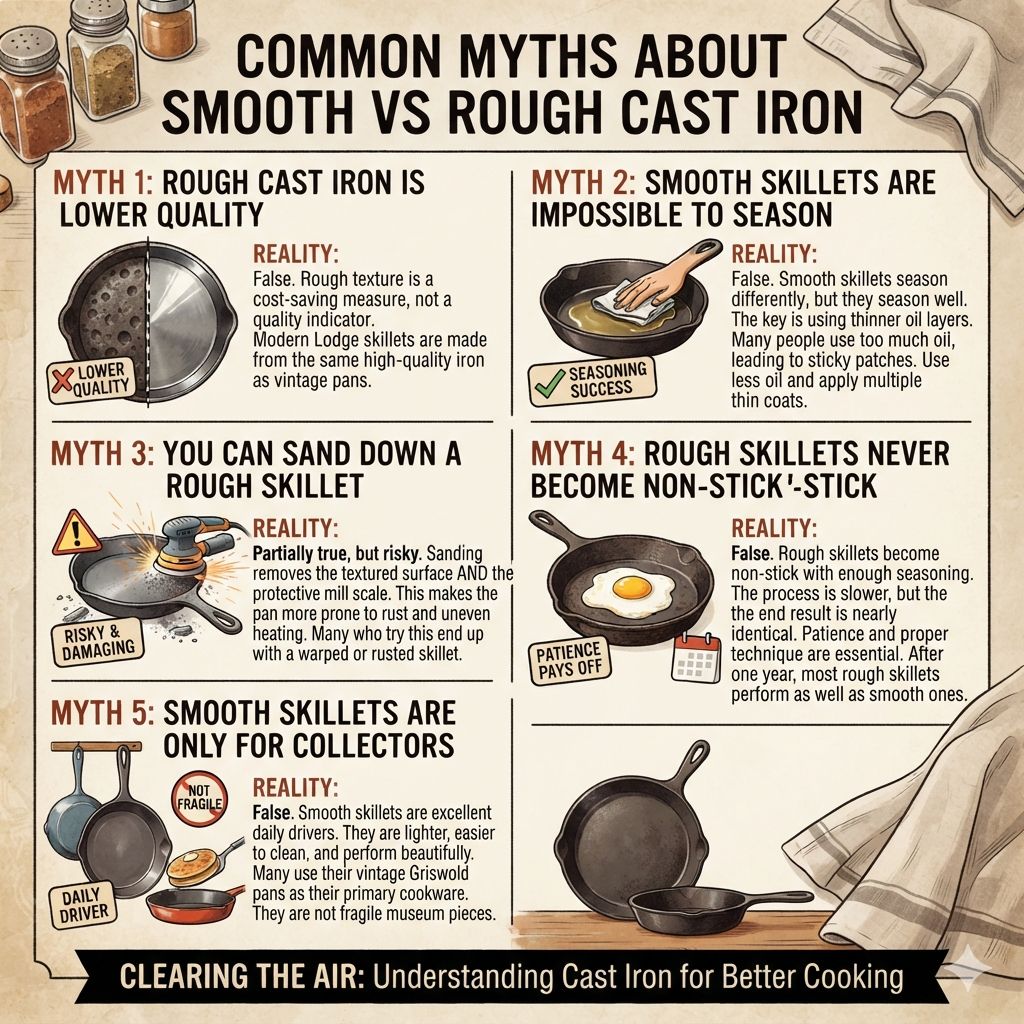
Common Myths About Smooth vs Rough Cast Iron
Misinformation spreads quickly in the cooking community. Let us clear up the most persistent myths about smooth vs rough cast iron skillet surfaces.
Myth 1: Rough Cast Iron Is Lower Quality
False. Rough texture is a cost-saving measure, not a quality indicator. Modern Lodge skillets are made from the same high-quality iron as vintage pans.
The metal composition is virtually identical. The texture does not affect durability.
Myth 2: Smooth Skillets Are Impossible to Season
False. Smooth skillets season differently, but they season well. The key is using thinner oil layers.
Many people use too much oil, leading to sticky patches. Use less oil and apply multiple thin coats.
Myth 3: You Can Sand Down a Rough Skillet
Partially true, but risky. Sanding a modern skillet removes the textured surface, but it also removes the protective mill scale. This makes the pan more prone to rust and uneven heating.
Many who try this end up with a warped or rusted skillet.
Myth 4: Rough Skillets Never Become Non-Stick
False. Rough skillets become non-stick with enough seasoning. The process is slower, but the end result is nearly identical.
Patience and proper technique are essential. After one year of regular use, most rough skillets perform as well as smooth ones.
Myth 5: Smooth Skillets Are Only for Collectors
False. Smooth skillets are excellent daily drivers. They are lighter, easier to clean, and perform beautifully.
Many people use their vintage Griswold pans as their primary cookware. They are not fragile museum pieces.
Which One Should You Buy? Smooth vs Rough Analysis
Your decision between a smooth and rough cast iron skillet should match your cooking habits, budget, and patience level. There is no universal winner. The best skillet is the one that fits your kitchen.
| Your Profile | Recommendation | Reason |
|---|---|---|
| Beginner cook | Rough (Lodge) | Low cost, forgiving, widely available |
| Eggs and delicate foods | Smooth (Vintage or Field) | Superior non-stick performance |
| Budget-focused | Rough (Lodge) | $20 price point, lifetime durability |
| Collector / Enthusiast | Smooth (Vintage Griswold) | Historical value, premium performance |
| Heavy searing / Steaks | Rough (Lodge) | Thicker metal retains heat better |
If you are still unsure, start with a modern rough skillet. It costs less than $30 and teaches you the fundamentals of cast iron care. Once you master seasoning, upgrade to a smooth vintage or premium skillet for an elevated experience.
Frequently Asked Questions
Is smooth or rough cast iron better for eggs?
Smooth cast iron is significantly better for eggs. The glass-like surface allows eggs to release easily with minimal oil. Rough skillets require much more seasoning buildup before they become non-stick enough for eggs.
Can I grind down a rough cast iron skillet to make it smooth?
You can grind down a rough skillet using an angle grinder or sandpaper, but it is not recommended. Grinding removes the protective mill scale and exposes raw iron that rusts quickly. It also creates an uneven surface that may warp during cooking.
Why are vintage cast iron skillets smooth?
Vintage skillets are smooth because manufacturers machined the cooking surface after casting.
This was standard practice until the 1960s when companies like Lodge stopped machining to reduce production costs and lower retail prices.
Are modern smooth skillets worth the high price?
Yes, for dedicated cooks. Brands like Field Company and Smithey offer modern smooth skillets that combine vintage surface quality with modern metallurgy. They are lighter, season faster, and perform exceptionally well.
Does surface texture affect heat distribution?
Surface texture has a minor effect on heat distribution. The primary factors are metal thickness and quality. Smooth skillets may heat slightly more evenly because the surface contacts food uniformly, but the difference is subtle.
Final Thoughts
Your choice between a smooth and rough cast iron skillet depends on your priorities. Smooth skillets offer immediate non-stick performance and lighter handling. Rough skillets provide unbeatable value and durability.
Both types can produce incredible meals when cared for properly. The best approach is to start with an affordable Lodge skillet, learn the basics of seasoning, and then expand your collection with a vintage or premium smooth skillet. Your cooking will improve no matter which path you choose.
Related pick: Check today's price on Amazon
Products related to this article
Sponsored / affiliate links. As an Amazon Associate I earn from qualifying purchases. I may earn additional commission from eligible campaigns.