Dish Soap vs Castile Soap for Cast Iron
Mild dish soap is the safer default for cast iron. Unscented liquid Castile soap may work for light cleaning if the pan is fully seasoned, as long as it is rinsed thoroughly and dried quickly. Leftover soap film can dull seasoning, hold moisture, and make food taste off. This guide compares Dish Soap and Castile Soap, explains when each stays low-risk, and shows how to clean cast iron without stripping its seasoning.
| Factor | Dish Soap | Castile Soap | Winner |
|---|---|---|---|
| Residue risk | Usually low with mild formulas and a thorough rinse | Can be low if unscented and lightly used, but added oils and scent can leave film | Dish Soap |
| Cleaning strength | Good for daily grease, stuck seasoning residue, and general cleanup | Often milder and may need more scrubbing on oily residue | Dish Soap |
| Seasoning sensitivity | Safe on well-seasoned cast iron when used with hot water and a non-abrasive tool | Safe only if the formula is gentle and rinsed completely | Dish Soap |
| Best-fit use case | Default choice for most pans after cooking | Acceptable for light cleanup when the bottle is unscented and simple | Dish Soap |
Residue risk and cleaning strength
Dish Soap
Mild dish soap works best when the pan has ordinary grease, light stuck food, or a slick handle. Warm, soapy water is generally considered acceptable, and mild dish soap with hot water and a non-abrasive sponge or scrub brush is commonly recommended.
The key is mild soap, not a heavy degreaser. Modern dish soap is nothing like the old lye-heavy soap many people still worry about, so it does not act the same way.
Castile Soap
Castile soap can clean cast iron, but the formula matters more than many people think. Unscented liquid versions are the safest starting point because scented blends, added oils, or extra moisturizers can leave a film that sticks to seasoning.
That makes Castile soap more of a maintenance option than a full substitute. It can suit light cleanup, but it is not automatically better than mild dish soap.
When residue becomes the deciding factor
If the pan already feels sticky, Castile soap is more likely to leave you unsure whether you rinsed it clean. Dish soap usually has the edge here because it is made for grease removal without needing a heavy formula.
Suppose a 10-inch skillet has a thin, tacky cooking-oil film after searing chicken. Mild dish soap and hot water are the cleaner choice. An unscented Castile soap may still work, but only if you rinse until the water runs clear and the pan no longer feels slick.
How cast iron reacts to soap
Seasoning is a polymerized oil layer
Cast iron seasoning is a thin polymerized oil layer on the cooking surface. Harsh degreasers or lye-heavy soap can weaken it, but normal modern soap is not in that category. That is why well-seasoned cast iron can handle brief washing.
Soap is a tool, not a soak. Use just enough to clean the surface, then rinse and dry completely.
When soap is safe
Soap is lowest risk on a pan with stable seasoning and no bare rust. Multiple cookware brands and editors, including Lodge, say soap is okay, and America’s Test Kitchen says soap will not ruin cast iron. Lodge also says hand washing is the right method, not the dishwasher.
Wirecutter’s approach is practical: hot water, mild dish soap, a non-abrasive sponge, then drying with a dish towel and a thin oil layer if needed.
What you’ll need
- Hot water
- Mild dish soap or unscented liquid Castile soap
- Non-abrasive sponge or scrub brush
- Nylon scrubbing brush for stubborn bits
- Pan scraper or stiff-bristled brush
- Dish towel
- Small amount of cooking oil
Wash with hot water and mild soap
- Scrape off loose food with a pan scraper or stiff-bristled brush.
- Run hot water into the warm pan.
- Add one drop of mild dish soap, then scrub with a non-abrasive sponge or nylon brush.
- Rinse until the water runs clear and no slick film remains.
Wirecutter says daily cleaning can take one to two minutes, which is the right scale for routine cast iron care. You are not trying to strip the pan bare. You are removing food and grease while leaving seasoning intact.
A common first-time mistake is scrubbing too hard at the first sign of residue. Picture a skillet with browned onions and a little fond at the center. A scraper plus hot water usually clears that faster than aggressive pads, and it is easier on the seasoning.
Is Castile soap safe for cast iron?
Yes, unscented liquid Castile soap can be safe for cast iron if the pan is already seasoned and you rinse thoroughly. The caution is not the plant-based label. It is the formula: scent, added oils, and heavier conditioners can leave residue that ordinary dish soap is less likely to leave behind.
Unscented liquid Castile soap
Choose unscented liquid Castile soap only when you want a light cleaner for everyday use. It works best on a pan with good seasoning and no greasy buildup. If the rinse water still beads or feels slippery, rinse again.
Scented Castile soap and added oils
Scented versions are the ones to watch. The extra ingredients that make a soap smell pleasant can also cling to cast iron and get in the way of the thin oil wipe you may apply after washing.
Field Company says most dish soaps are totally fine for cast iron and recommends soap for removing sticky oil residues. That is a useful clue: when the pan needs more cutting power, plain mild dish soap is the cleaner choice.
Dry the pan and wipe on oil
Dry cast iron completely after washing. Rust can form if the pan sits in water, and Field Company says cast iron should not drip-dry. A towel, then low heat on the stove for a short pass, helps push out hidden moisture in the handle and pores.
Apply oil only when needed
After the pan is dry, apply a very thin oil wipe if the surface looks dull, dry, or chalky. You do not need to oil after every wash, but a light film helps protect seasoning on pans that look thirsty.
If the pan feels smooth and dark after drying, stop there. Too much oil can leave a sticky layer that feels worse than no oil at all.
Cast iron soap comparison table
| Soap type | Best-use case on cast iron | Caution flags |
|---|---|---|
| Mild dish soap | Daily cleanup, greasy residue, well-seasoned pans | Avoid strong degreasing formulas and heavy soaking |
| Unscented liquid Castile soap | Light maintenance cleaning on fully seasoned pans | Rinse carefully; watch for added oils or conditioners |
| Scented Castile soap | Only if the formula is still simple and rinse is thorough | Higher residue risk from scent and extra ingredients |
| Strong degreasing detergent | Rarely the right choice for cookware | Can strip seasoning and leave the surface overly bare |
Mild dish soap
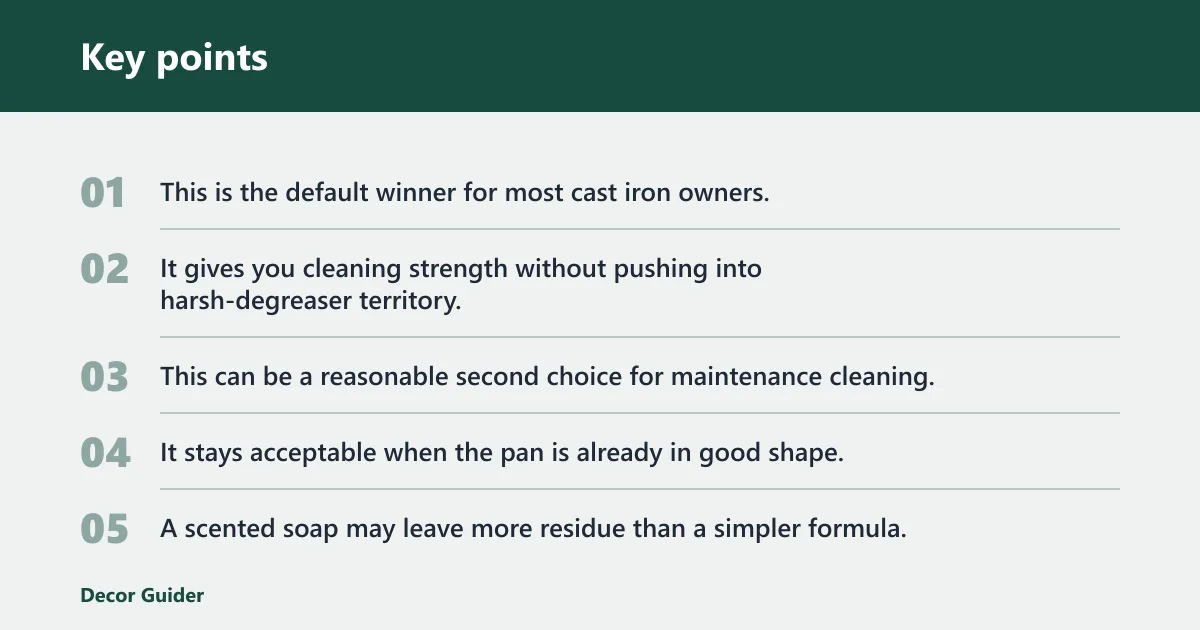
This is the default winner for most cast iron owners. It gives you cleaning strength without pushing into harsh-degreaser territory, and that matters when you want to keep the polymerized oil layer intact.
Unscented liquid Castile soap: this can be a reasonable
This can be a reasonable second choice for maintenance cleaning. It stays acceptable when the pan is already in good shape, but it is less forgiving if you leave residue behind or use too much.
Scented Castile soap
Use caution here. A scented soap may leave more residue than a simpler formula, which can interfere with drying and the next thin oil wipe.
Strong degreasing detergent
Save stronger cleaners for non-cookware jobs. On cast iron, repeated use can leave the surface stripped, dull, and more vulnerable to rust. If the pan already needs heavy correction, reseasoning is the better fix.
What soap mistakes should you avoid?
Do not soak cast iron, do not put it in the dishwasher, and do not leave it in a sinkful of water overnight. Those are the fastest paths to rust. Also avoid rough pads and steel wool for daily cleanup, because they can remove seasoning faster than you need.
Avoid soaking and drip-drying
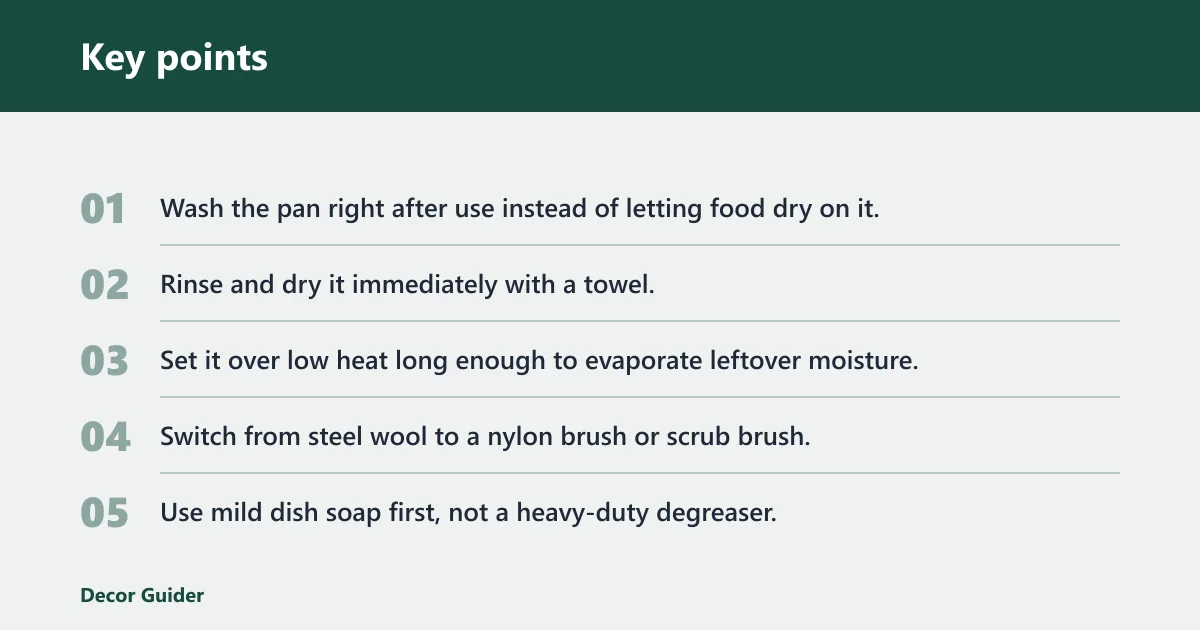
- Wash the pan right after use instead of letting food dry on it.
- Rinse and dry it immediately with a towel.
- Set it over low heat long enough to evaporate leftover moisture.
Say your skillet comes out of the dishwasher with orange specks at the rim. That is not a soap problem. It is a moisture problem, and the fix starts with complete drying and, if needed, reseasoning.
Avoid harsh degreasers and rough pads
- Switch from steel wool to a nylon brush or scrub brush.
- Use mild dish soap first, not a heavy-duty degreaser.
- If sticky residue remains, repeat with hot water and a scraper before escalating.
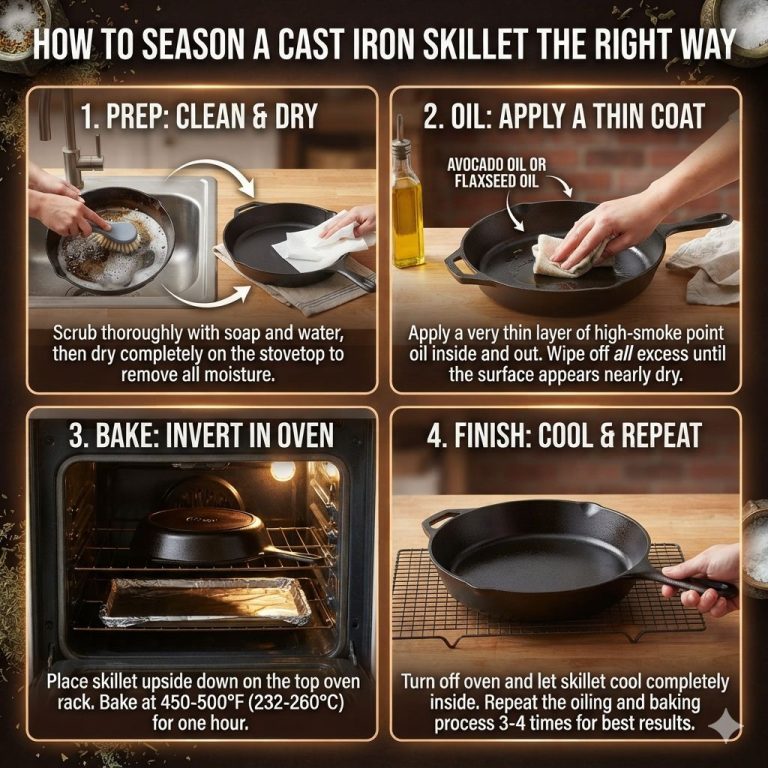
If the seasoning looks dull, dry, or rusted after cleaning, reseasoning is the next step. That means a thin coat of oil and heat, not a full refinish after every wash. The same source notes that reseasoning can take two to three hours, so reserve it for damaged pans.
Choose Dish soap if…
Choose Dish Soap if you want the safest default for daily cleaning, sticky grease, or a pan that needs more cleaning strength. It is the better pick for most well-seasoned skillets because it cuts residue without adding the formula uncertainty that comes with scented or heavily conditioned Castile soap.
Choose Castile Soap if the bottle is unscented, the pan is already well seasoned, and you are doing light maintenance cleanup. If the pan has sticky film, visible rust, or fragile seasoning, Dish Soap is the better choice.

Frequently asked questions
Can I wash cast iron with soap?
Yes. Lodge says warm, soapy water is acceptable, and it says modern soap will not remove seasoning the way old lye-heavy soap could. Use hot water, a non-abrasive sponge or brush, then dry the pan fully and add a thin oil wipe only if the surface looks dry.
Is Castile soap safe to use on cast iron?
Unscented liquid Castile soap can be safe on a seasoned pan if you use it lightly and rinse well. Scented versions or formulas with extra oils are more likely to leave residue, so mild dish soap is usually the more predictable option.
What is the difference between Castile soap and regular dish soap for cast iron?
Mild dish soap is usually better at cutting greasy residue with less risk of leftover film. Castile soap can be gentler, but the ingredient list matters more, especially if the formula includes scent or extra oils. For cast iron, simple and rinseable beats fancy.
Can soap ruin cast iron seasoning?
Normal mild soap should not ruin a well-seasoned pan. The bigger risks are harsh degreasers, lye-heavy cleaners, soaking, and poor drying. If seasoning looks damaged, reseason with a thin oil layer and heat rather than blaming the soap alone.
Should I oil cast iron after washing it with soap?
Only if the pan looks dry, dull, or lightly chalky after drying. A very thin wipe is enough. If the surface still looks dark and smooth, skip the oil and put the pan away after it has dried completely.
Can I soak cast iron in water?
No. Soaking raises rust risk fast, and leaving cast iron in a sinkful of water overnight is especially unhelpful. Wash it quickly, rinse it, dry it with a towel, then give it a short low-heat pass if needed.
How do I clean stuck-on food from cast iron without damaging seasoning?
Start with a pan scraper, hot water, and a non-abrasive brush. If needed, add a drop of mild dish soap or unscented Castile soap and scrub lightly. For stubborn spots, repeat the process before moving to reseasoning.
Products related to this article
Sponsored / affiliate links. As an Amazon Associate I earn from qualifying purchases. I may earn additional commission from eligible campaigns.