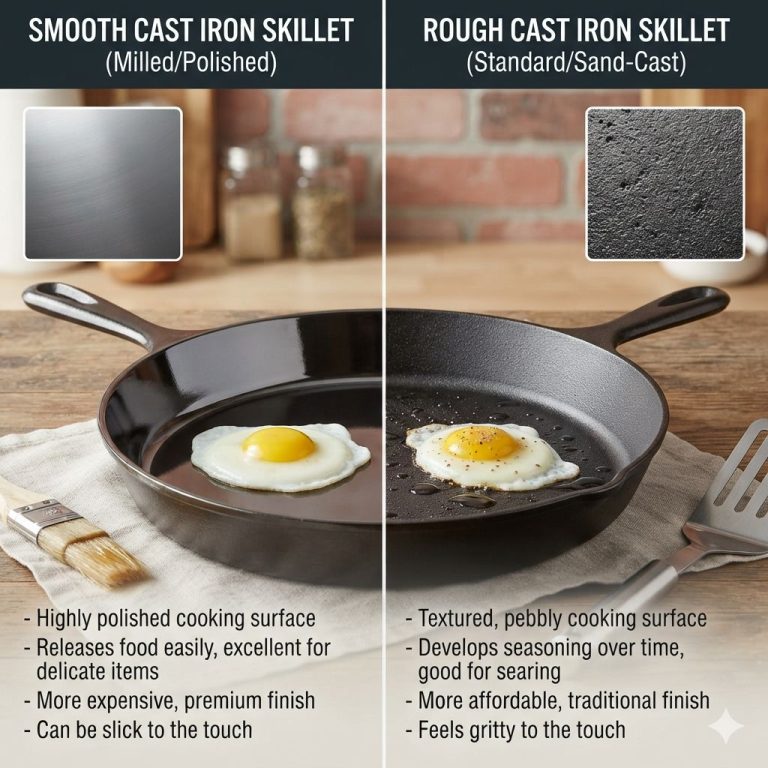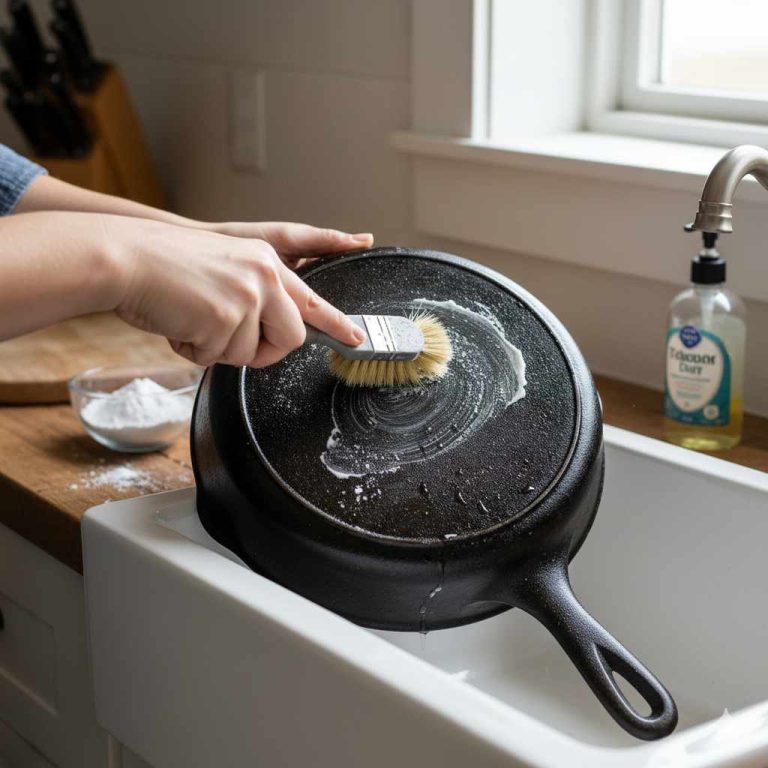
Lodge Cast Iron Scrub Brush Review: Is It Worth It?
The Lodge Cast Iron Scrub Brush is a reasonable choice if a seasoning-safe daily cleaner for stuck-on food and pan walls is needed, but it may not be suitable for heavy carbon. For that, use a scraper or chainmail. Using the wrong tool can strip seasoning, leave residue behind, or wear on enameled cast iron. This review compares the Lodge brush against scrapers, chainmail, and sponges so you can choose the right cleaner for your cookware.
Verdict

- Helps remove stubborn food residue
- Ergonomic handle improves control
- Reusable for everyday cookware cleaning
At $11.95, it is a practical middle-ground tool, not a must-have. The value is strongest if you clean cast iron often, want a dedicated brush for hot-water cleanup, and prefer more control than a sponge on textured skillet surfaces.
Pros
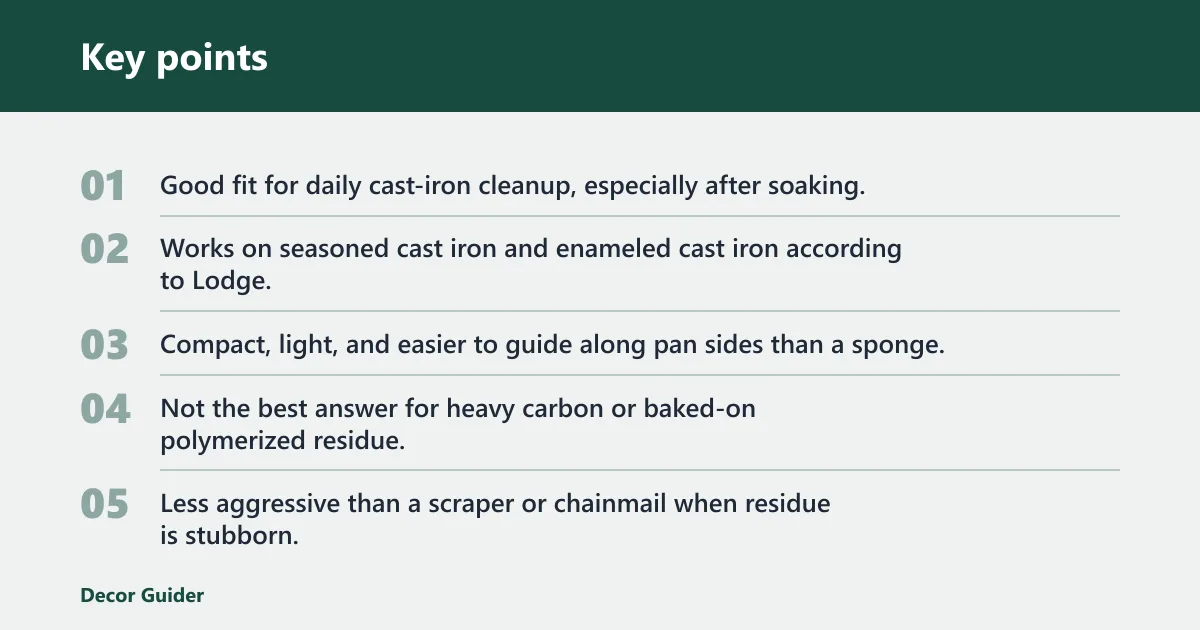
- Good fit for daily cast-iron cleanup, especially after soaking.
- Works on seasoned cast iron and enameled cast iron according to Lodge.
- Compact, light, and easier to guide along pan sides than a sponge.
Cons
- Not the best answer for heavy carbon or baked-on polymerized residue.
- Less aggressive than a scraper or chainmail when residue is stubborn.
- Generic nylon brushes can cost less, so the price is not a bargain by itself.
Specs at a glance
| Spec | Details |
|---|---|
| Product | Lodge 10 Inch Scrub Brush |
| Price | $11.95 |
| Length | 10.1 in |
| Weight | 0.25 lb |
| Brush head | Plastic with stiff nylon bristles |
| Handle | Rubber wood with natural lacquer finish |
| Design | Sturdy, ergonomic design |
| Made in | Cambodia |
Materials and finish
The brush uses a plastic head with stiff nylon bristles and a rubber wood handle with a natural lacquer finish. Lodge describes it as a sturdy, ergonomic design. That matters because the handle shape is meant to keep the brush under control as you scrub a skillet wall or work around a riveted handle area.
Handle and grip details
The 10.1-inch length and 0.25-pound weight make it easy to move around a pan without feeling bulky. That size helps when you want a tool that stays out of the way, especially beside a larger dish brush. Lodge also says it gives a good grip when washing cookware.
Who it
This brush fits people who clean seasoned cast iron often and want a tool for everyday food residue, hot-water rinsing, and quick post-cook cleanup. It also suits enameled cast iron owners who want a nonmetal tool for routine washing, as long as they still watch finish protection.
It is less compelling for buyers who already own a Lodge scraper and a chainmail pad and only need one aggressive residue remover. In that case, the brush overlaps with what you already have, and a cheaper generic nylon brush may cover the light-duty jobs well enough.
Seasoned cast iron owners
Seasoned cast iron is the brush’s main target. Lodge says it is for seasoned cast iron, and that matches its role as a daily cleaner rather than a stripping tool. Use hot water, loosened residue, and normal care for seasoning protection. The brush is meant to move food debris, not grind through hard carbon.
Enameled cast iron owners
Lodge also says the brush is for enameled cast iron. That matters because enameled surfaces need finish protection, not abrasion for its own sake. A brush like this is useful for everyday cleanup when you want more contact than a sponge but less force than a metal scrubber.
Buyers who already own a scraper or chainmail pad
If you already own a scraper, this brush becomes a support tool rather than a replacement. If you own chainmail, the brush still adds value on lighter residue, pan walls, and spots where you do not want to reach for the harsher option. If you rarely cook in cast iron, the brush is optional.
What works
The Lodge brush works best on residue that has loosened but has not fully released yet. It is a good match for stuck-on food after a short soak, for wiping away soft bits from a warm skillet, and for daily cleanup where you want to preserve seasoning on cast iron or protect an enameled finish.
Say your 10-inch skillet has eggs and onion bits clinging to the side after dinner. A hot-water rinse plus the brush can clear the loose debris without forcing you to drag a scraper over the whole interior. That is the kind of job this tool is built for.
Stuck-on food after soaking
Lodge says the bristles gently brush away food debris, and that is the right expectation. Soaked residue, starches, and soft browned bits are where the brush feels worthwhile. It gives you more control than a sponge and less force than chainmail, which matters when the residue is partial rather than welded on.
Seasoning-safe daily cleaning
For seasoned cast iron, the brush fits the normal cleanup cycle: hot water, brush, rinse, dry, oil if needed. It is not a stripping tool. That makes it useful for protecting seasoning because you are not reaching for a scraper every time the pan needs a rinse after a simple meal.
Hot-water cleanup on cast iron
Hot water softens residue and lets the nylon bristles do the lighter work. A common first-timer mistake is trying to clean a pan with dry residue and no soak, then blaming the tool when the food does not move. The brush works better when water has already done some of the job.
What does not?
The Lodge brush is not the best choice for heavy carbon, gritty residue, or cooked-on layers that have hardened into the pan surface. In those cases, a scraper or chainmail usually does the work faster and with fewer passes. If a sponge would already handle the mess, the brush may be more tool than you need.
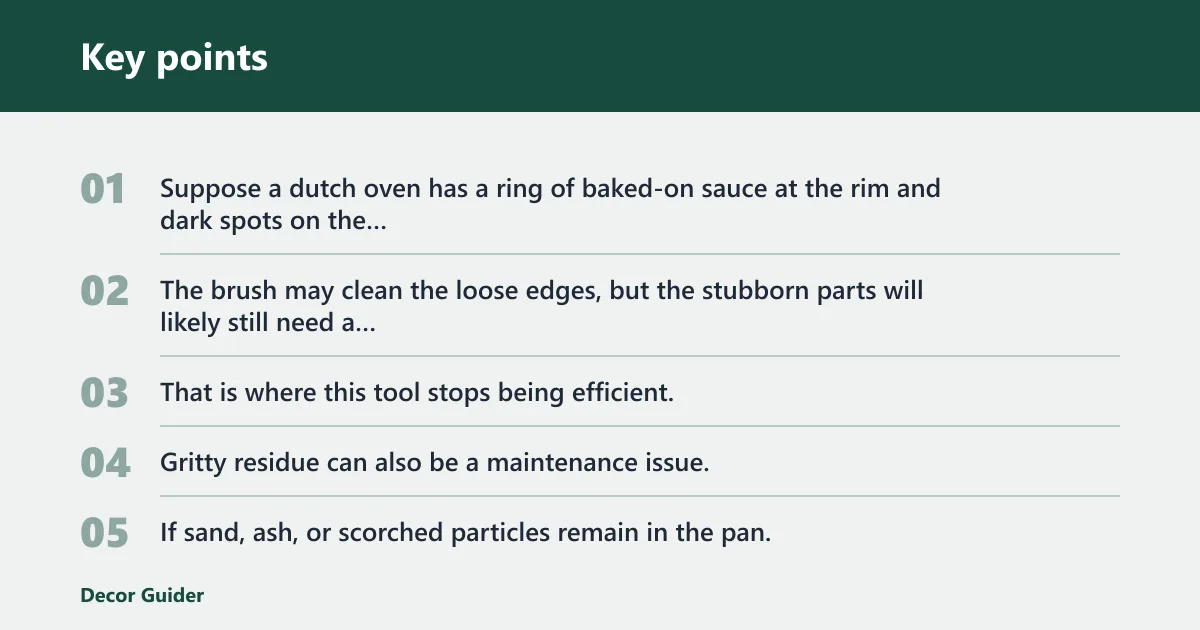
Suppose a dutch oven has a ring of baked-on sauce at the rim and dark spots on the cooking surface. The brush may clean the loose edges, but the stubborn parts will likely still need a scraper. That is where this tool stops being efficient.
Gritty residue and heavy carbon
Gritty residue can also be a maintenance issue. If sand, ash, or scorched particles remain in the pan, a brush can smear the mess around before it lifts it. A scraper gives more direct contact, and chainmail reaches the stubborn spots better when the residue has hardened.
Jobs better handled by a scraper
Use a scraper first when the residue is thick, dry, or layered. Scrapers are better for lifting stuck patches from flat cooking surfaces and for clearing corners where bristles do not bite deeply enough. If you already own a Lodge scraper, the brush is best viewed as the lighter companion tool, not a replacement.
Cases where a sponge is enough
If the pan only needs a rinse and a wipe, a sponge may be simpler and faster. The brush adds value when food is clinging or when you want more reach along the wall of the pan. For very light residue, the brush can be more than you need.
Cast iron cleanup matrix
This decision matrix maps common cleanup situations to the best tool. The point is not to pick a winner for every mess; it is to match the residue with the least aggressive tool that still does the job.
| Residue type | Cookware surface | Seasoning risk | Recommended tool | Expected effort |
|---|---|---|---|---|
| Loose egg bits and light grease | Seasoned cast iron | Low | Sponge | Low |
| Softened sauce or starch after soaking | Seasoned cast iron | Low | Lodge brush | Low to moderate |
| Browned food stuck to sidewalls | Seasoned cast iron | Low to moderate | Lodge brush | Moderate |
| Thick baked-on residue | Seasoned cast iron | Moderate | Scraper | Moderate to high |
| Hard carbon or welded-on patches | Seasoned cast iron | Moderate | Chainmail | High |
| Routine washing of glossy interior | Enameled cast iron | Finish protection matters | Sponge | Low |
| Food residue in seams or along curved walls | Enameled cast iron | Finish protection matters | Lodge brush | Moderate |
When the brush wins, it is usually because the mess is medium-light and spread across a wall or corner rather than fixed to the cooking surface. When the mess is hard and crusted, the scraper or chainmail takes over. When the pan is basically clean, the sponge is enough.
Brush vs other tools
The Lodge brush sits between the sponge and the harsher tools. That middle position is its main selling point. It gives you more reach and control than a sponge, but less bite than chainmail or a scraper.
Lodge brush vs scraper
A scraper is better when residue is thick, dry, or concentrated in one patch. The Lodge brush is better when residue is spread out and you want to keep moving across the pan without scratching up the work. If you already own a scraper, the brush fills the lighter-duty gap.
Lodge brush vs chainmail scrubbing pad
Chainmail is the stronger option for cooked-on debris and stubborn carbon, and Lodge even frames its Chainmail Scrubbing Pad as a related accessory. The brush is easier on lighter residue and more comfortable for routine washing. Chainmail usually belongs in the same drawer, but for a different job.
Chainmail is also the better companion when you pair it with a scraper for heavier cleanup. The brush does not replace that setup; it simply handles the days when you do not need the full aggressive combo.
Lodge brush vs generic nylon brush
Generic nylon brushes can be cheaper, which matters if you just want a basic wash tool. The Lodge version costs more, but the value depends on whether you want a brush sized and shaped for cast iron care. At $11.95, the premium is modest, yet not automatic.
If you mostly clean enameled cookware and only occasionally touch cast iron, a generic nylon brush may be the better buy. If cast iron is a regular part of your kitchen routine, the Lodge brush justifies itself more easily through repeated use.
Should you buy it?
Buy the Lodge brush if you clean cast iron often, want a seasoning-safe tool for everyday residue, and need something better than a sponge for pan walls and softened stuck-on food. Skip it if most of your cleanup requires a scraper or chainmail, or if you only need a light-duty brush once in a while.
There is a practical value argument here. At $11.95, the brush is priced like a dedicated accessory, not a luxury item. If it replaces repeated overuse of a sponge on cast iron and gives you a safer middle step before chainmail, the cost per use is reasonable. If you already own the right tools and rarely need another, it is optional.
Maintenance and durability notes
Because the head uses stiff nylon bristles, the main long-term concern is normal wear rather than metal damage. Keep the brush clean, rinse away residue after use, and dry it thoroughly before storage so debris does not build up in the bristles. If the brush starts to shed or deform over time, that is the point to replace it.
The wood handle and lacquer finish also deserve basic care. Do not leave it soaking in water. That is true for many cast iron cleaning tools, and it matters here because a wet handle shortens the useful life of the brush even if the bristles are still fine.
Warranty and brand context
Lodge includes a product-page link to the Lodge Made Right Warranty. That is worth noting as brand support context, not as a blanket promise about wear or damage. It signals that the brush sits inside Lodge’s wider cookware and care system, alongside scrapers, chainmail, and other cast iron cleaning tools.
Alternatives

- Scrubs without soap to protect seasoning
- Angled bristles reach grooves and ridges
- Tough scraper tip handles stubborn messes
The OXO Good Grips Cast Iron Brush is the closest alternative if you want a cast-iron brush with a non-slip grip and a scraper tip. Based on the published product details, it is a better fit for buyers who want a more aggressive brush profile than Lodge’s everyday cleaner. Its drawback is the higher $12.49 price and a broader claims set that may be more tool than some users need.

- Includes a long-handle brush for control
- Uses non-toxic, recycled materials
- Built-in scraper helps with stuck-on food
The Full Circle Double Dish Brush Set is the better choice if you want a two-brush setup and a built-in scraper in one purchase. It costs $16.99, so it makes sense only if you want the extra brush and broader dish-duty coverage. Its drawback is that it is less focused on cast iron alone, so the value depends on how often you need a dedicated skillet brush.
Frequently asked questions
Is the Lodge cast iron scrub brush worth it?
Yes, if you want a seasoning-safe daily cleaner for stuck-on food, pan walls, and quick hot-water cleanup on cast iron. It is worth less if you already own a scraper and chainmail pad, because those tools handle the hardest residue better. The best value shows up in frequent, light-to-moderate cleanup.
Can you use the Lodge scrub brush on seasoned cast iron?
Yes. Lodge says it is for seasoned cast iron, and that is where the brush makes the most sense. Use it with hot water and normal seasoning care. It is meant to remove food debris without forcing you into a more aggressive scrub for routine washing.
Will the Lodge brush damage cast iron seasoning?
Used normally, it should not. The brush is designed for everyday cleaning, not for sanding or scraping seasoning away. Damage risk rises if you scrub dry residue too hard, use it on heavy carbon that needs a scraper, or treat it like a strip-down tool instead of a cleaner.
How is the Lodge scrub brush different from a chainmail scrubber?
The brush is lighter and better for everyday residue. Chainmail is more aggressive and better for stuck-on carbon or patches that a brush cannot move. If your cookware often needs both, chainmail belongs in the rotation; if you mostly clean after normal cooking, the Lodge brush is easier to reach for.
What does the Lodge cast iron scrub brush work best on?
It works best on softened residue, stuck-on food after a soak, and routine cleanup on seasoned cast iron or enameled cast iron. The bristles are meant to move food debris, especially on sidewalls and curved areas where a sponge can miss. It is not the right tool for heavy carbon.
How much does the Lodge cast iron scrub brush cost?
The product price is $11.95. That price is easiest to justify if you will use the brush often enough to matter in your cast-iron routine. If you only need an occasional scrubber, a cheaper generic nylon brush may cover the same light-duty jobs with less upfront cost.
Products related to this article
Sponsored / affiliate links. As an Amazon Associate I earn from qualifying purchases. I may earn additional commission from eligible campaigns.
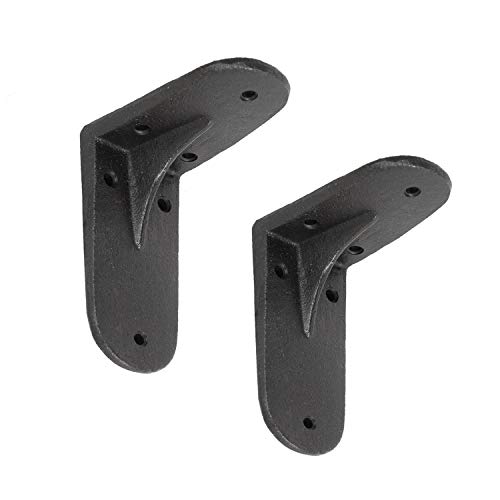 NACH Decorative Shelf Brackets, 2 Pack of 4.3 x 2 x 3.5 inch, Black Cast Iron Shelving Brackets - Metal Shelf Supports- Decorative L Brackets
 Non Slip Rug Pad, Natural Rubber Backing Rug Pads 1/4” Thick, Felt Rug Gripper Pad, Non Slip Under Carpet Mat, Under Rug Cushion for Hardwood Floors, Carpet Runners (2x8FT)