Cookware Cleaning Brush Review: Is It Worth It?
A cookware cleaning brush earns its spot only when the bristles match the pan: soft for nonstick and coated cookware, firmer for stainless steel and cast iron, plus replaceable heads if you clean often.
Verdict


Pick the wrong one, and you can mark coatings, leave grime in seams, or wear out the brush sooner than expected. The choice comes down to surface contact, what the brush removes, and what it can damage.
Bottom line by cookware type
For nonstick cookware, a brush is usually a narrow buy. Consumer Reports calls nonstick cookware “exceptionally easy to clean,” and it also notes that chips or cracks mean it’s best to stop using the pan. That makes aggressive brushing a poor trade.
For stainless steel, a brush can earn its place. Stainless steel cookware sets are described as long-lasting, but Consumer Reports also says stainless steel cookware can be tougher to clean. That is where a firmer scrub tool can save time on browned residue and stuck-on sauce.
According to 9 Best Cookware Sets of 2026, Expert Tested and Reviewed — The Consumer Reports cookware sets article mentions nearly 100 cookware sets in its ratings. (source)
Specs at a glance
| Brush type | Typical build | Best surface fit | Main failure risk | Keep, avoid, or replace |
|---|---|---|---|---|
| Wire | Stainless steel or brass bristles | Stainless steel, cast iron | Loose bristles, surface scratching | Keep for durable cookware; avoid on coated pans; replace if bristles shed |
| Brass | Softer metal bristles | Stainless steel, cast iron | Still can scratch delicate coatings | Keep for heavy residue; avoid on nonstick and most coated cookware |
| Bristle-free coil | Coil-shaped cleaner | Cast iron, some grill-type surfaces | Wear, flattening, loss of spring | Keep if you want less bristle risk; replace if the coil no longer springs back |
| Abrasive pad | Coarse scouring surface | Stainless steel only, with caution | Scratching, finish dulling | Keep for stubborn residue on durable surfaces; avoid on nonstick and fragile coatings |
What to check before you buy
Start with the surface you clean most. If the pan has a coating, the brush has to be mild enough for that finish. If the tool is meant for grill grates or thick stainless pots, it can be rougher, but only if the head stays intact and does not shed bits.
Check the replacement path too. A brush with frayed bristles, a bent head, or a coil that no longer springs back is not a bargain. It can leave debris behind or scratch the next pan.

Who it is for
A cookware cleaning brush fits people who cook on stainless steel, cast iron, or other durable surfaces and often deal with browned residue. It fits poorly with nonstick pans, easy-clean coated cookware, and any pan where one bad stroke can shorten the finish’s life.
Best fit: stainless steel and stubborn residue
Stainless steel cookware can take more force than coated cookware, and that matters when the problem is stuck-on fond, tomato reduction, or dried oil. A brush makes sense when a sponge stalls out and soaking would take longer than the cleanup is worth.
Poor fit: delicate coatings and easy-clean pans
Nonstick cookware is already exceptionally easy to clean, so the extra abrasion usually adds risk without much payoff. A brush is even less appealing if the pan has chips or cracks, because damaged coatings should not meet harsher tools.
What works
The right brush removes residue a soft sponge leaves behind. On stainless steel, cast iron, and some heavily soiled grates or pans, a firmer tool can lift dried protein, baked sauce, and carbonized oil with fewer passes than repeated wiping.
When a brush beats soaking or a sponge
Use a brush when residue is stuck in texture, corners, or rivets. A sponge is better for loose film and fresh grease. Soaking helps when residue is soft enough to release on its own, which is often the cleaner first move for cookware that does not like abrasion.
How bristle-free tools fit into the job
Bristle-free brushes solve one narrow problem well: they remove some grime without the loose-bristle risk of wire brushes. Consumer Reports recommends considering a bristle-free brush or pumice stone as alternatives, and a bristle-free design can be a smart middle ground when safety matters more than raw bite.
What does not
The main drawback is mismatch. A brush that is fine on stainless steel can be a poor choice on nonstick or coated cookware, where scratching is a real failure mode. Another drawback is bristle shedding. Consumer Reports warns wire grill brush bristles can break off and get stuck to the cooking surface, and stray bristles may be accidentally ingested with food. (consumerreports.org)
Where scratching and bristle shedding become real problems
Scratching is most concerning on nonstick and coated cookware. Loose bristles are most concerning on any surface that touches food again without a close inspection. A brush that looks clean can still leave behind a tiny hazard if the head is worn, bent, or missing material.
Why some brushes are a bad match for nonstick cookware
Nonstick cookware depends on a smooth finish. Once a coating is chipped, cracked, or scored, cleaning gets harder and the surface can fail faster. That is why a wire or abrasive pad is the wrong default even when the pan has a stubborn spot.
Surface-by-surface decision table
| Cookware surface | Best cleaning tool | Keep | Avoid | Replace if you see |
|---|---|---|---|---|
| Nonstick | Soft sponge or nylon-bristle brush | Soft nylon brush for light residue | Wire, brass, abrasive pad | Any chip, crack, frayed head, or rough patch on the pan or brush |
| Stainless steel | Wire, brass, or abrasive pad with caution | Wire or brass brush for baked-on residue | Only avoid if the finish is decorative or unusually thin | Frayed bristles, loose bristles, warped head, or residue that keeps reappearing after cleaning |
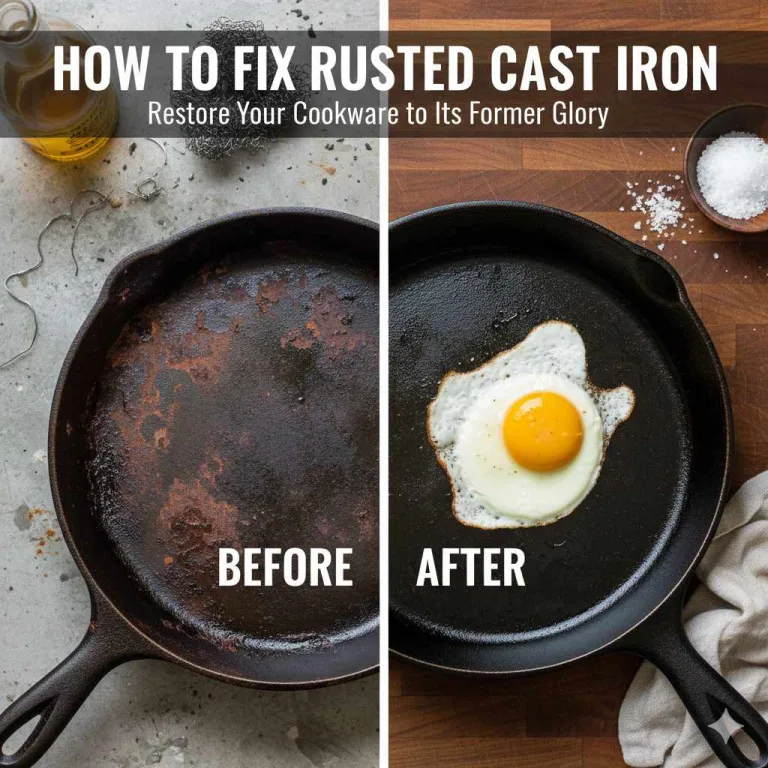
| Cast iron | Bristle-free coil, brush, or nonmetal scrubber | Coil-style cleaner or firm brush for stuck-on bits | Soaking for long periods, harsh abrasion on seasoned surfaces | Flattened coil, missing spring, worn edge, or rusting hardware |
| Coated cookware | Soft sponge, nylon brush, or gentle scraper | Soft bristle tool only if the maker approves it | Wire, brass, abrasive pad | Any visible scratching, coated flaking, warped brush, or leftover grit |
How to read the table
If the surface is delicate, the tool should be plain. If the surface is durable, the tool can be more aggressive, but only up to the point where it does not shed metal, flatten into a sharp edge, or leave residue behind.
Alternatives
Sometimes the right answer is no brush at all. The best tool depends on the residue, the coating, and the amount of cleanup left after the first pass.

OXO Good Grips Dish Scrub Brush with Nylon Bristles is the safer pick for nonstick and coated cookware. Based on the spec sheet and owner feedback, its softer nylon bristles and built-in scraper seem better when the goal is to lift stuck bits without being too harsh on the finish. The drawback is clear: it will not match wire-level bite on baked-on stainless steel.

Chore Boy Ultimate Copper Scrubber is the better fit for some copper and aluminum cookware, where a softer metal scouring pad can do the job without rusting or splintering. It is still an abrasive tool, though, so it is not a free pass for nonstick or most coated pans. Treat it as a surface-specific helper, not a universal scrubber.
Onewly Steel Wool Scrubber with Handle & 5 Refills is aimed at heavy cleanup on grills, griddles, sinks, and pots. The refillable handle is useful if you clean rough surfaces often, but the stainless steel wire construction makes it a poor match for nonstick and many coated cookware pieces. The main drawback is the same reason it works: it is aggressive.
When to use a bristle-free brush
Choose bristle-free when you want a safer option for some cleaning jobs, especially on warm grates if the manufacturer says that is allowed. It is a practical swap when your concern is loose bristles, not maximum abrasion.
When a pumice stone or GrillStone makes more sense
A pumice stone is a better fit for tough debris on hard, durable surfaces that can handle abrasion. A pumice stone is presented as an alternative, though the tradeoff is that it can wear out fairly quickly. That makes it useful for occasional rescue jobs, not constant cleaning.
When liquid grill cleaner or an abrasive pad is the better move
Liquid grill cleaner, sold in spray and foam form, loosens debris before scrubbing. That matters when the residue is too hard for a sponge but you do not want to jump straight to metal bristles. An abrasive pad can help after the cleaner softens the mess, but only on surfaces that can take the scratch risk.
When soaking and a soft sponge are enough
For fresh residue, light grease, and nonstick pans, soaking plus a soft sponge is usually enough. That approach keeps the coating intact and avoids turning a simple cleanup into a surface-repair problem.
Should you buy it?
Buy a cookware cleaning brush if your kitchen leans on stainless steel, cast iron, or other durable cookware and you regularly meet stuck-on residue. Skip it if most of your pans are nonstick or coated, because the risk of scratching outweighs the small convenience gain.
Before each use, check for frayed or missing bristles, a warped head, worn edges, and any coil that no longer springs back. If the brush is shedding, it is already past its useful point. For cookware care, replacement timing matters as much as scrubbing power.
Replacement timing and safety checks before each use
- Inspect the head for frayed, missing, or bent bristles.
- Check for a warped body or a coil that does not rebound.
- Run a quick visual sweep for loose particles before the brush touches food contact surfaces.
- Stop using the tool if it leaves residue, scratches, or metal fragments behind.
- Replace it the moment the head stops behaving like a clean, even scrubbing surface.
Frequently asked questions
Is a cookware cleaning brush worth it for nonstick pans?
Usually not. Nonstick cookware is exceptionally easy to clean, and it needs gentler care than stainless steel. A soft nylon brush or sponge is the safer choice, especially if the pan already has chips or cracks. A harsher brush can shorten the life of the coating fast.
What should I use instead of a wire brush on cookware?
Use a soft nylon brush for coated or nonstick cookware, a bristle-free coil for some heavier cleanup jobs, or a pumice stone on durable surfaces with stubborn buildup. For cookware with delicate coatings, a sponge and soak are usually the first tools to reach for.
Do cookware cleaning brushes scratch stainless steel or nonstick?
They can. Stainless steel can handle more abrasion, though a very aggressive pad can still dull a finish. Nonstick is far more vulnerable, and wire or brass tools can scratch it quickly. The bigger issue is not only visible scratching but also hidden coating damage.
How do I clean stuck-on food without damaging cookware?
Start with soaking, then move to the mildest tool that works. For stainless steel, that may mean a firmer brush or a nonmetal scrubber. For nonstick, stay with soft nylon and a gentle scraper. If the residue still clings, use a cleaner before reaching for anything rougher.
Are bristle-free cleaning brushes safer than wire brushes?
Safer for one specific reason: they remove the loose-bristle problem. Consumer Reports warns that wire grill brush bristles can break off and get stuck to the cooking surface, and stray bristles may be accidentally ingested with food. Bristle-free tools reduce that risk, but they still need wear checks.
When should I replace a cookware cleaning brush?
Replace it when the bristles are frayed, worn, missing, or warped, or when a coil no longer springs back. Also replace it if it starts leaving residue behind or if you find loose particles after cleaning. A worn brush can be worse than no brush at all.
Products related to this article
Sponsored / affiliate links. As an Amazon Associate I earn from qualifying purchases. I may earn additional commission from eligible campaigns.