Bamboo Pot Scraper Review: Is It Worth Buying Today?
Yes—if you cook with stainless, cast iron, or enamel and want a gentle scraper for soft messes; skip it if you need a stiff tool for burnt-on residue or want dishwasher-easy care. Pick the wrong tool and you keep grabbing metal that scuffs pans, or paper towels that pile up fast. I judge this one by cleaning power, care burden, durability, and whether the bamboo pot scraper deserves a drawer slot.
Verdict

A bamboo pot scraper is worth it when the mess is light to medium and you want a small manual tool that stays out of the way until you need it. In that lane, it pulls its weight. It is a weaker fit as one tool for every pan, spill, and sticky mess, because care is manual and the blade is still wood-based, not magic.
Pros and cons
- Pros: gentle on non-scratch cookware, comfortable to grip, good for corners, easy to store, handy for quick cleanup.
- Cons: hand wash only, avoid soaking, less effective on burnt-on residue, wears faster than metal, less flexible than silicone.
Specs at a glance
| Spec | What it means in use |
|---|---|
| Material | USDA certified organic bamboo |
| Build | Made without glues or lacquers |
| Finish | Natural food-safe oil finish |
| Size | 2.75 inches |
| Shape | Compact handheld scraper with cornered scraping edges |
| Care | Hand wash only; not recommended for dishwasher use; avoid prolonged soaking |
| Surface use | Sold as a non-scratch scraper for cooking surfaces |
| Common uses | Pots, pans, bowls, baking cleanup, and spilled sauce on a glass-top stove |
Material and build
The product is sold as a Bamboo Pot Scraper by Marley’s Monsters, and the listed build details are plain: USDA certified organic bamboo, no glues or lacquers, and a natural food-safe oil finish. That setup usually gives you a lighter tool with a natural hand feel, but it also means ordinary wood care instead of sink-and-forget treatment.
Size, shape, and edge design
The 2.75-inch size matters more than it sounds. It is small enough to live in a drawer or utensil jar without hogging space, and the short body makes it easy to pinch for controlled scraping. The cornered scraping edges are the useful bit: they can get into seams, pan corners, bowl curves, and around dried sauce where a flat spoon edge tends to skate over the mess.
Care rules
Hand washing is the expected routine here. The product is not recommended for dishwasher use, and the care guidance says to avoid prolonged soaking. That fits a bamboo tool with a food-safe oil finish, since heat and long water exposure can dry the surface, raise grain, and shorten the life of the scraper.
Who it is for
This suits eco-minded home cooks who actually need a small scraping tool, not a token green item in the drawer. It also fits apartment kitchens, cabins, and camping kits where space is tight and a compact piece of gear earns its place only if it gets used often.
It is also a sensible buy for zero-waste kitchens and light-duty cooks who clear pans after eggs, grains, sauces, and baked-on drips before they harden fully. It is less useful for someone who wants a heavy-duty burner cleaner, a dishwasher-safe tool, or one scraper that can do everything from a glass pan to a scorched skillet.
Who it does not suit
If the main job is attacking burnt syrup, layered carbon, or crusted pan drippings after they have bonded hard, this is the wrong class of tool. A stiffer metal scraper or a purpose-built cleaner will do that work better. The bamboo scraper is maintenance gear, not a rescue tool.
What works well?
Its best work is on stuck-on food that has not fully baked into the surface. That includes rice at the pan edge, sauce on the side of a pot, dried batter in a bowl, and the soft film left after cooking. On those jobs, the scraper is quick, gentle, and easy to control with one hand.
Stuck-on food on pots, pans, and bowls
The shape makes sense for routine cleanup. A spoon can move food around, but it is blunt. A spatula is better when you need flex, though many have wide heads that miss tight spots. The bamboo scraper hits the middle ground: firm enough to push residue, small enough to work along curves.
Narrow corners and dried residue
Cornered scraping edges are the quiet strength here. They help pull residue from seams, lip edges, and the angle where a bowl wall meets the base. That is exactly the sort of place where waste builds up during washing, because a cloth or sponge often glides over it instead of lifting it out.
Non-scratch scraping on coated cookware
The company says it will not scratch cooking surfaces, and that is the main reason many buyers look at bamboo in the first place. It is suitable for nonstick pans when used gently, and it is also useful for glass-top stove cleanup where a soft scraper beats anything metal. Still, pressure and grit matter. A dirty scraper can damage more than a clean one.
What does not work well?

It struggles when the residue is hard, burned, or bonded to the pan. At that point the tool is spending force on the surface rather than the mess, and a soft scraper only gets so far. The limitation is not a flaw so much as a boundary, and buyers should know it before expecting miracles.
Burned-on residue and heavy carbon buildup
If a pan has blackened sugar, deeply baked cheese, or thick carbon on the bottom, this is too mild for first-pass cleanup. It may still help at the edges, but it will not replace soaking, deglazing, or a firmer cleaning tool. For that kind of damage, a bamboo scraper can become a slow, tiring choice.
Cast iron seasoning and aggressive scraping
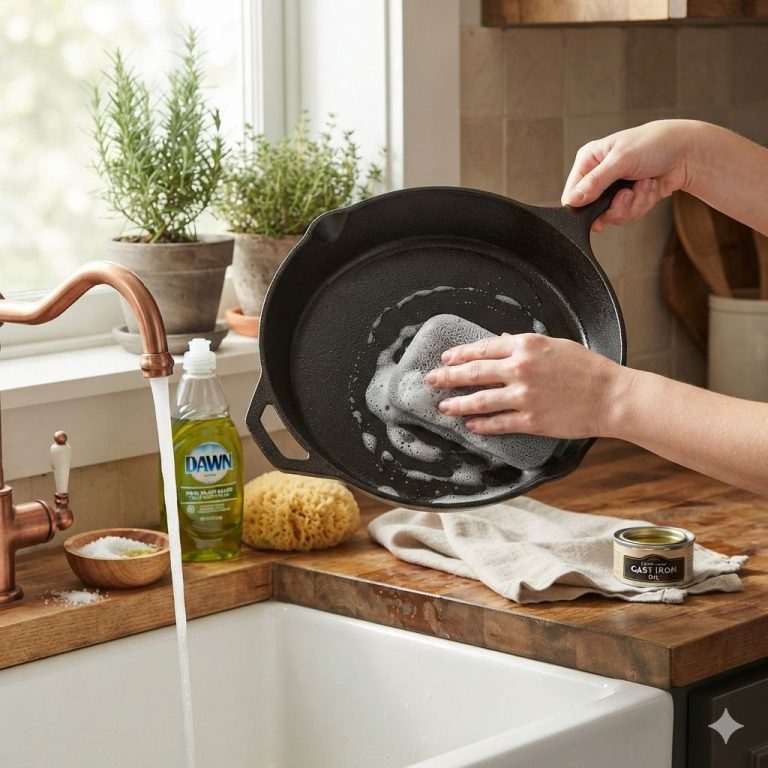
Cast iron is a mixed case. A bamboo scraper can be fine for loose food on a well-seasoned pan, but aggressive pressure is a bad idea because it can disturb seasoning and scratch off the slick layer that makes cast iron work well. On cast iron, the tool should be treated as gentle cleanup gear, not a chipper.
Delicate care burden and wear over time
The care routine is simple, but it is still care. Hand washing, drying soon after, and no soaking add a small friction cost to every use. The tool is also a wear item. Compared with metal, it will age faster, and compared with plastic, it may last longer in some kitchens but still needs replacement eventually.
How it compares with other scrapers
The right comparison is not bamboo versus “best possible cleanup.” It is bamboo versus the tools most people already reach for. On real kitchen jobs, the winner changes with the mess, the cookware, and how much care the tool can tolerate.
Bamboo pot scraper vs spoon
A spoon is the fallback tool, and it works in a pinch. It is common, hard to damage, and always nearby. But a spoon is poor at corners and awkward on flat sticky patches. The bamboo scraper beats it when you need a flatter edge and a shape made for lifting residue instead of stirring it around.
Bamboo pot scraper vs plastic scraper
Plastic scrapers are often easier to find and sometimes cheaper to replace. They can also flex more, which helps on curved surfaces. Bamboo has the advantage of feeling sturdier and less disposable, while plastic can be more forgiving on tricky angles. The tradeoff is that plastic may wear, deform, or feel less controlled over time.
Bamboo pot scraper vs metal or silicone tools
Metal is the heavy hitter. It is better for stubborn residue, but it brings scratch risk, especially on nonstick and delicate finishes. Silicone is gentler and more flexible, yet it may glide over dried spots instead of biting into them. Bamboo sits between those poles, which is why it works best as a daily cleanup tool rather than a deep-clean tool.
How long does a bamboo pot scraper last?
Its lifespan depends on how often it gets wet, how hard it is pushed, and whether it is used on food residue or hard debris. With normal hand care, a bamboo scraper can last a long time for light kitchen work, but it is not a forever tool. Once the edges round off or the surface dries out and roughens, performance drops.
Replacement value is tied to use frequency. If it is used every day and replaces paper towels, metal scraping, or repeated sponge damage, the cost per use can be low even if the sticker price is modest. If it stays in the drawer except for rare jobs, it becomes harder to justify, because a spoon may already cover the occasional task.
When it stops being worth it
It stops making sense when the user needs dishwasher convenience, strong force, or constant abuse from burnt food. It also stops earning its keep if another tool already handles the same mess faster. A bamboo scraper has value when it gets picked up often enough to matter.
Should you buy it?
Buy it if your cleanup pattern is mostly soft residue, your cookware needs a gentle edge, and you are willing to hand wash a small wood tool. It is especially useful in tight kitchens, travel setups, and zero-waste households where every item needs a clear job.
Skip it if you expect it to replace a metal scraper, if your pans regularly run into burnt-on food, or if any tool that is not dishwasher-safe feels like a burden. The best buy is the one that matches the mess you actually make.
Decision table: when it is worth buying
| Cookware type | Mess level | Cleaning ease | Scratch risk | Worth buying? |
|---|---|---|---|---|
| Nonstick pan | Light sauce or egg residue | Easy with a quick rinse | Low if used gently | Best-buy |
| Stainless pot | Dried rice, starch, or film | Moderate | Low | Best-buy |
| Enamel pan | Soft stuck-on bits | Moderate | Low to moderate | Best-buy |
| Cast iron skillet | Loose food after cooking | Easy if not burned on | Moderate if pressed hard | Maybe-buy |
| Glass-top stove area | Spilled sauce or soft splatter | Easy | Low | Best-buy |
| Any pan with burnt sugar or carbon | Heavy, bonded residue | Poor | Low tool risk, high frustration | Skip-it |
| Deep cleaning of old buildup | Thick crust | Poor | Low | Skip-it |
Alternatives
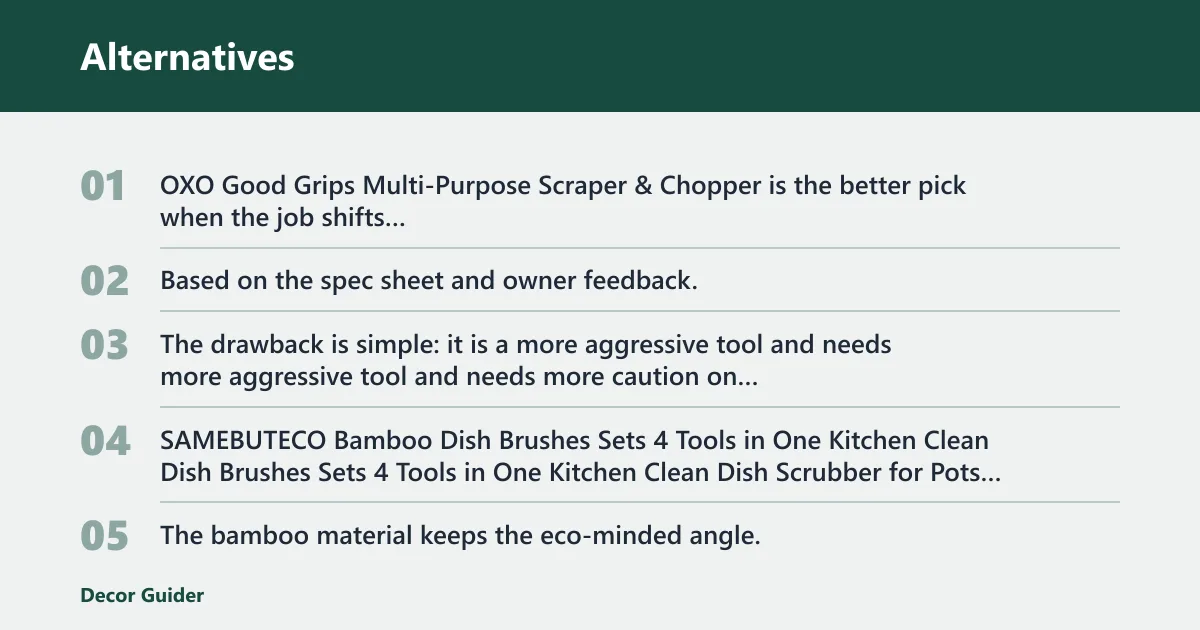

OXO Good Grips Multi-Purpose Scraper & Chopper is the better pick when the job shifts from gentle scraping to more assertive kitchen cleanup. Based on the spec sheet and owner feedback, the stainless steel blade and dishwasher-safe build make it more convenient than bamboo, but also less forgiving on delicate nonstick cookware. The drawback is simple: it is a more aggressive tool and needs more caution on scratch-prone surfaces.

SAMEBUTECO Bamboo Dish Brushes Sets 4 Tools in One Kitchen Clean Dish Scrubber for Pots Pans Bottles with Natural Bristles (Bamboo Brushes Sets) fits people who want a broader cleaning kit rather than a single scraper. The bamboo material keeps the eco-minded angle, and the long handle can help with deep pots, but a brush set is not the same as a flat scraper for corners or dried films. The honest drawback is that it takes more storage room and does not replace a true scraping edge.

Canlierr 4 Pcs 12 Inches Bamboo Wok Brush Bamboo Kitchen Cleaning Brush Pot Scraper Scrubber Dish Pan for Cooking Skillet Grill Utensils Scrubbing makes sense for larger cookware and shared use because the set includes multiple pieces and reaches deep pots more easily. That length helps on big cookware, but it is overkill for a small apartment drawer and less nimble than a compact 2.75-inch scraper. The drawback is that it solves a different problem: access and reach, not tight, precise scraping.
Frequently asked questions
Is a bamboo pot scraper worth it?
It is worth it when you regularly clean soft stuck-on food and want a gentle tool for coated cookware, stainless, or enamel. It is less worth it if you mainly fight burned-on residue or want a no-care tool. The value comes from frequent, specific use, not from owning another kitchen item.
What can you use a bamboo pot scraper for?
Use it for pots, pans, bowls, baking cleanup, and light residue on hard surfaces. It is also handy for dried sauce on a glass-top stove, as long as the surface is cool and the debris is not gritty. Its best role is lifting food before it gets fully baked on.
Will a bamboo pot scraper scratch nonstick pans?
Used gently, it is meant to be safe for non-scratch cookware, including nonstick pans. The risk rises if the edge is dirty, the pan has grit on it, or too much pressure is used. Treat it as a light cleanup tool, not a pry bar, and the scratch risk stays low.
How long does a bamboo pot scraper last?
Its life depends on how often it is washed, dried, and pressed into service. With careful hand washing and normal kitchen use, it can last long enough to justify its spot in a drawer. If it is soaked often or forced on hard residue, the edges wear down sooner.
Can you put a bamboo pot scraper in the dishwasher?
No, it is not recommended for dishwasher use. Hand washing is the expected care method, and the guidance also says to avoid prolonged soaking. Dishwasher heat and repeated water exposure can shorten the life of the bamboo and affect the finish.
What size bamboo pot scraper is easiest to hold?
A compact size around 2.75 inches is easy to pinch and control for most kitchen jobs. Smaller scrapers fit well in the hand and store easily, which helps in tight drawers, cabins, and travel kits. The tradeoff is that a tiny tool is less efficient on large flat surfaces.
How do you clean and care for a bamboo pot scraper?
Rinse it soon after use, wash it by hand, and dry it promptly. Avoid soaking, and keep it out of the dishwasher. A food-safe oil finish helps protect the wood, but it still needs normal drying and sensible storage if you want the scraper to stay smooth and usable.
Products related to this article
Sponsored / affiliate links. As an Amazon Associate I earn from qualifying purchases. I may earn additional commission from eligible campaigns.