Enamel Cookware Problems / Not Working / Troubleshooting
If enamel cookware is sticking, staining, or rusting, clean it gently first, but replace it if the coating is cracked, peeling, or exposing metal. Ignoring the difference can waste food, trap residue, and let damaged coating keep flaking into meals. This guide separates cosmetic issues from safety problems and shows what you can clean, keep using, or replace.
What enamel cookware is and what can go wrong

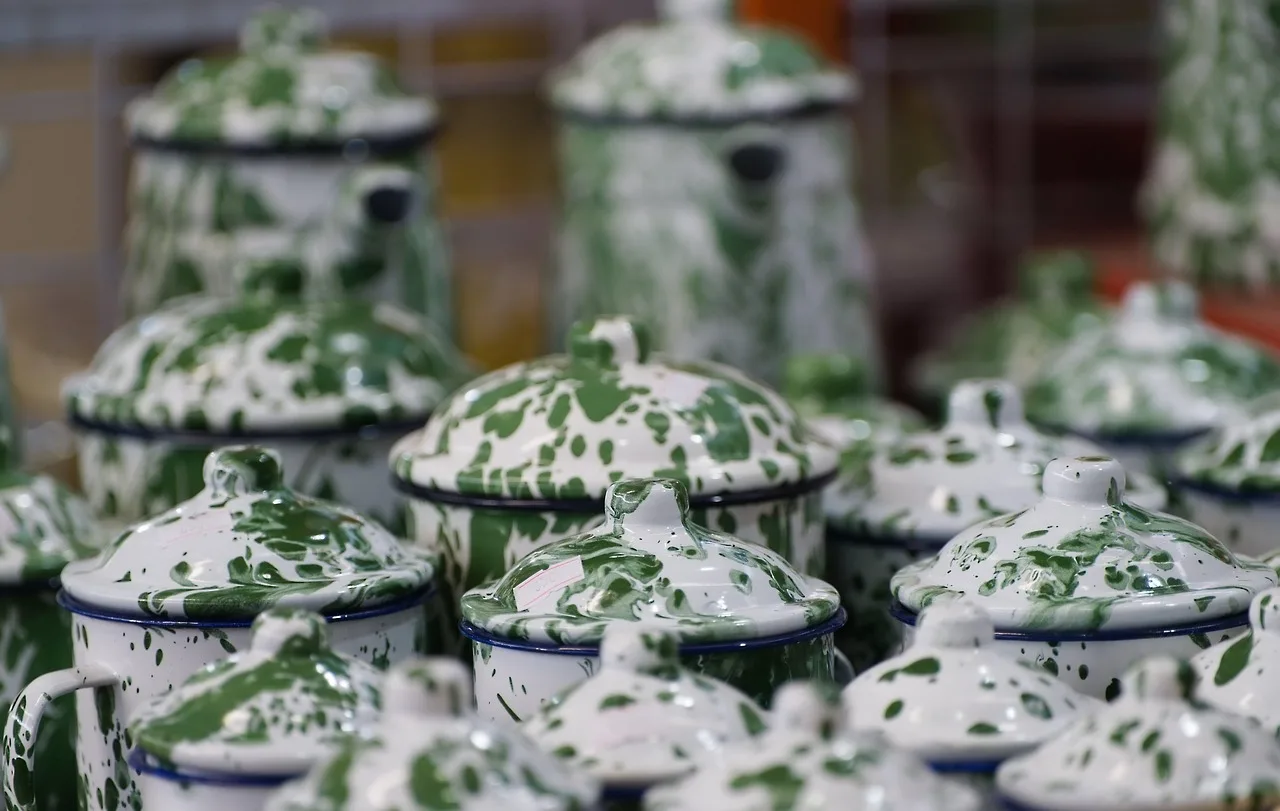
Enameled cast iron has a metal base with a porcelain enamel coating. It works on many cooktops, including induction when the base is compatible, and the enamel layer helps protect the cast iron from rust when it is intact. Manufacturer care pages for enameled cast iron generally emphasize gentle cleaning, avoiding sudden temperature changes, and using non-metal utensils to protect the finish. It is not naturally nonstick, so some sticking is normal when heat, oil, or preheating are off. See, for example, Le Creuset’s care guidance on enamel cookware, Lodge’s enameled cast iron care notes, and Staub’s enamel-use instructions.
What intact enamel protects
When the coating is sound, it acts as a protective barrier over the metal underneath. That keeps moisture from reaching bare cast iron and makes the surface nonreactive for most cooking tasks. It does not make the pan immune to wear, chips, cracks, or peeling. Manufacturer guidance for enameled cookware commonly treats intact enamel as the key condition for normal use and advises stopping use when the coating is compromised.
Common failure modes
The most common problems are sticking, burnt staining, rust spots, chips, cracks, discoloration, and peeling enamel. Some are performance issues. Others are safety issues. The key question is whether the surface is dirty, discolored, or actually broken enough to expose metal. If enamel is chipped, cracked, or peeling, manufacturer care pages generally advise replacement or contacting support rather than trying to “fix” the coating at home.
A dark or textured interior usually hides stains better, but it can also make browned bits cling more stubbornly than a light, smooth interior. A lighter interior often shows staining sooner, yet it can make it easier to judge whether the issue is residue, scorch marks, or true damage.
Enamel cookware troubleshooting table
Use this table as a triage list. Start with the safest first fix, then decide whether the pan is still usable.
| Problem | Likely cause | Safe first fix | When it is unsafe | Still usable for cooking? | Best next step by damage location | Replace or repair decision |
|---|---|---|---|---|---|---|
| Sticking | Not enough oil, skipped preheat, heat too low or too high, or a surface that is not naturally nonstick | Wash with mild soap and a soft sponge, then retry with oil and a moderate preheat that follows the cookware maker’s guidance | Unsafe only if sticking comes with peeling, cracks, or exposed metal | Yes, if the enamel is intact and there is no flaking or exposed metal | Interior cooking surface: clean and re-test. Rim: usually unrelated. Exterior: no safety issue. Lid: check fit and underside residue. | Retain if the surface is intact; replace only if damage is present |
| Burnt staining | Cooked-on residue, overheating, or sugar and protein buildup | Soak with warm water and mild soap first; if needed, use a baking soda paste or a manufacturer-approved enamel cleaner | Unsafe if scrubbing reveals chips, bare metal, or loose coating | Yes, if it is only discoloration and the enamel remains smooth and sealed | Interior cooking surface: clean gently. Rim: wipe residue. Exterior: cosmetic only. Lid: clean the underside and gasket area if present. | Retain if it is only discoloration; replace if the stain masks structural damage |
| Rust spots | Chipped enamel exposing the metal underneath or moisture trapped after damage | Dry thoroughly and inspect the area; do not cook on exposed metal until the coating status is clear | Unsafe if rust is spreading, flaking, or tied to a crack or chip at a food-contact area | Sometimes, only if rust is isolated off the cooking surface and the maker says the piece can remain in service | Interior cooking surface: usually stop using. Rim: monitor if purely exterior. Exterior: clean and dry. Lid: inspect edges and underside. | Repair only if a manufacturer-approved repair is possible; replace if metal is exposed in a cooking zone |
| Chips | Drop damage, utensil impact, stacking, or thermal shock | Stop using abrasive pads and inspect the size and location of the chip | Unsafe if the chip exposes metal, sits on a food-contact area, or has sharp edges | Maybe, if the chip is tiny, stable, and away from food contact; otherwise no | Interior cooking surface: replace if exposed. Rim: may be cosmetic if outside food contact. Exterior: monitor. Lid: inspect the rim and underside. | Small cosmetic chips on an exterior edge may be monitored; exposed interior chips usually mean replace |
| Cracks | Sudden temperature changes, impact, or long-term stress | Do not keep cooking until you inspect the full length of the crack | Unsafe if the crack crosses the cooking surface or reaches bare metal | No, if the crack is active, growing, or on a food-contact area | Interior cooking surface: stop using. Rim: inspect but do not ignore. Exterior: still requires caution. Lid: discontinue if the crack affects sealing or food contact. | Replace in most cases |
| Discoloration | Normal heat marks, mineral residue, or burnt oil film | Use mild soap first, then a baking soda paste or a manufacturer-approved cleaner | Unsafe if discoloration is actually peeling, blistering, or rust | Yes, if the enamel is intact and the change is only cosmetic | Interior cooking surface: clean and reassess. Rim: cosmetic. Exterior: cosmetic. Lid: check for residue and heat marks. | Retain if the enamel is intact; replace only if the surface is failing |
| Peeling enamel | Severe coating failure, prior impact, or repeated thermal shock | Stop using the cookware and inspect for loose flakes | Unsafe if enamel is actively shedding or exposing metal | No, if the peeling is on a food-contact area or is shedding into the pan | Interior cooking surface: discontinue use. Rim: discontinue if flakes can fall in. Exterior: may still signal broader failure. Lid: inspect and replace if shedding. | Replace |
How to use the table
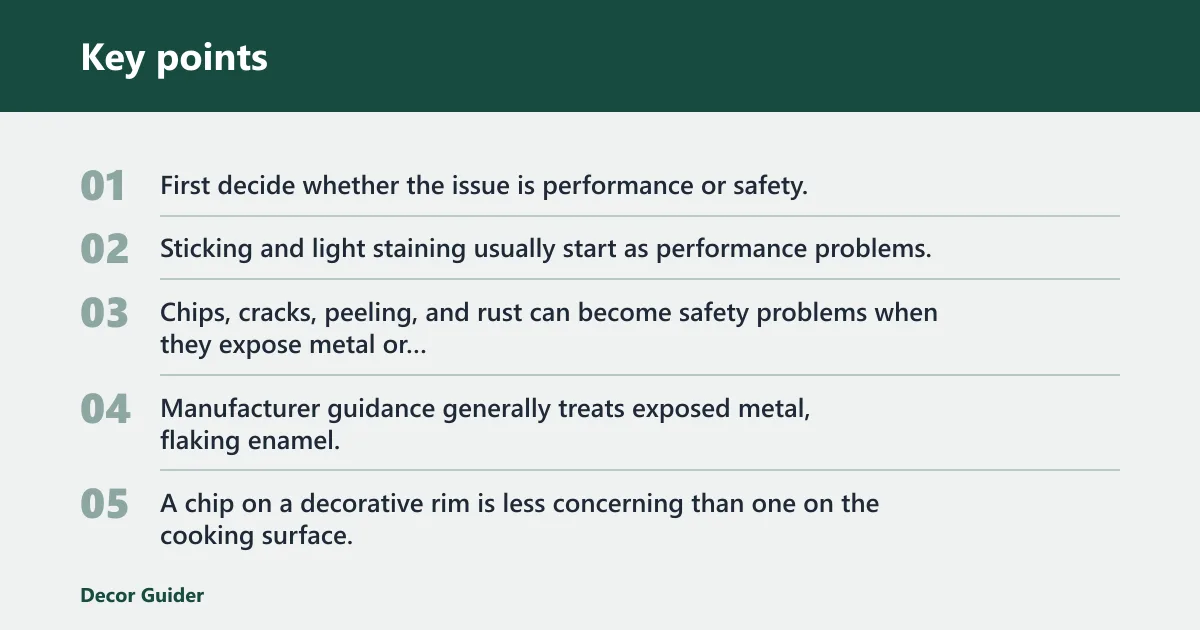
First decide whether the issue is performance or safety. Sticking and light staining usually start as performance problems. Chips, cracks, peeling, and rust can become safety problems when they expose metal or shed coating into food. Manufacturer guidance generally treats exposed metal, flaking enamel, or spreading cracks as replacement conditions rather than repair candidates.
Then check location. A chip on a decorative rim is less concerning than one on the cooking surface. A small flaw that stays outside food contact is different from a flaw in the base, sidewall, or lid rim that can shed into the pot. If the damage is on the interior cooking surface, err on the side of replacement unless the cookware maker gives a specific exception.
Repair versus replace decision points
Repair should be narrow, not creative. Do not sand enamel or use a repair compound unless the cookware manufacturer provides that exact method for that exact model. In most cases, enamel damage is not a do-it-yourself repair. If the finish is cracked, peeling, or exposing metal, manufacturer support or replacement is the safer framework.
Retain the piece when the problem is cosmetic: light staining, dullness, or a tiny chip away from the cooking surface. Replace it when the enamel is cracking, peeling, or exposing bare metal in a food-contact area.
Why is my enamel cookware sticking even when I add oil?
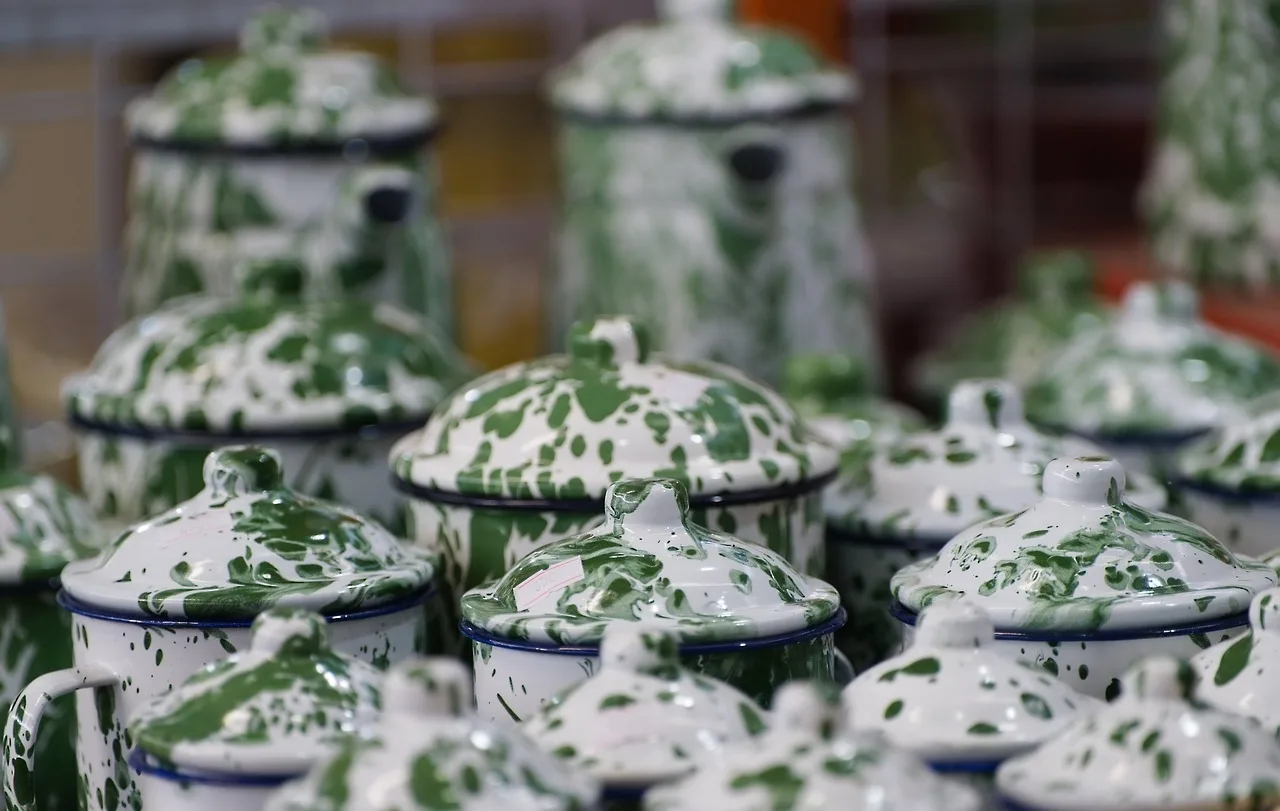
Enameled cookware is not supposed to be nonstick. Food can still cling if the pan is not preheated, if the heat is off, or if the surface needs a little more oil than expected. Use the cookware maker’s heat guidance rather than pushing high heat; many manufacturers caution against overheating enamel because it can worsen sticking and shorten the finish’s life.
Heat level, oil amount, and preheating
Use low to medium heat for most cooking unless the manufacturer says otherwise. High heat is commonly associated with sticking, especially with eggs, fish, and battered foods, and it can also stress the enamel. Preheat first, then add fat, then add food. That order matters more than stirring or extra scraping later.
Suppose a skillet still grabs an egg even after oil is added. The likely issue may be that the pan was cold when the egg went in, or the heat was too high and the protein set too fast. The safest correction is to lower the burner and let the pan warm before adding food.
Interior finish differences
A light interior shows browning and residue sooner, so it may seem worse even when the cooking surface is fine. A darker or textured interior can hide marks better, but it may release food less easily if the pan is underheated or under-oiled. Either way, the pan still needs oil and preheating.
How do you clean burnt stains off enamel?
Start with a soft sponge and mild soap. That is the safest default for daily cleaning and for most deep cleaning, and it matches the usual manufacturer advice for enameled cookware. If residue remains, move to a baking soda paste or a gentle cleaner approved for enamel. Avoid steel wool, metal scrubbers, and harsh cleaners because they can scratch the finish and make future staining worse.
Soft sponge and mild soap first
For fresh residue, wash with warm water, mild soap, and a soft sponge. This clears normal grease and keeps the enamel from getting scratched by abrasive pads. It also lets you see whether the stain is surface residue or a true surface defect.
Baking soda paste for stubborn marks
For tough stains, mix baking soda with water into a paste and leave it on the stain briefly. Then wipe gently with a soft sponge. This is useful when browned oil film or cooked-on sauce does not lift with soap alone. If the stain remains after gentle cleaning, that is still not a reason to sand the enamel.
White vinegar soak for burnt residue and discoloration
For burnt food and discoloration, soak the cookware in white vinegar for a short period if the manufacturer allows acidic cleaning. Some brands allow vinegar for mineral or residue removal, but boiling vinegar in enamel cookware is not universally recommended. Use this only when the enamel is intact and the problem is staining, not cracking.
A common first-timer mistake is reaching for a metal scrubber after one failed wash. That can turn a stain into scratch damage, and scratch damage can turn into chip risk later. Stay with soft sponges unless the manufacturer says otherwise.
Why is my enameled cast iron chipping?
Chipping usually comes from impact or stress. Drops, banging against a sink or stove, stacking heavy lids, metal utensil hits, and sudden temperature changes can all damage the porcelain enamel. Manufacturer guidance commonly warns against thermal shock, abrasive cleaners, and metal utensils because these can contribute to chipping and premature wear. Once the coating chips, the exposed area may rust.
Drops and impacts
A pan can chip if it hits the floor, the counter, or another hard object. Even a small drop can damage the rim or edge first. Inspect the outside, the lip, and the cooking surface after any fall, even if the pot still looks usable from a distance.
Metal utensils and abrasive cleaning
Wooden or silicone utensils are safer than metal utensils because they reduce scratching and chipping. Steel wool, metal scrubbers, and harsh cleaners are poor choices for the same reason. They can wear down the surface, especially around corners, handles, and edges.
Thermal shock and sudden temperature changes
Thermal shock means a sudden temperature change stresses the coating. Hot cookware should not be put into cold water. That kind of shock can crack enamel, especially after searing or roasting. Let the cookware cool before washing, and avoid moving it from a hot burner to a cold sink.
Picture a Dutch oven coming off a burner and going straight into a cold sink. The enamel may crack before the pan even reaches the dish rack. The safer move is to let it cool to room temperature, then wash it with a soft sponge and mild soap.
Can chipped enamel cookware be used safely?
Sometimes, but only when the chip is small, stable, and not on a food-contact area. Chipped enamel cookware can expose the metal underneath, and that exposed metal may rust. Cracks, active peeling, and chips with bare metal in the cooking zone are safety problems, not cosmetic issues. If the manufacturer’s care instructions say to replace the item once enamel is chipped or missing, follow that guidance over any general rule.
Cosmetic chips versus exposed metal
A tiny chip on an exterior edge may be cosmetic if it stays away from food and does not spread. A chip inside the pot is different. If you can see the metal underneath where food touches, the safer answer is usually to replace the cookware.
Cracks, peeling, and rust spots
Cracks and peeling suggest the coating is failing, not just marked. Rust spots usually mean the enamel has already lost its protective barrier. Because the enamel layer prevents rust when intact, damage that reaches the base metal can keep getting worse with washing and use.
When to replace instead of keep using
Replace the cookware if the damage is deep, spreading, or in the cooking area. Replace it if enamel is peeling, if a crack is visible, or if chips continue to shed flakes. High-quality enameled cast iron can last a long time, but only if the coating remains intact and manufacturer guidance does not say to retire it sooner.
How to prevent future damage
Preventing damage is mostly about heat control, gentle cleaning, and careful handling. Use moderate heat for most cooking unless the maker says otherwise. Do not move hot cookware into cold water. Wash with soft sponges. Store pieces so they do not bang into each other or into metal lids and utensils.
A simple post-use inspection checklist
- Let the cookware cool before washing.
- Check the cooking surface, rim, handle points, and underside for chips.
- Look for rust, loose flakes, or new cracks after dishwashing.
- Run a fingertip lightly over suspicious spots to feel for sharp edges.
- Dry the piece fully before storing it.
If you find a tiny chip after storage or dishwashing, compare it with the table above. Cosmetic wear can be watched. Structural damage should not be ignored.
Frequently asked questions
Can chipped enamel cookware be repaired safely?
Only if the manufacturer gives a specific repair method for that model. In general, chipped enamel is not a do-it-yourself repair job, and sanding or filler compounds are not safe default fixes. If the chip exposes metal in the cooking area, or if the enamel is cracking or peeling, replacement is the safer choice.
How do I clean burnt stains off enamel cookware without damaging it?
Start with mild soap and a soft sponge. For stubborn residue, use a baking soda paste briefly or a manufacturer-approved enamel cleaner. If the maker allows it, a short vinegar soak can help with discoloration. Avoid steel wool, metal scrubbers, and harsh cleaners because they can damage the enamel.
What causes enamel cookware to crack or chip?
Cracks and chips usually come from impact, drops, poor storage, or rapid temperature changes. Hot cookware should not be put into cold water, because thermal shock can fracture the enamel. Metal tools and abrasive pads can also weaken the surface over time and make damage more likely.
What heat level should I use on enamel cookware?
Use low to medium heat for most cooking unless the manufacturer specifies something different. High heat can cause sticking, scorching, and extra stress on the coating. Moderate heat gives the best balance of control and protection for the enamel surface.
Products related to this article
Sponsored / affiliate links. As an Amazon Associate I earn from qualifying purchases. I may earn additional commission from eligible campaigns.