The Only Crispy Skillet Potatoes Guide You’ll Ever Need
You know the scene. You order breakfast at a diner, and the home fries arrive as pale, flabby cubes that taste more like boiled potatoes than anything crisp. It’s a letdown. Making genuinely crispy skillet potatoes at home isn’t hard, but it does require a specific sequence of steps that most recipes skip or gloss over.
This guide walks through the entire process, from choosing the right potato to holding them for a crowd. You’ll learn the vinegar parboil trick that breaks down pectin for a creamy interior and a shatteringly crisp exterior, plus the exact timing and temperatures that make the difference between good and great. No vague advice here—just numbers, visual cues, and honest trade-offs.

Lodge
Lodge Pre-Seasoned Cast Iron Skillet with Silicone…
- Versatile Cooking Skillet: The Lodge Cast Iron Skillet is a multipurpose, everyday cooking pan that excels at searing, sautéing, b…
- Pre-Seasoned & PFAS-Free: This pre-seasoned skillet is made with 100% natural vegetable oil for a naturally nonstick finish and is…
- Superior Heat Distribution: The heavy-duty cast iron frying pan cooks evenly, making it ideal for precision recipes and consistent…
As an Amazon Associate I earn from qualifying purchases.
To get the best results, you need a pan that holds and distributes heat well. A cast iron skillet is the standard choice for this job. The Lodge Pre-Seasoned Cast Iron Skillet with Silicone Handle Holder (12 inches) is a solid workhorse. It comes pre-seasoned with vegetable oil, handles high heat without warping, and the included silicone handle holder is a nice touch when you’re moving a hot pan around the kitchen.
Why These Are the Best Crispy Skillet Potatoes
Most recipes fail for one simple reason: they skip the parboil. Tossing raw potatoes into a hot skillet might sound efficient, but the outside burns before the inside cooks through. You end up with a raw center and a scorched exterior.
Parboiling solves that. It cooks the potatoes through, and the vinegar in the water does something unexpected. The acid helps break down pectin on the potato’s surface, which creates a rougher texture. That roughness gives the oil more surface area to cling to, which means more browning and more crisp edges.
The other common mistake is overcrowding the pan. When you pile potatoes in, they steam instead of sear. The temperature of the pan drops, and the moisture released from the potatoes creates a gummy texture that’s impossible to fix. You need to work in batches if you’re cooking for more than two people.
Ingredients for Perfect Skillet Potatoes
The ingredient list is short, but each component matters. Here’s what you need and why.
The Best Potato Variety (and Why)
Starchy potatoes like Russets are the top choice. They have a high starch content and relatively low moisture, which means they crisp up beautifully on the outside while staying fluffy on the inside. Russets also have a thicker skin that gets delightfully crunchy when seared.
Yukon Golds are a close second. They’re a waxy-starchy hybrid with a buttery flavor and a slightly denser texture. They won’t get quite as shatteringly crisp as Russets, but they hold their shape better if you like larger chunks. If you use Yukon Golds, expect a golden crust with a creamier center.
Fully waxy potatoes like red new potatoes are the worst option here. They’re too moist and don’t brown well. You can still cook them, but you’ll fight an uphill battle against a gummy texture. Save red potatoes for potato salad.
The Right Oil for High-Heat Searing
You need an oil with a high smoke point. That means the oil can get very hot before it starts to burn and impart a bitter, acrid flavor to your food.
| Oil Type | Smoke Point (°F) | Best Use | Flavor |
|---|---|---|---|
| Avocado Oil | 520°F | High-heat searing | Neutral |
| Canola Oil | 400°F | Searing and frying | Neutral |
| Vegetable Oil | 400°F | Searing and frying | Neutral |
| Extra Virgin Olive Oil | 375°F | Low-heat cooking, finishing | Fruity, peppery |
| Butter | 350°F | Finishing, low-heat | Rich, nutty |
Avocado oil is the best choice for this recipe. It has the highest smoke point and a completely neutral flavor. Canola or vegetable oil work almost as well and are cheaper. Save the olive oil for a drizzle at the end, and never use butter for the initial sear—it will burn and turn bitter.
The 3-Step Method for Maximum Crispiness
This method has three distinct phases. Each one is important, so don’t skip any of them.
Step 1: Parboil with Vinegar (The Secret)
Cut your potatoes into uniform 1-inch cubes. Uniform size is critical—if some pieces are bigger, they’ll cook unevenly. Place them in a pot and cover with cold water by about an inch. Add a tablespoon of white vinegar and a generous pinch of kosher salt for every quart of water.
Bring the water to a boil over high heat, then reduce to a simmer. Cook the potatoes until they’re just tender. You should be able to pierce them easily with a paring knife, but they shouldn’t be falling apart. For 1-inch cubes of Russet, that takes about 8 to 10 minutes from the moment the water boils. Drain them immediately.
The vinegar isn’t for flavor. It’s for texture. The acid breaks down the pectin on the surface, creating tiny fissures. These fissures are where the oil gets in and creates that crunchy shell.
Step 2: The Steam-Dry and Rough-Up Shake
This is the step most recipes forget, and it’s the difference between crispy and soggy. After draining, return the potatoes to the hot pot and place it back on the burner over low heat for 5 to 7 minutes. Shake the pot occasionally to prevent sticking. You’ll see steam rising off the potatoes.
This steam-dry step removes surface moisture. Wet potatoes will not brown—they’ll steam and turn mushy. You want the surface of each cube to look dry and slightly chalky.
Once they’re dry, put the lid on the pot and shake it vigorously for about 10 seconds. This roughs up the edges, creating a starchy, fluffy coating on each cube. That coating is what turns into a golden crust in the pan. It’s the same principle as roughing up a steak with salt to help form a crust.
Step 3: Searing in a Hot Skillet (Don’t Touch!)
Place your cast iron skillet over medium-high heat. Let it get hot for a solid 3 to 4 minutes. Add enough neutral oil to coat the bottom of the pan generously—about 2 to 3 tablespoons for a 12-inch skillet. The oil should shimmer, but not smoke.
Carefully add the potatoes in a single layer. Do not overcrowd the pan. If you’re making a large batch, cook in batches. Each potato cube needs direct contact with the hot pan surface to brown.
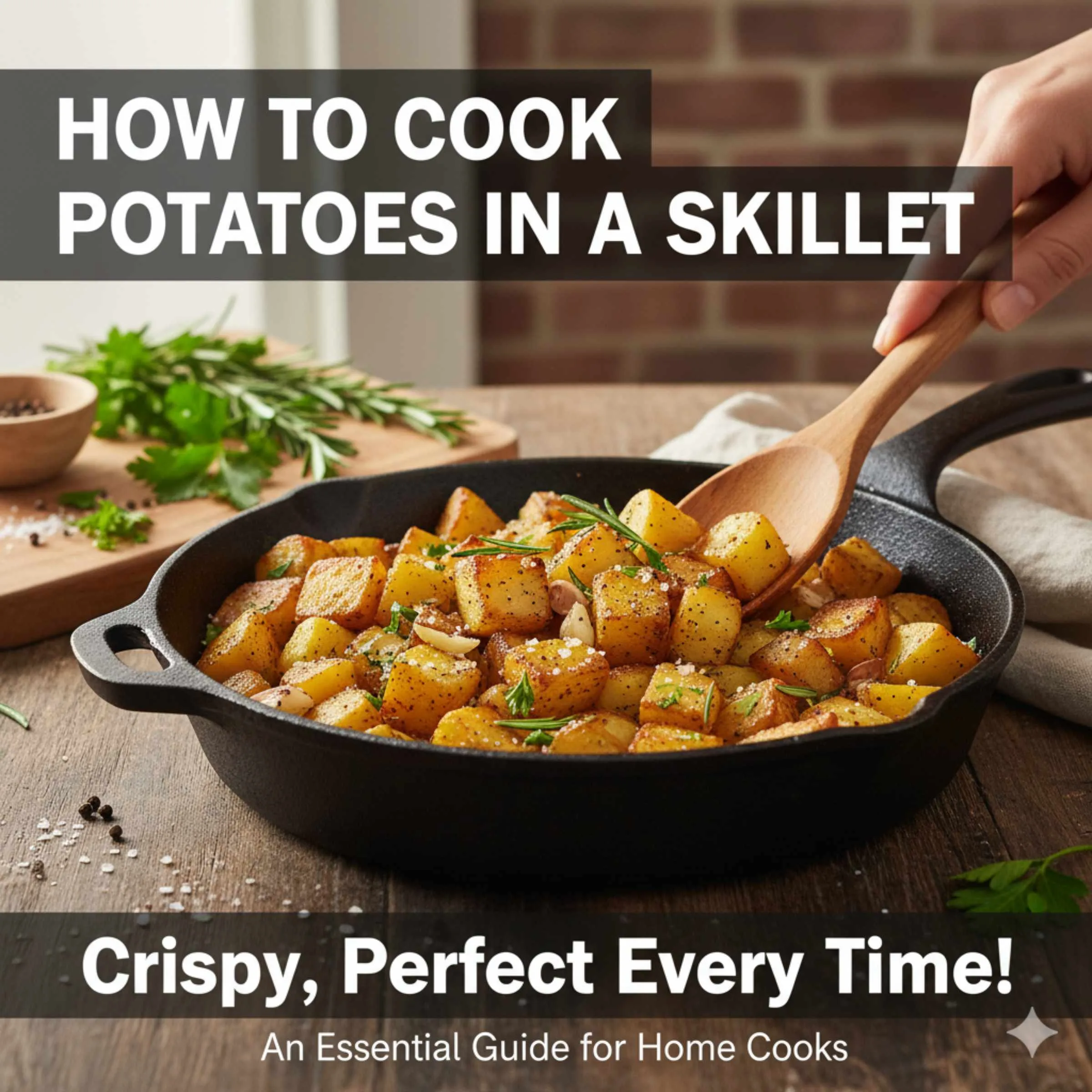
Now the hard part: leave them alone. Let them cook undisturbed for 4 to 5 minutes. You’ll see the edges start to turn golden brown. Use a thin metal spatula to flip them. You’ll feel some resistance at first—that means a crust is forming. If you flip too early, you’ll tear the crust and lose all that crispiness.
Continue cooking, flipping every 3 to 4 minutes, until the potatoes are deeply browned and crunchy on all sides. This usually takes 12 to 15 minutes total. Season with kosher salt immediately after you pull them from the pan.
How to Keep Potatoes Crispy (Holding and Reheating)
You’ve made a perfect batch, but dinner isn’t ready for another 30 minutes. Here’s how to hold them without turning them into a soggy mess.
Spread the cooked potatoes in a single layer on a wire rack set over a baking sheet. This allows air to circulate around all sides, preventing steam from condensing and softening the crust. Place them in a 200°F oven. They’ll stay crisp for up to 45 minutes.
If you have leftovers, reheating in the microwave is out of the question—it will make them rubbery. The best way to revive them is in a hot skillet with a little oil. Heat the pan over medium-high, add a teaspoon of oil, and sear the potatoes for 2 to 3 minutes per side. They won’t be as good as fresh, but they’ll be close.
Flavor Variations (Garlic Herb, Spicy Paprika, Smoky)
The base recipe is great, but it’s a blank canvas. Here are three reliable ways to change it up.
- Garlic Herb: After the potatoes are cooked, toss them with a tablespoon of minced fresh parsley, a clove of grated garlic, and a squeeze of lemon juice. The garlic goes in at the end so it doesn’t burn.
- Spicy Paprika: Add 1 teaspoon of smoked paprika and 1/2 teaspoon of cayenne pepper to the potatoes during the rough-up shake in step 2. The spice clings to the starchy coating and creates a deeply colored, smoky crust.
- Smoky: Use bacon fat instead of oil for the searing step. Cook the bacon first, reserve the fat, and use that to fry the potatoes. Add a sprinkle of smoked salt at the end for good measure.
Recipe FAQs (Soggy Potatoes, Overcrowding, Oil Smoke Points)
Why are my potatoes soggy?
Nine times out of ten, it’s moisture. You either skipped the steam-dry step, or you overcrowded the pan. Fix both and your problem disappears. If you’re using a non-stick pan, it might also be running too cool. Non-stick pans don’t hold heat as well as cast iron, so you may need to turn the heat up slightly.
Can I use a stainless steel or non-stick skillet instead of cast iron?
Yes. Stainless steel works very well. Heat it over medium-high for a few minutes, add the oil, and proceed. The potatoes might stick a little more, but a good metal spatula will handle it. Non-stick is the trickiest option. It doesn’t retain heat as well, so the crust takes longer to form. You can still get good results, but you’ll need patience and a slightly higher heat setting.
Is microwaving potatoes faster than parboiling?
It can be faster, but the texture suffers. Microwaving cooks from the inside out and doesn’t create the same dry, starchy surface that parboiling with vinegar does. If you’re in a hurry, you can microwave the cubed potatoes in a covered bowl with a splash of water for 5 to 6 minutes. Skip the vinegar, and make sure to dry them thoroughly before searing. The crust will be less shatteringly crisp, but it’s an acceptable shortcut.
Can I make these ahead of time?
You can parboil the potatoes a day ahead. After the steam-dry and rough-up shake, let them cool completely and store them in a sealed container in the fridge. When you’re ready to cook, spread them on a baking sheet and let them come to room temperature for 20 minutes. Then sear them as directed. They’ll take a minute or two longer to brown since they’re starting from cold.
What’s the best way to season them?
Kosher salt is non-negotiable. Season immediately after cooking so the salt sticks to the oil. Add black pepper, garlic powder, or onion powder before cooking. Fresh herbs go on at the end. Avoid seasoning with salt before searing, as it draws out moisture and prevents browning.
What to Serve with Skillet Potatoes
These potatoes are a natural breakfast side dish. They pair well with fried eggs, bacon, and a cup of strong coffee. For a heartier meal, serve them alongside a cast iron steak or roasted chicken. They also work as a base for a loaded potato bowl—top them with cheese, sour cream, and chives.
If you’re looking for a different take on the same idea, check out this guide on making French fries in a skillet. The techniques overlap, but the cut and cook time differ.
Putting It All Together
Here’s the complete recipe in one place.
Ingredients
- 2 lbs Russet potatoes, scrubbed and cut into 1-inch cubes
- 1 tablespoon white vinegar
- 1 tablespoon kosher salt, plus more for seasoning
- 3 tablespoons avocado oil or canola oil
- Freshly ground black pepper
Instructions
- Place the potato cubes in a large pot. Cover with cold water by 1 inch. Add the vinegar and 1 tablespoon of salt.
- Bring to a boil over high heat, then reduce to a simmer. Cook for 8-10 minutes, until just tender.
- Drain the potatoes. Return them to the pot and set over low heat for 5-7 minutes, shaking occasionally, until the surfaces are dry.
- Put the lid on the pot and shake vigorously for 10 seconds to rough up the potato edges.
- Heat a 12-inch cast iron skillet over medium-high heat for 3-4 minutes. Add the oil and swirl to coat.
- Add the potatoes in a single layer. Do not overcrowd. Cook undisturbed for 4-5 minutes, then flip with a metal spatula.
- Continue cooking, flipping every 3-4 minutes, until deeply browned and crispy all over, 12-15 minutes total.
- Season with kosher salt and black pepper immediately. Serve hot.
That’s the whole process. It takes about 45 minutes from start to finish, and most of that is hands-off time. The result is a batch of crispy skillet potatoes with a creamy interior and a crust that actually shatters. Worth the extra steps.
Products related to this article
Sponsored / affiliate links. As an Amazon Associate I earn from qualifying purchases. I may earn additional commission from eligible campaigns.