White Vinegar vs Lemon Juice for Removing Cookware Stains
White vinegar is often a good starting option for mineral haze and hard-water stains. Use the wrong acid, or leave it on too long, and you can dull finishes, waste time, or worsen damage on reactive metals. This guide compares white vinegar vs lemon juice by stain type and cookware material, then shows when to use neither.
| Decision factor | White Vinegar | Lemon Juice for Removing Cookware Stains | Winner |
|---|---|---|---|
| Hard water haze and limescale | Strong fit for cloudy, milky deposits | Can help, but is usually the second choice | White Vinegar |
| Rust stains | May help lightly, but is not the best first pick | Better first pick for rust on many items | Lemon Juice for Removing Cookware Stains |
| Odour removal | Good, especially with baking soda nearby in the kitchen | Also good, with a fresher scent during use | Tie |
| Stainless steel cookware | Works well when diluted with warm water | Can work, but needs more care with contact time | White Vinegar |
| Residue and rinse burden | Usually needs a thorough rinse to clear the scent | Often leaves less sharp smell, but still needs rinsing | Lemon Juice for Removing Cookware Stains |
Which cleaner works best for cookware stains?
Use the stain type, not habit, to choose the cleaner. White vinegar is the stronger first pick for hard-water haze, limescale, and cloudy spots on stainless steel cookware. Lemon juice is the better first pick for rust, light odour, and some fresh-looking marks on copper or stainless steel.
When white vinegar is the better first pick
Choose white vinegar when the mark looks cloudy, milky, or chalky. That usually points to mineral buildup, and vinegar can help remove limescale and hard-water deposits. It also fits stainless steel utensils and cookware, especially when diluted with warm water.
When lemon juice is the better first pick
Choose lemon juice when the stain is orange-brown rust, or when the main problem is smell rather than visible buildup. Lemon juice is an acidic cleaner, and the lemon itself can be used in some cleaning jobs. It also works well when you want a lighter scent during cleanup.
When neither one is the right fix
Skip both acids if the mark is heat tint, burnt oil, or deep mineral scaling that has bonded to the surface. Acid will not repair pitting, restore a damaged coating, or remove scorching. In those cases, you need a different method matched to the cookware material.
Cookware stain decision table
Use this table as a stain-by-stain shortcut. It is built for the most common pots, pans, lids, and handles that pick up haze, rust, odour, or baked-on residue during normal kitchen use.
| Stain type | Best choice: white vinegar or lemon juice | Why it works | Cookware material warnings |
|---|---|---|---|
| Cloudy or milky hard-water stain | White vinegar | Acetic acid helps break down mineral film and hard-water deposit buildup. | Best on stainless steel and glass lids; avoid long soaks on aluminium or cast iron. |
| Rust spot | Lemon juice | Its acidic cleaning action can loosen rust so you can wipe the surface clean after soaking. | Use care on copper, aluminium, and enamel; do not leave it sitting too long. |
| Light odour on a pan or lid | Tie | Both acids can help cut kitchen odour, with lemon usually leaving a fresher smell. | Nonstick and coated finishes need brief contact only; rinse promptly. |
| Stainless steel dullness | White vinegar | White vinegar can be used with warm water to brighten cookware. | Safe for stainless steel cookware; do not treat scratched nonstick the same way. |
| Burnt oil or baked-on film | Neither | These stains are usually fat or carbon, not acid-sensitive mineral residue. | Use a material-safe degreasing method instead of soaking in acid. |
How white vinegar cleans stains
White vinegar is an acetic-acid cleaner, and that acid helps loosen mineral film and some grime on cookware. It is also used around the home on glassware and mirrors, which is a clue that it works best on dull films rather than thick, cooked-on residue.
Acetic acid and mineral haze
Vinegar contains acetic acid, which is the part doing the cleaning work. Acetic acid can damage bacteria cell structure, but that does not make vinegar a substitute for proper sanitising. For cookware, the practical use is mineral removal, not disinfection.
Diluting vinegar with warm water
A simple starting mix is equal parts white vinegar and warm water. Warm water helps the liquid spread across the surface and supports brightening on stainless steel cookware. Do not use a stronger mix unless a stain is stubborn and the material can tolerate short contact.
Best uses on stainless steel and glassware
Vinegar can be used on stainless steel utensils and cookware, and a vinegar-and-water mix is also used to clean glass and mirrors. That makes it a good choice for lids, polished pans, and utensil marks where the problem is film rather than damage. It is also a common helper for limescale.
Scent and rinse considerations
White vinegar has a sharper scent and usually needs a more careful rinse. If odour control is part of the job, some kitchens pair vinegar with baking soda in separate steps, or use baking soda in a drain-cleaning recipe nearby. That said, do not mix them and expect the same acid action; the fizz is not the cleaning mechanism.
How lemon juice cleans stains
Lemon juice is also acidic, and that acid helps loosen some stains and odours. It is a practical choice when you want a gentler scent during cleanup or need to tackle rust on an item that can handle a short acid soak.
Acidic cleaning action from the lemon itself
Lemon juice works because of its acidity, not because of perfume. In some methods, the lemon itself is used along with the juice, which adds surface scrubbing and contact with the stained area. It is a useful option for lighter cleaning jobs on cookware and lids.
Rust stains and odour removal
Lemon juice is recommended for removing rust from items. For cookware, that means light rust spots on the surface, not deep corrosion or flaking metal. It can also help remove odours from pots and pans after cooking strong-smelling food.
Where lemon juice fits better than vinegar
Lemon juice often makes sense when the stain is not mineral haze but a visible rust mark or a smell issue. It can also be a better fit when the user wants a cleaner smell during the wash. For some stainless steel spots, it gives enough acid without the sharper vinegar scent.
Residue and rinse follow-up
Even lemon juice needs a rinse. After soaking, wipe the item clean and check the area under bright light. If the stain remains after one short soak, stop and reassess the material before repeating the acid treatment.
Can you use vinegar on stainless steel pans?
Yes, stainless steel cookware is a safe cleaning target for white vinegar when you use it briefly and dilute it with warm water. It can brighten dull cookware, cut mineral film, and clear cloudy spots. The key is short contact time, a full rinse, and no soaking on finishes that are not stainless steel.
Safe uses on stainless steel cookware
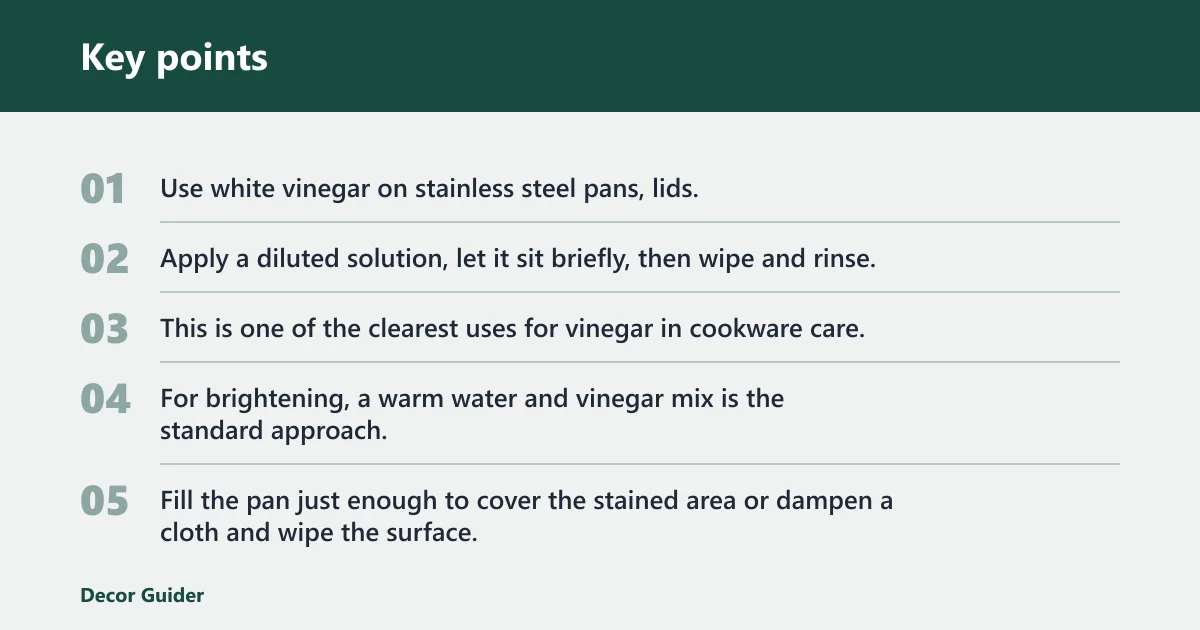
Use white vinegar on stainless steel pans, lids, and utensils when the issue is hard-water residue, mild odour, or a dull surface. Apply a diluted solution, let it sit briefly, then wipe and rinse. This is one of the clearest uses for vinegar in cookware care.
How to brighten with vinegar and warm water
For brightening, a warm water and vinegar mix is the standard approach. Fill the pan just enough to cover the stained area or dampen a cloth and wipe the surface. Then rinse with clean water and dry it so new spots do not form.
What to avoid on coated or reactive surfaces
Do not treat nonstick, cast iron, aluminium, copper, or enamel as if they all respond the same way. Nonstick can be damaged by aggressive soaking. Cast iron can lose its seasoning. Aluminium and copper can react with acids, and enamel can dull if the cleaner sits too long.
When to stop soaking and rinse
Stop as soon as the stain starts to loosen. A common first-timer mistake is leaving a pan in vinegar because the mark looks stubborn, then forgetting the finish itself needs protection. If the stain has not changed after a short soak, rinse and switch methods instead of extending the exposure.
Can lemon juice remove rust from cookware?
Yes, lemon juice can help remove rust from some cookware stains, especially light surface rust. It works best as a short soak followed by wiping clean. It is not a fix for deep corrosion, pitted metal, or rust that has already spread under a damaged finish.
Which rust stains respond best?
Fresh, orange-brown rust spots respond better than old, crusted rust. If the rust is thin and localised, lemon juice can loosen it enough for wiping. If the mark is flaky, rough, or eats into the metal, the problem is beyond a simple acid soak.
How long to let it sit
Keep the soak short. About ten to fifteen minutes is a reasonable starting window for a light rust spot, then check the area. Longer contact does not guarantee better cleaning and can be hard on reactive metals.
Why wiping after soaking matters
After soaking, wipe the area clean so loosened rust does not settle back onto the surface. Then rinse thoroughly and dry the item. Drying matters because lingering moisture invites more rust on vulnerable metals.
Surfaces that need extra caution
Be careful with aluminium, copper, cast iron, and enamel. Lemon juice is acidic, so prolonged contact can affect finish quality or seasoning. On nonstick surfaces, use the mildest possible touch and keep the contact time very brief.
When vinegar or lemon will not work
Some cookware marks are not stains in the usual sense. Heat tint, burnt oil, and mineral scaling can sit outside the range of a simple acid soak. If the mark is structural or heat-related, neither white vinegar nor lemon juice is the right first fix.
Heat tint versus true stain
Heat tint is a colour change caused by temperature, often on stainless steel. It can look like a stain, but acid may not remove it fully. If the surface changes colour after high heat, the issue is heat exposure rather than a mineral deposit.
Burnt oil and baked-on residue
Burnt oil is usually carbonised fat, not lime or rust. Acid alone will not break it down well. You need a different cleaner or a method that targets grease and carbon without harming the finish.
Mineral scaling that needs a different method
Heavy mineral scaling can cling after one soak. If the deposit is thick, layered, or rough to the touch, repeat acid is not always the answer. Scraping, a longer soak approved by the material, or another cleaner may be needed.
Material and finish warnings
Do not use the same method on every pan. Nonstick needs brief contact. Cast iron needs seasoning protection. Aluminium, copper, and enamel each react differently to acid, so the safest move is to test a small hidden area before treating the whole piece.
Step-by-step stain cleanup workflow
- Identify the stain first: cloudy haze, rust, odour, heat tint, or burnt oil.
- Check the cookware material: stainless steel, nonstick, cast iron, aluminium, copper, or enamel.
- Choose white vinegar for mineral haze or hard-water film; choose lemon juice for rust or light odour.
- Dilute white vinegar with warm water for most cookware jobs.
- Apply the cleaner to the stained area and keep the soak short.
- Wipe clean, then rinse with fresh water.
- Dry the piece fully before storing it.
Picture a 10-inch stainless steel sauté pan with a cloudy ring near the rim after a hard-water dry-down. White vinegar is the better first try because the mark is mineral haze, not rust. A short warm-water soak followed by wiping usually fits that case better than lemon juice.
Say your glass lid has a mild onion smell and a few dull spots near the handle. Lemon juice is a sensible first pick because the main problem is odour, with only a light surface mark. If the smell remains after rinsing, the issue is likely trapped residue in the gasket or handle assembly, not the glass itself.
Verdict: White vinegar or lemon juice for Removing cookware Stains?
Choose White Vinegar if the cookware has cloudy, milky, or chalky hard-water haze or limescale, especially on stainless steel pans, lids, and utensils where a diluted white vinegar and warm water mix can brighten the surface.
Choose Lemon Juice for Removing Cookware Stains if the stain is an orange-brown rust spot or the main issue is light odour on a pan or lid, since lemon juice is the better first pick for rust and leaves a fresher scent during cleanup.

Frequently asked questions
Is white vinegar or lemon juice better for removing cookware stains?
White vinegar is often a good choice for hard-water haze, cloudy mineral film, and brightening stainless steel cookware. Lemon juice is better for rust and light odour. If the stain is burnt oil, heat tint, or deep pitting, neither cleaner is the right first fix.
Can you use vinegar and lemon juice on stainless steel pans?
Yes, both can be used on stainless steel pans with care. White vinegar is the more reliable choice for mineral haze, and lemon juice is a useful backup for rust or smell. Keep contact time short, then rinse and dry the pan fully.
Does lemon juice remove rust from cookware?
Lemon juice can help with light surface rust on some cookware. It works best when the rust is fresh and thin, then you wipe the area clean after soaking. It will not fix deep corrosion, pitting, or rust that has spread under damaged metal.
Will white vinegar clean hard water stains off pots and pans?
Yes, white vinegar can help remove limescale and hard-water deposits from pots and pans. The marks usually look cloudy or milky, and an acidic soak often loosens them. Use diluted vinegar, then rinse well so the surface does not keep a sharp scent.
How do you clean cloudy or milky stains from cookware naturally?
Start with white vinegar and warm water. Apply it to the cloudy area, let it sit briefly, then wipe and rinse. Those stains are often mineral haze, so an acid works better than soap alone.
Can vinegar damage cookware or cookware finishes?
Yes, if you use it on the wrong material or leave it too long. Nonstick, cast iron, aluminium, copper, and enamel need extra caution. Even on stainless steel, the safer approach is short contact followed by a full rinse and drying.
Should you soak cookware in vinegar or lemon juice?
Soak only long enough to loosen the stain. For stainless steel and mineral haze, a brief vinegar soak is the better pick. For rust, a short lemon juice soak is more appropriate. Long soaking is rarely helpful and can create finish problems.
Can vinegar and lemon juice remove odours from pots and pans?
Yes, both can help reduce odours from cookware. Vinegar is stronger for mineral residue and general kitchen smells, while lemon often leaves a fresher scent during cleanup. Neither replaces proper washing if food residue is still stuck to the surface.
Products related to this article
Sponsored / affiliate links. As an Amazon Associate I earn from qualifying purchases. I may earn additional commission from eligible campaigns.