Best Cleaning Brushes for Pots and Pans: we compared
The best cleaning brushes for pots and pans match the cookware: soft nylon for nonstick, stiff plant fiber or brass for seasoned cast iron, and narrow bottle-style heads for burnt-on corners. The wrong brush can scratch coatings, strip seasoning, and leave residue that takes longer to remove later. This guide sorts brush choices by material and mess type, then points to the features that protect surfaces and cut cleanup time.
Quick comparison
| Product | Badge | Best for | Price | ||
|---|---|---|---|---|---|
 |
Scrub Daddy Scour Daddy Style, Scourers Non ScratchScrub Daddy | Also great | Pack of 2 · Non-scratch ArmorTec mesh · FlexTexture core | $8.50
Price as of 14 Oct 2026
|
View |
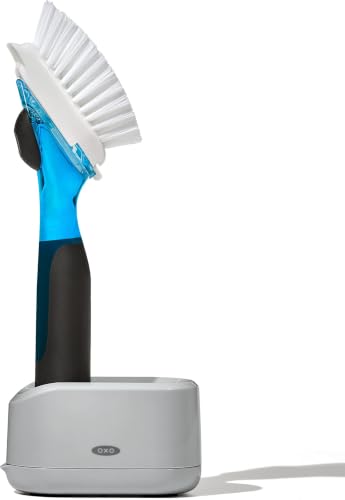 |
OXO Good Grips Soap Dispensing Dish Brush Storage Set |OXO | Our pick | Soap dispensing · Nylon bristles · Built-in scraper · Non-skid holder | $16.99
Price as of 14 Oct 2026
|
View |
 |
Libman Dish Brush Set with Long Handle – Deep CleaningTribello | Budget pick | 2-piece set · Long handle · Polymer bristles · Built-in scraper | $13.99
Price as of 14 Oct 2026
|
View |
 |
eplanita Natural Dish Brush, 3 Replacement Heads, Kitcheneplanita | Also great | Bamboo handle · Agave bristles · 3 replacement heads · Plastic-free | $12.99
Price as of 14 Oct 2026
|
View |
 |
BabriInta Cast Iron Cleaner – 6 Inch Stainless Steel ChainBabriInta | Upgrade pick | 6-inch chain mail · 316 stainless steel · For cast iron | $6.97
Price as of 14 Oct 2026
|
View |
The right brush is usually the one that matches your pan, not the harshest one on the shelf. Use the table below as a quick filter before you compare specific products.
📊 The Scotch-Brite brush can be sanitized in a dishwasher up to 20 times. Source: 10 Best Cleaning Brushes for Pots, Pans, and Dishes That Make….
How we chose
We compared brush type, cookware safety, and how each design handles kitchen messes such as grease, burnt sugar, tomato reduction, and polymerized oil. We also weighed grip comfort, head shape, upkeep, and whether a scraper, soap reservoir, or electric head adds real cleaning power.
Scratch risk came first. A brush that works on stainless steel can be a poor fit for nonstick or enamel. We also looked at whether the design reaches corners, rivets, and pan rims without forcing you to press too hard.
Two other filters mattered: cleaning speed and maintenance. A brush that rinses clean, dries fast, and stays sanitary is more practical than one that looks durable but traps odor, grease, or residue.
Which brush is safest for your cookware?
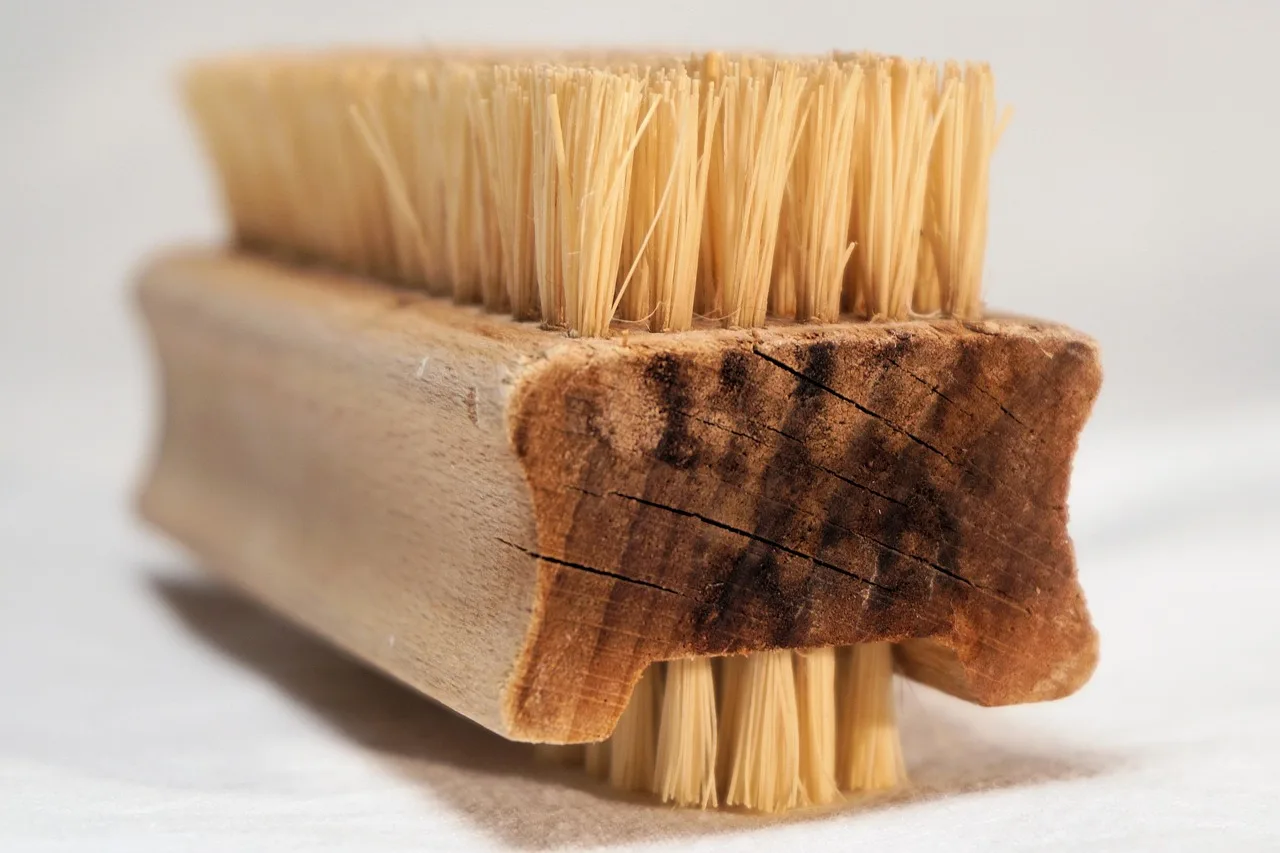
The safest brush usually depends on the surface. Soft nylon or PET fibers suit nonstick and enamel, medium bristles fit stainless steel and some coated metals, and hard or chainmail styles belong on seasoned cast iron or carbon steel only when you want to preserve seasoning rather than polish a delicate coating.
| Cookware material | Safest bristle type | Is a scraper useful? | When to avoid the brush |
|---|---|---|---|
| Stainless steel | Medium bristles; hard bristles for severe baked-on residue | Yes, for burnt bits and rivets | Avoid very abrasive pads on polished finishes if you want to limit cosmetic marking |
| Nonstick | Soft nylon or PET fiber | Only a gentle scraper edge, used lightly | Avoid stiff, wire, or hard-bristle brushes that can damage the coating |
| Cast iron | Hard plant fiber, chainmail, or stiff bristles for stuck residue | Useful for lifting clumps before rinsing | Avoid overly wet brushes if drying is delayed, and avoid anything that removes seasoning |
| Enamel | Soft to medium bristles | Useful for corners, not for force | Avoid hard bristles and aggressive scrapers on chipped or thin enamel |
| Carbon steel | Medium to hard bristles, depending on residue | Helpful on browned fond and burnt oil | Avoid harsh abrasion if the pan is newly seasoned or lightly coated with oil |
Stainless steel and carbon steel
Stainless steel handles more scrubbing than coated cookware, so a medium brush is usually the practical starting point. For burnt-on sugar or browned oil, a scraper or stiffer head can lift the top layer before detergent does the rest.
Nonstick and other coated pans
Use soft bristles only. A stiff brush on nonstick pans is a poor trade because scratch marks can shorten coating life, and once the surface is damaged it usually holds food more stubbornly.
Cast iron and seasoning care
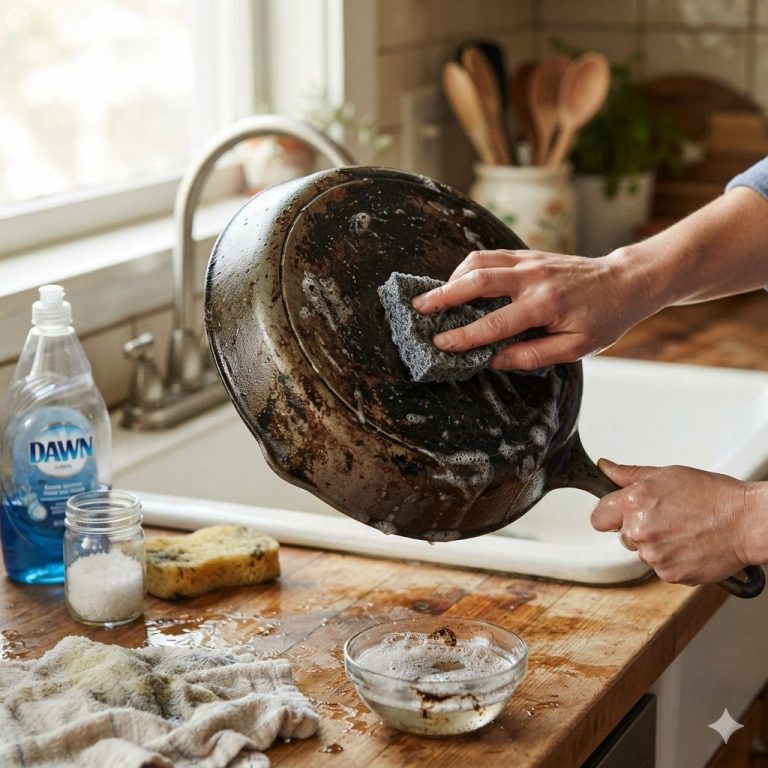
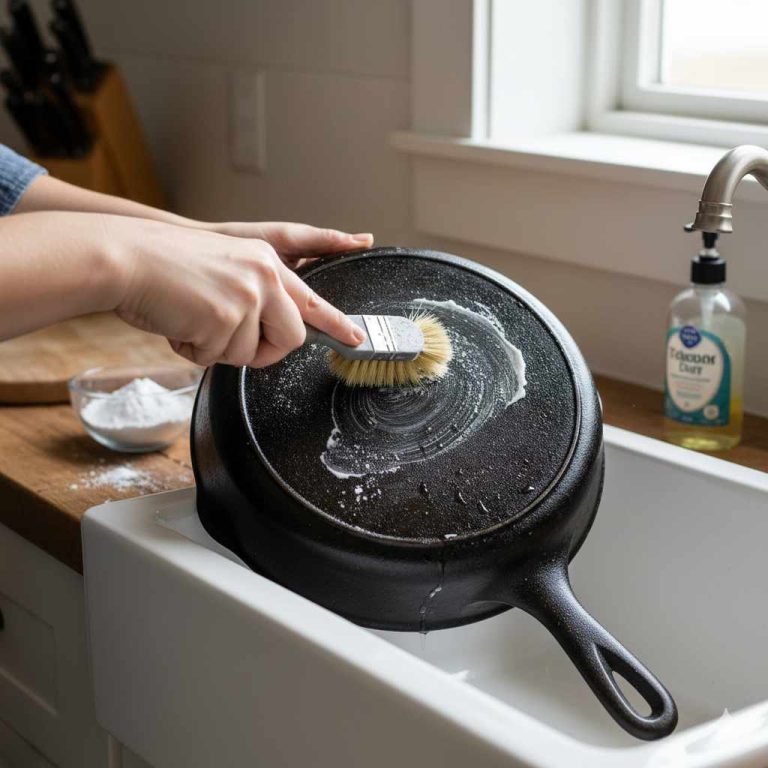
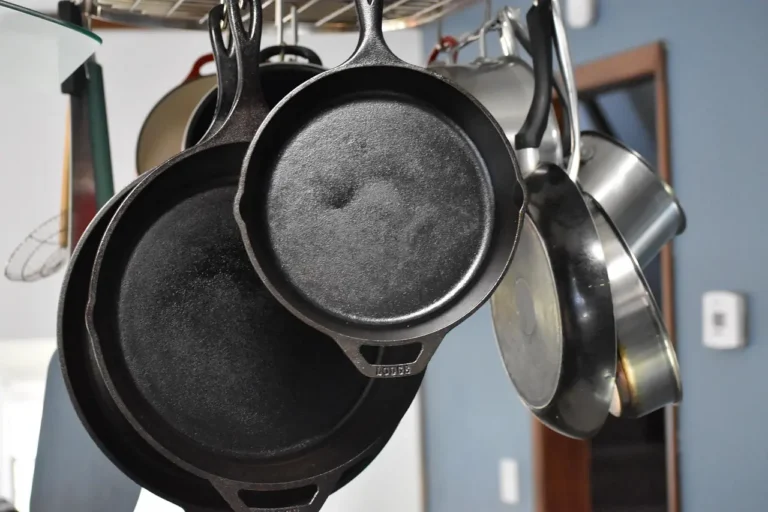
For seasoned cast iron, the goal is removal without stripping the seasoning layer. A stiff plant-fiber brush, a chainmail scrubber, or a brush with hard bristles can handle residue, but avoid anything so aggressive that it leaves the pan bare or patchy.
Enamel and chip-prone finishes
Enamel needs a gentler hand. Soft or medium bristles are the safer choice, especially around thin spots, chips, and rims where an overly hard brush can turn a small flaw into a larger one.
Brush types that matter most
Brush type matters more than packaging claims. Soft bristles reduce scratch risk, medium bristles balance speed and safety, and hard bristles are for surfaces that can take more abrasion, like seasoned cast iron or heavy stainless steel cleanup.
Soft, medium, and hard bristles
Soft bristles are the safest for nonstick and enamel. Medium bristles are the most flexible choice for general cookware because they handle grease without feeling too harsh. Hard bristles clean faster on stubborn residue, but they raise the risk of visible wear on delicate coatings.
Non-scratch nylon and PET fiber brushes
Non-scratch brushes usually use nylon or PET fiber. That makes them safer for coated pans, but the limit is real: they are better for grease, sauce, and light residue than for carbonized crust that needs soaking or a scraper first.
Soap-dispensing dish brushes
A soap-dispensing brush puts detergent in the handle for one-hand use. That helps with greasy cookware cleanup, but it also adds refill steps and a clog risk if detergent dries in the reservoir. They are convenient, not maintenance-free.
Built-in scraper designs
A built-in scraper helps lift stuck-on food and burnt bits. It is useful for browned edges, pan rims, and cooked-on sauces, but it does not replace the need for the right bristle type. Scrapers can assist; they should not do all the work.
Electric cleaning brushes
Electric cleaning brushes make sense for recurring heavy buildup. Rechargeable models and battery-powered tools can cut effort on pots, lids, and grates, and attachment sets help with corners or flat surfaces. They are less useful for careful seasoning care because speed can become too aggressive.
Best cleaning brushes for pots and pans by use case

Start with the cookware, then match the soil type. A light sauce film calls for a different tool than burnt sugar on a stainless pan. That simple split prevents a lot of surface damage and wasted scrubbing.
Best for nonstick: OXO Good Grips Soap Dispensing Dish Brush
- Push button dispenses soap for efficient washing
- Durable nylon bristles are safe for non-stick cookware
- Flips over to use handy scraper for stuck-on food
This is the cleanest fit for nonstick cookware because it uses nylon bristles and is sold as safe for non-stick cookware. The soap reservoir helps with greasy residue, and the scraper gives you a second cleaning edge for stubborn spots.
The drawback is upkeep. Soap-dispensing brushes need refills, and the reservoir can clog if detergent dries inside. It is also a better match for routine cleanup than for thick, burnt-on crust.
Best for stainless steel burnt-on food: Tribello Libman long-handle brush set
- Durable polymer fibers are strong and dishwasher-safe
- Built-in scraper removes baked-on food without scratching
- Long ergonomic handles protect hands from hot water
This set suits stainless steel pans that need more reach and firmer scrubbing. It includes polymer bristles, a long handle, and a built-in scraper, which makes it practical for baked-on food on pots, lids, and deep skillets.
The drawback is that the firmer setup is less forgiving on delicate coatings. It is a strong general cookware tool, but it is not the first choice for nonstick or polished finishes that need a softer touch.
Best for cast iron seasoning care: BabriInta chainmail scrubber
- Food-grade 316 stainless steel is durable and safe
- Chain mail design does not hide dirt or scratch pots
- Includes a hang ring for convenient wall storage
For cast iron, chainmail is one of the most direct ways to remove stuck bits without relying on soaps or soft bristles. This 316 stainless steel scrubber fits skillets, woks, Dutch ovens, and other seasoned surfaces where you want residue gone but seasoning preserved.
The drawback is that chainmail is not a universal pan brush. It is specialized, and it is not the right pick for nonstick or enamel. It also needs thorough rinsing and drying so residue does not collect between cleanings.
Best for deep pans, woks, and corners: Scotch-Brite Scour Daddy Style
- Stronger and thicker than ordinary scouring pads
- ArmorTec mesh rinses easily to avoid smelly odours
- FlexTexture technology adjusts firmness with water temperature
This is the best fit when you need a compact scrubber that can move into corners and around rivets without feeling bulky. The ArmorTec mesh and FlexTexture core make it a practical choice for sinks, cookware edges, and pan walls where a full brush head can miss residue.
The drawback is that it is still a scouring pad style tool, so it is less precise than a handle brush for deep pots. The antimicrobial bristles and dishwasher sanitizing claim help with upkeep, but the shape is still more pad than brush.
Best for recurring heavy buildup: Bosch UniversalBrush
The Bosch UniversalBrush is the option for repeated heavy cleanup, especially when manual scrubbing gets old. It is rechargeable, runs up to 45 minutes, and includes five head types or tools, so it can move from cookware to other kitchen jobs with less hand strain.
The drawback is that electric power is not automatically safer. On coated cookware, the wrong attachment or too much pressure can be a problem. It is better for stubborn, recurring buildup than for delicate seasoning care.
Which one should you buy?
If you cook mostly on nonstick, start with the OXO soap-dispensing brush because its nylon bristles and scraper suit routine cleanup without inviting unnecessary abrasion. If stainless steel is your problem pan, the Tribello long-handle set gives you more reach and stronger scrubbing for burned sauces and browned oil.
If you care for cast iron, the BabriInta chainmail scrubber is the most direct match because seasoning needs residue removal without coating damage. For deep pans, wok corners, and stubborn edges, the Scotch-Brite pad-style scrubber reaches where a full brush can struggle. For frequent heavy buildup, the Bosch electric tool saves effort.
Suppose a 12-inch stainless skillet has caramelized tomato sauce around the rim and browned oil in the center. A medium or firmer brush plus scraper is the right starting point. Picture the same mess on a nonstick pan: the safer move is soft nylon, warm water, and less pressure, even if cleanup takes longer.
What is the best brush for cleaning pots and pans without scratching?
The safest all-around answer is a soft nylon or PET fiber brush. It gives you enough cleaning action for sauce, grease, and light residue while keeping scratch risk lower on nonstick and enamel. For stainless steel, you can move up to medium bristles when the pan can handle more abrasion.
Should I use a stiff bristle brush on nonstick pans?
No. A stiff bristle brush on nonstick pans raises the chance of coating damage, and that damage can make later cleaning harder. Use soft bristles, a non-scratch brush, or a sponge-style scrubber instead. If food is burnt on, soak first and use a light scraper edge only if the coating allows it.
What brush works best for burnt-on food on stainless steel cookware?
Medium or hard bristles work best on stainless steel when the mess is truly burnt on, especially if you pair them with a scraper. Stainless tolerates more abrasion than coated pans, so you can use a brush that removes browned fond, tomato reduction, and oil residue without worrying about coating damage.
Are bamboo dish brushes better than plastic brushes for cookware?
Bamboo brushes are a solid choice if you want a comfortable grip and a handle material many buyers prefer. They can feel nicer in hand, but drying matters more than the material label. Plastic may resist repeated wetting better, while bamboo needs good airflow to limit odor and mold risk.
Do dish brushes with built-in scrapers work better for stuck-on food?
They help, but they are not magic. A built-in scraper is useful for lifting stuck-on food, especially burnt bits on stainless steel or around pan rims, yet it does not replace bristles. For heavy crust, the best result usually comes from soaking, then using the scraper and the right bristle type together.
How do I clean and sanitize a pot and pan brush?
Rinse the brush thoroughly after use, shake out water, and let it dry in open air. Dishwasher-safe parts help with sanitizing, but they do not solve trapped grease or residue in the handle, head, or reservoir. Retire a brush when bristles stay bent, smell persists, or buildup no longer rinses out.
What is the best brush for cast iron seasoning care?
The best brush for cast iron seasoning care is one that removes food without stripping the seasoned layer. A stiff plant-fiber brush, chainmail scrubber, or a hard-bristle brush can work, but only if you stay away from prolonged soaking and keep the surface dry after cleaning.
Which cleaning brush is best for deep pans, woks, and cookware corners?
Narrow, long-handle brushes and bottle-style heads are the most practical choice for deep pans and woks. They reach corners, rivets, and curved sides better than wide scrubbers. For burnt-on residue in tight spaces, a brush with a scraper tip or a compact pad shape can remove debris more cleanly.
Do you need a bamboo brush or a plastic one?
Bamboo is worth it if you want a comfortable handle and prefer a natural-feeling grip, while plastic is often easier to rinse and dry quickly. The better choice is the one that dries faster in your kitchen and matches how often you scrub greasy cookware.
Grip comfort and handle length
Handle ergonomics matter on deep pots and woks because short handles put your hand too close to steam and hot rinse water. A non-slip grip reduces hand fatigue during longer scrubbing sessions, which matters more once the mess has hardened.
Drying speed and mold resistance
Plastic usually dries faster, while bamboo needs more attention to airflow. That does not make bamboo a poor choice, but it does mean you should avoid storing it in standing water or a sealed caddy. Drying is a sanitation issue, not only a convenience issue.
When eco-friendly materials are worth it
Eco-friendly handles are worth considering when the brush is easy to dry, easy to replace, and suited to the cookware you clean most often. Holikme offers a three-pack bamboo-handle brush set with soft, medium, and hard bristle brushes, which is useful because it matches material to task instead of forcing one brush to do everything. The drawback is that bamboo still needs proper drying care.
Products related to this article
Sponsored / affiliate links. As an Amazon Associate I earn from qualifying purchases. I may earn additional commission from eligible campaigns.