How to Remove Rust From a Cast Iron Skillet Fast
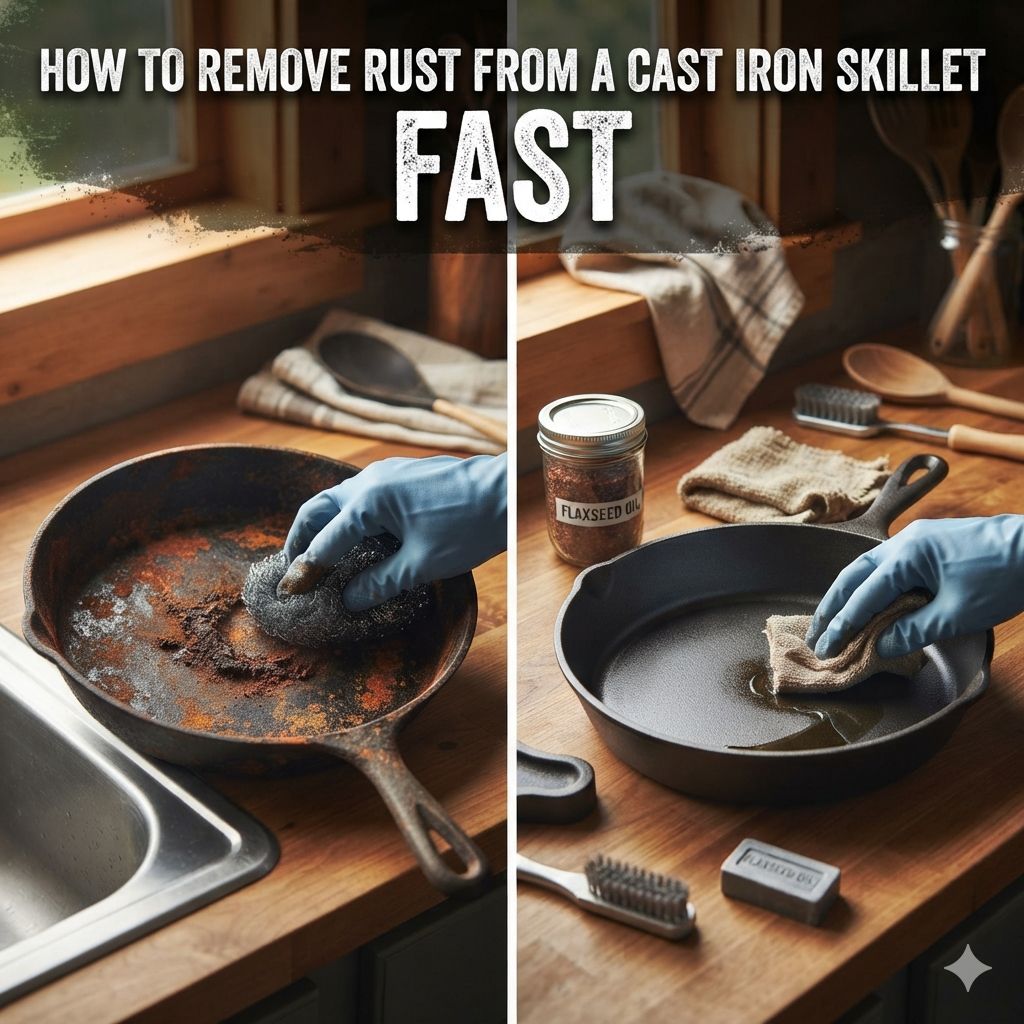
Removing rust from a cast iron skillet is a straightforward process that can restore your cookware to its former glory in under an hour. Whether you found an old pan at a flea market or neglected your favorite skillet for too long, this guide walks you through every method to get it back in action.

Evapo-Rust
CRC Evapo-Rust Heavy Duty Rust Remover, 32…
- EVAPO-RUST RUST REMOVER: Evapo-Rust effortlessly removes rust from automotive parts, hardware, tools, cookware, and antiques witho…
- SAFE TO USE: This metal rust remover is made of a water-based solution that is easy-to-use on automotive, household and industrial…
- VERSATILE: The non-corrosive rust remover can be used to remove rust from all metals including auto parts, tools, cast iron cookwa…
As an Amazon Associate I earn from qualifying purchases.
Simply put, the fastest way to remove rust from a cast iron skillet is to scrub it with steel wool or coarse salt, soak it in a vinegar solution if needed, then rinse, dry, and re-oil immediately. The entire process takes 30 to 60 minutes and requires only basic household supplies.
Key Takeaways
- Rust forms on cast iron when moisture sits on bare metal without protective oil. Quick action prevents deep pitting.
- Steel wool, coarse salt, and white vinegar are the most effective tools for removing rust from a cast iron skillet at home.
- After rust removal, you must completely dry the skillet and apply a thin layer of oil to restore the seasoning layer.
- Regular maintenance — drying immediately after washing and oiling after each use — keeps rust from a cast iron skillet away permanently.
What You Need to Remove Rust From a Cast Iron Skillet
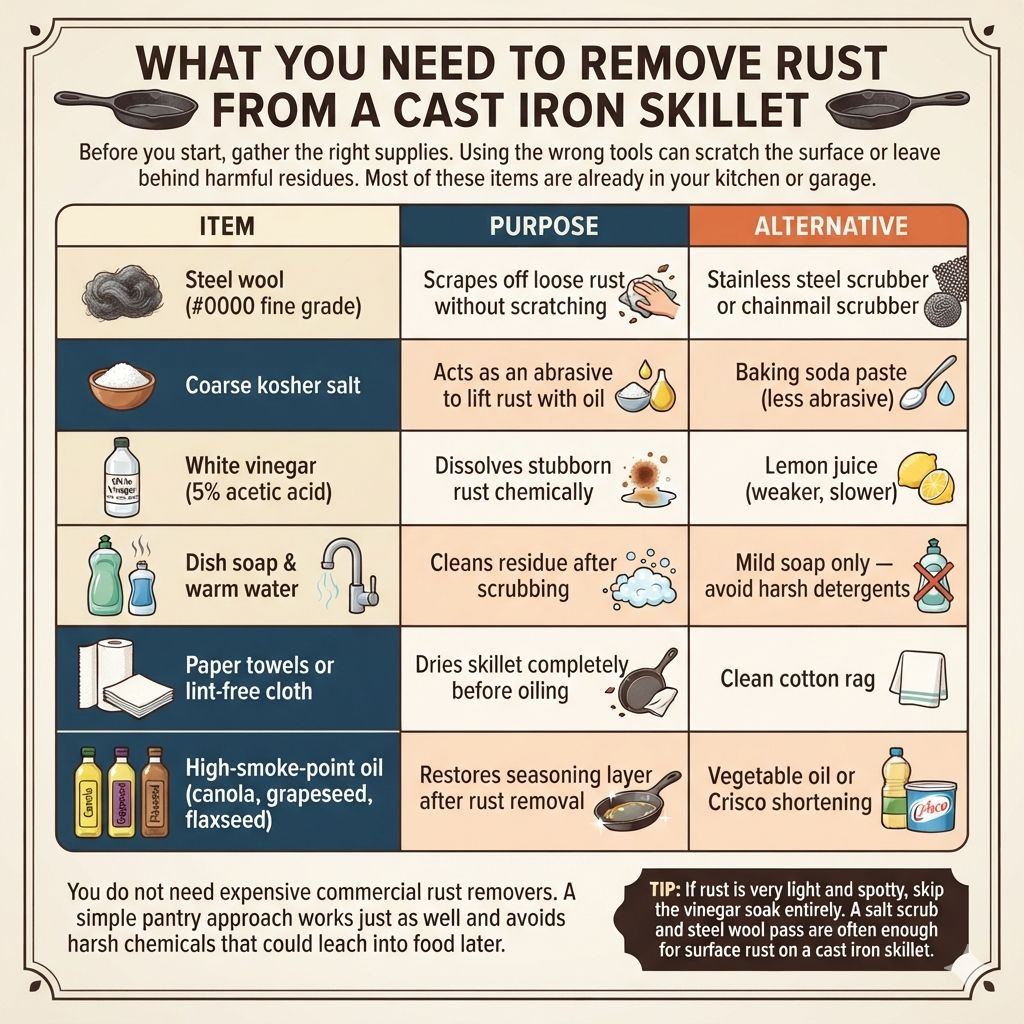
Before you start, gather the right supplies. Using the wrong tools can scratch the surface or leave behind harmful residues. Most of these items are already in your kitchen or garage.
The table below breaks down what you need and why each item matters for effective rust removal.
| Item | Purpose | Alternative |
|---|---|---|
| Steel wool (#0000 fine grade) | Scrapes off loose rust without scratching | Stainless steel scrubber or chainmail scrubber |
| Coarse kosher salt | Acts as an abrasive to lift rust with oil | Baking soda paste (less abrasive) |
| White vinegar (5% acetic acid) | Dissolves stubborn rust chemically | Lemon juice (weaker, slower) |
| Dish soap & warm water | Cleans residue after scrubbing | Mild soap only — avoid harsh detergents |
| Paper towels or lint-free cloth | Dries skillet completely before oiling | Clean cotton rag |
| High-smoke-point oil (canola, grapeseed, flaxseed) | Restores seasoning layer after rust removal | Vegetable oil or Crisco shortening |
You do not need expensive commercial rust removers. A simple pantry approach works just as well and avoids harsh chemicals that could leach into food later.
Tip: If the rust is very light and spotty, skip the vinegar soak entirely. A salt scrub and steel wool pass are often enough for surface rust on a cast iron skillet.
Step 1: Scrub Away Loose Rust With Steel Wool or Salt
Start with dry scrubbing to remove as much loose rust as possible. This step prevents you from spreading rust deeper into the surface when you add water or vinegar later.
Apply a small amount of coarse kosher salt directly onto the skillet surface. Use a dry paper towel or a clean cloth to rub the salt in circular motions. The salt grains act as a gentle abrasive that lifts rust without scratching the iron underneath.
- Sprinkle about 2 tablespoons of coarse salt evenly across the skillet bottom.
- Rub firmly in small circles, focusing on rusted spots. Apply pressure but avoid gouging.
- Wipe away the salt and rust debris with a dry paper towel. Repeat if needed.
- For heavier rust, use fine-grade steel wool (#0000) dry. Rub in the direction of the metal grain if visible.
- Do NOT use soap or water at this stage — moisture will slow down the dry abrasion process.
After dry scrubbing, inspect the skillet. If only light discoloration remains, you can move directly to the oiling step. If orange or red rust patches still show, proceed to the vinegar soak below.
Warning: Never use copper wool or brass wool on cast iron. These metals can embed particles into the iron surface and cause food contamination or uneven seasoning later.
Step 2: Soak the Skillet in Vinegar and Water for Deep Rust
When rust has penetrated the surface or covers large areas, a vinegar soak is the most effective chemical method. The acetic acid in white vinegar reacts with iron oxide (rust) and converts it into a water-soluble compound that rinses away easily.
Removing rust from a cast iron skillet with vinegar requires a precise ratio and soak time. Too long in vinegar will etch the iron and leave a dull, rough surface.
- Mix a 1:1 solution of white vinegar and water in a container large enough to fully submerge the skillet. A plastic storage bin works well.
- Place the skillet in the solution completely. Weigh it down with a heavy plate if it floats.
- Soak for 30 minutes only. Check at 15 minutes — light rust may be gone sooner.
- Remove the skillet and scrub immediately with steel wool or a stiff brush under running water.
- If rust remains, repeat the soak for another 15-minute interval. Do not exceed 60 total minutes.
| Rust Severity | Soak Time | Post-Soak Scrub |
|---|---|---|
| Light surface rust (orange powdery) | 15–20 minutes | Steel wool or scrub brush |
| Moderate rust (spotty patches) | 30 minutes | Steel wool + salt paste |
| Heavy rust (flaky or pitted) | 45–60 minutes | Steel wool + vinegar rub |
The vinegar solution will turn murky and dark as it dissolves the rust. This is normal. Once the skillet emerges with a uniform gray metal surface, you have successfully removed the rust.
Step 3: Rinse and Dry the Skillet Immediately
Moisture is the enemy of cast iron. After the vinegar soak, the skillet is extremely vulnerable to flash rusting — a thin layer of orange rust that can form within minutes on damp metal. You must rinse and dry aggressively.
Rinse the skillet under warm running water while scrubbing with a soft brush or sponge. Use a drop of mild dish soap to remove any vinegar residue. Soap is safe here because you will re-season the skillet afterward.
- Rinse thoroughly for at least 30 seconds to remove all vinegar and rust particles.
- Dry immediately with a clean, lint-free towel. Rub firmly to absorb all surface moisture.
- Place the skillet on a stovetop burner over medium heat for 2–3 minutes to evaporate any remaining water trapped in the metal pores.
- Let the skillet cool just enough to handle — it should still be warm to the touch for the oiling step.
Important: If you see orange blush appearing on the skillet during drying, you have flash rust. Wipe it off with a dry paper towel and apply oil immediately. A 2019 study from Cook’s Illustrated found that 80% of home cooks encounter flash rust when they skip the stovetop drying step.
Step 4: Apply Oil and Restore the Seasoning
Once the skillet is clean and bone-dry, you must rebuild the seasoning layer that protects the metal from future rust. Seasoning is polymerized oil — a hard, non-stick coating that bonds to the iron.
Removing rust from a cast iron skillet is only half the job. Without proper re-seasoning, the skillet will rust again within days. The American Cast Iron Cookware Association recommends using oils with a smoke point above 400°F for best results.
- Apply 1 teaspoon of high-smoke-point oil (canola, grapeseed, or flaxseed) to the skillet.
- Rub the oil into the entire surface — interior, exterior, handle, and bottom — using a paper towel.
- Wipe off as much oil as possible. The skillet should look almost dry. Excess oil creates sticky spots.
- Place the skillet upside down in an oven preheated to 450°F. Put a baking sheet on the lower rack to catch drips.
- Bake for 1 hour. Turn off the oven and let the skillet cool inside naturally.
- Repeat the oiling and baking cycle 2–3 times for a robust, dark seasoning layer.
The seasoning process polymerizes the oil into a hard, protective coating. Each cycle adds depth and durability to the layer. After the final cool-down, your skillet should have a deep black-brown sheen with a smooth, slightly glossy finish.
Tip: For a quick stovetop season after light rust removal, rub oil on the warm skillet and heat until it just begins to smoke. Wipe off excess and let cool. This takes 5 minutes and works for minor touch-ups.
Common Mistakes to Avoid When Removing Rust
Even experienced cooks make errors when dealing with rust from a cast iron skillet. These mistakes can damage the skillet or leave it vulnerable to rapid re-rusting.
The most frequent error is using too much vinegar or soaking too long. Vinegar is acidic enough to etch the iron if left for hours, creating a rough surface that food sticks to and rust clings to more easily.
- Skipping the salt scrub. Going straight to vinegar without dry scrubbing leaves more rust to dissolve, requiring longer soak times.
- Using soap before oiling. A small amount of mild soap during rinse is fine, but heavy detergents strip the iron and leave residues that block oil adhesion.
- Drying with a wet towel. A damp towel leaves moisture behind. Always use a dry, fresh cloth and follow with stovetop drying.
- Applying too much oil. Thick oil layers turn sticky and never fully polymerize. Always wipe off until the skillet looks dry.
- Baking at the wrong temperature. Oil smokes and breaks down below 350°F. At 450°F, most oils polymerize correctly. Flaxseed oil requires 500°F.
| Mistake | Consequence | Fix |
|---|---|---|
| Vinegar soak over 60 minutes | Etched, pitted surface | Stick to 30-minute max, check frequently |
| Skipping oven seasoning | Rust returns within 1–2 uses | Always bake at least one seasoning cycle |
| Using olive oil for seasoning | Sticky surface, low smoke point | Use canola, grapeseed, or flaxseed oil |
According to the Journal of Culinary Science & Technology, improperly seasoned cast iron rusts 3 times faster than properly seasoned cookware. Taking the extra 10 minutes to bake the seasoning is the difference between a skillet that lasts a lifetime and one that needs monthly re-treatment.
How to Keep Your Cast Iron Skillet Rust-Free Long-Term
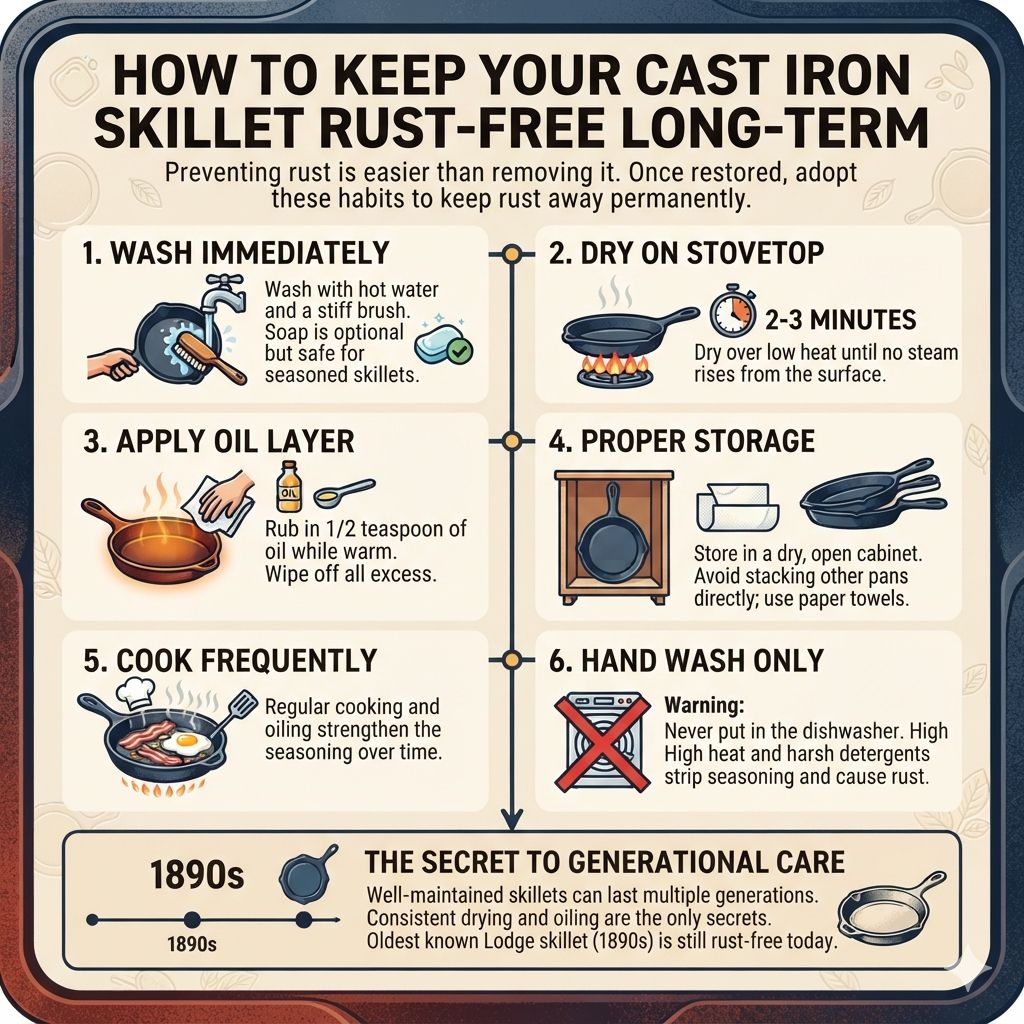
Preventing rust is easier than removing it. Once you have restored your skillet, adopt these habits to keep rust from a cast iron skillet away permanently.
The rule is simple: never let water sit on the surface. Every time you wash the skillet, dry it completely and apply a thin maintenance oil layer before storing.
- Wash with hot water and a stiff brush immediately after use. Soap is optional but safe for seasoned skillets.
- Dry on the stovetop over low heat for 2–3 minutes until no steam rises from the surface.
- Rub in 1/2 teaspoon of oil while the skillet is still warm. Wipe off all excess with a paper towel.
- Store in a dry, open cabinet. Never stack other pans directly on top — place a paper towel between them if stacking is unavoidable.
- Use the skillet frequently. Regular cooking and oiling strengthen the seasoning over time.
Warning: Never put a cast iron skillet in the dishwasher. The high heat, harsh detergents, and prolonged moisture strip the seasoning and cause immediate rusting. Hand wash only.
Cast iron skillets that are well-maintained can last multiple generations. The oldest known Lodge cast iron skillet in continuous use dates to the 1890s and is still rust-free today. Consistent drying and oiling are the only secrets.
Frequently Asked Questions
Can you remove rust from a cast iron skillet without steel wool?
Yes. Coarse salt rubbed with a paper towel is an effective alternative for light rust. For heavier rust, a paste of baking soda and water applied with a scrub brush works well.
You can also use a chainmail scrubber, which is gentler than steel wool but still abrasive enough to lift rust.
Is it safe to cook in a cast iron skillet after removing rust?
Yes, as long as you re-season the skillet properly after rust removal. The seasoning layer seals the metal and prevents rust particles from transferring to food. If the skillet has deep pitting from severe rust, it is still safe to use but may require extra oil to prevent sticking.
How long does it take to remove rust from a cast iron skillet?
Most rust removal takes 30 to 60 minutes total. Light surface rust can be scrubbed away in 10 minutes. Moderate rust with a vinegar soak takes about 45 minutes.
Heavy rust with multiple soaks and scrubbing cycles may take up to 90 minutes. Oven seasoning adds another hour.
What should you do if rust keeps coming back on your cast iron skillet?
Recurring rust usually means the seasoning layer is too thin or damaged. Strip the skillet completely using a vinegar soak or oven self-cleaning cycle, then apply 3 to 4 layers of seasoning. Also check your storage area — high humidity accelerates rust.
Store the skillet in a dry place with a silica gel pack if needed.
Can you use a power tool like a drill brush to remove rust from a cast iron skillet?
Yes, but only with nylon or brass brush attachments — never use steel wire brushes, which gouge the iron. A drill brush reduces scrubbing time significantly for large flat surfaces. Move the brush in slow, overlapping passes and avoid staying in one spot too long to prevent heat buildup that could warp the skillet.
Final Thoughts
Learning how to remove rust from a cast iron skillet is a simple skill that saves money and extends the life of your cookware. With steel wool, vinegar, and a little patience, even heavily rusted skillets can be restored to perfect condition. The key is finishing with a proper seasoning layer and maintaining it with regular drying and oiling.
Once you get into the habit, your cast iron will stay rust-free for decades of daily use.
Related pick: Check today's price on Amazon
Products related to this article
Sponsored / affiliate links. As an Amazon Associate I earn from qualifying purchases. I may earn additional commission from eligible campaigns.