How to Clean a Cast Iron Skillet Outside Without Ruining the Interior
You pull out your favorite skillet and the cooking surface is perfect. Then you flip it over and see it: a crusty, sticky, black mess on the bottom and sides. It happens to every cast iron owner eventually. The exterior takes the brunt of oven heat, gas flames, and drips, so it builds up grime faster than the inside ever does.
The problem is that most cleaning advice focuses on the cooking surface. You get vague tips like “scrub it well” without anyone explaining how to strip a carbon-crusted exterior without wrecking the perfectly seasoned interior you spent months building. This article walks through a triage system: match the cleaning method to the severity of the buildup, protect the interior seasoning at every step, and get your skillet looking respectable again.

Purgreat
Cast Iron Scrubber Dish Scrub Brush 316…
- 【PROFESSIONAL COMBO FOR TOUGH CLEANING】: Cast iron scrubber is made of 316 stainless steel + silicone. Silicone has extreme stabil…
- 【DURABLE AND RELIABLE】: Cast iron chainmail scrubber is designed with ergonomic handle. Contact area between the long handle and y…
- 【THICKER & WIDER SILICONE】: Upgraded silicone base is thicker and wider, providing a larger contact area to improve cleaning effic…
As an Amazon Associate I earn from qualifying purchases.
If you need a reliable tool for the light to moderate grime, the Purgreat chainmail scrubber handles the job well. Its 316 stainless steel rings and wider silicone base make quick work of cooked-on residue without scratching the seasoning, and it rinses clean under the tap.
Why the Outside Gets So Dirty (And Why It Matters)
The exterior of a cast iron skillet gets dirty for a different reason than the interior. On the inside, food residue and oil polymerize into layers of seasoning. On the outside, you get the same polymerization plus direct exposure to flame and oven heat, which bakes oils into a hard, sticky carbon buildup.
Polymerization is the key process to understand. When oil is heated past its smoke point, it breaks down and forms a plastic-like film. That film is what we call seasoning. But when oil drips down the side of the pan and gets repeatedly heated past its smoke point, it forms a less uniform, thicker layer of carbon. That black, gummy crust is not seasoning; it is burnt oil and grease that has polymerized unevenly.
This distinction matters because it dictates your cleaning method. Simple grease wipes off with soap and water. Polymerized oil requires a solvent or abrasive action. Thick carbon buildup often needs a chemical stripper like lye.
Ignoring the exterior is not just cosmetic. A thick carbon layer acts as an insulator, making your pan heat less efficiently. It also flakes off into the oven or onto your stovetop, and it can trap moisture against the iron, which leads to rust.
Safety First: What You Need and What to Avoid
Before you start scrubbing, get your safety gear together. You will likely use chemicals that are harsh on skin and lungs.
- Nitrile gloves (not latex, which degrades quickly)
- Safety glasses or goggles
- A well-ventilated area or open windows
- Old rags or paper towels you can throw away
- A plastic trash bag for disposal of chemical-soaked materials
Do not use lye-based oven cleaner in a small, closed kitchen. The fumes are strong enough to irritate your eyes and throat within minutes. Work outside if you can, or open every window and run a fan.
Also avoid mixing chemicals. Never combine oven cleaner with vinegar or any acid. Lye and acid react violently, producing heat and toxic fumes. If you use one method, rinse thoroughly and dry before trying another.
One more warning: never put a hot skillet in cold water. Thermal shock can crack or warp cast iron. Always let the pan cool completely before cleaning.
Method 1: The Quick Clean (For Light Grime)
This is for the typical weeknight situation. You cooked dinner, the outside has some grease spots and a light brown film, but nothing is caked on.
Using Hot Water and a Stiff Brush
- Let the skillet cool until it is warm to the touch, not hot.
- Run hot tap water over the exterior. Warmth helps loosen grease.
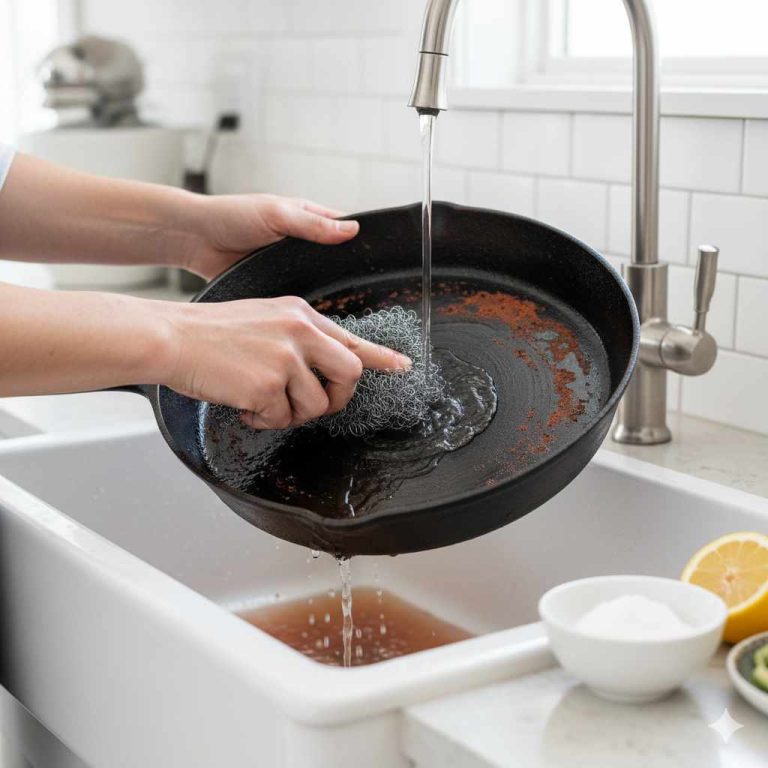
- Use a stiff nylon brush or the chainmail scrubber to scrub the outside in circular motions. Focus on the sides and bottom where grease accumulates.
- Rinse thoroughly and dry with a towel.
- Place the skillet on a burner over low heat for 2-3 minutes to evaporate any remaining moisture.
Do not use soap for this light clean unless the grease is excessive. A little dish soap is fine; it will not strip seasoning, but it is unnecessary for light grime. The chainmail does the mechanical work.
The Baking Soda Paste Trick
For grime that is slightly tacky or has a thin layer of browned oil, make a paste. Mix three parts baking soda with one part water to form a thick slurry.
- Apply the paste to the cool exterior with a rag.
- Let it sit for 10-15 minutes. The mild alkalinity helps break down the oil film.
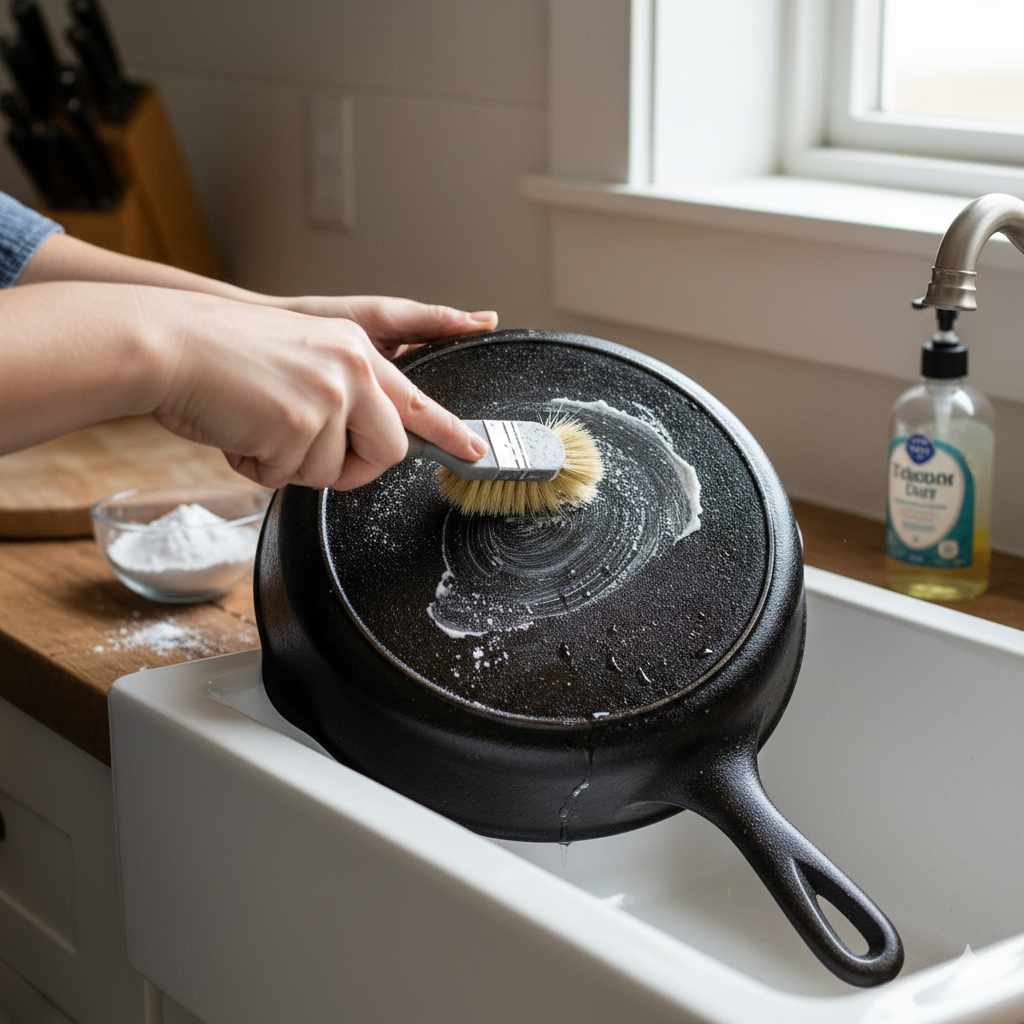
- Scrub with a stiff brush or chainmail. The abrasive baking soda lifts the residue without scratching the iron.
- Rinse and dry completely.
This method works well for the sides of the pan where grease splatters but never bakes into a hard crust.
Method 2: The Deep Clean (For Stubborn Carbon Buildup)
When the exterior has a thick, black, crusty layer that flakes or feels rough to the touch, you are dealing with heavy carbon buildup. Quick scrubbing will not fix this. You need to strip the layer down to bare iron or at least thin it significantly.
The Oven Self-Clean Cycle (Pros and Cons)
The self-cleaning oven cycle heats your oven to around 800-900°F. At that temperature, all organic material burns off, turning the carbon into ash.
Pros: It is hands-off and requires no chemicals. You place the skillet upside down on the oven rack, run the cycle, and let it cool. The ash wipes off easily.
Cons: The heat also burns off the seasoning on the interior. You will need to re-season the entire pan afterward. Also, the cycle produces strong smoke and an odor that can set off smoke detectors. Open windows and run a vent fan.
This method is best for a skillet that is already in rough shape, not for a pan with good interior seasoning you want to preserve. If you care about the interior, skip this method and use lye instead.
The Lye-Based Oven Cleaner Soak
Lye (sodium hydroxide) dissolves polymerized oil without damaging the iron. This is the safest way to strip carbon off the exterior while leaving the interior seasoning intact, provided you protect it.
- Put on gloves and goggles. Work in a ventilated area.
- Spray a generous layer of lye-based oven cleaner over the entire exterior of the cool, dry skillet.
- Place the skillet in a large plastic trash bag. Seal the bag to keep the cleaner from drying out and to contain fumes.
- Let it sit for 24-48 hours. Check after 24 hours. The carbon should soften and turn into a brownish sludge.
- Remove the skillet from the bag and scrub with steel wool or a stiff brush. Rinse thoroughly with water.
- Repeat if any carbon remains.
Lye does not attack the iron, so it is safe to leave it on for multiple days. However, it will also strip the interior seasoning if it touches it. To protect the interior, fill the skillet with a layer of plastic wrap pressed firmly against the cooking surface before spraying the outside. This barrier method keeps the lye off the seasoned interior.
Dispose of the used bag and gloves in the trash. Do not pour leftover oven cleaner down the drain; it can damage pipes. Check your local waste disposal rules for chemical waste.
Method 3: The Full Restoration (For Rust and Neglect)
If the exterior has rust spots, pitting, or a rough, flaky surface, you need to remove the rust and rebuild the seasoning from scratch.
Removing Rust with Vinegar and Steel Wool
Vinegar dissolves rust through a mild acid reaction. It is effective but needs time to work.
- Mix a 1:1 solution of white vinegar and water in a plastic tub or bucket.
- Submerge the skillet exterior in the solution. You can place the skillet upside down so the vinegar touches the outside only, keeping the interior mostly dry.
- Soak for 30-60 minutes. Check every 15 minutes. Longer soaks can damage the iron by etching it.
- Remove and scrub with steel wool (grade 0 or 00). The rust should come off as a reddish-brown residue.
- Rinse with water and dry immediately with a towel.
- Apply a thin layer of oil to the bare iron to prevent flash rusting.
A rough, pitted exterior takes more effort. Use a coarser steel wool (grade 1 or 2) for the initial pass, then switch to a finer grade to smooth the surface. You may need to repeat the vinegar soak for deeply pitted areas.
Re-Seasoning the Exterior Only
After stripping rust, you need to rebuild the protective seasoning layer.
- Preheat your oven to 350°F.
- Wipe a very thin layer of oil (flaxseed oil or a neutral oil like canola) over the entire exterior. Use a paper towel to rub it in, then wipe off as much as you can. The surface should look dry, not glossy.
- Place the skillet upside down on the oven rack. Put a baking sheet on the rack below to catch any drips.
- Bake for 1 hour.
- Turn off the oven and let the skillet cool inside.
- Repeat the oil and bake cycle 2-3 times for a durable exterior layer.
Flaxseed oil polymerizes into a hard, glossy finish, but it can flake if applied too thickly. A neutral oil like grapeseed or canola is more forgiving.
How to Protect the Interior Seasoning While Cleaning the Outside
The barrier method is the most reliable way to preserve the interior while working on the exterior. Here is the step-by-step process for any chemical or soak method:
- Wipe the interior clean and dry it thoroughly.
- Press a sheet of plastic wrap firmly into the cooking surface, covering the entire interior and the top rim.
- Use a rubber band to hold the plastic wrap in place around the rim.
- Apply your cleaning method to the exterior only.
- When finished, remove the plastic wrap and rinse the interior with hot water. Dry and apply a light oil coat.
For mechanical scrubbing (like with a chainmail brush), the interior is not at risk because you are not using chemicals. Just be careful not to scrub the interior with steel wool or abrasive pads meant for rust removal; those will scratch the seasoning.
Preventing Future Buildup: A 2-Minute Habit
The best way to avoid a deep clean is to stop the buildup before it starts. After every use, once the skillet is cool enough to handle, wipe the exterior with a dry paper towel. This removes the thin layer of oil and grease that would otherwise polymerize on the next cook.
If you notice a sticky film forming on the outside, address it immediately. A quick scrub with hot water and a stiff brush takes two minutes. Waiting until the film hardens into carbon turns a two-minute job into a two-hour project.
Also, check your cooking habits. Dripping oil down the sides of the pan is the main culprit. Use a lid to reduce splatter, and wipe the sides of the skillet with a paper towel after adding oil to the pan.
FAQ: Quick Answers to Common Exterior Cleaning Questions
Can I use soap on the outside of my cast iron skillet?
Yes. Modern dish soap is mild and will not strip seasoning. Use it for routine cleaning of the exterior. It helps cut through grease that plain water leaves behind. Rinse thoroughly and dry completely.
Is it safe to put my cast iron skillet in the dishwasher to clean the outside?
No. Dishwasher detergent is highly alkaline and will strip all seasoning. The high heat and prolonged moisture will also cause rust. Always hand wash.
My skillet has a rough, pitted exterior. Is it ruined?
Probably not. Pitting is usually cosmetic. A vinegar soak and steel wool scrub will remove the rust and smooth the surface. If the pitting is deep enough to create cracks, then it is unsafe to use, but shallow pitting is fine.
How long does a lye soak take to remove thick carbon buildup?
Typically 24-48 hours. Thick crusts may need a second application. Check every 12 hours and scrub loose carbon off with steel wool. The lye does not dissolve the carbon instantly; it softens the polymerized oil so you can scrub it away.
What is the difference between cleaning the outside and re-seasoning it?
Cleaning removes dirt, grease, and carbon. Re-seasoning adds a new layer of polymerized oil. After any deep clean that strips the exterior down to bare iron, you must re-season it to protect against rust. A quick clean does not require re-seasoning.
What to Remember When Your Skillet Looks Rough
- Match the method to the mess: light grime needs a brush, carbon needs lye, rust needs vinegar.
- Protect the interior seasoning with plastic wrap before using any chemical stripper.
- Never use the oven self-clean cycle on a skillet with good interior seasoning; it will strip everything.
- Dry the exterior thoroughly after every wash. Moisture is the enemy.
- Wipe the exterior with a paper towel after each use to prevent buildup.
- Re-season any bare iron immediately with a thin oil coat and a 350°F oven bake.
- Invest in a good chainmail scrubber; it handles 90% of daily grime without chemicals.
Cleaning the outside of a cast iron skillet is not hard once you understand what you are dealing with. Polymerized oil, carbon, and rust each require a different approach. Triage the problem, protect the interior, and your skillet will look good and cook well for decades. For more on keeping your pan in shape, check out the rust removal guide or the damage-free cleaning tips.
Products related to this article
Sponsored / affiliate links. As an Amazon Associate I earn from qualifying purchases. I may earn additional commission from eligible campaigns.