You just cooked a perfect steak, and now the pan looks like a crime scene. Burnt bits are welded to the surface, oil has polymerized into a sticky film, and you’re wondering if soaking it overnight will fix things or make them worse. It depends entirely on what your skillet is made of. Use the wrong method, and you’ll strip the seasoning off a cast iron pan or scratch the coating off a non-stick one.
This guide walks you through the decision tree: identify your pan, then match the cleaning method to the material. You’ll learn the exact timing for when to clean a hot pan versus a cool one, how to fix rust on a neglected cast iron skillet, and how to remove burnt-on residue from the outside of the pan. No guesswork, no ruined cookware.

Purgreat
Cast Iron Scrubber Dish Scrub Brush 316…
- 【PROFESSIONAL COMBO FOR TOUGH CLEANING】: Cast iron scrubber is made of 316 stainless steel + silicone. Silicone has extreme stabil…
- 【DURABLE AND RELIABLE】: Cast iron chainmail scrubber is designed with ergonomic handle. Contact area between the long handle and y…
- 【THICKER & WIDER SILICONE】: Upgraded silicone base is thicker and wider, providing a larger contact area to improve cleaning effic…
As an Amazon Associate I earn from qualifying purchases.
One tool that makes the whole process easier is the Purgreat chainmail scrubber. It’s a hand-woven 316 stainless steel mesh with a silicone base and an ergonomic handle. It tackles stuck-on food on cast iron without stripping seasoning, and it rinses clean under the tap. Worth having in the drawer before you need it.
Identify Your Skillet Material First
You can’t pick a cleaning method if you don’t know what you’re dealing with. Most skillets fall into one of three categories: cast iron, stainless steel, or non-stick. Each one reacts differently to heat, water, and abrasives.
The Visual and Scratch Test
Look at the cooking surface first. Cast iron is dark, rough, and often has a slightly bumpy texture from the seasoning. Stainless steel is shiny, silver, and smooth, usually with visible grain lines. Non-stick pans have a dark, slick coating that feels slippery to the touch.
Still unsure? Try the scratch test. Use a butter knife on a small, hidden spot on the bottom of the pan. If it leaves a silver mark, that’s stainless steel. If it doesn’t scratch at all, it’s non-stick. If it scrapes off a dark, powdery residue, that’s cast iron seasoning coming off.
One more clue: weight. Cast iron is heavy, often 5 to 8 pounds for a 12-inch pan. Stainless steel is lighter but still substantial. Non-stick pans feel noticeably light because the core is usually aluminum.
The Golden Rule: Hot Pan, Cold Water—Never Mix
Thermal shock is the fastest way to ruin any skillet. A screaming-hot cast iron pan dropped into cold water can warp or crack. The same goes for stainless steel, which can permanently distort. Non-stick pans are even worse—sudden temperature changes can make the coating bubble or peel.
Here’s the timing guide you actually need:
- Right after cooking: Leave the pan on the stove. Pour a splash of hot water into it while it’s still warm. The steam helps loosen food residue. Never use cold water.
- 5 to 10 minutes after cooking: This is the sweet spot. The pan is cool enough to handle but warm enough that stuck-on food hasn’t hardened into cement. Clean it now.
- After it’s fully cool: You can still clean it, but expect to work harder. Burnt-on residue will need soaking or a scrubber.
The key is to avoid extreme temperature swings. Warm pan, warm water. Cool pan, cool water. That simple rule prevents most skillet damage.
How to Clean a Cast Iron Skillet
Cast iron isn’t fragile, but it does have a protective layer of seasoning—polymerized oil—that you need to preserve. Harsh detergents and steel wool will strip it. The goal is to remove food without removing that layer.
The Chainmail Scrub Method
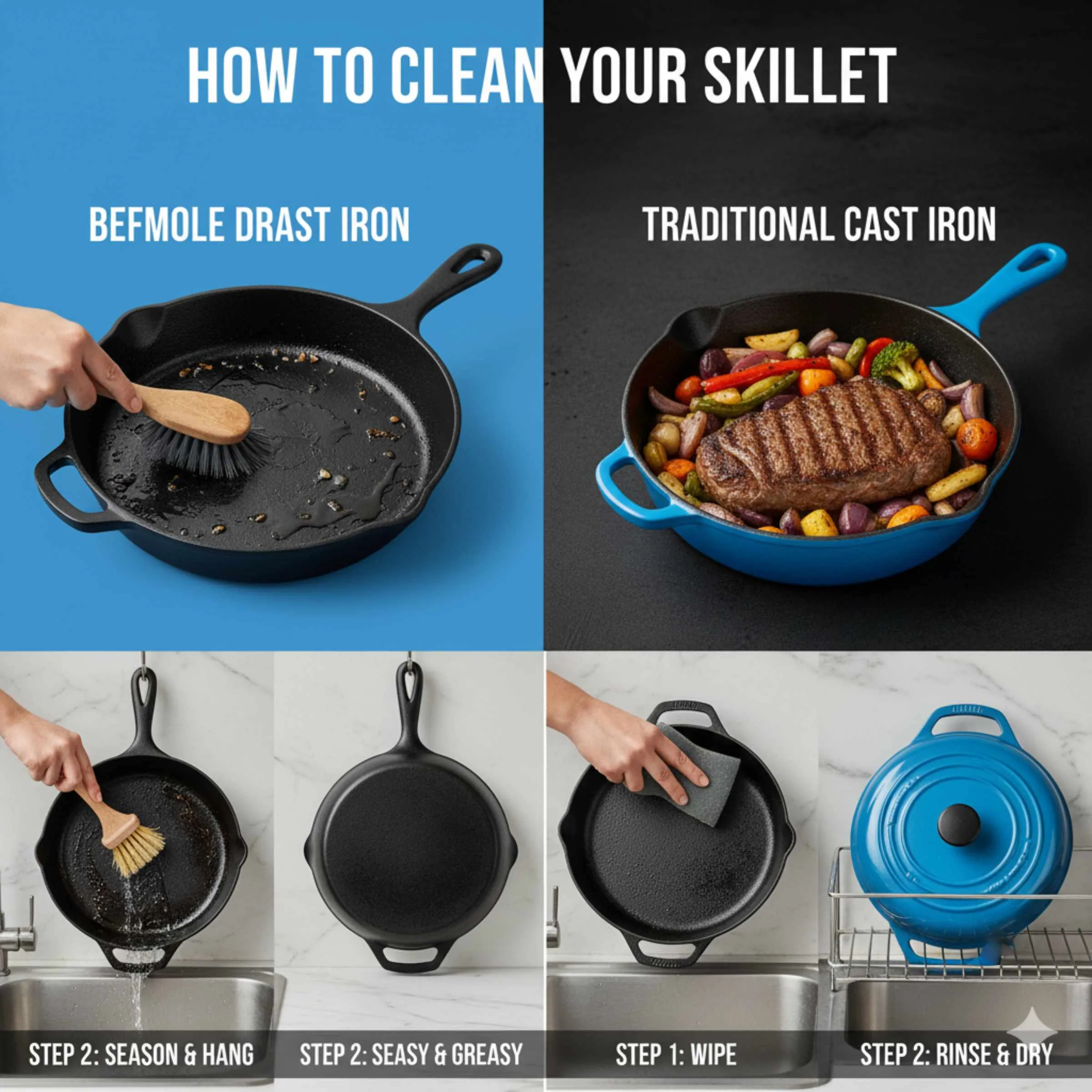
For most meals, a chainmail scrubber is all you need. Run the pan under warm water, then scrub in circular motions. The stainless steel rings catch and lift food particles without digging into the seasoning. It’s fast, effective, and doesn’t require soap.
If you’re dealing with a particularly stubborn spot, apply a little pressure and keep the water running. The chainmail will gradually wear down the residue. Rinse, then dry the pan immediately.
The Salt and Oil Paste for Stubborn Bits
For burnt-on food that won’t budge, skip the water entirely. Pour a couple tablespoons of coarse salt into the pan, add a splash of oil, and use a paper towel or cloth to rub the mixture around. The salt acts as a gentle abrasive, while the oil lubricates and protects the seasoning.
This method works especially well for carbonized residue on the cooking surface. It takes a few minutes of elbow grease, but it won’t harm the pan. Once the bits are gone, wipe out the salt and oil with a paper towel.
Emergency Rust Removal (Vinegar Bath)
If your cast iron skillet has been sitting in the sink or outside for a while, you might see orange rust spots. That’s fixable. Mix a 1:1 solution of white vinegar and water, and submerge the pan for 30 minutes. Check it every 10 minutes—vinegar eats rust, but it also eats seasoning.
After the soak, scrub the rust off with steel wool or a chainmail scrubber. You’ll likely strip the seasoning in the process, which is fine. Wash the pan with soap and water, dry it thoroughly, then immediately re-season it (more on that below). For a deeper dive on this process, check out this rust removal guide.
How to Clean a Stainless Steel Skillet
Stainless steel is more forgiving than cast iron. You can use soap, abrasive scrubbers, and even dishwasher detergent (though hand washing is better). The challenges are burnt-on food and rainbow-colored discoloration from high heat.
Deglazing with Water or Vinegar
When food sticks to stainless steel, the quickest fix is deglazing. While the pan is still warm, add a cup of water or a 50/50 mix of water and white vinegar. Let it simmer for a minute, then use a wooden spoon to scrape the bottom. The stuck-on bits will release instantly.
This works because the liquid dissolves the bond between the food and the metal. It’s the same technique you use to make a pan sauce, just without the wine and shallots.
Using Barkeeper’s Friend for Discoloration
White spots or rainbow tints on stainless steel come from overheating or mineral deposits. A gentle cleanser like Barkeeper’s Friend—which contains oxalic acid—removes both. Sprinkle it on the cool pan, add a little water to make a paste, and scrub with a soft sponge.
Rinse thoroughly and dry with a towel. This won’t scratch the surface, and it restores the original shine. Just don’t use it on non-stick or cast iron; it’s too harsh for those.
How to Clean a Non-Stick Skillet
Non-stick pans are the easiest to clean but the easiest to ruin. The coating is delicate, and once it’s scratched or flaked, the pan is done. Treat it gently.
Avoiding Abrasives and Thermal Shock
Never use steel wool, chainmail, or harsh scrubbers on a non-stick surface. They’ll scratch the coating, which can then leach into your food. Stick to a soft sponge or cloth with warm, soapy water.
Also, let the pan cool before cleaning. Plunging a hot non-stick pan into cold water can warp the base and cause the coating to peel. Wait 10 minutes, then wash it by hand. Most non-stick pans are dishwasher-safe, but hand washing extends their life significantly.
For stubborn residue, fill the pan with warm water and a drop of dish soap, and let it sit for 15 minutes. The food will soften and wipe away without any scrubbing.
Drying and Seasoning: The Final Step
How you dry a skillet matters more than most people think. Leaving a cast iron pan wet overnight is an open invitation for rust. Even stainless steel can develop water spots.
Stovetop Drying vs. Towel Drying
For cast iron, towel drying alone isn’t enough. The pan absorbs moisture into its pores. After wiping it dry, place it on a warm stove burner for 2 to 3 minutes to evaporate any remaining water. You’ll see the metal change color as it dries.
For stainless steel and non-stick, a regular kitchen towel works fine. Just dry them immediately after washing to prevent water spots.
Applying the Right Oil for Seasoning
Cast iron needs a thin layer of oil after every wash. Use a high-smoke-point oil like grapeseed, canola, or flaxseed oil. Flaxseed oil creates the hardest, most durable seasoning, but it can flake if applied too thick. Rub a tiny amount onto the warm pan, then wipe it out with a paper towel as if you were trying to remove all the oil. The invisible film that remains is what you want.
If the pan’s seasoning is damaged or uneven, you may need to strip it and start over. This damage-free cleaning guide covers that process in detail.
The Soap Debate: When It’s Safe and When It’s Not
You’ve probably heard that soap ruins cast iron. That was true 50 years ago, when soap contained lye. Modern dish soaps don’t. They’re mild enough that they won’t strip a well-seasoned pan.
So when should you use soap? On stainless steel and non-stick, always. Dish soap cuts grease and removes food residue effectively. On cast iron, use it sparingly. A drop of soap on a sponge is fine if the pan is greasy, but avoid soaking the pan in soapy water or running it through the dishwasher.
The scientific reason: soap breaks down oil, and seasoning is oil. But the polymerized layer that forms during seasoning is chemically different from liquid oil—it’s bonded to the metal. Mild soap won’t dissolve that bond. Harsh detergents or long soaks might. That’s the line.
Frequently Asked Questions (FAQs)
Can I put a cast iron skillet in the dishwasher?
No. The dishwasher’s detergent, heat, and water pressure will strip the seasoning and cause rust. Always hand wash cast iron. The same goes for non-stick pans—the coating degrades faster in a dishwasher.
How do I remove burnt-on oil from the outside of a cast iron skillet?
That sticky, gummy residue is polymerized oil that baked onto the exterior. The easiest fix is to scrub it with a chainmail scrubber and hot water. For heavy buildup, use an oven cleaner or a lye-based product, but that will strip the seasoning everywhere. If the outside is badly caked, you may need to strip the whole pan and re-season it. This outside cleaning guide walks through the options.
What oil is best for seasoning a cast iron skillet?
Flaxseed oil produces the hardest, most durable seasoning, but it’s expensive and can flake if applied too thick. Grapeseed and canola oil are reliable, affordable alternatives. Avoid olive oil and butter—they have low smoke points and leave a sticky residue.
How often should I season my cast iron skillet?
After every wash, apply a thin layer of oil and heat the pan until it smokes. That’s a maintenance season. A full oven-seasoning session is only necessary if the pan looks dull, sticky, or has rust spots.
Is it safe to use steel wool on stainless steel?
Yes, but it will leave fine scratches. If you don’t care about cosmetic marks, steel wool is fine for removing burnt-on food. If you want to keep the pan looking new, use a nylon scrubber or Barkeeper’s Friend instead.
A Quick Roundup Before You Go
- Identify your skillet material before cleaning. Cast iron, stainless steel, and non-stick all need different treatment.
- Never shock a hot pan with cold water. Let it cool slightly, then use warm water.
- Clean cast iron with a chainmail scrubber or a salt-and-oil paste. Avoid harsh detergents.
- Deglaze stainless steel with water or vinegar to release stuck-on food instantly.
- Treat non-stick pans gently: soft sponge, warm soapy water, no abrasives.
- Dry cast iron on the stove and apply a thin layer of oil after every wash.
- Use soap on stainless steel and non-stick freely, but sparingly on cast iron.