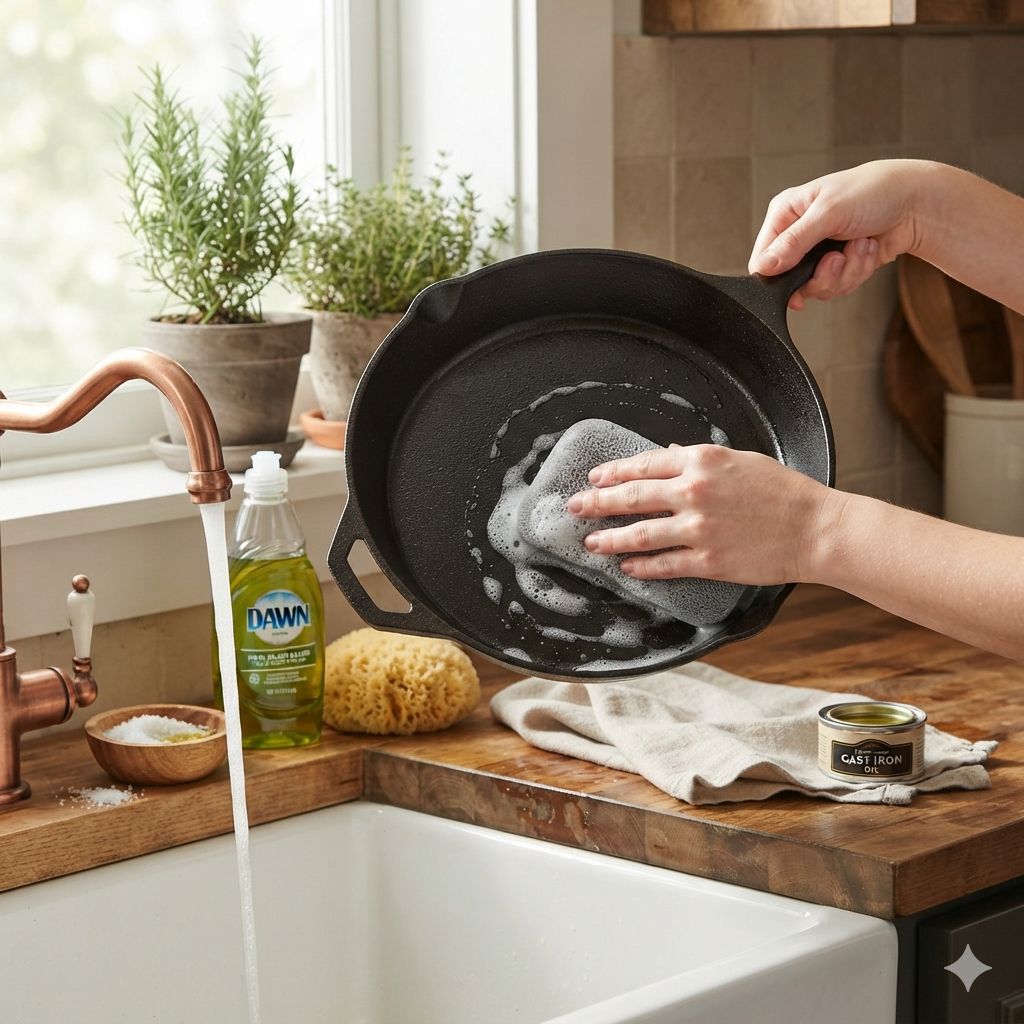
How to Clean a Cast Iron Skillet Without Damage
Cleaning a cast iron skillet without damage is essential for preserving its seasoning and preventing rust. This guide provides practical steps and expert tips to maintain your skillet’s non-stick surface and longevity.
Simply put, avoid harsh detergents and abrasive scrubbers. Use hot water, a soft brush, and dry thoroughly. Apply a light coat of oil after each wash to protect the seasoning and prevent rust.
Key Takeaways
- Cleaning a cast iron skillet correctly preserves its seasoning and non-stick properties.
- Always dry the skillet completely to avoid rust damage.
- Use minimal soap and avoid soaking to protect the seasoning.
- Season with oil after every cleaning for long-term care.
- Stubborn residue can be removed with coarse salt and oil.
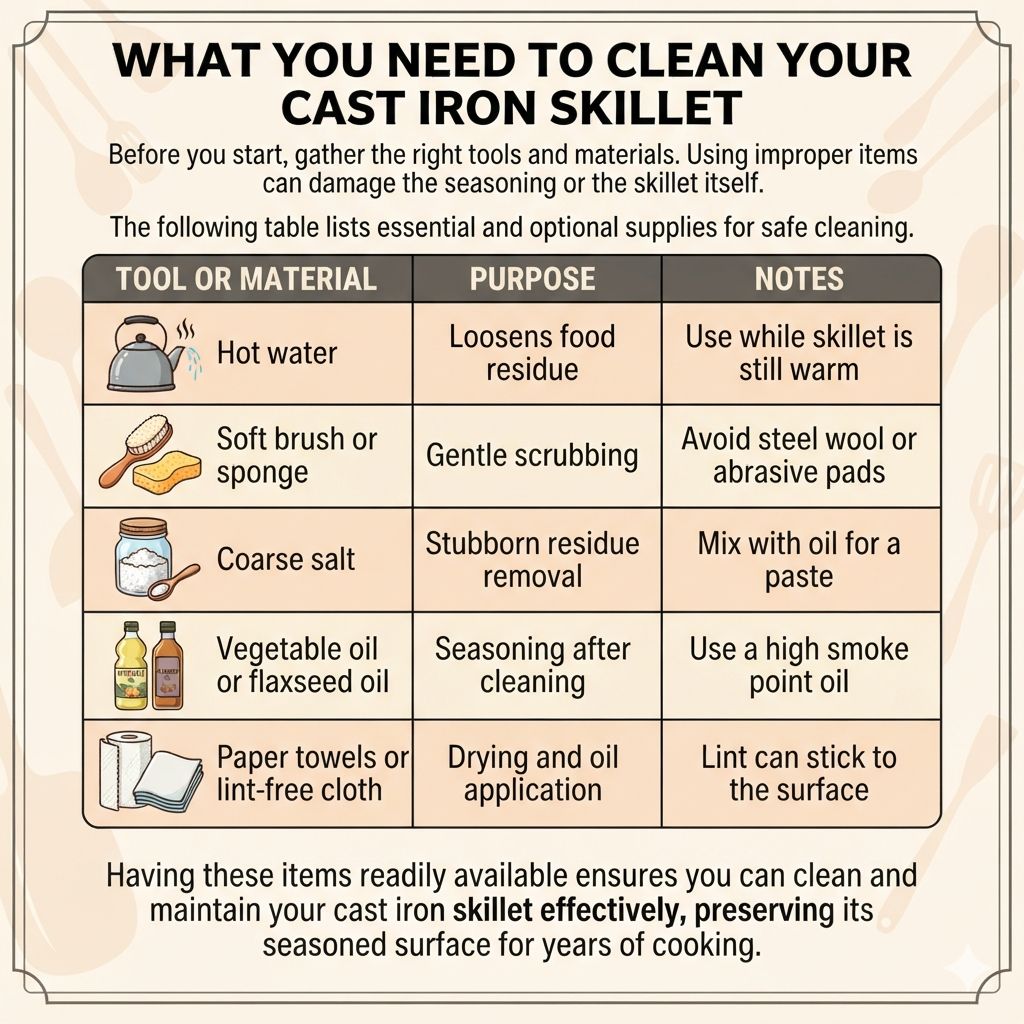
What You Need to Clean Your Cast Iron Skillet
Before you start, gather the right tools and materials. Using improper items can damage the seasoning or the skillet itself.
The following table lists essential and optional supplies for safe cleaning.
| Tool or Material | Purpose | Notes |
|---|---|---|
| Hot water | Loosens food residue | Use while skillet is still warm |
| Soft brush or sponge | Gentle scrubbing | Avoid steel wool or abrasive pads |
| Coarse salt | Stubborn residue removal | Mix with oil for a paste |
| Vegetable oil or flaxseed oil | Seasoning after cleaning | Use a high smoke point oil |
| Paper towels or lint-free cloth | Drying and oil application | Lint can stick to the surface |
Having these items ready will make the cleaning process efficient and safe for your skillet.
Step 1: Cool the Skillet Properly
After cooking, allow the skillet to cool completely before cleaning. Placing a hot pan in cold water can warp it or cause cracking.
Here are key points to follow:
- Wait until the skillet is warm to the touch but not hot.
- Never run cold water directly into a hot skillet—thermal shock can damage the iron.
- Place the skillet on a trivet or cooling rack to cool evenly.
- Avoid rapid temperature changes; gradual cooling is best.
- If you need to clean immediately, use hot water to reduce temperature shock.
Warning: Never submerge a hot cast iron skillet in cold water. This can cause permanent warping or cracks.
Cooling properly sets the stage for safe cleaning without compromising the skillet’s structure.
Step 2: Scrape Off Food Residue
Use a plastic scraper or spatula to remove food bits from the skillet. Metal scrapers can chip the seasoning layer.
Follow this process:
- Hold the skillet over a trash can or sink.
- Gently scrape off large food remnants with a plastic scraper.
- For sticky residue, add a tablespoon of coarse salt to the skillet.
- Use a paper towel to rub the salt against the surface—this lifts gunk without chemicals.
- Dispose of the salt and residue after scraping.
Using coarse salt as a scrub is a traditional method that protects the seasoning while removing stuck-on food.
Step 3: Wash with Minimal Soap
Contrary to old beliefs, using a small amount of mild dish soap is safe for seasoned cast iron. Soap won’t harm the seasoning if used sparingly.
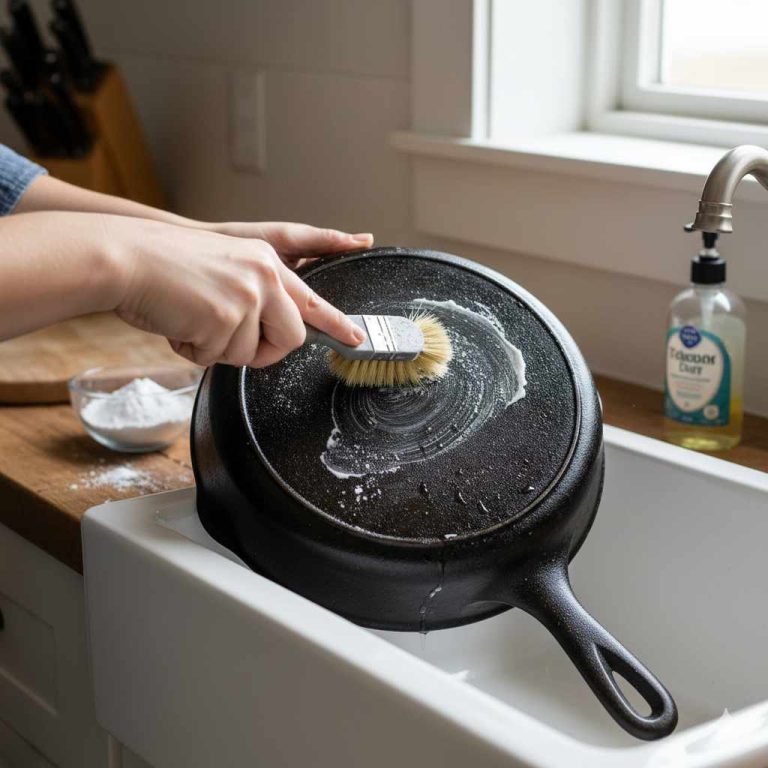
- Apply a few drops of mild dish soap to a soft sponge.
- Scrub gently with hot water; avoid heavy pressure.
- Rinse immediately—do not let soap sit on the surface.
- For greasy pans, soap helps cut residue without stripping seasoning.
- Avoid dishwasher use—the harsh detergents and heat cycle can remove seasoning.
- If the skillet smells soapy, rinse with hot water for 10 seconds.
Tip: For routine cleaning, skip soap entirely. Hot water and a brush are often enough for daily maintenance.
The key is minimal soap and quick rinsing to preserve the seasoning’s integrity.
Step 4: Dry Immediately and Thoroughly
Rust develops quickly on cast iron if moisture remains. Drying is one of the most critical steps in cleaning without damage.
| Method | Effectiveness | Time Required |
|---|---|---|
| Paper towel drying | Moderate (leaves lint) | 1 minute |
| Stovetop heating | High (evaporates all moisture) | 2 minutes |
| Lint-free cloth drying | High (no lint) | 30 seconds |
Placing the skillet on a low flame for 1-2 minutes after towel drying ensures all moisture evaporates. This step is non-negotiable for preventing rust.
Step 5: Apply a Thin Layer of Oil
After drying, protect the skillet by applying a small amount of oil. This seals the surface and reinforces the seasoning.
- Use a high-smoke-point oil like grapeseed, canola, or flaxseed oil.
- Pour a few drops onto the skillet.
- Rub the oil evenly over the entire surface with a paper towel.
- Wipe off any excess—only a thin, invisible film should remain.
- For extra protection, heat the oiled skillet on low for 2 minutes, then let it cool.
Important: Too much oil will become sticky and attract dust. A light coat is all you need for proper protection.
Regular oiling after cleaning keeps the skillet in prime condition for years.
Common Mistakes When Cleaning Cast Iron
Many well-intentioned cleaning methods can damage your skillet. Knowing what to avoid saves you from ruining the seasoning.
Using Abrasive Cleaners
Steel wool and harsh scrubbing pads scratch the seasoning layer. Stick to soft brushes or plastic scrapers.
Soaking in Water
Submerging cast iron in water encourages rust. If food is stuck, use salt or a paste instead.
Applying Heavy Soap
Excessive soap or degreasing agents strip seasoning. Keep soap use minimal and rinse thoroughly.
Storing Without Drying
Even trace moisture can cause rust spots overnight. Always dry the skillet completely.
Using the Dishwasher
Dishwashers combine heat, detergent, and moisture—all detrimental to cast iron. Hand wash only.
Warning: According to the American Cleaning Institute, abrasive cleaning tools can destroy non-stick surfaces, including cast iron seasoning. Always choose gentle methods.
Avoiding these mistakes will dramatically extend the life of your skillet.
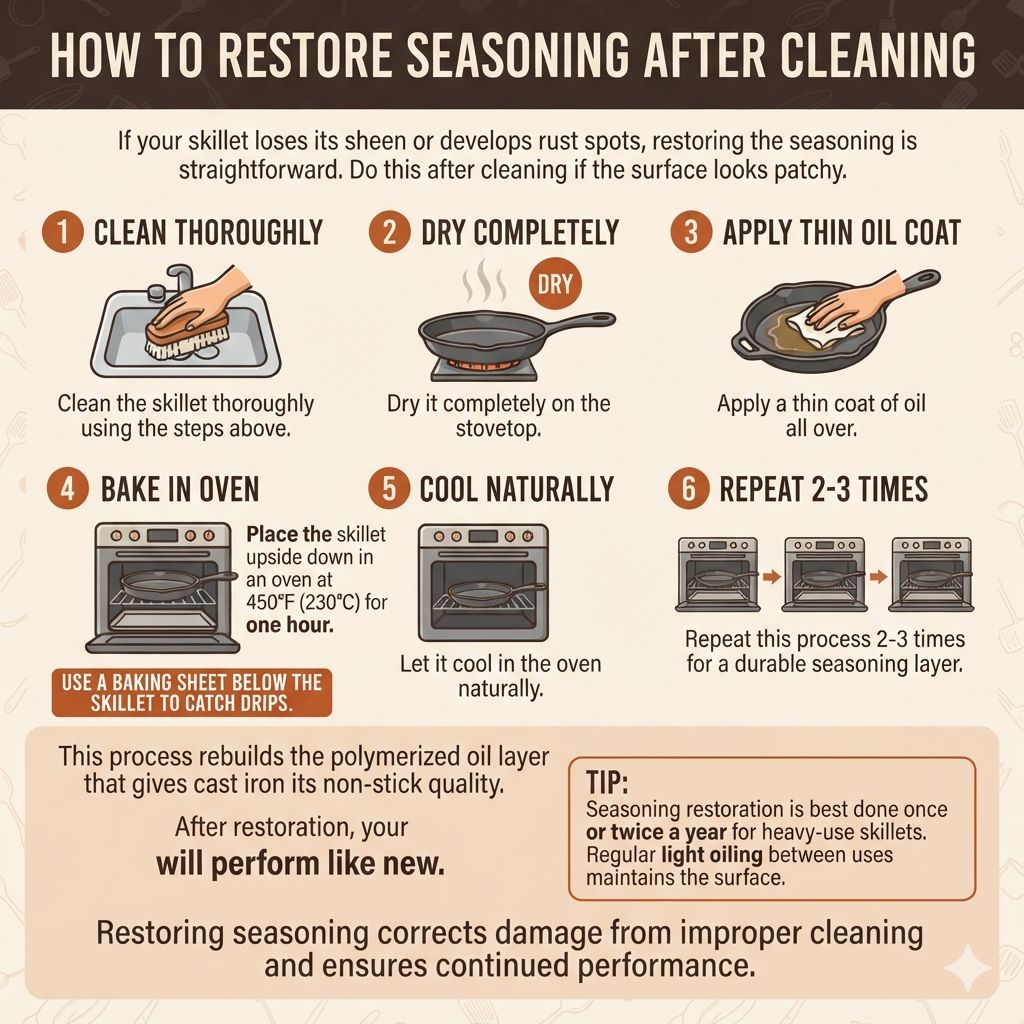
How to Restore Seasoning After Cleaning
If your skillet loses its sheen or develops rust spots, restoring the seasoning is straightforward. Do this after cleaning if the surface looks patchy.
- Clean the skillet thoroughly using the steps above.
- Dry it completely on the stovetop.
- Apply a thin coat of oil all over.
- Place the skillet upside down in an oven at 450°F (230°C) for one hour.
- Let it cool in the oven naturally.
- Repeat this process 2-3 times for a durable seasoning layer.
- Use a baking sheet below the skillet to catch drips.
- This process rebuilds the polymerized oil layer that gives cast iron its non-stick quality.
- After restoration, your skillet will perform like new.
Tip: Seasoning restoration is best done once or twice a year for heavy-use skillets. Regular light oiling between uses maintains the surface.
Restoring seasoning corrects damage from improper cleaning and ensures continued performance.
Frequently Asked Questions
Can I use soap on a cast iron skillet?
Yes, you can use a small amount of mild dish soap on seasoned cast iron. Modern soaps are gentle and won’t strip the seasoning if rinsed quickly.
How often should I season my cast iron skillet?
Season your skillet after every cleaning with a light oil coat. Full oven seasoning is needed only when the surface looks dry or rusty.
What oil is best for cast iron seasoning?
Oils with high smoke points like grapeseed, canola, or flaxseed oil work best. They polymerize into a hard, non-stick layer.
Can I clean cast iron with vinegar?
Vinegar is too acidic and can damage the seasoning. Use it only for removing rust, and follow with immediate re-seasoning.
Why does my cast iron skillet rust after cleaning?
Rust occurs when moisture remains on the surface. Incomplete drying or storage in a damp place is the usual cause. Always heat-dry and oil the skillet.
Final Thoughts
Cleaning a cast iron skillet without damage is simple with the right techniques. Focus on gentle tools, minimal soap, thorough drying, and regular oiling. Avoid common mistakes like soaking or abrasive scrubbers.
With proper care, your skillet will last a lifetime and deliver excellent cooking results.
Products related to this article
Sponsored / affiliate links. As an Amazon Associate I earn from qualifying purchases. I may earn additional commission from eligible campaigns.