How To Take Care Of Cast Iron Skillets: Proven Best Ways
To take care of cast iron skillets, clean them after each use with a scraper and a brush while the pan is still warm. Use a small amount of soap if needed, then dry it completely on the stovetop over low heat. Finish by wiping a very thin layer of cooking oil onto the surface before storing.
For a related bathroom or plumbing question, How to Remove a Sink Drain Stopper helps readers check the next detail.
For a related lighting or fan project, How To Clean Brushed Nickel Bathroom Fixtures gives readers another setup detail to compare.
Hey everyone, Dustin Hall here. Most days, you’ll find me under the hood of a car, talking about engine oil, tire pressure, and preventative maintenance. But today, I want to talk about another piece of heavy-duty machinery that needs just a little bit of care to run forever: the cast iron skillet. It might sound funny, but I treat my cast iron just like I treat a classic car. It’s durable, reliable, and gets better with age—but only if you know the simple rules of the road. A lot of people are intimidated by cast iron, but I promise you, it’s easier than an oil change. In this guide, I’ll walk you through everything you need to know, step-by-step, so you can keep your skillet in showroom condition for a lifetime.
Why Your Cast Iron Skillet is Like a Classic Engine
Think about a trusty old engine. It’s a solid block of metal built to withstand intense heat and pressure. With regular maintenance, it can outlast almost any other part of the car. Your cast iron skillet is exactly the same. It’s a single piece of heavy metal designed for one thing: high-performance cooking. Just like an engine needs oil to run smoothly and prevent parts from grinding together, your skillet needs something called “seasoning.”
A well-maintained cast iron pan gives you incredible benefits:
- Unbeatable Heat Retention: Once it’s hot, it stays hot. This is perfect for getting that beautiful, deep brown sear on a steak, just like a well-tuned engine delivers consistent power.
- Natural Non-Stick Surface: A properly seasoned pan lets food slide right off. You don’t need any fancy, delicate chemical coatings. Its non-stick ability is built up over time with proper care.
- Built to Last Generations: There are no plastic handles to break or coatings to peel. A cast iron skillet you buy today can be passed down to your kids and grandkids. It’s a true heirloom, a piece of family history you can cook with.
But just like you wouldn’t leave a classic car out in the rain to rust, you can’t neglect your cast iron. The good news is, the maintenance is incredibly simple. You just have to know the basics.

Understanding “Seasoning”: The Engine Oil of Your Skillet
Before we get into the “how-to,” we need to talk about the single most important concept in cast iron care: seasoning. This word scares a lot of new owners, but it’s really simple. Seasoning has nothing to do with salt and pepper. In the world of cast iron, “seasoning” is just a layer of baked-on oil.
Here’s how it works: When you heat a very thin layer of cooking oil on cast iron, it undergoes a chemical process called polymerization. The oil transforms from a liquid into a hard, slick, plastic-like layer that bonds directly to the metal. This smooth, tough coating does two critical jobs:
- It Creates a Non-Stick Surface: This is what allows you to fry an egg and have it slide right out of the pan. The more you cook with fats and oils and maintain the pan, the thicker and more non-stick this layer becomes.
- It Protects Against Rust: Cast iron is, well, iron. And iron rusts when exposed to moisture. The layer of seasoning acts as a waterproof barrier, sealing the metal away from water and air, preventing rust from ever starting.
Every time you cook with your skillet or perform a maintenance wipe-down, you’re adding to this seasoning. You’re not just cleaning; you’re actively improving the pan. It’s the ultimate kitchen tool that rewards you for using it.
Your Essential Toolkit: The Cast Iron Maintenance Garage
You don’t need a lot of fancy equipment to take care of cast iron. Just like a basic car maintenance kit, a few simple tools will handle 99% of the work. Here’s what you should have by your sink:
- A Pan Scraper: A simple, flat piece of hard plastic is perfect for scraping off any stubborn bits of food without damaging the seasoning.
- A Stiff-Bristled Brush or Sponge: A nylon brush or the scrubby side of a regular dish sponge works great. Avoid using steel wool or harsh metal scourers for daily cleaning, as they can strip away your hard-earned seasoning.
- Lint-Free Cloths or Paper Towels: You’ll need these for drying the pan and wiping on oil. Lint-free is best to avoid leaving fibers behind.
- Cooking Oil: This is for maintaining the seasoning. Any common cooking oil will work, like vegetable, canola, grapeseed, or even flaxseed oil. We’ll discuss the best types later.
- Mild Dish Soap: This might be controversial, but a small amount of modern dish soap is perfectly safe for a well-seasoned pan. We’ll bust that myth in a minute.
The Daily Tune-Up: How to Clean Your Skillet After Every Use
This is the most important routine you will learn. If you do this every time you cook, your skillet will stay in perfect shape. Think of it as checking your tire pressure—a quick, simple check that prevents major problems down the road. Follow these steps every single time.
Step 1: Clean While It’s Still Warm
The best time to clean your skillet is right after you’re done cooking, while it’s still warm or hot. Don’t let it sit and cool completely with food in it. When the pan is warm, food debris is soft and easy to remove. Be careful, though—use an oven mitt or towel to handle the hot skillet.
Step 2: Scrape Out Any Food Debris
Use your plastic pan scraper to get rid of any stuck-on bits of food. For most meals, a simple scrape and a wipe with a paper towel might be all you need. If there are stubborn spots, run some hot water into the pan. The steam will help lift the food right off.
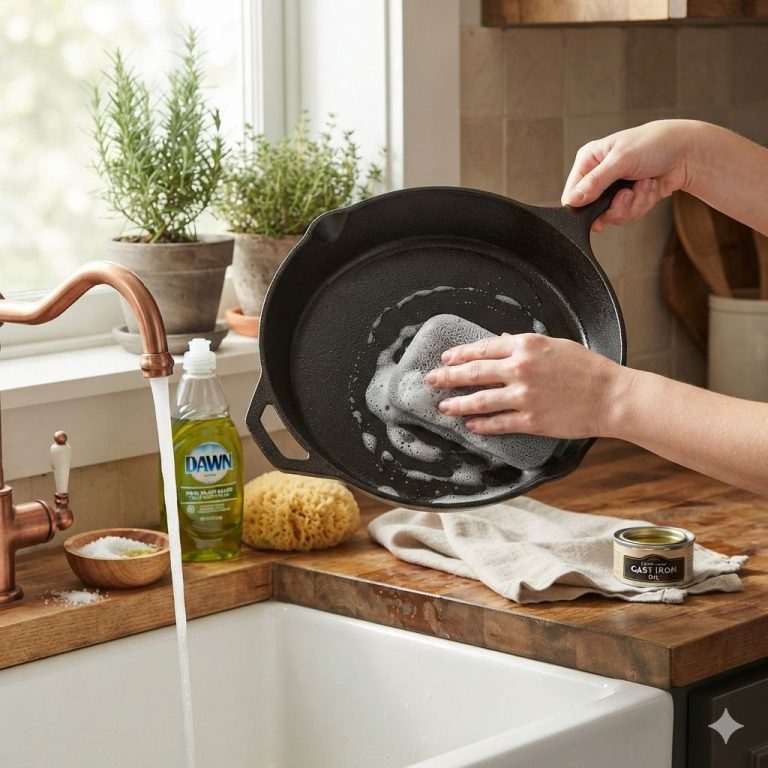
Step 3: Wash Gently (Yes, a Little Soap is Okay!)
Here it is: the great soap debate. You may have heard that you should never, ever let soap touch your cast iron. That was true a hundred years ago when soap was made with lye, which is harsh enough to eat through seasoning. Modern dish soaps are much gentler. According to leading manufacturers like Lodge, a small amount of mild dish soap is perfectly fine for a well-seasoned pan. It helps remove excess oil and food residue. Use your brush or sponge to give it a quick scrub under hot water, then rinse thoroughly.
Step 4: Dry Thoroughly—This is The Most Important Step!
Moisture is the number one enemy of cast iron. It causes rust. Simply towel-drying your skillet is not enough, as tiny water droplets can remain in the pores of the metal. The foolproof way to dry your skillet is to put it back on the stove over low heat for a few minutes. You’ll see any remaining moisture evaporate completely. Once you see the pan is bone dry, turn off the heat.
Step 5: Apply a Maintenance Coat of Oil
While the pan is still warm from drying on the stove, add about half a teaspoon of your chosen cooking oil into the skillet. Use a paper towel or a lint-free cloth to spread the oil in a very thin, even layer over the entire cooking surface. You want a micro-thin layer. It should look shiny, but not wet or greasy. Keep wiping until it seems like you’ve wiped all the oil off—what remains is the perfect amount.
Step 6: Store It Properly
Let the skillet cool completely before putting it away. Store it in a dry place, like a cupboard or on a pot rack. If you live in a very humid environment, or if you plan to stack other pans on top of it, place a paper towel inside the skillet. This will absorb any potential moisture and protect the surface from scratches.
The Full Overhaul: How to Season a New or Restored Skillet
Sometimes you need to do more than a daily tune-up. If you have a brand-new skillet or an old, rusty one you’ve just restored, you’ll need to do a full seasoning process in the oven. This creates that strong, foundational layer of seasoning that makes the pan so great to use.
- Start with a Clean Slate: For a new pan, wash it with hot, soapy water to remove any factory coating. For a restored pan, you should have already stripped it down to the bare metal.
- Dry It Completely: Place the clean skillet in a 200°F (95°C) oven for about 10 minutes to make sure it is completely, totally dry.
- Apply a VERY Thin Layer of Oil: Take the warm pan out of the oven. Put a small amount of your seasoning oil on a lint-free cloth and rub it all over the skillet—inside, outside, the handle, everywhere. You want to cover every inch of the iron.
- Wipe Off the Excess Oil: This is the most crucial step that beginners get wrong. Take a clean, dry cloth and wipe off all the oil you just applied. It will look like you’re removing all of it, but you’re not. You’re leaving behind a microscopic layer, which is exactly what you want. If you leave too much oil on, it will turn into a sticky, gummy mess instead of a hard, smooth surface.
- Bake It in the Oven: Place the skillet upside down on the middle rack of your oven. Placing it upside down prevents any excess oil from pooling at the bottom. Put a sheet of aluminum foil on the rack below to catch any potential drips. Heat your oven to a temperature just above the smoke point of your chosen oil, typically between 450-500°F (230-260°C). Let the skillet bake for one hour.
- Let It Cool and Repeat: Turn off the oven, but leave the skillet inside to cool down slowly for at least two hours. For the best possible seasoning, you should repeat this process 3 to 5 times. Each layer will build on the last, creating an incredibly durable and non-stick finish.

Troubleshooting Guide: Your Cast Iron Diagnostic Chart
Even with perfect maintenance, you might run into a few issues. Don’t worry! Just like with a car, most problems have simple fixes. Here’s a quick diagnostic chart for common cast iron troubles.
| Problem (The “Symptom”) | Likely Cause | The Fix |
|---|---|---|
| Rust Spots | The skillet was exposed to moisture. It was likely put away while still damp or stored in a humid area. | Scrub the rust away with steel wool and a little water. Wash the pan thoroughly, dry it completely on the stove, and then perform a full oven seasoning to re-establish the protective layer. |
| Food is Sticking | This can be caused by a few things: weak seasoning, not pre-heating the pan enough before adding food, or not using enough cooking fat (oil/butter). | Scrape the pan clean. Perform a maintenance seasoning on the stovetop. Next time you cook, make sure to pre-heat your skillet for a few minutes over medium heat and always use a bit of oil or butter. |
| A Gummy, Sticky Surface | Too much oil was left on the pan during the last seasoning or maintenance wipe-down. The excess oil didn’t fully polymerize. | Scrub the sticky residue off with a stiff brush and hot, soapy water. Dry the pan completely and apply a much, much thinner layer of oil next time. |
| Black Flakes in Your Food | This is usually not the iron itself, but bits of carbonized food or a weak layer of seasoning flaking off. It’s harmless but not very appetizing. | Give the pan a good scrub with a brush or a chainmail scrubber to remove any loose bits. Rinse, dry, and apply a maintenance coat of oil. This often happens when cooking acidic foods for too long. |
Choosing the Right “Fuel”: Best Oils for Seasoning
You can use almost any food-grade oil to season cast iron, but some perform better than others. The key factor is the oil’s “smoke point,” which is the temperature at which it starts to break down and smoke. For oven seasoning, you want an oil with a relatively high smoke point. Here’s a comparison of popular choices, based on guidance from food science resources like this article from Utah State University Extension.
| Oil Type | Smoke Point | Pros | Cons |
|---|---|---|---|
| Grapeseed Oil | High (approx. 420°F / 216°C) | A fantastic all-around choice. Neutral flavor, high smoke point, polymerizes into a hard, slick finish. Very forgiving for beginners. | Can be slightly more expensive than basic vegetable oil. |
| Crisco (Vegetable Shortening) | Medium (approx. 360°F / 182°C) | The classic, traditional choice. It’s cheap, easy to find, and creates a reliable seasoning layer. Many cast iron enthusiasts swear by it. | Lower smoke point means you need to be more careful with oven temperature. |
| Canola or Vegetable Oil | Medium-High (approx. 400°F / 204°C) | Inexpensive and readily available in every kitchen. They get the job done without any fuss. | The seasoning can sometimes become slightly sticky over time compared to other oils. |
| Flaxseed Oil | Very Low (approx. 225°F / 107°C) | Chemically, it creates the hardest and most durable seasoning layer possible, almost like an enamel. | It’s expensive, has a strong smell when seasoning, and is very unforgiving. If not done perfectly, the seasoning can be brittle and flake off. Best for experts. |
For beginners, my recommendation is simple: use grapeseed oil or Crisco. They provide excellent results and are very easy to work with.
Frequently Asked Questions (FAQ)
Is it really okay to use soap on cast iron?
Yes, it is. The myth about soap comes from the old days when soap contained lye, which would strip seasoning. Modern dish soaps are much milder. A small amount of soap is very effective for cleaning and will not harm a well-established layer of seasoning. Just be sure to rinse it well and dry the pan on the stove afterward.
My skillet is rusty. Is it ruined?
Absolutely not! A rusty cast iron skillet is almost never ruined. It just means the protective seasoning has worn off and the metal was exposed to moisture. All you need to do is scrub off the rust with steel wool, wash it clean, and then follow the steps for a full oven re-seasoning. It will be as good as new.
Why is my food always sticking?
Sticking is usually caused by one of three things: 1) Your pan’s seasoning is weak or uneven. 2) You aren’t pre-heating the pan long enough before adding food. Cast iron needs a few minutes on medium heat to get evenly hot. 3) You aren’t using enough cooking fat (oil or butter) when you start cooking.
How often should I re-season my skillet in the oven?
If you follow the daily maintenance routine (clean, dry on stove, wipe with oil), you may never need to do a full oven re-seasoning again. The daily “tune-ups” are enough to maintain and build the seasoning. You only need to do a full oven seasoning when you are restoring a rusty pan or establishing the first coat on a new one.
Can I cook acidic foods like tomatoes or wine sauces in cast iron?
You can, but with caution. Highly acidic foods can break down the seasoning, especially if they are simmered for a long time. For a quick sauce, it’s generally fine in a very well-seasoned pan. But avoid slow-cooking a tomato sauce for hours. If your seasoning looks a little dull after cooking something acidic, just give it a quick maintenance seasoning on the stovetop.
What are the black flakes coming off my pan?
Those little black bits are not iron; they are either bits of burnt-on food or a weak layer of seasoning that is flaking off. This is harmless. It’s a sign that you should give your pan a good scrub with a stiff brush to remove any loose particles, and then focus on your daily maintenance to build a stronger seasoning layer.
How should I store my cast iron skillets?
Store them in a dry, cool place. The most important thing is to make sure they are 100% dry before putting them away. If you need to stack them, place a paper towel or a thin cloth between each pan to prevent scratches and absorb any ambient moisture.
Your Skillet for the Long Haul
And there you have it. Taking care of a cast iron skillet isn’t some dark art—it’s just simple, logical maintenance. It’s about protecting the metal from its natural enemy, rust, and building up a slick surface that makes it a joy to use. Just like with your car, a little bit of regular attention prevents big problems and ensures high performance for years and years.
Don’t be afraid to use your skillet. Cook in it, experiment with it, and make it your own. Every meal you cook adds to its story and improves its surface. Now you have the owner’s manual. Get in the kitchen, fire up that stove, and enjoy the ride. Your skillet will thank you for it, and it will serve you faithfully for a lifetime.
Products related to this article
Sponsored / affiliate links. As an Amazon Associate I earn from qualifying purchases. I may earn additional commission from eligible campaigns.