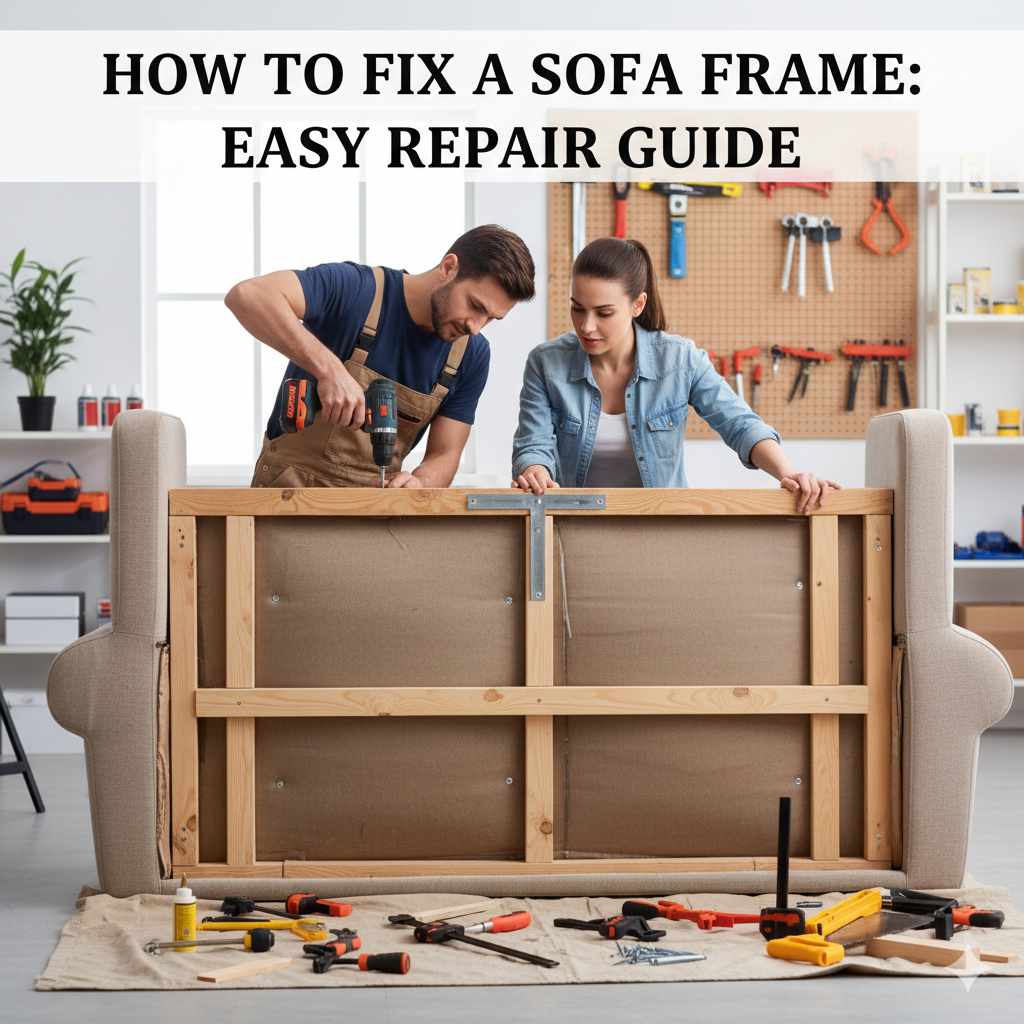
How To Fix A Sofa Frame: Easy Repair Guide
A sofa frame can often be repaired by addressing loose joints, reinforcing weak spots with screws or brackets, or replacing damaged wood. This guide covers common frame issues and practical DIY solutions for restoring stability and comfort to your furniture.
For a closely related home or decor topic, Difference Between Ottoman and Pouf: Effortless gives readers a useful next step.
For a closely related home or decor topic, What Is a Chaise Lounge? Ultimate & Uses gives readers a useful next step.
For a closely related home or decor topic, How To Repair A Leather Sofa: Fix gives readers a useful next step.
For a closely related home or decor topic, Sofa Reupholstery Cost: Pricing gives readers a useful next step.
Understanding Your Sofa Frame
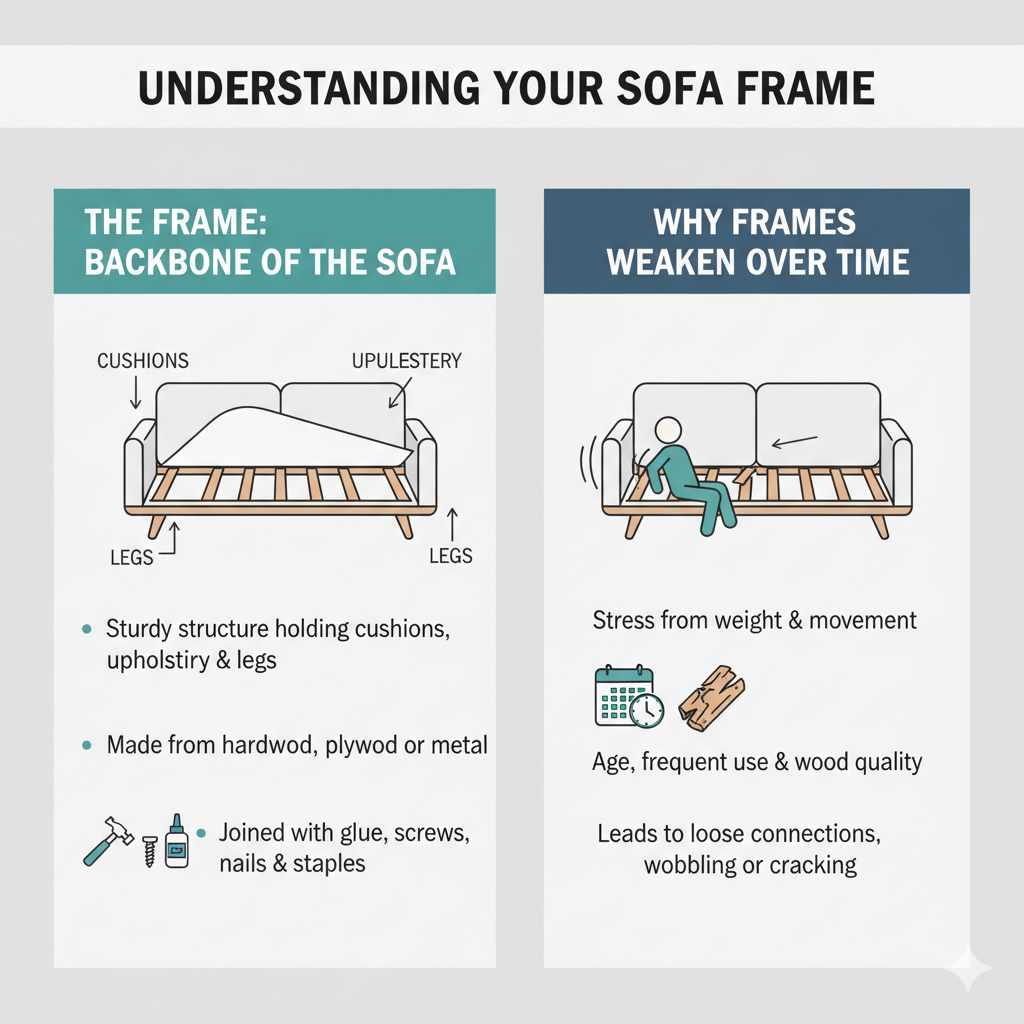
Your sofa’s frame is its backbone. It’s the sturdy structure that holds everything together. This includes the cushions, the upholstery, and the legs.
Most frames are made from strong wood, like hardwood or plywood. Sometimes, metal is used too. These frames are put together with glue, screws, nails, and staples.
They are designed to be strong and last a long time.
Over time, though, these connections can loosen. Weight and movement put stress on the frame. This is especially true if the sofa is used a lot.
Or if it’s moved often. The wood itself can also weaken or crack. This is more common in older furniture or if the wood quality isn’t the best.
Knowing this helps us understand where problems might start.
Why Do Sofa Frames Break?
Sofa frames don’t just break for no reason. There are common causes. One big one is simple wear and tear.
Every time someone sits down, jumps on it, or shifts weight, the frame takes a little bit of stress. Over years, this adds up. Joints that were once tight can start to loosen.
Another common issue is moisture. If a sofa gets wet, the wood can swell or rot. This makes it much weaker.
Spills that aren’t cleaned up properly can lead to mold. This also damages the wood over time. Poor quality materials can also be a factor.
Cheaper sofas might use softer wood or less secure joinery.
Moving the sofa can also be tough on the frame. If you drag it instead of lifting it, you can put a lot of force on the joints. This can cause them to break or pull apart.
Sometimes, a heavy object falling on the sofa can cause direct damage. It really depends on how the sofa is used and cared for.
Common Sofa Frame Problems
Let’s talk about the most common things you’ll notice. The first is a wobbly sofa. When you sit on it, it feels like it’s going to tip over.
This usually means joints are loose. They aren’t holding together like they should.
You might also hear creaking or groaning sounds. These noises often come from the frame. They happen when wood pieces rub against each other.
Or when screws are coming loose. This is a clear sign that something needs attention.
Another problem is a sagging seat. If one part of the sofa feels lower than the others, it’s likely a frame issue. A broken slat or a cracked support beam can cause this.
This makes the sofa uncomfortable to sit on. It can also look bad.
Sometimes, you might see cracks in the wood. These can appear on the arms, the back, or the base. These cracks weaken the frame.
They can grow larger if not fixed. It’s important to spot these early. They are warning signs.
Loose or detached legs are another issue. Legs are screwed into the frame. If the frame is weak where the leg attaches, it can become wobbly or even fall off.
This is a direct sign of frame damage.
Common Sofa Frame Issues at a Glance
- Wobbly Feel: Joints are loose and not stable.
- Creaking Noises: Wood pieces are rubbing or screws are loose.
- Sagging Seat: A support is broken or weakened.
- Visible Cracks: Wood is splitting and losing strength.
- Loose Legs: Attachment point in the frame is damaged.
Gathering Your Tools and Materials
Before you start fixing, get your tools ready. You’ll need a few things. A good set of screwdrivers is important.
Make sure you have Phillips head and flathead types. You’ll also want a drill. This makes driving screws much faster.
Get a few different sizes of screws. Wood screws are best.
You might need wood glue. This is great for filling small gaps and strengthening joints. Some clamps can be very helpful.
They hold pieces together while the glue dries. A hammer is useful for tapping things into place. You may also need wood filler.
This can patch small holes or cracks.
Safety gear is a must. Wear gloves to protect your hands. Safety glasses are important too, especially when drilling or hammering.
If your sofa has fabric that’s stapled on, you might need a staple gun and new staples. Measure carefully before buying any replacement wood. Wood shims can also be useful.
Think about the type of wood in your sofa. Most are pine or hardwood. You’ll want screws that are long enough to go into the wood well.
But not so long they poke out the other side. Wood glue comes in different types. A strong wood glue is usually best.
Check the instructions on the glue.
Step-by-Step Repair Guide: Loose Joints
Loose joints are the most common problem. They are also often the easiest to fix. First, you need to find the loose joint.
Gently rock the sofa. See where the movement is coming from. You might need to lift some fabric to see the frame underneath.
Often, you’ll see that screws have worked their way loose. Or that glue has failed. If screws are loose, try tightening them first.
If they just keep turning, the hole might be stripped. In that case, you can put a little wood glue on a toothpick. Stick it in the hole.
Let it dry. Then try the screw again. Or use a slightly larger screw.
If the joint is held with nails, they might be loose. You can try hammering them back in. Or you might need to remove them carefully and re-nail.
Wood glue is your best friend here. Apply a good amount of wood glue into the joint. Make sure it gets into the crack or gap.
Use clamps to hold the joint tightly together while the glue dries. This is very important. If you don’t have clamps, you can use heavy objects.
Or even strong straps. Let the glue dry completely. This usually takes at least a few hours.
Some glues need 24 hours. Once dry, test the joint. It should be much more stable.
Quick Fix for Loose Joints
What to do:
- Find the wobbly spot.
- Tighten any loose screws.
- If screws strip, fill hole with glue and a wood piece.
- Apply wood glue to the joint gap.
- Clamp the joint tight.
- Let glue dry fully.
Reinforcing Weak Spots
Sometimes, a joint isn’t just loose. It’s actually weakened. Or a support beam might be cracked.
For these issues, you need to reinforce. This means adding extra support to make it strong again.
One good way to do this is with metal brackets. These are L-shaped pieces of metal. You can buy them at any hardware store.
Place the bracket across the weak joint or crack. Make sure it covers the damaged area. Then, screw the bracket into the wood on both sides.
Use screws that are the right length. They need to go deep enough to hold well. But not so long they poke through.
You might need several screws per bracket. This adds a lot of strength. It’s like giving the frame an extra hug.
If you have a cracked piece of wood, like a support beam, you can also use a metal plate. A flat metal plate can be screwed across the crack. This holds the pieces together.
You can also use wood glue in the crack first. Then add the plate for extra strength.
For very weak spots, you might need to add a new piece of wood. Cut a piece of similar wood to size. Glue it over the damaged area.
Then screw it in place. This is like putting a bandage on the wood. It protects it and holds it together.
Dealing with Cracked Wood
Cracks in the wood frame are a concern. The wood is losing its integrity. Small cracks can sometimes be fixed with wood glue.
You need to work the glue deep into the crack. Then, clamp the wood together tightly. Let it dry completely.
For larger cracks, or cracks that go all the way through, you’ll need more. You can use wood filler. This is a paste that dries hard.
You can spread it into the crack. Let it dry. Then sand it smooth.
This fills the gap and can make the surface look better.
However, wood filler alone might not restore the full strength. For load-bearing parts of the frame, reinforcement is still key. You might need to use a metal bracket or a new piece of wood in addition to filler.
Always think about where the crack is and what stress it will face.
If the wood is badly rotted, you might need to replace the section. This can be more involved. You’ll need to cut out the rotted piece.
Then cut a new piece of wood to fit. Use wood glue and screws to attach the new piece. Ensure it’s securely fastened.
I remember one time I was helping a friend with an old armchair. The armrest had a big crack in it. It was starting to splinter.
We carefully applied wood glue. Then, use some small C-clamps to hold it tight. We let it dry overnight.
The next day, it was much better. We then added a small decorative metal plate on the underside for extra support. It looked okay and felt much stronger.
Filling Small Cracks
Steps:
- Clean the crack.
- Apply wood glue deep into the crack.
- Clamp the wood together firmly.
- Wipe away excess glue.
- Let dry for at least 24 hours.
- For cosmetic fixes, sand and apply wood filler.
Repairing a Sagging Seat
A sagging seat usually means a problem with the support system beneath the cushions. This could be broken wooden slats or a damaged support beam. First, remove the cushions.
Look underneath the seat. You should see wooden slats or a solid panel.
If you see wooden slats, check if any are broken or warped. If a slat is broken, you can
If there’s a larger support beam that’s cracked or sagging, you’ll need to reinforce it. You can add a new support beam. Cut a piece of wood to the length needed.
Attach it parallel to the sagging beam. Use wood glue and screws. Or you can use a metal bracket to shore up the cracked beam.
Sometimes, the issue is simply that the slats have shifted. They might have pulled away from the frame. In this case, you can re-secure them with screws.
Make sure the screws go into the frame securely. This can often bring back the firmness to the seat.
I remember a sofa where the seat sagged so much you felt like you were sliding off. We pulled it apart and found a couple of the main support planks had cracked right in the middle. We couldn’t replace them easily.
So, buy some sturdy metal angle iron. We screwed one piece under each cracked plank. It really did the trick.
The seat felt firm again.
Replacing Damaged Wood
Sometimes, a piece of wood is too damaged to repair. It might be rotted, severely cracked, or broken. In these cases, you’ll need to replace it.
This is a bit more work, but it can save your sofa.
First, you need to identify the damaged piece. Then, figure out how it’s attached. Is it glued?
Screwed? Nailed? You’ll need to carefully remove the old piece.
Try not to damage the surrounding frame. You might need to pry it out gently.
Once the old piece is out, take it to a hardware store. Get a new piece of wood that’s the exact same size and type. If it’s a specific shape, you might need to cut it yourself.
Or have it cut at the store.
When you get the new piece, test fit it. Make sure it slides into place easily. Then, attach it.
Use wood glue for a strong bond. Then use screws or nails to secure it firmly. If it’s a structural piece, use plenty of screws.
Make sure they go into solid wood.
It’s important that the new piece is as strong as the old one. If you’re unsure about the type of wood, ask for advice at the store. Hardwoods are generally stronger.
Plywood can also be a good choice for structural parts.
When to Replace Wood Sections
Signs it’s time for replacement:
- Severe rot or water damage.
- Multiple deep cracks that compromise strength.
- Wood is splintered or crumbling.
- A piece is completely broken into two or more parts.
- Previous repairs have failed.
Fixing Loose Legs
Loose sofa legs are a common and annoying problem. Legs are usually screwed into a mounting block that’s attached to the sofa frame. The problem can be with the leg itself, the screw, or the mounting block and frame it’s attached to.
First, check the leg and the screw. Is the screw loose? Try tightening it.
If the screw just spins, the wood in the mounting block or frame might be stripped. You can try the toothpick and glue trick again here. Let it dry, then re-screw.
If the mounting block itself is loose, you’ll need to secure that. Use wood glue and screws to attach the block firmly to the sofa frame. Make sure the screws go into solid wood.
If the frame where the block attaches is damaged, you might need to reinforce that spot first.
Sometimes, the leg itself might be damaged where it screws in. If the threads are stripped on the leg’s bolt, you might need a new leg. Or you could try using a slightly larger screw or bolt if possible.
Always check if the leg is still straight and not cracked.
A coffee table may have a leg that is always wobbly. It turned out the metal bolt that screwed into the leg was spinning in its wooden socket. I ended up drilling out the old socket.
Then, glue in a wooden dowel. Once dry, drill a new pilot hole. The leg felt solid again.
It took a little fiddling.
Quick Fix for Loose Sofa Legs
Check these points:
- Tighten the leg screw.
- If stripped, try the wood glue and toothpick method.
- Secure the mounting block to the frame if loose.
- Check the leg itself for damage.
- Consider replacing the leg if heavily damaged.
When to Call a Professional
While many sofa frame repairs are DIY-friendly, there are times when it’s best to call in an expert. If your sofa is very old, valuable, or has intricate details, you might want professional help. They have specialized tools and experience.
If the damage is extensive, like a completely broken frame or widespread rot, a professional can assess if it’s even worth repairing. They can also handle complex structural issues. Things like rebuilding major sections of the frame are best left to them.
If you’ve tried a few fixes and the problem persists, it might be time for help. Sometimes, the issue is deeper than it looks. A professional can diagnose and fix it correctly.
This saves you time and potential further damage.
Don’t hesitate to get a quote from a furniture repair specialist. It’s better to know your options. You might be surprised at how affordable a professional repair can be.
Especially compared to buying a whole new sofa. They can often restore a beloved piece to its former glory.
Preventing Future Frame Damage
The best fix is often prevention. Taking good care of your sofa can stop frame problems before they start. Try to avoid jumping on the sofa.
This puts a lot of stress on the frame. It’s tempting, especially for kids, but it’s bad for the furniture.
Clean up spills right away. Moisture can lead to wood rot and weaken the frame. Don’t let liquids sit on the upholstery and soak into the frame.
If you need to move the sofa, always lift it. Don’t drag it across the floor. This can twist the frame and loosen joints.
Rotate your cushions regularly. This helps distribute the wear evenly. It means one part of the frame isn’t constantly bearing more weight.
Check the legs and screws every so often. A quick tighten can prevent a wobbly leg from becoming a bigger issue.
Avoid placing heavy items on the sofa when no one is sitting on it. This can put undue stress on specific spots. If your sofa is in a humid environment, consider a dehumidifier.
This helps keep the wood dry and strong. Regular care makes a big difference.
Sofa Frame Care Tips
Keep your sofa strong:
- No jumping on the sofa.
- Clean spills immediately.
- Lift, don’t drag, when moving.
- Rotate cushions regularly.
- Check legs and screws for tightness.
- Avoid overloading with heavy items.
My Experience with a Wobbly Recliner
I remember a favorite recliner in my dad’s den. It was an old, comfy leather thing. Over the years, it developed a terrible wobble.
Every time someone sat down, it felt like it was going to give out. It wasn’t just the cushions; the whole base seemed to shift. It was a bit unnerving, honestly.
My dad, bless his heart, kept saying “I’ll fix it soon.” But “soon” never seemed to arrive. Finally, I decided I’d had enough. I decided to tackle it myself.
I got down on my hands and knees and started poking around. The wooden frame underneath may seem a bit loose. Some of the screws were definitely not as tight as they should have been.
It was a bit of a maze under there. Lots of metal parts for the reclining mechanism. But find the main wooden frame supporting the seat.
Grab a drill and some new, longer wood screws. Start tightening every screw available. Some were easy.
Others were in tricky spots. It may require contorting yourself a bit.
Then, find a place where two pieces of wood meet. It looked like the glue had failed there. It was a key joint.
Use a putty knife to pry the gap open just a little. Then I squeezed in as much wood glue as I could. I didn’t have clamps that would fit.
So, use some strong rope and a stick to create a makeshift clamp. Tighten it as much as possible. I left it overnight.
The next day, I removed the rope. Test the recliner. It was night and day!
The wobble was gone. It felt solid again. It was a simple fix, really.
Just a matter of finding the loose spots and tightening things up. It made me realize that many furniture problems aren’t insurmountable. Sometimes, they just need a little attention.
Restoring Comfort and Stability
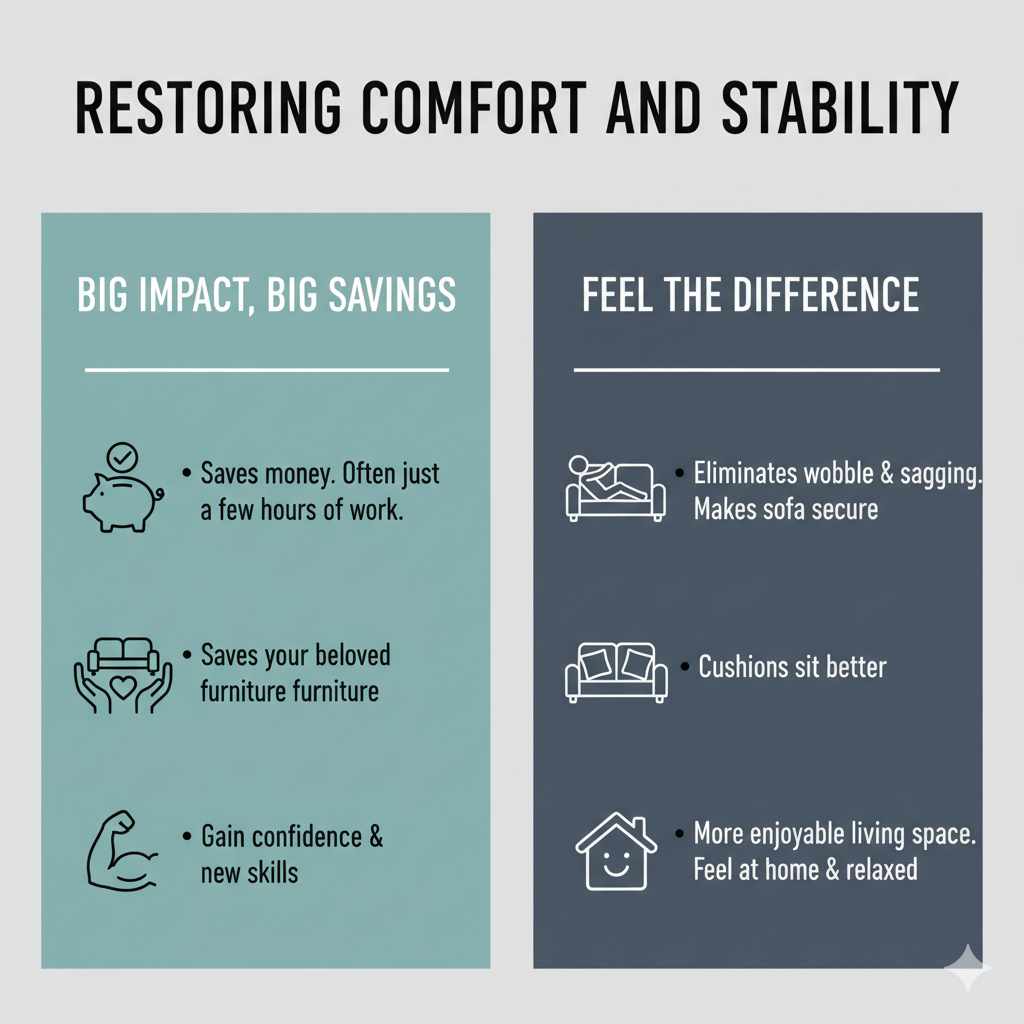
Fixing a sofa frame isn’t just about making it look good. It’s about restoring comfort and stability. A wobbly sofa can be dangerous.
A sagging seat is uncomfortable. These fixes bring your furniture back to life. They make your living space more enjoyable.
You can feel the difference when a frame is strong. The cushions sit better. The sofa feels secure.
It’s a small thing, but it makes a big impact on how you use and enjoy your furniture. It’s about feeling at home and relaxed.
Don’t let a wobbly frame make you think you need a new sofa. Often, a few hours of work can save you a lot of money. It’s a satisfying feeling to fix something yourself.
You gain confidence. You learn new skills. And you save your beloved furniture.
FAQ About Sofa Frame Repairs
Can I fix a broken sofa frame myself?
Yes, many common sofa frame issues like loose joints or minor cracks can be fixed yourself with basic tools and materials like wood glue and screws. For extensive damage, professional help might be needed.
What is the best way to fix a wobbly sofa?
To fix a wobbly sofa, first identify the loose joints. Tighten any loose screws. If screws strip, use the wood glue and toothpick method or a slightly larger screw.
Apply wood glue to loose joints and clamp them tightly until dry.
How do I repair a cracked sofa frame leg?
For a cracked sofa frame leg, if it’s a minor crack, you can try gluing it and clamping it. For structural cracks, reinforce the leg with L-brackets or angle braces screwed securely into the leg and the sofa frame.
What kind of wood is typically used for sofa frames?
Sofa frames are commonly made from hardwoods like oak, maple, or ash, or from sturdy softwoods like pine. Plywood is also frequently used for its strength and stability, especially for larger panels.
How much does it cost to repair a sofa frame?
DIY repairs can cost as little as $20-$50 for materials. Professional repairs can range from $100 to $500 or more, depending on the complexity and extent of the damage.
Is it worth repairing an old sofa frame?
It is often worth repairing an old sofa frame if the sofa has sentimental value, is made of quality materials, or if the repair cost is significantly less than buying a new, comparable sofa. Professionals can help assess its value.
What’s the difference between a frame repair and reupholstering?
Frame repair fixes the underlying structure of the sofa, addressing issues like breaks, cracks, or loose joints. Reupholstering is the process of replacing the fabric and padding on the sofa, which may be done after frame repairs.
Conclusion
Your sofa frame is its foundation. Keeping it strong means your sofa lasts longer and stays comfortable. Most common problems are fixable with a little effort.
You can tackle loose joints, cracks, and sagging with simple tools. Remember to always prioritize safety. And when in doubt, a professional can help.
Enjoy your newly stable sofa!
Sponsored / affiliate links. As an Amazon Associate I earn from qualifying purchases. I may earn additional commission from eligible campaigns.Products related to this article