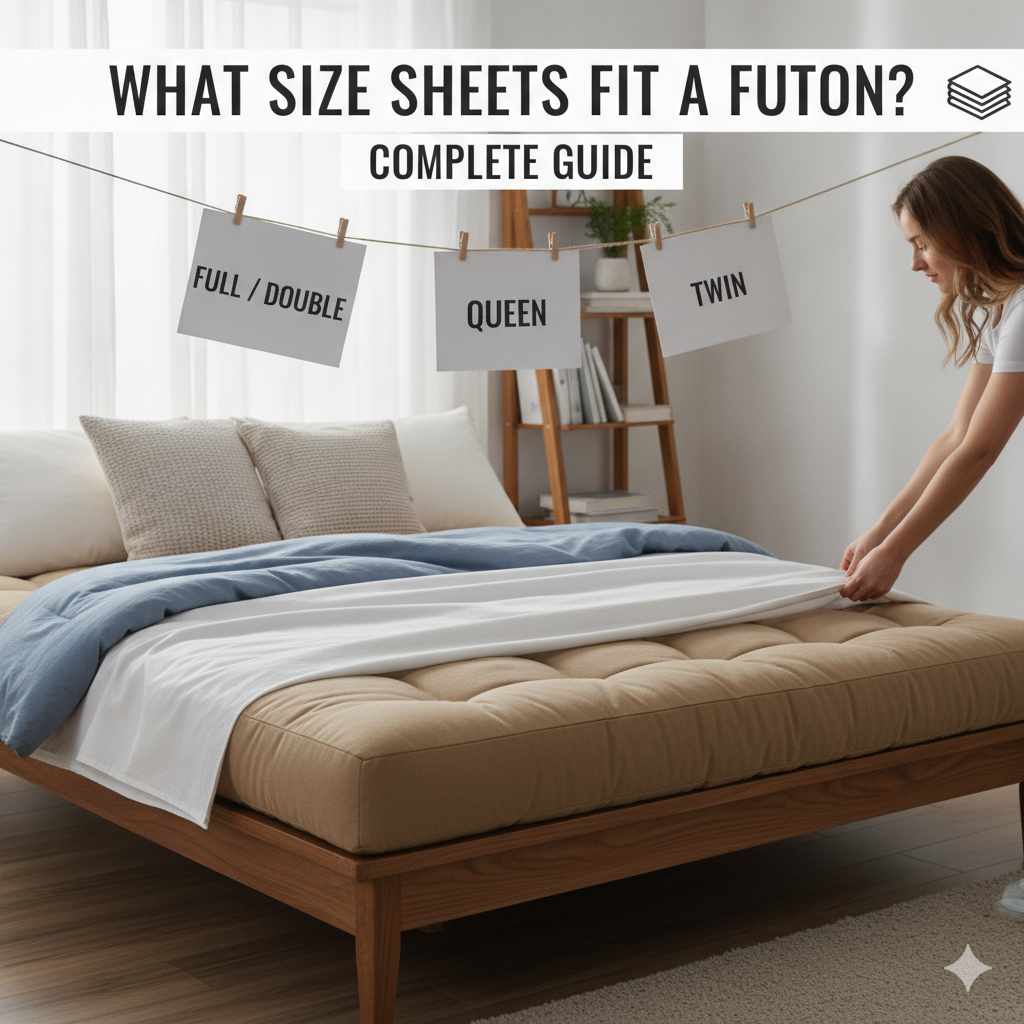
What Size Sheets Fit A Futon? Complete Guide
Futon sheets often fit best using standard mattress sizes like Twin or Full. The key is measuring your specific futon mattress thickness and dimensions, as futons vary. Look for deep-pocket sheets if your futon is thicker than a standard mattress.

N&Y HOME
N&Y HOME Soft Stretch Twin Fitted Sheet…
- Stay Put All Night: The fabric with 4-way flexibility tech stretches over the mattress and stays in place securely all night, no m…
- No More Coming Off: Deep pocketed design and the elastic all the way around the entire bottom & staying underneath, which keeps co…
- Tailored Sheet for Mattress/Box Spring: This stretchy fitted sheet fits for any mattress/boxspring up to 15" depth. Great for memo…
As an Amazon Associate I earn from qualifying purchases.

Understanding Futon Mattress Sizes
Futons are wonderfully versatile. They serve as a sofa by day and a bed by night. But this dual purpose means their mattresses can be a bit different from standard beds.
This is where the confusion often starts. Knowing a few key things will help you find the right fit for your sheets.
Most futon mattresses are designed to fold and bend. This means they might be thinner than a regular mattress. Or, some futons have very thick, plush mattresses that feel more like a traditional bed.
The shape can also be a bit different. They might be a bit shorter or wider than you expect.
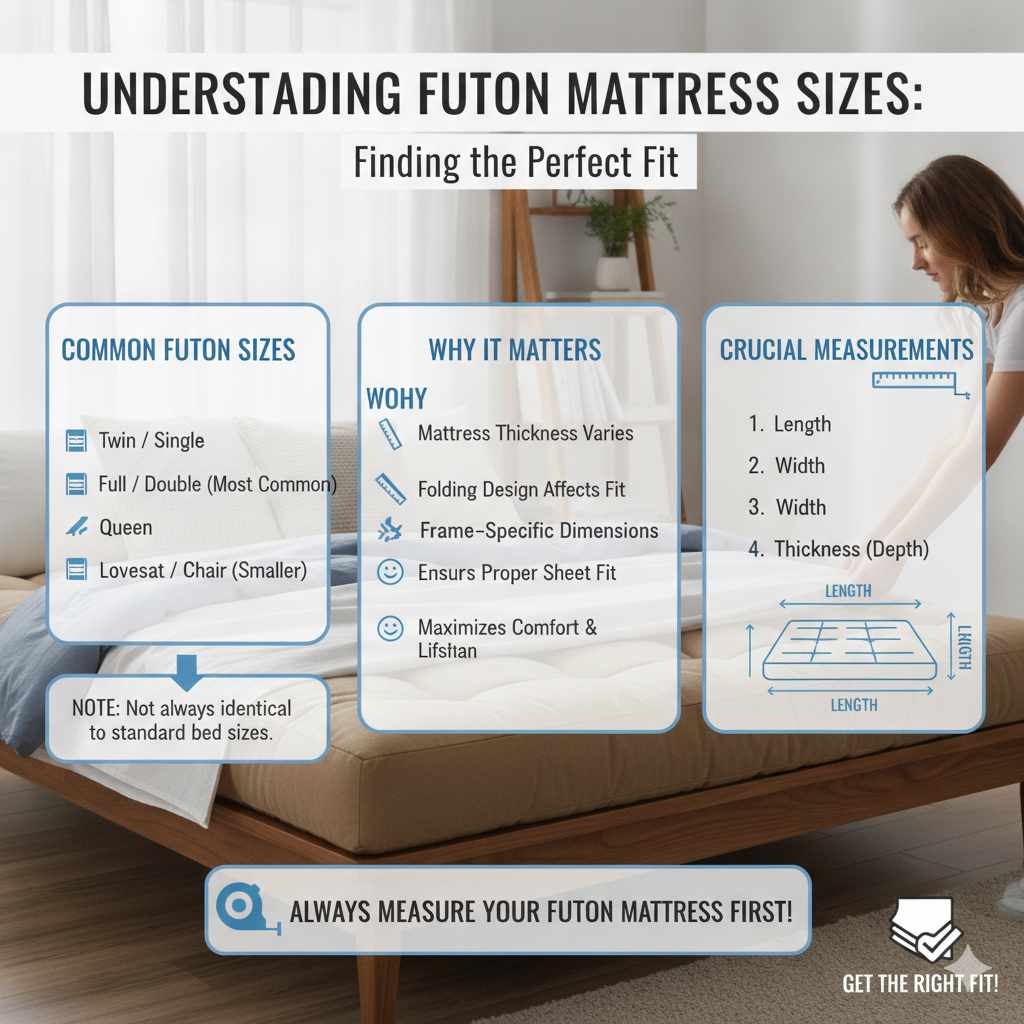
The most common futon sizes try to match standard bed sizes. Think about a Twin or a Full (also called Double). These are the most frequent targets.
But it’s not always a perfect match. That’s why just grabbing any Twin sheet might not work wonders.
Some futons are made for specific frames. These might have unusual dimensions. You might even find futon mattresses that are square.
These are less common but do exist. The general rule is to always measure your futon mattress first. This is the most important step.
You want to know its length, width, and, very importantly, its thickness.
Why Futon Sheet Sizes Can Be Tricky
Let’s dive into why this isn’t always a simple pick-and-choose. Futon mattresses are not built to one single standard. This is unlike most traditional mattresses, which follow set guidelines for size.
Manufacturers of futon frames and futon mattresses can vary greatly. They often aim for compatibility with existing bed sizes to make things easier for buyers.
However, the thickness is often the biggest challenge. A standard Twin mattress is typically 8 to 10 inches thick. Many futon mattresses are much thinner, maybe only 4 to 6 inches.
This difference means a sheet made for a thicker mattress might be too loose. It will slip off easily. On the flip side, some futons are designed for maximum comfort.
They can have mattresses that are 10 inches or even thicker. In this case, a standard Twin sheet might be too tight. It might not stretch enough to go over the corners.
The frame itself can also play a role. Some futon frames are designed to accommodate a slightly larger mattress than a standard size. This can happen if the frame’s internal dimensions are a bit generous.
You might also find that the corners of a futon mattress are not as rounded as a traditional mattress. They can be more squared off. This can affect how well a fitted sheet stays in place.
Another factor is the fabric of the futon mattress itself. Some futon mattresses have a fabric cover that is quite slippery. This makes it harder for sheets to grip.
Others have a more textured surface that helps sheets stay put. Understanding these variations helps you see why a blanket approach won’t work.
Measuring Your Futon Mattress: The Golden Rule
Okay, let’s get down to the practical stuff. Measuring your futon mattress is the single most important step. Don’t skip this.
It’s not hard, and it will save you a lot of frustration. You’ll need a tape measure. You can use a cloth tape measure, like one for sewing, or a metal one.
Just make sure it’s flexible enough to go around the edges.
First, measure the length of your futon mattress. Lay the tape measure flat along the longest side of the mattress. Get the measurement in inches.
Write it down. Next, measure the width. Do the same thing, but along the shorter side of the mattress.
Again, write down the number in inches.
The third, and very crucial, measurement is the thickness. This is often overlooked. You need to know how deep the mattress is from the top surface to the bottom surface.
For this, you can either try to measure the side, or if the mattress is removable, you can place it on its side and measure the height. If it’s very thick, you might need a helper to hold it steady.
Let’s say you measure your futon and find it’s 75 inches long, 39 inches wide, and 8 inches thick. This sounds very much like a standard Twin mattress. Now you know you should be looking for Twin sheets.
If your futon is 75 inches long, 54 inches wide, and 10 inches thick, it’s very close to a standard Full size mattress. You’ll want to aim for Full sheets. But remember the thickness.
What if your measurements are a bit off? For example, a futon that is 70 inches long and 36 inches wide. This is a bit shorter and narrower than a standard Twin.
In this case, a Twin sheet might be a bit too large. It might have extra fabric that bunches up. You might need to look for sheets specifically made for shorter twin beds or even consider a Twin XL and see if the extra length can be tucked in well.
The thickness is key for fitted sheets. Standard sheets often fit mattresses up to 10 or 12 inches deep. If your futon mattress is thicker than that, you’ll need to look for “deep pocket” sheets.
These are made with extra fabric to accommodate taller mattresses.
Common Futon Sizes and Their Sheet Equivalents
Because futons try to fit into our existing home systems, they often mimic standard bed sizes. This makes buying sheets easier. The most common futon sizes are based on standard North American mattress dimensions.
Let’s break these down.
Twin Futon: This is the most popular size. A typical Twin futon mattress measures about 38-40 inches wide and 75 inches long. The thickness can vary from 4 inches to 10 inches or more.
For a Twin futon, you will generally want Twin size sheets. If your futon is on the thicker side (over 10 inches), look for Twin sheets with a deep pocket option.
Full Futon (Double Futon): This size is wider than a Twin. A standard Full futon mattress is usually around 54 inches wide and 75 inches long. Again, thickness can range widely.
For a Full futon, you will want Full size sheets. If your futon is very thick, consider Full sheets with a deep pocket designation.
Queen Futon: Less common, but they do exist. A Queen futon mattress is typically around 60 inches wide and 80 inches long. If you have a Queen futon, you’ll need Queen size sheets.
These are often harder to find for futons, and you’ll definitely want to check the pocket depth.
Other Sizes: Some futons might be custom-made or designed for specific chair-bed styles. These could be closer to a Cot size or even a narrower Twin. If your futon doesn’t match these standard sizes, you might need to get creative.
This could mean buying a larger size and tucking in the extra fabric, or looking for specialty bedding retailers.
The key takeaway is that while a futon might be called “Twin,” its actual dimensions can differ. Always double-check your measurements against the sheet set’s stated dimensions. Manufacturers usually list the dimensions of their fitted sheets and flat sheets.
This information is your best friend.
Choosing the Right Sheet Type
Fitted Sheets: These have elastic corners. They are designed to hug the mattress. For futons, the elastic is key.
You need it to be strong enough to grip the mattress corners without slipping off.
Flat Sheets (Top Sheets): These are flat pieces of fabric. They don’t have elastic. They are laid over the fitted sheet.
They are usually a bit larger than the mattress, allowing you to tuck them in.
Sheet Sets: Most sets include one fitted sheet, one flat sheet, and pillowcases. When buying for a futon, focus on the fitted sheet’s fit. The flat sheet is more forgiving.
Deep Pocket Sheets: These have extra fabric depth. They are great for thicker mattresses. If your futon is 8 inches or more, especially if it’s closer to 10-12 inches, deep pocket sheets are a smart choice.
Fabric Matters: Comfort and Fit
Beyond just the size, the fabric of your sheets can make a big difference in how they fit and feel on a futon. Futons often live in living rooms or guest rooms. They might get more use than a guest bed.
So comfort is important. Also, some fabrics stretch better than others, which can help with tricky fits.
Cotton: This is a very popular choice. It’s breathable and soft. 100% cotton sheets can be great.
However, some cottons, like percale, can be a bit stiff. They might not stretch as well over thicker futons. Cotton blends, like poly-cotton, can offer more stretch and are often more durable.
They also tend to wrinkle less, which is a bonus for futons that are often on display.
Microfiber: These sheets are made from very fine synthetic fibers. They are known for being incredibly soft and often have a slight stretch. Microfiber sheets can be a good option for futons because they are flexible and tend to drape well.
They also tend to be more affordable. Some people find microfiber can be warmer, so if you live in a hot climate, this might be a factor.
Bamboo: Bamboo fabric is known for being very soft and smooth. It’s also breathable and has moisture-wicking properties. Bamboo sheets can offer a luxurious feel.
They tend to have good drape, which can help them fit various mattress shapes.
Jersey Knit: Think of the fabric of your favorite t-shirt. Jersey knit sheets are made from cotton or a blend knit in this way. They are super soft, stretchy, and relaxed.
This stretchiness makes them excellent for futon mattresses. They can conform to different shapes and thicknesses quite well. Many people find jersey sheets to be the most forgiving and comfortable for futons.
When considering fabric, think about how you use your futon. If it’s in a main living area, you might want something that looks crisp and neat. If it’s in a guest room or a secondary space, ultimate comfort and ease of fit might be more important.
Jersey knit is a strong contender for ease of fit.
Infographic-Style Quick Scan: Futon Sheet Fit Factors
Factor: Futon Size
Match To: Standard Twin, Full, or Queen.
Action: Measure your futon first!
Factor: Mattress Thickness
Match To: Standard pocket (up to 10-12 inches) or Deep Pocket (12+ inches).
Action: Measure your futon’s depth.
Factor: Fabric Stretch
Best Bets: Jersey knit, Microfiber, Bamboo blends.
Avoid (if fit is hard): Stiff percale cottons.
Factor: Elastic Quality
Look For: Strong, full-around elastic on fitted sheets.
Action: Check product reviews for sheet grip.
What If My Futon Isn’t a Standard Size?
It’s true that not every futon fits neatly into the Twin, Full, or Queen boxes. What do you do then? It can feel a bit daunting, but there are still solutions.
The goal is to get a sheet that covers the mattress well and stays on.
Measure, Measure, Measure: We can’t say this enough. If your futon is 70 inches by 36 inches with a 5-inch thickness, you’re not going to find sheets labeled “70x36x5.” You have to adapt. In this case, a standard Twin sheet might be too big.
You might have excess fabric. You’ll need to focus on how well you can tuck in the extra material.
Consider a Size Up and Tuck: Often, if your futon is slightly smaller than a standard size, you can use sheets of that standard size and just tuck the extra fabric very securely underneath. For example, if your futon is a bit smaller than a Twin, using Twin sheets and tucking the extra fabric under the mattress might work. The key here is to tuck it really tightly.
You don’t want it to come loose when someone sits or sleeps on it.
Look for “Split” or “Custom” Sizes: Some bedding companies offer split head or foot sheets, which are typically for adjustable beds. While not directly for futons, these can sometimes be adapted. More niche retailers might offer custom-sized bedding.
This is usually more expensive but guarantees a perfect fit for very unusual dimensions.
DIY Solutions (with caution): For very specific needs, some people turn to DIY. This could involve buying a larger sheet and hemming it to size. Or, if you’re feeling crafty, you could even sew elastic into a flat sheet to create your own fitted sheet.
However, this requires sewing skills and time. For most people, adapting standard sizes is the easier route.
Focus on Flat Sheets: If fitted sheets are proving impossible, consider just using a flat sheet. You can buy a larger flat sheet and tuck it very snugly around all sides of the futon mattress. Then, use a duvet or a thick comforter on top.
The duvet will help keep the flat sheet in place. It provides a soft surface to sleep on.
The most important thing is to be practical. Assess how much extra fabric you can manage. Can you tuck it in well?
Does the mattress have defined corners that the elastic can grab, even if the size is a little off? Think about the main purpose: comfort and a neat appearance.
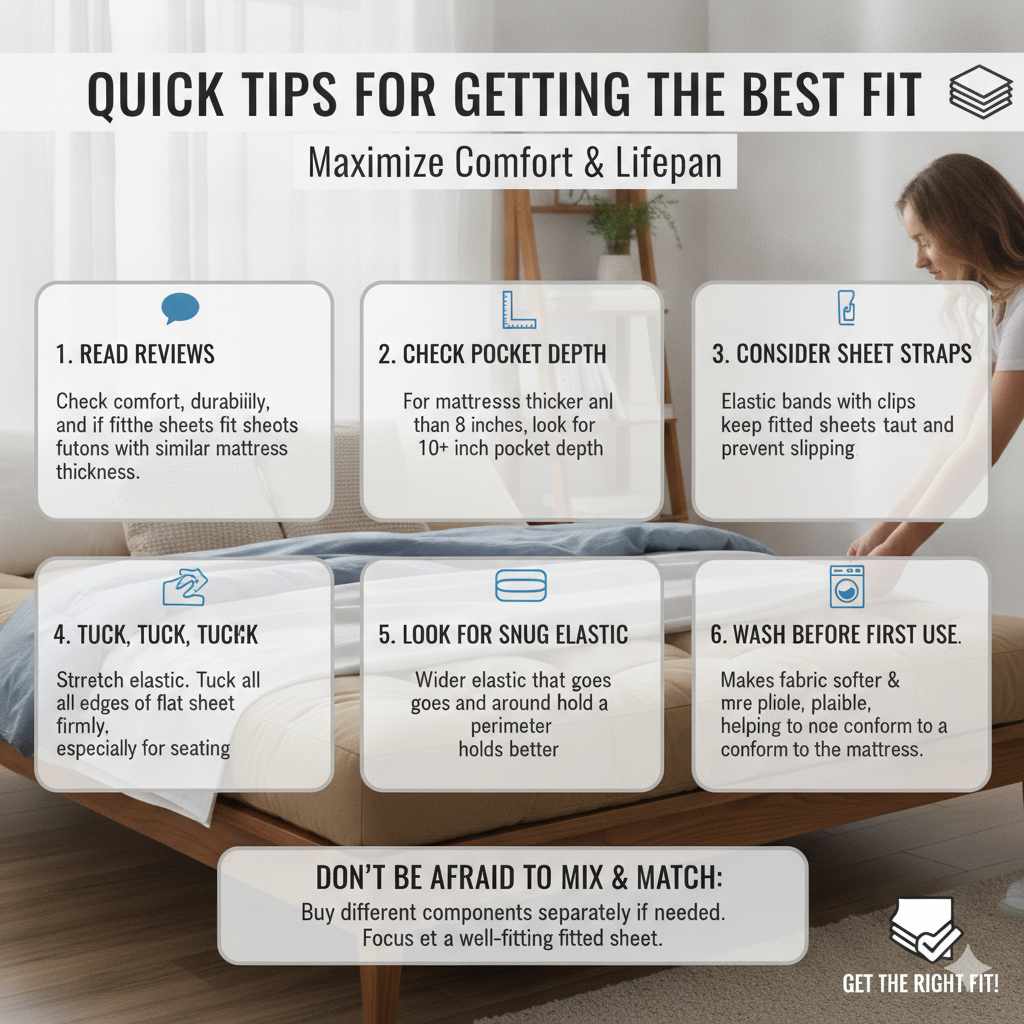
Tips for Getting the Best Fit
Once you’ve measured and you have an idea of the size and type of sheets you need, here are some extra tips to make sure they fit well and stay put on your futon.
Read Reviews: Before buying, especially online, check product reviews. Many reviewers will mention if the sheets fit a futon, or if they had trouble with a mattress of a certain thickness. Look for comments about whether the fitted sheet stays on, or if it tends to slip off.
Check Pocket Depth: As mentioned, this is vital. If your futon mattress is thicker than 8 inches, start looking for sheets that specify a pocket depth of 10 inches or more. Deep pocket sheets are your friend for thicker futons.
Consider Sheet Straps: If your fitted sheets are always slipping off the corners, even after trying different sizes, consider buying sheet straps or suspenders. These are elastic bands that clip onto the corners of your fitted sheet and then attach to the underside of the mattress. They pull the sheet taut and really help keep it in place.
Tuck, Tuck, Tuck: When putting on your fitted sheet, make sure to stretch the elastic as far as it can go. Then, for the flat sheet, tuck all the edges in very securely. For futons that are often used as seating, tucking firmly is crucial.
You don’t want the sheets to pull off when people sit down.
Look for Snug Elastic: On the fitted sheet, check how the elastic is sewn. Some sheets have a thin elastic band just around the edge. Others have a stronger, wider elastic that goes all the way around the bottom perimeter of the sheet.
The latter tends to hold on better to mattresses, including futons.
Wash Before First Use: Washing new sheets can sometimes make the fabric a little softer and more pliable. This might help them conform better to your futon mattress. Plus, it’s always good to wash bedding before you sleep on it!
Don’t Be Afraid to Mix and Match: You might find that a fitted sheet from one brand fits your futon perfectly, but the flat sheet is a bit too small or too big. You can buy different components separately if needed. Or, find a fitted sheet that works and use a separate, generously sized flat sheet and duvet.
Contrast Matrix: Normal Futon Sheet Fit vs. Concerning Fit
Normal Futon Sheet Fit
Appearance: Smooth, neat, without excessive wrinkles or sagging.
Feel: Stays in place when sitting or sleeping. No bunching underneath.
Corners: Fitted sheet corners are pulled taut and securely under the mattress.
Tucking: Flat sheet edges are tucked in firmly and stay tucked.
Concerning Futon Sheet Fit
Appearance: Saggy, loose fabric. Lots of wrinkles or hanging edges.
Feel: Fitted sheet slips off corners easily. Bunches up when used.
Corners: Fitted sheet elastic doesn’t reach the mattress or pops off.
Tucking: Flat sheet edges come untucked quickly, exposing the mattress.
Common Questions About Futon Sheets
It’s natural to have questions when you’re trying to figure out the best bedding for your futon. Here are some frequently asked questions that might help clarify things further.
Are futon sheets the same as Twin sheets?
Often, yes. Many futons are designed to fit standard Twin size sheets (about 38-40 inches wide by 75 inches long). However, it’s crucial to measure your specific futon mattress, as dimensions and thickness can vary significantly from a standard Twin mattress.
Can I use regular bed sheets on a futon?
Yes, you can often use regular bed sheets. The key is to match your futon’s dimensions (length, width, and thickness) to the sheet size and pocket depth. A standard Twin or Full sheet is usually the best starting point, but always measure first.
What is “deep pocket” bedding?
Deep pocket sheets are designed to fit thicker mattresses. Standard sheets usually fit mattresses up to 10-12 inches deep. Deep pocket sheets can accommodate mattresses 13 inches or more.
If your futon mattress is thick, you’ll likely need deep pocket sheets.
How do I know if my futon mattress is too thick for regular sheets?
If the fitted sheet feels like it’s being stretched to its absolute limit, or if the elastic pops off the corners frequently, your mattress is likely too thick for the sheets. Measuring the mattress thickness and looking for sheets with a specified deeper pocket depth (e.g., 14 inches or more) is recommended.
My futon is shorter than a Twin. What sheets should I use?
If your futon is significantly shorter or narrower than a standard Twin, you might have excess fabric with Twin sheets. In this case, you can use Twin sheets and tuck the extra material very securely underneath. Some people opt for “Cot” size sheets if available, or they might look into custom bedding options for a perfect fit.
Are there special sheets made just for futons?
While you can find bedding marketed specifically for futons, they often just refer to standard Twin or Full sizes with descriptions that hint at their suitability for futons. There aren’t many uniquely sized futon sheets in the market. The best approach is usually to adapt standard sizes by measuring and choosing sheets with the right pocket depth and fabric stretch.
What material is best for futon sheets?
Materials like jersey knit, microfiber, or bamboo blends are often recommended for futon sheets. These fabrics tend to be softer and have more stretch than stiff cottons like percale. This stretchiness helps them conform better to the unique shape and thickness of futon mattresses.
Final Thoughts on Futon Sheets
Finding the right sheets for your futon doesn’t have to be a headache. By understanding that futon mattresses aren’t always standard, you’re already ahead. The most critical step is always measuring your mattress—length, width, and especially thickness.
Most futons will fit Twin or Full size sheets. If your mattress is thick, look for deep pocket options. Jersey knit fabric is a favorite for its stretch and comfort.
With these simple steps, you can transform your futon into a cozy, inviting spot. Sweet dreams!
Related pick: Check today's price on Amazon
Products related to this article
Sponsored / affiliate links. As an Amazon Associate I earn from qualifying purchases. I may earn additional commission from eligible campaigns.