Freeze-drying vs canning: Which is better for long-term food storage?
Freeze-drying offers superior retention of nutrients and texture but comes with a higher initial cost, while canning is more budget-friendly and accessible but can alter food’s taste and nutritional profile more significantly. The best choice depends on your priorities for taste, texture, nutrient preservation, and budget.
As an Amazon Associate I earn from qualifying purchases.

Key Takeaways
- Freeze-drying removes water by sublimation, preserving nutrients and texture exceptionally well, resulting in lightweight, long-lasting food.
- Canning uses heat to destroy microorganisms and vacuum seal food, extending shelf life but potentially degrading nutrients and altering taste/texture.
- The cost of freeze-drying equipment is significantly higher than for canning supplies.
- Freeze-dried foods rehydrate quickly and retain much of their original form, while canned foods often have a softer, cooked consistency.
- Both methods contribute to food security and reducing waste, but cater to different priorities regarding quality and cost.
What is Freeze-Drying?
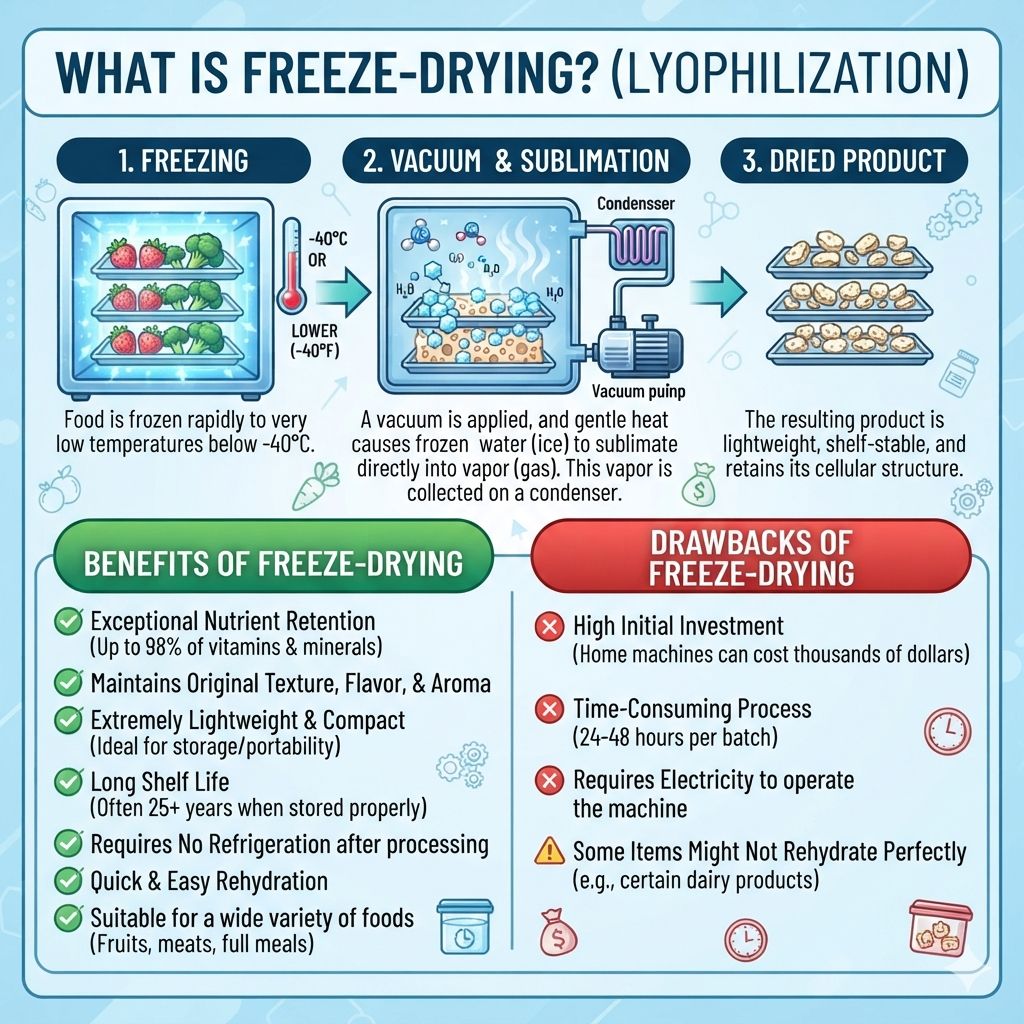
Freeze-drying, also known scientifically as lyophilization, is a dehydration process that involves freezing the food and then reducing the surrounding pressure to allow the frozen water in the food to sublimate directly from the solid phase to the gas phase. This gentle process preserves the food’s structure, nutrients, flavor, and aroma far better than conventional drying methods.
The entire process typically occurs in specialized freeze-drying machines. First, the food is frozen to very low temperatures, usually below -40°C (-40°F). Then, it’s transferred to a chamber where a vacuum is applied.
Heat is gently introduced, causing the ice crystals within the food to turn directly into vapor, bypassing the liquid state. This vapor is then collected on a condenser, effectively removing moisture from the food without damaging its cellular structure.
The result is a lightweight, shelf-stable product that retains up to 98% of its original nutrients. When water is added back (rehydration), the food closely resembles its fresh state in terms of texture, color, and taste, making it an excellent option for long-term food storage, backpacking meals, and emergency kits.
Benefits of Freeze-Drying
- Exceptional nutrient retention (up to 98% of vitamins and minerals).
- Maintains original texture, flavor, and aroma.
- Extremely lightweight and compact, ideal for storage and portability.
- Long shelf life, often 25 years or more, when stored properly.
- Requires no refrigeration after processing.
- Quick and easy rehydration.
- Suitable for a wide variety of foods, including delicate fruits, vegetables, meats, and even full meals.
Drawbacks of Freeze-Drying
- High initial investment for home freeze-dryers, which can cost thousands of dollars.
- The freeze-drying process itself can be time-consuming, sometimes taking 24-48 hours per batch.
- Requires electricity to operate the machine.
- Some items, like certain dairy products, might not rehydrate as perfectly.
What is Canning?
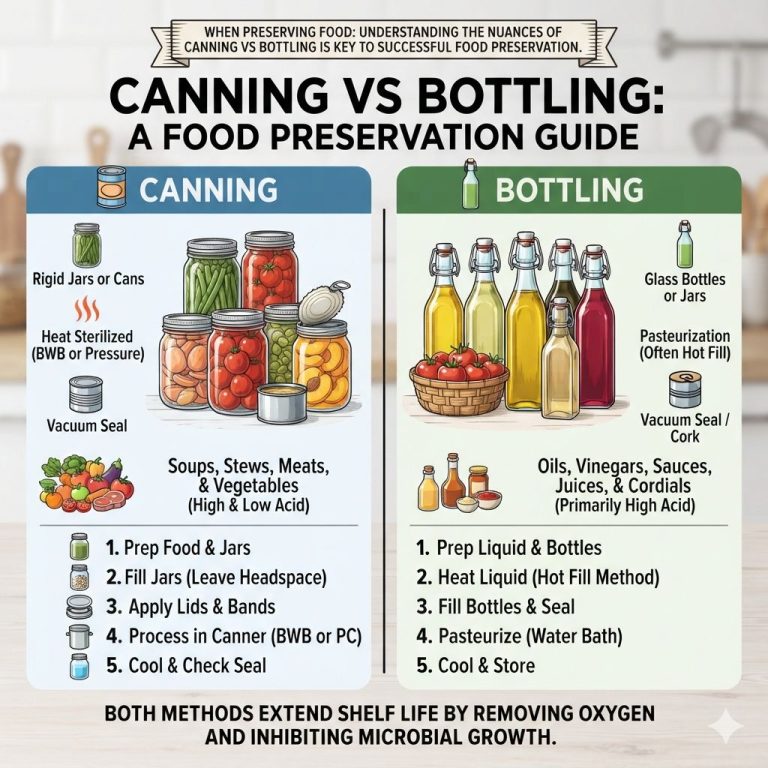
Canning is a method of preserving food that involves placing food in airtight jars or cans and heating them to a temperature that destroys spoilage microorganisms and deactivates enzymes. This process creates a vacuum seal as the food cools, preventing recontamination and thus preserving the food for extended periods.
There are two primary methods for home canning: water bath canning and pressure canning. Water bath canning is suitable for high-acid foods like fruits, jams, jellies, pickles, and tomatoes. Pressure canning is necessary for low-acid foods such as vegetables, meats, poultry, and seafood, as it reaches higher temperatures required to kill dangerous bacteria like Clostridium botulinum.
| Canning Method | Food Types | Temperature Reached | Required Equipment |
|---|---|---|---|
| Water Bath Canning | High-acid foods (fruits, jams, pickles) | Boiling point (212°F / 100°C) | Large pot with rack, canning jars, lids, rings |
| Pressure Canning | Low-acid foods (vegetables, meats, grains) | Above boiling point (240-250°F / 116-121°C) | Pressure canner, canning jars, lids, rings |
Canned foods generally have a shelf life of 1-2 years for optimal quality, though they remain safe to eat for much longer if the seal is intact and the food shows no signs of spoilage.
Advantages of Canning
- Lower initial cost compared to freeze-drying.
- Widely available equipment and readily understood processes.
- Effective for preserving a broad range of foods, especially for creating ready-to-eat meals.
- Canned foods are often softer and more tender, which can be desirable for certain dishes.
- The process is relatively straightforward once learned.
- Canned foods do not require electricity for storage.
Disadvantages of Canning
- Can lead to significant loss of heat-sensitive nutrients (like Vitamin C and some B vitamins).
- Texture and flavor can be altered, often resulting in a softer, cooked consistency.
- Risk of spoilage or botulism if not done correctly (especially with low-acid foods).
- Canning jars and lids are typically single-use for optimal sealing.
- Canned foods can be heavier than freeze-dried counterparts.
Comparing Key Differences: Freeze-Drying vs Canning
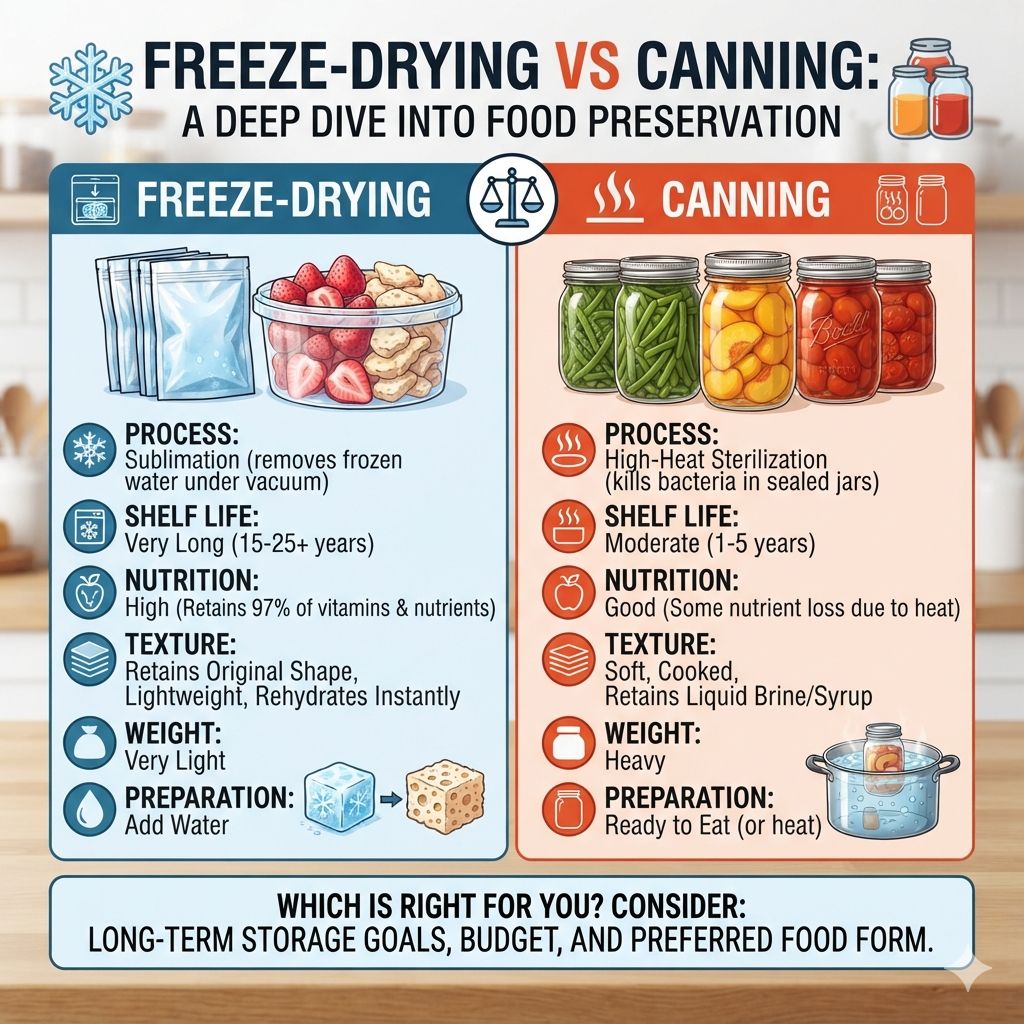
When comparing freeze-drying vs canning, several critical factors come into play, impacting your choice based on what you value most in preserved food. The most significant differences lie in the preservation method, the resulting quality of the food, and the associated costs.
Freeze-drying utilizes cold temperatures and vacuum to remove water through sublimation, a process that is very gentle on the food’s molecular structure. This results in a product that is remarkably close to its fresh state, both in terms of taste and texture. On the other hand, canning relies on high heat and vacuum sealing to preserve food.
While effective at killing microbes, this heat can degrade delicate nutrients and significantly alter the texture of foods, often making them softer or mushy.
Consider the texture. If you want your preserved strawberries to still have a crisp bite when rehydrated, freeze-drying is the way to go. If a softer, cooked berry texture is acceptable, canning works.
For meats, freeze-drying retains chewiness, while canning makes them very tender. Nutritional preservation is another major differentiator; freeze-drying is a clear winner, retaining almost all vitamins, minerals, and antioxidants. Canning, especially pressure canning, can reduce certain nutrients by up to 50%.
Nutritional Value Retention
Nutrient retention is a critical aspect when choosing between freeze-drying and canning. Freeze-drying excels in this area due to its low-temperature process. The sublimation of ice directly to vapor minimizes exposure to heat and oxygen, which are the primary culprits in nutrient degradation.
This means that vitamins, minerals, antioxidants, and even the original color and flavor profiles are largely preserved. Studies by institutions like the USDA’s Agricultural Research Service have indicated that freeze-dried fruits and vegetables can retain up to 97% of their original vitamin C and other heat-sensitive nutrients, a feat unmatched by traditional canning methods.
Canning, conversely, subjects food to high temperatures for extended periods. While this is necessary to ensure food safety by eliminating harmful bacteria, it inevitably leads to a reduction in the nutritional content. Water-soluble vitamins, such as Vitamin C and B vitamins, are particularly susceptible to heat and can leach out into the surrounding water or be destroyed by the high temperatures.
For instance, research has shown that Vitamin C content in canned vegetables can be reduced by 20-50% or more. While some nutrients, like lycopene in tomatoes, can become more bioavailable after the heat treatment of canning, the overall loss of delicate nutrients is a significant drawback for those prioritizing maximum nutritional intake.
The difference is stark: If you’re preserving food for maximum health benefits and want it to be as close to fresh as possible nutritionally, freeze-drying is the superior choice. If you’re prioritizing convenience and longer shelf life with a slight compromise on peak nutritional value, canning remains a viable option. Both methods have their place, but for those focused on optimal nutrient preservation, freeze-drying is the clear frontrunner.
Texture and Flavor Profile
The impact on texture and flavor is one of the most perceivable differences between freeze-dried and canned foods. Freeze-drying aims to preserve the food’s natural structure. When rehydrated, freeze-dried items often regain a texture that is very similar to their fresh counterparts.
For example, freeze-dried berries will still have a recognizable shape and a slight crunch or firmness, while freeze-dried vegetables can retain a satisfying crispness or firmness. This makes them excellent for snacking, adding to cereals, or in recipes where the original texture is desired.
Canning, on the other hand, fundamentally alters the texture of food. The high heat and moisture involved in the canning process break down cell walls, soften fibers, and cook the food. This results in a softer, often mushy, consistency.
While this can be desirable for certain applications – like creamy soups or spreadable fruit preserves – it’s not ideal if you’re aiming for the crunch of fresh bell peppers or the distinct texture of individual peas. The flavor profile is also impacted. While canning preserves the essence of the food, the prolonged heat exposure can lead to cooked flavors that differ from the fresh taste.
Some of the volatile aromatic compounds that contribute to fresh flavor can be lost or altered during the high-heat processing. Therefore, if preserving the original taste and texture is paramount, freeze-drying holds a distinct advantage.
For instance, consider pre-packaged emergency meals. Those made with freeze-dried ingredients often offer a more satisfying, almost homemade taste and texture, whereas many canned meals can have a uniformly soft texture and a slightly metallic or overcooked flavor. The rehydration process for freeze-dried food is also a key factor in its perceived quality, typically involving a simple addition of hot or cold water which reconstitutes the food relatively quickly and effectively.
Canned foods are usually ready to eat straight from the can, with no reconstitution needed, which is a convenience factor.
Cost and Equipment
When evaluating freeze-drying vs canning, the cost factor is substantial, particularly for home use. Investing in a home freeze-dryer represents a significant upfront expenditure. These machines can range from $2,000 for smaller, basic models to $5,000 or more for larger, commercial-grade units.
The electricity consumption for running these machines, especially for longer cycles, also adds to the ongoing operational costs, though this is often offset by the longevity of the preserved food and the ability to buy in bulk when prices are low.
Canning, in contrast, offers a much more accessible entry point for home preservation. A good quality water bath canner can be purchased for $30-$60, and a pressure canner typically costs between $100-$200. Jars, lids, and rings are relatively inexpensive, and lids can often be purchased in bulk for a few dollars per dozen.
While canning jars and rings can be reused, the lids are generally recommended for single use to ensure a proper seal. The cost per pound of food preserved through canning is often lower than freeze-drying, especially when factoring in the initial equipment investment. However, the longevity of canned food (1-2 years for optimal quality) means more frequent processing compared to freeze-dried products that can last 25 years or more.
Over the very long term, and for larger quantities, the economic argument for freeze-drying can strengthen, but the initial barrier to entry remains a major consideration for most individuals and families.
Shelf Life and Storage
The shelf life and storage requirements are key differentiating factors in the freeze-drying vs canning debate, influencing long-term preparedness and convenience. Freeze-dried foods, when stored in airtight, moisture-proof packaging (like Mylar bags with oxygen absorbers), can maintain their quality for an astonishing 25 years or even longer. This remarkable longevity is attributed to the near-complete removal of water, which is essential for microbial growth and enzymatic activity that cause spoilage.
Additionally, freeze-dried foods are exceptionally lightweight and compact, making them ideal for long-term storage in limited spaces, such as emergency kits, RVs, or small apartments. They require no refrigeration or special climate control, as long as they are kept away from direct sunlight and extreme temperatures.
Canned foods, while also offering extended shelf life, do not match the longevity of freeze-dried products. For optimal quality, canned goods are generally recommended for use within 1-2 years. After this period, while they may still be safe to consume if the seal is intact and there are no signs of spoilage, their texture, flavor, and nutritional value can begin to degrade.
The storage environment for canned goods is also important; they should be stored in a cool, dry place, away from direct sunlight, extreme temperatures, and humidity, which can cause cans to rust or lids to fail. Unlike freeze-dried foods, canned foods are not exceptionally lightweight; a quart of canned peaches will weigh considerably more than a quart of freeze-dried peaches.
Here’s a comparative look:
| Feature | Freeze-Drying | Canning |
|---|---|---|
| Optimal Shelf Life | 25+ years | 1-2 years (for optimal quality) |
| Storage Requirements | Airtight, cool, dry, dark; no refrigeration needed | Cool, dry, dark; no refrigeration needed; can integrity is key |
| Weight/Volume | Very lightweight, compact | Heavier, bulkier |
| Rehydration/Preparation | Requires rehydration with water | Often ready to eat directly from container |
This table clearly illustrates the trade-offs, with freeze-drying offering superior longevity and convenience for storage, while canning provides immediate readiness and a more familiar form for consumption.
When to Choose Freeze-Drying
Freeze-drying is the ideal choice when you prioritize preserving the highest quality of food possible, especially for long-term storage or when portability is a concern. If your goal is to maintain the nutritional integrity, texture, and flavor of fresh produce, meats, or dairy, freeze-drying is the superior method. This makes it particularly attractive for those involved in emergency preparedness, where every nutrient and ounce of weight counts.
Consider situations like creating lightweight, high-nutrient meals for camping, backpacking, or hiking trips. Freeze-dried meals are a staple for astronauts due to their light weight, long shelf life, and minimal storage requirements. For homesteaders who want to preserve a bountiful harvest of delicate fruits or vegetables without compromising their appeal, freeze-drying ensures that the quality of the produce is maintained for years.
It’s also an excellent option for preserving baby food, homemade yogurt, or even coffee, maintaining their original characteristics.
Ideal Scenarios for Freeze-Drying
- Emergency Preparedness: For creating long-term food reserves that are lightweight, nutrient-dense, and require minimal space.
- Outdoor Activities: Perfect for backpacking, camping, and mountaineering where reducing pack weight is crucial.
- Preserving Delicate Foods: Ideal for berries, herbs, leafy greens, and other items that can be easily degraded by heat.
- Specialty Food Preservation: For items like coffee, ice cream, or even pet food where maintaining original quality is important.
- Health-Conscious Individuals: Those who want to maximize nutrient intake from stored foods.
- Maximizing Food Investment: Preserving peak-season produce when it’s abundant and inexpensive.
Warning: Home freeze-dryers require a significant initial investment, and the process can be time-consuming. Ensure you have the budget and patience before purchasing.
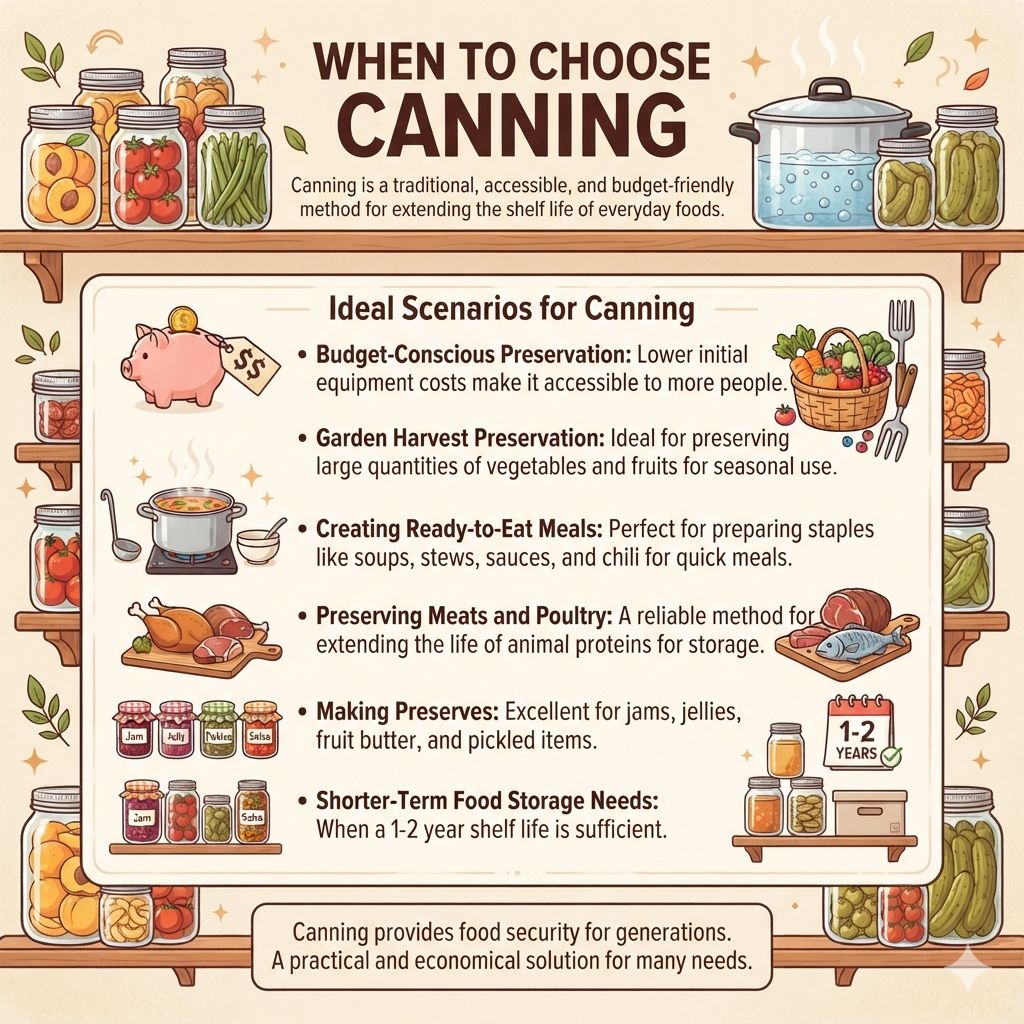
When to Choose Canning
Canning is a more traditional, accessible, and often more budget-friendly method for preserving food, making it a practical choice for many households. If your primary goal is to extend the shelf life of everyday foods like vegetables, fruits, meats, and sauces at a lower initial cost, canning is an excellent option. It’s particularly well-suited for creating ready-to-eat meals or ingredients that don’t require strict adherence to fresh texture or the absolute highest nutrient retention.
For families looking to preserve a garden’s harvest for the winter, canning is often the go-to method due to its lower equipment cost and widespread availability of resources and knowledge. It’s also great for making large batches of things like tomato sauce, pickles, jams, and preserved meats that are convenient to store and use. If you’re preparing for shorter-term food storage needs or if the slightly altered texture and reduced nutrient profile are acceptable compromises for the sake of cost and ease, canning is a solid choice.
Ideal Scenarios for Canning
- Budget-Conscious Preservation: Lower initial equipment costs make it accessible to more people.
- Garden Harvest Preservation: Ideal for preserving large quantities of vegetables and fruits for seasonal use.
- Creating Ready-to-Eat Meals: Perfect for preparing staples like soups, stews, sauces, and chili for quick meals.
- Preserving Meats and Poultry: A reliable method for extending the life of animal proteins for storage.
- Making Preserves: Excellent for jams, jellies, fruit butter, and pickled items.
- Shorter-Term Food Storage Needs: When a 1-2 year shelf life is sufficient.
Canning is a time-tested method that has provided food security for generations. Its accessibility and effectiveness for many common foods make it a cornerstone of home food preservation. While it may not preserve food to the same degree of freshness as freeze-drying, it offers a practical and economical solution for many needs.
Frequently Asked Questions
What is the main difference between freeze-drying and canning?
The main difference lies in the preservation method: freeze-drying removes water through sublimation at low temperatures, preserving nutrients and texture, while canning uses high heat to kill microorganisms and seal food in airtight containers, which can alter nutrient content and texture.
Which method is better for preserving nutrients?
Freeze-drying is significantly better for preserving nutrients, retaining up to 98% of vitamins and minerals, whereas canning can reduce nutrient content due to the high-heat processing.
Is freeze-dried food more expensive than canned food?
The initial cost of home freeze-drying equipment is much higher than for canning supplies. However, the longevity of freeze-dried food can make it more cost-effective over the very long term for large quantities.
How does the texture of freeze-dried food compare to canned food?
Freeze-dried food, when rehydrated, closely resembles its original fresh texture. Canned food typically has a softer, more cooked consistency due to the heat processing.
Which method is better for emergency preparedness?
For emergency preparedness, freeze-drying is often preferred due to its exceptional longevity, lightweight nature, and superior nutrient retention, making it ideal for long-term survival scenarios where weight and nutritional density are critical.
Final Thoughts
Deciding between freeze-drying vs canning hinges on your specific priorities: nutrient preservation, texture, cost, and intended use. Freeze-drying offers unparalleled quality for long-term storage and portability, albeit at a higher upfront cost. Canning provides an accessible, budget-friendly option for extending shelf life, with convenience for immediate consumption.
Both methods are valuable tools for food security, waste reduction, and self-sufficiency, and understanding their distinct advantages will help you choose the best fit for your needs.
Related pick: Check today's price on Amazon
Products related to this article
Sponsored / affiliate links. As an Amazon Associate I earn from qualifying purchases. I may earn additional commission from eligible campaigns.