Steam Canning vs Pressure Canning: Key Differences
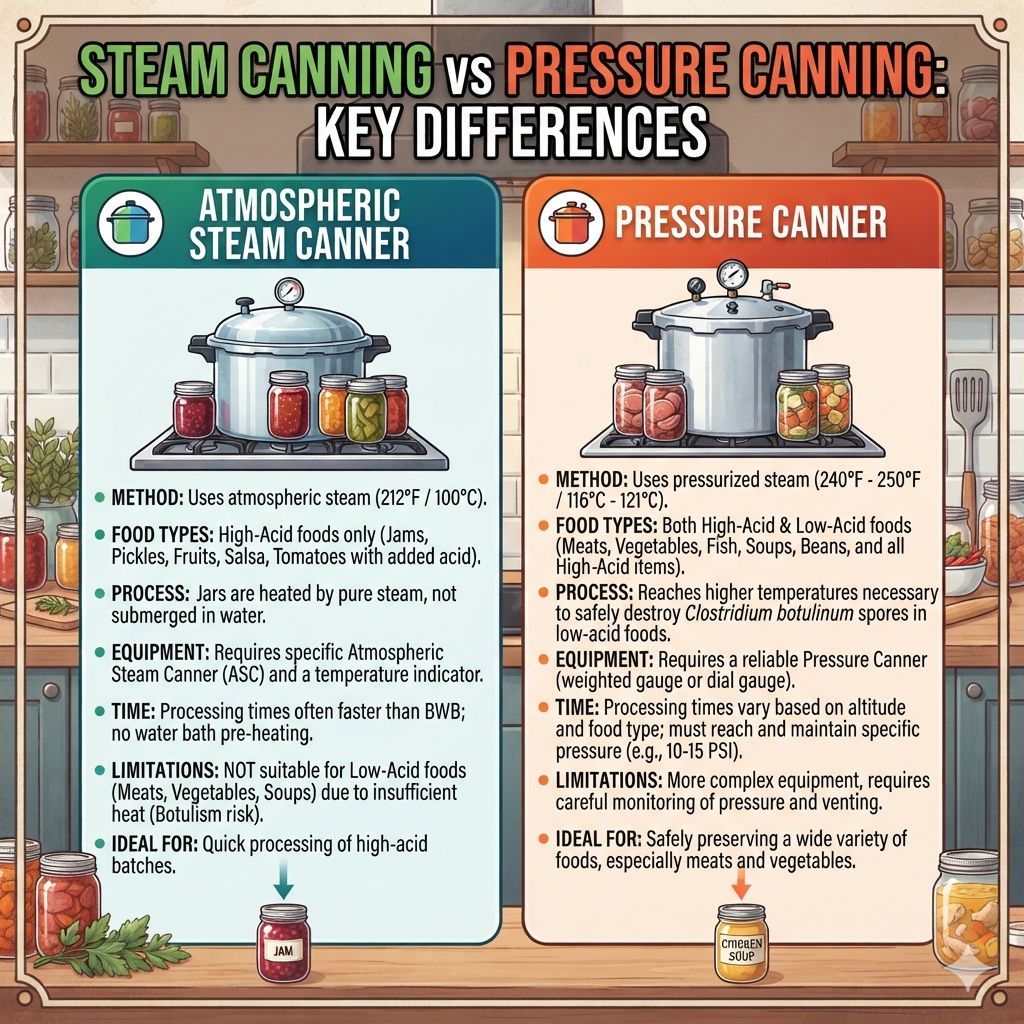
Deciding between steam canning and pressure canning can be confusing for home preservers. Both methods are designed to preserve food, but they serve different purposes and require distinct equipment. Understanding the fundamental steam canning vs pressure canning differences is crucial for safely and effectively preserving your harvest.
This guide breaks down what each method entails, when to use them, and what makes them unique so you can choose the right one for your needs.
Simply put, steam canning is ideal for preserving high-acid foods like fruits, jams, and pickles, while pressure canning is essential for low-acid foods such as vegetables, meats, and poultry to safely destroy harmful bacteria.
Key Takeaways
- Steam canning is suitable only for high-acid foods like fruits, jams, jellies, and pickles.
- Pressure canning is mandatory for low-acid foods to reach temperatures high enough to kill botulism spores.
- Steam canners operate using only boiling water and steam, reaching 212°F (100°C).
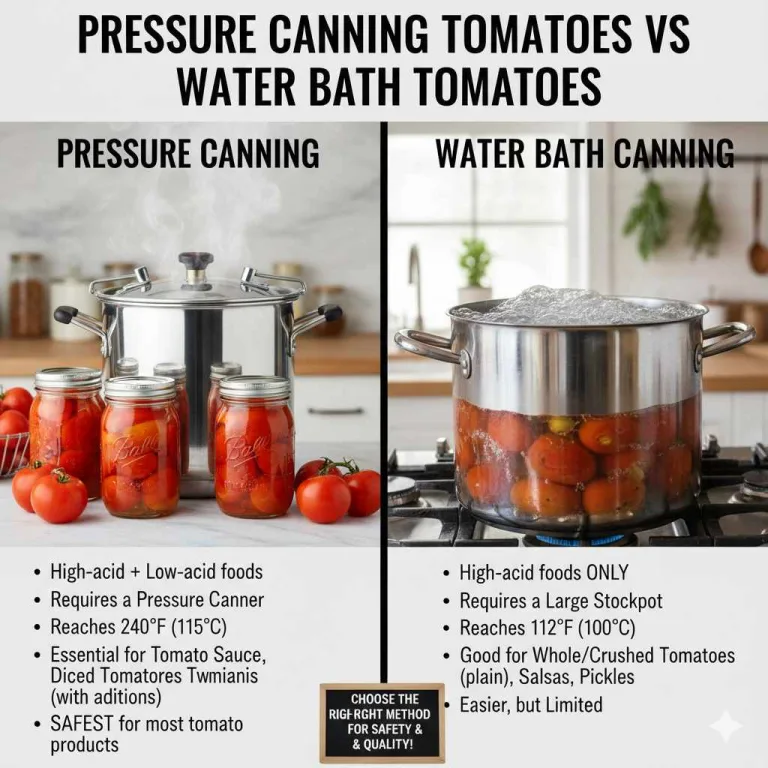
- Pressure canners utilize a sealed pot to build steam pressure, reaching temperatures above boiling (240°F/116°C or higher).
- Improper canning methods can lead to dangerous foodborne illnesses, including botulism.
- Always follow tested recipes and guidelines from reliable sources like the National Center for Home Food Preservation.
What is Steam Canning?
Steam canning, often referred to as water bath canning when using a standard water bath canner, is a preservation method primarily used for foods with a high natural acidity. This method relies on the heat generated by boiling water and steam to create a vacuum seal in jars, which preserves the food and extends its shelf life. The process involves submerging sealed jars in a large pot filled with boiling water, ensuring the water covers the jars by at least one to two inches.
The jars are then processed for a specific amount of time outlined in a tested recipe.
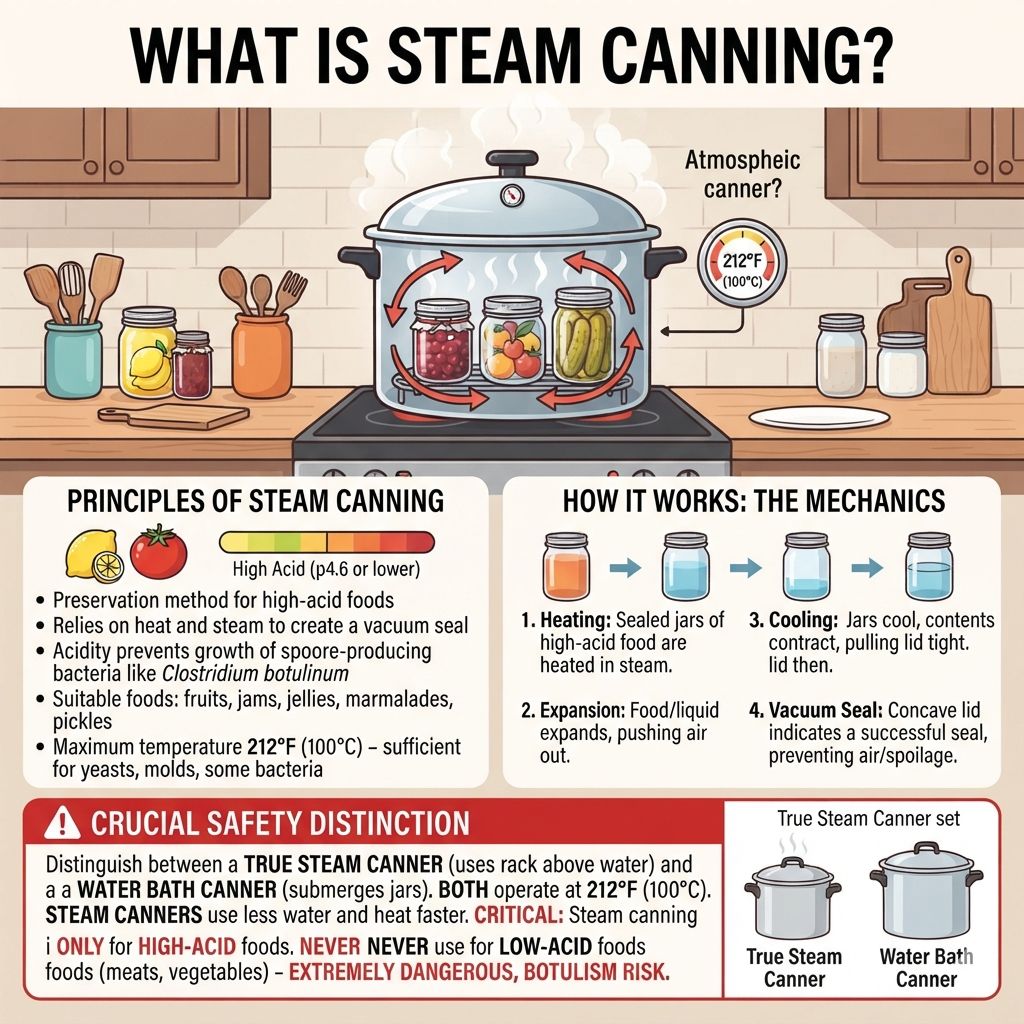
The key principle behind steam canning is that the acidity of the food prevents the growth of spoore-producing bacteria, particularly Clostridium botulinum, which can cause botulism. High-acid foods, generally those with a pH of 4.6 or lower, are less hospitable to these dangerous microorganisms. Examples include fruits, jams, jellies, marmalades, and pickles.
The temperature reached in a steam canner, which is the boiling point of water (212°F or 100°C at sea level), is sufficient to kill molds, yeasts, and some bacteria, but not the heat-resistant spores associated with botulism.
It’s crucial to distinguish between a true steam canner and a water bath canner. A steam canner uses a rack to hold jars above boiling water, relying on the steam to heat the jars. A water bath canner fully submerges jars in boiling water.
While both operate at 212°F (100°C), steam canners are often lauded for using less water and heating up faster. However, regardless of the type of canner, the foods being processed are the critical determinant of whether this method is safe. Using a steam canner for low-acid foods is extremely dangerous and should never be done.
How Steam Canning Works
The process is relatively straightforward and relies on basic principles of heat transfer and vacuum sealing. Here’s a breakdown of the mechanics:
- Heating the Food: Jars filled with high-acid food are sealed.
- Creating a Vacuum Seal: As the jars are heated in boiling water or steam, the food and liquid inside expand. This expansion pushes air out from under the lid.
- Cooling and Sealing: When the jars are removed from the canner and cool down, the contents contract. This contraction creates a vacuum under the lid, pulling it down tightly against the rim of the jar. A successful seal is indicated by the lid being concave and not moving when pressed.
- Preservation: The vacuum seal prevents air and spoilage organisms from entering the jar, thus preserving the food.
The temperature maintained by boiling water or steam is the key limitation. At sea level, water boils at 212°F (100°C). This temperature is sufficient to kill most spoilage organisms in high-acid foods.
However, it is not hot enough to destroy the highly resilient spores of Clostridium botulinum, which can survive and multiply in low-acid environments, producing deadly toxins.
When to Use Steam Canning
Steam canning is the go-to method for preserving a variety of high-acid foods. Its simplicity and efficiency make it popular for these specific applications. Always refer to a tested recipe to confirm the appropriate processing time and method.
- Fruits: All types of fruits, whether whole, sliced, or in sauce.
- Jams, Jellies, and Preserves: These fruit-based spreads are acidic by nature and ideal for water bath or steam canning.
- Marmalades: Similar to jams, their high acidity ensures safety.
- Pickles: Including dill pickles, bread and butter pickles, and other pickled vegetables where vinegar contributes significant acidity.
- Salsas: Many commercially prepared salsas are processed this way, but home recipes must be carefully balanced for acidity.
- Relishes: Fruit or vegetable-based relishes that are sufficiently acidic.
It’s imperative to use recipes that have been specifically tested for canning and are known to be safe. Adding extra sugar or fruit to a tested jam recipe might slightly alter its acidity, but generally, it remains safe for water bath processing. However, altering the vinegar or water ratios in pickles or salsas can significantly impact their safety.
What is Pressure Canning?
Pressure canning is a preservation method that utilizes a specialized canner to create a high-temperature, high-pressure environment. This method is absolutely essential for safely preserving low-acid foods, which include vegetables, meats, poultry, fish, and soups. Unlike steam canning, which operates at the boiling point of water, pressure canning achieves temperatures significantly above 212°F (100°C) by building steam pressure within a sealed canner.
These higher temperatures are critical for destroying the heat-resistant spores of Clostridium botulinum.
The U.S. Department of Agriculture (USDA) and other food safety organizations strongly recommend pressure canning for all low-acid foods. The spores of Clostridium botulinum can germinate and grow in oxygen-free environments (like sealed jars) when temperatures are between 40°F and 140°F (4°C and 60°C).
These spores are incredibly resilient and can survive boiling temperatures for extended periods. Only the high temperatures achieved under pressure, typically at least 240°F (116°C), can reliably destroy them. Failure to reach and maintain these temperatures when canning low-acid foods can result in a deadly toxin being produced.
A pressure canner typically consists of a large, heavy-duty pot with a locking lid, a dial gauge or weighted gauge to measure pressure, and often a vent pipe. When the canner is heated, water inside turns to steam, and the trapped steam increases the pressure within the pot. This pressure forces the temperature of the steam to rise above the normal boiling point.
For example, at 10 lbs of pressure, the temperature reaches approximately 240°F (116°C) at altitudes below 1,000 feet. This elevated temperature is what makes pressure canning safe for low-acid foods.
How Pressure Canning Works
The science behind pressure canning is all about creating an environment hot enough to neutralize the threat of botulism spores. Here’s the process:
- Sealed System: The pressure canner lid locks tightly, creating a sealed environment.
- Steam Generation: A small amount of water is added to the bottom of the canner, and as it heats up, it generates steam.
- Pressure Buildup: The steam is trapped by the lid, causing the internal pressure to rise.
- Temperature Increase: As pressure increases, the boiling point of water rises. This phenomenon allows the steam inside the canner to reach temperatures of 240°F (116°C) or higher.
- Processing: Jars filled with low-acid foods are processed for the time specified in tested recipes, ensuring they are exposed to the necessary high temperatures to destroy any harmful microorganisms.
- Cooling and Sealing: After the processing time, the canner is slowly depressurized. As the canner cools, the vacuum seal forms on the jars, similar to water bath canning.
The pressure gauge (dial or weighted) is crucial. It ensures that the correct pressure, and therefore the correct temperature, is maintained throughout the processing time. If the pressure drops below the recommended level, it indicates that the temperature has also dropped, and the processing time must be restarted from the point the pressure was lost to ensure safety.
When to Use Pressure Canning
Pressure canning is non-negotiable for any food that has a pH level above 4.6. These foods lack sufficient natural acidity to inhibit the growth of botulism spores at boiling temperatures. Using a pressure canner ensures that the food is heated to a temperature high enough to kill these dangerous spores.
- Vegetables: All vegetables, including corn, beans, carrots, potatoes, and leafy greens.
- Meats: Beef, pork, lamb, and game.
- Poultry: Chicken, turkey, and duck.
- Fish: Including tuna and salmon.
- Soups and Stews: Mixed dishes that contain low-acid ingredients like meats and vegetables.
- Broths and Stocks: Made from bones or meats.
- Legumes: Beans, lentils, and peas.
It is vital to follow a tested recipe precisely. These recipes have been developed based on extensive research and testing to ensure the correct processing time and pressure are used to safely preserve these foods. Deviating from tested recipes for low-acid foods can compromise the safety of the preserved product.
Steam Canning vs. Pressure Canning: A Detailed Comparison
The fundamental difference between steam canning and pressure canning lies in the temperature they achieve and the types of food each is safe for. While both aim to preserve food through heat processing and vacuum sealing, their operational mechanisms and safety parameters are distinct. Understanding these distinctions is paramount for anyone engaging in home food preservation.
Steam canning, whether using a dedicated steam canner or a traditional water bath canner, relies on the steady temperature of boiling water, which is 212°F (100°C) at sea level. This temperature is effective for high-acid foods because the acidity itself acts as a primary barrier against harmful bacteria, including botulism spores. The heat applied further kills most spoilage organisms.
However, this temperature is insufficient to destroy the robust spores of Clostridium botulinum.
Pressure canning, on the other hand, deliberately creates an environment where temperatures exceed 212°F (100°C). By trapping steam in a sealed vessel, the pressure increases, which in turn raises the boiling point of water. This allows pressure canners to reach temperatures of 240°F (116°C) or higher.
These extreme temperatures are necessary to effectively kill the heat-resistant spores of Clostridium botulinum, making pressure canning the only safe method for preserving low-acid foods.
The equipment also differs significantly. A steam canner or water bath canner is generally a large pot with a lid, designed to hold jars and water or steam. A pressure canner is a much more robust, heavy-duty pot with a specialized locking lid, a pressure gauge, and a vent.
The sealed nature of the pressure canner is key to its function, whereas water bath canners are not designed to be airtight during processing.
Equipment Differences
The canning equipment used for each method is a primary indicator of its purpose and capability. This is not just about size; it’s about the underlying principles of heat and pressure.
| Feature | Steam/Water Bath Canner | Pressure Canner |
|---|---|---|
| Primary Function | Boiling water/steam processing | High-pressure, high-temperature processing |
| Operating Temperature (at sea level) | 212°F (100°C) | 240°F (116°C) or higher (depending on pressure) |
| Lid Type | Loose-fitting, not designed to seal | Heavy-duty, locking lid with gasket |
| Pressure Monitoring | Not applicable | Dial gauge or weighted gauge |
| Safe Foods | High-acid foods (fruits, jams, pickles) | Low-acid foods (vegetables, meats, poultry, fish) |
This table clearly illustrates the critical distinctions in how these canners operate and the safety implications for food preservation.
Food Acidity: The Deciding Factor
The acidity of food is the most important factor in determining whether steam canning or pressure canning is appropriate. Acidity is measured by pH, with lower pH values indicating higher acidity. Foods with a pH of 4.6 or lower are considered high-acid and can be safely processed in a boiling water canner or steam canner.
Foods with a pH above 4.6 are considered low-acid. These include most vegetables, meats, poultry, and seafood. The danger with low-acid foods is the potential presence of Clostridium botulinum spores.
These spores can survive the temperatures reached in boiling water and can germinate in the oxygen-free environment of a sealed jar. If they germinate, they produce a potent neurotoxin that causes botulism, a severe and potentially fatal illness.
It’s not just about the food itself; recipe preparation plays a role. For example, adding vinegar to recipes for pickles and relishes increases their acidity, making them safe for water bath canning. However, if the amount of vinegar is reduced, or other low-acid ingredients are added in large quantities, the final product might become too low in acid for safe water bath processing.
Similarly, adding meat or broth to vegetable soup drastically lowers its acidity, requiring pressure canning.
| Food Type | pH Range (Approximate) | Safe Canning Method |
|---|---|---|
| Fruits (most) | 2.5 – 4.0 | Steam/Water Bath |
| Jams & Jellies | 2.8 – 3.8 | Steam/Water Bath |
| Pickles (vinegar-based) | 3.0 – 4.5 | Steam/Water Bath |
| Vegetables (most) | 4.8 – 6.5 | Pressure Canning |
| Meats & Poultry | 5.5 – 6.8 | Pressure Canning |
| Fish | 6.0 – 6.8 | Pressure Canning |
This table highlights the critical pH thresholds that determine the safe canning method for various food categories.
Safety First: Why the Distinction Matters
The most critical aspect of understanding steam canning vs pressure canning is recognizing the inherent safety implications. Improper canning of low-acid foods using a steam or water bath canner is a direct route to botulism, a serious foodborne illness. Clostridium botulinum thrives in environments with low acidity, high moisture, and no oxygen – precisely the conditions found in a sealed jar of improperly canned low-acid food.
Botulism toxin is odorless, colorless, and tasteless, meaning you cannot detect its presence by appearance or smell. Symptoms can include nausea, vomiting, diarrhea, blurred vision, muscle weakness, and difficulty breathing. In severe cases, it can be fatal.
The U.S. Centers for Disease Control and Prevention (CDC) reports that while rare, botulism outbreaks can occur from improperly home-canned foods. For instance, a 2015 outbreak linked to commercially canned potato salad highlighted the ongoing risk associated with improper processing.
For these reasons, adhering strictly to tested recipes and using the correct canning method for the specific food type is non-negotiable. Reputable sources like the National Center for Home Food Preservation (NCHFP) and university extension offices provide scientifically validated canning guidelines. These resources are essential for ensuring the safety and quality of your preserved foods.
Using an outdated recipe or a method not recommended for a particular food can have severe consequences.
Altitude Adjustments
Both steam canning and pressure canning require adjustments based on altitude. At higher altitudes, the atmospheric pressure is lower, which affects the boiling point of water. This means that at higher elevations, water boils at a cooler temperature than at sea level.
For steam and water bath canning, processing times are extended at higher altitudes to compensate for the lower boiling temperature. For example, at altitudes above 1,000 feet, processing times for high-acid foods are typically increased by 5-10 minutes, with further increases for higher altitudes. A standard guideline from the NCHFP suggests adding 1 minute of processing time for every 1,000 feet above sea level for altitudes between 1,000 and 6,000 feet.
For pressure canning, the required pressure is increased at higher altitudes. This is because a higher internal pressure is needed to achieve the necessary target temperature of 240°F (116°C). For instance, at altitudes between 1,000 and 2,000 feet, a dial gauge canner might require 11 lbs of pressure instead of 10 lbs.
At higher altitudes, even more pressure might be needed. Weighted gauge canners also have specific pressure requirements based on altitude. It is critical to consult canning charts that provide these specific altitude adjustments for both steam/water bath and pressure canning.
Common Canning Mistakes to Avoid
Even experienced canners can make mistakes. Being aware of common errors can help prevent spoiled food and, more importantly, ensure safety. These mistakes often stem from misunderstanding the principles of steam canning vs pressure canning or not following tested recipes.
- Using the Wrong Canner: The most critical mistake is using a steam or water bath canner for low-acid foods.
- Not Following Tested Recipes: Modifying recipes by changing ingredient quantities (especially acidifiers like vinegar or lemon juice) or processing times can lead to unsafe products.
- Incorrect Altitude Adjustments: Failing to adjust processing times or pressure for your specific altitude can lead to under-processing and potential spoilage or illness.
- Improper Sealing: Not ensuring jars are properly filled, air bubbles are removed, rims are clean, and lids are properly tightened can lead to seal failures.
- Under-processing: Cutting processing times short or failing to maintain the correct temperature or pressure for the entire duration.
- Jar and Lid Issues: Using jars with nicks on the rims, reusing lids that are damaged, or not following manufacturer instructions for lid application.
- Cooling Too Quickly: Rapid cooling of jars after processing, especially with pressure canners, can sometimes cause seal failures.
Always double-check your equipment, recipe, and procedures before you begin canning. This diligence is the best defense against canning failures and food safety risks.
Can You Use a Pressure Canner for Steam Canning?
Yes, you can use a pressure canner as a water bath canner for high-acid foods, but it’s not always the most efficient method. A pressure canner can be used like a large pot for water bath canning by simply not putting the lid on, or if it has a locking mechanism that won’t seal without pressure, you might need to remove the pressure regulator or weight. However, standard pressure canners are much larger and heavier than typical water bath canners, making them cumbersome for processing smaller batches of fruits or jams.
When using a pressure canner for water bath canning, you would fill it with the required amount of water to cover the jars by one to two inches. You would then bring the water to a rolling boil and process your jars according to the tested recipe’s time. The key is that you are not using the pressure-sealing lid or the pressure-building function; you are simply using the pot as a large boiling water bath.
This is an acceptable alternative if you don’t have a dedicated water bath canner.
However, it is critical to reiterate that a pressure canner’s primary and essential function is for low-acid foods. Using it as intended for low-acid foods requires carefully following the pressure and time guidelines specific to the food and your altitude. Attempting to pressure can high-acid foods is generally unnecessary and can sometimes affect the texture or quality of the food due to the higher temperatures and longer processing times often required for pressure canning.
Steam Canner vs. Pressure Canner Processing Times
Processing times are one of the most significant differentiators when comparing steam canning vs pressure canning. These times are not interchangeable and are based on the temperature achieved by each method and the type of food being preserved.
- Steam/Water Bath Canning: Processing times are generally shorter and range from 5 minutes for some very small jars of fruit to over 30 minutes for larger jars of certain fruits or pickles. These times are calculated based on the consistent 212°F (100°C) temperature of boiling water.
- Pressure Canning: Processing times are typically longer and can range from 20 minutes for small jars of vegetables to 75-90 minutes or more for large jars of meat or mixed dishes. These times are calculated to ensure that the food reaches and is held at temperatures of at least 240°F (116°C) for a sufficient duration to destroy botulism spores.
For example, a pint of sliced peaches might require 15-20 minutes in a water bath canner. The same quantity of peaches, if processed in a pressure canner (which would be unusual and unnecessary for high-acid foods), might require a similar or even longer time at a specific pressure, but the goal is different. The critical point is that you would never substitute pressure canning times for water bath canning times, or vice versa.
Always follow the specific processing time and pressure (if applicable) outlined in your tested recipe.
Choosing the Right Method for Your Needs
Deciding whether to use steam canning or pressure canning boils down to the type of food you are preserving. The decision is driven by safety and efficacy. Both methods, when used correctly, are valuable tools for extending the life of your food and reducing waste.
If your pantry is stocked with fruits, homemade jams, jellies, or pickled vegetables, steam canning (or water bath canning) is your go-to. These methods are efficient, relatively quick, and perfect for the high-acid nature of these foods. Investing in a dedicated water bath canner or a steam canner might be a worthwhile addition to your kitchen tools if you frequently preserve these types of items.
For anyone looking to preserve vegetables, meats, poultry, fish, or mixed dishes like soups and stews, a pressure canner is an essential piece of equipment. There is no safe alternative for preserving these low-acid foods at home. While the initial investment and learning curve for a pressure canner might seem higher, it is absolutely critical for ensuring the safety of these food types.
Many home preservers find that owning both types of canners offers the most flexibility for their harvest.
What About Other Canning Methods?
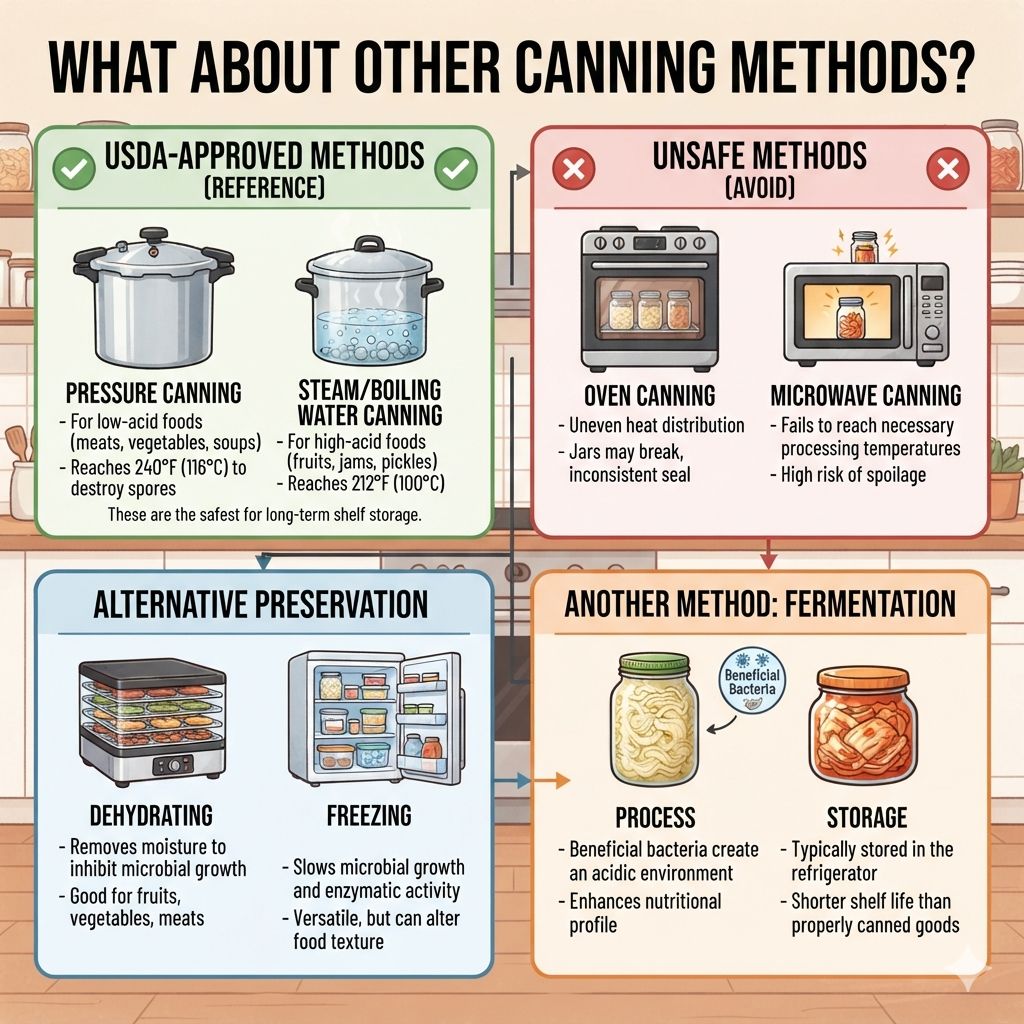
While steam and pressure canning are the two primary USDA-approved methods for canning at home, other methods exist but are generally not recommended or are unsafe for long-term shelf storage. Oven canning and microwave canning are frequently discussed but are highly discouraged by food safety experts due to their inability to guarantee consistent temperatures and achieve safe processing.
Dehydrating and freezing are excellent alternative preservation methods. Dehydrating removes moisture, inhibiting microbial growth, and is suitable for fruits, vegetables, and meats. Freezing preserves food by slowing down microbial growth and enzymatic activity; it’s a versatile method for almost all types of food, though it can alter texture.
Fermentation is another age-old method, particularly for vegetables like sauerkraut and kimchi, where beneficial bacteria create an acidic environment that preserves the food and enhances its nutritional profile. However, fermented foods are typically stored in the refrigerator and have a shorter shelf life than properly canned goods.
Frequently Asked Questions
What is the main difference between steam canning and pressure canning?
The main difference lies in the operating temperature and the types of food each method can safely preserve. Steam canning (or water bath canning) uses boiling water temperatures (212°F/100°C) and is only safe for high-acid foods. Pressure canning reaches temperatures above boiling (240°F/116°C or higher) under pressure, making it safe for low-acid foods.
Can I use a steam canner to can meat?
No, you absolutely cannot use a steam canner (or a water bath canner) to can meat. Meat is a low-acid food, and boiling temperatures are not sufficient to destroy the dangerous spores of Clostridium botulinum. Only a pressure canner can reach the necessary temperatures to safely preserve meat.
How long do I process food in a steam canner?
Processing times for steam canning vary depending on the food and jar size, but they are generally shorter than pressure canning. Always refer to a tested recipe for the exact processing time, and remember to adjust for altitude if you are above 1,000 feet.
What happens if I use a pressure canner but don’t get the correct pressure?
If you do not achieve or maintain the correct pressure in a pressure canner, the temperature inside the canner will be too low to kill harmful bacteria and spores. This means the food may not be safely preserved and could be a risk for foodborne illness, particularly botulism.
Is steam canning as safe as pressure canning?
Both methods are safe when used correctly for the appropriate food types. Steam canning is safe for high-acid foods because their acidity naturally inhibits dangerous bacteria. Pressure canning is safe for low-acid foods because the high temperatures it achieves are necessary to destroy heat-resistant spores that thrive in low-acid environments.
The danger arises from using the wrong method for the wrong food.
Final Thoughts
Mastering the distinction between steam canning vs pressure canning is fundamental to safe and successful home food preservation. While steam canning is a simple and effective method for fruits, jams, and pickles, pressure canning is the indispensable tool for safely preserving vegetables, meats, and other low-acid foods. Always prioritize safety by using tested recipes, the correct equipment for the food type, and making necessary altitude adjustments.
With diligence and the right knowledge, you can confidently preserve your harvest for enjoyment year-round.
Products related to this article
Sponsored / affiliate links. As an Amazon Associate I earn from qualifying purchases. I may earn additional commission from eligible campaigns.