Canning Salt vs Regular Salt: Key Differences
Choosing the right type of salt for preserving food can significantly impact the taste, texture, and safety of your canned goods. While both canning salt and regular table salt appear similar, their compositions differ, leading to distinct outcomes in your preserving efforts. Understanding these differences is crucial for anyone looking to achieve consistent, high-quality results in their home canning projects.
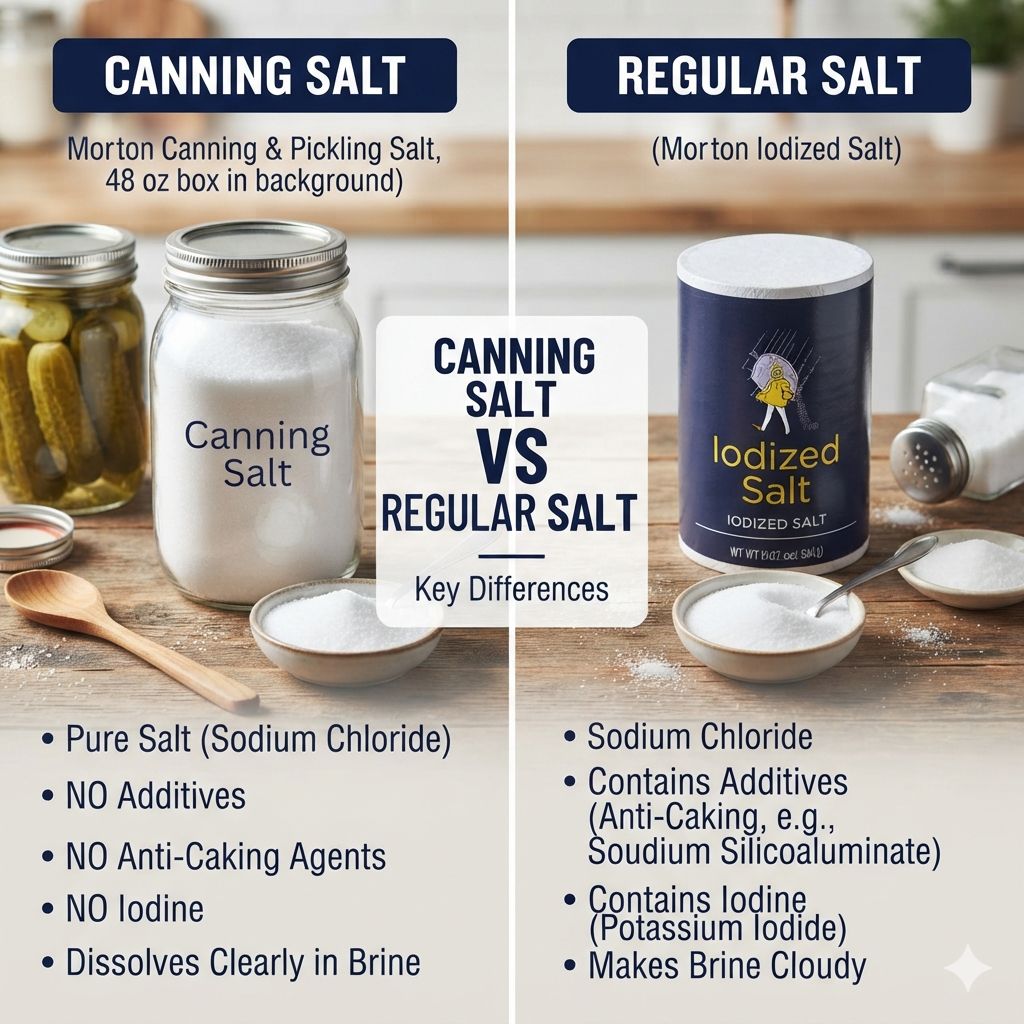
Simply put, canning salt is pure sodium chloride without any additives, ideal for preserving food’s color and texture. Regular table salt contains anti-caking agents and iodine, which can cause cloudiness, off-flavors, and undesirable discoloration in canned goods, making canning salt the superior choice for consistent, high-quality preserving results.
Key Takeaways
- Canning salt is pure sodium chloride (NaCl) with no additives.
- Regular table salt contains anti-caking agents and iodine, which affect preserving.
- Using the wrong salt can lead to cloudy brine, off-flavors, and discoloration in canned foods.
- For best results in home canning, always opt for dedicated canning salt.
What is Canning Salt?
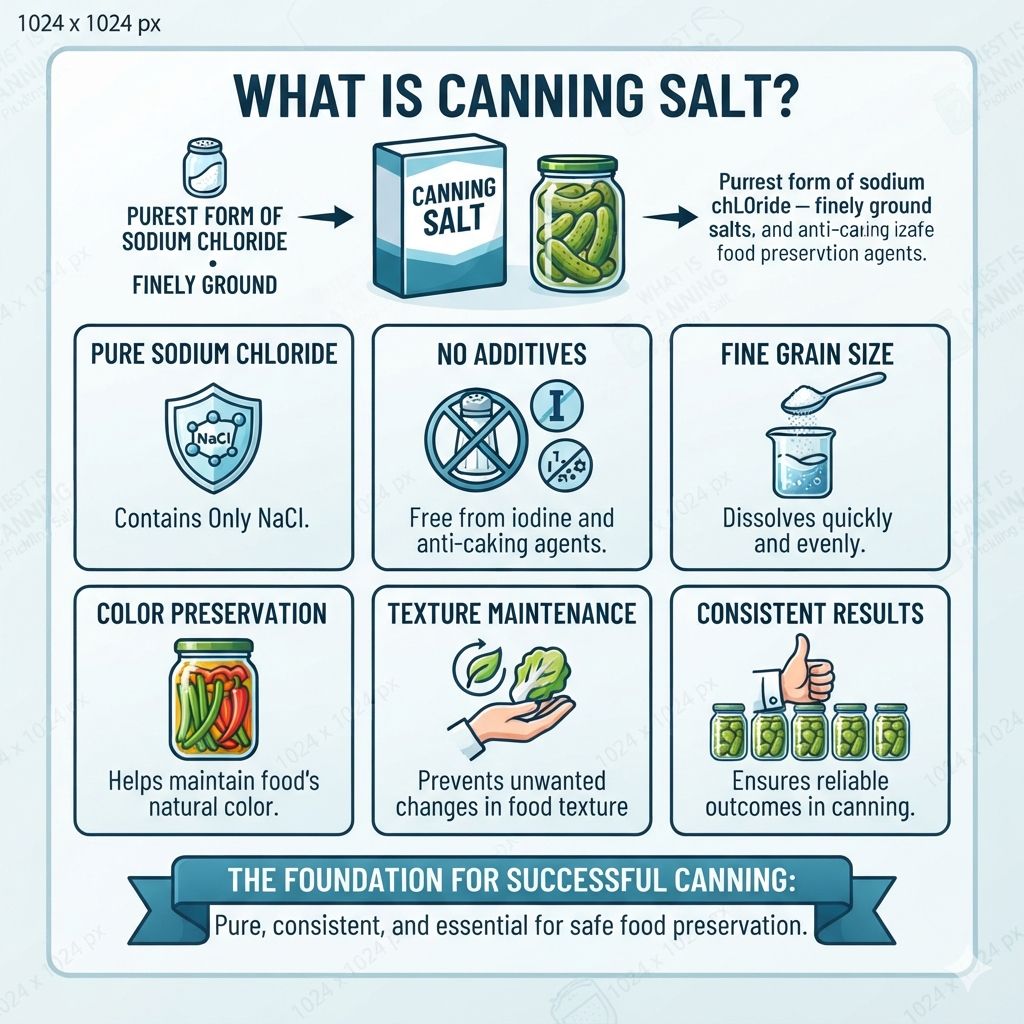
Canning salt, also known as pickling salt, is a finely ground, pure form of sodium chloride. Its primary characteristic is its purity; it contains absolutely no additives, such as anti-caking agents or iodine. This is a critical distinction because the absence of these extra ingredients is what makes it ideal for food preservation.
When you are canning, the goal is often to maintain the natural color and texture of the food, and canning salt facilitates this by not introducing elements that could interfere with those qualities.
The fine grain size of canning salt ensures that it dissolves quickly and evenly into the brine or pickling liquid. This uniform dissolution is essential for achieving consistent salt concentrations throughout the jars, which is vital for both flavor and effective preservation. Uneven salt distribution can lead to some parts of the food being under-salted (risking spoilage) and others being over-salted (making them unpalatable).
Manufacturers typically produce canning salt with stringent quality controls to ensure it meets the specific needs of home canners. This focus on purity and consistency means that when you reach for a box of canning salt, you can be confident it will perform as expected, without introducing unwanted chemical reactions or flavor alterations to your precious preserves. It’s a simple ingredient, but its role is foundational to successful canning.
- Pure Sodium Chloride: Contains only NaCl.
- No Additives: Free from iodine and anti-caking agents.
- Fine Grain Size: Dissolves quickly and evenly.
- Color Preservation: Helps maintain food’s natural color.
- Texture Maintenance: Prevents unwanted changes in food texture.
- Consistent Results: Ensures reliable outcomes in canning.
What is Regular Table Salt?
Regular table salt, the kind most people have in their kitchen for everyday cooking, is chemically similar to canning salt in that its primary ingredient is sodium chloride. However, the key difference lies in the additional ingredients commonly found in it. These additives are included for various reasons, primarily to improve its handling and storage properties in a typical kitchen environment.
One common additive is an anti-caking agent, such as silicon dioxide or calcium silicate. These agents prevent the salt crystals from clumping together, ensuring it flows freely from the shaker. While this is convenient for everyday use, these agents can cause cloudiness in canning liquids.
Another frequent addition is iodine, either as potassium iodide or sodium iodide, which is added for nutritional purposes to prevent iodine deficiency. However, iodine can cause discoloration, turning light-colored foods like vegetables and fruits a brownish or greyish hue, which is undesirable in preserved goods.
The presence of these additives means that regular table salt is not the best choice for canning. The anti-caking agents can create a hazy or cloudy brine, making your canned goods look unappetizing. The iodine can alter the vibrant colors of fruits and vegetables, making them appear dull or discolored.
While table salt can technically preserve food, the aesthetic and sensory qualities of the final product may be compromised. Therefore, for optimal results, especially when appearance matters, it’s best to reserve table salt for general cooking and use specialized salt for canning.
- Primary Ingredient: Sodium Chloride (NaCl).
- Common Additives: Anti-caking agents (e.g., silicon dioxide), Iodine (e.g., potassium iodide).
- Purpose of Additives: Prevent clumping, provide nutritional iodine.
- Potential Issues in Canning: Cloudiness, discoloration (especially in fruits and vegetables).
- Flavor Impact: Can sometimes impart a metallic or off-flavor due to additives.
- Granule Size: Varies, but often finer than pickling salt, though not always.
Why is Additive-Free Salt Crucial for Canning?
The fundamental reason why additive-free salt, like canning salt, is crucial for preserving food lies in the integrity of the food itself. When you embark on the canning process, you are aiming to capture the food’s essence – its color, flavor, and texture – and preserve it for future enjoyment. Additives in regular table salt work against these goals.
Anti-caking agents, while great for keeping salt flowing, can cause a cloudy appearance in the brine or liquid used for canning. This cloudiness is not just an aesthetic issue; it can obscure the visual appeal of your canned goods, making them look less fresh or appealing. For instance, pickled cucumbers might appear hazy rather than crisp and clear, and canned fruits might have a dull, murky liquid surrounding them.
This visual compromise can significantly detract from the overall presentation and perceived quality of your homemade preserves.
Iodine is another significant concern. While beneficial for health, its presence in canning can lead to undesirable chemical reactions with the food. Foods like apples, peaches, pears, and even lighter-colored vegetables can turn a brownish or grayish color when exposed to iodine.
This discoloration can make the food look unappetizing and potentially alter the perception of freshness. The goal of canning is to preserve food at its peak, and this includes its vibrant, natural colors. Therefore, avoiding iodized salt is a simple yet effective step to ensure your preserved foods retain their attractive appearance.
| Effect of Additives in Canning | Canning Salt (No Additives) | Regular Table Salt (With Additives) |
|---|---|---|
| Brine Appearance | Clear and bright | Often cloudy or hazy |
| Food Color | Retains natural vibrant colors | Can cause discoloration (brownish/greyish hues) |
| Flavor Profile | Clean, pure salty taste | May have a slightly metallic or “off” taste from additives |
| Texture Impact | No negative impact | Generally minimal, but some additives could theoretically affect it over long periods |
This comparison highlights why pure salt is the professional’s choice for canning and pickling. The visual and taste differences can be quite pronounced.
Warning: While using regular table salt won’t typically make your food unsafe to eat, it will likely compromise the visual appeal and potentially the flavor of your canned goods. For the best and most aesthetically pleasing results, always use canning salt.
Impact on Taste and Texture
Beyond visual concerns, the type of salt used can also subtly influence the taste and texture of preserved foods. Canning salt is designed to be neutral, contributing only the desired saltiness without any secondary flavor notes. This allows the natural flavors of the fruits, vegetables, or meats being preserved to shine through.
The pure saltiness enhances these flavors without introducing complexity or unwanted undertones that might distract from the primary ingredient.
Regular table salt, on the other hand, can sometimes introduce a slight metallic or chemical taste due to the anti-caking agents and iodine. While this might not be immediately apparent in strongly flavored dishes, it can be noticeable in delicate preserves like fruit compotes or lightly pickled vegetables. These subtle off-flavors can detract from the authentic taste you worked to achieve.
Regarding texture, canning salt’s fine, uniform grain size ensures it dissolves completely, leading to consistent osmotic pressure across all food items in the jar. This is important for drawing out excess moisture from vegetables (firming them up) and for ensuring that any introduced brining liquid penetrates evenly. While table salt also dissolves, the presence of anti-caking agents could, in theory, slightly alter the way the liquid interacts with the food surfaces over very long storage periods.
However, the primary textural benefits of canning salt come from its reliable salt concentration, which is critical for maintaining the desired crispness in pickles and firmness in other preserved items.
- Pure Salty Flavor: Enhances natural food tastes.
- Neutral Profile: Does not impart additional flavors.
- Consistent Osmotic Pressure: Aids in drawing out moisture and firming foods.
- Even Brine Distribution: Contributes to uniform texture throughout the jar.
- Avoids Metallic Tastes: Prevents off-flavors from additives.
- Texture Enhancement: Supports crispness in pickles and firm fruits.
Canning Salt vs. Kosher Salt vs. Sea Salt
It’s a common question: can other types of salt, like Kosher salt or sea salt, be used instead of canning salt? While they share some similarities, they also have differences that make them less ideal for preserving compared to dedicated canning salt. Understanding these distinctions helps in making the best choice for your canning endeavors.
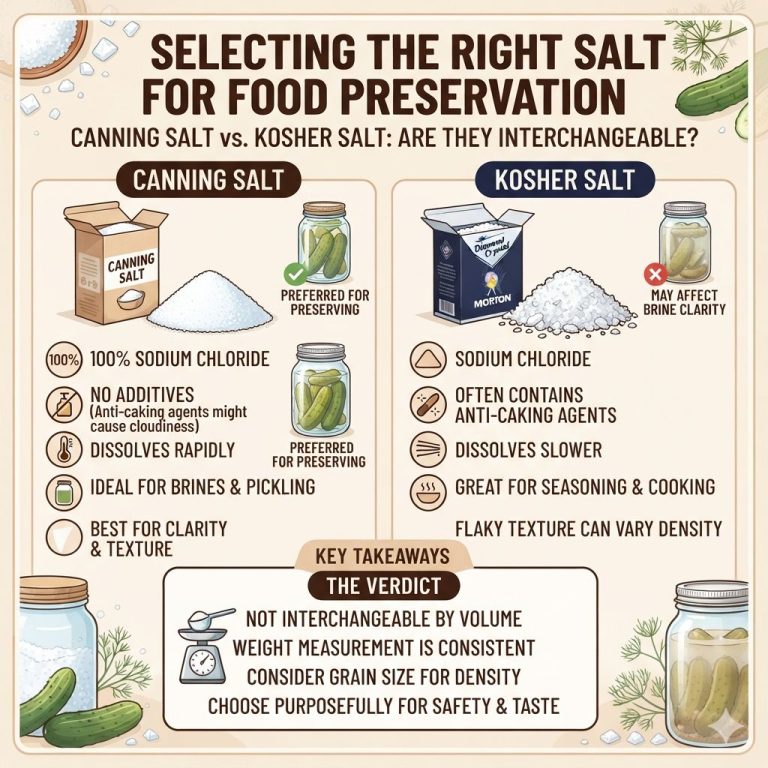
Kosher salt is a popular choice in general cooking for its flavor-enhancing properties and its ability to dissolve quickly. However, many brands of Kosher salt contain anti-caking agents. Furthermore, Kosher salt crystals are typically larger and flakier than canning salt, meaning you would need to adjust the measurements if substituting.
The larger crystals might not dissolve as uniformly or as quickly, potentially leading to inconsistent salt levels in your jars. Some brands may also contain iodine, though this is less common than in table salt. If you choose to use Kosher salt, it’s imperative to find a brand that is pure sodium chloride with no additives and to carefully measure by weight rather than volume due to the differing crystal sizes.
Sea salt is harvested from evaporated seawater and can vary greatly in its mineral content and grain size depending on the source and processing. While some sea salts are pure sodium chloride, many retain trace minerals that can affect flavor and color. These minerals, while natural, can sometimes lead to unexpected outcomes in canning.
Like Kosher salt, sea salt can also have different crystal sizes, affecting dissolution rates and consistency. If you opt for sea salt, ensure it is pure, unrefined, and additive-free, and be prepared for potential variations in your results compared to using specifically formulated canning salt.
| Salt Type | Additives (Common) | Grain Size | Suitability for Canning |
|---|---|---|---|
| Canning Salt | None | Fine, uniform | Excellent |
| Regular Table Salt | Anti-caking agents, Iodine | Fine | Poor (can cause cloudiness & discoloration) |
| Kosher Salt | Often anti-caking agents | Flaky, irregular | Fair to Poor (requires careful selection & measurement) |
| Sea Salt (Unrefined) | None (typically) | Varies greatly | Fair (variable results, can affect flavor) |
This table underscores why dedicated canning salt remains the safest and most reliable option for preserving food.
How to Choose the Right Salt for Your Preserves
When you’re standing in the grocery aisle, deciding which salt to put in your cart for canning, a few key factors should guide your decision. The primary goal is to ensure the salt contributes positively to the preservation process without introducing unwanted side effects. This means prioritizing purity and specific properties that benefit the food being canned.
First and foremost, look for labels that explicitly state “Canning Salt” or “Pickling Salt.” These products are formulated specifically for this purpose and are guaranteed to be pure sodium chloride without additives like iodine or anti-caking agents. This is the most straightforward and reliable choice. If a product is labeled simply as “Salt” or “Table Salt,” it’s highly likely to contain additives that you want to avoid for canning.
If you cannot find dedicated canning salt, the next best option is to seek out a brand of pure, non-iodized, additive-free salt. Some brands of Kosher salt or sea salt might fit this description, but you must read the ingredients list meticulously. Ensure the only ingredient listed is “Salt” or “Sodium Chloride.” Pay attention to the grain size; very coarse grains might require you to adjust your recipes, as most canning recipes are written assuming the volume of fine-grained canning salt.
If in doubt, sticking to the recommended “canning salt” specified in your recipe is always the safest bet for predictable and high-quality results in your home preservation projects.
- Read the Label Carefully: Always look for “Canning Salt” or “Pickling Salt.”
- Check Ingredients: If not specifically labeled for canning, ensure the salt is pure sodium chloride with no iodine or anti-caking agents.
- Verify Grain Size: Recipes are usually formulated for fine-grained canning salt; adjust if using coarser salts like Kosher or sea salt.
- Prioritize Purity: The absence of additives is key to preventing discoloration and cloudiness.
- When in Doubt, Stick to the Recipe: If a recipe specifies canning salt, use it for the best outcome.
- Consider Flavor Impact: Pure salt enhances food flavors; additives can detract.
- Consult Reputable Sources: Rely on Ball, Bernardin, or university extension office guidelines for salt recommendations.
Tip: Always use salt specifically labeled as “canning salt” or “pickling salt” for the most consistent and visually appealing results in your preserved foods. If you must substitute, ensure it’s pure sodium chloride without any additives.
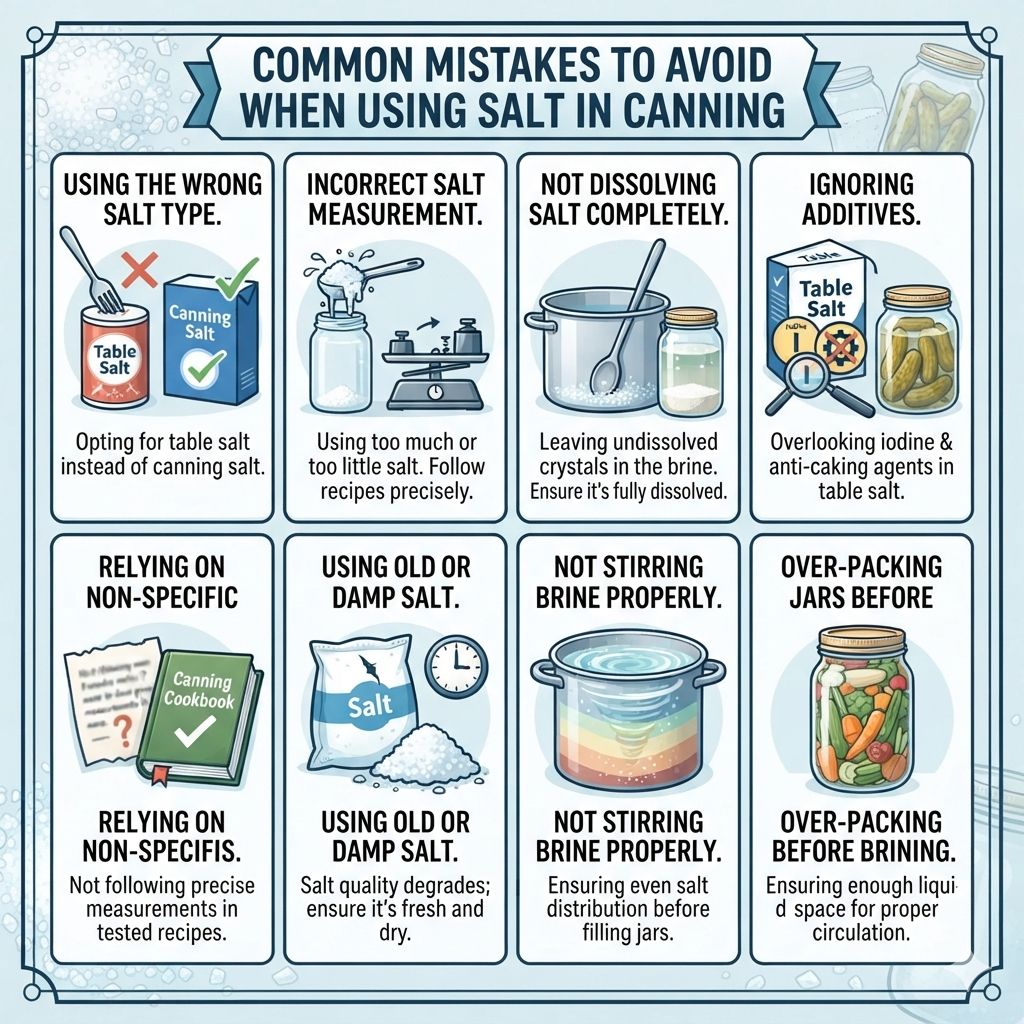
Common Mistakes to Avoid When Using Salt in Canning
When preparing to preserve your harvest, using the correct type and amount of salt is paramount for safety, quality, and longevity. Several common mistakes can undermine your efforts, leading to spoilage, undesirable textures, or unappetizing appearances. Being aware of these pitfalls can help you avoid them and ensure successful canning every time.
One of the most frequent errors is using the wrong type of salt. As discussed, regular table salt with its additives (iodine and anti-caking agents) is a prime culprit for cloudy brines and discolored foods. Many home canners might not realize the impact these seemingly minor ingredients can have.
Another mistake is miscalculating the salt quantity. Canning recipes are precise for a reason; they establish the correct salinity for both flavor and preservation. Over-salting can make food inedible, while under-salting can compromise its safety, increasing the risk of spoilage.
Always measure salt carefully according to your recipe’s instructions.
Another oversight is not dissolving the salt completely. If salt crystals remain at the bottom of the pot or jar, the salt concentration will be inconsistent throughout the food. This can lead to some items being under-preserved and others being too salty.
Ensure the salt is fully dissolved in the liquid before adding it to the jars or before processing. Finally, neglecting to check the salt’s purity is a critical mistake. Assuming all “plain” salts are suitable without reading labels can lead to the aforementioned issues with additives.
Always double-check that your chosen salt is pure sodium chloride and free from any unwanted compounds.
- Using the Wrong Salt Type: Opting for table salt instead of canning salt.
- Incorrect Salt Measurement: Using too much or too little salt.
- Not Dissolving Salt Completely: Leaving undissolved crystals in the brine.
- Ignoring Additives: Overlooking iodine and anti-caking agents in table salt.
- Relying on Non-Specific Recipes: Not following precise salt measurements in tested canning recipes.
- Using Old or Damp Salt: Salt quality can degrade; ensure it’s fresh and dry.
- Not Stirring Brine Properly: Ensuring even salt distribution before filling jars.
Frequently Asked Questions
What is the primary difference between canning salt and table salt?
The primary difference is purity. Canning salt is 100% sodium chloride with no additives, ensuring clear brines and natural food colors. Table salt typically contains iodine and anti-caking agents, which can cause cloudiness and discoloration in canned goods.
Can I use Kosher salt for canning?
While some Kosher salts are pure sodium chloride, many contain anti-caking agents. If you choose Kosher salt, ensure it’s explicitly additive-free and non-iodized, and be aware that its larger grain size may require volumetric adjustments compared to fine canning salt.
Why does iodine in salt cause discoloration in canned foods?
Iodine can react chemically with certain compounds in fruits and vegetables, leading to oxidation that results in a brownish or greyish hue. This is particularly noticeable in light-colored produce like apples, pears, peaches, and some vegetables.
How much salt should I use for canning?
The amount of salt to use depends entirely on the specific canning recipe. Always follow the recipe’s instructions precisely, as the salt quantity is critical for both flavor and safe preservation. Different recipes and foods require varying salt concentrations.
Is it safe to can with regular table salt if I can’t find canning salt?
It is generally considered safe from a spoilage perspective, as salt does preserve food. However, the aesthetic quality of your canned goods will likely be compromised due to cloudiness and discoloration. For the best results, it is highly recommended to use canning salt.
Final Thoughts
Understanding the distinctions between canning salt and regular table salt is essential for any serious home canner. While the latter is fine for everyday cooking, its additives can negatively impact the appearance and taste of preserved foods. Opting for pure, additive-free canning salt ensures clear brines, vibrant colors, and the best possible quality for your homemade preserves.
Making this simple switch is a key step toward achieving consistently excellent results in your canning endeavors.
Products related to this article
Sponsored / affiliate links. As an Amazon Associate I earn from qualifying purchases. I may earn additional commission from eligible campaigns.