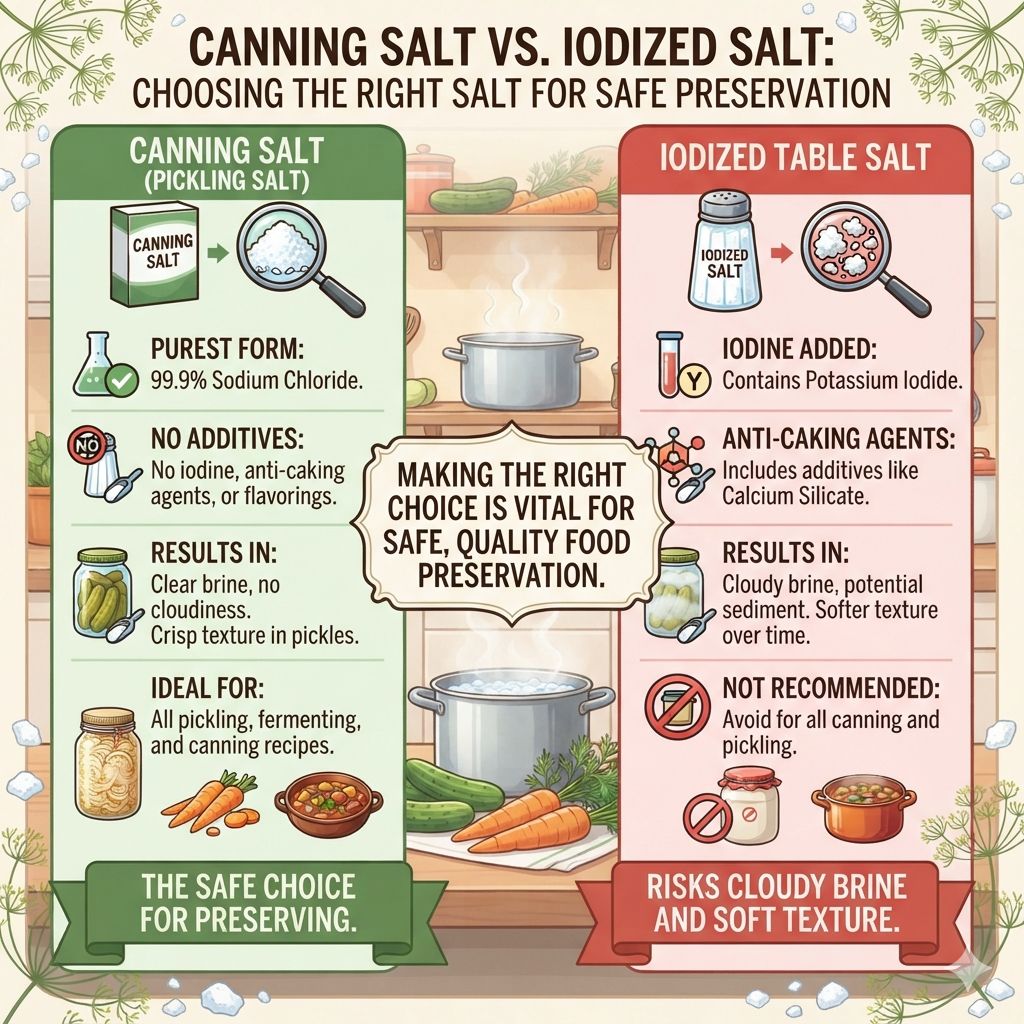
Canning salt and iodized salt differ in purity and use, making the right choice important for safe, quality food preservation.
Simply put, canning salt is pure salt without additives like iodine or anti-caking agents, making it ideal for preserving food where clarity and preventing discoloration are important. Iodized salt contains iodine and anti-caking agents, which can cause cloudiness, discoloration, and off-flavors in canned goods, making it unsuitable for most canning applications.
Key Takeaways
- Canning salt is pure sodium chloride, free from additives like iodine and anti-caking agents.
- Iodized salt contains iodine and anti-caking agents that can cause undesirable changes in canned food’s appearance and taste.
- For optimal results in pickling and preserving, always opt for canning salt or kosher salt.
- Understanding the difference between canning salt vs iodized salt ensures the quality and safety of your home-preserved foods.
- Using the wrong type of salt can lead to cloudy brine, discolored vegetables, and a metallic taste.
What is Canning Salt?
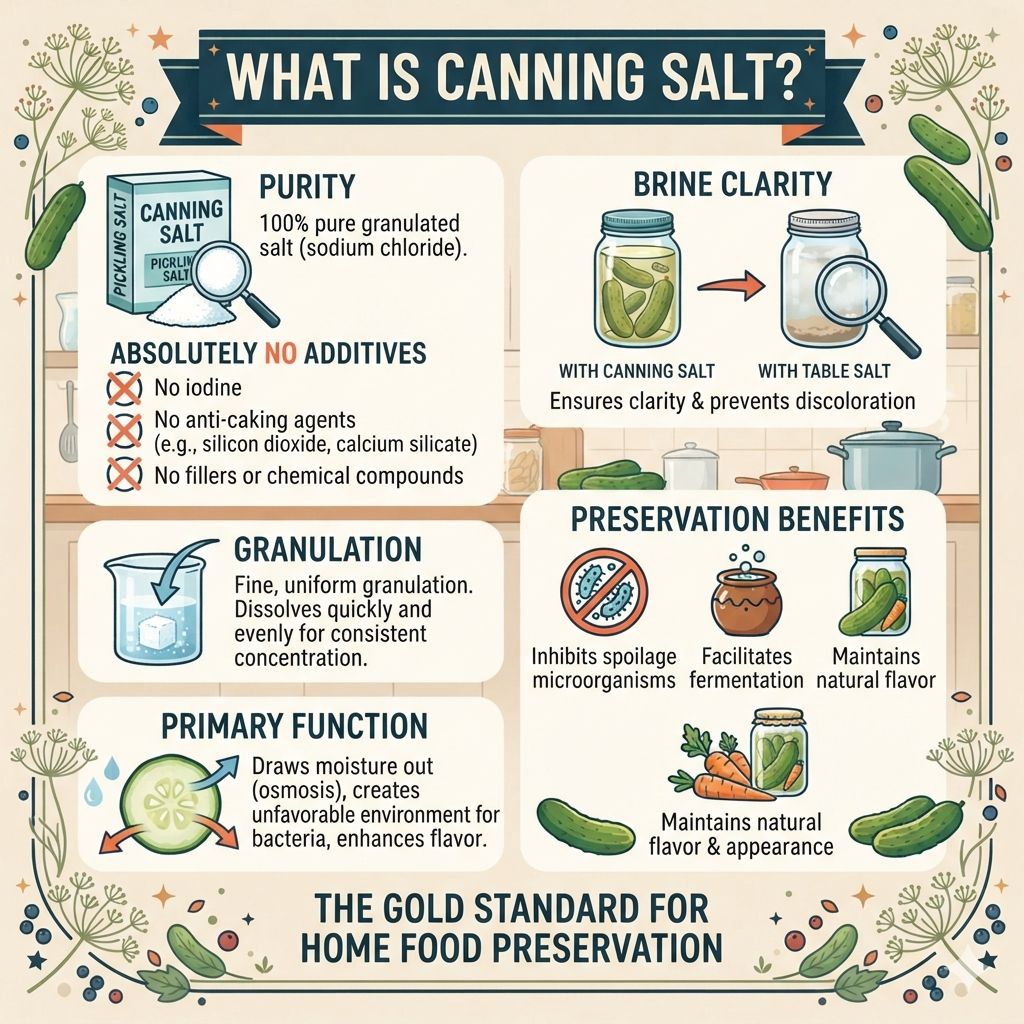
Canning salt, also often referred to as pickling salt or preserving salt, is specifically formulated for use in food preservation. Its primary characteristic is its purity. It is made of 100% pure granulated salt (sodium chloride) with absolutely no additives whatsoever.
This means you won’t find any iodine, anti-caking agents, or other compounds that are often included in table salt or even some types of kosher salt.
The absence of these additives is critical for several reasons in the canning process. Firstly, it ensures that your brine remains clear and doesn’t become cloudy. Additives, particularly anti-caking agents, can cause the liquid to become opaque, which can be visually unappealing in a jar of pickles or preserved vegetables.
Secondly, pure salt won’t react with the food being preserved to create off-flavors or colors. This is paramount for maintaining the natural taste and appearance of your ingredients.
Another benefit of using dedicated canning salt is its fine, uniform granulation. This consistency helps it dissolve quickly and evenly in liquids, ensuring proper salt concentration throughout your preservation mixtures. Consistent salt levels are vital for effective preservation, as salt plays a key role in inhibiting the growth of spoilage microorganisms and facilitating the fermentation process in pickles.
Without uniform salt distribution, you risk spoilage or uneven texture.
- 100% pure sodium chloride.
- No added iodine.
- No anti-caking agents (e.g., silicon dioxide, calcium silicate).
- No other fillers or chemical compounds.
- Dissolves quickly and evenly.
- Ensures clarity and prevents discoloration.
- Maintains the natural flavor of preserved foods.
The primary function of salt in canning is to draw moisture out of food through osmosis, create an environment unfavorable to spoilage bacteria, and enhance flavor. By using pure canning salt, you are maximizing its effectiveness in these roles without introducing any variables that could compromise your efforts. This makes it the gold standard for anyone serious about home food preservation.
What is Iodized Salt?
Iodized salt is the most common type of salt found in households and is primarily used for seasoning food. Its defining characteristic is the addition of iodine, a trace element essential for human health, particularly for thyroid function. The addition of iodine helps prevent iodine deficiency disorders in populations where dietary intake may be insufficient.
Beyond iodine, iodized salt also typically contains anti-caking agents.
These anti-caking agents, such as sodium aluminosilicate or silicon dioxide, are added to prevent the salt crystals from clumping together, ensuring it remains free-flowing. While beneficial for everyday cooking, these very additives are what make iodized salt problematic for canning and preserving. Anti-caking agents can cause the canning brine to become cloudy.
This isn’t just an aesthetic issue; cloudiness can sometimes indicate a breakdown in the preservation process or the presence of unwanted microbial activity, though in the case of pure anti-caking agents, it’s primarily a visual concern.
Furthermore, the iodine itself can lead to undesirable outcomes in preserved foods. It can cause vegetables, particularly those with light skins or flesh, to darken or develop a yellowish-brown hue. This discoloration can make the food look unappetizing.
In some cases, the added iodine can also impart a slightly metallic or bitter taste to the preserved items, altering their intended flavor profile. Therefore, while perfectly fine for your dinner table, iodized salt is generally not recommended for canning.
- Contains added iodine for health benefits.
- Includes anti-caking agents to prevent clumping.
- Can cause brine to become cloudy.
- May lead to discoloration of preserved foods.
- Can impart a metallic or off-flavor.
- Designed for general seasoning, not preservation.
When comparing canning salt vs iodized salt, the presence of these additives in iodized salt is the primary differentiator. These components, while harmless for consumption in everyday cooking, actively interfere with the desired outcomes of food preservation, leading to products that are less appealing in appearance and potentially altered in taste. Always check the label to ensure you are using a salt suitable for your canning needs.
Why Additives in Salt Matter for Canning
The difference between canning salt and iodized salt boils down to the additives. In the context of food preservation, these seemingly minor components can have a significant impact. The primary concern with additives like anti-caking agents is their tendency to make the canning brine cloudy.
This cloudiness not only detracts from the visual appeal of the finished product but can also mask potential issues with the preservation process, making it harder to assess if the food is safe and properly preserved.
Iodine, while a crucial nutrient, can react with certain compounds in foods, especially vegetables. This reaction often results in a change of color, typically a darkening or yellowing, which makes the food look less fresh and appealing. For products like pickles, where a vibrant, crisp appearance is desired, this discoloration can be a major drawback.
The taste can also be affected, with some people reporting a subtle metallic or bitter undertone that isn’t present when using pure salt. This interference with flavor is undesirable when you’ve worked hard to achieve specific taste profiles.
Salt’s role in canning is multifaceted: it inhibits the growth of spoilage-causing bacteria and yeasts, encourages the growth of beneficial lactic acid bacteria (in fermented pickles), draws moisture from food, and enhances flavor. For these processes to work optimally and predictably, the salt needs to be pure and consistent. Additives introduce variables that can disrupt the delicate balance required for successful preservation.
They can affect fermentation rates, brine clarity, and the final texture and color of the food, making the choice of salt a critical step.
| Additive Type | Effect in Canning | Why It’s Undesirable |
|---|---|---|
| Iodine | Can cause discoloration (darkening, yellowing) and off-flavors (metallic). | Makes food look unappetizing; alters natural taste. |
| Anti-caking Agents (e.g., Sodium Aluminosilicate) | Can cause the brine to become cloudy. | Reduces visual appeal; may mask potential spoilage signs. |
| Other Fillers/Chemicals | Unpredictable reactions, potential for altering taste, texture, or shelf life. | Compromises the integrity and quality of the preserved food. |
This table highlights why avoiding additives is essential for consistent and high-quality results when you’re canning or pickling.
What Type of Salt is Best for Pickling?
For the best results in pickling, whether you are making fermented pickles or quick pickles, the answer is consistently canning salt. Its purity is its biggest advantage, ensuring that your pickles remain crisp, vibrantly colored, and free from any unwanted flavors. When you use canning salt, you are trusting that the salt will perform its intended functions without introducing any negative side effects.
This allows the natural flavors of the vegetables and spices to shine through.
If canning salt is unavailable, kosher salt can be a suitable alternative, but with a crucial caveat: you must ensure it is pure kosher salt without any additives. Many brands of kosher salt are simply pure, coarse-grained salt and are perfectly acceptable for canning. However, some brands may include anti-caking agents or be iodized.
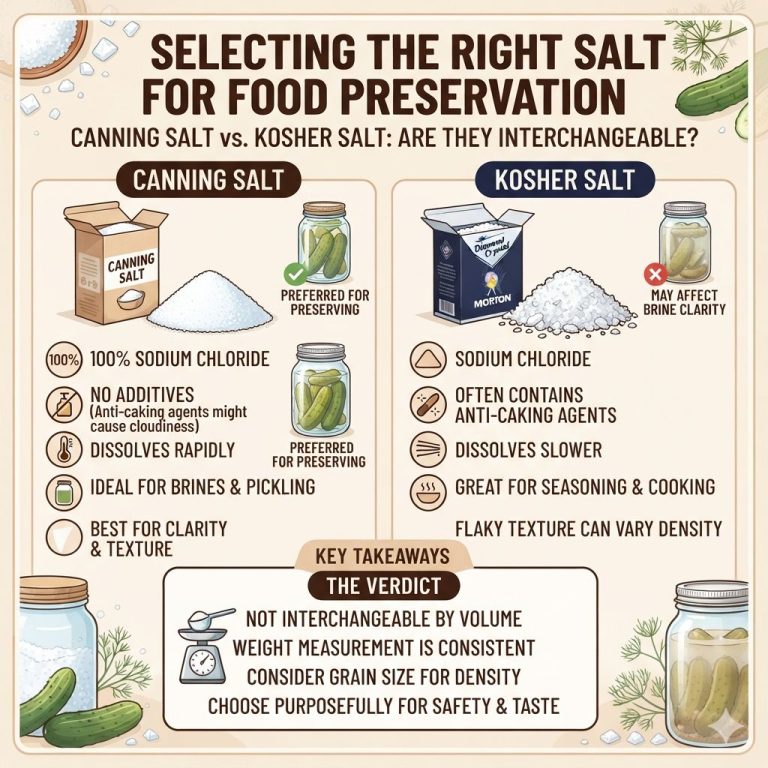
Always read the ingredient list carefully. The coarser grain size of kosher salt might require a slight adjustment in measurement compared to fine-grained canning salt, as volume can differ from weight.
Another option, though less common for home canning and more for specific culinary uses, is sea salt. However, unrefined sea salts can contain minerals other than sodium chloride, which might affect the brine’s clarity and flavor. If you choose to use sea salt, opt for a fine-grained, pure sea salt that lists only “sea salt” as its ingredient.
Like kosher salt, it’s vital to confirm the absence of any added iodine or anti-caking agents. Ultimately, when in doubt, dedicated canning salt is the safest and most reliable choice for all your pickling and preserving needs.
- Canning Salt: The gold standard. Pure, fine-grained, dissolves easily.
- Kosher Salt: Acceptable if it’s pure and free of additives. Check labels carefully. May have a coarser grain.
- Sea Salt: Use with caution. Opt for fine-grained, pure varieties. Check for additives.
- Iodized Salt: NOT recommended due to iodine and anti-caking agents.
- Table Salt: Generally not recommended due to fine grain, additives, and potential for anti-caking agents.
The key takeaway is to prioritize purity. The less processing and fewer added ingredients in your salt, the better it will perform in preserving your food. This principle holds true whether you are preserving cucumbers, sauerkraut, or any other type of vegetable or fruit.
Stick to pure salt for predictable, delicious results.
Understanding Salt’s Role in Fermentation
Fermentation, a cornerstone of many traditional preservation methods like making sauerkraut, kimchi, and fermented pickles, relies heavily on salt. In this process, salt doesn’t just add flavor; it actively manages the microbial environment. It works by drawing out water from the vegetables, creating a brine.
This brine then serves as a medium where beneficial lactic acid bacteria (LAB) can thrive, while undesirable spoilage microbes are inhibited.
The concentration of salt is critical. A typical brine for vegetable fermentation ranges from 1.5% to 2.5% salt by weight. At this concentration, the salt inhibits the growth of most harmful bacteria, yeasts, and molds that can cause spoilage.
Simultaneously, it favors the growth of LAB, which are naturally present on the surface of vegetables. These LAB consume sugars in the vegetables and produce lactic acid, carbon dioxide, and other compounds. Lactic acid lowers the pH of the environment, further inhibiting spoilage organisms and acting as a preservative.
The purity of the salt is paramount in fermentation. Additives found in iodized salt, such as iodine and anti-caking agents, can interfere with the activity of these beneficial bacteria. Iodine, in particular, can be toxic to some microbes, potentially hindering the fermentation process or leading to an incomplete breakdown of sugars.
Anti-caking agents might affect the clarity of the brine and potentially influence the texture of the fermented product. Therefore, when embarking on fermentation projects, using pure canning salt or pure kosher salt is essential for ensuring a healthy, predictable, and safe fermentation cycle.
- Draws out moisture: Salt creates a hypertonic environment, causing water to leave vegetable cells.
- Inhibits spoilage microbes: Higher salt concentrations prevent the growth of undesirable bacteria, yeasts, and molds.
- Favors beneficial bacteria: Salt allows naturally occurring lactic acid bacteria (LAB) to flourish.
- Lowers pH: LAB produce lactic acid, acidifying the brine and further preserving the food.
- Enhances flavor: Salt contributes to the complex taste profile of fermented foods.
- Improves texture: Salt helps vegetables maintain crispness during fermentation.
This understanding underscores why the distinction between canning salt vs iodized salt is so important for methods involving natural fermentation. The science behind it shows that pure salt is the key ingredient for controlled microbial activity.
What About Kosher Salt?
Kosher salt is often a topic of discussion when choosing salt for canning and preserving. Its name comes from its use in the Jewish dietary practice of koshering meat, where its coarse grains help draw out blood. Many brands of kosher salt are made from pure salt (sodium chloride) and lack the anti-caking agents and iodine found in table salt, making them a viable alternative to canning salt.
However, it’s not universally pure.
The critical factor with kosher salt is to check the ingredients list. Some brands, like Morton Kosher Salt, do contain anti-caking agents. Diamond Crystal Kosher Salt, on the other hand, is widely regarded as being pure salt with no additives.
The difference lies in the crystal structure and density. Diamond Crystal kosher salt is lighter and fluffier due to its irregular crystal shape, meaning a cup of it weighs less than a cup of Diamond Crystal or Morton table salt, and also less than Morton Kosher Salt. This difference in density means you need to be mindful of measurements.
When using kosher salt for canning, it’s generally recommended to measure it by weight rather than volume if possible, to ensure accuracy. If you must measure by volume, be aware that different brands may require different amounts for the same level of saltiness. For example, you might need slightly more Diamond Crystal kosher salt than canning salt to achieve the same salinity due to its lighter weight per volume.
Always stick to recipes that specify the type of salt and measurement. If a recipe calls for ‘kosher salt,’ it’s usually referring to a pure, additive-free variety like Diamond Crystal.
| Salt Type | Purity (Additives?) | Grain Size | Canning Suitability |
|---|---|---|---|
| Canning Salt | 100% Pure | Fine | Excellent (Recommended) |
| Diamond Crystal Kosher Salt | Pure (No additives) | Coarse, flaky | Good (Verify purity) |
| Morton Kosher Salt | Contains anti-caking agents | Coarse | Fair (Not ideal due to additives) |
| Iodized Table Salt | Contains iodine & anti-caking agents | Fine | Poor (Not recommended) |
When comparing canning salt vs iodized salt, the purity and crystal structure of kosher salt make it a much better option than iodized salt, provided you choose a pure variety.
When Can You Use Table Salt?
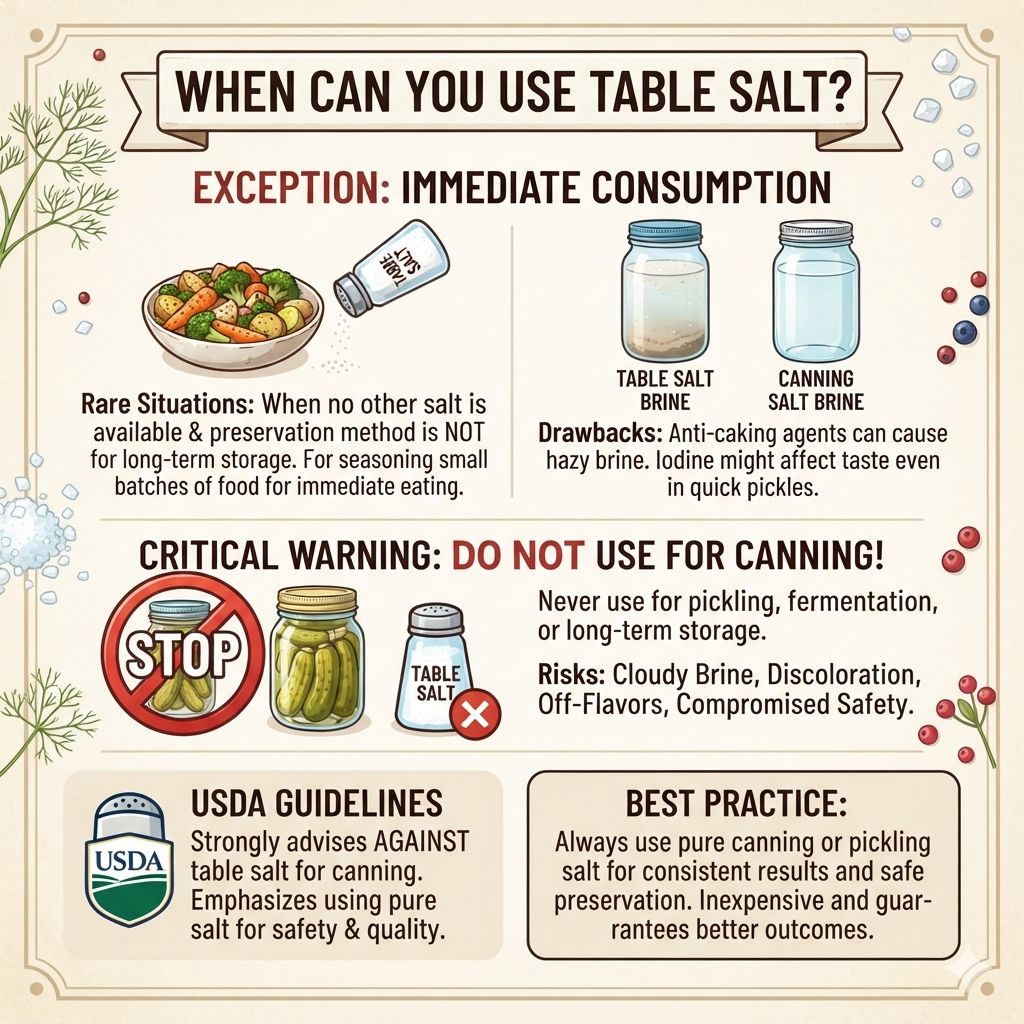
While iodized table salt is generally discouraged for canning and preserving, there might be rare exceptions where its use could be considered, though not ideal. These situations are typically when there is absolutely no other type of salt available, and the preservation method is not critical for appearance or long-term shelf stability. For instance, if you are quickly making a small batch of seasoned roasted vegetables for immediate consumption and have no other salt on hand, table salt could be used for seasoning.
However, it’s crucial to understand the limitations and potential drawbacks. Even for immediate consumption, the anti-caking agents can lead to a slightly hazy appearance if dissolved in liquid, and the iodine might contribute a subtle, undesirable taste. For any method that involves pickling, fermentation, or long-term storage in jars, table salt should be avoided.
The risk of cloudy brine, discolored food, off-flavors, and potentially compromised preservation is too high.
The USDA Complete Guide to Home Canning strongly advises against using table salt, especially iodized salt, for canning. Their guidelines emphasize using pure salt to ensure the safety and quality of preserved foods. Therefore, even in a pinch, it’s always best practice to procure the correct type of salt before starting any canning project.
Investing in a box of canning salt is inexpensive and guarantees better results, preventing potential disappointment or, worse, spoiled food.
Warning: Never use iodized salt or table salt with anti-caking agents for canning or fermenting if appearance, taste, or long-term preservation quality is important. It can lead to cloudy brine, discoloration, and off-flavors.
Frequently Asked Questions
What happens if I use iodized salt for canning?
If you use iodized salt for canning, the iodine can cause your preserved foods, especially vegetables, to darken or turn a yellowish-brown color. Additionally, anti-caking agents may cause the brine to become cloudy, reducing the visual appeal of your canned goods. In some cases, a subtle metallic or off-flavor can also be imparted to the food.
Can I use sea salt for canning?
You can use sea salt for canning, but it’s important to ensure it is pure sea salt without any added iodine or anti-caking agents. Unrefined sea salts can also contain other minerals that might affect the clarity and taste of your brine. Opt for fine-grained, pure sea salt for the best results.
Is Diamond Crystal Kosher Salt the same as canning salt?
Diamond Crystal Kosher Salt is a good substitute for canning salt because it is pure salt without additives. However, it is a coarser grain and lighter in weight per volume than fine-grained canning salt. This means you might need to adjust measurements if substituting, often by weight for best accuracy.
Why does canning salt have to be pure?
Canning salt needs to be pure because additives like iodine and anti-caking agents can negatively impact the appearance, taste, and texture of preserved foods. They can cause discoloration, cloudiness in brine, and undesirable flavors, compromising the quality and safety of your canned goods.
Can I use regular table salt for brining chicken or pork?
For brining meats intended for immediate cooking and consumption, regular table salt (iodized or not) is generally acceptable. The additives typically do not significantly affect the outcome for immediate cooking. However, for any preservation or fermentation processes, pure canning salt is always recommended.
Final Thoughts
Choosing the right salt for your food preservation projects is a critical step that significantly impacts the final quality. When comparing canning salt vs iodized salt, the distinction is clear: pure canning salt is designed for preservation, ensuring clarity, vibrant color, and the intended taste of your food. While kosher salt can be a suitable alternative if pure, always verify the ingredients.
Avoid iodized salt and table salt with additives to guarantee successful and delicious canning results.
Products related to this article
Sponsored / affiliate links. As an Amazon Associate I earn from qualifying purchases. I may earn additional commission from eligible campaigns.