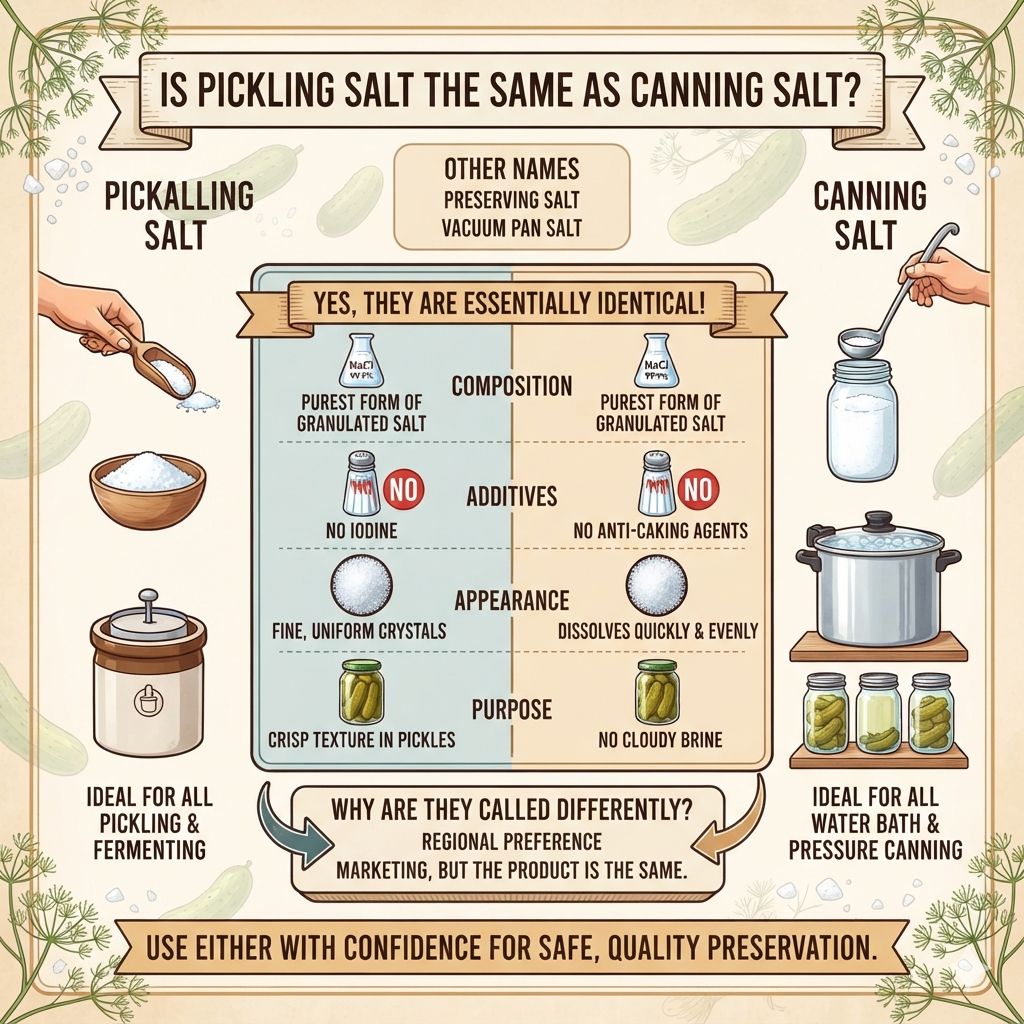
Is Pickling Salt the Same as Canning Salt?
This post will break down the key differences, explain why these distinctions matter, and help you choose the right salt for your preserving endeavors, ensuring your pickles, jams, and other canned goods turn out perfectly every time. We’ll cover everything from chemical composition to practical applications.
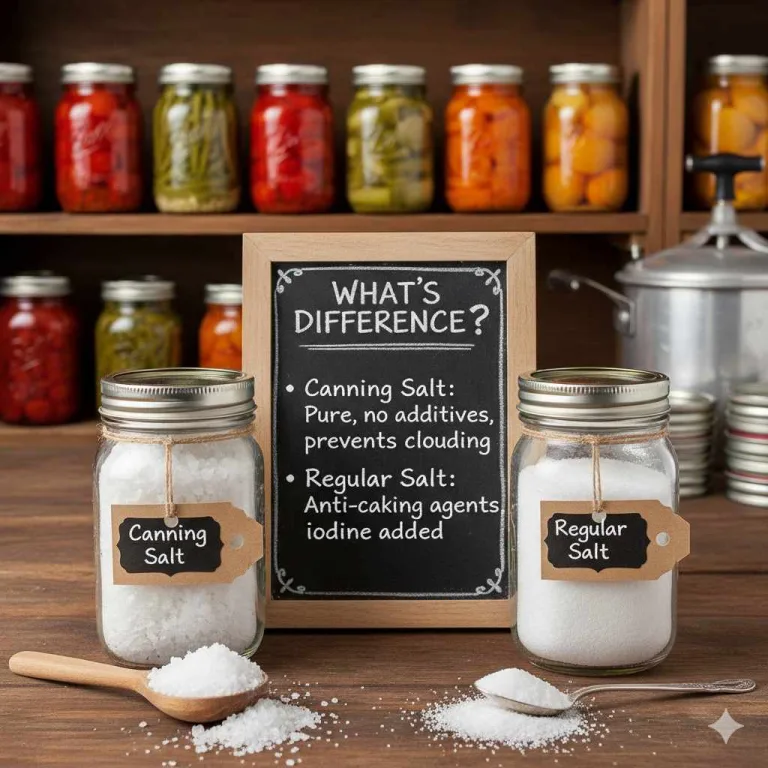
In short, while both pickling salt and canning salt are pure, fine-grained, and free of additives, pickling salt is strictly 100% pure salt (sodium chloride), whereas canning salt may contain small amounts of anti-caking agents like magnesium carbonate or calcium silicate. For the clearest brine and best texture in pickles, pickling salt is preferred.
Key Takeaways
- Pickling salt is 100% pure sodium chloride, free of anti-caking agents and iodine, ensuring clear brine and crisp pickles.
- Canning salt is also very pure but might contain trace amounts of anti-caking agents to prevent clumping, which can slightly cloud brine or affect texture.
- Both are excellent choices for preserving food, but pickling salt offers superior clarity for visible products like pickles.
- Iodized salt and salt with added minerals should be avoided for preserving as they can discolor or create cloudiness.
- Choosing the right salt significantly impacts the final appearance and texture of your canned and pickled goods.
What is Pickling Salt?
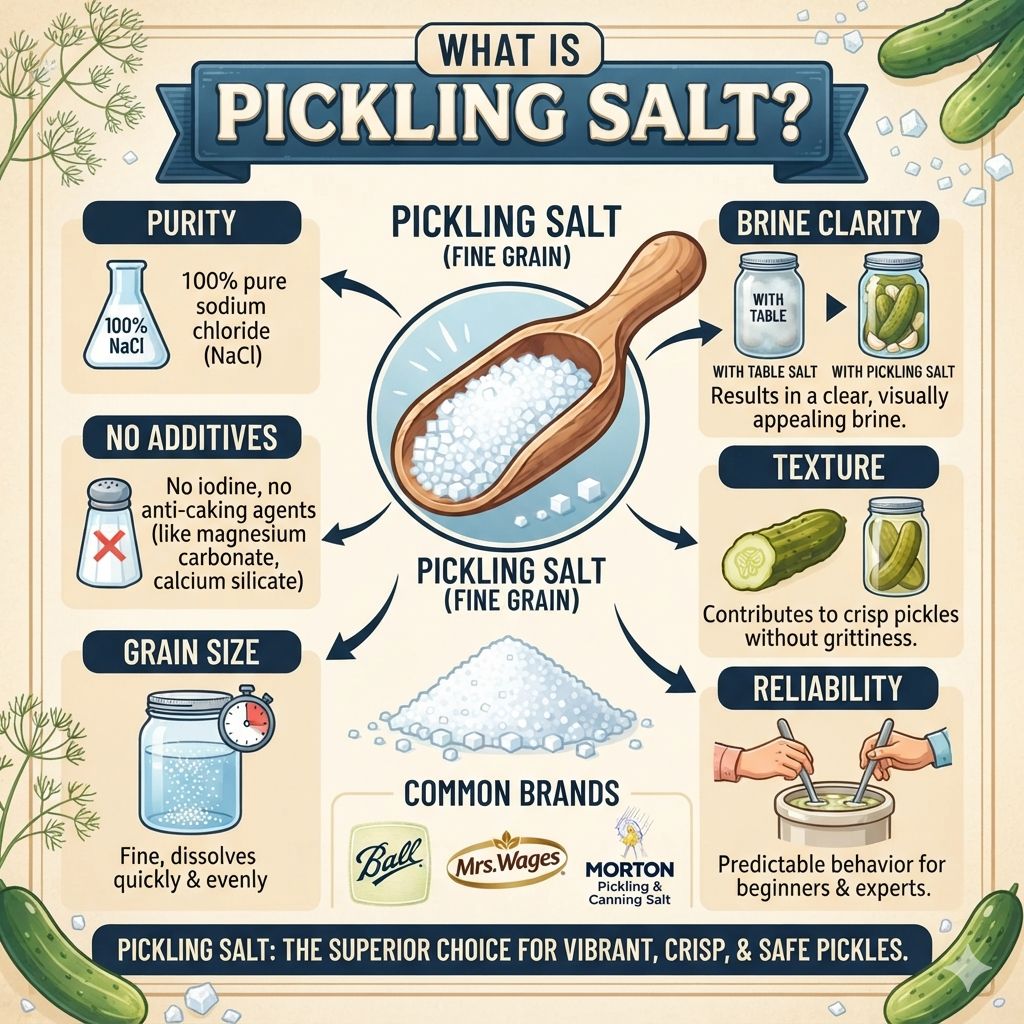
Pickling salt, also commonly referred to as kosher salt (specifically fine kosher salt, though there are nuances), is specifically designed for the brining and pickling process. Its primary characteristic is its purity. It is made of 100% sodium chloride, with no added iodine or anti-caking agents.
This purity is essential because any extraneous ingredients, like anti-caking compounds or iodine, can interfere with the pickling process.
The fine grain of pickling salt ensures it dissolves quickly and evenly in brine, leading to consistent salt distribution. This consistency is vital for proper fermentation and preservation, as it helps inhibit the growth of undesirable microorganisms while encouraging beneficial lactic acid bacteria. The lack of iodine prevents the discoloration that can occur with iodized salt, keeping your pickles vibrant and appealing.
The absence of anti-caking agents means that the brine remains clear. Anti-caking agents, while harmless for cooking, can sometimes cause a slight cloudiness in the pickling liquid. For visually appealing pickles where you want to see the ingredients clearly suspended in the brine, pickling salt is the superior choice.
Its granular structure, though fine, is typically cubic, which contributes to its solubility without leaving a gritty texture.
- Purity: 100% pure sodium chloride (NaCl).
- Additives: No iodine, no anti-caking agents (like magnesium carbonate or calcium silicate).
- Grain Size: Fine, dissolves quickly and evenly.
- Impact on Brine: Results in a clear, visually appealing brine.
- Texture: Contributes to crisp pickles without grittiness.
- Cost: Generally affordable and widely available.
- Common Brands: Ball, Mrs. Wages, Morton Pickling & Canning Salt.
When you want your preserved vegetables to look as good as they taste, pickling salt is the go-to. Its predictable behavior in brine makes it a reliable ingredient for both beginners and experienced preservers.
What is Canning Salt?
Canning salt is also a high-purity salt intended for food preservation, including canning and pickling. Similar to pickling salt, it is typically non-iodized and free from harsh mineral impurities often found in table salt. This makes it a good option for preserving because, like pickling salt, it won’t cause the undesirable darkening or off-flavors that iodized or mineral-heavy salts can.
The main distinction, and where it differs from true pickling salt, is that canning salt often contains a small percentage of an anti-caking agent, such as magnesium carbonate or calcium silicate. These agents are added to keep the salt free-flowing and prevent it from clumping, especially in humid conditions. While these agents are food-grade and considered safe for consumption, they can sometimes lead to a slightly hazy or cloudy brine in your canned goods.
| Feature | Canning Salt | Pickling Salt |
|---|---|---|
| Purity (Sodium Chloride) | Very High (often >99.5%) | 100% |
| Anti-Caking Agents | May contain (e.g., magnesium carbonate) | None |
| Iodine | None | None |
| Brine Clarity | Slightly less clear due to agents | Very Clear |
| Best Use Case | General canning, some pickling | Pickling, fermentation, clear brines |
For many general canning purposes, like preserving fruits or making jellies where visual clarity of the liquid is less critical, canning salt performs very well. The slight cloudiness it might introduce is usually negligible. However, when the appearance of the final product is paramount, such as with dill pickles or pickled onions, the difference becomes more noticeable.
- Purity: Very high purity, but not always 100% NaCl.
- Additives: May contain small amounts of food-grade anti-caking agents.
- Grain Size: Typically fine, similar to pickling salt.
- Impact on Brine: Can result in a slightly hazy brine.
- Texture: Generally good for texture, though pickling salt is preferred for maximum crispness.
- Availability: Widely available in grocery stores.
- Common Brands: Ball Canning Salt, Morton Canning & Pickling Salt (check labels carefully).
It’s important to read the packaging. Some brands that sell “canning salt” might indeed be 100% pure, blurring the lines. Always check the ingredient list to be certain.
Why the Difference Matters for Preserving
The subtle differences between pickling salt and canning salt can have a significant impact on the final outcome of your preserved foods. For recipes where the appearance of the brine is a key feature, such as visually clear dill pickles, pickled beets, or relishes, the absence of anti-caking agents in pickling salt is crucial. These agents, while safe, can make the brine appear cloudy or murky, detracting from the overall presentation.
Beyond aesthetics, the type of salt can influence texture and fermentation. Pickling salt, being 100% pure sodium chloride, interacts more predictably with food and the fermentation process. It ensures a consistent salt concentration, which is vital for inhibiting spoilage organisms while allowing beneficial lactic acid bacteria to thrive.
This controlled environment leads to the best flavor development and a desirable crisp texture in pickles.
In contrast, while canning salt is usually fine for most preservation tasks, the presence of anti-caking agents might slightly alter the brine’s composition, potentially affecting the rate of fermentation or the crispness of vegetables over long storage periods. For instance, some preservers report that pickling salt yields a crisper pickle than canning salt, even when both are non-iodized. This could be due to the chemical interaction of the anti-caking agents with the vegetable cell structure or the brine itself.
- Clarity: Pickling salt ensures crystal-clear brines, essential for visually appealing products.
- Texture: 100% pure salt contributes to optimal crispness in pickles and fermented vegetables.
- Fermentation: Predictable salt concentration from pure salt aids controlled bacterial growth.
- Discoloration: Both are non-iodized, preventing spoilage and color changes.
- Flavor: Pure salt offers a cleaner, more direct salty flavor profile.
- Versatility: Pickling salt works exceptionally well for all preservation needs, while canning salt is better suited for less visually demanding applications.
When embarking on a large canning project or perfecting a specific pickle recipe, opting for pickling salt provides a greater degree of control and a higher likelihood of achieving professional-looking results. It’s a small ingredient that makes a big difference.
Can I Use Table Salt for Pickling or Canning?
It is strongly advised to avoid using regular table salt for pickling and canning. Table salt contains additives that can negatively affect the quality, appearance, and even safety of your preserved foods. The most problematic additives are iodine and anti-caking agents, both of which are commonly found in table salt.
Iodine, often added to table salt for health reasons, can cause your pickles and other vegetables to turn an unappetizing dark brown or purplish color. This discoloration is purely cosmetic but makes the food look unappealing. Furthermore, iodine can also impart a slightly bitter or metallic taste to the preserved items, altering their intended flavor profile.
Therefore, any salt labeled as “iodized” should be completely avoided for preservation purposes.
Warning: Never use iodized salt or table salt containing anti-caking agents for canning or pickling. The iodine can discolor your food, and the anti-caking agents can make your brine cloudy. Stick to pickling salt, canning salt (check label for agents), or pure kosher salt.
In addition to iodine, table salt typically contains anti-caking agents (like silicon dioxide or magnesium carbonate) to keep the fine grains from sticking together. As discussed earlier, these agents can cause the brine to become cloudy, diminishing the visual appeal of your preserved goods. In larger quantities, some believe these agents might also interfere with the fermentation process or affect the texture of the food over time.
Therefore, for the best results in terms of color, flavor, and clarity, it is always best to opt for specialized pickling or canning salt.
- Iodine Content: Causes discoloration (darkening) of preserved foods.
- Anti-Caking Agents: Lead to cloudy brines and can affect texture.
- Grain Size: Table salt is often much finer, which can dissolve too quickly or unevenly.
- Mineral Impurities: Can introduce unwanted flavors or affect brine chemistry.
- Recommended Alternative: Use pickling salt, non-iodized kosher salt, or specific canning salt brands.
While table salt is a staple in many kitchens for everyday cooking, its use is not recommended for preserving. The ingredients that make it suitable for daily use can be detrimental to the outcome of your canning and pickling projects.
What About Kosher Salt?
Kosher salt is often considered a suitable alternative to pickling salt, but there are important distinctions to be aware of. The primary difference lies in the grain size and the presence of anti-caking agents. Traditional kosher salt, like Diamond Crystal, is known for its flaky, irregular crystal structure and its purity – it is typically 100% sodium chloride without additives.
This makes it an excellent choice for pickling and canning, mirroring the benefits of pickling salt.
However, not all kosher salts are created equal. Morton Kosher Salt, for instance, is denser and has a finer, more uniform grain than Diamond Crystal. While it is also non-iodized, it may sometimes contain anti-caking agents.
Always check the packaging of any kosher salt you intend to use for preservation. If it lists anti-caking agents or if the grains are very fine and uniform like table salt, it might behave more like canning salt and could potentially cause cloudiness.
When choosing kosher salt for preservation, the key factors are: 1) is it non-iodized, and 2) does it contain anti-caking agents? For the clearest brine and best texture, a pure, flaky kosher salt like Diamond Crystal is a preferred option. It dissolves well and contributes to the crispness and appearance of preserved foods.
If you can’t find specific pickling salt or a pure kosher salt, then a canning salt that is confirmed to be free of undesirable additives would be the next best choice.
- Purity: Most kosher salts are pure sodium chloride, but check labels.
- Grain Size: Varies significantly (flaky vs. fine). Flaky is often preferred for dissolving and texture.
- Additives: Diamond Crystal is typically additive-free. Morton Kosher Salt may contain anti-caking agents.
- Iodine: Always non-iodized.
- Suitability: Pure, flaky kosher salt is an excellent substitute for pickling salt.
- Recommendation: Verify ingredients before using for preserving.
The salt aisle can be confusing, but by understanding these key characteristics – purity, grain size, and additives – you can confidently select the best salt for your preserving needs, ensuring delicious and beautiful results.
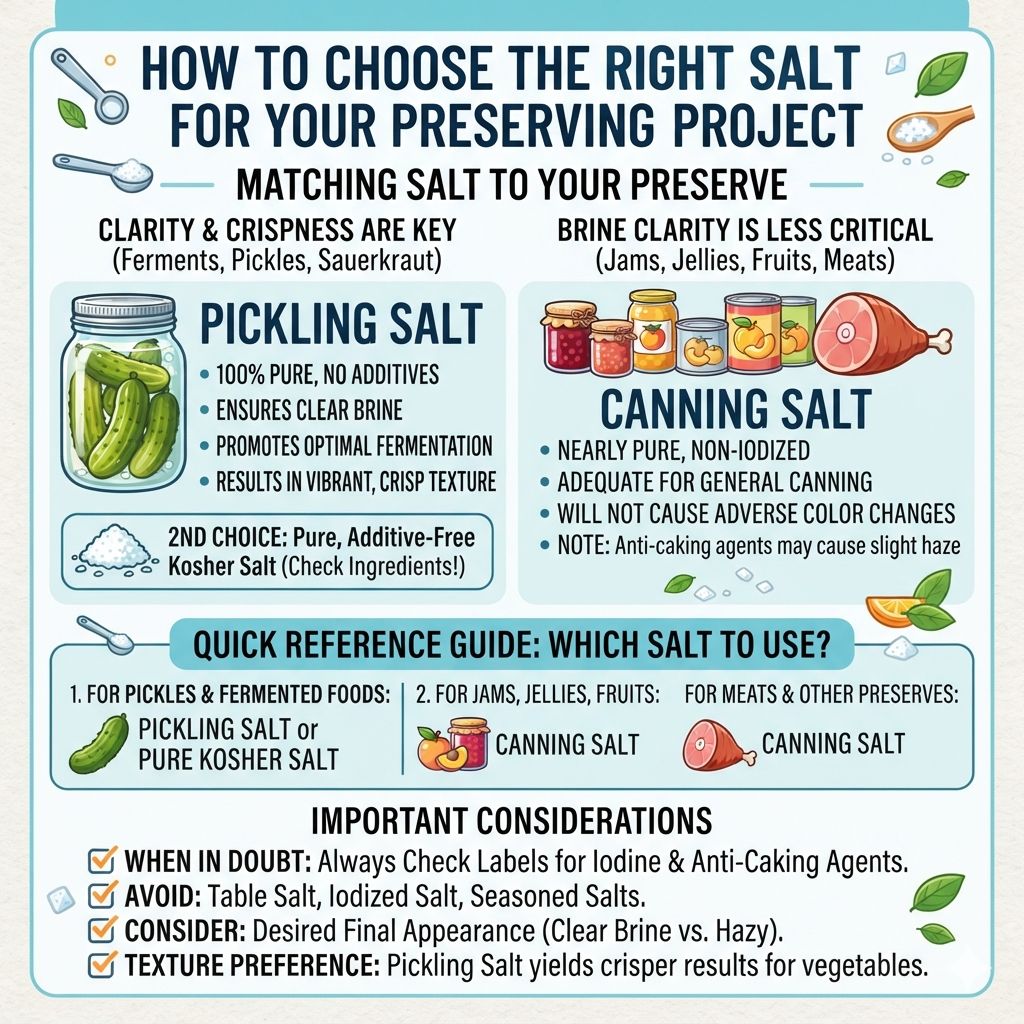
How to Choose the Right Salt for Your Preserving Project
Selecting the correct salt is a foundational step in successful food preservation. The choice primarily hinges on what you are preserving and the desired outcome, particularly regarding visual appearance and texture. For recipes where clarity and crispness are paramount, such as dill pickles, sauerkraut, or other fermented vegetables, pickling salt is the undisputed champion.
Its 100% purity ensures a clean, clear brine and optimal fermentation conditions, leading to vibrant, crisp products. If pickling salt isn’t readily available, a pure, additive-free kosher salt (like Diamond Crystal) is a strong second choice. Always perform a quick check of the ingredients to confirm the absence of iodine and anti-caking agents.
Important: For any recipe where the visual appeal of the brine is important (like clear pickles), always opt for pickling salt or a pure, additive-free kosher salt. This ensures the best clarity and texture.
For general canning projects where the brine’s clarity is less critical – such as canning fruits, making jams, jellies, or preserving meats – canning salt is usually perfectly adequate. Its near-purity and non-iodized nature mean it won’t cause adverse color changes. However, if you notice your canning salt contains anti-caking agents, be aware it might result in a slightly hazier liquid.
- For Pickles & Fermented Foods: Use pickling salt or pure kosher salt.
- For Jams, Jellies, Fruits: Canning salt is typically fine.
- For Meats & Other Preserves: Canning salt is usually suitable.
- When in Doubt: Always check labels for iodine and anti-caking agents.
- Avoid: Table salt, iodized salt, or seasoned salts.
- Consider: The desired final appearance (clear brine vs. slightly hazy).
- Texture Preference: Pickling salt often yields crisper results for vegetables.
Ultimately, the cost difference between these salts is usually minimal, making the investment in pickling salt or pure kosher salt a worthwhile decision for ensuring the quality of your homemade preserved goods.
Frequently Asked Questions
What is the main difference between pickling salt and canning salt?
The main difference lies in their purity and additives. Pickling salt is strictly 100% pure sodium chloride, ensuring a clear brine and crisp texture. Canning salt is also very pure and non-iodized but may contain trace amounts of food-grade anti-caking agents, which can sometimes cause slight cloudiness in the brine.
Can I use iodized salt for canning or pickling?
No, you should never use iodized salt. The iodine can cause preserved vegetables to turn an unappetizing dark color and may impart a bitter taste, compromising both the appearance and flavor of your food.
Does the brand of salt matter for pickling?
Yes, the brand can matter, especially regarding additives. While many brands offer pickling or canning salt, you must check the ingredient list. Some brands labeled “canning salt” might contain anti-caking agents, while others are pure.
Opt for brands specifically marketed as pickling salt or verify that any canning salt is free of additives.
Can I use sea salt for canning and pickling?
You can use non-iodized sea salt, provided it is pure and free of mineral impurities or additives. However, many sea salts have a coarser grain than pickling salt, which can affect how evenly they dissolve. If using sea salt, ensure it’s a fine grain and that it doesn’t contain iodine or anti-caking agents.
Pickling salt or pure kosher salt are generally more reliable choices.
What happens if I use table salt with anti-caking agents in my pickles?
Using table salt with anti-caking agents can result in a cloudy brine, making your pickles less visually appealing. While the salt is still safe to consume, the cloudiness can detract from the desired clarity, especially for transparent pickles like dill or bread-and-butter varieties. It might also subtly affect the texture over time compared to using pure pickling salt.
Final Thoughts
Understanding the nuances between pickling salt and canning salt empowers you to make informed decisions for your home preservation projects. While both serve the fundamental purpose of adding flavor and aiding preservation, pickling salt offers superior clarity and texture for visually delicate items like pickles. Always prioritize pure, non-iodized salts, and when in doubt, choose pickling salt for the most consistent and aesthetically pleasing results.
Your preserved foods will thank you for it.
Products related to this article
Sponsored / affiliate links. As an Amazon Associate I earn from qualifying purchases. I may earn additional commission from eligible campaigns.