Is kosher salt the same as canning salt?
This post will break down the differences, explain when to use each, and help you make informed decisions in your kitchen.
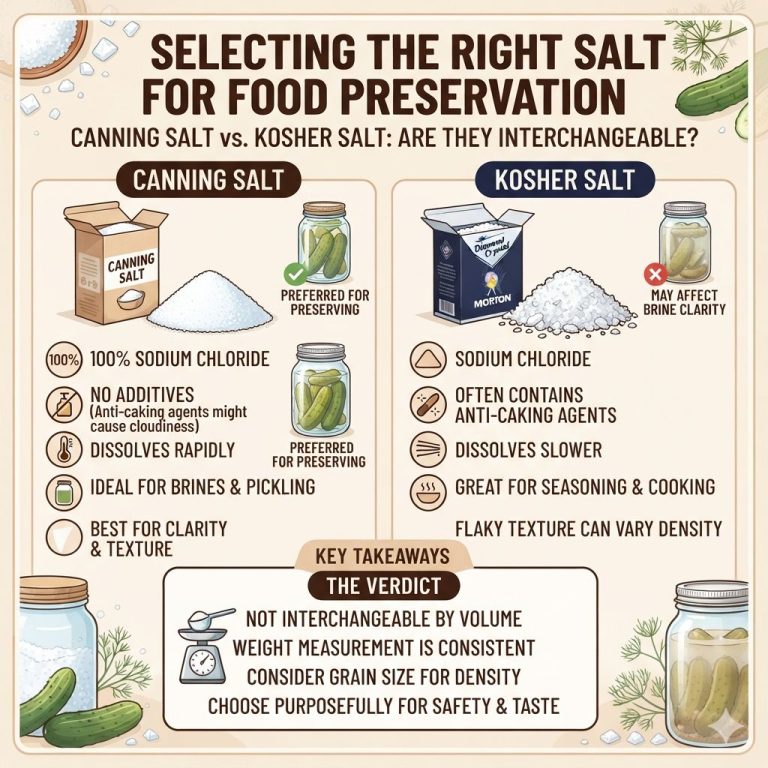
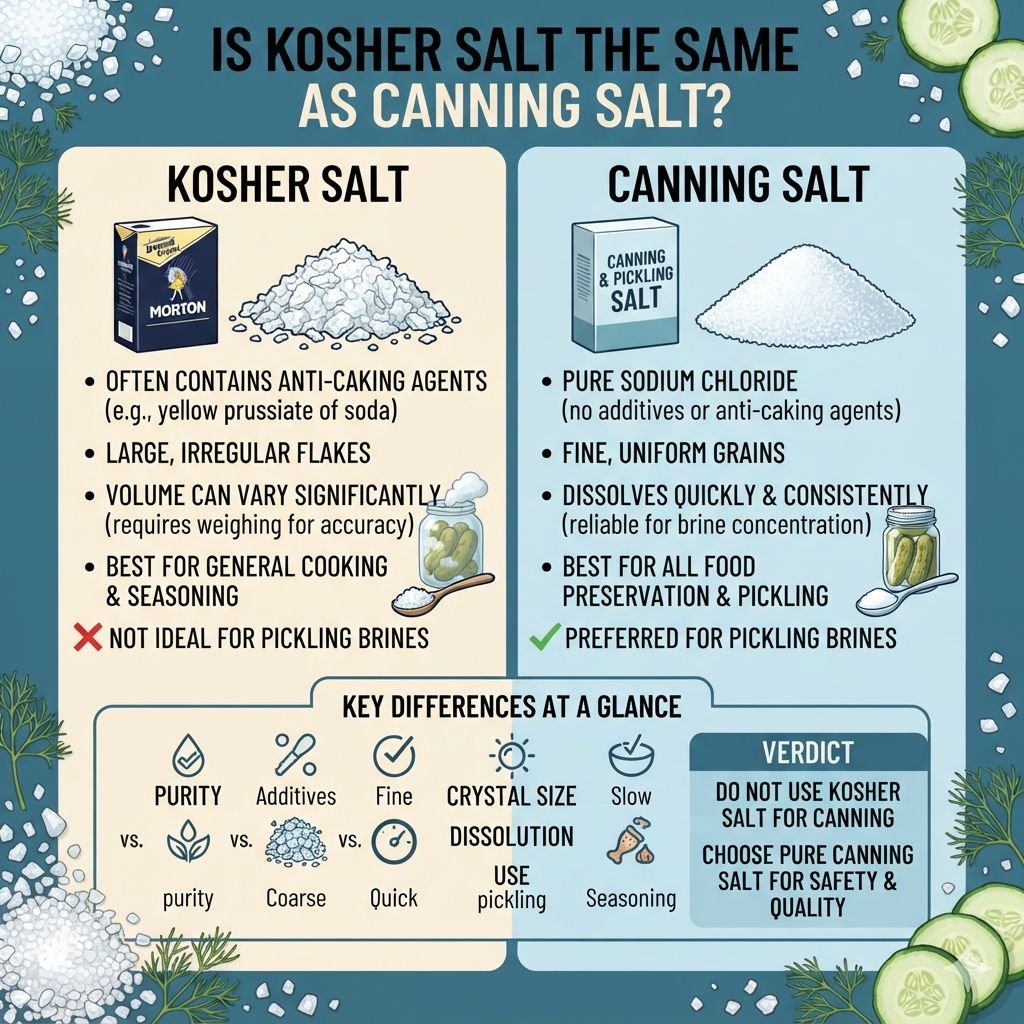
In short, kosher salt and canning salt are not the same due to their varying purity and the presence of anti-caking agents. For safe and effective home canning, only use canning salt, which is pure sodium chloride, while kosher salt is best reserved for cooking and flavoring.
Key Takeaways
- Kosher salt has larger, irregular crystals and may contain anti-caking agents, making it unsuitable for canning.
- Canning salt is pure sodium chloride with no additives, essential for safe and effective food preservation.
- Using the wrong type of salt can lead to cloudy brine, texture issues, or even safety concerns in preserved foods.
- Always check the label to ensure you’re using the correct salt for your specific culinary needs, especially for canning.
- Canning salt is specifically designed to dissolve cleanly and maintain the clarity and safety of your preserved foods.
What is Kosher Salt and How Is It Used?
Kosher salt is a popular choice for many home cooks and professional chefs due to its unique texture and flavor-enhancing properties. Its name comes from its use in the koshering process of meat, where its coarse grains help draw out blood. However, it’s widely used in various culinary applications beyond that specific ritual.
The key characteristic of kosher salt is its crystal structure. It typically features larger, flaky, or irregular-shaped crystals compared to table salt. This makes it easier to pick up and sprinkle, allowing for better control when seasoning food.
Many find its less intense flavor profile, compared to iodized table salt, to be advantageous, as it adds salinity without an overpowering “salty” taste.
Kosher salt is primarily used for seasoning and enhancing the flavor of food during cooking. Its larger crystals dissolve more slowly, which can be beneficial for drawing moisture out of meats, like in brining or curing. It’s also a common component in rubs and marinades, where its texture helps coat food evenly.
Some bakers prefer it for its texture and the subtle crunch it can provide on baked goods.
- Flavor Enhancement: Adds salinity without an overpowering taste.
- Texture: Larger crystals offer a pleasing mouthfeel and visual appeal.
- Moisture Drawing: Effective for brining and curing due to its surface area.
- Ease of Use: Easier to grip and sprinkle for precise seasoning.
- Versatility: Suitable for a wide range of cooking and baking applications.
However, it’s crucial to note that not all kosher salts are created equal. Some brands may include anti-caking agents like silicon dioxide or calcium silicate to prevent clumping. These additives are generally harmless for cooking but can interfere with the canning process.
Always check the label to ensure your kosher salt is pure sodium chloride if you intend to use it for anything other than general cooking.

What is Canning Salt and Why Is It Essential?
Canning salt, also known as pickling salt, is specifically formulated for preserving fruits, vegetables, and other foods through methods like pickling, fermenting, and water bath canning. Its primary requirement is purity: it must be 100% pure sodium chloride with absolutely no additives.
The absence of additives like iodine and anti-caking agents is paramount for successful home canning. Iodine, when used in table salt, can cause preserves to darken and develop an undesirable metallic taste. Anti-caking agents, commonly found in kosher and table salts, can lead to cloudy brines, sediment at the bottom of jars, and can even inhibit proper preservation by preventing the salt from fully dissolving and penetrating the food.
Canning salt dissolves quickly and completely, ensuring that the salt concentration in your brine is consistent and accurate. This consistency is vital for creating an environment that inhibits the growth of spoilage microorganisms while promoting the desired fermentation processes. A properly salted brine helps to maintain the crispness of vegetables and the vibrant color of fruits.
- 100% Pure Sodium Chloride: Contains no iodine or anti-caking agents.
- Clear Brine: Dissolves completely, preventing cloudiness in jars.
- Consistent Salinity: Ensures accurate salt concentration for safe preservation.
- Preserves Color and Texture: Helps maintain the quality of canned foods.
- Promotes Fermentation: Creates the right conditions for beneficial microbial growth.
Using canning salt is a small but critical step in ensuring the safety and quality of your homemade preserves. It guarantees that the salt will perform its intended function without introducing unwanted chemical reactions or visual imperfections into your food.
Key Differences: Kosher Salt vs. Canning Salt
The distinction between kosher salt and canning salt boils down to purity, crystal structure, and intended use. While both are forms of sodium chloride, the manufacturing processes and the presence or absence of additives create significant functional differences.
Kosher salt’s crystal size varies greatly by brand. Morton Kosher Salt, for instance, has a finer, more uniform flake than Diamond Crystal Kosher Salt, which has a unique, hollow, irregular structure. This variability affects how much salt you measure by volume; a tablespoon of one brand might not be as salty as a tablespoon of another.
This makes precise measurement crucial for recipes, but it’s the additives that truly disqualify it for canning.
| Feature | Kosher Salt | Canning Salt |
|---|---|---|
| Purity | May contain anti-caking agents (e.g., silicon dioxide) and sometimes iodine (check label). | 100% pure sodium chloride; no additives. |
| Crystal Structure | Larger, irregular, or flaky crystals. Varies by brand. | Fine, uniform grains. |
| Primary Use | Cooking, seasoning, brining, general flavoring. | Food preservation, pickling, fermenting. |
| Effect on Brine | Can cause cloudiness or sediment if additives are present. | Dissolves cleanly, maintaining brine clarity. |
| Iodine Content | Rarely contains iodine, but always check the label. | Never contains iodine. |
The fine, uniform grains of canning salt ensure it distributes evenly and dissolves quickly. This is critical for achieving the precise brine concentrations required for safe and effective preservation. Kosher salt’s larger, often irregular crystals can lead to uneven salt distribution and potential dissolution issues, especially if it contains anti-caking agents.
According to the National Center for Home Food Preservation (NCHFP), it is strongly recommended to use only canning or pickling salt when preserving food. They emphasize that because salt can vary in composition, using non-canning salts can lead to unpredictable results and potential spoilage.
Important: Always verify the ingredients on your salt packaging. If it lists anything other than sodium chloride, or if it doesn’t explicitly state “pure” or “for canning,” it’s best to avoid using it for preserving food.
When to Use Kosher Salt in Your Kitchen
Kosher salt is a workhorse in the kitchen for a myriad of cooking tasks. Its unique properties make it ideal for enhancing flavor and texture in everyday meals. When you’re not canning, reach for kosher salt for its versatility and ease of use.
Its large crystals make it easy to grab pinches of salt to season food as you cook. This is particularly helpful when sautéing vegetables, searing meats, or finishing dishes just before serving. The larger flakes can also add a pleasant textural contrast to certain foods, like the crust on baked goods or a sprinkle over a salad.
Kosher salt is also excellent for brining meats, poultry, and even vegetables. The salt helps to break down proteins and draw moisture into the food, resulting in a more tender and flavorful product. For example, when brining a turkey for Thanksgiving, kosher salt helps create a moist and delicious outcome.
- General Seasoning: Perfect for everyday cooking, from eggs to pasta.
- Meat Rubs & Marinades: Its texture adheres well to surfaces and penetrates flavors.
- Brining: Excellent for drawing moisture and flavor into meats.
- Finishing Salt: Adds a final touch of flavor and texture to dishes.
- Roasting: Helps draw moisture from vegetables for crispier results.
It’s also a preferred choice for many recipes where precise salt measurement is less critical and where the textural element is desired. However, if a recipe calls for a specific weight of salt or a precise volume for critical baking applications, using a pure, fine-grained salt (like canning salt or a fine sea salt) might be more accurate due to the variable density of kosher salt crystals.
When to Use Canning Salt for Food Preservation
Canning salt is the undisputed champion when it comes to preserving food. Its purity ensures that it performs its vital role without introducing any unwanted elements that could compromise the safety or quality of your canned goods. This is not a negotiable aspect of safe food preservation.
When making pickles, the crispness and clear brine are often desired characteristics. Canning salt, with its complete solubility and lack of additives, is essential for achieving this. The salt draws out moisture from cucumbers and other vegetables, allowing them to absorb the pickling liquid and develop that characteristic tangy flavor and firm texture.
Beyond pickles, canning salt is crucial for other preservation methods. It’s used in making sauerkraut and other fermented vegetables, where it helps create the anaerobic environment necessary for lactic acid bacteria to thrive while inhibiting the growth of undesirable microbes. For fruit preserves, jams, and jellies, while sugar plays a primary role in preservation, salt can be used in small amounts to enhance flavor and balance sweetness, and here too, purity is key.
- Pickling: Essential for crisp pickles and clear brines.
- Fermentation: Creates the correct environment for beneficial bacteria in sauerkraut, kimchi, etc.
- Preserving Vegetables: Ensures consistent salinity for various vegetable preservation methods.
- Fruit Preserves: Balances flavors and contributes to overall preservation.
- Water Bath Canning: Maintains brine integrity and food safety.
The University of Wisconsin-Madison Division of Extension emphasizes that using canning salt is a standard recommendation for home food preservation to ensure consistent and safe results. Deviating from this recommendation can lead to spoiled food, which can be a serious health hazard.
Warning: Never substitute other types of salt for canning salt if the recipe specifically calls for it. Using the wrong salt can lead to spoilage, illness, and a failed preservation effort. Always buy salt labeled specifically for canning or pickling.
Can You Substitute Kosher Salt for Canning Salt?
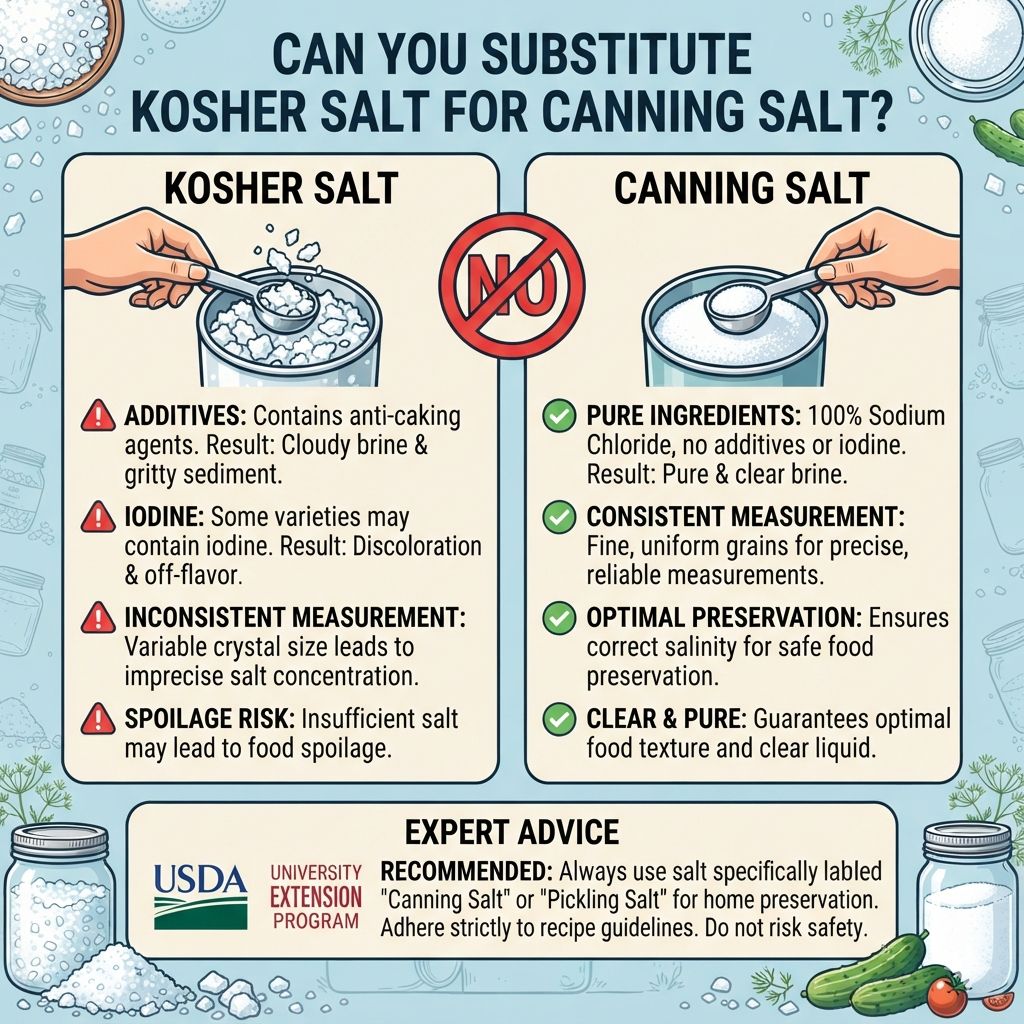
The short and direct answer is no, you should not substitute kosher salt for canning salt. While both are salts, their differing compositions and properties make them unsuitable for one another’s primary functions, especially in the critical realm of food preservation.
The main reason is the presence of additives. Anti-caking agents in kosher salt can cause your brine to become cloudy, leaving a gritty sediment in your jars. These agents can also interfere with the salt’s ability to properly penetrate the food, potentially leading to spoilage.
Iodine, if present in a salt labeled “kosher” (though less common than in table salt), can cause discoloration and an off-flavor in your preserved items.
Furthermore, the crystal size of kosher salt can be inconsistent, leading to inaccurate measurements. If a recipe calls for a specific volume of salt for preservation, using kosher salt might result in too little salt, compromising the safety of the product, or too much, making it overly salty. Canning salt, with its fine, uniform grains, ensures consistent measurements and dissolves predictably.
- Additive Interference: Anti-caking agents cause cloudy brine and hinder salt penetration.
- Iodine Issues: Can cause discoloration and off-flavors in preserved foods.
- Measurement Inaccuracy: Variable crystal sizes lead to inconsistent salt concentration.
- Safety Risks: Insufficient salt concentration can lead to spoilage and health hazards.
- Texture and Clarity: Canning salt ensures clear brines and optimal food texture.
For successful and safe home canning, always adhere to the salt type specified in your recipes. Reputable sources like the USDA and various university extension programs consistently recommend only using canning or pickling salt. The investment in a box of canning salt is minimal compared to the risk of losing an entire batch of preserves or, worse, risking foodborne illness.
How to Read Salt Labels for Canning
Understanding salt labels is your first line of defense in ensuring safe and successful food preservation. The key is to look for specific wording that indicates purity and suitability for canning. Not all white granular substances are created equal when it comes to preserving food.
When picking up a box or container of salt, pay close attention to the ingredient list and any claims made on the packaging. The ideal salt for canning will be labeled as “canning salt,” “pickling salt,” or explicitly state “pure granulated salt” with no other ingredients listed. It should ideally be free from any anti-caking agents or iodine.
| Label Feature | What It Means for Canning |
|---|---|
| “Canning Salt” or “Pickling Salt” | This is the most reliable indicator. It means the salt is pure sodium chloride and formulated for preservation. |
| “Pure Granulated Salt” | Generally safe, but always check the ingredient list. Ensure it’s 100% sodium chloride with no added anti-caking agents. |
| “Iodized Salt” | Avoid for canning. Iodine can cause discoloration and affect flavor. |
| “Contains Anti-Caking Agents” | Avoid for canning. These agents can cause cloudy brine and interfere with preservation. |
| “Kosher Salt” | Generally not recommended for canning due to potential additives and variable crystal size. Always check the label for purity. |
Look out for terms like “YPS” (Yellow Prussiate of Soda) or “E535” (Silicon Dioxide) as these are common anti-caking agents. If the label says “salt,” but provides no further clarification, it’s wise to assume it might contain additives and err on the side of caution by purchasing a salt specifically designated for canning.
Remember that brands can vary. For instance, some generic “table salt” may be pure enough, but most often they contain anti-caking agents. It’s always better to be safe than sorry.
According to the USDA’s Complete Guide to Home Canning, pure salt is essential for successful preservation. If you can’t find specific canning salt, opt for pure fine sea salt or pure fine table salt, ensuring absolutely no additives are present.
Frequently Asked Questions
Is all kosher salt bad for canning?
Not necessarily all kosher salt is “bad” in the sense of being immediately toxic, but it’s highly discouraged for canning. Most kosher salt contains anti-caking agents or other additives that can lead to cloudy brines, affect texture, and potentially compromise the preservation process. Always check the label for purity.
Can I use sea salt for canning?
Fine sea salt can be used for canning, provided it is 100% pure sodium chloride with no additives like iodine or anti-caking agents. Avoid coarse or flavored sea salts. The fine grain ensures it dissolves well and distributes evenly, similar to canning salt.
What happens if I use table salt for canning?
Using regular iodized table salt for canning is not recommended. The iodine can cause preserved foods to darken and develop an undesirable metallic taste. Additionally, table salt often contains anti-caking agents that can result in cloudy brine and sediment, hindering the overall quality and appearance of your preserved items.
How much canning salt do I need for a batch of pickles?
The amount of canning salt needed varies significantly depending on the recipe, the type of vegetable being preserved, and the size of the batch. Most reputable canning recipes will specify the exact amount of salt to use. It’s crucial to follow these measurements precisely for both flavor and safety.
Where can I buy canning salt?
Canning salt is typically available in the canning or spice aisle of most large supermarkets, grocery stores, and specialty cooking shops. It’s also widely available online from retailers like Amazon and directly from canning supply companies. It usually comes in boxes or plastic containers.
Final Thoughts
Understanding the difference between kosher salt and canning salt is fundamental for anyone engaging in home food preservation. While kosher salt excels in everyday cooking for its flavor and texture, canning salt’s purity is non-negotiable for safe and successful canning. Always prioritize safety and quality by using the correct salt for the job.
Products related to this article
Sponsored / affiliate links. As an Amazon Associate I earn from qualifying purchases. I may earn additional commission from eligible campaigns.