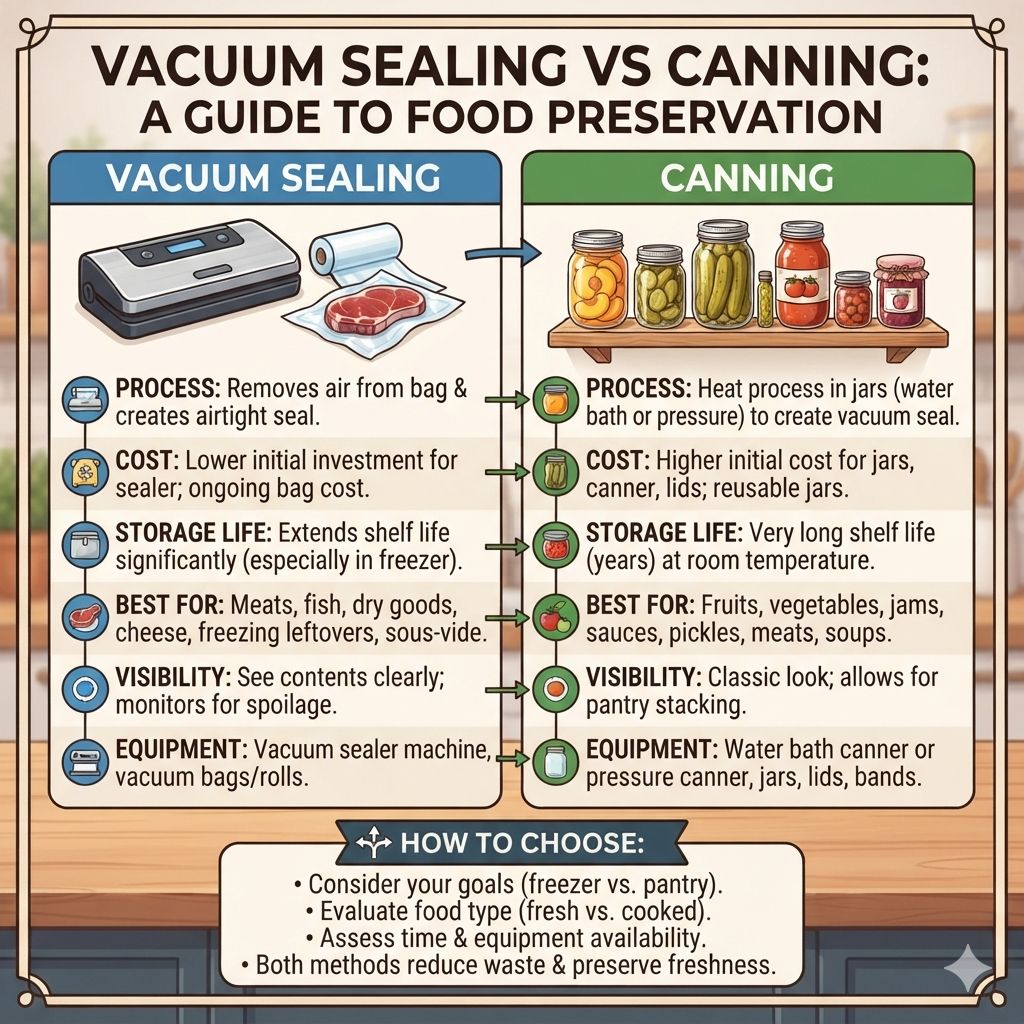
When preserving food, you’ll often encounter two main methods: vacuum sealing vs canning. Both offer excellent ways to extend the shelf life of your food, but they differ significantly in process, cost, and the types of food best suited for each. Choosing the right method depends on your needs, available equipment, and what you plan to store.
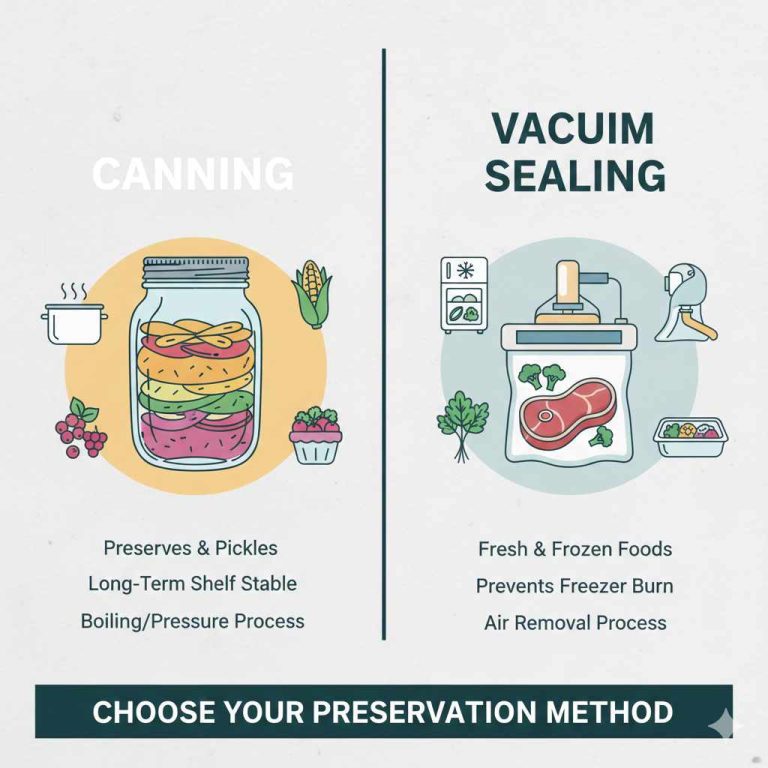
Simply put, vacuum sealing is ideal for short-to-medium term food storage in the freezer, refrigerator, or pantry, preserving quality and preventing freezer burn. Canning is a long-term preservation method that renders food shelf-stable at room temperature, suitable for bulk storage and emergency preparedness.
Key Takeaways
- Vacuum sealing excels at extending the freshness of foods in short-to-medium term storage by removing air.
- Canning creates shelf-stable foods for long-term storage at room temperature through a heat sterilization process.
- Both vacuum sealing vs canning require specific equipment and knowledge to ensure food safety.
- Vacuum sealing is generally quicker and preserves texture better for many foods than canning.
- Canning is more labor-intensive but offers indefinite shelf stability without relying on refrigeration or freezers.
What is Vacuum Sealing?
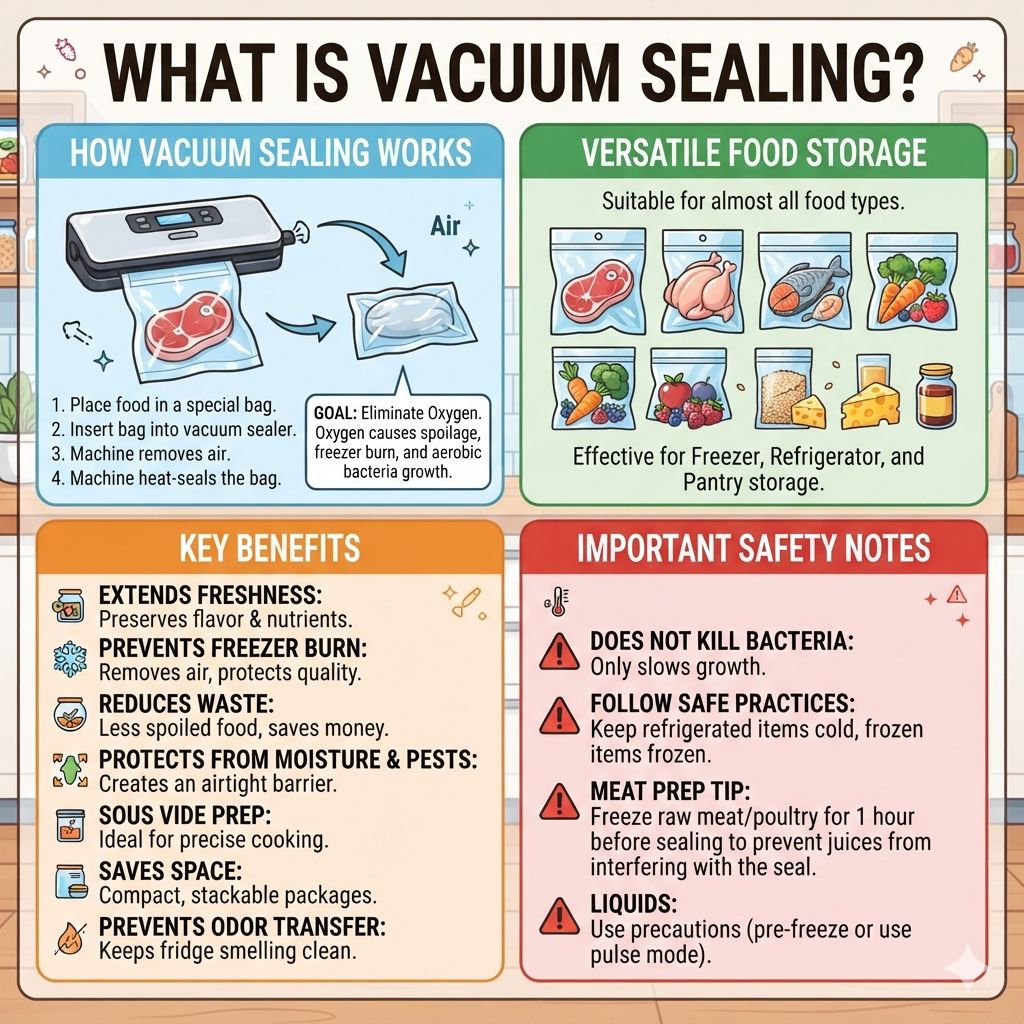
Vacuum sealing involves removing air from a food package before sealing it. This is typically done using a vacuum sealing machine that sucks the air out of a special plastic bag or container and then heat-seals the opening. The primary goal is to eliminate oxygen, which is a major contributor to food spoilage, freezer burn, and the growth of aerobic bacteria and mold.
By removing air, the food’s quality, flavor, and nutritional value are preserved for much longer periods than traditional storage methods.
This method is incredibly versatile. You can vacuum seal meats, poultry, fish, vegetables, fruits, grains, cheeses, and even liquids (with some precautions). It’s particularly effective for items destined for the freezer, as it dramatically reduces the risk of freezer burn, which can make food dry, tough, and unappetizing.
Beyond the freezer, vacuum-sealed items can also be stored in the refrigerator for longer than unsealed items or kept in a cool, dry pantry. The tight seal also prevents odors from transferring between foods in the refrigerator.
- Benefits of Vacuum Sealing:
- Extends food freshness significantly.
- Prevents freezer burn by removing oxygen.
- Reduces food waste and saves money.
- Protects food from moisture and pests.
- Ideal for sous vide cooking preparation.
- Keeps food tasting and looking its best.
- Saves freezer and refrigerator space by creating compact packages.
While highly effective, it’s important to note that vacuum sealing does not kill existing bacteria or spores. It merely slows down their growth. Therefore, it’s crucial to follow safe food handling practices and store vacuum-sealed foods appropriately – refrigerated items still need refrigeration, and frozen items still need freezing.
For raw meats and poultry, it’s recommended to freeze them for about an hour before vacuum sealing to prevent any juices from interfering with the seal.
What is Canning?
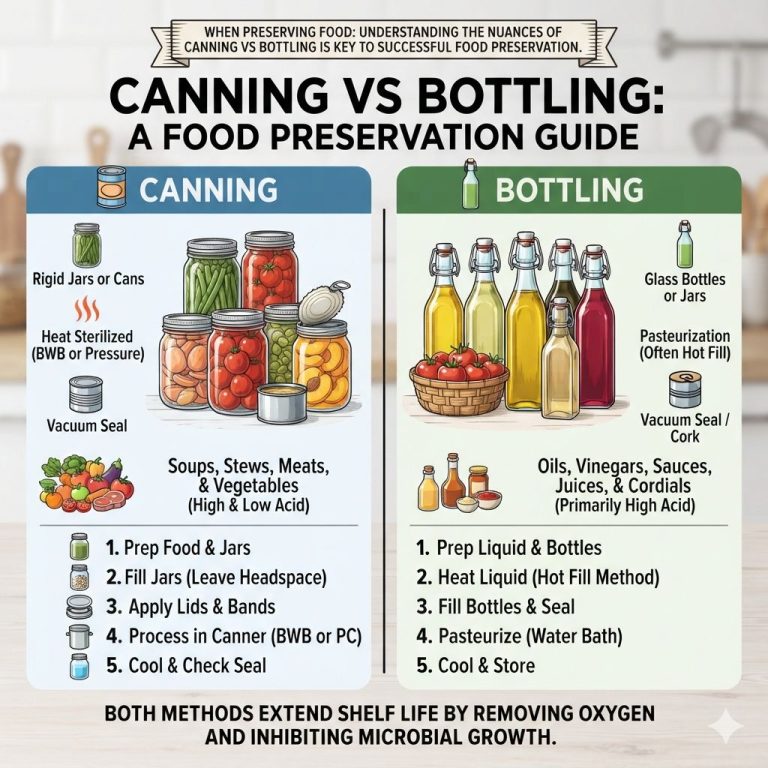
Canning is a method of preserving food by heating it in sealed containers (jars or cans) to a temperature that destroys microorganisms and inactivates enzymes. The vacuum created during the cooling process forms an airtight seal, preventing recontamination and making the food shelf-stable at room temperature. This process effectively halts spoilage and allows food to be stored for extended periods, often years, without refrigeration.
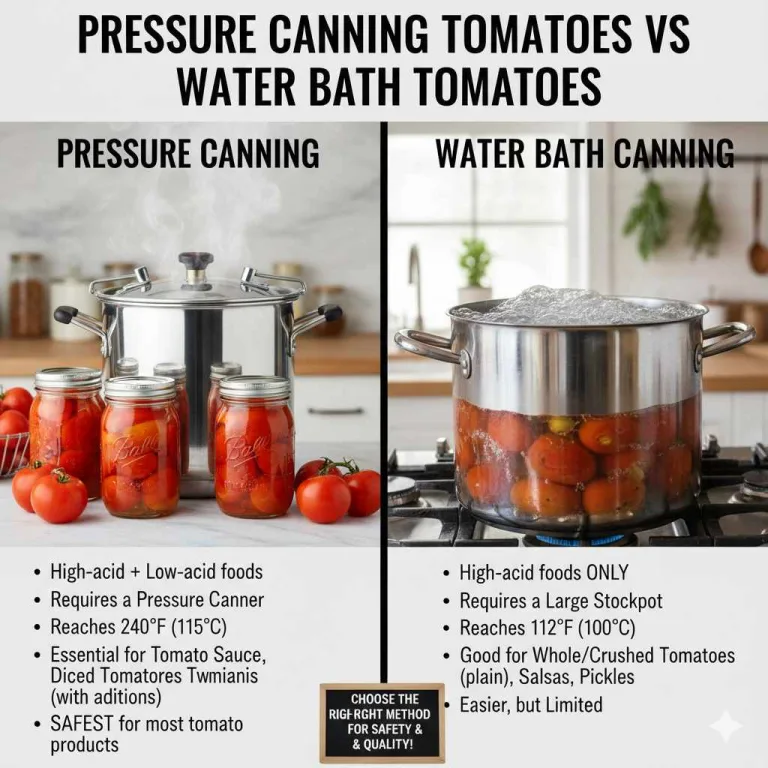
There are two primary methods of canning: water bath canning and pressure canning. Water bath canning is suitable for high-acid foods like fruits, jams, jellies, pickles, and tomatoes (often with added acid). The jars are submerged in boiling water for a specific duration.
Pressure canning is necessary for low-acid foods, including most vegetables, meats, poultry, and seafood. These foods require higher temperatures (above boiling point) to destroy harmful bacteria like Clostridium botulinum, which can cause botulism. This higher temperature is achieved by processing the jars in a pressure canner under steam pressure.
Canning is a time-tested preservation technique that has been used for centuries. It’s particularly valuable for individuals or families who grow their own produce, hunt, or fish, as it allows them to preserve large harvests or catches for consumption throughout the year. The initial investment in equipment (canners, jars, lids, tools) can be significant, but the cost per jar can become very low over time, making it a cost-effective long-term storage solution.
| Canning Method | Food Types Suitable For | Equipment Needed | Process |
|---|---|---|---|
| Water Bath Canning | High-acid foods: fruits, jams, jellies, pickles, most tomatoes | Large pot with rack, canning jars, lids, rings | Jars processed in boiling water for a set time |
| Pressure Canning | Low-acid foods: vegetables, meats, poultry, seafood | Pressure canner, canning jars, lids, rings | Jars processed under pressure at higher temperatures |
Ensuring a proper seal is paramount for safety and shelf life. If a jar fails to seal, the food should be reprocessed immediately or refrigerated and used within a few days. Botulism is a serious risk with improperly canned low-acid foods, so following tested recipes and procedures from reliable sources like the National Center for Home Food Preservation (NCHFP) is critical.
Vacuum Sealing vs Canning: Direct Comparison
When deciding between vacuum sealing and canning, it’s helpful to see how they stack up against each other in key areas. This comparison will highlight their strengths and weaknesses, making it easier to choose the best method for your specific food preservation needs.
| Feature | Vacuum Sealing | Canning |
|---|---|---|
| Primary Storage | Freezer, Refrigerator, Pantry (shorter term) | Pantry (long-term, shelf-stable) |
| Shelf Life | Freezer: 2-3 years; Fridge: weeks/months; Pantry: months | 1-5+ years (quality degrades over time) |
| Food Quality Preservation | Excellent, retains texture, color, and nutrients | Good, but texture can soften; some nutrient loss due to heat |
| Equipment Cost | Moderate (sealer + bags) | Higher initial investment (canner, jars, lids) |
| Time Investment Per Batch | Fast (minutes per bag) | Slow (hours per batch, including prep and processing) |
| Food Safety Considerations | Relies on proper refrigeration/freezing after sealing; doesn’t kill bacteria. | Critical to follow tested recipes and ensure proper seal/processing to prevent botulism. |
| Energy Dependence | Requires electricity for sealer; depends on freezer/fridge for extended storage. | Can be done without electricity if using a stovetop canner; shelf-stable food does not require power for storage. |
This table highlights that vacuum sealing vs canning serve different primary purposes. Vacuum sealing is about maintaining high quality for shorter periods and preventing degradation in controlled environments like freezers, while canning is about creating truly shelf-stable food for long-term storage where no power is available.
Best Foods for Vacuum Sealing
Vacuum sealing shines when preserving the quality of foods destined for shorter-term storage or when you want to maximize freezer space and quality. It’s particularly effective for items where texture and fresh flavor are paramount. Think about the foods you regularly use and want to keep at their absolute best without the long-term commitment of canning.
Meats, poultry, and fish are prime candidates. A well-sealed steak or chicken breast will remain virtually free of freezer burn for years, tasting as fresh as the day you bought it when thawed. Vegetables can be blanched and then vacuum-sealed for the freezer, retaining more of their crispness and nutrients than when simply frozen in bags.
Fruits also benefit greatly, maintaining their shape and flavor, which is excellent for baking or smoothies.
- Top Picks for Vacuum Sealing:
- Raw and cooked meats (steaks, roasts, ground meat, chicken, pork)
- Poultry (whole chickens, turkey parts)
- Fish and seafood (whole fish, fillets, shrimp)
- Vegetables (blanched before freezing)
- Fruits (berries, peaches, apples for pies)
- Cheeses (hard cheeses last longer, soft cheeses better for shorter term)
- Dry goods (grains, beans, rice, pasta – prevents moisture and pests)
- Prepared meals and leftovers
- Soups and stews (freeze flat for space-saving)
For dry goods like grains, rice, or beans, vacuum sealing can protect them from moisture, insects, and spoilage, extending their pantry life considerably. This is also a fantastic method for portioning bulk purchases. When you buy a large bag of rice, you can divide it into meal-sized portions.
This not only saves space but also ensures you only open what you need, keeping the rest perfectly sealed.
Tip: For sealing liquids like soups or broths, freeze them in a container first until solid. Then, vacuum seal the frozen block. This prevents the liquid from being sucked into the machine. Alternatively, leave a generous headspace and fold the bag to create a barrier.
Best Foods for Canning
Canning is the superior choice for creating truly shelf-stable foods that can be stored in a cool, dark pantry for extended periods. This method is ideal for preserving large quantities of produce from a garden or orchard, creating a food supply that doesn’t rely on electricity. It’s about creating long-term food security and having access to a variety of foods year-round.
Fruits are commonly canned, whether as whole fruits in syrup, pie fillings, or sauces like applesauce. High-acid vegetables, such as tomatoes (whole, diced, or as sauce) and pickles (cucumbers, relishes), are also excellent candidates for water bath canning. For low-acid foods, pressure canning unlocks the ability to preserve a wide array of vegetables like green beans, corn, carrots, and potatoes, as well as meats, poultry, and fish.
This allows for the preservation of complete meals or the core components for them.
| Food Category | Canning Method | Examples |
|---|---|---|
| Fruits | Water Bath | Peaches, pears, berries, applesauce, fruit cocktail, jams, jellies |
| Tomatoes & Pickled Foods | Water Bath | Whole tomatoes, diced tomatoes, tomato sauce, salsa, pickles, relishes, sauerkraut |
| Low-Acid Vegetables | Pressure Canning | Green beans, corn, peas, carrots, potatoes, beets, asparagus |
| Meats, Poultry & Seafood | Pressure Canning | Beef, chicken, pork, fish, shellfish, stews |
The ability to preserve meat and low-acid vegetables through pressure canning is a significant advantage for creating robust, long-term food stores. While it requires more technical skill and specific equipment, the result is food that is safe to store without power, providing a crucial buffer against power outages or supply chain disruptions. The U.S.
Department of Agriculture (USDA) provides extensive, tested canning recipes that are essential for safety.
Important: Always use tested recipes from reliable sources like the National Center for Home Food Preservation or your local Extension Office. Do not alter canning recipes, especially regarding processing times or ingredient amounts, as this can compromise food safety.
Pros and Cons: Vacuum Sealing vs Canning
To further clarify the decision-making process for vacuum sealing vs canning, let’s break down the advantages and disadvantages of each method.
| Aspect | Vacuum Sealing | Canning |
|---|---|---|
| Pros |
|
|
| Cons |
|
|
The choice between vacuum sealing and canning often comes down to your priorities: immediate quality and convenience for shorter terms (vacuum sealing) versus long-term food security and shelf stability (canning). Many households find value in using both methods to cover different preservation needs.
Equipment and Costs
Understanding the equipment and associated costs is crucial when comparing vacuum sealing vs canning. Each method requires a distinct set of tools, and the initial investment can vary significantly.
For vacuum sealing, the primary piece of equipment is the vacuum sealer machine itself. These range from basic, affordable models suitable for occasional use to more advanced, high-powered machines designed for frequent use. Beyond the machine, you’ll need specialized vacuum seal bags or rolls.
These bags are textured on one side to allow air to be evacuated and are made of durable, food-safe materials. The cost of bags is an ongoing expense, as they are typically single-use. A decent entry-level vacuum sealer can cost anywhere from $70 to $150, with high-end models costing $300 or more.
Bags can range from $20-$50 for a box of 100, depending on size and quality.
Canning, on the other hand, has a more substantial initial investment. The most significant piece of equipment is the canner. For water bath canning, a large stockpot with a rack may suffice for some, but dedicated water bath canners are more efficient and safer.
For pressure canning, a certified pressure canner is non-negotiable. These can range from $100 to $300 or more. You’ll also need canning jars (reusable but require new lids each time), jar lifters, headspace tools, funnels, and potentially a de-bubbler and lid wand.
Jars can be purchased new for about $15-$25 per dozen, with lids costing around $5-$8 per dozen. While the upfront cost for canning equipment is higher, the jars are reusable, making the cost per preserved item lower over time compared to vacuum seal bags.
| Equipment Category | Vacuum Sealing Estimated Cost | Canning Estimated Cost (Initial) |
|---|---|---|
| Sealer/Canner Machine | $70 – $300+ | $50 – $300+ (Water Bath) $150 – $300+ (Pressure Canner) |
| Bags/Jars & Lids | $20 – $50 per 100 bags (ongoing) | $15 – $35 per dozen jars $5 – $8 per dozen lids (ongoing for lids) |
| Utensils & Accessories | Minimal (e.g., cutting tool for rolls) | $30 – $70 (jar lifter, funnel, ladle, etc.) |
| Total Estimated Initial Cost | $100 – $400+ | $130 – $700+ |
The cost analysis suggests that while vacuum sealing might have a lower initial barrier to entry for the machine itself, the ongoing cost of bags can make it more expensive over time for heavy users. Canning has a higher initial cost but becomes more economical per unit as jars are reused. For the best of both worlds, many users invest in both systems.
Which Method is Right for You?
The decision between vacuum sealing vs canning isn’t about one being definitively “better” than the other; it’s about which method aligns best with your food preservation goals, lifestyle, and storage capabilities. Consider these factors when making your choice.
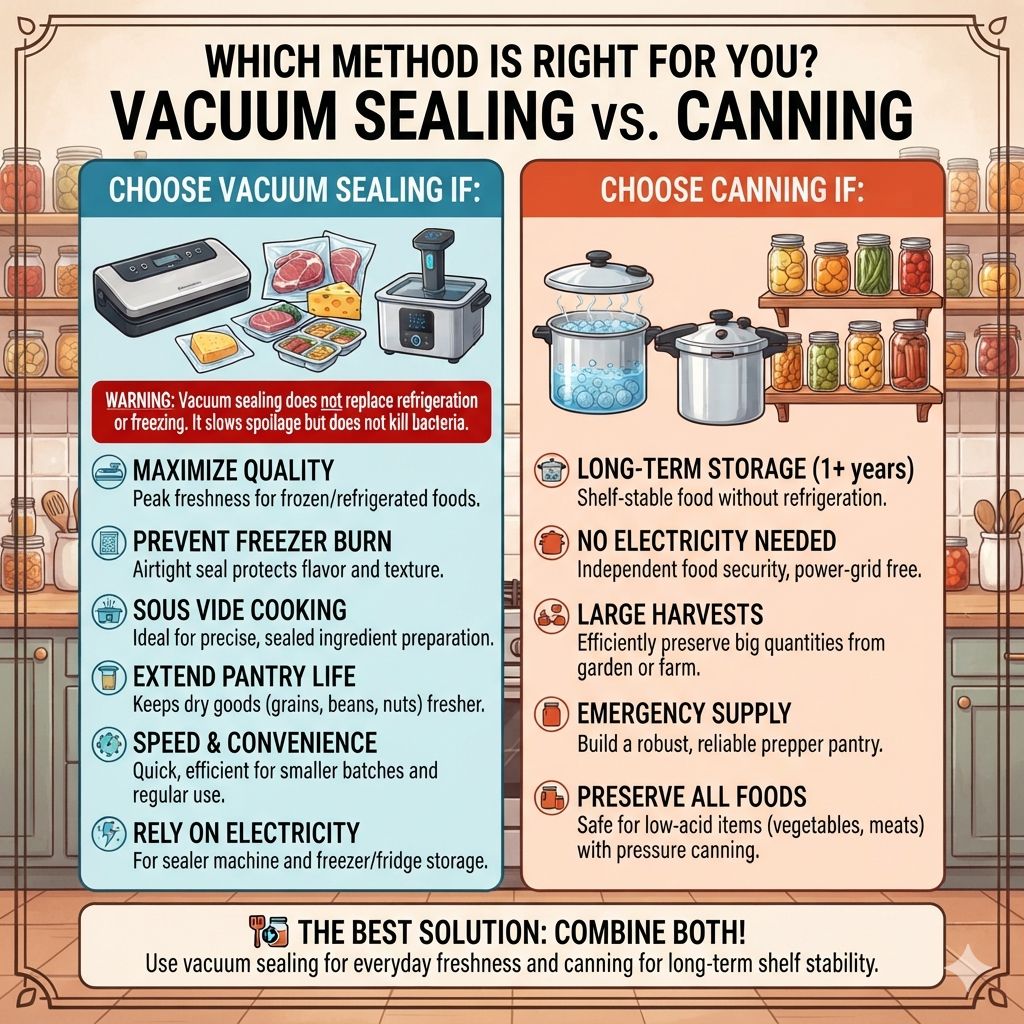
If your priority is maintaining the highest possible quality for foods stored in the freezer or refrigerator, and you have reliable access to electricity, vacuum sealing is likely your best bet. It’s perfect for preserving meats, cheeses, and pre-portioned meals for regular use. If you’re an avid freezer user or enjoy sous vide cooking, vacuum sealing is practically indispensable.
It also excels at keeping dry goods fresh in the pantry for longer than traditional packaging.
Warning: Never use vacuum-sealed foods as a substitute for proper refrigeration or freezing. Vacuum sealing does not kill bacteria or prevent spoilage on its own; it only slows down the process by removing oxygen.
If your goal is long-term food security, creating a pantry stocked for emergencies, or preserving large quantities of garden produce that will last for years without refrigeration, then canning is the way to go. It provides peace of mind knowing you have a stable food supply independent of power grids. This method is essential for anyone looking to build a robust “prepper” pantry or to preserve bountiful harvests from a garden or farm.
- Choose Vacuum Sealing if:
- You want to maximize the quality and shelf life of foods in your freezer or refrigerator.
- You frequently use the freezer and want to prevent freezer burn.
- You enjoy sous vide cooking and need properly sealed ingredients.
- You want to extend the pantry life of dry goods like grains and beans.
- You prioritize speed and convenience for smaller batch preservation.
- You have reliable access to electricity for your storage appliances.
- Choose Canning if:
- You want to create truly shelf-stable food for long-term storage (1+ years).
- You need a food storage solution that doesn’t rely on electricity.
- You are preserving large harvests from a garden or farm.
- You are building an emergency food supply.
- You are preserving low-acid foods like vegetables or meats.
Many individuals and families find that the ideal solution is to employ both vacuum sealing and canning. Vacuum sealing is used for everyday freezer storage and maintaining peak quality, while canning is reserved for long-term pantry staples and emergency preparedness.
Frequently Asked Questions
What is the primary difference between vacuum sealing and canning?
The primary difference lies in their outcome: vacuum sealing removes air to preserve quality for shorter to medium-term storage (freezer, fridge, pantry), while canning uses heat and sealing to create shelf-stable food for long-term pantry storage at room temperature.
Can vacuum-sealed food be stored at room temperature indefinitely?
No, vacuum sealing does not sterilize food. Foods that require refrigeration or freezing must still be stored in those conditions after vacuum sealing. Dry goods, like rice or beans, can be stored at room temperature for extended periods if kept dry and sealed properly.
Is canning safer than vacuum sealing?
Both methods can be safe when performed correctly. Canning low-acid foods requires strict adherence to tested recipes and procedures to prevent botulism. Vacuum sealing is safer for preventing spoilage in freezers/refrigerators but does not inherently make perishable food safe at room temperature.
Which method preserves nutrients better?
Vacuum sealing generally preserves nutrients better because it doesn’t involve the high heat exposure that canning does. While canning is effective for preservation, the heat processing can lead to some loss of heat-sensitive vitamins.
Can I vacuum seal foods I intend to can later?
Yes, you can vacuum seal certain foods, like fresh produce, before canning them. This can help maintain freshness until you’re ready to can, but it doesn’t replace the canning process itself. Ensure the vacuum-sealed package is properly stored (refrigerated or frozen) until canning.
Final Thoughts
Choosing between vacuum sealing vs canning depends entirely on your specific food preservation goals. Vacuum sealing excels at maintaining peak freshness for shorter terms in controlled environments, while canning offers unparalleled long-term, electricity-free shelf stability. Many successful preservers utilize both methods, leveraging the unique advantages of each to create a versatile and secure food storage system.
Products related to this article
Sponsored / affiliate links. As an Amazon Associate I earn from qualifying purchases. I may earn additional commission from eligible campaigns.