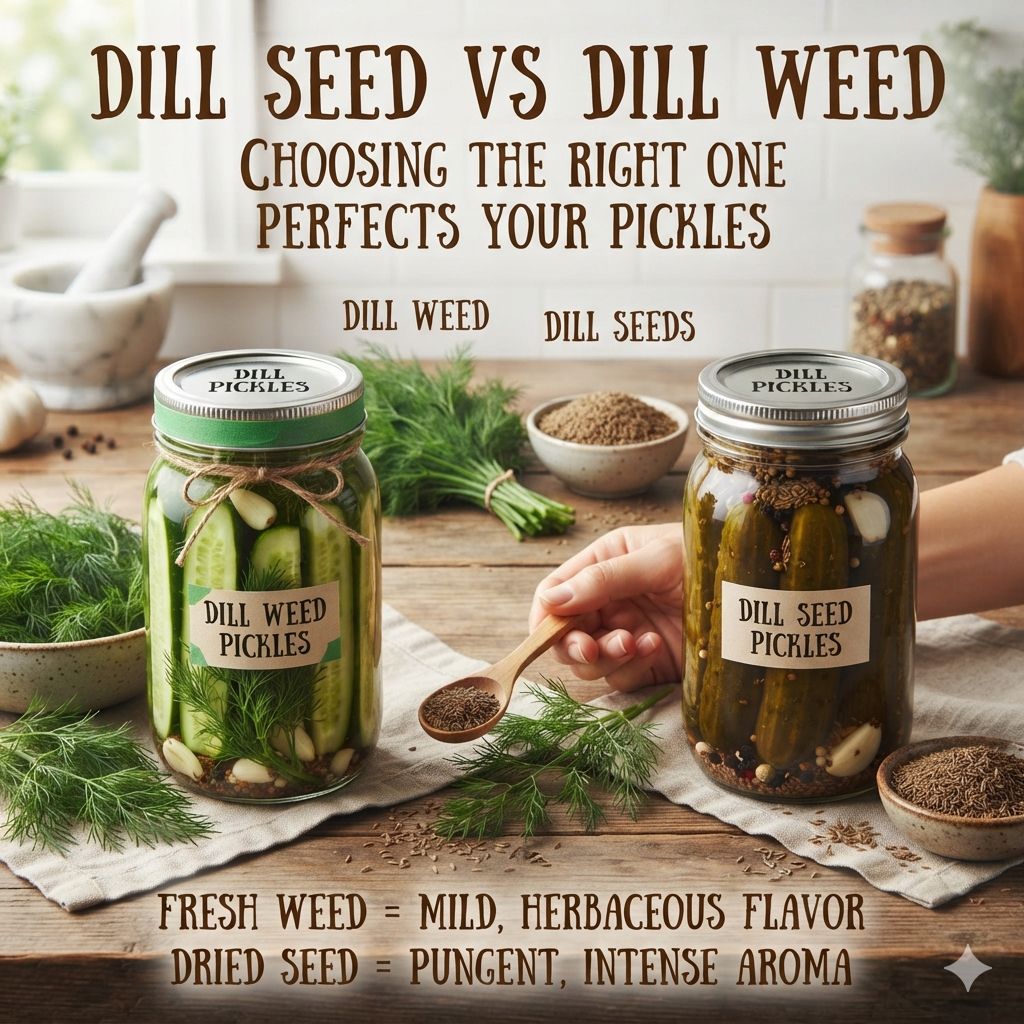
Dill seed and dill weed create distinct flavors, so choosing the right one can perfect your pickles.
Simply put, dill seed offers a stronger, more pungent flavor and firmer texture, ideal for crisp pickles, while dill weed provides a milder, fresher, herbaceous note better suited for lighter brines or finishing dishes. Choose dill seed for robust, classic dill pickles and dill weed for more delicate flavors.

The Spice Way
The Spice Way Dill Seed 8 oz…
- DILL SEEDS - flavorful seeds that have so many uses. pickles, seafood, vegetables, dill pickle soup and more.
- PURE - No preservatives, no additives, no MSG, Non GMO, no fillers just fresh dill seeds for cooking
- FLAVORS OF THE WORLD - Dill pickle seeds are very common in many authentic recipes from America, Europe and the Middle East.
As an Amazon Associate I earn from qualifying purchases.

Key Takeaways
- Dill seed provides a more intense, licorice-like flavor and helps create firmer pickles.
- Dill weed offers a fresher, lighter, more herbaceous taste and aroma, often used for finishing.
- Both dill seed vs dill weed come from the same dill plant (Anethum graveolens) but are harvested at different stages.
- For classic, crisp dill pickles, dill seed is generally preferred for its flavor and texture contribution.
- Dill weed is excellent for adding a fresh, bright finish to salads, sauces, or lighter brine recipes.
What is Dill Seed?
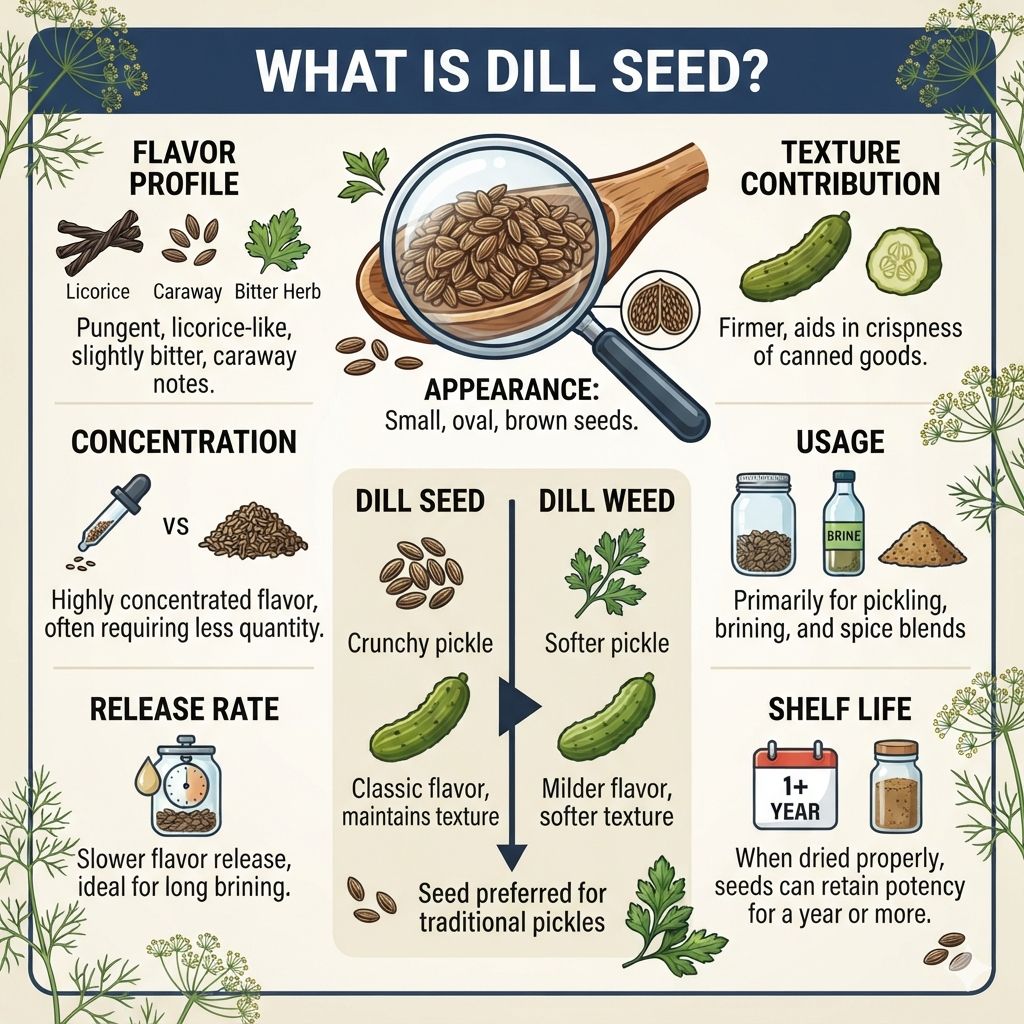
Dill seed refers to the small, oval-shaped seeds produced by the dill plant after it has flowered. These seeds are harvested and dried, concentrating their flavor. They possess a more robust and pungent taste compared to dill weed, often described as having notes of caraway and a distinct, slightly bitter, licorice-like undertone.
The seeds are denser and have a firmer texture, which contributes to the crispness of pickles when used in canning.
The flavor of dill seed is released more slowly than dill weed, making it a perfect component for long brining processes. When added to a canning jar, the seeds impart their strong flavor over time, creating that signature, tangy dill taste that many associate with traditional pickles. Their inherent firmness also helps maintain the structure of the pickle, preventing it from becoming mushy during the preservation process.
When considering dill seed vs dill weed for canning, the seed is often the go-to for achieving a classic dill pickle flavor and texture. Its ability to withstand prolonged exposure to brine without disintegrating is a significant advantage. Furthermore, the concentrated flavor profile means you often need less seed than weed to achieve a desired taste intensity.
- Flavor Profile: Pungent, licorice-like, slightly bitter, caraway notes.
- Texture Contribution: Firmer, aids in crispness of canned goods.
- Release Rate: Slower flavor release, ideal for long brining.
- Usage: Primarily for pickling, brining, and spice blends.
- Appearance: Small, oval, brown seeds.
- Concentration: Highly concentrated flavor, often requiring less quantity.
- Shelf Life: When dried properly, seeds can retain potency for a year or more.
What is Dill Weed?
Dill weed, on the other hand, refers to the feathery green leaves and stems of the dill plant. It is harvested when the plant is actively growing and before it sets seed. The flavor of dill weed is much milder, fresher, and more herbaceous than that of dill seed.
It carries bright, grassy notes with a subtle sweetness and a hint of anise, making it a versatile herb for a variety of culinary applications.
Unlike dill seeds, dill weed’s delicate leaves are best utilized when their fresh flavor can be appreciated. While it can be added to canning recipes, it’s often used in smaller quantities or added towards the end of the cooking or brining process to preserve its aromatic qualities. Overcooking or prolonged exposure to heat can diminish its vibrant taste and aroma, which is why its application in canning differs significantly from dill seed.
In the context of dill seed vs dill weed for canning, dill weed is less commonly the primary flavoring agent for robust dill pickles. However, it can be an excellent addition for lighter brines, refrigerator pickles, or to add a fresh herbaceous note to other preserved vegetables where a strong dill flavor isn’t the main goal. It’s also perfect for garnishing finished canned dishes.
- Flavor Profile: Fresh, herbaceous, grassy, slightly sweet, subtle anise.
- Aroma: Distinctive, bright, and aromatic.
- Texture: Delicate, leafy, can become soft when cooked.
- Flavor Release: Quick and bright, best when fresh or lightly heated.
- Usage: Salads, sauces, dips, fish dishes, lighter brines, garnishes.
- Appearance: Fine, feathery green leaves and stems.
- Preservation: Can be frozen or dried, though fresh is often preferred.
How Dill Seed Contributes to Pickle Crispness
One of the most significant differences users notice when comparing dill seed vs dill weed for canning is the impact on pickle texture. Dill seeds contain pectin, a natural gelling agent that helps maintain cell wall integrity in the produce. When used in brine, this pectin can migrate into the cucumber or other vegetable, effectively firming up its structure from within.
The hard casing of the dill seed itself also plays a minor role. It provides a physical element within the jar that can support the vegetable, preventing it from collapsing under its own weight or during the sealing process. This dual action – both internal structural support via pectin and external physical aid – leads to noticeably crisper pickles that retain their bite even after weeks or months in the pantry.
The slow release of flavor from dill seeds also means they are imparting their compounds gradually, allowing the vegetables to absorb these pickling agents without becoming waterlogged. This controlled diffusion of acids and flavors, coupled with the textural benefits of the seeds, is why they are a staple in many classic dill pickle recipes from canning enthusiasts. They are not just for flavor; they are functional ingredients for achieving that perfect snap.
- Pectin Content: Seeds contain natural pectin, aiding vegetable firmness.
- Cell Wall Integrity: Pectin helps maintain the crisp structure of cucumbers and other vegetables.
- Physical Support: The dense seeds provide a form of internal bracing within the pickle.
- Controlled Flavor Release: Gradual impartation of flavor prevents vegetables from becoming overly saturated too quickly.
- Texture Enhancement: Contributes to the desired “snap” and resistance to mushiness.
- Traditional Use: A long-standing ingredient in classic dill pickle recipes for generations.
- Drying Process: Proper drying of seeds is crucial for maximizing their texture-enhancing properties.
How Dill Weed Impacts Flavor Profiles
When comparing dill seed vs dill weed for canning, the flavor contribution is where they diverge most dramatically. Dill weed is all about freshness and aroma. Its bright, herbaceous notes can lift an entire dish, adding a layer of complexity that is both subtle and invigorating.
This makes it an excellent choice for recipes where you want a hint of dill without overwhelming the primary flavors of the ingredients.
For instance, in lighter brine recipes for refrigerator pickles or quick pickles, dill weed can be added for a gentle, fresh dill essence. It pairs beautifully with garlic, lemon, and other herbs. Its flavor is more volatile and can be easily lost if subjected to prolonged high heat, which is why it’s often used as a finishing herb in cooked dishes or added to brines that are not pressure canned or boiled for extended periods.
This gentle nature is its strength.
The aromatic qualities of dill weed are also a significant factor. The scent itself is a crucial part of the culinary experience. When you open a jar of lightly pickled vegetables seasoned with dill weed, the fresh, green aroma is immediately noticeable and appealing.
This contrasts sharply with the more robust, sometimes earthy aroma of dill seed, which is deeper and more integrated into the overall brine.
- Aromatic Qualities: Provides a fresh, green, and vibrant scent.
- Flavor Nuance: Adds subtle herbaceous notes rather than dominant dill.
- Pairing Potential: Complements delicate flavors like fish, chicken, and lighter vegetables.
- Best Use Cases: Refrigerator pickles, quick pickles, marinades, finishing touches.
- Heat Sensitivity: Flavor diminishes with prolonged high heat, best for no-cook or low-cook methods.
- Versatility: Can be used in a wider array of dishes beyond just pickles.
- Visual Appeal: The feathery leaves can add a decorative element to dishes and jars.
Comparing Flavor Intensity and Release
The most significant differentiator between dill seed vs dill weed for canning lies in their flavor intensity and how that flavor is released over time. Dill seeds are powerhouses of concentrated flavor. They contain volatile oils that are released slowly, especially when exposed to the acidic environment of a pickle brine.
This slow, sustained release is what gives traditionally canned dill pickles their robust and enduring flavor profile.
When you bite into a pickle made with dill seed, you get an immediate, strong dill hit. As you continue to eat, the flavor may subtly evolve, revealing undertones of caraway or a mild pepperiness. This layered flavor experience is highly desirable for those seeking a classic dill pickle.
The seeds themselves are not typically eaten; they remain in the brine, continuously infusing their taste throughout the preservation period and beyond.
Dill weed, by contrast, offers a much more immediate but less enduring flavor. The delicate oils in the leaves are present in lower concentrations and are more volatile. When added to a brine, the flavor is bright and fresh, but it can dissipate or weaken over time, particularly with heat.
This makes dill weed ideal for recipes where a lighter, fresher dill note is desired and when the preserved item will be consumed relatively quickly, such as in refrigerator pickles or certain types of relishes.
Here’s a simple comparison of their flavor characteristics:
| Characteristic | Dill Seed | Dill Weed |
|---|---|---|
| Flavor Intensity | High, Pungent | Mild, Fresh |
| Flavor Notes | Licorice, caraway, slightly bitter | Grassy, herbaceous, slightly sweet |
| Flavor Release | Slow and sustained | Quick, dissipates with heat |
| Best For | Classic dill pickles, long brines | Refrigerator pickles, lighter brines, garnishes |
This table clearly illustrates the distinct roles each plays in preserving flavors.
When to Use Dill Seed in Canning
If your goal is to achieve that quintessential, robust dill pickle flavor that stands the test of time, then dill seed is your champion. It’s the foundational ingredient for many classic canning recipes, especially for cucumbers, green beans, and beets, where a strong, discernible dill presence is desired. Think of the dill pickles you find in most grocery stores – that distinct flavor is largely thanks to dill seed.
When using dill seed in canning, consider the quantity. Start with a teaspoon or two per quart jar, adjusting based on your preference and the size of the seeds. It’s also beneficial to use whole dill seed rather than ground, as the whole seeds release their flavor more gradually and prevent the brine from becoming cloudy.
For even greater flavor infusion, some canners lightly toast the dill seeds before adding them to the jar, which can enhance their aromatic compounds.
The texture benefit is another critical reason to opt for dill seed. For pickles that maintain a satisfying crunch and resist becoming soft or mushy, dill seed is an essential component. Its ability to help preserve the crispness of the vegetables means you’ll enjoy better texture and mouthfeel in your preserved goods.
So, for firm, flavorful, and traditionally tasting dill pickles, reach for the dill seed.
- Classic Dill Pickle Recipes: Essential for achieving authentic flavor.
- Firm Texture: Contributes to crispness and prevents mushiness.
- Long-Term Preservation: Ideal for shelf-stable canned goods.
- Flavor Intensity: Provides a strong, pungent dill taste.
- Vegetable Versatility: Works well with cucumbers, green beans, carrots, and beets.
- Quantity: Typically 1-2 teaspoons per quart jar, adjust to taste.
- Preparation Tip: Lightly toasting seeds can enhance their aroma and flavor.
Warning: Overuse of dill seed can lead to a flavor that is too intense or even bitter. Always start with a recommended amount and adjust in future batches based on your preference.
When to Use Dill Weed in Canning
Dill weed shines in applications where a lighter, fresher dill essence is preferred, or as a complementary herb rather than the primary flavor driver. This is particularly true for refrigerator pickles, which are not processed through high heat and are meant to be consumed within a few weeks. The delicate flavor of dill weed is preserved beautifully in these shorter-term, less intensely processed items.
Consider adding a few sprigs of fresh dill weed to jars of quick pickles, which are made with a hot brine but are cooled and stored in the refrigerator. It adds a beautiful aroma and a subtle herbaceous note that complements the vinegar and spices without overpowering them. It’s also a fantastic addition to relishes, chutneys, or even pickled fruits where a softer herbal note is more appropriate than the bold flavor of dill seed.
Beyond the brine itself, dill weed is invaluable as a finishing touch. Once your canned goods are opened and served, a sprinkle of fresh or lightly dried dill weed can elevate the dish. It can be stirred into potato salads made with pickled potatoes, added to tuna salad using canned tuna, or used to garnish pickled eggs.
Its versatility extends beyond the canning process itself, making it a valuable herb for any kitchen that enjoys preserved foods.
- Refrigerator Pickles: Adds a fresh, bright dill note without overpowering.
- Quick Pickles: Complements the brine with its herbaceous qualities.
- Relishes and Chutneys: Offers a milder, more balanced herbal flavor.
- Finishing Garnish: Sprinkled on finished dishes made with canned goods.
- Herbal Blends: Pairs well with other herbs like parsley, chives, and mint in preserved items.
- Aromatic Appeal: Enhances the overall sensory experience of the preserved food.
- Recipe Flexibility: Suitable for recipes where a strong dill flavor isn’t the primary goal.
Combining Dill Seed and Dill Weed
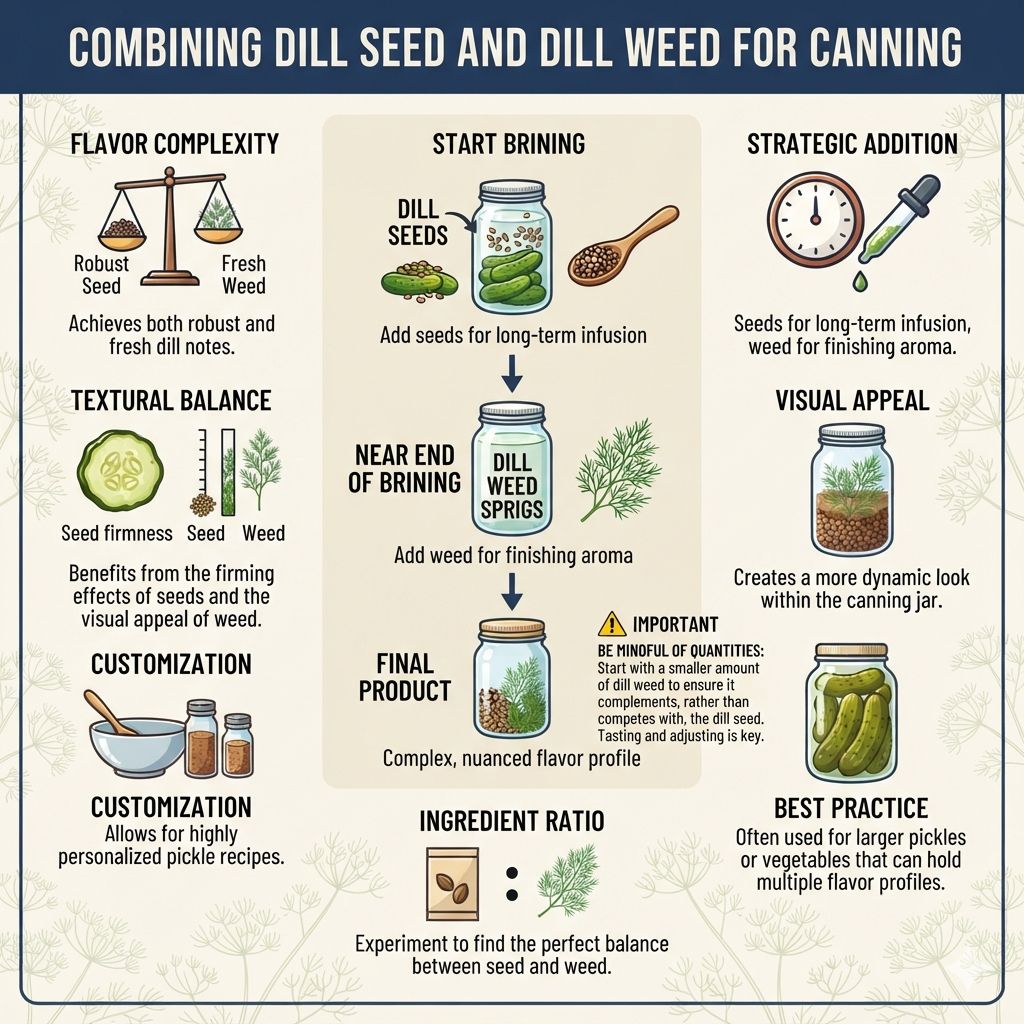
For those seeking the best of both worlds, a combination of dill seed vs dill weed for canning can offer a wonderfully complex flavor profile. This approach allows you to leverage the textural benefits and slow-release intensity of dill seed while incorporating the fresh, aromatic lift of dill weed. It’s a strategy employed by many advanced canners to achieve a truly nuanced dill pickle.
You might start by adding dill seeds to your brine as you would for any classic dill pickle recipe. Then, towards the end of the brining process, or even just before sealing the jars (if using a method that allows for it without compromising shelf-stability), you can add a few sprigs of dill weed. This ensures the dill seed contributes its robust flavor and firming properties throughout the preservation, while the dill weed imparts its fresh aroma and brighter notes right up until consumption.
This dual-ingredient approach is particularly effective for larger-format pickles or when canning vegetables that benefit from both a strong foundational flavor and a fresh, herbaceous top note. It also provides a beautiful visual contrast within the jar, with the small brown seeds and the delicate green fronds of the weed. Experimenting with this combination allows for a personalized approach to canning, moving beyond a singular flavor profile to something more layered and sophisticated.
Important: When combining, be mindful of quantities. Start with a smaller amount of dill weed to ensure it complements, rather than competes with, the dill seed. Tasting and adjusting is key.
- Flavor Complexity: Achieves both robust and fresh dill notes.
- Textural Balance: Benefits from the firming effects of seeds and the visual appeal of weed.
- Strategic Addition: Seeds for long-term infusion, weed for finishing aroma.
- Visual Appeal: Creates a more dynamic look within the canning jar.
- Customization: Allows for highly personalized pickle recipes.
- Ingredient Ratio: Experiment to find the perfect balance between seed and weed.
- Best Practice: Often used for larger pickles or vegetables that can hold multiple flavor profiles.
Frequently Asked Questions
What is the primary difference between dill seed and dill weed?
The primary difference lies in the part of the plant used and their resulting flavor and texture profiles. Dill seed comes from the mature seeds of the dill plant and offers a strong, pungent flavor and contributes to pickle crispness. Dill weed refers to the leafy fronds of the dill plant, providing a milder, fresher, herbaceous taste and aroma.
Can I use dill weed instead of dill seed in a traditional pickle recipe?
You can, but the result will be different. Using only dill weed will yield a pickle with a much milder, less pungent dill flavor and may lack the desired crispness. For classic dill pickles, dill seed is generally preferred for its robust taste and texture-enhancing qualities.
How long does the flavor of dill seed last in canned goods?
Dill seed’s flavor is known for its longevity. It can remain potent in properly canned goods for at least a year, and often longer, continuously infusing the brine. The flavor may mellow over extended periods but typically remains noticeable.
When is the best time to add dill weed to canning recipes?
Dill weed’s delicate flavor is best preserved when added towards the end of the brining process or when the recipe involves minimal heat. For refrigerator pickles, it can be added directly to the jar. For hot brine recipes, consider adding it just before sealing or using it as a garnish after opening to preserve its fresh aroma.
Are there any specific types of vegetables that benefit more from dill seed versus dill weed?
Dill seed is excellent for robust vegetables like cucumbers, green beans, and carrots, where a strong pickle flavor and crisp texture are desired. Dill weed is better suited for lighter vegetables or fruits, or in recipes where dill is a complementary flavor rather than the star, such as pickled radishes or certain fruit preserves.
Final Thoughts
Understanding the nuances between dill seed vs dill weed for canning empowers you to make informed choices for your preserving projects. Whether you’re aiming for the bold, crisp crunch of a classic dill pickle with seeds or the subtle, fresh herbaceousness of a lighter brine with dill weed, the right choice ensures delicious results. Don’t hesitate to experiment with combinations to discover your perfect balance of flavor and texture in every jar.
Related pick: Check today's price on Amazon
Products related to this article
Sponsored / affiliate links. As an Amazon Associate I earn from qualifying purchases. I may earn additional commission from eligible campaigns.