How to Cook Steak in a Skillet: Perfect Every Time
Learning how to cook steak in a skillet is the quickest way to get a restaurant-quality meal at home without firing up the grill. This guide walks you through every step—from choosing the right cut to achieving that perfect crust—so you can serve a juicy, flavorful steak any night of the week.
Simply put, the secret to cooking steak in a skillet lies in high heat, a quality pan, and proper resting. Follow this step-by-step method, and you’ll consistently get a deeply browned crust and a tender, perfectly cooked interior.
Key Takeaways
- How to cook steak in a skillet starts with patting the steak dry and seasoning generously with salt and pepper.
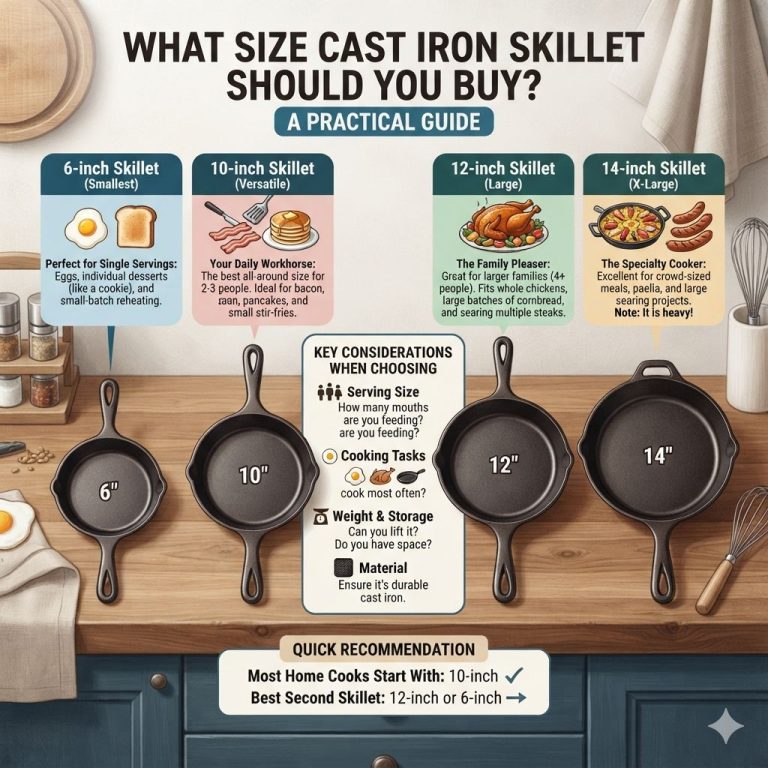
- A cast iron skillet is ideal because it retains and distributes heat evenly for a perfect sear.
- Use a meat thermometer to hit your desired doneness every single time.
- Rest the steak for at least 5 minutes after cooking to let the juices redistribute.
What You Need to Cook Steak in a Skillet
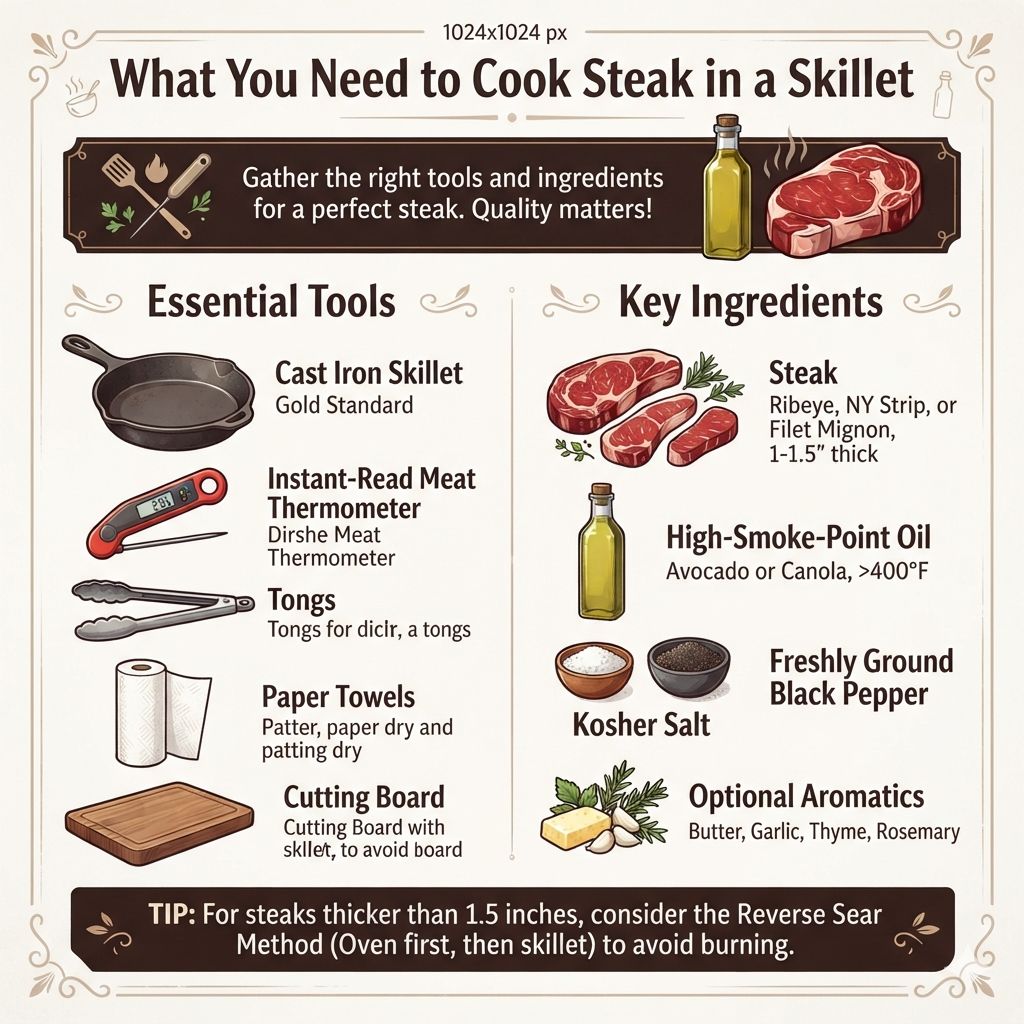
Before you start, gather the right tools and ingredients. The quality of your equipment matters as much as the steak itself.
For the best results, use a heavy-bottomed skillet—cast iron is the gold standard. You’ll also need a pair of tongs, a reliable meat thermometer, and high-smoke-point oil like avocado or canola.
Essential Tools
- Cast iron skillet (or heavy stainless steel)
- Meat thermometer (instant-read or probe-style)
- Tongs — long enough to keep your hands away from splatter
- Paper towels for patting the steak dry
- Cutting board for resting and slicing
Key Ingredients
- Steak: ribeye, New York strip, or filet mignon (1 to 1.5 inches thick)
- Oil: avocado, canola, or grapeseed (smoke point above 400°F)
- Salt: kosher or flaky sea salt
- Black pepper: freshly ground
- Optional: butter, garlic cloves, fresh thyme or rosemary for basting
Tip: If your steak is thicker than 1.5 inches, consider using the reverse sear method (oven first, then skillet) to avoid burning the outside.
How to Choose the Best Steak for Skillet Cooking
Not every cut works well in a skillet. You want steaks that are at least 1 inch thick, well-marbled, and forgiving under high heat.
Ribeye is a top choice because its fat renders and bastes the meat as it cooks. New York strip offers a nice balance of tenderness and beefy flavor. Filet mignon is leaner but still excellent when seared fast in a hot pan.
Top Steak Cuts for Skillet
| Cut | Marbling | Best For |
|---|---|---|
| Ribeye | High | Rich flavor, forgiving |
| New York Strip | Medium-high | Balanced, firm texture |
| Filet Mignon | Low | Tender, lean, needs butter |
| Sirloin | Low-medium | Budget-friendly, slice thin |
When choosing, look for bright red color, white fat flecks (marbling), and minimal sinew. A thick cut (1–1.5 inches) gives you enough time to develop a crust without overcooking the center.
Important: Steaks less than ¾ inch thick cook too quickly to form a good crust before they overcook. Stick to thicker cuts for best results.
How to Prepare the Steak Before Cooking
Preparation is half the battle. Follow these steps to ensure your steak cooks evenly and develops a deep brown crust.
First, take the steak out of the fridge 30–45 minutes before cooking to bring it to room temperature. This reduces temperature shock and promotes even cooking.
Preparation Steps
- Pat dry thoroughly with paper towels. Moisture is the enemy of a good sear.
- Season generously with kosher salt on all sides. Let it sit for 10 minutes; the salt will draw out moisture and then reabsorb.
- Add fresh black pepper just before cooking (pepper burns on high heat, so don’t apply it too early).
- Preheat your skillet on medium-high heat for 5 minutes until it’s smoking hot. Add a thin layer of oil just before the steak goes in.
- Optional: apply a dry rub or brush with oil before seasoning for extra flavor.
According to a study by the University of California, patting steak dry and salting early can improve crust formation by reducing surface moisture by up to 40%.
How to Cook Steak in a Skillet: Step-by-Step
Follow these exact steps to cook a steak in a skillet that rivals any steakhouse. The process takes about 10–15 minutes total, depending on thickness and desired doneness.
Step 1: Heat the Skillet and Add Oil
Place your cast iron skillet over medium-high heat and let it get hot for 5 minutes. The pan should be so hot that a drop of water sizzles instantly. Add 1–2 tablespoons of high-smoke-point oil and swirl to coat the bottom.
Step 2: Sear the First Side
Lay the steak into the pan away from you to avoid oil splatter. Press it down gently with tongs for even contact. Cook for 3–4 minutes without moving it.
This builds the crust.
You should hear a loud, steady sizzle. If it’s quiet, the pan isn’t hot enough.
Step 3: Flip and Add Butter (Optional)
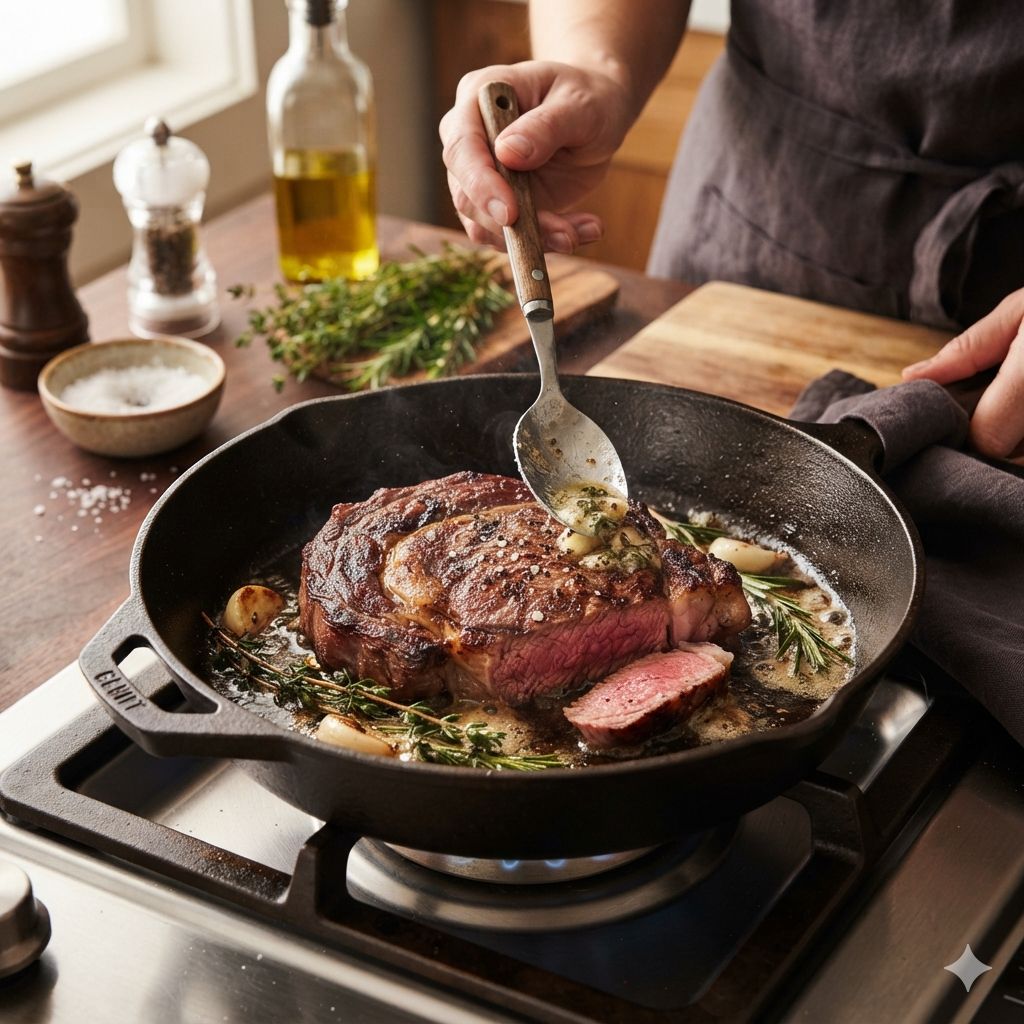
Flip the steak using tongs. Add 2 tablespoons of butter, a few crushed garlic cloves, and a sprig of thyme or rosemary to the pan. Tilt the pan and use a spoon to baste the melted butter over the steak for about 1 minute.
Step 4: Check Internal Temperature
Insert a meat thermometer into the thickest part of the steak. Use the chart below to target your preferred doneness.
| Doneness | Internal Temp °F (°C) | Cook Time (1-inch steak) |
|---|---|---|
| Rare | 120–125°F (49–52°C) | 3–4 min per side |
| Medium Rare | 130–135°F (54–57°C) | 4–5 min per side |
| Medium | 140–145°F (60–63°C) | 5–6 min per side |
| Medium Well | 150–155°F (66–68°C) | 6–7 min per side |
| Well Done | 160°F+ (71°C+) | 7+ min per side |
The USDA recommends cooking whole steaks to at least 145°F (medium) and then resting for 3 minutes. However, many chefs prefer medium-rare for optimal texture and flavor.
Step 5: Rest the Steak
Transfer the steak to a cutting board and tent loosely with foil. Let it rest for 5–7 minutes. Resting allows the juices to redistribute evenly throughout the meat.
Cutting too early will cause those juices to run out onto the plate.
Warning: Never cut into the steak immediately after cooking. You’ll lose up to 30% of the moisture, leaving dry meat.
Common Mistakes When Cooking Steak in a Skillet
Even experienced cooks make errors that prevent a perfect steak. Avoid these pitfalls for consistent results.
- Using a cold pan: A hot skillet is non-negotiable. Preheat for at least 5 minutes.
- Overcrowding: Cook one or two steaks at most. Too many steaks lower the pan temperature and cause steaming instead of searing.
- Flipping too often: Let each side cook undisturbed for 3–4 minutes to develop a crust. Constant flipping prevents browning.
- Not resting: As noted, resting is essential for juiciness. In a hurry? At minimum rest for 5 minutes.
- Using butter too early: Butter burns at high heat. Add it only after flipping the steak, then baste quickly.
- Cutting against the wrong grain: Always slice against the grain (perpendicular to the muscle fibers) for tenderness.
According to a survey by the Beef Checkoff, 67% of home cooks said they struggled with crust consistency before learning proper pan preheating techniques.
How to Achieve the Perfect Crust Without Burning
A deep brown crust requires high heat, but you don’t want a burnt exterior. Here’s how to balance it.
The Maillard reaction—the chemical process that creates browning—starts at around 285°F (140°C). Your skillet surface should be between 400°F and 500°F when the steak hits it. If you see smoke, that’s a good sign (use your oil’s smoke point as a guide).
- Use oil with a high smoke point: avocado (520°F), canola (400°F), or grapeseed (420°F). Olive oil smokes too easily.
- Don’t move the steak early: Let it sear until it releases easily from the pan. If it sticks, it’s not ready to flip.
- Blot the steak dry again if you notice moisture pooling on the surface during preheating.
- Reduce heat slightly after the first flip to finish cooking the interior without burning the crust.
Tip: For an ultra-crust, dust the steak with a pinch of baking soda 20 minutes before cooking. The alkaline surface speeds up browning. Rinse and dry before seasoning.
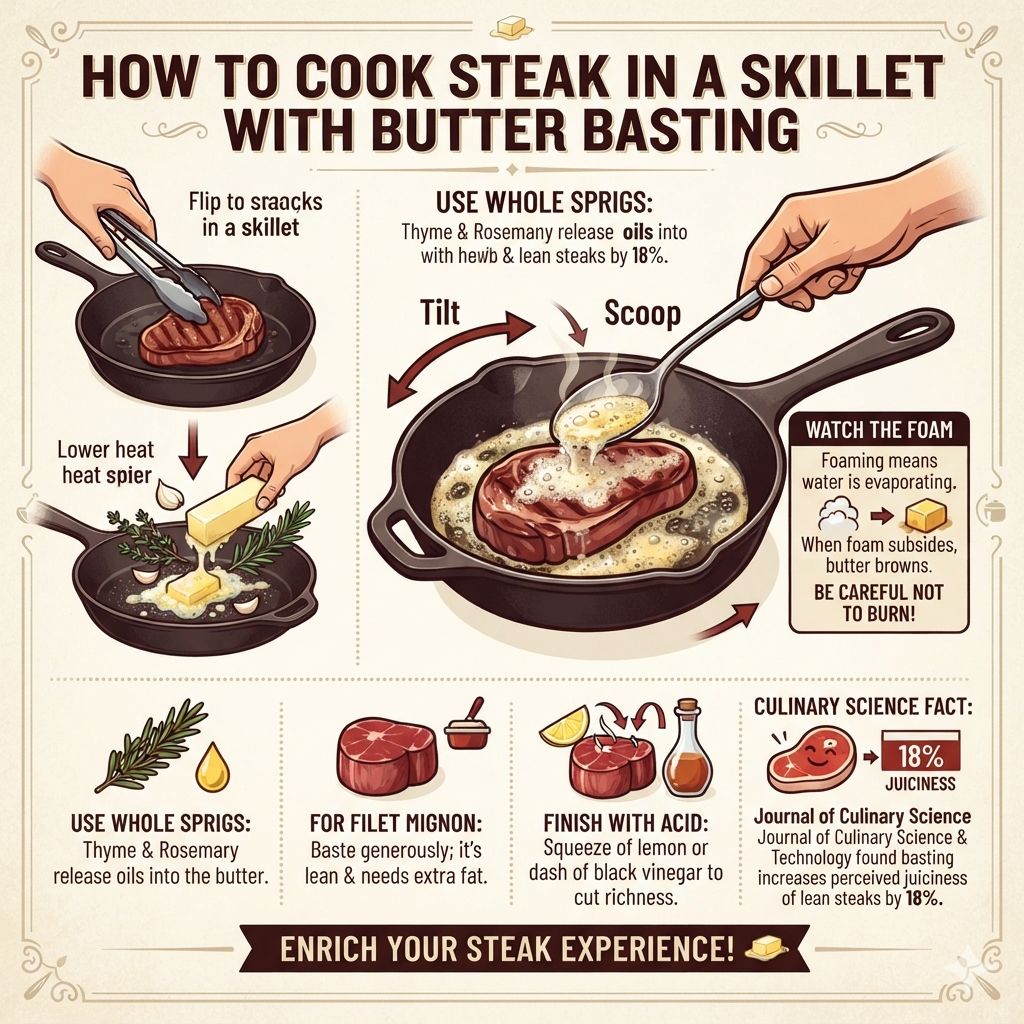
How to Cook Steak in a Skillet with Butter Basting
Butter basting adds richness and flavor, especially with lean cuts. Here’s the technique.
Once you flip the steak, reduce the heat to medium. Add butter, smashed garlic cloves, and fresh herbs. As the butter melts, tilt the skillet toward you and use a spoon to scoop the foaming butter over the steak repeatedly for about 1–2 minutes.
- Watch the foam: Foaming means water is evaporating. When the foam subsides, the butter is browning—be careful not to let it burn.
- Use whole sprigs of thyme or rosemary. They release oils into the butter.
- For filet mignon, baste generously since the cut is lean and benefits from extra fat.
- Finish with a squeeze of lemon or a dash of black vinegar to cut the richness.
A study in the Journal of Culinary Science & Technology found that butter basting can increase the perceived juiciness of lean steaks by 18% due to added fat and moisture retention.
How to Tell When Steak Is Done Without a Thermometer
While a meat thermometer is the most reliable tool, you can also use the hand test or visual cues.
The finger test compares the firmness of the steak to different parts of your hand. Touch your thumb to your index finger; the muscle at the base of your thumb feels like rare. Middle finger = medium rare.
Ring finger = medium. Pinky = well done.
| Doneness | Finger-to-Thumb | Visual Cue |
|---|---|---|
| Rare | Index finger | Bright red center, soft |
| Medium Rare | Middle finger | Deep pink center, slightly firm |
| Medium | Ring finger | Light pink center, firm |
| Well Done | Pinky | Little to no pink, very firm |
Visual cues: For a 1-inch steak, peek at the cut edge to gauge color penetration. But the most accurate method remains a probe thermometer—invest $15 for consistent results.
Frequently Asked Questions
Can I cook a frozen steak in a skillet?
Yes, but you need to adjust the method. Sear frozen directly in a hot pan for 4–5 minutes per side, then finish in a 375°F oven until the internal temperature reaches your target. Pat dry before searing to remove any surface ice.
What oil is best for cooking steak in a skillet?
Oils with a high smoke point work best. Avocado oil (520°F) is excellent, followed by canola (400°F), grapeseed, and refined vegetable oil. Avoid olive oil and butter for initial searing as they burn easily.
How long should I cook a 1-inch steak in a skillet?
For medium-rare, cook 4–5 minutes per side on medium-high heat. Total time depends on thickness and desired doneness. Always use a thermometer to confirm 130–135°F.
Do I need to oil the steak or the pan?
Oil the pan, not the steak. Adding oil directly to the hot skillet ensures even distribution. If you oil the steak, the oil may drip off and cause flare-ups or uneven cooking.
Why is my steak tough after skillet cooking?
Toughness usually results from overcooking or not resting. Overcooking tightens muscle fibers and pushes out moisture. Resting for 5–7 minutes allows fibers to relax and juices to redistribute.
Also, slice against the grain.
Final Thoughts
Mastering how to cook steak in a skillet comes down to heat, patience, and a good thermometer. Pat the steak dry, preheat your cast iron until smoking, and let each side rest undisturbed. Butter basting adds flair, but the core technique stays the same.
Once you get the timing right, you’ll never need a grill for a weekday steak again.
Products related to this article
Sponsored / affiliate links. As an Amazon Associate I earn from qualifying purchases. I may earn additional commission from eligible campaigns.