How To Put A Futon Together Without Mistakes
Putting together new furniture can feel like a puzzle. Especially when it’s a futon, which can have many parts. You might be looking at a pile of wood, metal, and fabric.

PrinceDeco
PrinceDeco Stretch Futon Slipcover Armless Futon Bed…
- UNIQUE FEATURES AND FABRIC: This soft textured stretch sofa cover is crafted from luxurious and thick knitted Jacquard with small…
- PREFECT FITTED DIMENSIONS: These cozy and fantastic furniture covers can be compatible with most of furniture sizes, please always…
- All-ROUND PROTECTION: Our futon cover can giving your futon sofa a whole covering even the back of futon sofa. High stretch fabric…
As an Amazon Associate I earn from qualifying purchases.
It can seem a bit daunting at first. But don’t worry, we’ll walk through it step-by-step. You can get your new futon ready to use without any big headaches.
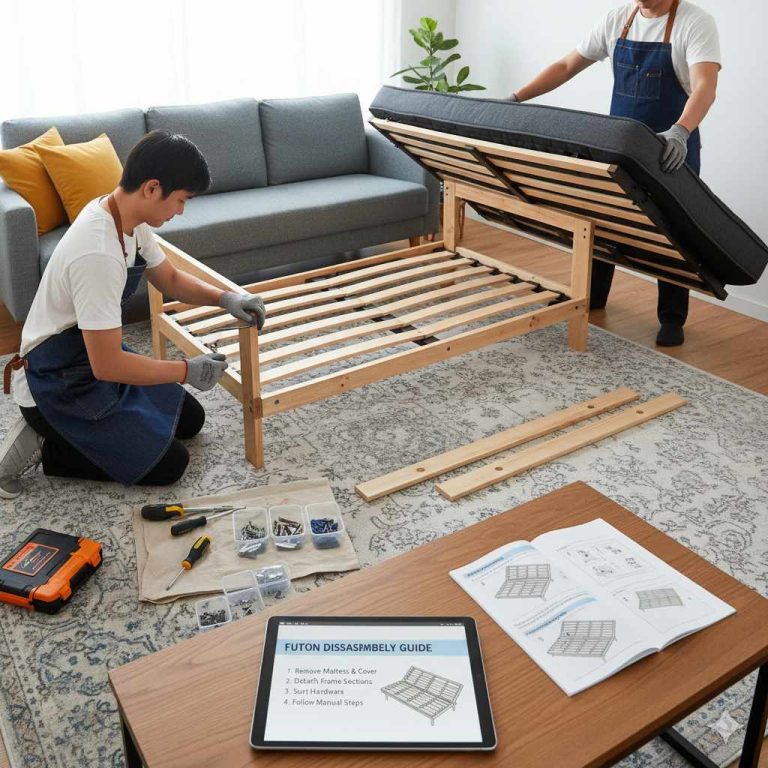
Putting together a futon involves several steps. You’ll need to identify all parts, attach the frame pieces securely, install the mattress support, and add the mattress. Taking your time and following instructions carefully helps avoid mistakes and ensures a sturdy, functional futon.
Understanding Your Futon Parts
Before you even think about tools, let’s get familiar. Every futon is a bit different. But most have a main frame.
This usually includes legs, side rails, and maybe a back support. You’ll also find a mattress support system. This could be wooden slats or a metal grid.
Don’t forget the hardware bag. This holds all the screws, bolts, washers, and maybe an Allen wrench. Lay everything out.
Check it against the parts list in your manual. This stops you from missing something crucial later on.
I remember the first time I tackled a futon assembly. I was excited to have a new couch that could also be a bed. But when I opened the box, it looked like a jumble of wood and metal.
My first instinct was to just start screwing things together. That’s where the trouble started. I missed a small but important piece.
It made the whole frame wobbly. That taught me a valuable lesson about always checking the parts first.
Futon Part Checklist
Main Frame Pieces: Legs, Side Rails, Back Support, Front Rail
Mattress Support: Wooden Slats or Metal Frame
Hardware: Screws (various sizes), Bolts, Washers, Nuts, Allen Wrench (often included), Wood Dowels
Optional: Hinges, Brackets, Decorative Caps
Knowing what you have is half the battle. It stops those “oops, I need that part” moments. Plus, it gives you a clear picture of the project.
You can see how the pieces are meant to fit. This makes the actual assembly feel much smoother.

Gathering Your Tools
Most futon kits come with a basic tool, often an Allen wrench. This is good for many of the bolts. But having a few extra tools can make the job much easier.
A Phillips head screwdriver is usually needed for some screws. A small rubber mallet can be helpful for tapping pieces gently into place. If you have them, a socket wrench set can speed up tightening bolts.
Make sure the tools fit the hardware. This prevents stripping screws or damaging bolt heads.
I once tried to build a whole entertainment center with just the tiny Allen wrench provided. It took hours and my hands were sore. Since then, I learned to have a small toolbox ready.
It includes basic screwdrivers, a socket set, and pliers. It saves so much time and frustration. It makes the whole process feel less like a chore and more like a project you can handle.
Recommended Tools for Futon Assembly
Essential: Allen Wrench (usually included), Phillips Head Screwdriver
Helpful: Rubber Mallet, Socket Wrench Set, Pliers, Level
Note: Always check your futon’s manual for specific tool requirements.
Having the right tools at hand means you’re prepared. You won’t have to stop and search for something. This keeps your momentum going.
It helps ensure each connection is tight and secure.
Step-by-Step Assembly: The Frame
Now, let’s get to the real building. Start with the main frame. Usually, you’ll attach the legs to the base or side pieces first.
Look at the diagrams carefully. Some legs screw directly in. Others might use bolts and washers.
Make sure you use the correct screws or bolts for each step. The manual will show you which ones. Don’t overtighten screws at this stage.
You want them snug, but not so tight they strip. This allows for minor adjustments later.
Next, connect the side rails to the base. Then attach the back support pieces. Again, follow the pictures.
Pay attention to the direction of each piece. Many parts have a specific front or back. If you put them on backward, the futon might not fold properly.
Or, it might look odd. Take your time. If a piece doesn’t seem to fit, don’t force it.
Double-check the instructions. You might have a piece upside down or backward.
I recall assembling a bed frame once. I got the side rails on perfectly. But I put the headboard on upside down.
It looked strange and the holes for the mattress support didn’t line up. I was so frustrated. I had to take it all apart.
It was a good reminder to look at the overall picture and not just the single step.
Building the Futon Frame: Key Points
Start with the Base: Attach legs and bottom supports.
Connect Sides: Secure side rails to the base and back structure.
Direction Matters: Ensure all pieces face the correct way.
Snug, Not Tight: Tighten bolts and screws just enough initially.
Check Alignments: Make sure holes for the next steps line up.
Getting the frame right is the foundation. A solid frame means a sturdy futon. It will last longer.
And it will feel more comfortable whether you’re sitting or sleeping on it.
Installing the Mattress Support
This is the part that turns the frame into a functional piece. Your futon will likely have wooden slats or a metal mesh support. If you have wooden slats, they usually slide into grooves or rest on ledges on the frame.
Some might need small screws to hold them in place. Make sure the slats are evenly spaced. This provides good support for the mattress.
If you have a metal frame support, it might fold out. Or it might attach with screws. Follow the manual precisely.
This part needs to be very secure. It bears the weight of anyone using the futon. Loose supports can lead to sagging or even damage to the futon frame over time.
Ensure all clips or fasteners are in place. If screws are involved, use the correct ones.
I had a futon where the slats were just resting in place. They would shift around when I moved. It made a lot of noise.
I found that using a few small wood screws to secure each end of the slats to the frame made a huge difference. It stopped the squeaking and made it feel much more solid. It was a small fix but improved the whole experience.
Mattress Support Installation Tips
Even Spacing: Ensure slats or mesh are distributed evenly.
Secure Fit: Make sure supports are firmly attached, not loose.
Correct Fasteners: Use only the specified screws or clips.
Weight Bearing: This system supports all weight, so it must be strong.
This stage is critical for comfort and durability. A well-installed mattress support means a better night’s sleep. It also means your futon will handle daily use without problems.
Attaching Hinges and Folding Mechanisms
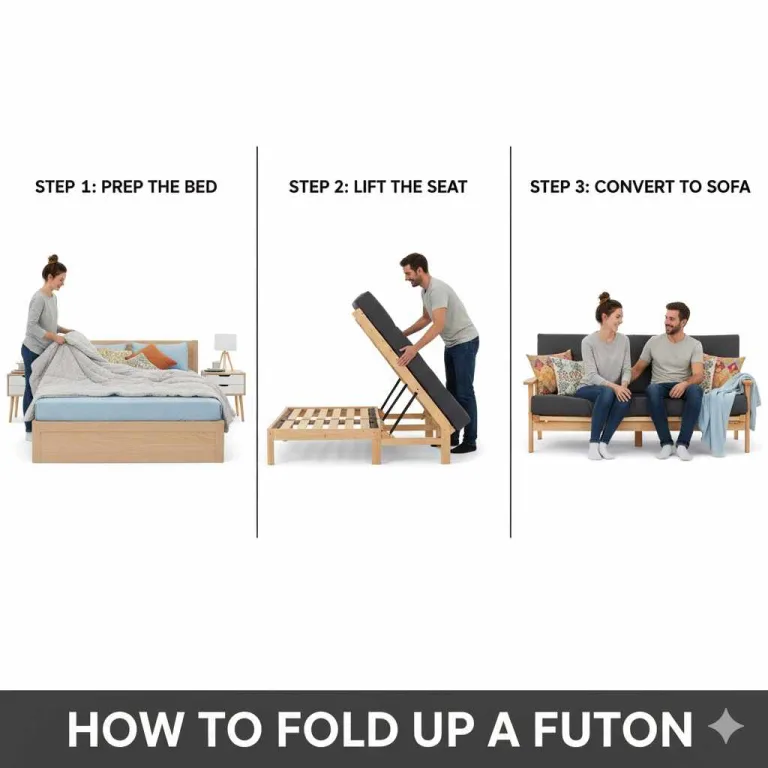
Many futons have parts that need to fold. This lets them switch between a couch and a bed. You’ll often find hinges or special brackets.
These connect the backrest to the seat frame or the armrests. Sometimes these parts are pre-attached. Other times, you’ll need to screw them in.
Look closely at how they are designed to move. They need to swing freely but also lock into place.
Make sure you use the right screws for these moving parts. They often have a specific length and head type. Overtightening can stop the hinges from working.
Too loose, and they might wobble or detach. It’s a balancing act. Test the folding mechanism gently after you attach it.
Does it move smoothly? Does it lock in the “couch” position? Does it unfold fully for “bed” mode?
A friend of mine bought a futon with a complex folding system. The instructions were unclear about the hinge placement. He put one side on slightly angled.
When he tried to fold it, it jammed. He ended up having to take the whole side off and redo it. It was a good lesson that fiddly parts need extra attention.
Hinge and Folding Mechanism Check
Correct Placement: Ensure hinges align with pre-drilled holes.
Smooth Operation: Test the folding action after installation.
Secure Locking: Verify that mechanisms lock properly in both positions.
Right Hardware: Use the exact screws or bolts specified for these parts.
Getting the folding parts right is key to the futon’s function. It’s what makes it useful as both a sofa and a bed. A well-working mechanism adds great value.
Final Tightening and Checks
Once the main frame and folding parts are together, it’s time for the final tighten. Go back over every screw, bolt, and nut. Make sure they are all snug and secure.
This is when you can tighten them fully. But be careful not to overtighten. You don’t want to strip threads or crack wood.
A good way to check is to gently rock the futon. Does it feel solid? Are there any wobbly parts?
Use a level if you have one. Place it on the seat and the backrest. This helps ensure the futon sits evenly.
If it’s a bit off, you might be able to adjust the legs slightly. Some legs have adjustable feet. This is also a good time to add any decorative caps or covers.
They hide the hardware and give the futon a finished look.
I always do a final wobble test. I gently push and pull on different parts of the frame. It’s amazing how one slightly loose bolt can make the whole thing feel unstable.
It’s like the chain reaction of a falling domino. Finding and tightening that one bolt makes everything feel much more robust.
The Final Assembly Review
Go Back Over Everything: Re-check all connections.
Wobble Test: Gently test for stability by rocking the frame.
Level Check: Ensure the futon sits evenly on the floor.
Finished Look: Add any decorative caps or covers.
This final check is your quality control. It ensures your futon is safe and built to last. It’s your sign-off before adding the mattress.
Placing the Mattress
Now for the final step: putting on the mattress. Futon mattresses are usually a bit thicker than regular ones. They need to be flexible to fold.
Unroll or unfold your futon mattress. Place it on the mattress support system. Make sure it lies flat and covers the entire support area.
There might be straps or ties on the mattress. Use these to secure it to the frame. This stops it from shifting when you fold or unfold the futon.
Ensure the mattress fits snugly. It shouldn’t hang over the edges of the frame. If it’s too big, it might interfere with the folding mechanism.
If it’s too small, it won’t provide enough coverage or comfort. Futon mattresses come in standard sizes, so make sure you got the right one for your frame.
I once bought a futon mattress that was slightly too thick. When I tried to fold it into a couch, the backrest wouldn’t close all the way. It stuck out a few inches.
It looked awkward and wasn’t very comfortable to sit on. I had to swap it for a thinner mattress. It showed me how important the right mattress fit is.
Mattress Placement and Securing
Unroll and Position: Lay the mattress flat on the support base.
Full Coverage: Ensure the mattress covers the entire support area.
Use Straps/Ties: Secure the mattress to the frame to prevent slipping.
Proper Fit: Make sure the mattress size is correct for the frame.
With the mattress in place, your futon is ready! You can now test its function as both a couch and a bed. Enjoy your new, assembled furniture.
Common Mistakes to Avoid
It’s easy to rush through assembly. But small mistakes can cause big problems. One common error is not checking the parts list.
This can lead to missing pieces. Another is mixing up screws. They might look similar but have different lengths.
This can damage the wood or make a connection weak.
Forgetting to tighten everything properly is a big one. A wobbly futon is not safe. It will also creak and groan.
Also, putting parts on backward is very common. Always look at the diagrams. See which way a piece should face.
Forcefully pushing parts together can break them. If something doesn’t fit, stop. Re-read the instructions or check online for help.
I learned the hard way about overtightening screws. I was eager to finish. I cranked down on a screw, and it went right through the particle board.
It ruined the piece. Now, I tighten until snug, then give it just a tiny bit more pressure. It’s about feeling the resistance, not forcing it.
Futon Assembly Pitfalls
Missing Parts: Always verify you have everything before starting.
Wrong Hardware: Use the exact screws, bolts, and washers specified.
Loose Connections: Ensure all fasteners are tightened appropriately.
Incorrect Orientation: Double-check the direction of each piece.
Forcing Pieces: Never force parts; re-check instructions if there’s resistance.
Being aware of these common errors can help you avoid them. It leads to a smoother building process and a better end result.
When to Call for Help
Most futon assembly is straightforward. But sometimes, you might get stuck. If the instructions are completely unclear, that’s a sign.
If you’ve tried several times to connect two pieces and they just won’t fit, it might be an issue with the parts themselves. This can happen, though it’s rare. If a part seems broken or defective, you’ll need to contact the manufacturer.
If you’ve gone through all the steps and the futon still feels wobbly or unstable, it’s worth getting a second opinion. Maybe a friend can take a look. They might spot something you missed.
Safety is the most important thing. If you’re unsure about the structural integrity of your futon, don’t use it. Contact customer support or a professional.
I once had a shelf that wouldn’t align. I spent hours trying to fix it. It turned out there was a slight bend in one of the metal support beams.
It was almost invisible. I had to call the company to get a replacement part. It was frustrating, but better than having a wobbly shelf.
Seeking Assistance for Futon Assembly
Confusing Instructions: If the manual makes no sense.
Parts Don’t Fit: After multiple attempts, if pieces still won’t align.
Damaged Parts: If any component arrives broken or bent.
Instability: If the assembled futon feels unsafe or wobbly.
Don’t feel bad about asking for help. It’s better to get it right than to risk injury or damage. Most manufacturers want you to be happy with their product.
Long-Term Care for Your Futon
Once your futon is assembled, taking care of it will make it last. Regularly check the screws and bolts. Tighten them if they become loose.
This is especially important for futons that are folded and unfolded often. Vacuum the mattress regularly. Spot clean any spills immediately.
For the frame, dust it and wipe it down with a damp cloth.
Avoid placing very heavy objects on the futon mattress for long periods. This can cause sagging. Also, be mindful of the weight limits stated by the manufacturer.
If your futon is in a humid environment, consider using a dehumidifier. Moisture can affect wood over time. Simple maintenance keeps your futon looking and working great.
I learned this with a wooden coffee table. I never cleaned it. Eventually, the finish started to dull.
Then I spilled a drink and it left a permanent ring. Now, I make it a habit to wipe down furniture. It makes a big difference in how long it stays looking new.
Maintaining Your Futon’s Longevity
Regular Checks: Periodically tighten all hardware.
Mattress Care: Vacuum and spot clean as needed.
Frame Cleaning: Dust and wipe the frame regularly.
Weight Awareness: Avoid overloading the futon.
Environment: Protect from excessive moisture or heat.
A little bit of ongoing care can extend your futon’s life significantly. It ensures you get years of use and comfort from it.

Conclusion
Putting a futon together might seem like a big task. But by breaking it down, it becomes manageable. Always start by checking your parts and gathering your tools.
Follow the instructions carefully, step-by-step. Pay attention to details like piece orientation and hardware. Take your time, and don’t be afraid to ask for help if you need it.
With a little patience, you’ll have a functional and comfortable futon ready for use.
Related pick: Check today's price on Amazon
Products related to this article
Sponsored / affiliate links. As an Amazon Associate I earn from qualifying purchases. I may earn additional commission from eligible campaigns.