How Much Does a Futon Frame Cost?
A basic futon frame usually costs about $120 to $350, while solid hardwood or heavy-duty models run about $400 to $900 or more, depending on size and joinery. Buy too cheap, and warped slats, loose joints, or a weak hinge can turn a bargain into a replacement purchase. This guide breaks down frame-only prices by material, size, and durability so you can compare fair value by build quality.
Futon frame price bands


Frame-only pricing is different from a full futon purchase. A frame can sit in a lower price band, but the mattress adds a separate cost that can change the total fast. For a frame alone, budget metal models sit at the low end, while hardwood frames with better hardware move into the higher bands.
| Frame type | Low-end budget | Mid-range | Premium | Best for |
|---|---|---|---|---|
| Twin or chair metal frame | $80 to $150 | $150 to $280 | $300 to $500 | Dorm rooms, occasional seating, tight budgets |
| Full metal frame | $100 to $180 | $180 to $320 | $320 to $550 | Guest rooms, small apartments, lighter daily use |
| Full wood frame | $120 to $220 | $220 to $450 | $450 to $750 | Classic look, better support, regular couch use |
| Queen hardwood frame | $180 to $300 | $300 to $600 | $600 to $900+ | Primary bed setup, heavier sleepers, long-term use |
Those bands reflect the frame only. Once you add a futon mattress, the total can move from the barest setup to $600 or more for a larger, better-built system. The mattress choice matters almost as much as the frame.
Low-end budget frames
Low-end frames usually cut costs with thinner metal, simpler hardware, or particle board parts. They can work for a dorm, a rarely used guest room, or a short-term apartment setup. They are less forgiving if you plan to fold the bed every day.
Mid-range frames
Mid-range frames are where value often starts to make sense. You usually get steadier slats, a more reliable hinge, and a finish that looks better in a living room. For most shoppers, this is the safest price band for a couch that converts to a bed.
Premium frames
Premium frames cost more because the structure is stronger, the joinery is better, and the finish usually holds up longer. Solid hardwood options also tend to look more like real furniture than a temporary spare-bed frame. If the futon will be used often, this tier is easier to justify.
Best for by use case
Choose the cheapest frame only if the futon will get light use. Daily sleeping needs better slat support and sturdier hardware. A guest room can sit in the middle, while a dorm often needs the lowest price that still folds smoothly and stays stable.
What a futon frame costs by material
Material is the fastest way to predict price. Metal is often cheaper up front, while wood can cost more because of lumber quality and joinery. Solid hardwood frames like birch or maple usually sit at the higher end because they are typically longer-lasting and provide better support than particle board.
Wood futon frame pricing
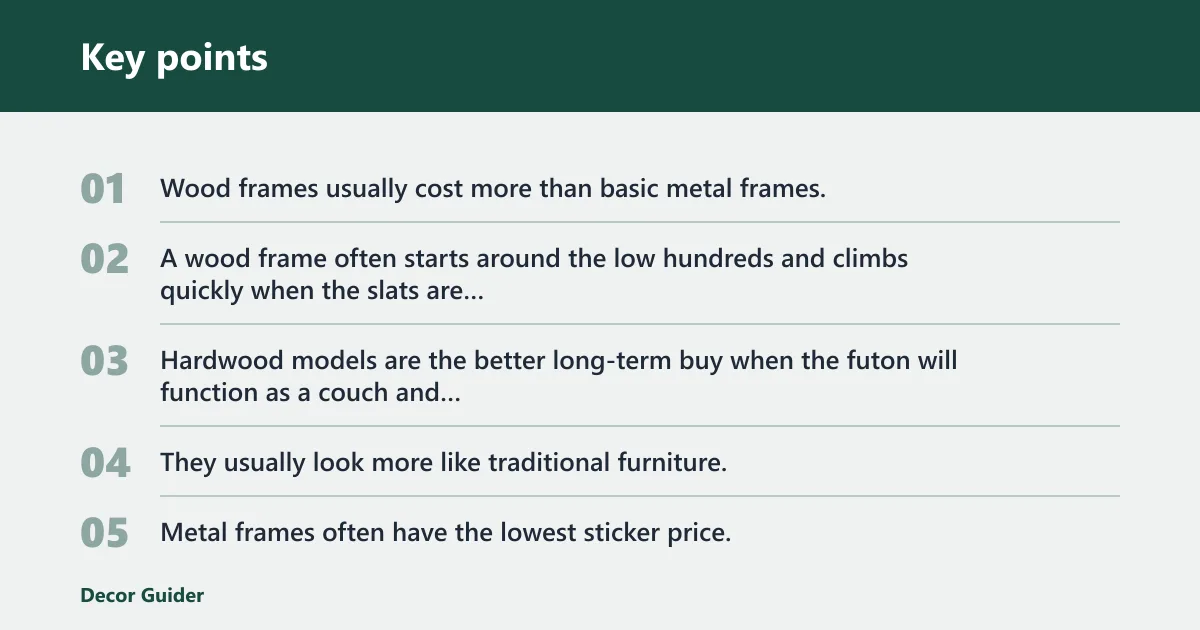
Wood frames usually cost more than basic metal frames, especially when they use solid hardwood instead of particle board. A wood frame often starts around the low hundreds and climbs quickly when the slats are thicker, the finish is better, and the hinge system feels smoother.
Hardwood models are the better long-term buy when the futon will function as a couch and bed. They usually look more like traditional furniture, and the slat structure matters when someone sits on the same frame every day.
Metal futon frame pricing
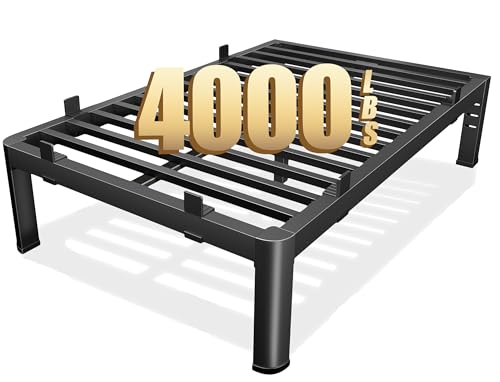
Metal frames often have the lowest sticker price. They usually come in silver or black, with a clean modern look and a sturdy foundation when the tubing and welds are decent. Thin steel or light hardware can bring the price down, but it can also shorten service life.
Metal is a good fit when budget matters most and the futon will not carry heavy daily use. Better metal frames still need even slat support and a hinge that locks cleanly in both positions.
Why hardwood costs more
Hardwood costs more because it generally gives you better support, better wear resistance, and a more finished look. Birch and maple are the hardwood options most often suggested for futon frames. They are harder to build cheaply, and that shows up in the quote.
Particle board can lower the upfront price, but it is a weak choice if you need a frame that gets folded often. Once joints loosen or slats warp, the savings can disappear in a replacement purchase.
What makes a futon frame cost more?
Size, support, hardware, and finish all move the quote. A larger frame needs more material and stronger joinery. Better slat spacing, a smoother folding mechanism, and heavier-duty fasteners all add to the price, but they also reduce the odds of wobble, sagging, or early failure.
Size and weight capacity
Larger futon frames cost more because they use more material and need more reinforcement. A queen frame will usually cost more than a full or twin frame, and a frame built for heavier use often needs stronger cross-bracing. That raises the price, but it can also make the bed more dependable.
Slat spacing and support
Slat support is not a small detail. Slats should be an equal distance apart for better support, and they should be about 2.5 to 3 inches wide. Wider, evenly spaced slats help the mattress stay stable instead of dipping between supports.
Say your frame has wide gaps between slats and a six-inch mattress on top. The mattress can sag into those openings faster, which makes the seat feel uneven and shortens useful life.
Mechanism quality and hardware
The folding mechanism matters because a futon is meant to switch from couch to bed and back without strain. Better hinges, bolts, and center supports raise the price, but they usually make the frame feel steadier. Cheap mechanisms can loosen, stick, or creak early.
Finish, upholstery, and shipping
Finish changes cost more than many shoppers expect. Stain, paint, and upholstered trim add labor and material cost. Shipping can also raise the final total, especially for larger or boxed hardwood frames that are heavy and bulky.
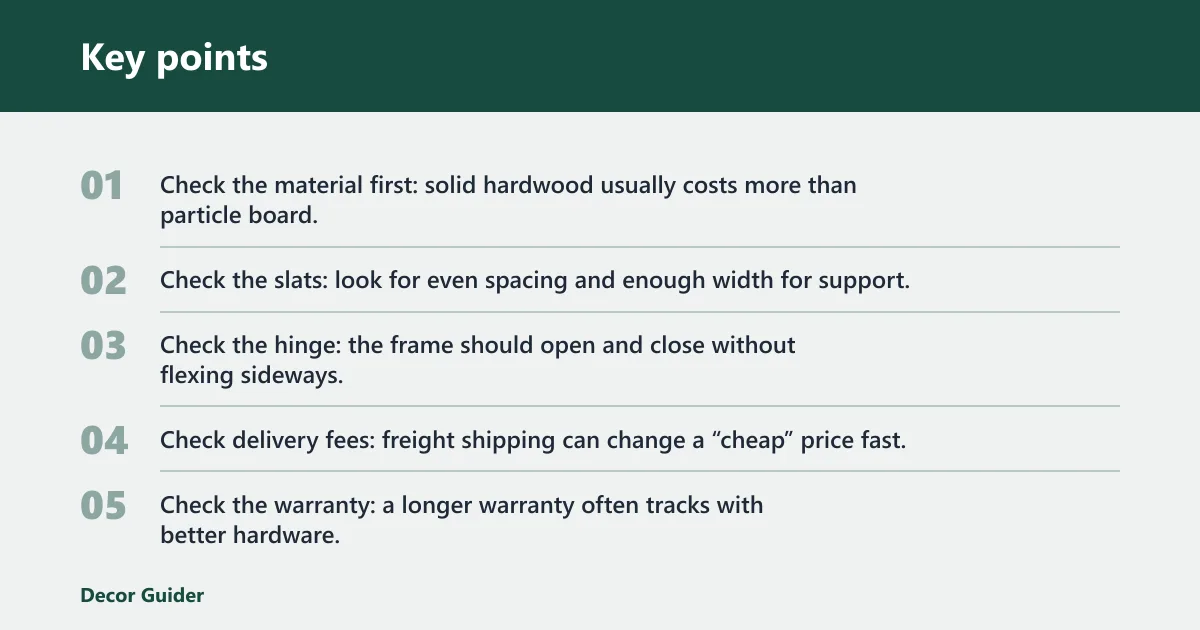
- Check the material first: solid hardwood usually costs more than particle board.
- Check the slats: look for even spacing and enough width for support.
- Check the hinge: the frame should open and close without flexing sideways.
- Check delivery fees: freight shipping can change a “cheap” price fast.
- Check the warranty: a longer warranty often tracks with better hardware.
Wood vs metal futon frame prices
Metal is usually cheaper upfront, and wood often costs more but feels more substantial. If you want the lowest entry price, metal usually wins. If you want a frame that is more likely to stay supportive over time, solid hardwood is often the better buy.
Which is cheaper upfront?
Metal futon frames are usually cheaper at the register. They cost less to manufacture, and many basic models use simple tubing and a straightforward hinge system. That makes them easier to buy on a tight budget.
Which tends to last longer?
Solid hardwood frames usually last longer than particle board and often hold up better than very light metal frames too, especially when they are built with good slat structure. The strength of the frame depends on build quality, not material alone.
Picture a full-size futon in a small apartment that doubles as the main couch. A hardwood frame with even slats and stronger hardware is more likely to stay stable through repeated folding than a low-cost frame with thin rails.
Which fits a budget buy?
If the goal is the lowest possible price, metal is usually the better starting point. If the goal is the lowest cost over several years, a mid-range hardwood frame can be smarter because it may avoid the early replacement that cheap frames often trigger.
How much is a futon with mattress?
A futon with mattress usually costs more than the frame alone by a wide margin. The frame price is only one part of the total, and mattress material, thickness, and size can change the final bill. A basic setup can stay in the low hundreds, while a larger, better-built one can reach $600 or more.
Frame-only vs full setup
Frame-only pricing helps you compare structure, but it does not tell you the real purchase price. Once you add a futon mattress, the total depends on whether you choose cotton, foam, latex, polyester, pocket coils, or innersprings. Size compatibility also changes the quote.
Mattress materials that change price
Most futon mattresses are about six inches thick, but the fill material changes how much you pay and how the seat feels. Cotton is often the simpler option, while latex, pocket coils, and innersprings usually push the price up. Foam and polyester options sit somewhere in the middle.
Typical total by use case
For a dorm, a basic metal frame with a simple mattress can stay near the low end of the market. For a guest room, a full frame with a better mattress usually lands in the middle. For a daily sleeper, a solid hardwood frame with a more durable mattress can push the total into the premium range.
How much does a futon bed cost? The total depends on whether you mean the frame only or the full frame-and-mattress setup. A budget setup can stay under $200 if both pieces are basic, but a better queen-sized setup can move into the $600-plus range fast.
What size futon frame do you need?
Match the frame to the room and the way you plan to use it. Chair and twin futons save the most space. Full is the common couch size. Queen works best when the futon is used more like a bed than a sofa.
Chair and twin options
Chair futon mattresses are about 28 inches wide, so they work for compact seating or a single-person spot. Twin futon mattresses are about 39 inches wide and suit very small rooms, dorms, or a reading nook that occasionally turns into a sleep space.
Full size for couch use
Full futon mattresses are usually about 54 inches wide, which makes them the common choice for couch use. They give you enough width for sitting and a practical sleep surface for one person or two people in a pinch.
Queen size for bed use
Queen futon mattresses are usually about 60 inches wide, so they fit better when sleeping is the main job. If the futon will serve as a primary bed, queen usually gives a more comfortable layout than a full-size setup.
Cost drivers to check before you buy
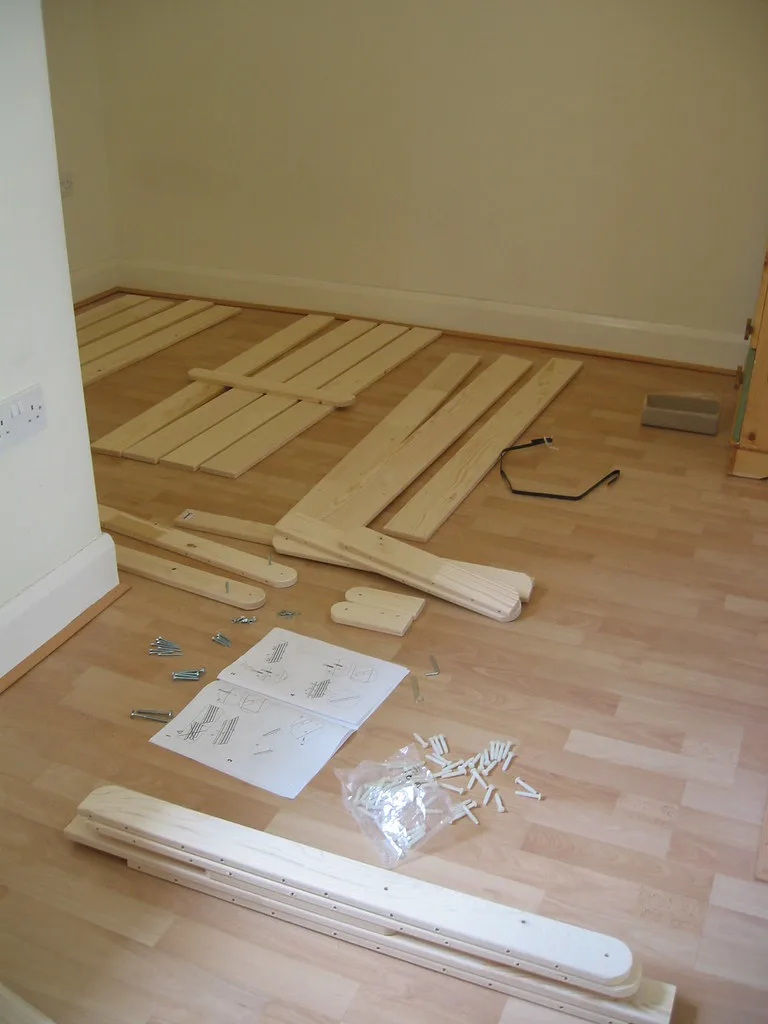
Read the spec sheet before you compare prices. The same-looking futon can price very differently once you account for support rails, slat gaps, hinge quality, assembly difficulty, warranty length, and delivery costs. These details explain why a cheap frame can become a false economy.
- Support rails and slat gaps: even spacing and enough slat width help prevent mattress sagging.
- Folding mechanism style: smoother hardware usually costs more, but it is less likely to wobble or bind.
- Assembly and delivery: bulky frames can add freight charges and setup time.
- Warranty: a better warranty often points to stronger construction or better confidence from the seller.
- Finish quality: stain, paint, and upholstery can add cost without changing the frame’s core strength.
How long does a futon frame last? Futons generally last between five and ten years with light use and care. Heavy daily use shortens that window, especially for thin metal frames or frames with weak slats. Good support, careful folding, and tighter joints help extend usable life.
A common first-timer mistake is buying the cheapest frame and then pairing it with a heavier mattress than the frame was built to support. The frame may feel fine at first, then start to creak, sag, or wobble once the mattress and daily use add strain.
Frequently asked questions
How much does a futon mattress cost?
A futon mattress often costs less than a full mattress, but the price changes with size and fill. A basic twin or chair mattress can be on the low end, while a thicker queen mattress with latex, innersprings, or pocket coils costs more. Size compatibility matters as much as material.
How much does a futon bed cost?
A futon bed usually means the full setup, not just the frame. A basic frame-and-mattress combo can stay under $200, but a better wood frame with a larger mattress can move past $600. The biggest price jumps come from mattress size, frame material, and hardware quality.
How much does a sofa bed cost?
A sofa bed often costs more than a basic futon because of the sofa frame, upholstered structure, and mattress system. If you are comparing the two, a futon is usually the cheaper route. The exact price depends on whether you want a compact guest option or a full daily sleeper.
How much is a sofa bed cost?
What makes a futon frame more expensive?
Larger size, better hardware, stronger slat support, and higher-grade material all raise the price. Solid hardwood frames like birch or maple cost more than particle board because they usually last longer and support weight better. Finish, upholstery, and shipping can also move the total upward.
Is a wood or metal futon frame cheaper?
Metal is usually cheaper upfront. Wood, especially solid hardwood, often costs more but can offer better support and a longer useful life. If the frame will be used daily, the higher wood price can make sense; if it is for light use, metal may be the better budget choice.
What size futon frame do I need for a couch or bed?
Choose chair or twin for the smallest spaces, full for a standard couch setup, and queen if the futon will function more like a bed. Full futon mattresses are usually about 54 inches wide, while queen futon mattresses are usually about 60 inches wide.
Products related to this article
Sponsored / affiliate links. As an Amazon Associate I earn from qualifying purchases. I may earn additional commission from eligible campaigns.