Wood Futon Frame vs Metal Futon Frame: Which Is Better?
Wood futon frames usually sleep quieter and keep mattresses steadier. Metal frames are often lighter and easier to move, but they can squeak and flex more with everyday use. I’d pick wood for nightly sleeping, metal for guest rooms or frequent moves, or expect noise, sag, and a mattress that slides. This guide compares both by squeak risk, sagging, mattress stability, moving weight, and apartment upkeep.
This guide is part of our Futon mattress guide: sizes, setup, and care series.
| Decision factor | Wood Futon Frame | Metal Futon Frame | Winner |
|---|---|---|---|
| Sleep comfort | Usually steadier, with less frame flex and a warmer feel under the mattress | Can feel firm, but flex and joint movement are more common on lighter builds | Wood Futon Frame |
| Squeak risk | Lower when joinery is tight and slats fit well | Higher when bolts, hinges, or weld points shift over time | Wood Futon Frame |
| Weight | Heavier, especially rubberwood and hardwood versions | Usually lighter and easier to carry | Metal Futon Frame |
| Assembly | Often needs two people because of weight and bulk | Often manageable for one person if the design is simple | Metal Futon Frame |
| Durability | Excellent in hardwood versions; pine and rubberwood depend on joinery and slats | Depends heavily on weld quality, tube thickness, and coating | Tie |
| Style | Warmer, more furniture-like look | Cleaner, more utilitarian look | Wood Futon Frame |
| Maintenance | Watch for finish wear, swelling, or cracking in damp spaces | Watch for chipped coating and rust spots | Tie |
| Tight-space mobility | Harder through stairs, hallways, and narrow corners | Better for frequent moves and small-room setup | Metal Futon Frame |
Wood futon frame vs metal futon frame: the real trade-off


Wood usually wins on sleep feel and furniture-like appearance, while metal usually wins on lower weight, moisture resistance, and easier moving. That trade-off matters most once the frame is in a real home, because noise, sag, mattress slip, and stair carries expose weak designs fast.
The buyer who notices the difference fastest is usually the one sleeping on it every night. A guest-room owner may never care about a little flex, but a daily sleeper will notice frame noise, mattress drift, and slat spacing within the first week.
What changes in daily use, not just appearance
The biggest changes show up under load. A frame that looks fine in a showroom can start squeaking at the pivot points, let the mattress wander, or bow where slats are too narrow or too far apart.
That is why slat width matters on both materials. A practical rule of thumb is to use slats around 2.5 to 3 inches wide; wider slats can help spread weight, reduce flex, and protect the mattress from uneven wear.
Which buyer type usually feels the difference fastest
People who sleep on the futon nightly feel it first. So do renters who move often, because a frame that is light on paper can still be awkward if it comes apart in too many pieces or has a weak folding mechanism.
Occasional users, dorm residents, and guest-room shoppers may prioritize handling and storage more than long-term sleep feel. Their frame choice often changes once use becomes daily.
How wood futon frames and metal futon frames compare side by side
Both materials can work well, but they fail in different ways. Wood tends to fail through moisture movement, finish wear, or poor joinery; metal tends to fail through weak welds, thin tubing, coating chips, and hinge noise.
Sleep comfort and mattress stability
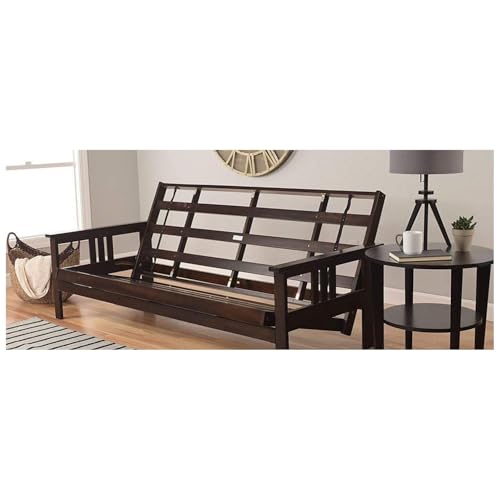
Wood usually gives a steadier platform when the slats are well made and the joints stay tight. That steadiness helps the mattress stay put and reduces the hollow, springy feel some metal frames develop over time.
Metal can still sleep well, especially when the frame is stiff and the slats are correctly spaced. The problem is that lighter metal constructions often flex more at the center, which can make the mattress shift or feel less even.
Squeak risk and frame noise
Noise usually comes from movement at contact points, not from the material alone. On wood frames, squeaks come from loose joinery or slats rubbing against rails; on metal, they often come from hinges, bolt joints, or weld points that start to work loose.
Solid construction matters more than the label. A well-built metal futon frame with good welds can stay quiet, but a cheap one often starts talking back as soon as it is used daily.
Weight, assembly, and moving
Metal frames usually win on weight, and that matters in apartments and dorms. One person can often handle the box, line up the parts, and finish setup without much trouble.
Wood frames often take more than one person because the parts are heavier and bulkier. Stair carries, tight doorways, and narrow hall turns are where that difference becomes obvious.
Durability, maintenance, and tight-space mobility
Durability depends on build quality as much as material. Wood needs good slat support and solid joinery; metal needs sound welds, tube strength, and a finish that resists chips and corrosion.
Maintenance is different too. Wood finishes can wear, stain, or crack when humidity swings; painted or powder-coated metal resists moisture better, but scratches can turn into rust spots if the coating is damaged.
Does a wood futon frame sleep better than a metal one?

Often yes, especially for nightly use. A wood futon frame usually feels steadier and quieter because the structure relies on rails, slats, and joinery rather than multiple pivot points, which can reduce motion and mattress slip if the build is sound.
How slat width affects support and mattress protection
Slat width and spacing are central to comfort. The 2.5 to 3 inch rule of thumb gives the mattress more continuous support, spreads weight better, and reduces flex that can shorten mattress life.
This applies to both wood and metal futon frames. Narrow slats or wide gaps let the mattress sink into spaces, which is hard on foam and can make a futon feel uneven after a short time.
Why joinery quality matters on wood frames
Wood frames rely on joinery quality more than many shoppers expect. Loose joints create motion, and motion creates squeaks, especially when the frame converts between sofa and bed positions.
Pine frames are often among the lightest and least expensive wood options, but they depend more on careful construction. Rubberwood is often a middle-of-the-road option for cost and stability. Hardwood futon frames are often the premium choice, with a higher price and a stronger case for daily sleeping because they can hold up longer when built well.
Where metal flex can change feel under load
Metal frames can feel firmer at first, but thin tubing or weak hinges can create flex at the center of the bed. That flex changes the sleeping surface and can make the mattress shift each time the sleeper changes position.
For buyers comparing two metal frames, tube thickness and weld quality matter more than the finish color. Solid welds usually point to better durability; bad welds shorten lifespan and invite wobble.
Which futon frame lasts longer: wood or metal?
Neither material automatically wins. A hardwood futon frame with good joinery can outlast a low-cost metal frame, while a well-welded steel frame may outlast a softer wood frame in a damp room. Build quality and use frequency decide the outcome more than the headline material.
Pine, rubberwood, and hardwood differences
Pine is common because it is lighter and usually cheaper, but it dents more easily and depends on stronger reinforcement to stay solid. Rubberwood is generally denser and more stable than pine, which can help with daily use if the slats and joints are well made.
Hardwood futon frames sit at the top end. They cost more, but they usually make more sense for everyday sleeping because they handle repeated use and moving parts better than softer woods.
Weld quality and tube strength on metal frames
Metal frames live or die by their welds. Clean, solid welds at stress points help the frame stay rigid, while weak welds can crack or loosen and lead to wobble, squeaks, or failure at the folding joints.
Tube thickness also matters. Thin tubing may keep the weight down, but it can transmit more motion and bend sooner under repeated use.
Humidity, warping, rust, and finish wear
Metal usually handles damp rooms better because it does not swell or crack from moisture the way wood can. In humid spaces, wood can change fit over time, and that can affect alignment, noise, and conversion ease.
Finish care matters on both materials. Painted or powder-coated metal can resist wear well, but scratches may expose bare metal and lead to rust spots. Wood stain and varnish protect appearance, yet they can wear at edges, armrests, and high-contact points.
Which futon frame is easier to move, assemble, and fit into a small apartment?
Metal is usually easier to move and set up because it is lighter and often simpler in layout. Wood is harder on stairs and through tight doors, though some low-profile designs can still be manageable if the parts break down cleanly.
One-person setup vs two-person setup
Many metal futon frames can be assembled by one person, especially when the frame is modest in size and the hardware is straightforward. Wood frames often need two people to turn the parts safely and line up the heavier side rails.
Ease of setup also depends on design. A light metal frame with awkward hinge pieces can still be frustrating, while a well-designed wood frame with clear hardware can go together more smoothly than expected.
Stairs, hallways, and tight corners
Apartment move-ins expose the real difference. Metal frames are easier to carry up stairs and pivot through narrow hallways because the pieces usually weigh less, and the total package is less cumbersome.
Wood frames tend to be the harder choice when there are sharp turns, small elevator cars, or a long walk from the truck. The extra weight becomes memorable fast.
How frame weight changes rental and dorm use
For rentals and dorms, frequent moves favor metal. The lower weight reduces the strain of getting the frame into place, taking it apart later, and carrying it to the next room or apartment.
Wood makes more sense when the futon stays put for years. Once the frame is in place, the extra weight can help it feel more planted, but that benefit is less useful if the room changes often.
Decision table: wood vs metal on 8 buyer priorities
This table turns the comparison into a buying decision. The scores are practical, not absolute: a better-built frame can beat a weaker one of either material, but the pattern below holds in real homes more often than not.
| Buyer priority | Wood Futon Frame | Metal Futon Frame | Winner |
|---|---|---|---|
| Sleep comfort | Usually steadier and quieter for nightly use | Can feel firm, but more prone to flex and vibration | Wood Futon Frame |
| Squeak risk | Lower when joinery and slats fit well | Higher at hinges, bolts, and weak weld points | Wood Futon Frame |
| Weight | Heavier to carry and reposition | Lighter and easier to move | Metal Futon Frame |
| Assembly | Often needs two people | Often easier for one person | Metal Futon Frame |
| Durability | Best in hardwood; pine and rubberwood depend on construction quality | Best when welds, tubing, and coating are strong | Tie |
| Style | Warmer, more furniture-like | More minimal and utilitarian | Wood Futon Frame |
| Maintenance | Finish wear, swelling, and cracking can show up in damp rooms | Coating chips can lead to rust spots | Tie |
| Tight-space mobility | Harder in stairs, hallways, and narrow doorways | Better for small apartments, dorms, and frequent moves | Metal Futon Frame |
Choose Wood Futon Frame if… / Choose Metal Futon Frame if…
Choose a wood futon frame if the futon will be used for nightly sleeping, if mattress stability matters more than low weight, or if the room stays dry and the frame is likely to remain in one place. Hardwood is the strongest case for daily use; pine is better when budget matters more than lifespan.
Choose a metal futon frame if the frame needs to move often, if stairs and tight hallways are a problem, if the room is damp, or if the futon is mainly for guests, dorm use, or a rental that may change again soon. Metal also makes more sense when setup has to be done quickly by one person.
Best for everyday sleeping
Wood usually wins for everyday sleeping, especially hardwood or well-made rubberwood with proper slat support. The frame tends to stay quieter, feel steadier, and keep the mattress in place better over time.
Best for rentals, dorms, and frequent moves
Metal is usually the better fit for rentals and dorms because it is lighter, easier to carry, and less sensitive to humidity changes. If the frame may be moved again soon, that handling advantage often matters more than the warmer look of wood.
When a hybrid or upholstered futon base makes more sense
A hybrid or upholstered futon base is worth considering when the goal is a softer sofa look, built-in storage drawers, or less of a bare-frame feel. Those options can work better in living rooms where the futon acts as both seating and bed, and where appearance matters as much as mechanical support.
Frequently asked questions
Is a wood futon frame better than a metal futon frame?
Wood is often better for nightly sleeping because it can feel steadier and may run quieter. Metal is often better when the futon needs to be moved often, fit into tight spaces, or handle a damp room. The better choice depends on how often the frame is used and moved.
Which futon frame is more durable, wood or metal?
Durability depends on build quality. Hardwood wood frames with good joinery can last a long time, while metal frames need strong welds, thicker tubing, and a coating that stays intact. Cheap versions of either material fail sooner than well-built ones.
Do metal futon frames squeak more than wood frames?
Often yes, especially after repeated folding and daily use. Metal squeaks usually come from hinges, bolts, or shifting joints, while wood squeaks are more often tied to loose joinery or slats rubbing the rails. Good construction can reduce noise in both materials.
Which futon frame is better for a small apartment?
Metal is usually better for a small apartment because it is lighter, easier to move, and simpler to get through tight halls and doorways. Wood can work if the frame stays in one room and the extra weight is not a problem during move-in.
Is a wood futon frame worth the extra cost?
It can be, if the futon is used as a bed most nights. The added cost often buys a steadier sleep surface, better visual fit in a bedroom, and less noise if the joints and slats are made well. For guest use, the extra cost is harder to justify.
Which futon frame is easier to move and set up?
Metal is usually easier to move and set up because it weighs less and often arrives in more manageable parts. Wood frames are heavier, more awkward on stairs, and more likely to need two people for safe assembly and positioning.
Products related to this article
Sponsored / affiliate links. As an Amazon Associate I earn from qualifying purchases. I may earn additional commission from eligible campaigns.