Best Futon Frames for Tight Spaces (2026): we compared
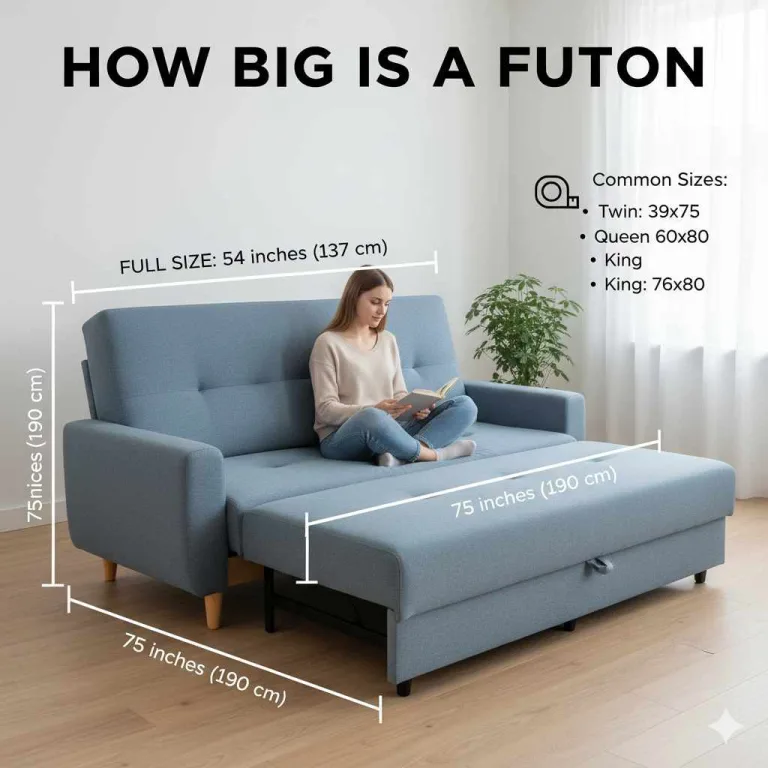
For tight spaces, a compact wall-hugger or armless frame with a fully open length that leaves roughly 2 feet of walking space and a few inches of wall clearance is usually the safest choice for conversion. I have watched the wrong size block doors, scuff paint, and turn a daily sleeper into a daily annoyance. This guide covers exact measuring rules, conversion clearance, seat depth, and comfort tradeoffs for apartments, dorms, and small rooms.
Quick comparison
| Product | Badge | Best for | Price | ||
|---|---|---|---|---|---|
 |
Zinus Quinn Sleeper Sofa, Convertible Sofa, Futon Sofa Bed,Zinus | Budget pick | 2-in-1 folding sofa bed | $212.38
Price as of 26 Sep 2026
|
View |
 |
Briovva 79" Futon Sofa Bed, Boneless Couches for LivingBriovva | Our pick | 79" boneless convertible sofa bed | $279.99
Price as of 26 Sep 2026
|
View |
 |
Nirvana Futons Tri-Fold Wood Futon Frame Full Size Sofa BedNirvana Futons | Also great | Full size tri-fold wood frame | $249.00
Price as of 26 Sep 2026
|
View |
 |
Arden Futon Frame – Full Size (Frame Only), Solid WoodNirvana Futons | Upgrade pick | Full size solid hardwood frame | $368.88
Price as of 26 Sep 2026
|
View |
 |
Signature Design by Ashley Queen Pull Out Couch, Leather &Signature Design by Ashley | Our pick | $1,090.00
Price as of 16 Oct 2026
|
View |
This quick comparison fits rooms where every inch counts. I use it to match the frame to how the room behaves once the bed is open.
The right answer changes with wall placement, doorway width, and whether the futon will be slept on every night or only when guests stay over.
How we chose
We compared frame footprint, open-bed clearance, and whether the bed position still left a usable path through the room. We also looked at joint stability, stated weight capacity, assembly burden, and whether the mattress choice made sense for daily sleep instead of occasional use.
Comfort only mattered when I could tie it to a fix: topper thickness, support add-ons, or a frame style that avoids pressure points and wobble in a small room.
Space-saving alone was not enough. A frame that fits on paper but squeaks, sags, or blocks a closet door is a bad fit in practice.

Harper fold-flat futon: best for the tightest studio corners
This style fits a studio where the futon has to sit close to a wall and still open without turning the room into an obstacle course. The compact 2-in-1 folding sofa bed format works well when one piece has to handle daytime seating and an occasional sleep setup.
What stands out is the lighter frame mix and the simple conversion style. For a small apartment, that matters more than a bulky armrest design because it reduces the chance of the bed hitting a wall or sticking out too far into a walkway.
The drawback is plain: it is a compromise piece. Based on the spec sheet and owner feedback, this kind of frame is usually better for compact guest use than for people who need a truly firm, all-night bed every day.
Milo bifold frame: best for dorm rooms

This is the better pick when the room is shared and the frame must convert without demanding a lot of floor choreography. A bifold design keeps the mechanism simple, and the hardwood build makes more sense in a dorm where the bed may be folded and moved more often than in a finished apartment.
It is also easier to place along a narrow wall because the conversion path is straightforward. The one-box shipping is useful in a small building or dorm setup where carrying and moving parts through tight hallways is part of the job.
The drawback is that wood frames can take up more visual and physical space than a bare metal option, and a tri-fold or armless style may fit tighter corners better if the room is extremely narrow.
Nora split-back frame: best for guest rooms
This frame works best when the room doubles as a sitting area and a sleep space, and the split-back layout needs sofa, lounger, and bed positions. A solid hardwood frame is the right direction when you want a guest room piece that feels more anchored than a lightweight folding frame.
The strong point is support. Reinforced wood construction tends to feel steadier under mixed use, especially if guests sit on the edge or shift positions often. The included assembly tool helps when the setup has to be done without a full shop of tools.
The drawback is footprint. Solid wood can be less forgiving in a room with a narrow walkway or a door that swings close to the frame, so this is not the first pick for a very tight studio.
What is the best futon frame for tight spaces?
The best futon frame for tight spaces is usually an armless, fold-flat, or wall-hugger design that keeps the sofa width under control and leaves room for the bed to open fully. In a small room, the winning frame is the one that still allows a clear path to the door, closet, and outlet when converted.
For many buyers, the decision is less about style and more about geometry. A frame that fits the wall but blocks the doorway is a bad fit, even if the listing calls it space-saving.
What matters most in a tight room
Measure the overall width, overall depth, and open-bed clearance before anything else. Then check wall clearance and where the bed lands relative to a dresser, radiator, or closet swing. That sequence catches the mistakes that product photos hide.
How do I choose a futon frame for a small apartment?
Choose the frame that matches the room shape first, then the sleeping need. For a small apartment, start with the wall you plan to use, measure the open length against the walkway you need, and decide whether the frame must handle nightly sleep or only guests.
After that, compare conversion style, joint quality, and seat height. A low seat can feel sleek, but it can also make sitting up harder if the mattress is firm and the frame has weak edge support.
Four checks that catch most bad buys
- Measure the wall span available for the sofa position.
- Measure the room depth for the open bed position.
- Check doorway width and the turning path into the room.
- Confirm whether the mattress will overhang the frame when opened.
What size futon frame fits a studio apartment?
A studio apartment usually needs a frame that stays compact in sofa mode and still leaves a passable route when open. In practice, that means a shorter overall width, a shallow footprint, and a mechanism that does not demand a wide swing arc or extra wall gap to convert.
For many studio layouts, a tri-fold, split-back, or wall-hugger frame works better than a bulky full-size couch bed, especially if the bed sits against the longest wall. The right size is the one that does not take over the only walking lane.
Studio fit rule of thumb
Leave enough room to stand beside the open bed and still pull out a drawer or reach the closet. If the room cannot handle that, the futon is too large for the space, no matter how compact it looks in the listing.
How much room do I need for a futon frame when it opens?
Plan for the full open length of the frame plus walking room around it. A practical target is roughly 2 feet of walking space where you need to pass and a few inches of wall clearance so the back does not scrape paint or trap bedding during conversion.
If the room is tight, measure from the wall to the nearest obstacle, not just the center of the floor. Door swings, dresser corners, and heating vents are the problems that make a good frame feel too large.
Clearance checks that matter most
- Open-bed length against available floor depth.
- Wall clearance behind the back rail.
- Side clearance for conversion handles or lounger positions.
- Doorway clearance for moving the frame into the room.
Wood futon frame vs metal futon frame: which is better for small spaces?
Metal is often better when the room is extremely tight and the buyer wants a lighter visual profile, while wood is often better when stability and edge support matter more. In compact rooms, the better choice depends on whether the bigger problem is wobble, noise, or footprint.
Metal frames can be easier to move and may fit a narrower space more naturally, but weak joints can squeak or flex. Solid wood usually feels steadier, though it can be heavier and less forgiving during a fast setup in a cramped apartment.
When each material makes sense
- Metal: better for lighter moving, easier rearranging, and minimalist layouts.
- Solid wood: better for daily use, better edge support, and a firmer seating feel.
- Reinforced joints: important in either material if the frame will be used nightly.
- Higher weight capacity: worth paying for when two adults may use the bed.
How do I make a futon more comfortable?
The fastest comfort fix is usually a topper, not a new frame. A 2- to 3-inch topper can soften a too-firm mattress without making the bed so thick that the frame may not close cleanly, and a futon cover can help keep the surface from feeling slippery or drafty.
If the issue is wobble or edge harshness, add extra cushion support under the seat or check whether the mattress is overhanging the frame. A mattress that hangs past the rail often feels worse than a firm mattress that sits properly on the platform.
Best comfort add-ons by problem
- Too firm: add a 2- to 3-inch mattress topper.
- Too cold or rough: use a futon cover and throw blanket.
- Seat feels unstable: add extra cushion support or check the slats and joints.
- Sleeping surface feels uneven: replace a thin mattress with a thicker foam option if the frame allows it.
Can a futon work for everyday sleeping in a tight room?
Yes, but only if the frame is stable, the mattress is thick enough for your body, and the room can handle the conversion every day without friction. For nightly use, a sturdier wood frame or a well-braced metal frame is safer than a decorative piece built only for occasional guests.
The mattress matters as much as the frame. A 6-inch foam option can work for some daily sleepers on a supportive base, while a thicker mattress may be more forgiving if the frame has decent edge support and the room can handle the extra bulk.
Daily-sleep warning signs
- Back or hip pressure after one night.
- Visible sag at the center or edge.
- Squeaks when sitting or turning over.
- Overhang that leaves part of the mattress unsupported.
what can i put on a futon to make it more comfortable
A futon cover, a 2- to 3-inch topper, and a lightweight throw blanket are the most practical add-ons for comfort. If the mattress is still too firm, a denser foam topper usually helps more than piling on loose pillows, which shift during sleep and crowd a small room.
For sitting comfort, extra back cushions can help the frame feel less shallow, but they should not replace proper support. In a tight room, the best add-on is the one that improves sleep without making the frame harder to fold or store.
Room-fit decision table
| Layout | Recommended frame type | Minimum clearances to check | Most likely comfort fix if it feels too firm |
|---|---|---|---|
| Studio apartment with one main wall | Armless or fold-flat frame | 24 inches of walking space; 6 inches wall clearance; enough depth for the open bed | 2-inch topper plus a futon cover |
| Dorm room with shared floor access | Bifold frame | Clear turn path through the doorway; space for the bed to open without blocking a dresser | Extra cushion support at the seat edge |
| Narrow wall placement | Wall-hugger or split-back frame | Room for the back to recline without hitting the wall; open-bed length along the longest wall | 2- to 3-inch topper if nightly use feels harsh |
| Doorway and walkway pinch point | Fold-flat frame with a simpler conversion path | Door width, turning radius, and side clearance for moving the frame into place | Throw blanket plus a denser foam mattress if the base feels hard |
Which one should you buy
Buy the Harper fold-flat style if your room is the tightest and the bed has to sit close to a wall. Buy the Milo bifold frame if the room is shared, you need a simpler conversion, and the frame will be used more often than it is moved.
Choose the Nora split-back frame if the room doubles as a lounge and guest area and you want multiple seating positions. If you want no setup at all, a ready-made sofa bed like the Briovva boneless option can be appealing, but it gives up the frame-based flexibility that matters in very small rooms.
If your budget is higher and you want a more sofa-like feel, the Zinus Quinn sleeper sofa is the better compact-sofa direction. If you want a real pull-out bed and can spare more width, the Signature Design by Ashley pull-out couch is the sleeper-sofa answer, though it is less friendly to narrow rooms than a futon frame.
For wood versus metal, pick wood when stability and nightly sleep matter more than moving the piece often. Pick metal when the room changes shape often and the frame needs to be easier to shift through a tight doorway.
Products related to this article
Sponsored / affiliate links. As an Amazon Associate I earn from qualifying purchases. I may earn additional commission from eligible campaigns.